Tag: #palestine

  • Israel weakly counters South Africa’s strong stance in genocide case: What’s next?

    Israel weakly counters South Africa’s strong stance in genocide case: What’s next?

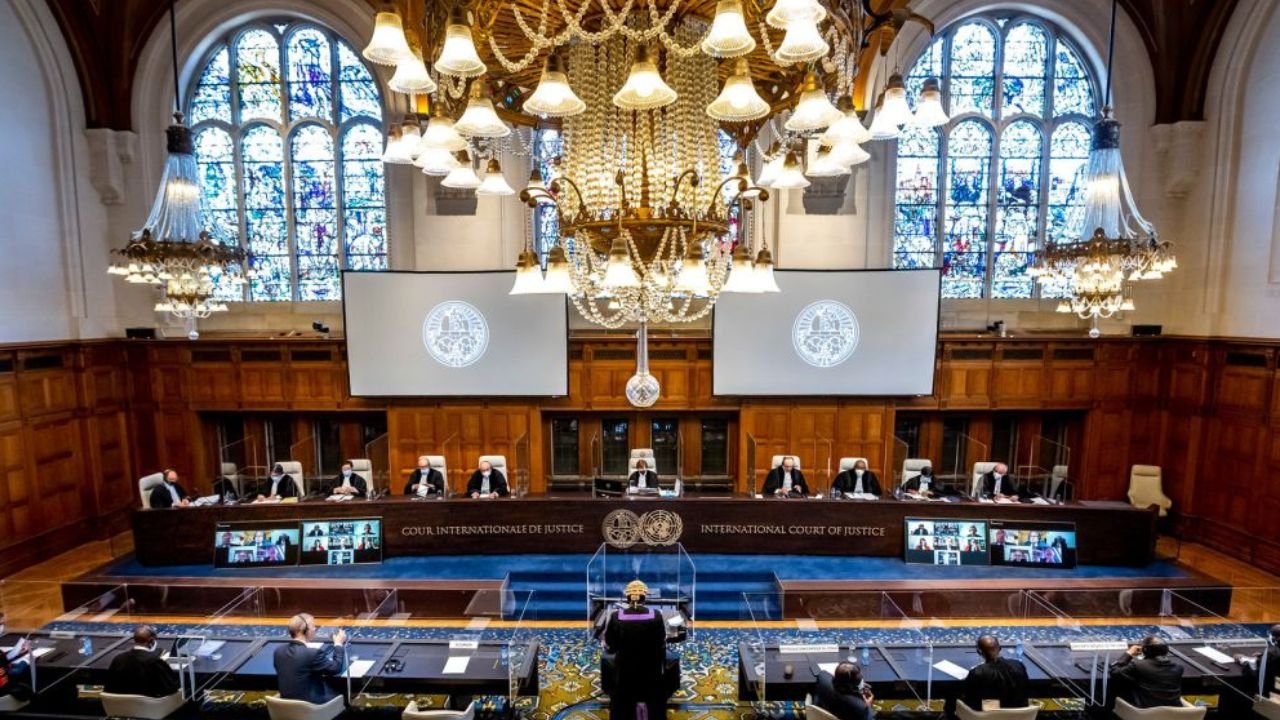
    On January 11-12, the International Court of Justice (ICJ) heard the genocide case filed against Israel by South Africa.

    On Day 1, South Africa’s legal team put forward its case, pointing at the atrocities being committed against Palestinians in Gaza by Israel.

    Israel is accused of committing genocidal acts during their military operations which included mass killings of Palestinians, bodily and mental harm, forced displacement and food blockade, destruction of the healthcare system, and preventing Palestinian births.

    On Day 2, Israel defended itself against the charges, arguing that South Africa “ignored” the incident of October 7 and that Israel had the right to defend itself, adding that the court should put provisional measures against South Africa, accusing it of having ties with Hamas. Israel did not submit any evidence to support its claims that Hamas was the cause of the attacks in Gaza whereas South Africa submitted video evidence of Israeli atrocities in Gaza.

    They also blamed Hamas for the high civilian death toll in Gaza, claiming that Israel did not bomb hospitals and that they enabled humanitarian aid.

    What’s next?

    Al Jazeera explains that even though South Africa’s case against Israel can take years, an “interim measure” intended to halt Israel’s attack in Gaza can be taken “within weeks”.

    If the interim measure is implemented, Israel will be legally obligated to put an end to its offences. And while the “court’s rulings are final”, it has no authority to impose them, nonetheless.

    On the other hand, if the court does not implement an interim measure, “it could still decide it has jurisdiction and proceed with the case”, adds Al Jazeera’s explainer.

  • US-UK strike Yemen after Houthi rebels defend Palestine by stopping Israeli ships

    US-UK strike Yemen after Houthi rebels defend Palestine by stopping Israeli ships

    American and British forces have launched fresh raids on Yemen’s capital, Houthi rebel forces confirmed on Saturday, a day after the allies carried out dozens of strikes on the country.

    The latest raids targeted Al-Dailami airbase in Sanaa, which has been under Houthi control since 2014, a statement released on their official media stated. “The American-British enemy is targeting the capital, Sanaa, with a number of raids,” Al-Masirah TV posted on X, formerly Twitter, citing its correspondent in Sanaa.”The American-British aggression targeted the Al-Dailami base in the capital, Sanaa,” it added.

    Raids on Yemen follow weeks of Houthi attacks on Israel’s ships in the commercial Red Sea in protest against the war on Gaza.

    The strike on a Houthi radar site comes a day after scores of attacks across the country heightened fears that Israel’s aggression on Gaza could engulf the whole Arab region.

    The Houthis warned that US and British interests were “legitimate targets” after the initial strikes. Britain, the United States and eight allies said strikes carried out on Friday had aimed to “de-escalate tensions”, but the Houthis vowed to continue their attacks. Hussein al-Ezzi, the rebels’ deputy foreign minister, said the United States and Britain would “have to prepare to pay a heavy price”.

    The rebels have controlled much of Yemen since a civil war erupted in 2014 and are part of the “axis of resistance” against Israel and its allies.

    Violence involving these groups in Yemen, Lebanon, Iraq, and Syria has surged since the war in Gaza began in early October.

    What has the UN said?

    UN chief Antonio Guterres called on all sides “not to escalate” in the interest of regional peace and stability, his spokesman Stephane Dujarric said.

    The UN Security Council held an emergency meeting on Friday, days after adopting a resolution demanding the Houthis immediately stop their attacks.

    At the meeting, US Ambassador Linda Thomas-Greenfield warned that no ship was safe from the threat posed by Houthis to shipping in the Red Sea.

    Russian ambassador Vassili Nebenzia denounced the “blatant armed aggression” against the entire population of the country.

    Red Sea attacks and the politics of the Middle East

    The Houthis have intensified attacks on what they deem Israeli-linked shipping in the Red Sea- through which 12 percent of global maritime trade normally passes- since October 7.

    The United States and Britain launched strikes on Friday that targeted nearly 30 locations using more than 150 ammunitions, US General Douglas Sims said, updating earlier figures, and President Joe Biden said he did not believe there were civilian casualties.

    Biden called the strikes a successful “defensive action” after the “unprecedented” Red Sea attacks and said he would act again if the Houthis continued their “outrageous behaviour”.

    British Prime Minister Rishi Sunak said the Houthis’ breach of international law warranted the “strong signal”, with his government publishing its legal position justifying the strikes as lawful and “proportionate”.

    Nasser Kanani, spokesman for Iran’s foreign ministry, said the Western strikes would fuel “insecurity and instability in the region” while “diverting” attention from Gaza.

    The Houthis fired “at least one” anti-ship ballistic missile in retaliation on Friday that caused no damage, according to Sims.

    The United States said it did not seek conflict with Iran, with National Security Council spokesman John Kirby telling MSNBC there was “no reason” for an escalation.

    Middle Eastern leaders voiced concern at the violence, with Turkish President Recep Tayyip Erdogan describing the strikes on Yemen as disproportionate and saying: “It is as if they aspire to turn the Red Sea into a bloodbath.”

    Saudi Arabia said it “is following with great concern the military operations” and called for “self-restraint and avoiding escalation”. The kingdom is trying to extricate itself from a nine-year war with the Huthis, though fighting has largely been on hold since a truce in early 2022.

    Palestinian freedom fighting group Hamas said it would hold Britain and the United States “responsible for the repercussions on regional security”.

    ‘Death to America’

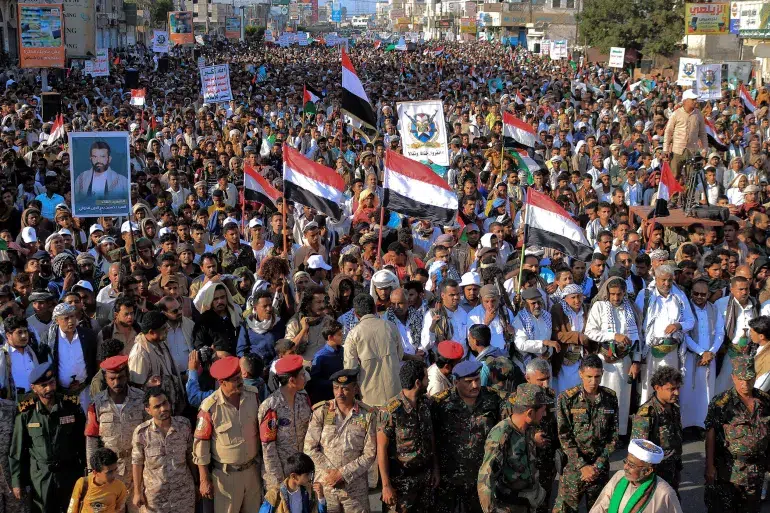
    Hundreds of thousands of people, some carrying Kalashnikov assault rifles, gathered in Yemen’s capital Sanaa on Friday to protest, many waving Yemeni and Palestinian flags and holding portraits of Huthi leader Abdulmalik al-Huthi, an AFP journalist reported.

    “Death to America, death to Israel,” they chanted.

    In Tehran, hundreds rallied against the United States, Britain, and Israel, burning the three countries’ flags outside the UK embassy while voicing support for Gazans and Yemenis, an AFP correspondent reported.

    In Gaza, Palestinians lauded Houthi support and condemned Britain and the United States. “No one is standing with us but Yemen,” said Fouad al-Ghalaini, one of hundreds of thousands of Palestinians left homeless by Israel’s bombardment of Gaza City

  • All you need to know about South Africa’s genocide case against Israel at ICJ

    All you need to know about South Africa’s genocide case against Israel at ICJ

    A case in the International Court of Justice (ICJ) has been put in motion by South Africa in The Hague, Netherlands, asking the court to look into the genocide being committed by Israel against Palestinians.

    The imposition of charges do not only pertain to the crimes perpetrated during the last few months since October 7 that have killed more than 23,000 people till now, but also the 75-year long apartheid, 56-year hostile occupation, and 16-year blockade on Gaza.

    The hearing will take place on January 11th and 12th in which a 15-judge panel will hear and deliberate the case.

    South Africa filed an 84-page suit with the court on December 29, quoting proofs and references of atrocities being committed by Israel in Gaza, asking the Court – a United Nations body established for settling interstate discords – to pronounce Israeli breaches of responsibilities under international law since October 7.

    “No armed attack on a State’s territory no matter how serious — even an attack involving atrocity crimes — can, however, provide any possible justification for, or defence to, breaches of the 1948 Convention on the Prevention and Punishment of the Crime of Genocide (‘Genocide Convention’ or ‘Convention’), whether as a matter of law or morality.”, read an excerpt from the suit.

    While the rulings are intended to be “binding”, a number of countries do not recognise its results. To give an example, the previous ICJ rulings of Russia invasion of Ukraine, and China’s claims in the South China Sea, were disregarded by China and Russia, consequently affecting ICJ’s credibility.

    Additionally, an NGO called Protect Palestine, an Action Guide, writes that according to experts, while South Africa “will make a strong case, it still may not be enough to rule against Israel. Israel will likely continue claims that “Hamas is embedded with civilians”, and that they “try to warn civilians”.

    The votes for and against, however, can pave the way to additional challenges for Israel and further affect the legal global standing of the country.

    Who is supporting South Africa’s ICJ case against Israel?

    The 57-member bloc known as the Organization of Islamic Countries (OIC) which includes Saudi Arabia, Iran, Pakistan and Morocco; Malaysia; Turkey; Jordan; Bolivia; The Maldives; and Namibia.

    A number of advocacy groups and civil society groups across the world including Terreiro Pindorama in Brazil, Asociación Nacional de Amistad Italia-Cuba in Italy, and Collectif Judeo Arabe et Citoyen pour la Palestine in France.

    Previously, Bolivia had filed a request to International Criminal Court (ICC) Prosecutor Karim Khan alongside South Africa, Bangladesh, Comoros, and Djibouti to probe into the matter in Palestine.

    Read more: Can South Africa’s ICJ case against Israel stop war in Gaza?

  • Palestinian Journalist Freed From Israeli Custody Abused: Report

    Palestinian Journalist Freed From Israeli Custody Abused: Report

    London-based media outlet The New Arab announced on Tuesday the release of one of its Palestinian journalists from Israeli custody, alleging he faced torture during more than a month in detention.

    Diaa al-Kahlout, who was among dozens of Palestinians shown detained by Israeli troops and stripped to their underwear in north Gaza last month, had been released back into the Palestinian territory, the Qatari-owned outlet said.

    In an report on its website, Kahlout told The New Arab he had faced “indescribably tough and difficult” conditions following his arrest.

    The 37-year-old said he had been beaten and tortured.

    “The moment I was detained, Israeli soldiers crowded round me… before they gagged me with tape so I couldn’t speak.”

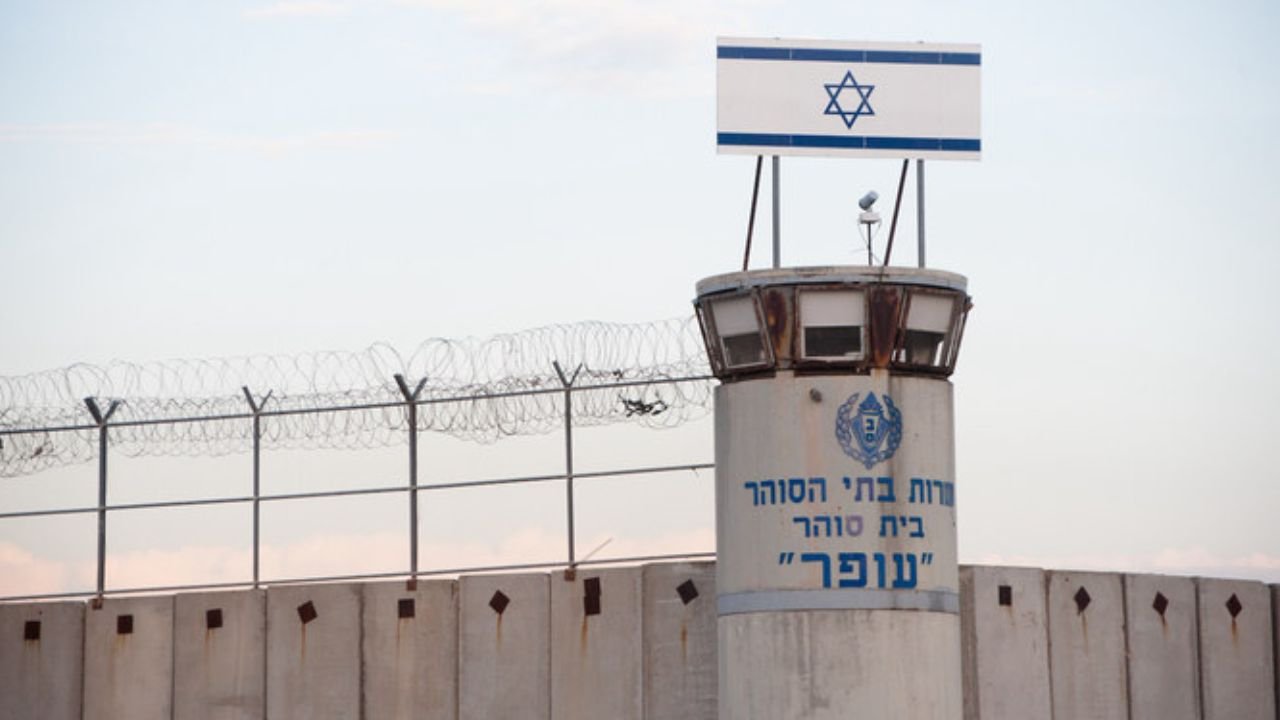
    Paris-based media watchdog Reporters Without Borders (RSF) has said following his arrest the journalist was briefly held in Eshel prison in Israel and was subjected to torture, according to several of the organisation’s sources.

    The bloodiest ever Gaza war broke out after Hamas gunmen launched their October 7 attack that resulted in about 1,140 deaths in Israel, mostly civilians, according to an AFP tally based on official figures.

  • Blinken to meet Palestinian president after warning Israel civilian toll ‘too high’

    Blinken to meet Palestinian president after warning Israel civilian toll ‘too high’

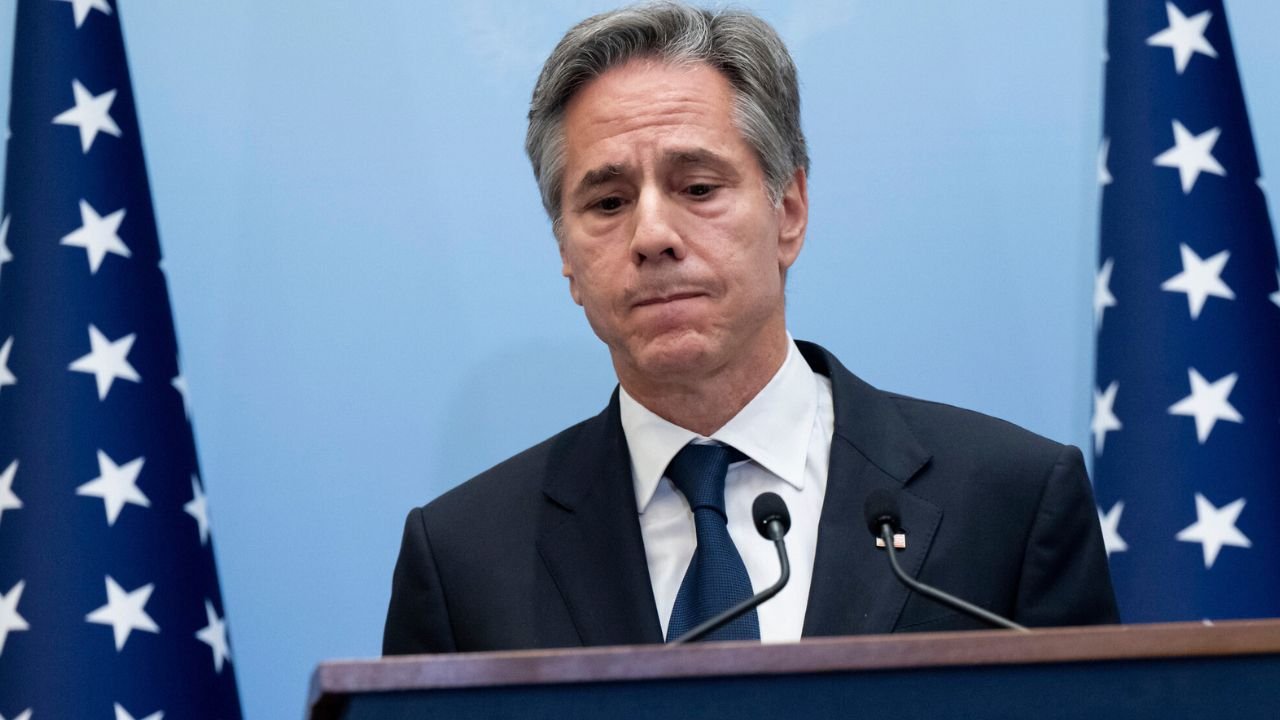
    Tel Aviv (AFP) – US Secretary of State Antony Blinken was due to hold talks Wednesday with the head of the Palestinian Authority, which Washington hopes could govern Gaza after Israel’s attacks end.

    The United States’ top diplomat was on his fourth crisis visit to the Middle East since the war in the Gaza Strip began, meeting with Israeli Prime Minister Benjamin Netanyahu in Tel Aviv on Tuesday.

    Blinken told a news conference afterwards that the United States would continue to support its ally, but also called on Israel to do more to protect those trapped in the besieged Palestinian territory, saying the “daily toll on civilians in Gaza, particularly children, is far too high”.

    Washington has floated a post-war scenario in which a reformed Palestinian Authority, currently led by president Mahmud Abbas, governs Gaza in addition to the West Bank.

    The authority currently exercises limited rule in the West Bank, which has been occupied by Israel since 1967.

    “Israel must stop taking steps that undercut Palestinians’ ability to govern themselves effectively,” Blinken said Tuesday, emphasising the importance of progress towards a two-state solution.

    “The Palestinian Authority also has a responsibility to reform itself, to improve its governance — issues I plan to raise with president Abbas,” he added.

    Netanyahu, however, has shown no interest in reviving negotiations towards a Palestinian state, and an early post-war plan outlined by Defence Minister Yoav Gallant envisions local “civil committees” governing Gaza after Israel has dismantled Hamas.

    Blinken declined to say on Tuesday whether Netanyahu’s views had shifted in their discussions.

    Multiple attempts at reconciliation have failed, but Hamas chief Ismail Haniyeh said last week he was “open to the idea” of a single Palestinian administration in Gaza and the West Bank.

    Jordan’s royal palace, meanwhile, said King Abdullah II would host Abbas and Egyptian President Abdel Fattah al-Sisi on Wednesday for talks on Gaza, including efforts to “push for an immediate ceasefire”.

    ‘We see no hope’

    Israel has responded with relentless bombardment and a ground invasion of Gaza since October 7 that have killed at least 23,210 people, mostly women and children, the health ministry said Tuesday.

    The ministry announced Wednesday morning that another 70 people were killed and more than 130 wounded in overnight attacks.

    The Israeli army announced the death of another soldier early Wednesday, bringing the total killed since its ground invasion began to 186.

    The war has displaced the vast majority of Gaza’s population, and dire shortages of food, water and medicine have left hundreds of thousands at risk of famine and disease, the UN and WHO have said.

    AFP footage on Tuesday showed a crowd of Gazans rushing towards aid trucks carrying flour and canned goods into Gaza City, in the territory’s devastated north, with some climbing up the sides of the vehicles and tossing down food.

    “We’ve been listening to the news for 98 days, hoping that the war will end, but due to this difficult situation we see no hope,” Ibrahim Saadat told AFP from a camp for displaced people in the southern border town of Rafah.

    “Due to the lack of water, we shower just once per month. Psychologically we are suffering, and diseases have spread everywhere.”

    The WHO warned on Tuesday that its ability to provide aid and support to Gazan hospitals was “shrinking”.

    During his visit, Blinken called for “more food, more water, more medicine” to be delivered to the territory, and said that Israel had agreed to a UN assessment in the north to “determine what needs to be done to allow displaced Palestinians to return safely”.

    Israel says it has largely achieved military control over northern Gaza and that operations are focussing further south.

    In the southern city of Khan Yunis, wounded people, some of them children, were rushed to hospital on Tuesday after a strike hit displaced Palestinians living in tents at Al-Mawasi camp.

    “We were chatting under a palm tree, and suddenly we saw stones and shrapnel everywhere,” young Lama Abu Gemmayzeh told AFP.

    “Some of us started running, and others were on the ground, and we started screaming for ambulances.”

    Fears of escalation

    Since the war started, fears have grown of an escalating conflict between Israel and its other regional enemies, a loose alliance of Iran-backed armed groups in Lebanon, Syria, Iraq and Yemen.

    Defence Minister Gallant told Blinken on Tuesday that intensifying pressure on Iran was “critical” and could prevent a regional escalation, an Israeli government statement said.

    Hours later, Iran-backed Huthi rebels in Yemen “launched a complex” drone and missile attack in the southern Red Sea, the US Central Command (CENTCOM) said.

    American and British forces shot down 18 drones and three missiles in the latest attack, CENTCOM said, adding no injuries or damage were reported.


  • ‘Ceasefire Now’; Joe Biden’s speech interrupted by pro-Palestinian protestors

    ‘Ceasefire Now’; Joe Biden’s speech interrupted by pro-Palestinian protestors

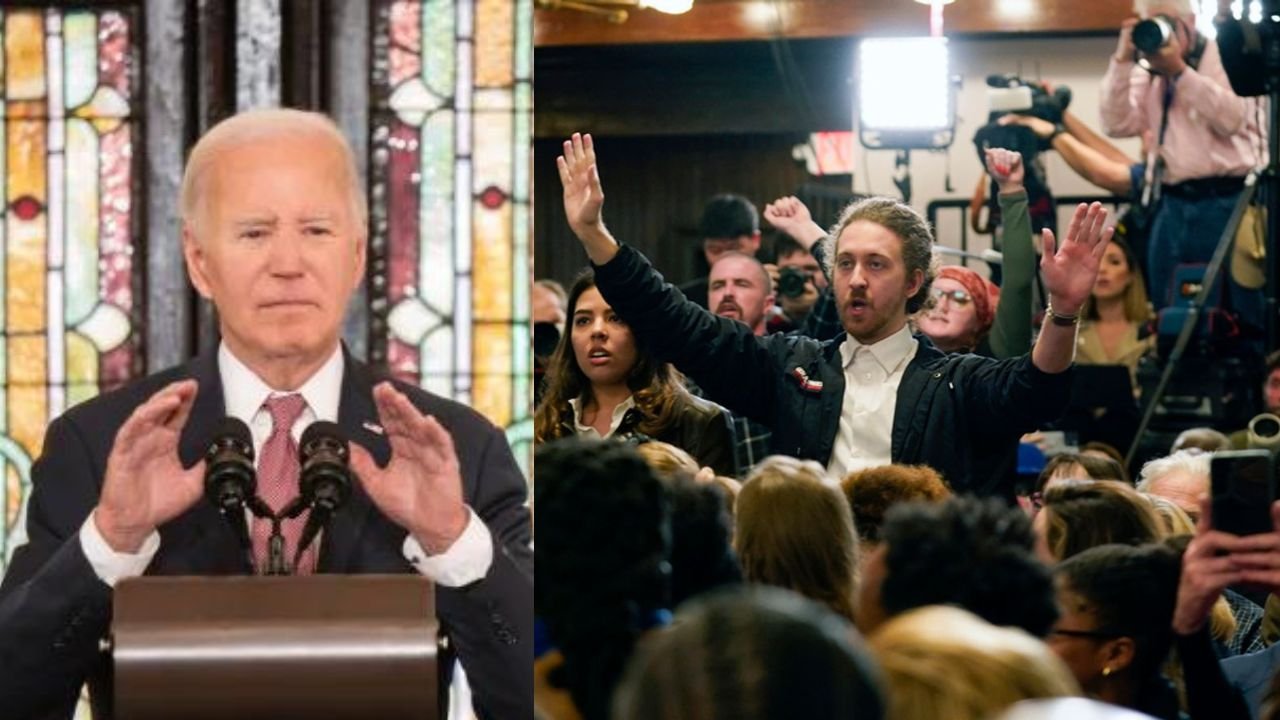
    American President Joe Biden’s speech at a church in South Carolina was interrupted by chants of “Ceasefire Now” by supporters of the Palestinian cause. The president was there as part of the presidential campaign to woo black voters. This is the same church where a white supremacist shot nine black people in 2015.

    As he was talking about the horrific incident, one protestor got up and said, “If you really care about the lives lost here, then you should honour lives lost and call for a ceasefire in Palestine.” She was then joined by others saying, “Ceasefire Now”. One of them was seen shouting “Blood on your hands” to Biden.

    The President was seen calming the charged crowd by raising a hand and saying, “That’s alright”. As security personnel removed the protesters from the church, he said: “I understand their passion, and I’ve been quietly working, quietly working with the Israeli government to get them to reduce and significantly get out of Gaza.”

    According to the Gaza health ministry, more than 23,000 Palestinians have been killed in Gaza since October 7.

    Biden faced the same situation previously at a human rights’ dinner in Washington DC where pretended to not listen.

  • Germany Ready To Sell Eurofighter Jets To Saudi Arabia

    Germany Ready To Sell Eurofighter Jets To Saudi Arabia

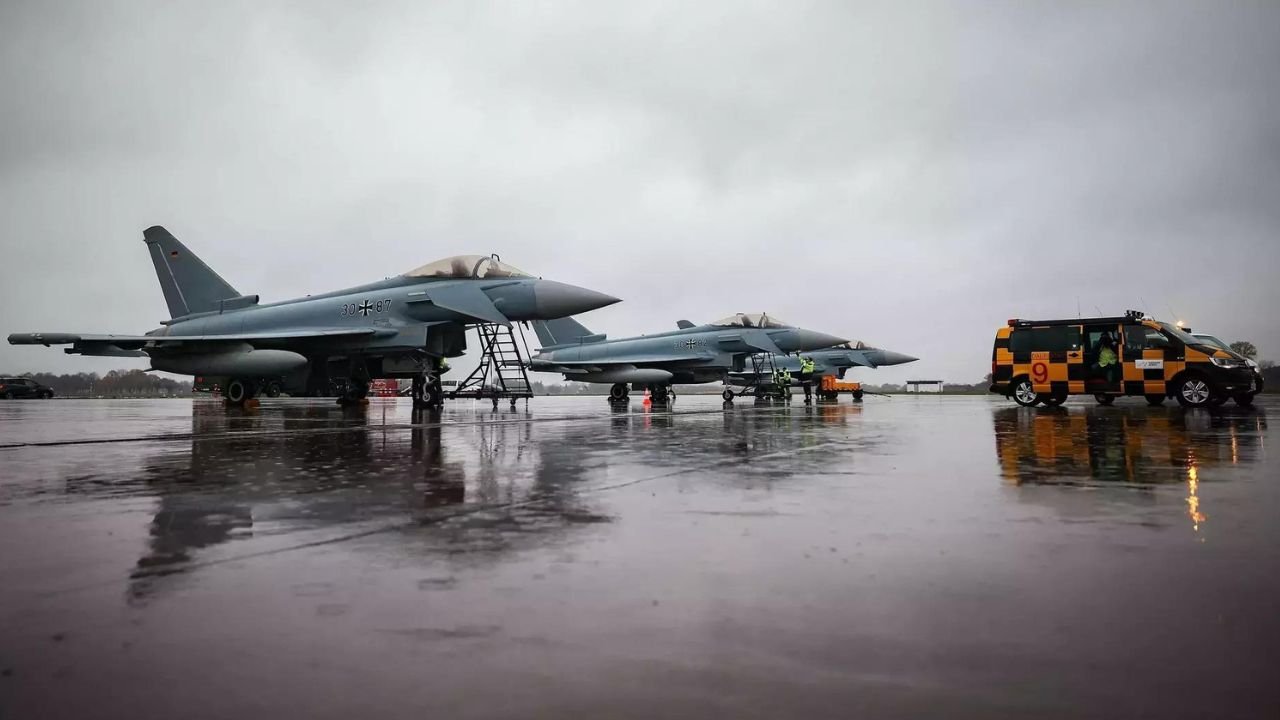
    Chancellor Olaf Scholz’s government on Monday defended plans to lift Germany’s longstanding veto on sales of Eurofighter jets to Saudi Arabia, saying Riyadh has adopted a “constructive approach” in the Israel-Hamas war.

    Germany, Britain, Italy and Spain jointly build the jet and each can veto deals.

    Berlin has blocked one deal, sought by London, since 2018.

    But German Foreign Minister Annalena Baerbock, on a visit to Israel on Sunday, signalled that Berlin was ready to lift its blockade.

    “We do not see ourselves, as the German federal government, opposing British considerations on other Eurofighter (sales),” Baerbock told journalists, as she underlined the Saudi role in the Middle East security crisis since the eruption of the Israel-Hamas war on October 7.

    Scholz “shares this assessment,” his spokesman Steffen Hebestreit said on Monday at a press conference, noting that “it is an open secret that Saudi Arabia’s airforce has used Eurofighters to shoot down rockets launched by the Huthis on the way to Israel”.

    Germany has blocked arms sales to Riyadh since the 2018 murder of dissident journalist Jamal Khashoggi in the Saudi consulate in Istanbul.

    That includes blocking a deal for 48 Eurofighter jets signed by Saudi Crown Prince Mohammed bin Salman in London.

    Baerbock noted that Saudi Arabia and Israel had “not renounced their policy of normalisation” since the war broke out.

    “The fact that Saudi Arabia is now intercepting missiles fired by the Huthis at Israel underlines this, and we are grateful for that,” she added.

    “The fact that the Saudi air force also uses Eurofighters in this context is an open secret,” the minister continued.

    “Saudi Arabia is a key contributor to Israel’s security, even these days, and is helping to stem the risk of a regional conflagration.”

    Germany’s previous position against deliveries to the kingdom had put itself at odds with key partners, with Airbus chief Guillaume Faury saying in November that it was “damaging to Germany’s reputation as an exporting nation”.

    “This raises the question of confidence and the credibility of Germany as a country participating in international programmes,” he added.

    Berlin’s U-turn, however, risks opening up a new political row domestically, with Baerbock’s Greens already uneasy about the move.

    Co-chair of the Greens, Ricarda Lang, on Monday insisted that “with a view on the human rights situation, including Saudi Arabia’s domestic constitution, I think as before that it is wrong to deliver Eurofighters” to the kingdom.

  • Rotten food and cat hunting as famine hits Gaza

    Rotten food and cat hunting as famine hits Gaza

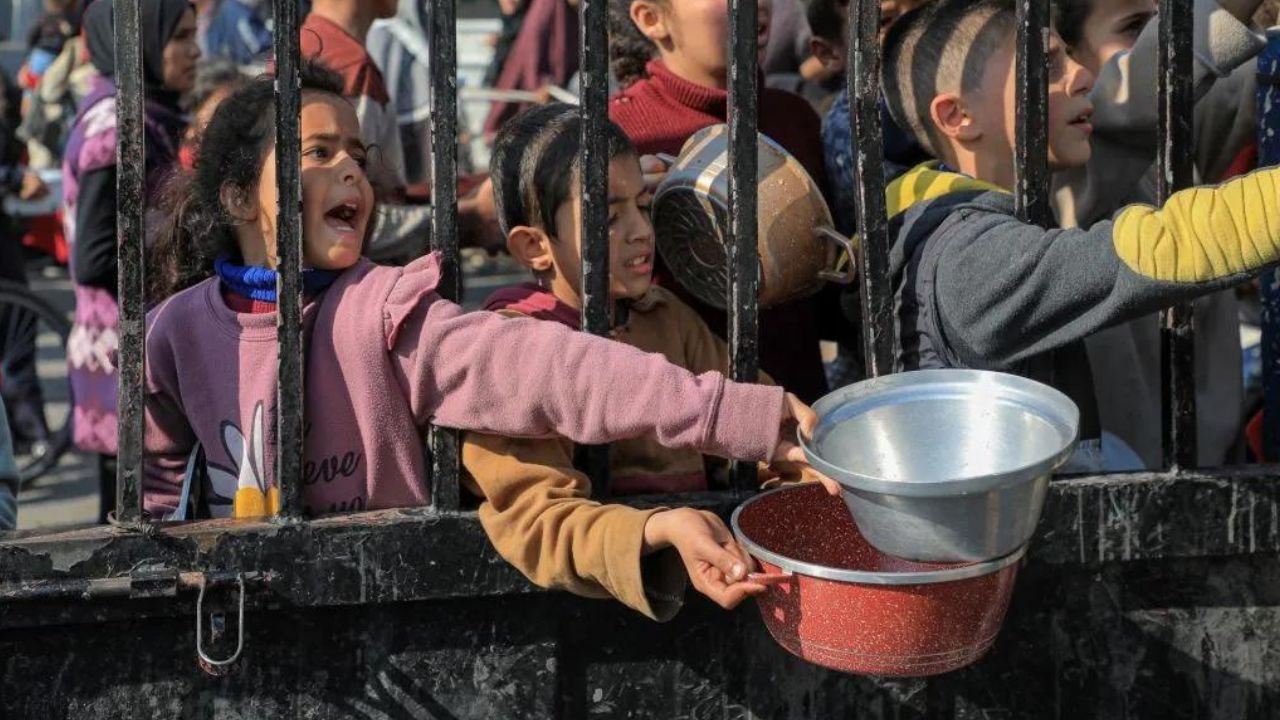
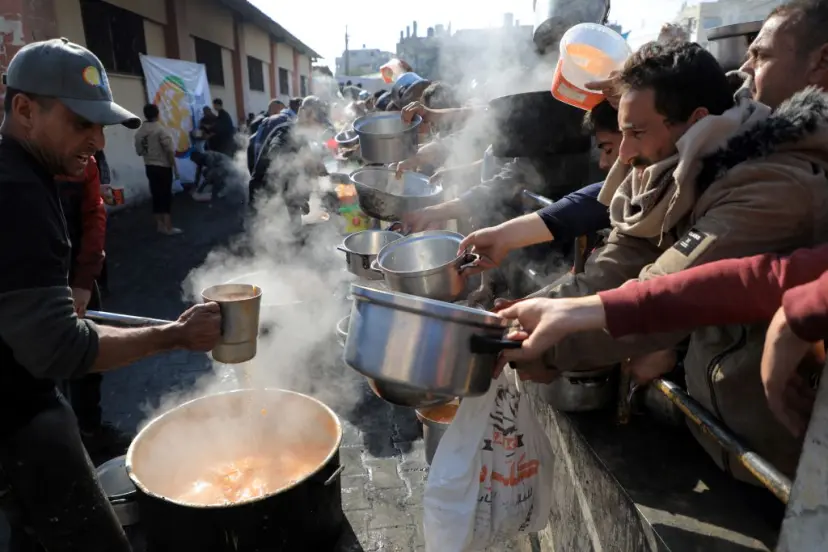
    As the war on Gaza extends into its 90th day, impending famine and starvation are haunting the besieged strip.

    According to an assessment of the integrated food security phase classification initiative, a UN-backed body that sets the international standard that determines the severity of the food crisis, food shortage in Gaza is solely a consequence of war. Before it began, about 150 to 180 food lorries entered Gaza every day. Since, the end of the “humanitarian pause” a month ago, only about 30 do so. They are blocked by Israeli bombardment, fighting on the ground, and by restrictions and inspections on the border with Egypt, imposed by the Israeli and Egyptian authorities, cites The Times.

    More than a million people are displaced in Gaza but none is safe from hunger. It is rampant in Gaza, it is in the wasteland of al-Mawasi encampment in Gaza where handfuls of dirty flour are kneaded by mothers to make bread for their children. It is in the fires, stoked with plastic bottles, which produce nothing but choking black smoke. Children in Gaza no longer play but lie around, exhausted by hunger. It is in food that is rotten and makes you sick but is eaten just the same.

    Camellia Subeh talked to The Times who stated that her breasts no longer produce milk for her baby son.⁠ “My other sons keep saying, ‘Mum, I’m dizzy, I have a headache,” said the mother of five, sitting outside a shelter she built on the mud from scraps of plastic and wood. Subeh and her children left their home in northern Gaza weeks ago on the instructions of the Israel Defence Forces (IDF). They said this is a safe area. Perhaps it is safe from the bombs that have destroyed Gaza’s cities and towns but not from hunger, diseases, or thirst that will kill just the same as a bullet will. “This place is like a desert, all sand,” Subeh said. “We are so tired.” The Palestinian death toll in the Gaza Strip after nearly three months of war stands at 21,672, with more than 55,000 wounded, the territory’s health ministry said on Saturday.

    A 13-year-old, Muhammad al-Yaziji, told The Times, “I feel that this burden is very heavy for us. We became like beggars. We were not like that.”

    In an interview with the New Yorker, Arif Hussain, the chief economist at the United Nations World Food Program explains that according to a consensus-based analysis by Integrated Phase Classification, the entire population of 2.2 million people is in a food-security crisis or a worse situation implying a famine is coming because the conditions are “catastrophic”.

    Human Rights Watch drew from Israeli officials’ statements, interviews with people in the territory about the lack of food, and evidence of bombardment that has destroyed infrastructure and resources to accuse Israel in a December report of starvation as a war crime.

  • Legendary singer Eric Clapton plans special concert for children of Gaza

    Legendary singer Eric Clapton plans special concert for children of Gaza

    In a heartfelt initiative to make a difference in the lives of the children of Gaza, legendary musician Eric Clapton is set to deliver a powerful message through the broadcast of his intimate concert, which took place in London in December 2023.

    Scheduled for airing on January 17th, the exclusive performance is not only a musical treat for fans but also a beacon of hope for a cause that has gone global.

    Eric Clapton’s concert, performed in front of a small, intimate audience, showcased the artist’s iconic songs such as Tears In Heaven, Got To Get Better In A Little While, and a poignant rendition of George Harrison’s Give Me Love (Give Me Peace On Earth) featuring Dhani Harrison.

    The carefully curated setlist not only resonates with Clapton’s musical prowess but also reflects the spirit of empathy and compassion that underscores the purpose of this unique broadcast.

    By choosing Gaza as the beneficiary, Clapton not only spotlights the urgent need for support but also invites viewers to contribute to a cause that transcends borders, fostering a collective effort to bring hope and relief to the young lives affected.

  • McDonald’s CEO admits markets in Middle East affected by boycott

    McDonald’s CEO admits markets in Middle East affected by boycott

    McDonald’s CEO Chris Kempczinski revealed on Thursday that a number of markets in the Middle East, and some beyond, were undergoing a “meaningful business impact” following the Israel-Hamas escalation and “associated misinformation” with regards to the brand.

    Since October 7, when Israel intensified its ground and air raids in Gaza and killed more than 22,000 people, several fast-food chains, including McDonald’s and Starbucks, have been boycotted by consumers due to their “pro-Israeli stance and alleged financial ties to Israel”.

    Kempczinski deems the “misinformation” regarding the brands “disheartening and ill-founded.”

    “In every country where we operate, including in Muslim countries, McDonald’s is proudly represented by local owner operators who work tirelessly to serve and support their communities while employing thousands of their fellow citizens,” Kempczinski said in a LinkedIn post.

    In October, following the escalation, McDonald’s Israel posted on social media that it gave thousands of free meals to Israel Defense Forces members.

    This move was repudiated by McDonald’s franchises in some Islamic states.

    Since then, many brands have felt the impact of boycotts in Egypt and Jordan as well as non-Arab countries like Muslim-majority Malaysia.

    Reuters reports that as of fiscal 2022, the company franchised and operated about 40,275 McDonald’s restaurants across more than 100 countries. The fast-food chain reported total annual revenue of $23.18 billion in the year.

    Shares of the company were down marginally in afternoon trading.