Tag: #palestine

  • Israel pulls out of Al-Shifa hospital after killing civilians, destroying buildings

    Israel pulls out of Al-Shifa hospital after killing civilians, destroying buildings

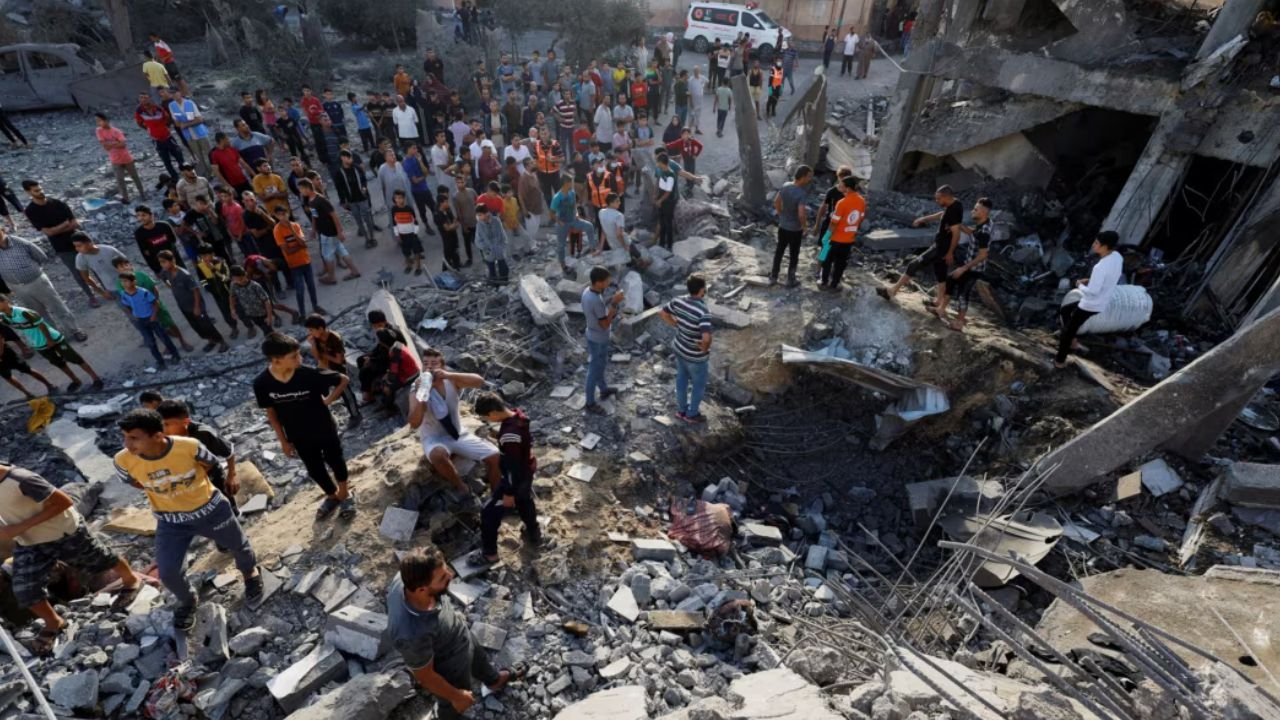
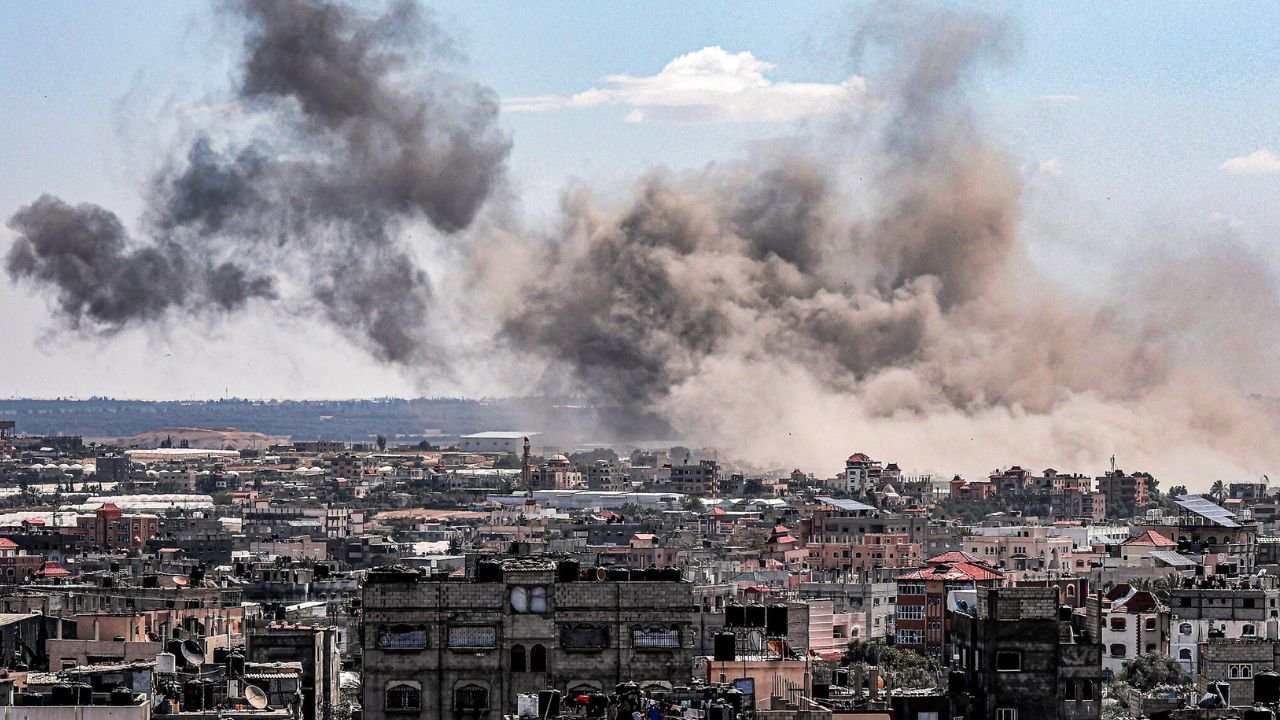
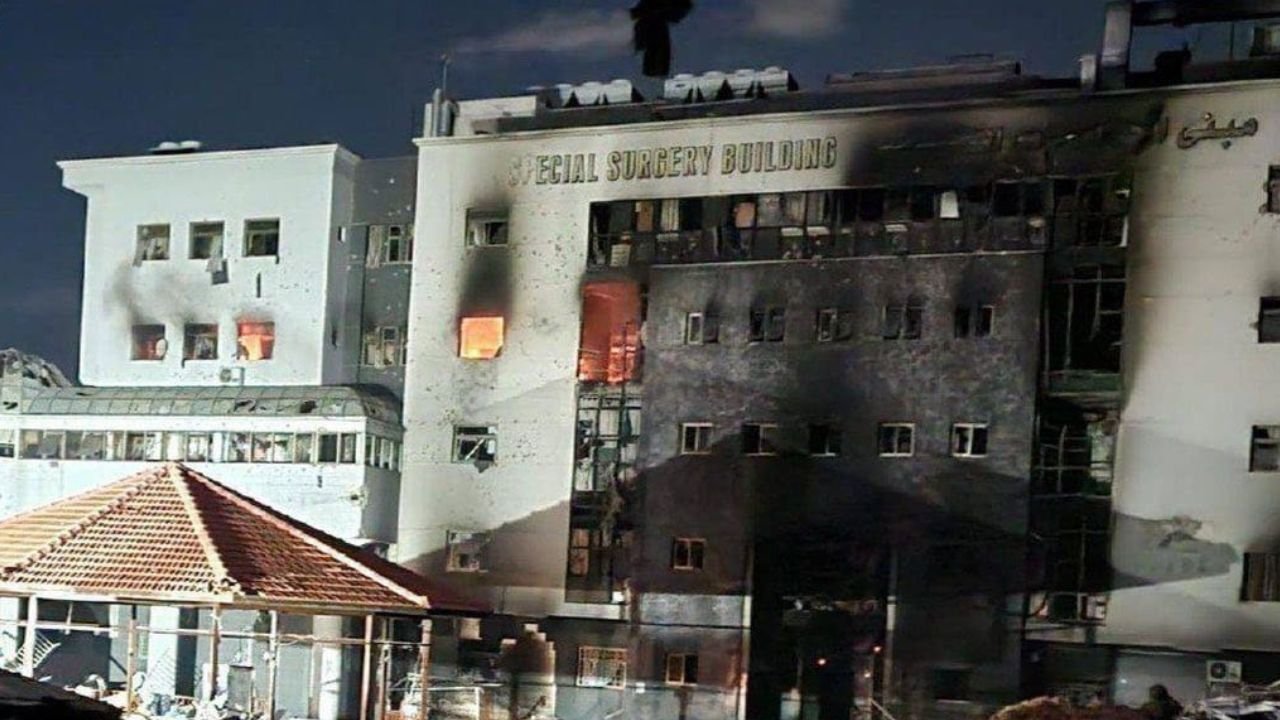
    Israeli forces on Monday pulled out of Gaza’s largest hospital complex after an intensive two-week military operation, leaving behind charred buildings and bodies strewn at the sprawling complex.

    Israel said it had battled Palestinian militants hiding inside Gaza City’s Al-Shifa Hospital, killed at least 200 fighters and recovered large stockpiles of weapons, explosives and cash.

    The health ministry in Gaza said that, after heavy Israeli air strikes and tank fire, “the scale of the destruction inside the complex and the buildings around it is very large”.

    “Dozens of bodies, some of them decomposed, have been recovered from in and around the Al-Shifa medical complex,” the ministry said, adding that the hospital was now “completely out of service”.

    A doctor told AFP more than 20 bodies had been recovered, some crushed by withdrawing vehicles.

    Israeli attacks have also flared around other Gaza hospitals almost six months since October 7 attacks which have destroyed swathes of the besieged coastal territory.

    The Hamas government press office said the army had blown up more than 20 houses within 24 hours in the main southern city of Khan Yunis, where battles have raged around the Nasser and Al-Amal hospitals.

    Israel destroys hospital

    Over the past two weeks, the Israeli army carried out what it labelled “precise operational activity” at the Al-Shifa complex, before declaring on Monday that the forces had withdrawn.

    The scene left behind was one of devastation, with windows blown out, concrete walls blackened and volunteers carrying away shrouded corpses across the sandy wasteland.

    Dozens of air strikes and shelling had hit the area around the complex in the morning, in heavy fire which the Hamas government media office said served to provide cover for the withdrawing troops and tanks.

    The army has in recent days released footage of its fighters moving through the hospital’s corridors, and pictures of large numbers of assault rifles, grenades and other weapons it said were recovered from the maternity ward.

    The military has said 200 Hamas fighters were killed in fighting in and around Al-Shifa.

    Hamas has denied operating from Al-Shifa and other health facilities.

    An Israeli strike also hit “a tent camp” inside central Gaza’s Al-Aqsa hospital compound, killing four people, said World Health Organization chief Tedros Adhanom Ghebreyesus on social media platform X.

  • New Palestinian government gets wary greeting

    New Palestinian government gets wary greeting

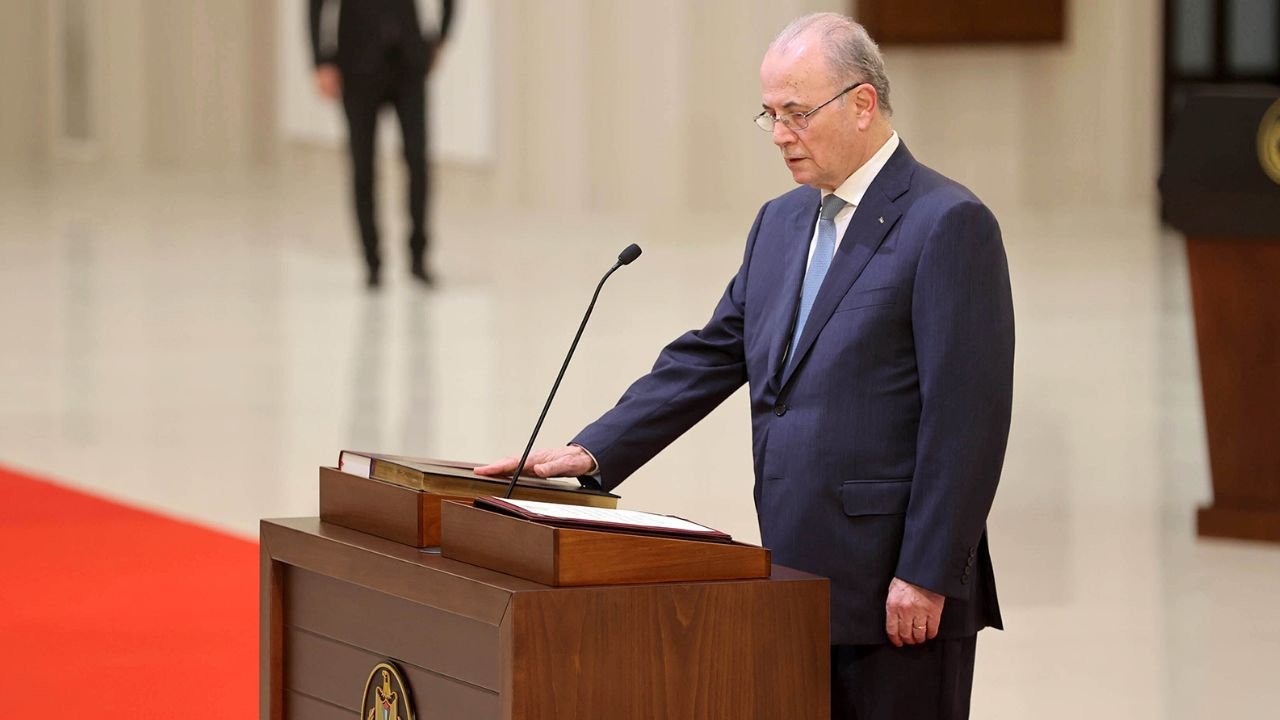
    Ramallah (Palestinian Territories) (AFP) – A new Palestinian government that contains both Gazans and four women was sworn in Sunday, but was already facing scepticism from its own people.

    The Palestinian Authority led by Mahmud Abbas is under pressure from Washington to prepare to step into the breach in the aftermath of the Gaza war and undertake reforms.

    Newly-appointed prime minister Mohammed Mustafa said his government’s “top national priority” was ending the war as he named his new team.

    He said his cabinet “will work on formulating visions to reunify the institutions, including assuming responsibility for Gaza”.

    President Abbas, 88, is being nudged by the United States to shake the creaking authority up so it can reunite the occupied West Bank and the devastated Gaza Strip under a single rule after the war.

    The Palestinian Authority has had almost no influence over the Gaza Strip since Hamas took power there in 2007 from Abbas’s Fatah party.

    Secretary of State Antony Blinken urged Abbas to make “administrative reforms” when the two men met in January.

    Abbas’s Ramallah-based administration has been hamstrung by Israel’s decades-old occupation of the West Bank and his own unpopularity.

    Mustafa, an economist and longtime Abbas advisor, said the “reconstruction” of the Palestinian territories was his main goal, with Gaza in ruins after six months of Israeli bombardment in retaliation for the October 7 attack.

    His new cabinet is made up of 23 ministers and includes four women and six ministers from Gaza, among them former Gaza City mayor Maged Abu Ramadan who has been given the health portfolio.

    Among the new female faces is Varsen Aghabekian, a Palestinian-Armenian academic who will work alongside Mustafa in the foreign ministry, which he also controls.

    ‘Deepen divisions’

    The premier, who previously worked for the World Bank, said the thorny issue of Israeli-annexed east Jerusalem was also a top priority along with the “fight against corruption”.

    But many doubt whether the Palestinian Authority — which has been dogged by divisions, corruption scandals and the authoritarian tendencies of its ageing leader — can be a credible player in any future deal.

    Ali Jarbawi, a former PA minister and political scientist, said it faces massive challenges on all fronts.

    “It is broke and it’s in debt and can’t pay its salaries, so it needs immediate financial support,” he said.

    And it needs to be accepted by both Palestinian factions — Fatah which controls the West Bank and Hamas in Gaza.

    “Thirdly it needs a political horizon, from the international community, and a commitment to the two-state solution,” Jarbawi said.

    And none of that can happen unless the “Israeli government, the army and settlers in the West Bank ease the pressure” on Palestinians, he added.

    Senior Hamas member Bassem Naim criticised Abbas’s policies.

    “His hijacking of the unified Palestinian decision-making” is dangerous for “our cause at this very critical stage in the history of our people,” he told AFP.

    He said Hamas “proposed sitting down for the sake of national dialogue and rebuilding the political system… but Abbas blocked all these attempts.”

    Hamas, Islamic Jihad and the Marxist Popular Front for the Liberation of Palestine issued a joint statement earlier this month declaring that Mustafa’s appointment would only deepen Palestinian divisions.

    People on the streets of Ramallah, where the authority is based, were equally sceptical.

    “Changing the government will not solve anything because change to us comes only from the outside,” said Suleiman Nassar, 56.

    “We know very well that any minister or any Palestinian government will not get in without an American or Israeli” approval he said.

  • Israel’s Netanyahu approves new Gaza ceasefire talks

    Israel’s Netanyahu approves new Gaza ceasefire talks

    Palestinian Territories – Israeli Prime Minister Benjamin Netanyahu gave the go-ahead Friday for a new round of talks on a Gaza ceasefire, a day after the world’s top court ordered Israel to ensure aid reaches desperate civilians.

    But despite a binding UN Security Council resolution earlier this week demanding an “immediate ceasefire”, fighting raged on unabated in Gaza Friday, including around its few functioning hospitals.

    The health ministry said dozens of people were killed overnight.

    Among them were 12 people killed in their home in the southern city of Rafah, which has been bombed repeatedly ahead of a threatened Israeli ground operation.

    Men worked under the light of mobile phones to free people trapped under the debris, AFPTV images showed.

    Regional fallout from the conflict also flared, with Israel saying it killed a Hezbollah rocket commander in Lebanon and a war monitor saying that Israeli air strikes killed several Hezbollah fighters in Syria.

    Netanyahu’s office said new talks on a Gaza ceasefire and hostage release will take place in Doha and Cairo “in the coming days… with guidelines for moving forward in the negotiations”.

    Those talks had appeared deadlocked in recent days despite a major push by the United States and fellow mediators Egypt and Qatar to secure a truce in time for the Muslim fasting month of Ramadan, now more than half way through.

    – Famine ‘setting in’ –

    In its ruling, the International Court of Justice (ICJ) in The Hague said it had accepted South Africa’s argument that the further deterioration of the humanitarian situation in Gaza required Israel to do more.

    “Palestinians in Gaza are no longer facing only a risk of famine, but… famine is setting in,” it said.

    Philippe Lazzarini, head of the UN agency for Palestinian refugees, said the ruling was “a stark reminder that the catastrophic humanitarian situation in the Gaza Strip is man-made (and) worsening”.

    A UN-backed report released last week warned that half of Gazans are feeling “catastrophic” hunger and projected imminent famine in the territory’s north.

    The Israeli defence ministry body responsible for Palestinian civil affairs (COGAT) hit back on Friday, alleging the assessment contained inaccuracies and questionable sources.

    The ICJ had ruled in January that Israel must facilitate “urgently needed” humanitarian aid to Gaza.

    The latest binding ruling by the court, which has little means of enforcement, came as Israel’s military said it was continuing operations in Gaza’s largest hospital Al-Shifa for a 12th day.

    Fighting around Gaza hospitals

    The United Nations says Gaza’s health system is collapsing “due to ongoing hostilities and access constraints”.

    Israel’s military accuses Hamas of hiding inside medical facilities, using patients, staff and displaced people for cover — charges the militants have denied.

    On Friday the army said it was “continuing precise operation activities in Shifa Hospital” where it began a raid early last week.

    Troops first raided Al-Shifa in November, but the army says Palestinian militants have since returned.

    About 200 militants have been killed during the latest Al-Shifa operation, it said.

    In north Gaza’s Shati refugee camp, Amany, a 44-year-old mother of seven, described how it felt to live under relentless Israeli bombardment.

    “Explosions and air strikes go on throughout the night, it’s petrifying,” she said. “I feel like I’m living a continuous nightmare that doesn’t want to end.”

    Netanyahu said on Thursday that troops “are holding the northern Gaza Strip” and also the southern city of Khan Yunis, amid heavy fighting.

    Near Al-Amal Hospital in Khan Yunis, troops carried out “targeted raids on terrorist infrastructure”, killing dozens in combat backed by air support, the army said on Thursday.

    Israeli tanks have also surrounded another Khan Yunis health facility, the Nasser Hospital, the Gaza health ministry said.

    Syria, Lebanon strikes

    Israel’s intensified attacks in Gaza have killed at least 32,623 people since October 7, mostly women and children, according to health ministry figures.

    Palestinian militants also seized about 250 hostages. Israel believes about 130 remain in Gaza, including 33 who are presumed dead.

    Since the Gaza war began, Israel has increased its strikes in Syria, targeting army positions and forces including Lebanon’s Hezbollah movement.

    A Britain-based war monitor, the Syrian Observatory for Human Rights, said Israeli air strikes killed seven Hezbollah fighters.

    The Israeli military said it killed the deputy commander of Hezbollah’s rocket unit in south Lebanon, Ali Abdel Hassan Naim, in an air strike.

    Israeli Defence Minister Yoav Gallant toured the army’s northern command on Friday “to closely examine another successful termination like the one that was executed this morning”, he said in a post.

    Gallant said the army would keep up its operations against Hezbollah, and its leader Hassan Nasrallah was to blame for the consequences, including members killed and wounded.

    “We will make them pay a price for every attack that comes out from Lebanon,” he said.

    Recent days have seen an uptick in deadly exchanges, and the White House has called on both Israel and Lebanon to put a high priority on restoring calm.

    burs-kir/hkb

    © Agence France-Presse

  • No change in Gaza since UN ceasefire vote: MSF

    No change in Gaza since UN ceasefire vote: MSF

    The MSF medical charity lamented Thursday that nothing had changed on the ground in genocide ravaged Gaza since the United Nations Security Council resolution this week demanding an “immediate ceasefire”.

    After more than five months of war, the UN Security Council for the first time Monday demanded an immediate ceasefire in Gaza after Israel’s ally the United States, which vetoed previous drafts, abstained.

    That resolution demanded an “immediate ceasefire” for the ongoing Muslim holy month of Ramadan, leading to a “lasting” truce.

    But since then, “we haven’t seen any change after this resolution on the ground,” Christos Christou, MSF’s international president, told AFP in an interview.

    “We haven’t seen any impact in… people’s lives there every day; we haven’t seen an impact in our world, (and the) ways of delivering the humanitarian aid,” he said.

    “The situation remains the same.”

    And Christou stressed that MSF’s demands also remained unchanged.

    What was needed, he said, was an immediate and lasting ceasefire, a halt to all attacks on medical installations and personnel, and “unhindered humanitarian aid in Gaza”.

    For now, he acknowledged that “our efforts are just a little drop in the ocean of needs”.

    MSF still has local and international staff working in the few hospitals that are still functioning in Gaza.

    The organisation is among other things working to care for women after they undergo a caesarian section.

    He pointed out that in many cases, women who gave birth via a caesarian section were “literally kicked out of the hospital after a couple of hours because there were no beds”.

    “MSF has increased the capacity of beds in order to offer at least some quality of care to these women,” he said.

    Israel’s intensified attacks have killed at least 32,552 people, mostly women and children, according to the health ministry in Gaza.

    Christou said MSF was “extremely worried” about Israeli plans to push its ground offensive into Rafah, Gaza’s southernmost city which is packed with some 1.5 million people, many of them displaced from other parts of the territory.

    “This would be really catastrophic.”

  • Teens in Gaza hoping to be killed to end their ‘nightmare’: UN

    Teens in Gaza hoping to be killed to end their ‘nightmare’: UN

    The situation in genocide-ravaged Gaza is so desperate that teenagers are now saying they hope to be swiftly killed to escape the “nightmare”, a spokesman for the UN children’s agency said Tuesday.

    “The unspeakable is regularly said in Gaza,” said James Elder, spokesman for the United Nations children’s agency UNICEF.

    Speaking to journalists in Geneva via video message from Rafah in southern Gaza, he said the agency had on Monday held a meeting with adolescents.

    Several said they were “so desperate for this nightmare to end that they hoped to be killed”, he said.

    Israel’s intense attacks in Gaza have killed at least 32,333 people, most of them women and children, according to the health ministry.

    The UN has warned that Gaza is facing a looming famine, spurring increasingly urgent appeals for Israel to open up more border crossings and to stop hampering the movement of aid through the Palestinians territory.

    The Israelis “have a right to control. They inspect every single gram, litre, kilo of whatever goes into Gaza,” Jens Laerke, spokesman for the UN humanitarian agency, told reporters.

    “But they cannot say that once it’s inside, we leave it with you. They must create this enabling environment that allows us to move it around.”

    “We need to dispel this notion that their obligation with getting aid in somehow stops with getting a few trucks, a fraction of what is needed, across the border,” he said.

    “That is not correct.”

    Elder meanwhile pointed out that the Israelis had denied a quarter of the 40 mission requests to the north since the beginning of the month.

    “Now there is an existing old crossing point that could be used in the north 10 minutes from where those people are putting their hands to their mouth pleading for food,” he said, referring to the Erez Crossing.

    “10 minutes. Open that and we could turn this humanitarian crisis around in a matter of days. But it remains closed.”

    “Let’s be clear, life-saving aid is being obstructed, lives are being lost, dignity is being denied.”

  • Struggling for a can of food: starving Gazans scramble for aid drops

    Struggling for a can of food: starving Gazans scramble for aid drops

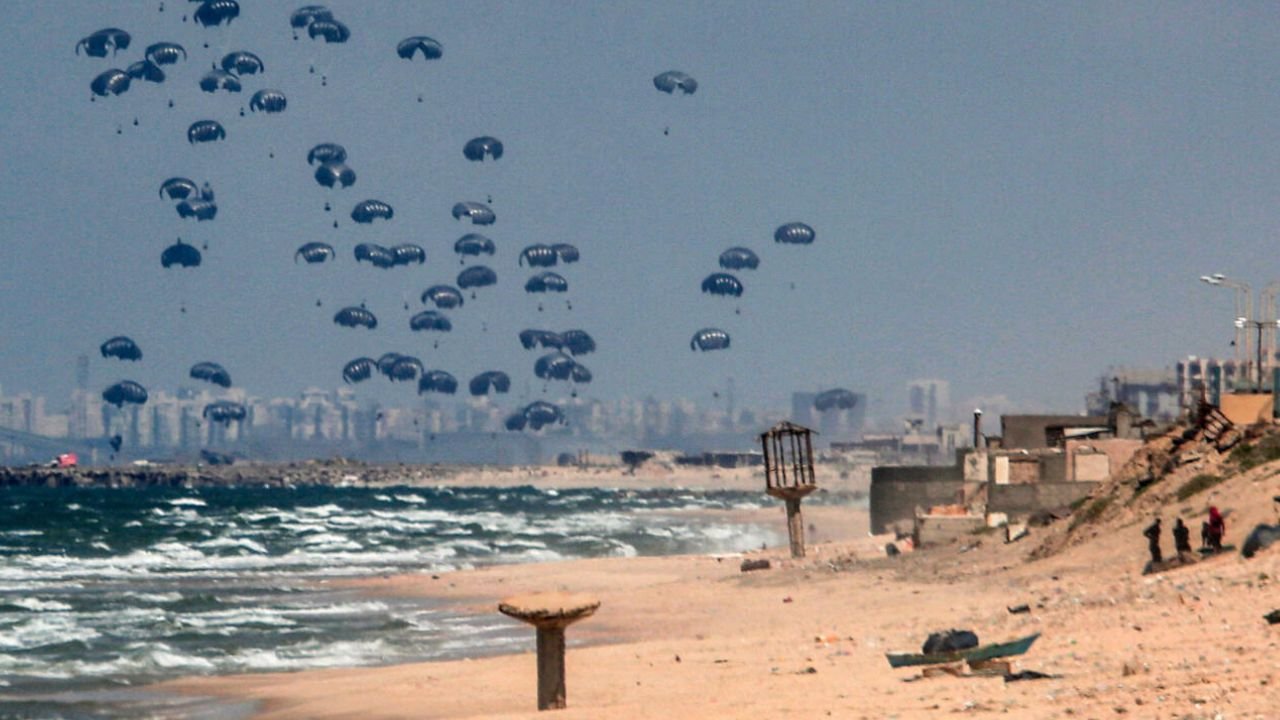
    A military plane banked over the war-ravaged ruins of Gaza City dropping dozens of black parachutes carrying food aid.

    On the ground, where almost no building within sight was still standing, hungry men and boys raced towards the beach where most of the aid seemed to have landed.

    Dozens of them jostled intensely to get to the food, with scrums forming up and down the rubble-strewn dunes.

    “People are dying just to get a can of tuna,” said Mohamad al-Sabaawi, carrying an almost empty bag on his shoulder, a young boy beside him.

    “The situation is tragic, as if we are in a famine. What can we do? They mock us by giving us a small can of tuna.”

    Aid groups say only a fraction of the supplies required to meet basic humanitarian needs have arrived in Gaza since October, while the UN has warned of famine in the north of the territory by May without urgent intervention.

    The aid entering the Gaza Strip by land is far below pre-war levels, at around 150 vehicles a day compared to at least 500 before the war, according to UNRWA, the UN agency for Palestinian refugees.

    With Gazans increasingly desperate, foreign governments have turned to airdrops, in particular in the hard-to-reach northern parts of the territory including Gaza City.

    The United States, France and Jordan are among several countries conducting airdrops to people living within the ruins of what was the besieged territory’s biggest city.

    But the aircrews themselves told AFP that the drops were insufficient.

    US Air Force Lieutenant Colonel Jeremy Anderson noted earlier this month that what they were able to deliver was only a “drop in the bucket” of what was needed.

    The air operation has also been marred by deaths. Five people on the ground were killed by one drop and 10 others injured after parachutes malfunctioned, according to a medic in Gaza.

    Calls have mounted for Israel to allow in more aid overland, while Israel has blamed the UN and UNRWA for not distributing aid in Gaza.

    “Palestinians in Gaza desperately need what has been promised — a flood of aid. Not trickles. Not drops,” UN chief Antonio Guterres said on Sunday after visiting Gaza’s southern border crossing with Egypt at Rafah.

    “Looking at Gaza, it almost appears that the four horsemen of war, famine, conquest and death are galloping across it,” he added.

    Israel has intensified its attacks in Gaza, killing at least 32,333 people, according to the health ministry in Gaza.

    Returning home in Gaza City with little to keep his family going, another Palestinian man said their situation was miserable.

    “We are the people of Gaza, waiting for aid drops, willing to die to get a can of beans — which we then share among 18 people,” he said.

  • No let-up in genocide in Gaza despite UN ceasefire resolution

    No let-up in genocide in Gaza despite UN ceasefire resolution

    Palestinian Territories – Israeli attacked Gaza on Tuesday, with no sign of a let-up in the war despite a UN Security Council resolution demanding an “immediate ceasefire”.

    The resolution was adopted on Monday after Israel’s closest ally the United States abstained amid growing concern for the worsening humanitarian situation after nearly six months of war.

    The text demands an “immediate ceasefire” for the ongoing Muslim holy month of Ramadan, leading to a “lasting” truce.

    It also demands that Hamas and other militants free hostages they took during the unprecedented October 7 attacks on Israel, though it does not directly link the release to a truce.

    In Gaza, there was intense fighting overnight, with Israeli operations in and around at least three major hospitals in the besieged territory.

    The Israeli military said its jets had struck more than 60 targets in Gaza in the past day, including tunnels, infrastructure and military structures “in which armed terrorists were identified”.

    The health ministry in the territory said 70 people were killed early Tuesday, 13 of them in Israeli air strikes around the southern city of Rafah.

    The Israeli military said air raid sirens sounded in areas near the Gaza border.

    The Security Council resolution was the first since the Gaza war erupted to demand an immediate halt in the fighting.

    After the vote, UN chief Antonio Guterres led calls for the resolution to be implemented. “Failure would be unforgivable,” he said on social media platform X.

    Israel reacted furiously to the US abstention, while Washington insisted that it did not mark a shift in policy, although it has taken a tougher line with Israel in recent weeks.

    The United States had previously vetoed successive draft resolutions calling for a ceasefire, but it has become increasingly concerned by the dire humanitarian situation in Gaza, where the United Nations has warned of famine in the north by May if urgent action isn’t taken.

    The Gaza health ministry said seven people had drowned in the Mediterranean trying to reach aid airdropped into the territory.

    Washington has also baulked at Israeli Prime Minister Benjamin’s determination to launch an assault on Rafah, the last major population centre still untouched by Israeli ground troops where most of Gaza’s population has sought refuge from the fighting.

    ‘Absolute interest’

    In protest at the United States’ abstention in the UN vote, which it said “hurts” both its war effort and attempts to release hostages, Israel cancelled a planned visit to Washington by a high-ranking delegation.

    Israel’s intensified attacks in Gaza killed at least 32,333 people in Gaza, most of them women and children, according to the health ministry.

    Hamas welcomed the Security Council resolution and reaffirmed its readiness to negotiate the release of hostages in exchange for Palestinian prisoners held by Israel.

    In a statement, the militant group blamed Israel for the failure to make progress in the latest round of talks hosted by mediator Qatar.

    Hamas said Netanyahu and his cabinet were “entirely responsible for the failure of negotiation efforts and for preventing an agreement from being reached up until now”.

    Netanyahu’s office hit back on X, charging that Hamas was “not interested in continuing negotiations” as it had been emboldened by the Security Council vote.

    Hamas leader Ismail Haniyeh was in Tehran on Tuesday for talks with Iranian officials, state media reported.

    It is Haniyeh’s second visit to key backer Iran since the start of the war.

    In the occupied West Bank, German Foreign Minister Annalena Baerbock met Palestinian president Mahmud Abbas.

    She welcomed the Security Council resolution and said it was “in the absolute interest of the people of Israel that we come to a ceasefire now so that the hostages can be released.”

    Hospital battles

    On the ground in Gaza, the fighting raged on unabated.

    Dozens of Israeli tanks and armoured vehicles surrounded the Nasser Hospital in the southern city of Khan Yunis, where thousands of displaced people have sought refuge, witnesses said.

    The health ministry said  shots were being fired around the sprawling complex, but no raid had yet taken place.

    At Gaza City’s Al-Shifa Hospital, the territory’s largest, Israeli troops have been involved in heavy fighting for the past nine days. Israel claims to have killed 170 Palestinian militants and arrested hundreds of others.

    And on Monday, the Israeli military reported killing about 20 fighters around Al-Amal Hospital, also in Khan Yunis, over the previous day in close-quarters combat and air strikes.

    Israel has labelled its operations “precise operational activities” and said it has taken care to avoid harm to civilians, but aid agencies have voiced concern for non-combatants caught up in the fighting.

    Palestinians living near Al-Shifa have reported corpses in the streets, constant bombardment and the rounding up of men who are stripped to their underwear and questioned.

    Palestinians in Rafah welcomed the UN vote and called on Washington to use its influence with Israel to ensure the resolution is implemented.

    Bilal Awad, 63, said Washington must “stand against an attack on Rafah, and support the return of the displaced to their cities”.

    Ihab al-Assar, 60, expressed hope that “Israel will comply” with the Security Council text.

    The fighting came as an independent UN-appointed expert, Francesca Albanese, said there were “reasonable grounds to believe” Israel’s actions in Gaza had met the threshold for “acts of genocide”.

    Israel rejected Albanese’s report, due to be presented to the UN Human Rights Council on Tuesday, as an “obscene inversion of reality”.

    bur-ser-dcp/kir

    © Agence France-Presse
  • Israel tanks surround Gaza’s Nasser Hospital: witnesses

    Israel tanks surround Gaza’s Nasser Hospital: witnesses

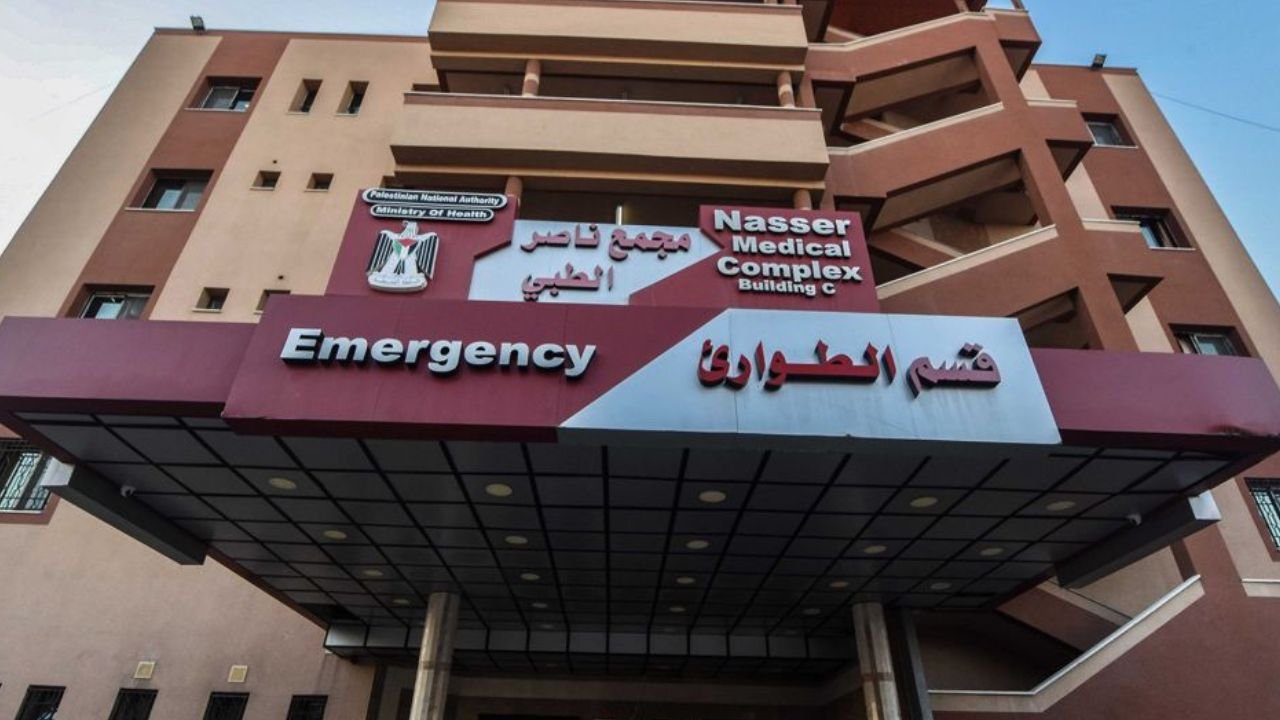
    Palestinian Territories – Dozens of Israeli tanks and armoured vehicles surrounded the Nasser Hospital in Gaza Tuesday, where thousands of displaced people have sought refuge from the fighting, witnesses said.

    Witnesses told AFP that shots were being fired at the sprawling complex in the southern city of Khan Yunis, but no raid was as yet taking place.

    Gaza’s health ministry said Israeli troops were shooting and firing “shells and (conducting) violent raids in its surroundings in preparation for its storming”.

    “Thousands of displaced people are still inside the hospital,” the ministry said. “They do not have sufficient quantities of drinking water, food and infant formula, and their lives are in danger.”

    The Israeli army did not immediately respond to an AFP request for comment.

    For the past nine days, Israeli troops have been involved in heavy fighting in and around Gaza City’s Al-Shifa Hospital, the territory’s biggest. They claim to have killed 170 Palestinian militants there and arrested hundreds of others.

  • Hamas welcomes China, Russia veto of US-backed Gaza resolution

    Hamas has reportedly shown “appreciation” as Russia and China vetoed a US-led draft resolution on a Gaza ‘ceasefire’ at the UN Security Council on Friday.

    The United States proposed a resolution endorsing “the urgent need for an immediate and enduring ceasefire” and, notably, condemning the October 7 attack carried out by Hamas for the first time.

    “We express our appreciation for the position of Russia, China and Algeria who rejected the biased American resolution of aggression against our people,” the Hamas said in a statement.

    They added that the draft consists of “misleading wording that is complicit” with Israel and “grants it cover and legitimacy to commit a genocidal war against the Palestinian people in the Gaza Strip.”

    On the other hand, prior to the vote, Russia’s ambassador to the UN, Vassily Nebenzia, urged members against endorsing the resolution, deeming it as “excessively politicized” and implying it endorsed Israeli military operations in Rafah, Gaza, where more than half of its 2.3 million residents sought shelter in camps to escape the Israeli offensive in the northern regions.

    Nebenzia asserted that several non-permanent Security Council members had crafted an alternative resolution, which he portrayed as a fair proposal, calling on all members to support it.

  • Israeli military wants evacuation of Al-Shifa Hospital in Gaza

    Israeli military wants evacuation of Al-Shifa Hospital in Gaza

    Al Jazeera has reported that according to Hani Mahmoud, their colleague reporting from Gaza, the Israeli army has given a notice to forcefully displaced people to immediately leave Al-Shifa Medical Complex or the premises will be bombed.

    Mahmoud suggests that based on past bombing patterns, the entire hospital complex is at risk of destruction at the hands of the Israeli army.

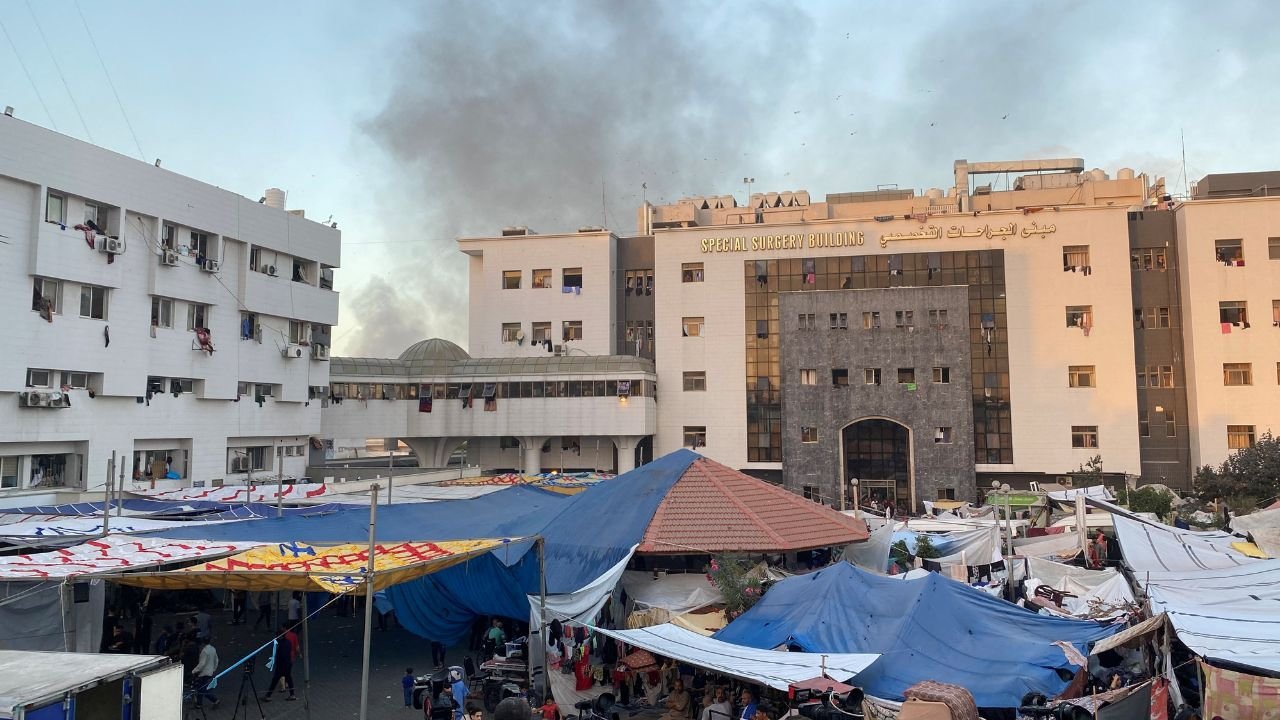
    Al Jazeera also reports that as per local Palestinian media reports that a building used for specialised care within al-Shifa Hospital has been destroyed by the Israeli military.

    The military justified the raid on Monday by claiming according to intelligence, Hamas fighters were using the hospital complex for shelter. During the raid, approximately 90 Palestinians were killed, 300 suspects were interrogated, and over 160 were detained.

    Israel is continuing with its policies of destroying all infrastructure in Gaza, including health institutions, to force the strip to become completely uninhabitable.