Tag: Palestinian Authority

  • Hamas announces ‘national unity’ deal with Palestinian rivals

    Hamas announces ‘national unity’ deal with Palestinian rivals

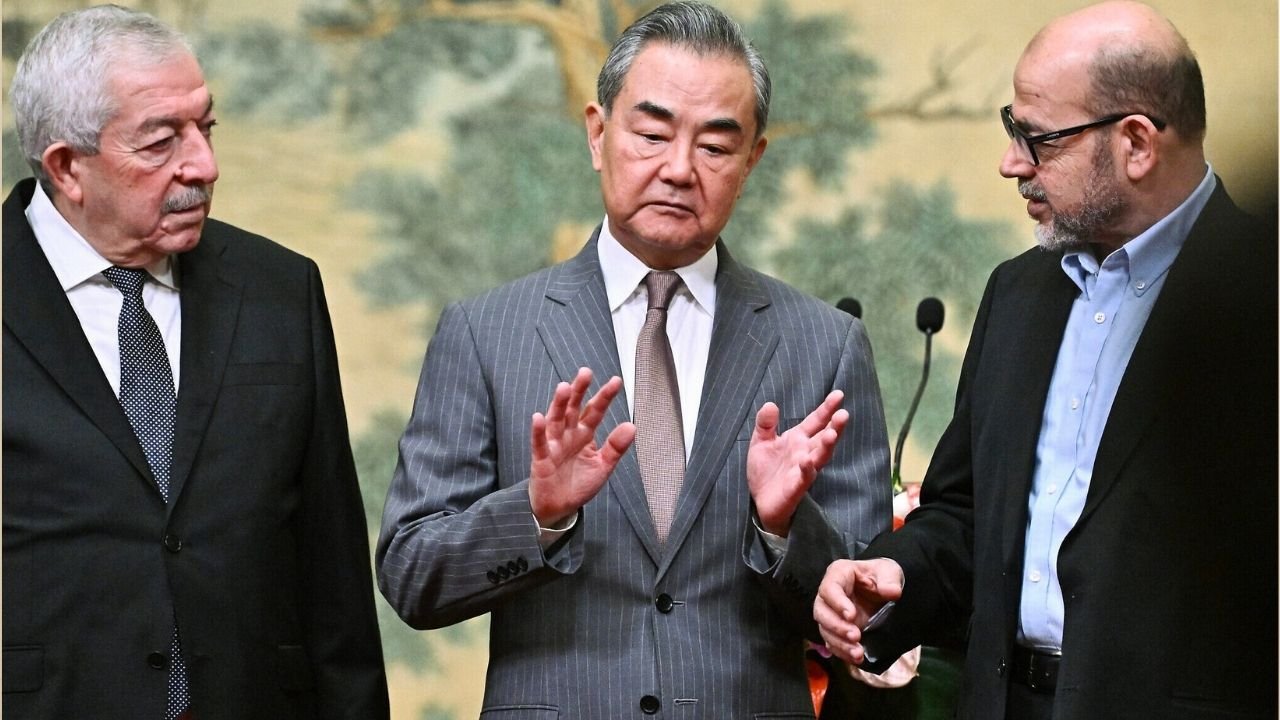
    Hamas announced Tuesday it had signed an agreement in Beijing with other Palestinian organizations, including rivals Fatah, to work together for “national unity”, with China describing it as a deal to rule Gaza together once the war ends.

    Chinese Foreign Minister Wang Yi, who hosted senior Hamas official Musa Abu Marzuk, Fatah envoy Mahmud al-Aloul and emissaries from 12 other Palestinian groups, said they had agreed to set up an “interim national reconciliation government” to govern post-war Gaza. “Today we sign an agreement for national unity and we say that the path to completing this journey is national unity. We are committed to national unity and we call for it,”

    Abu Marzuk said after meeting Wang and the other envoys. The announcement comes more than nine months into the genocide.

    Israel’s retaliatory military campaign in Gaza has killed more than 39,000 people, also mostly civilians, according to data from the health ministry in Gaza.

    The relentless fighting has plunged Gaza into a severe humanitarian crisis. China has sought to play a mediator role in the conflict, which has been rendered even more complex due to the intense rivalry between Hamas, which rules the Gaza Strip, and Fatah, which partially governs the occupied West Bank.

    Israel has vowed to keep fighting until it destroys Hamas, and world powers, including key Israeli backer the United States, have scrambled to imagine scenarios for the governance of Gaza once the war ends. As Tuesday’s meeting wrapped up in Beijing, Wang said the groups had committed to “reconciliation”.

    “The most prominent highlight is the agreement to form an interim national reconciliation government around the governance of post-war Gaza,” Wang said following the signing of the “Beijing Declaration” by the factions in the Chinese capital.

    “Reconciliation is an internal matter for the Palestinian factions, but at the same time, it cannot be achieved without the support of the international community,” Wang said. China, he added, was keen to “play a constructive role in safeguarding peace and stability in the Middle East”. Beijing, Wang said, called for a “comprehensive, lasting and sustainable ceasefire”, as well as efforts to promote Palestinian self-governance and full recognition of a Palestinian state at the UN.

    Hamas and Fatah have been bitter rivals since Hamas fighters ejected Fatah from the Gaza Strip after deadly clashes that followed Hamas’s resounding victory in a 2006 election.

    Fatah controls the Palestinian Authority, which has partial administrative control in the Israeli-occupied West Bank. Several reconciliation bids have failed, but calls have grown since October 7, with violence also soaring in the West Bank, where Fatah is based.

    China hosted Fatah and Hamas in April, but a meeting scheduled for June was postponed. China has historically been sympathetic to the Palestinian cause and supportive of a two-state solution to the Israeli-Palestinian conflict.
  • New Palestinian government gets wary greeting

    New Palestinian government gets wary greeting

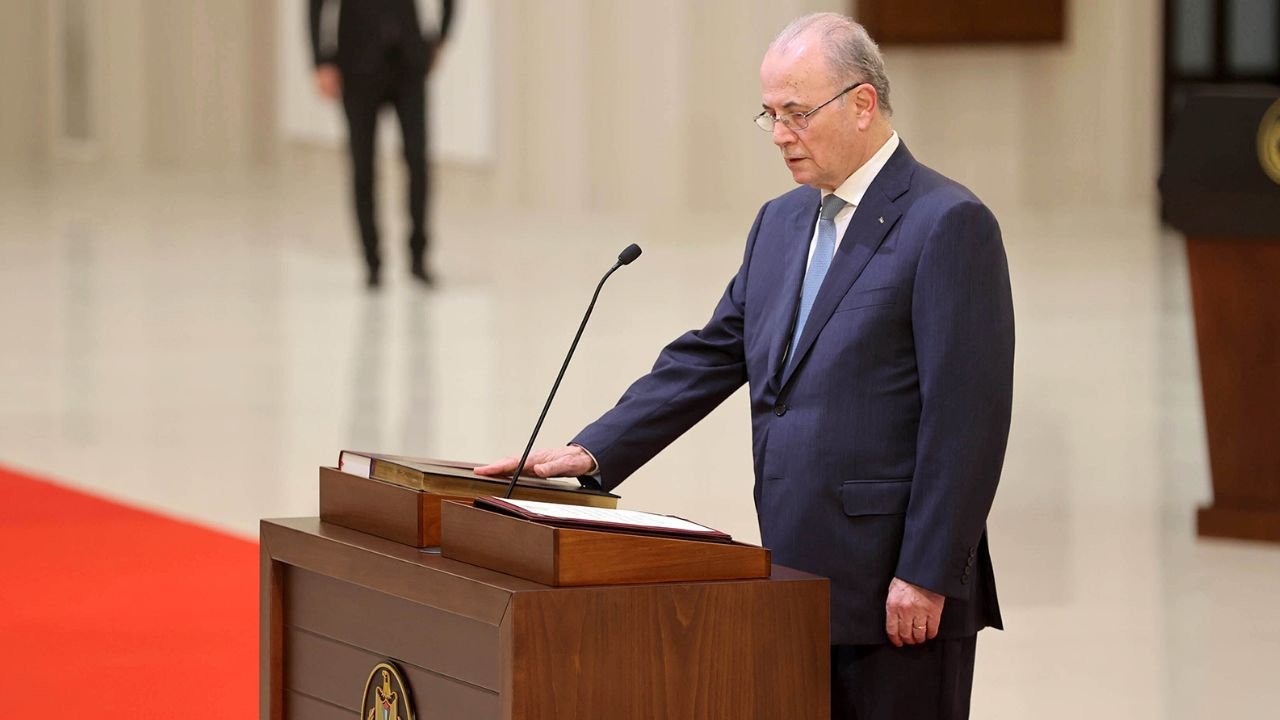
    Ramallah (Palestinian Territories) (AFP) – A new Palestinian government that contains both Gazans and four women was sworn in Sunday, but was already facing scepticism from its own people.

    The Palestinian Authority led by Mahmud Abbas is under pressure from Washington to prepare to step into the breach in the aftermath of the Gaza war and undertake reforms.

    Newly-appointed prime minister Mohammed Mustafa said his government’s “top national priority” was ending the war as he named his new team.

    He said his cabinet “will work on formulating visions to reunify the institutions, including assuming responsibility for Gaza”.

    President Abbas, 88, is being nudged by the United States to shake the creaking authority up so it can reunite the occupied West Bank and the devastated Gaza Strip under a single rule after the war.

    The Palestinian Authority has had almost no influence over the Gaza Strip since Hamas took power there in 2007 from Abbas’s Fatah party.

    Secretary of State Antony Blinken urged Abbas to make “administrative reforms” when the two men met in January.

    Abbas’s Ramallah-based administration has been hamstrung by Israel’s decades-old occupation of the West Bank and his own unpopularity.

    Mustafa, an economist and longtime Abbas advisor, said the “reconstruction” of the Palestinian territories was his main goal, with Gaza in ruins after six months of Israeli bombardment in retaliation for the October 7 attack.

    His new cabinet is made up of 23 ministers and includes four women and six ministers from Gaza, among them former Gaza City mayor Maged Abu Ramadan who has been given the health portfolio.

    Among the new female faces is Varsen Aghabekian, a Palestinian-Armenian academic who will work alongside Mustafa in the foreign ministry, which he also controls.

    ‘Deepen divisions’

    The premier, who previously worked for the World Bank, said the thorny issue of Israeli-annexed east Jerusalem was also a top priority along with the “fight against corruption”.

    But many doubt whether the Palestinian Authority — which has been dogged by divisions, corruption scandals and the authoritarian tendencies of its ageing leader — can be a credible player in any future deal.

    Ali Jarbawi, a former PA minister and political scientist, said it faces massive challenges on all fronts.

    “It is broke and it’s in debt and can’t pay its salaries, so it needs immediate financial support,” he said.

    And it needs to be accepted by both Palestinian factions — Fatah which controls the West Bank and Hamas in Gaza.

    “Thirdly it needs a political horizon, from the international community, and a commitment to the two-state solution,” Jarbawi said.

    And none of that can happen unless the “Israeli government, the army and settlers in the West Bank ease the pressure” on Palestinians, he added.

    Senior Hamas member Bassem Naim criticised Abbas’s policies.

    “His hijacking of the unified Palestinian decision-making” is dangerous for “our cause at this very critical stage in the history of our people,” he told AFP.

    He said Hamas “proposed sitting down for the sake of national dialogue and rebuilding the political system… but Abbas blocked all these attempts.”

    Hamas, Islamic Jihad and the Marxist Popular Front for the Liberation of Palestine issued a joint statement earlier this month declaring that Mustafa’s appointment would only deepen Palestinian divisions.

    People on the streets of Ramallah, where the authority is based, were equally sceptical.

    “Changing the government will not solve anything because change to us comes only from the outside,” said Suleiman Nassar, 56.

    “We know very well that any minister or any Palestinian government will not get in without an American or Israeli” approval he said.