Tag: pandemic

  • Hepatitis viruses kill 3,500 people a day: WHO

    Hepatitis viruses kill 3,500 people a day: WHO

    More than 3,500 people die from hepatitis viruses every day and the global toll is rising, the World Health Organization warned on Tuesday, calling for swift action to fight the second-largest infectious killer.

    New data from 187 countries showed that the number of deaths from viral hepatitis rose to 1.3 million in 2022 from 1.1 million in 2019, according to a WHO report released to coincide with the World Hepatitis Summit in Portugal this week.

    These are “alarming trends,” Meg Doherty, head of the WHO’s global HIV, hepatitis and sexually-transmitted infection programmes, told a press conference.

    The report said that there are 3,500 deaths per day worldwide from hepatitis infections — 83 percent from hepatitis B, 17 percent from hepatitis C.

    There are effective and cheap generic drugs which can treat these viruses.

    Yet only three percent of those with chronic hep B received antiviral treatment by the end of 2022, the report said.

    For hep C, just 20 percent-or 12.5 million people-had been treated.

    “These results fall well below the global targets to treat 80 percent of all people living with chronic hep B and C by 2030,” Doherty said.

    The overall rate of hepatitis infections did fall slightly.

    But WHO chief Tedros Adhanom Ghebreyesus emphasised that the report “paints a troubling picture”.

    “Despite progress globally in preventing hepatitis infections, deaths are rising because far too few people with hepatitis are being diagnosed and treated,” he said in a statement.

    Africa accounts for 63 percent of new hep B infections, yet less than one in five babies on the continent are vaccinated at birth, the report said.

    The UN agency also lamented that the affected countries did not have enough access to generic hepatitis drugs — and often paid more than they should.

    Two thirds of all hepatitis cases are in Bangladesh, China, Ethiopia, India, Indonesia, Nigeria, Pakistan, the Philippines, Russia, and Vietnam, according to the report.

    “Universal access to prevention, diagnosis, and treatment in these 10 countries by 2025, alongside intensified efforts in the African region, is essential to get the global response back on track,” the WHO said in a statement.

    Viral hepatitis is the second-biggest infectious killer, narrowly trailing tuberculosis.
  • Man vaccinated for Covid 217 times reports no Side effects: scientists

    A German man who deliberately got vaccinated for Covid-19 a whopping 217 times did not report any side effects from his many jabs, according to researchers studying possibly the “most vaccinated person in history”.

    The immune system of the 62-year-old man from the central German city of Magdeburg — who has not been named — is still firing on all cylinders, the researchers said in The Lancet Infectious Diseases journal.

    They said the man voluntarily received so many shots against all medical advice, and warned against jumping to far-reaching conclusions from this single case.

    The man first came to the attention of the German-led researchers due to news reports in 2022, when he had only received 90 jabs.

    Media reports at the time said the man was suspected of getting so many doses to collect the completed vaccination cards, which could then be forged and sold to people who did not want to be vaccinated.

    A public prosecutor in Magdeburg opened an investigation into allegations of fraud over the case but no criminal charges were filed, according to the scientific paper published earlier this week.

    The prosecutor collected evidence of 130 vaccinations over nine months, it added.

    But the man claims to have received 217 vaccine doses of eight different Covid vaccines — including all mRNA versions — over 29 months.

    Kilian Schober, a virologist at Germany’s University of Erlangen-Nuremberg and study co-author, said in a statement that when they contacted the man, he was “very interested” in undergoing a range of tests to examine the effect of so many vaccinations.

    The case allowed the researchers an extremely rare chance to study what is known as “hyper-vaccination”.

    Some scientists have theorised that after being hit by so many vaccinations, a body’s immune cells would become less effective as they became accustomed to the antigens.

    But that was not the case for the German man, the researchers found.

    In fact, he had “considerably higher concentrations” of immune cells and antibodies for the Covid virus than a control group of three people who received the recommended three vaccinations, the study said.

    His body also showed no sign of fatigue from all those vaccinations — his 217th jab still boosted his number of antibodies against Covid, the researchers found.

    The man reported that he never had any vaccine-related side effects from any of the 217 jabs. He also never tested positive for Covid and showed no signs of past infection, the researchers said.

    But they warned against taking away any wider lessons from the man’s experience.

    “It should go without saying that we do not endorse hypervaccination,” Schober wrote on X, formerly Twitter.

    Caitjan Gainty, an expert in the history of vaccines at King’s College London not involved in the study, told AFP she had “never come across a historical discussion of someone who received more vaccinations than this”.

    It is “relatively unlikely” that anyone has ever had more vaccinations than the man, she added.

    Spyros Lytras, a virologist at the University of Tokyo, said it was a “comically large number of vaccinations”.

    “Whether this is the most vaccinated person in history, I cannot know, but they are certainly the most vaccinated person reported to date” by some margin, he told AFP.

    “And I doubt that we’re going to see another such report any time soon.”

  • World must be ready to fight ‘disease X’ : WHO

    World must be ready to fight ‘disease X’ : WHO

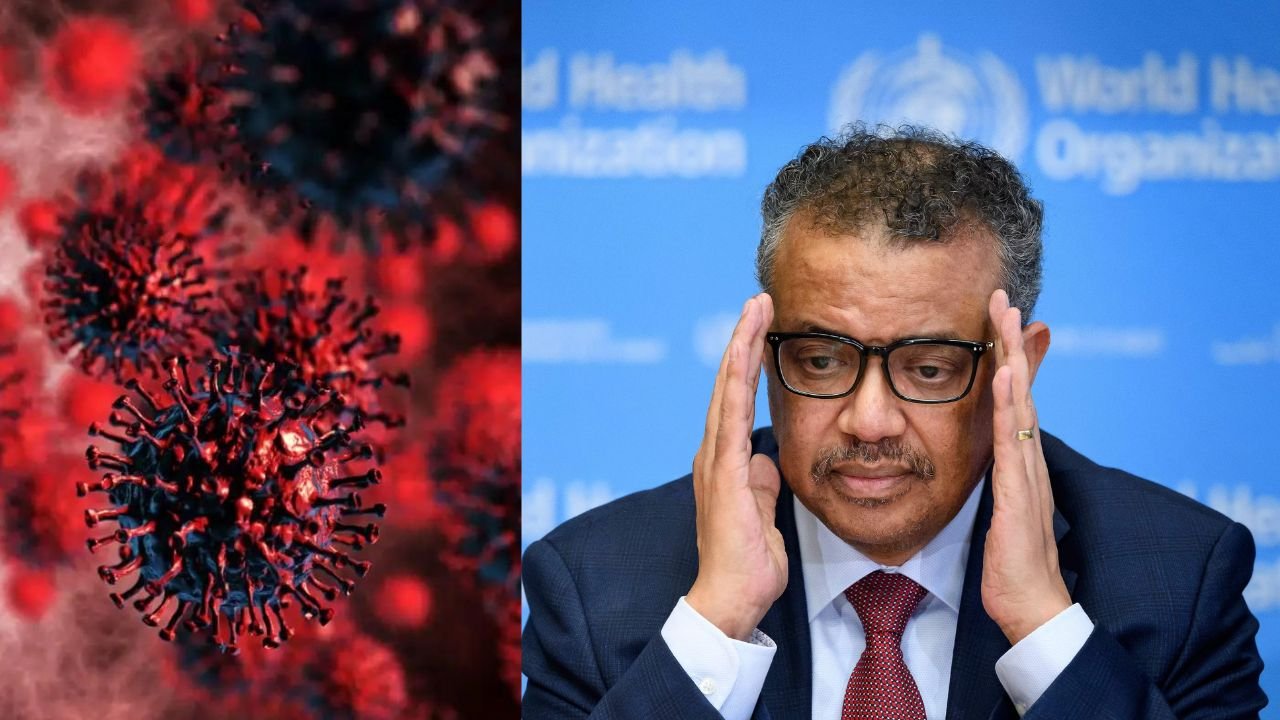
    Director General of the World Health Organization (WHO) Dr. Tedros Adhanom has said that Disease X is a global problem that we need to be prepared for.

    Addressing the World Economic Forum in Davos, Switzerland, the WHO head talked the next possible global epidemic, dubbed Disease X.

    The name was first added to the WHO list in 2018, before the emergence of Covid-19.

    Dr. Tedros Adhanom said, “You can call Covid the first Disease X and it may happen again in the future.”

    He acknowledged that some people will say that such a warning will spread fear, but pointed out that it is better to be prepared for everything because it has happened many times in our history and now we have to start preparing for the next epidemic.

    Dr. Tedros said that the world learned from the Covid epidemic how to deal with the next epidemic.

    WHO discussed plans for a global agreement to prevent future pandemics in 2021.

    The head of the WHO said in Davos that the agreement to prevent epidemics will be the most important to protect the world from future epidemics. So far, many countries could not agree on the terms of this agreement.

    Dr. Tedros Adhanom stated that the negotiations between the member states are going on and WHO expects the agreement to be reached in time. “If our generation does not do it, we do not think the next generation will do it. Because this is about a common enemy and without a shared response, starting from the preparedness … we will face the same problem as COVID,” added the WHO chief.

    Reminding his audience that the deadline for the pandemic agreement is May 2024, he said that he hopes countries will reach this pandemic agreement by that time.

    He went on to say that if this generation who has first-hand experienced a pandemic cannot do it, he does not think the next generation will be able to do so.

    “So for our children and grandchildren’s sake, … we have to prepare the world for the future,” added Ghebreyesus.

  • Mysterious pneumonia outbreak: WHO asks China for more data on respiratory illness

    Mysterious pneumonia outbreak: WHO asks China for more data on respiratory illness

    Beijing (AFP) – The World Health Organization has asked China for more data on a respiratory illness spreading in the north of the country, urging people to take steps to reduce the risk of infection.

    Northern China has reported an increase in “influenza-like illness” since mid-October when compared to the same period in the previous three years, the WHO said.

    “WHO has made an official request to China for detailed information on an increase in respiratory illnesses and reported clusters of pneumonia in children,” the UN health body said in a statement on Wednesday.

    China’s National Health Commission told reporters last week that the respiratory illness spike was due to the lifting of Covid-19 restrictions and the circulation of known pathogens, namely influenza and common bacterial infections that affect children, including mycoplasma pneumonia.

    The Chinese capital of Beijing, located in the north of the country, is currently experiencing a cold snap, with temperatures expected to plummet to well below zero by Friday, state media said.

    Temperatures plummeted as the city “entered a high incidence season of respiratory infectious diseases”, Wang Quanyi, deputy director and chief epidemiological expert at the Beijing Center for Disease Control and Prevention, told state media on Wednesday.

    Beijing “is currently showing a trend of multiple pathogens coexisting”, he added.

    Calls for transparency

    Over the course of the Covid-19 pandemic, the WHO repeatedly criticised Chinese authorities for their lack of transparency and cooperation.

    More than three years after cases were first detected in Wuhan, heated debate still rages around the origins of Covid-19.

    Scientists are divided between two main theories of the cause: an escape from a laboratory in the city where such viruses were being studied and an intermediate animal that infected people at a local market.

    Earlier this year, WHO experts said they were sure that Beijing had far more data that could shed light on the origins of Covid, and called it a moral imperative for the information to be shared.

    A team of specialists led by the WHO and accompanied by Chinese colleagues investigated China in early 2021, but there has not been a team able to return since and WHO officials have repeatedly asked for additional data.

    WHO chief Tedros Adhanom Ghebreyesus has stressed that getting to the bottom of the mystery could help avert future pandemics.

  • UK’s Rishi Sunak said Britain should ‘let people die’ during Covid

    UK’s Rishi Sunak said Britain should ‘let people die’ during Covid

    A recent inquiry into Britain’s handling of the Covid-19 pandemic has revealed that Rishi Sunak believed that the government should “just let people die” rather than impose a second national lockdown.

    The concerning statement by Rishi Sunak was quoted in a hearing on Monday about UK’s handling of the Covid-19 pandemic that shut down large sections of the economy and killed more than 220,000. The explosive claim was made by Patrick Vallance, the former chief scientific adviser to the government. He claimed that the then-finance minister Sunak said during a meeting with then-prime minister Boris Johnson, that the government should “just let people die” rather than impose a second national lockdown.

    Vallance noted this down in a meeting in his diary on October 25, 2020, which was presented to the inquiry on Monday. The incident was relayed to him by Dominic Cummings, Johnson’s most senior adviser during the pandemic, relayed to Vallance what he had heard at the meeting.
    Vallance quoted Cummings in his diary as saying: “Rishi thinks just let people die and that’s okay. This all feels like a complete lack of leadership.”
    According to a spokesperson for Sunak, the prime minister would set out his position when he gives evidence to the inquiry “rather than respond to each one in piecemeal”

  • Geniuses behind mRNA covid vaccines to receive Nobel Prize

    Geniuses behind mRNA covid vaccines to receive Nobel Prize

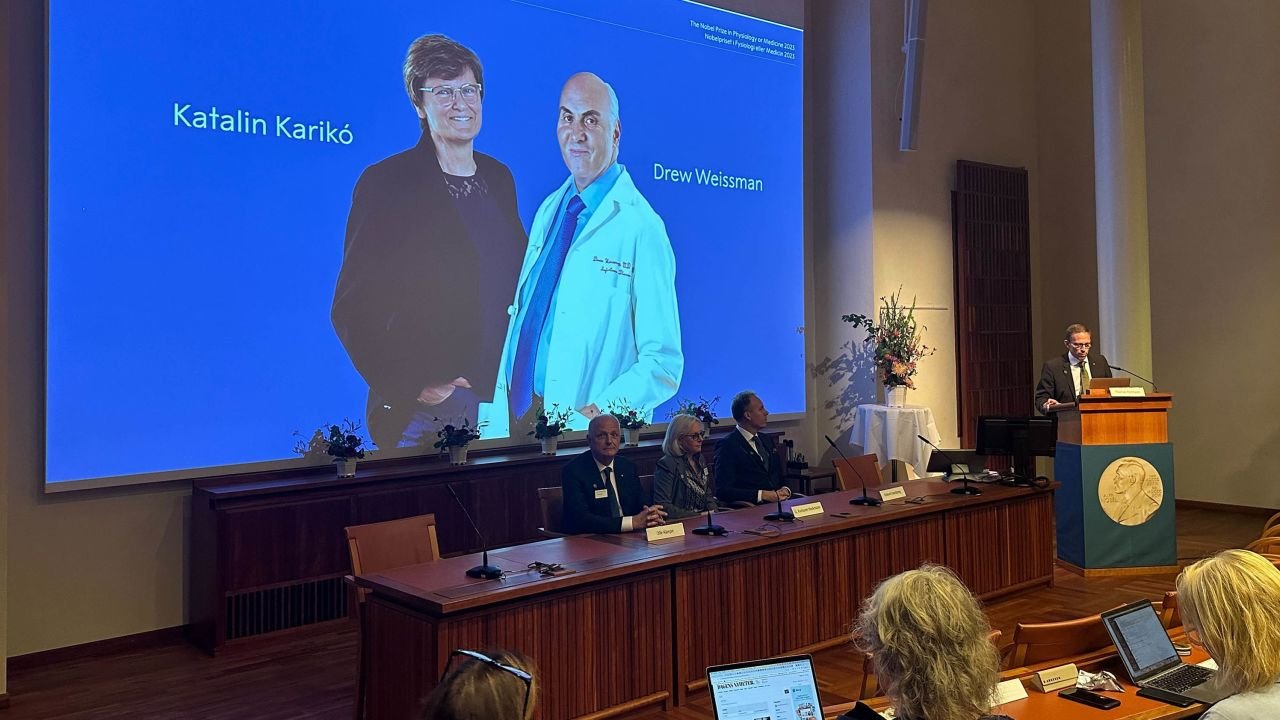
    Katalin Kariko from Hungary and American-born Drew Weissman have won the 2023 Nobel Prize in Physiology or Medicine for their research that paved the way for the first mRNA vaccines against COVID-19, made by Pfizer and Moderna.

    The Nobel Prize committee announced the winners in Sweden on Monday.

    “The laureates contributed to the unprecedented rate of vaccine development during one of the greatest threats to human health in modern times,” the jury said in Sweden’s capital Stockholm on Monday.

    Professor at Sagan’s University in Hungary and an adjunct professor at the University of Pennsylvania, Katalin Kariko researched mRNA along with Drew Weissman at the University of Pennsylvania.

    Their prize will include a diploma, a gold medal and a $1 million cheque on December 10 in Stockholm. That day will also mark the death anniversary of Alfred Nobel, the scientist who created the prize in his last will and testament.

  • McDonald’s temporarily closes US offices ahead of layoffs announcement

    McDonald’s temporarily closes US offices ahead of layoffs announcement

    McDonald’s, the fast-food chain, will temporarily close its US offices this week to inform its corporate employees about layoffs as part of a broader company restructuring.

    Last week, the company sent an internal email to its US employees and some international staff requesting that they work from home on Monday through Wednesday to communicate staffing decisions virtually. It is currently unknown how many employees will be affected by the layoffs.

    The Chicago-based company stated in the message that it would communicate “key decisions related to roles and staffing levels across the organization” during the week of April 3. The report also indicated that McDonald’s asked its employees to cancel all in-person meetings with vendors and other outside parties at its headquarters.

    In January, McDonald’s had previously announced that it would review corporate staffing levels as part of an updated business strategy that could result in layoffs in some areas and expansion in others.

    McDonald’s is expected to start announcing key decisions this week.

  • About 830,000 Pakistanis left the country in 2022 in search of better jobs

    About 830,000 Pakistanis left the country in 2022 in search of better jobs

    The Bureau of Immigration and Overseas Employment (BE&OE) has reported a historic surge in emigrants seeking overseas employment in 2022, with a staggering 829,549 individuals registering for job opportunities abroad. Syed Agha Rafiullah, Parliamentary Secretary for Overseas Pakistanis and Human Resource Development (OPHRD), presented this data to the National Assembly on Wednesday, shedding light on the nation’s growing interest in international job markets.

    Rafiullah went on to explain that although 12.45 million Pakistani workers had registered for overseas employment opportunities since 1971, the COVID-19 pandemic had significantly impacted emigration numbers in 2020 and 2021. Only 224,705 and 286,648 Pakistani emigrants had been recorded in those years, respectively.

    To combat this decline, the government is actively pursuing a diversification strategy, seeking new international employment markets for its workforce. In this regard, the government has already established statements of intent on migration and mobility with Greece and the United Kingdom, and is hopeful of signing a similar agreement with Germany soon.

    Moreover, the ministry is currently in talks with 12 nations, including Denmark, Belgium, Germany, Greece, Italy, Iran, Lebanon, Kuwait, Libya, Romania, Portugal, and Uzbekistan, to sign memorandums of understanding (MoUs) on personnel export. In addition, 24 social welfare attachés have been deployed to 16 countries to explore new opportunities for Pakistani labor.

    The government is committed to providing Pakistani emigrants with the necessary training in line with the host country’s labor market requirements, as determined by the host country’s Labour Market Analysis (LMA). These measures reflect the government’s proactive approach in promoting overseas employment and ensuring its workforce’s sustainable livelihood.

  • National Institute of Health urges citizens to wear masks amid rise in Covid-19

    As Covid-19 cases has begun rising in Pakistan once more, the National Institute of Health (NIC) tweeted yesterday that according the guidelines sent by the National Command And Operation Center (NCOC) citizens are advised to take safety precautions like wearing masks to keep themselves safe from the disease.

    Amid the current COVID-19 disease trends across the country, NCOC recommended following guidelines for the period up to 30 April 2023. “Mask wearing is recommended at crowded tightly enclosed spaces including healthcare facilities”

    The alert has arrived after the countrywide Covid-19 positivity rate rose to 2.7%, with positive patients adding up to 133 in total, and at least 15 under critical care, as per the tweet released by NIH.

  • Toyota IMC records worst sales in three years, selling less than 2,000 cars in February

    Toyota IMC records worst sales in three years, selling less than 2,000 cars in February

    Toyota Indus Motor Company (IMC), a leading automaker renowned for offering the country’s best-selling sedan, has reported a significant decline in sales in February 2023, marking the worst sales month since the onset of the Covid-19 pandemic.

    Having previously sold over 7,100 units in March 2022, the company’s sales have now plummeted to a meager 1,803 vehicles in February 2023, according to Autojournal.

    It is pertinent to note that this represents the lowest sales figures for Toyota in the past three years, since the outbreak of the Covid-19 pandemic and subsequent lockdowns.

    Toyota is not the only company experiencing this phenomenon, as Pak Suzuki Motor Company has also reported a massive decline in sales, selling only 544 units in February 2023, despite having sold over 6,000 units of Suzuki Alto in a single month previously.

    Pakistan’s auto industry is currently facing significant challenges due to production halts, resulting from a lack of availability of auto parts and restrictions on imports.

    As a result, car manufacturers are facing difficulties in meeting consumer demands, leading to decreased sales figures for many companies, including Toyota and Suzuki.