Tag: pandemic

  • Karachiites ignore Covid-19 protocols, as people head to beaches to beat the heat

    Karachiites ignore Covid-19 protocols, as people head to beaches to beat the heat

    Pakistan has shown great progress in its fight against the coronavirus pandemic.

    However, Karachiites seemed to have completely ignored the government’s call for maintaining precautions during the third wave. Videos on social media show how crowded the beaches were on the weekend.

    People gathered at the beach to beat the heat. Temperatures regularly hover around 40 degrees and the humidity only makes it worse.

    Pakistan has only fully vaccinated 3.4 million people. The government has asked citizens to avoid crowds and maintain social distancing.

    The total number of Covid-19 cases in the country are 949,175 with positivity rate of 2.6 per cent.

  • Man arrested for eating a snake, claims ‘kept COVID-19 at bay’

    Man arrested for eating a snake, claims ‘kept COVID-19 at bay’

    A man from India’s Tamil Nadu ate a dead snake to “protect” himself from contracting the COVID-19.

    The  50-year-old Vadivel was arrested and charged with a fine of Rs 7,000 after he posted a video of him eating a poisonous snake on social media.

    He claimed that snakes are good antidotes to Covid-19 and keep the deadly virus at bay.

    As per reports, the man caught the reptile in a field and killed it before eating it.

    ‘Mouse plague’ in Australia: Mice crawl into beds and bite residents

    A forest officer in Madurai district said the agriculture worker had been prompted to eat the snake by other people. He had been drunk at the time of the incident.

    Fortunately, the man didn’t bite into the venom glands of the snake, identified as a common krait, a species of highly venomous reptiles native to the Indian subcontinent.

    Its venom consists of powerful neurotoxins that can even be fatal for humans if not treated. The reptile had been found dead in a drain, the forest officer said.

    Warning: This video contains graphic content.

  • ‘Safer in jail’: 21 Indian prisoners don’t want parole amid COVID-19

    ‘Safer in jail’: 21 Indian prisoners don’t want parole amid COVID-19

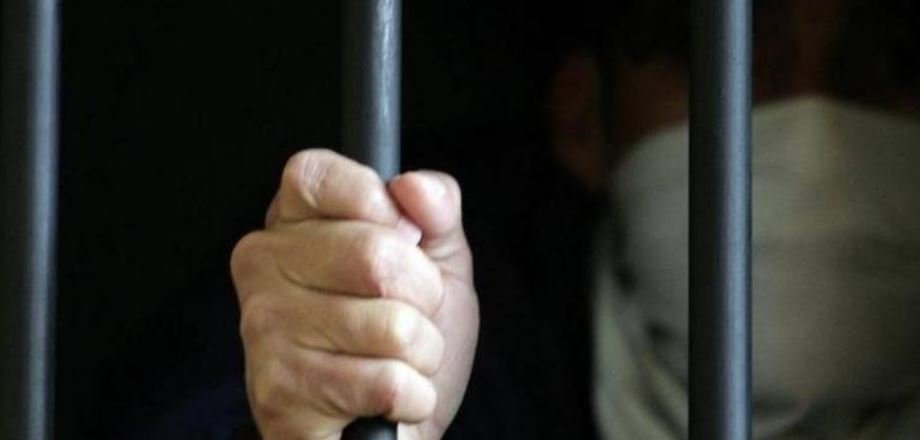
    21 prisoners in Uttar Pradesh, India do not want parole to stay safe and healthy during the Covid pandemic. Parole is a temporary hold-up of the sentence.

    As per reports, the Director-General of Jail Administration Anand Kumar said that the prisoners who have requested that to the authorities are kept in nine prisons of Uttar Pradesh.

    He said that the reason is that when they get three months of parole then these days will be added to the sentence period later.

    Read More: Indian couple gets married on plane to avoid COVID restrictions

    The second main reason is that the prisoners feel that the kind of food and the healthcare services they are getting in jails will not be possible once they are out on parole for 90 days.

    They said that medical facilities are available and daily health checkups are done in jails. They also get food on time so they are safe and healthy in prison and not when they are out trying to make money and living.

    Four requests from Lucknow jail, two from Maharajganj jail and three from Ghaziabad jail have been reported.

    Kumar said that the prisoners have written their requests clearly so they have to agree to take their viewpoint and respect it.

    Due to the extraordinary gush of Covid-19 cases in the country, the Supreme Court on May 8 ordered for decongestion of jails with immediate release of all the inmates who were approved for bail or parole last year.

    The top court had taken suo motu cognizance of the congestion of prisons all over the country on March 16, 2020, saying that it is hard for the prisoners to keep social distancing to avoid the spread of coronavirus.

  • COVID likely to stay, will only get worse, warn experts

    COVID likely to stay, will only get worse, warn experts

    The novel coronavirus is morphing into a tougher variant over time, experts have warned. According to them, the mutations identified in the virus are worrisome, and as per the finds of the scientists, the virus will get more contagious and threatening.

    Experts are hesitant about making any predictions about when the pandemic will end and most scientists have accepted the truth that the virus will likely stay forever.

    There are some majors reasons why the virus will stay and not go anywhere. First, there are already four human coronaviruses endemic in our population. It means that they will circulate perpetually.

    “It’s safe to say we’re not going to eradicate it,” said Dr Becky Smith, an infectious disease specialist at Duke Health. “Too many people in the world have it. It’s too efficient at transmitting.”

    Secondly, the virus is zoonotic; it can jump from animal to humans or vice versa. Moreover, the SARS-CoV-2 has also emerged. So, even if we manage to eradicate SARS-CoV-2; the human and animals would likely produce a deadlier variant.

    Scientists have also predicted that the SARS-CoV-2 would turn into endemic; the intensity will reduce to the only flue and common cold. It’s a sign of hope, but it would likely happen over a period of five to ten years.

    Vaccination will not be available to everyone said Mike Osterholm, a leading infectious disease expert, adding it would be nearly impossible to make a yearly coronavirus vaccine available to every person on Earth.

    “It is going to be with us forever,” said Osterholm, who directs of the Center for Infectious Disease Research and Policy at the University of Minnesota, said of the virus. “It is something we can’t eradicate from humans.”

    As far as the new variants are concerned, the new South African (carrying B.1.351) virus shows resistance to Moderna’s vaccine. The new variant carries ten mutations in the virus’ spike protein, and it has forced vaccine makers to change their strategies. The P.1 variant of Brazil also have the same potency.

    Earlier, companies that produced Johnson & Johnson, AstraZeneca, and Novavax have also raised concerns that vaccines won’t work well against B.1.351 or other variants with similar mutations.

    It is also possible that more powerful variants could drown out old versions of the virus, making the pandemic harder to combat. Virus experts in the US are already predicting that the fast-spreading B.1.1.7 variant, first discovered in the UK, will become the dominant variant in America by this May.

    But it’s impossible to predict what changes the virus might undergo next, or what they’ll mean for us because not all mutations make viruses more dangerous.


  • Rich Indians reportedly fleeing to UAE on private jets, paying fare as high as $38,000

    Rich Indians reportedly fleeing to UAE on private jets, paying fare as high as $38,000

    Rich and affluent Indians are reportedly fleeing India to escape the COVID-19 pandemic, and the demand for private jets and fares has increased drastically.

    United Arab Emirates (UAE) decided to suspend flights from India and people had time till Sunday to travel back to UAE.

    Online price for one way fare has increased almost ten times. Flights from Mumbai to Dubai would cost as much as 80,000 Indian Rupees ($1,400).

    Tickets for the New Delhi to Dubai route were going for more than 50,000 rupees, five times more than the average rate. Moreover, no tickets were on offer from Sunday when the 10-day flight suspension comes into force.

    For private jets, the fare is ridiculously high. The spokesperson for a charter company total that
    “We have requested more aircraft from abroad to meet the demand. It costs $38,000 to $50,000 to hire a 13-seater jet from Mumbai to Dubai, and US$31,000 to hire a six-seater aircraft.”

    “People are making groups and arranging to share our jets to get a seat. We’ve had some queries for Thailand but the demand is for Dubai,” he maintained.

    According to the latest figures, UAE is home to around 3.3 million Indians which accounts to a third of Dubai’s total population.

    The UAE’s General Civil Aviation Authority has ordered that those who are coming from India must stay in 14 days quarantine.

  • ‘Increase the price or it’s going somewhere else’ threatens vaccine importer

    ‘Increase the price or it’s going somewhere else’ threatens vaccine importer

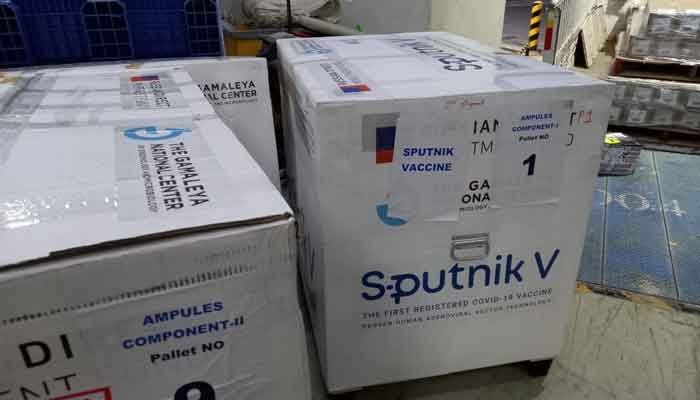
    Rs 8,449 not enough for the vaccine, says the importer of the Russian Sputnik V vaccine and is threatening to “re-export” the 50,000 doses it brought to Pakistan. Officials say that the importer is saying that they can send the vaccine to ‘another country’ if the importer’s desired price is not set by the government.

    “The drug pricing committee of DRAP (Drug Regulatory Authority of Pakistan had recommended Rs8,449 for two doses of the vaccine, which is not acceptable to the importer,” an anonymous official of the federal government told news network, Geo News .

    RELATED: Fake COVID-19 reports, vaccines being sold on darkweb

    “The government is already under harsh criticism for the price recommended by DRAP’s pricing committee at Rs8,449. It was calculated on the basis of a landing cost of $30 but people are comparing it with the cost of the Russian vaccine in India and criticising the government for fixing higher price as compared to the neighbouring country,” the official stated.

    A representative of AGP Limited, the importer of the vaccine, said that they had the “option of re-exporting” the vaccine shipment or selling it to another country where they can get a much higher price.

    RELATED: ‘Govt does not plan to buy vaccines anytime soon’

    “The government’s price of Rs8,449 is not affordable for us because in addition to landing cost, there is distributor margin, storage and transportation costs, and hospitals and institutions will also take their service charges,” an official of the company clarified, also adding that if the didn’t send the vaccine back, there were ‘other options’ available too.

    “We are going to wait for a couple of days to resolve this issue but it is already over a week now and the shipment is [stored needlessly] at the cold storage. It could have been used by now to vaccinate at least 25,000 people who could afford to get it, as for millions, government’s vaccine is not available,” the official said to Geo News.

    Government officials had earlier said that AGP wants a retail price between Rs. 12,500-13,000 for two doses of their vaccine based on their expenses for procuring and delivering the vaccine but DRAP is unwilling to review its decision, since they say the recommended price of Rs. 8449 is fair.

  • Mehwish Hayat calls out those holding ‘live concerts’ amid ‘deadly third wave’

    Mehwish Hayat calls out those holding ‘live concerts’ amid ‘deadly third wave’

    Mehwish Hayat has expressed her disappointment and called out those holding live concerts in Islamabad amid rising cases of COVID-19.

    Read more – Mehwish Hayat slams India for spreading conspiracy theories against Muslims amid COVID-19 crisis

    “This is very disappointing to be having live concerts with so many people while we are still not free of COVID,” wrote the actor on Twitter. “Cases are on the rise again and we are experiencing a deadly third wave.”

    Mehwish urged people to act responsibly and reminded them that “Jaan hai to jahaan hai!“.

    According to the latest figures given by National Command Operation Center (NCOC), Islamabad has recorded 371 cases in the past 24 hours. While Punjab has recorded 1191 cases and total confirmed cases recorded in the last 24 hours are 2,253.

    Amid the drastic increase in cases, the Punjab Government has reimposed numerous restrictions in different districts of the province including a complete ban on indoor and outdoor dining, closure of all commercial activities and markets by 6 pm on weekdays and suspension of all sports and all cultural activities. The Sindh Government has also issued directives for a smart lockdown in the province.

  • Vaccine procurement woes

    Vaccine procurement woes

    We thought the year 2021 will be a year of hope after last year’s pandemic outbreak. This year will indeed be a year when a vaccine is rolled out around the world but there is a catch. According to the People’s Vaccine Alliance – a coalition including Oxfam, Amnesty International and Global Justice Now – just one in 10 people in dozens of poor countries will be able to get vaccinated against the coronavirus because wealthy countries have hoarded more doses than they need.

    The Alliance said that the rich nations have bought more than 50 per cent of the total stock of the world’s most promising vaccines, despite being home to just 14 per cent of the global population. According to the Duke Global Health Innovation Centre, the current models predict that there will not be enough vaccines to cover the world’s population until 2023 or 2024. This is quite worrying. Pakistan, too, has yet to procure the vaccines.

    Special Assistant to the Prime Minister on Health Dr Faisal Sultan told Dawn that Pakistan’s target is to procure the vaccine in the first quarter of the current year, and “we are confident of doing so. But it is quite difficult to say on which date we will acquire the vaccine”. Reports indicate that apart from Chinese vaccines and the Oxford vaccine, Pakistan will also be relying on the World Health Organization’s (WHO) COVAX initiative, which insures “rapid and equitable access to COVID-19 vaccines for all countries, regardless of income level”. Some government officials say that Pakistan did not have enough resources to place orders initially for vaccines. It is understandable given that Pakistan’s economy is already struggling.

    The lesson to learn from this pandemic is that countries like Pakistan must invest in science, technology and medical/health research. If we do this, we would be able to work on our own vaccines and manufacture them in the future. Healthcare is one of the top priorities of the current government. The government must step up and invest in research related to healthcare so that it helps Pakistan in the future. Coronavirus may have been a once-in-a-century pandemic but there will be new health emergencies that we could face in the future. Thus, it is important to invest heavily in research because the future is all about scientific research and development.

  • Wasim Akram urges authorities to look after players’ mental well-being

    Wasim Akram urges authorities to look after players’ mental well-being

    Wasim Akram on Tuesday emphasised on the mental well-being of cricketers going through tough isolation, calling authorities to ensure there are measures that can counter the implications of quarantine restrictions.

    Akram, while speaking to media outlets, maintained that it is never easy for an individual to spend two weeks in isolation, adding that such circumstances can have serious implications on one’s mental health.

    “It is imperative to look after players’ mental well-being in this scenario in order to keep them positive and motivated for the game. There’s a serious need to have a regular psychologist with teams when they travel to new environments,” said the legendary fast bowler.

    “I’m sure seniors like Waqar Younis and Misbah would have spoken to players in New Zealand to keep them motivated during isolation period,” added Akram.

    Calling for a uniform policy worldwide, the former cricketer said that it is never easy for anyone to move from one isolation to another.

    “I think ICC should talk to governments in this regard,” he shared.

    Green shirts were kept in strictly managed isolation in New Zealand for the last 14 days before the isolation period ended today (Tuesday). The team has been in a biosecure bubble since summer, playing back-to-back cricket.

    Akram also said that New Zealand team is in good form and Pakistan will have a tough time in the upcoming series.

    Akram’s remarks come after two England cricketers recently pulled out of Big Bash League in Australia complaining of biosecure bubble fatigue.

  • Locally-produced AI software to detect COVID-19 in seconds

    The National Institute of Electronics has developed an artificial intelligence-based software that would detect the coronavirus in the lungs in 60 seconds.

    The AI software was developed by the institute to upgrade the testing process, as currently, it takes several hours for the PCR tests to detect the virus in a patient. The new virus detecting system named ‘Cov-Raid AI Detection’ has already been approved by the Drug Regulatory Authority Pakistan (DRAP).

     DRAP said that the Cov-Raid “shall employ Convolutional Neural Networks to predict [presence of] Covid-19 in suspected individuals” by using X-rays and it has been approved for “secondary detection” of the virus, reported Dawn.

    According to the creators of the software, ‘Cov-Raid’ has been developed by “creating a data repository of Chest X Rays (CXR) for Covid-19 or non-Covid-19 detection”.

    “The Cov-Raid requires a chest X-Ray image as an input for the detection of Covid-19 positive or negative patients in less than one minute,” the description on the website said.

    “The algorithm has been trained on more than 35,000 CXRs (data authentication done through multiple certified radiologists and PCR reports),” the website said, adding that the test can be used to test a large number of patients in a limited time.

    Meanwhile, DRAP Chief Executive Officer Dr Asim Rauf has reportedly said that the new software is registered under the DRAP Act of 2012.