Tag: PARCO

  • One rupee relief: Petroleum Division reveals ‘benefit’ of importing Russian crude

    The Petroleum Division has presented a comprehensive briefing to the caretaker Prime Minister, Anwaar ul Haq Kakar, regarding the potential impact of Russian crude oil on petroleum prices in Pakistan.

    According to The News, the Petroleum Division highlighted that the projected benefit to consumers resulting from the import of Russian crude oil remains relatively modest, at approximately Re1 per litre for both petrol and diesel. This assessment takes into account various operational intricacies and market dynamics.

    Importing Russian crude oil carries two notable risks, the division stated. The first pertains to the duration of transportation, which spans between 30 and 36 days, and the second revolves around the production of furnace oil.

    Approximately 60 per cent of furnace oil generated from Russian crude must be exported, incurring a 25 per cent loss in the process.

    It is significant to note that, currently, only the Pakistan Refinery Limited (PRL) has expressed readiness to refine Russian oil. However, if PRL assumes the responsibility of refining Russian oil exclusively, only a nominal Re1 relief can be passed on to consumers for each litre of gasoline and diesel.

    In a potential collaborative effort, the prime minister was informed that if PARCO (Pak-Arab Refinery Company) and NRL (National Refinery Limited) jointly undertake the refining of Russian oil, the benefit to consumers could potentially increase to Rs3 per litre. The magnitude of this relief would be contingent on the volume of Russian crude involved in the process.

    PARCO, as a comparatively modern refinery with superior facilities, is expected to contribute to enhanced yields from Russian crude and, consequently, a reduction in the production of furnace oil. However, it was also revealed that both PARCO and NRL have declined the proposition to refine Russian oil.

    The caretaker Prime Minister, Anwaar ul Haq Kakar, has expressed the need for a thorough evaluation of the situation, considering the potential benefits, risks, and the willingness of refineries to participate in the process. The decision regarding the import and refining of Russian crude oil remains a pivotal concern as Pakistan navigates its energy landscape in the coming days.

    This development emphasises the intricate balance between economic considerations and strategic decisions in the energy sector that Pakistan faces as it grapples with global oil market dynamics.
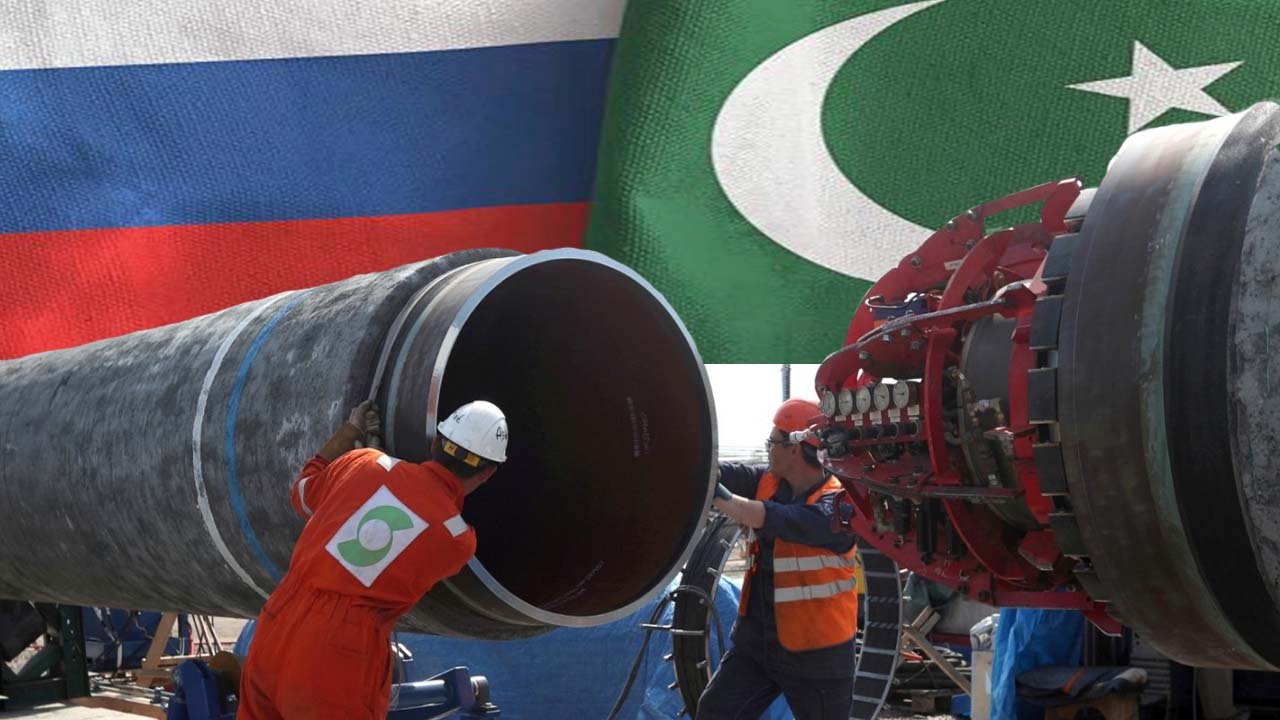
  • Pakistan will start importing crude oil from Russia in March

    Pakistan will start importing crude oil from Russia in March

    Pakistan and Russia have decided on the deadline for crude oil exports in late March after the conclusion of the annual inter-governmental commission between the two countries concluded.

    The Minister of State for Petroleum, Musadik Malik, said that Pakistan intends to import 35 per cent of its entire crude oil needs from Russia. He added that Russia does not have liquefied natural gas (LNG) for Pakistan currently.

    Russian Energy Minister Nikolay Shulginov also stated that Pakistan will pay for its energy purchases from Russia in the currencies of friendly nations when they begin in late March.

    Last year, the government of Pakistan sent representatives to Russia, and as a result, the state minister for petroleum of Pakistan announced that Russia would supply crude oil at a reduced price.

    Russian oil and gas have not historically been widely imported by Pakistan.

    Islamabad and Moscow agreed during the negotiations that the oil and gas trading transaction will be set up such that both nations can profit economically after reaching an agreement on the technical details.

    The leaders also decided to expand energy infrastructure investment, improve energy trade, and strengthen energy cooperation under advantageous strategic and commercial circumstances.

    A “Comprehensive Plan for Energy Cooperation” that will serve as the framework for future work and be completed in 2023 has been agreed to by both parties.

    The federal and provincial governments of Pakistan welcomed the Russian side to consider prospective initiatives, including those involving public-private partnerships and asked the Russian businesses to investigate these options.

    “Both sides have resolved the pending issues related to the exchange of information on certificates of origin of goods with the use of an electronic verification system and shall endeavour to finalise the above-mentioned protocols by the end of May 2023,” the joint statement issued in this regard read.

    In order to improve their mutual collaboration and talk about issues pertaining to connectivity and logistics in Central and South Asia, the authorities decided to designate focus points for each side.

    It was also resolved at the talks held over the last three days that creative business practises, such as bartering, would be used. They also agreed to further investigate the possibility.

    “In the context of the desire of both parties to promote regional integration and Eurasian connectivity, the two sides agreed to share information towards developing and improving rail and road infrastructure,” the statement read.

    The documents signed during the session included an “Agreement regarding cooperation and mutual assistance in customs matters,” a “Protocol on the Exchange of Documents and Data on the Customs Value of Goods Transported,”  and a “Working Agreement on the Airworthiness of Aeronautical Products.”

    The seventh IGC’s debates and choices served as the foundation for the eighth session, which moved the process ahead and looked at new possibilities for collaboration.

    Additionally, Pakistan and Russia decided to extend their cooperation in the areas of commerce and investment, energy, communication, transportation, higher education, industry, railroads, banking, finance, customs, agriculture, science, and technology.