Tag: parliament

  • Kyrgyzstan to remove ‘fickle’ sunflower from flag

    Kyrgyzstan to remove ‘fickle’ sunflower from flag

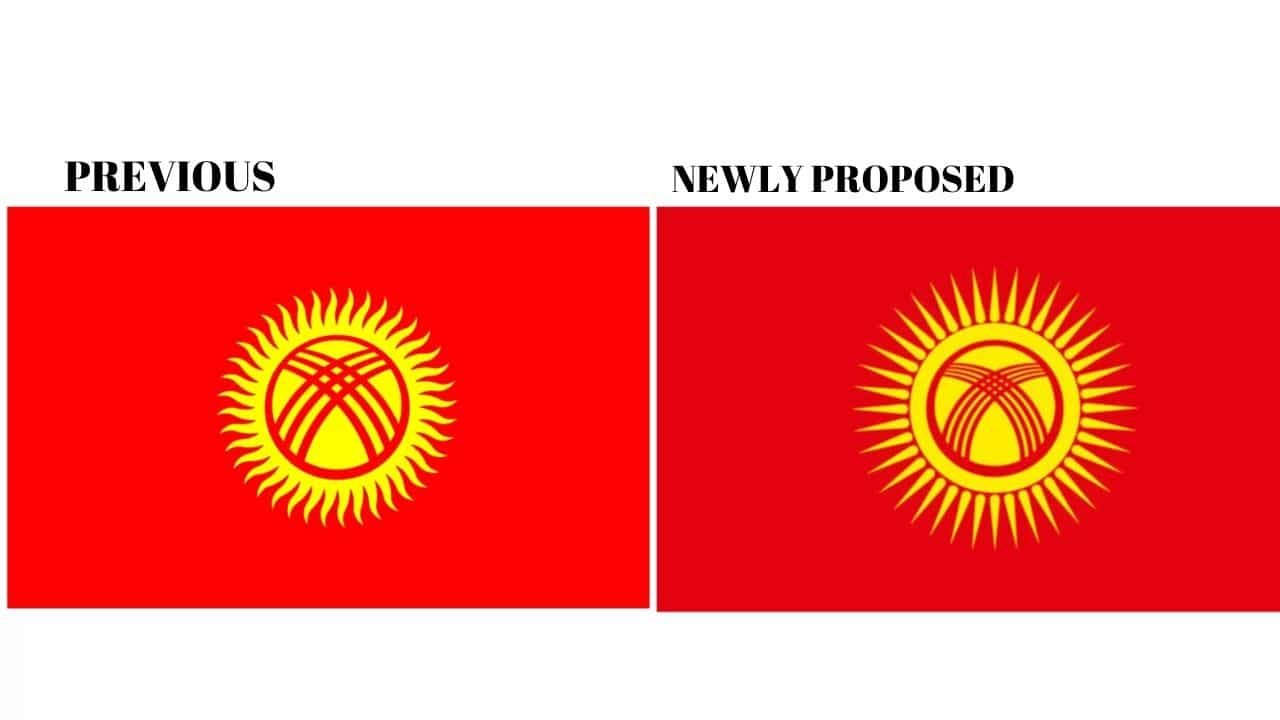
    Kyrgyzstan’s supreme council (Jogorku Kenesh) on November 29 supported a bill on changing the state flag in its first reading in parliament after 66 deputies voted for and eight people’s representatives voted against the document.

    President Sadyr Japarov had recently criticised the design, saying that its central element looked more like a sunflower which in the local culture symbolizes fickleness and servility. Others joined in the criticism and the bill was proposed in the parliament.

    Speaker Nurlanbek Shakiev, one of the authors of the document, said that if the flag is changed, funds will not be lost from the budget, and if the flag is changed in places where it is necessary, sponsors will bear the cost.

    However, critics are opposing the hasty adoption of the draft in the first reading without discussion, calling it rushed. Representative Erulan Kokulov said that the flag is for every citizen. “This issue should have been resolved by a referendum,” he said.

    The goal of the draft law is to “improve the flag, which is one of the main state symbols of the country.”
  • Parliament enacted legislation with ‘good intentions’, says Chief Justice Isa

    Parliament enacted legislation with ‘good intentions’, says Chief Justice Isa

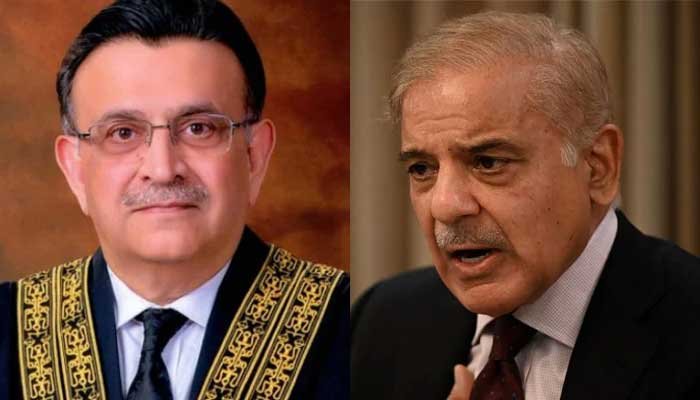
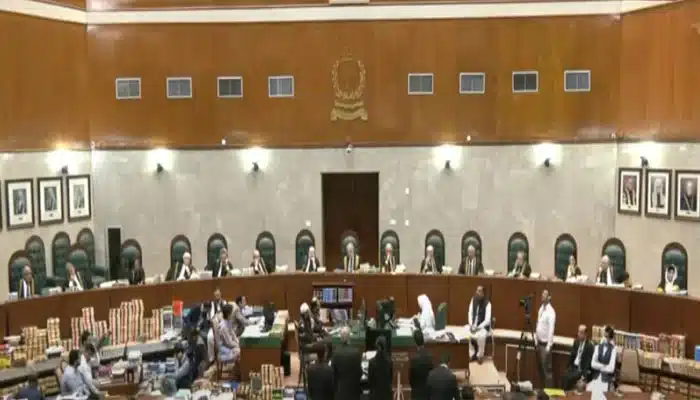
    The Chief Justice of Pakistan (CJP), Qazi Faez Isa, while hearing petitions filed against the Practice and Procedure Act (2023), remarked that the Parliament has enacted the legislation with good intentions. “If a patient is dying, can a person with medical understanding allow the patient to die just because he is not a doctor? Parliament is told that the number game should be complete, but one person comes and makes Parliament a rubber stamp,” he said.

    A full court headed by CJP Qazi Faez Isa is hearing petitions against the Practice and Procedure Act (2023) in the Supreme Court.

    During the hearing, Justice Ijaz-ul-Ahsan remarked that Parliament cannot make rules or legislate to make rules; only the Supreme Court has the authority to change the rules within the scope of the existing law.

    The CJP said that the Constitution says that the Supreme Court is authorised to make its own rules of practice and procedure.

    Justice Ijaz-ul-Ahsan said that the Constitution already binds the Supreme Court to make rules in accordance with the Constitution and the law, while the Chief Justice of Pakistan, while talking to the president of the Supreme Court Bar Association, Abid Zubairi, said that time is short, asking what difference does it make to the option.

    Abid Zubairi said in his arguments that even if the words of making rules according to the constitution and law are removed from the constitution, it will not make a difference, to which CJP Isa said that it is fine; the answer has come.

    Abid Zubairi said that when the Supreme Court made the rules, they could not be changed by law, and the CJP said that the hearing has to be completed today, as he wanted to hear the lawyers.

  • President Alvi returns 13 bills

    President Alvi returns 13 bills

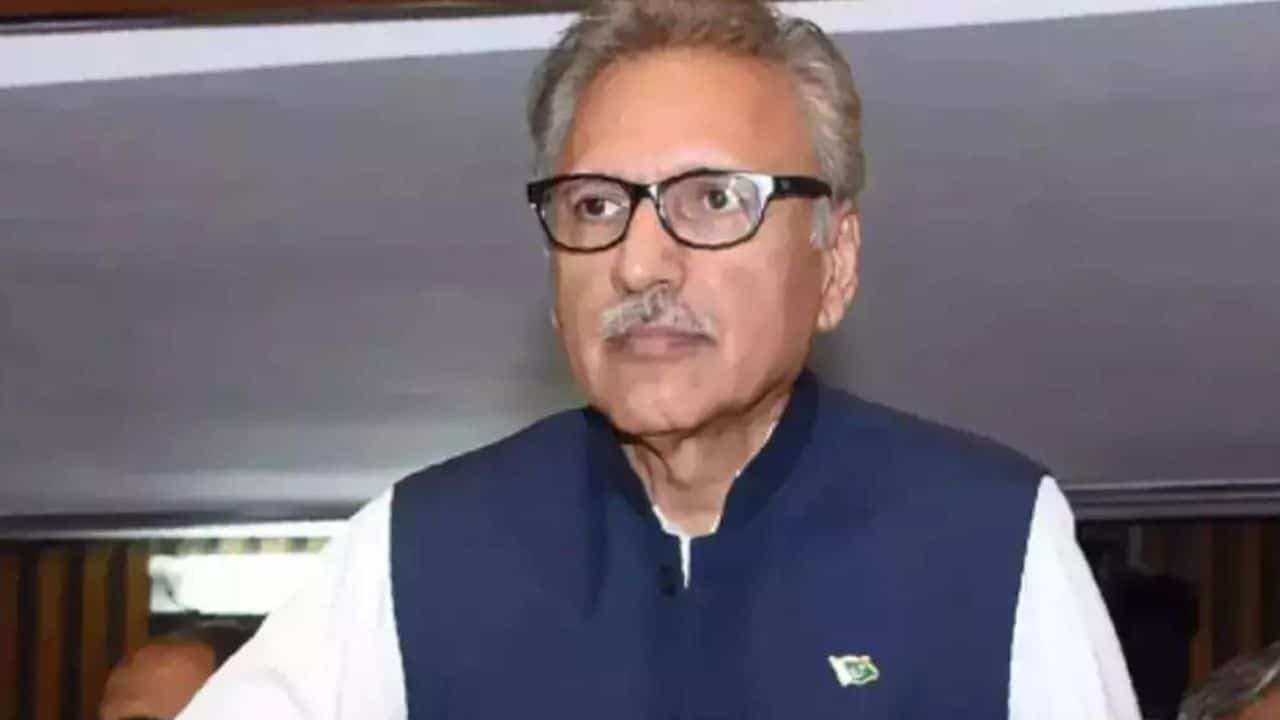
    President Dr. Arif Alvi has returned over a dozen bills for reconsideration by the parliament, resulting in an indefinite delay in their progression since a new assembly will be formed after the general elections, to be held later this year. The bills were approved by both houses of the parliament towards the end of the PML-N-led government’s term.

    Among these bills is the recently proposed amendment to the Code of Criminal Procedure, aimed at increasing penalties for those found guilty of showing disrespect to the Holy Prophet (PBUH), his companions, and other revered religious figures.

    Additional bills that have been sent back include the amendment to the Press, Newspapers, News Agencies, and Books Registration legislation, which seeks to change the term ‘federal government’ with ‘Prime Minister’ wherever mentioned in the law.

    Similarly, the Bill for the Protection of Journalists and Media Professionals aims to shift the jurisdiction over journalist protection from the Ministry of Human Rights to the Ministry of Information. The National Commission for Human Development (Amendment) Bill is also among the returned bills, proposing revisions to the functions of the National Commission for Human Development (NCHD) and changes in its administrative structure to enhance efficiency and facilitate business operations.

    Furthermore, a returned bill linked to the 2023 amendment of the Imports and Exports (Control) Bill.
    This measure addresses instances of economic difficulty and has been prompted by appeals from the business community and other sectors, seeking temporary relief from import/export-related restrictions.

    President Alvi also returned the bill related to the Higher Education Commission (HEC), which seeks to extend the term of the HEC chairman to four years.

    The remaining bills that have been sent back include amendments to the Public Sector Commission legislation, the Institute of Management Sciences Bill, the Horizon University Bill, the Federal University Bill, NFC Institute of Engineering and Technology Multan Bill, and the National Institute for Technology Bill.

  • What is bhambhal bhoochiyan? PM Shehbaz left us all confused

    What is bhambhal bhoochiyan? PM Shehbaz left us all confused

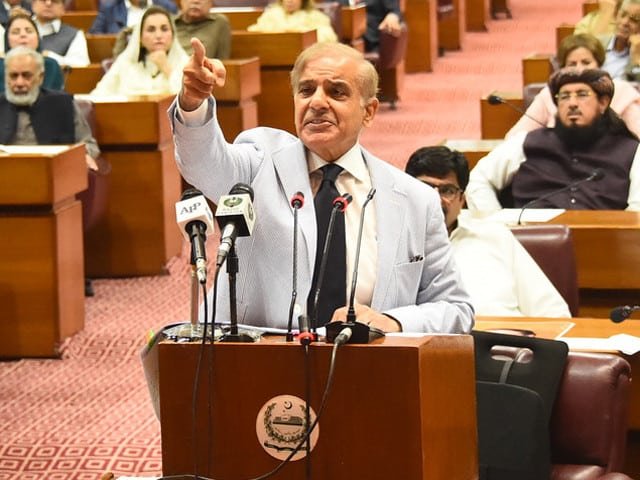
    Prime Minister (PM) Shehbaz Sharif not only comprehensively won a vote of confidence on Thursday but also unwittingly gave us a lesson in language.

    While addressing the House, the premier used a word that left the internet scratching its head.

    Woh kaam humein karny diye jaye, humein in bhambhal bhoochiyoon mei na uljhaya jaye,” he said.

    As soon as he used the expression, Railways Minister Khawaja Saad Rafique burst into laughter. PM Shehbaz turned around to look at the members seated closest to him. He asked if he pronounced the word correctly, to which they laughed and nodded.

    Former President Asif Ali Zardari can also be seen smiling up at Shehbaz Sharif from his chair.

    However, the exact meaning of the word eluded many. So we did some sleuthing on Twitter.

    According to one social media user ‘Bhambhal bhoochiyan‘ means putting someone in trouble or confusion.

    Another user suggested it may be the antonym of Bhool Bhulaiyaa. Another one said that it means leading someone on.

  • ‘Mere aziz hum watno’: Shahid Khaqan says today’s situation is complete script for martial law

    Pakistan Muslim League-Nawaz (PML-N) senior leader and seasoned politician Shahid Khaqan Abbasi has warned of the possibility of martial law in Pakistan, citing political polarisation and economic crisis.

    Speaking on Dawn News‘ English show ‘Spotlight’, Khaqan said that the country “has never witnessed a more severe economic and political situation before. In much less severe circumstances the military has taken over.”

    The former Prime Minister (PM) hoped that the military isn’t considering taking over Pakistan, however, he said that “when they are left with no choice then the old famous speech, ‘mere aiziz hum watno’, if you read the situation today it’s a complete script for a speech like that.”

    He clarified that if the army were to take over, it would make things worse instead of doing any good.

    “When the system fails, when there is no interaction between the institutions, and when there is a conflict between them, then martial law always remains a possibility”, he said.

    He stressed the importance of dialogue and strong leadership but stated that the environment has become so toxic that even the parliament doesn’t discuss national issues.

    According to him, elections are not the kind of solution they used to be in the past.

    Pointing out that dialogues were supposed to have a purpose, Abbasi stated if they benefited only one political party, they would defeat their purpose. “If the intent is just to decide a date for the elections or the political benefits of one, it’s not a proper dialogue.”

    “Dialogue in media is all about abusing each other”, said the politician.

    According to him, it is unfortunate that his own party isn’t ready for dialogue. He said that he fears today that even the “youth has become delusional with this whole system” adding that Pakistanis themselves don’t recognise the potential of their country.

    At the last, he again stressed the responsibility of leadership, and that they should try to step in.

  • ‘Judiciary cannot re-write Constitution’; PM Shehbaz remains defiant

    ‘Judiciary cannot re-write Constitution’; PM Shehbaz remains defiant

    A defiant Prime Minister (PM) Shehbaz Sharif on Thursday said that the judiciary can only interpret the law, but cannot re-write it.

    “There is no example in the world where the parliament’s law — which has not even come into existence right now and has not taken its applicable shape — was subjected to a stay order,” said PM Shehbaz while addressing the launch ceremony of the constitution’s mobile app in Islamabad.

    “The Constitution has taken birth from the cradle of the parliament. The judiciary can interpret the Constitution — that is their right — but the judiciary cannot rewrite the Constitution,” said the Premier as his government faces off with the Supreme Court.

    “This (rewriting Constitution) is only the parliament’s authority,” he added, warning that the “parliament will use its constitutional and legal rights on this” matter.

    Shehbaz said the country was “standing at crossroads today” and that politicians, including him, had committed numerous mistakes.

    “The ones who stand above others are those who move forward after learning from their mistakes and subordinate themselves to the national interest for the nation’s supreme aim,” he said.

    The prime minister said the government was “working day and night to improve Pakistan’s difficult conditions and will keep doing so”.

  • Pervez Ashraf warns Supreme Court not to interfere in politics

    Pervez Ashraf warns Supreme Court not to interfere in politics

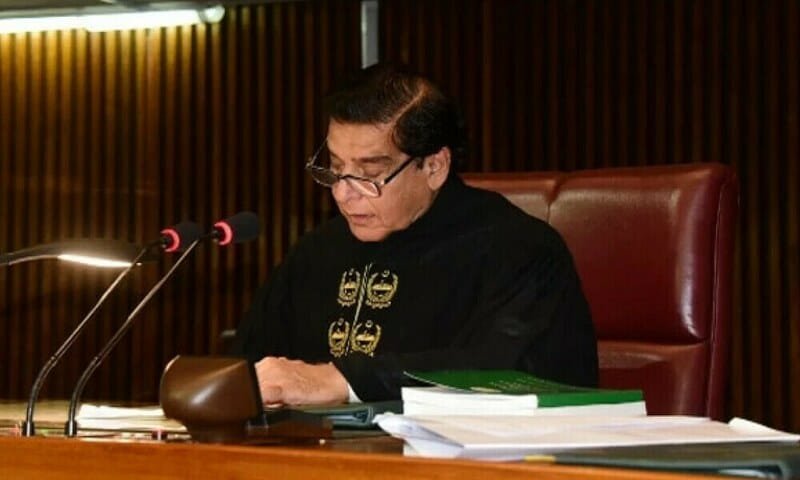
    Speaker of the National Assembly (NA) Raja Pervez Ashraf has taken a strong stance against what he has termed “interference” by the Supreme Court in the affairs of the parliament.

    In an interview, the Speaker said that if the Parliament is restricted to legislating only what the Supreme Court wants, then what is the need for elections.

    Ashraf said that “[the superior judiciary] should take over the legislative business if parliament’s lawmaking authority is unacceptable.”

    He also warned the top court against intruding in the parliament’s domain, saying “others will also try to enter your domain”.

    He asserted that parliamentarians themselves should resolve all political matters in the parliament or at any other forum on their own.

    Referring to alleged differences between Supreme Court judges, the former Prime Minister (PM) said: “Division in politics is necessary, but division in Supreme Court is dangerous.” He said the Supreme Court can’t function if it is divided.

  • Cabinet approves bill seeking parliament validation for election funds

    Cabinet approves bill seeking parliament validation for election funds

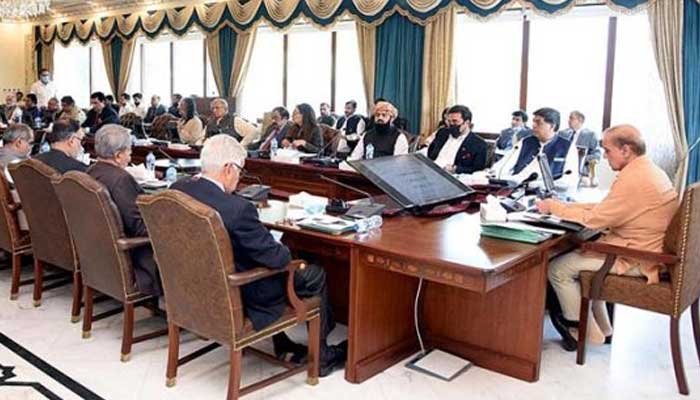
    The federal cabinet on Monday approved a summary prepared by the Ministry of Finance seeking to release funds for the Election Commission of Pakistan (ECP) to hold elections in Punjab on May 14 as ordered by the Supreme Court, which will now be forwarded to the parliament.

    Finance Minister Ishaq Dar presented the bill before parliament today.

    Earlier today, a meeting chaired by Prime Minister (PM) Shehbaz Sharif, decided to send the matter to the parliament, observing that the Lower House was supreme and whatever decision it would make, would be acceptable.

    On Sunday the cabinet decided to refer to parliament the issue of the release of funds to the ECP for holding elections in Punjab.

    The cabinet asked Dar to prepare a summary for the guidance of the Parliament.

    It is pertinent to mention here that the SC has ordered that federal government to release Rs21 billion by April 10 for holding polls in Punjab.

  • Parliament rejects the verdict of Supreme Court

    The National Assembly (NA) has passed a resolution rejecting the verdict of the three-member bench of the Supreme Court about holding polls in Punjab on May 14.

    The resolution was moved by Balochistan Awami Party lawmaker Khalid Magsi and approved by a majority of the lawmakers. 

    Previously, the govt demanded a full bench for the hearing of the suo moto case, however, many judges recused themselves from the hearings.

    Earlier, Pakistan Muslim League-Nawaz (PML-N) Supremo Nawaz Sharif urged the parliament to file a reference of misconduct against Chief Justice Bandial, Justice Ijazul Ahsan and Justice Munib Akhtar who gave the verdict.

  • SBP issues commemorative coin of Rs50 to celebrate golden jubilee of Senate of Pakistan

    SBP issues commemorative coin of Rs50 to celebrate golden jubilee of Senate of Pakistan

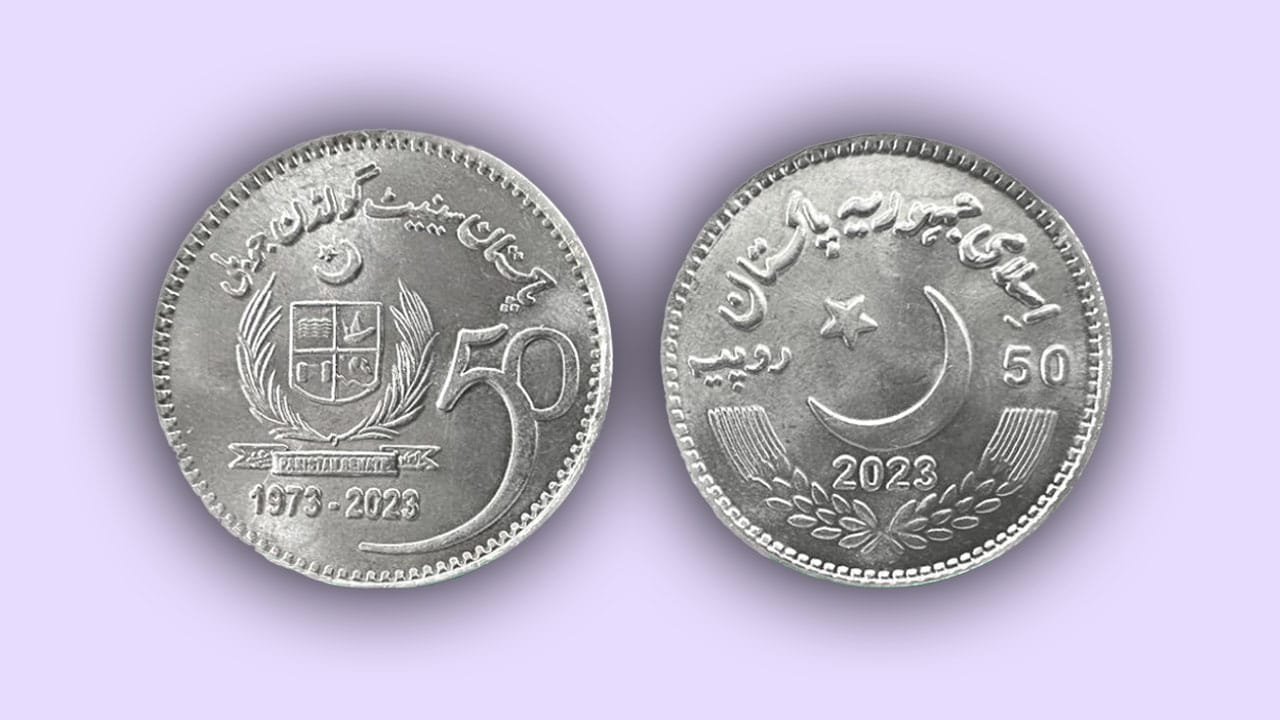
    The Federal Government of Pakistan has authorised the State Bank of Pakistan (SBP) to issue a commemorative coin of Rs50 to celebrate the Golden Jubilee of the Senate of Pakistan in 2023.

    The coin, which has a round shape milled with a dimension of 30.0 mm, weight of 13.5 grammes, and Cupro-Nickel metal contents (Copper 75 per cent & Nickel 25  per cent), shall be issued through the exchange counters of all field offices of SBP Banking Services Corporation starting from March 17, 2023.

    The Senate of Pakistan, also known as Aiwan-e-Bala Pakistan and constitutionally referred to as the House of the Federation, is the upper legislative chamber of the bicameral parliament of Pakistan. As a permanent House with equal representatives from all provinces of the country, the Senate symbolizes continuity in national affairs.

    The issuance of the commemorative coin is a fitting tribute to the Golden Jubilee of the Senate of Pakistan and underscores the significance of this occasion. It is expected to serve as a lasting reminder of the Senate’s contribution to Pakistan’s democratic process and its role in shaping the country’s political landscape.