Tag: paypal

  • ‘No intention of accusing anyone’; IT minister clarifies recent statement about PayPal deal

    ‘No intention of accusing anyone’; IT minister clarifies recent statement about PayPal deal

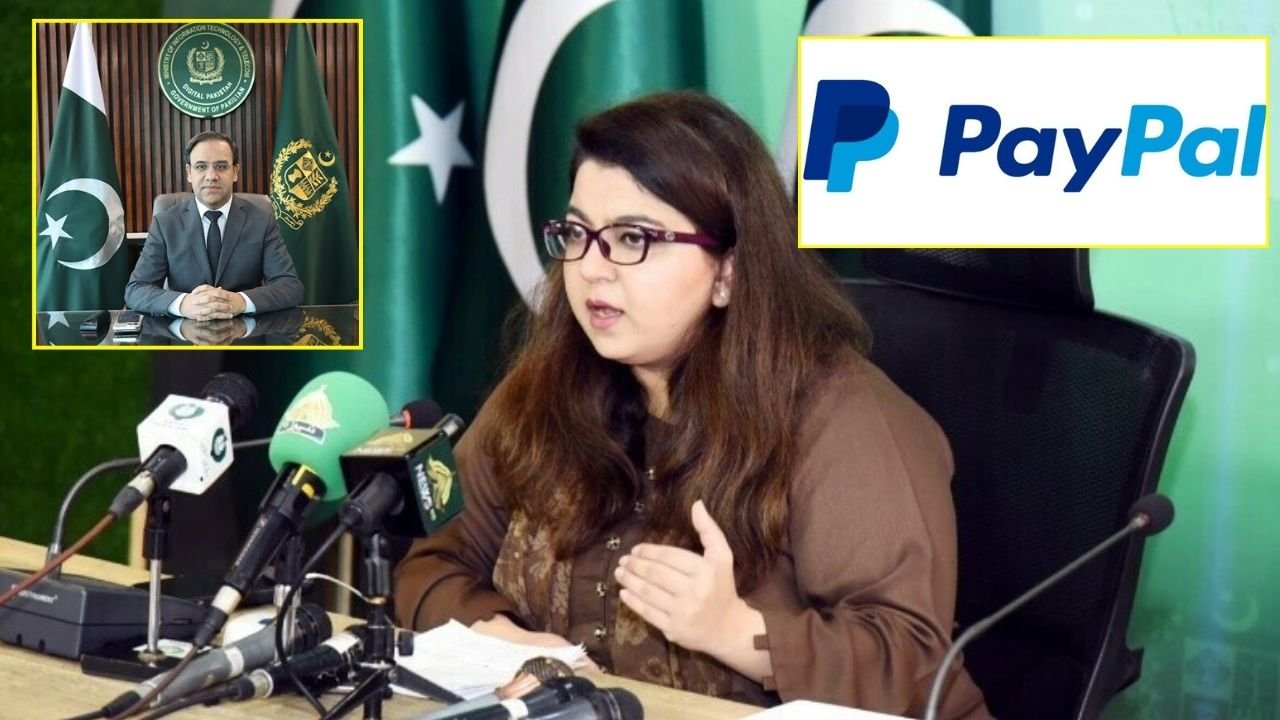
    Shaza Fatima Khawaja, the minister of State for IT and Telecommunication, was quoted by Business Recorder as saying that former caretaker federal minister Dr Umar Saif sabotaged a deal to bring PayPAYal to Pakistan by leaking the news before time.

    As per Business Recorder, the IT Minister told a presser, “Bringing PayPal to Pakistan was a private deal, which Dr Saif leaked before time. This action annoyed PayPal and he (Dr Umar) sabotaged it”.

    IT Minister released her response in a tweet to the viral statement: “I have been quoted out of context.” She further elaborated that her intention was never to name or blame anyone.
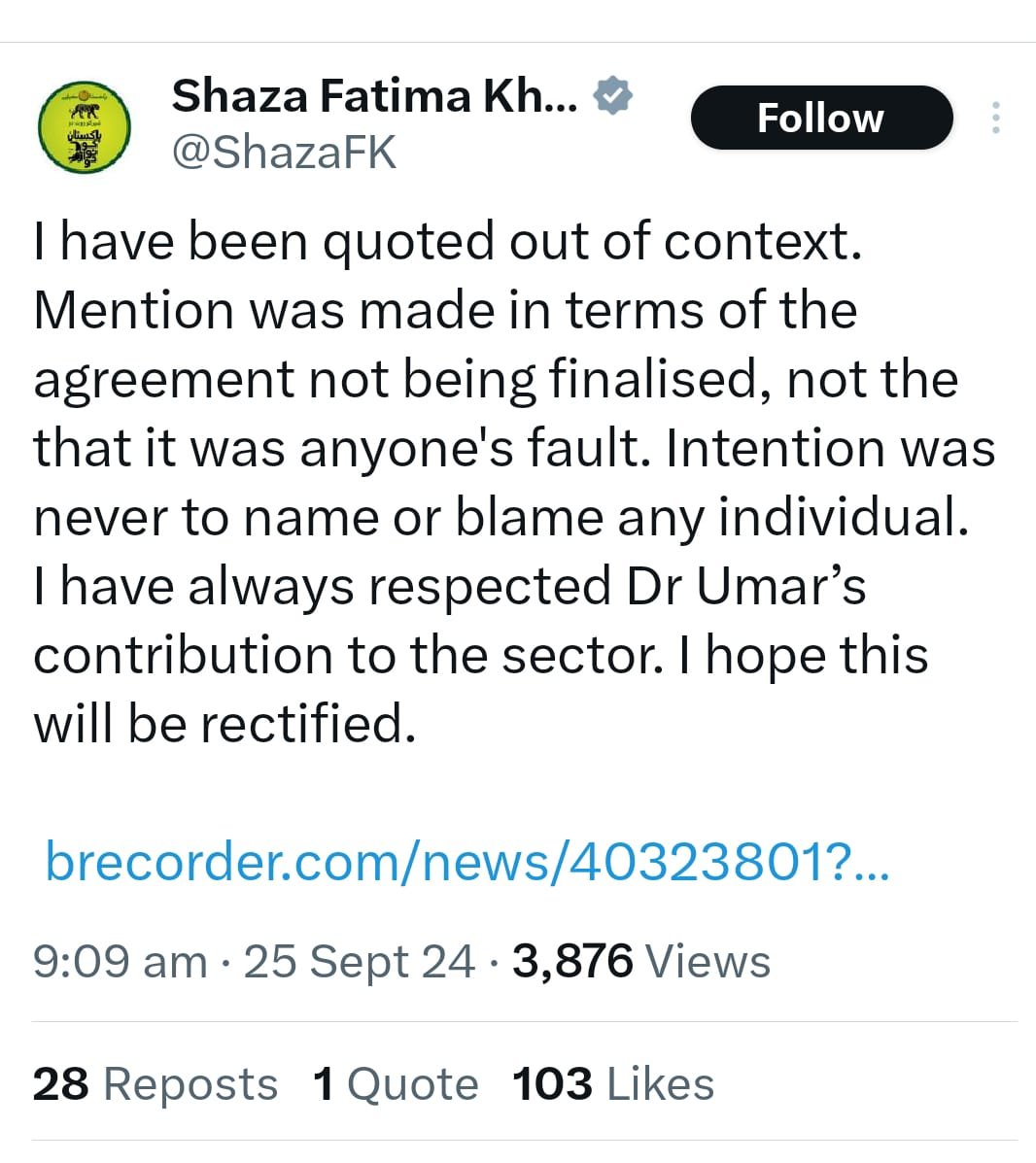
    The Current talked to Shaza Khawaja about her statement. “The comment was mainly that he deal was private and it didnt go through with no intention of accusing anyone,” she stressed. While mentioning her tweet, in which she said, “I have always respected Dr. Umar’s contribution to the sector,” she added that she had tweeted about it and made an official statement about it as well.

    The Current inquired her if she meant that the deal was made privately by Dr Umar, but she declined. “I just said that PayPal was a deal between two private entities that didnt go through,” she emphasised.

    Notably, a year ago, on October 25, it was reported that Umar Saif, the then Minister for IT and Telecommunication, had shared that Pakistan would hear “good news” regarding Paypal in the near future.

    However, the Current reached out to Dr Umar Saif, who refused to comment on it.
  • Pakistan welcomes PayPal through strategic alliance

    Pakistan welcomes PayPal through strategic alliance

    In a groundbreaking move for Pakistan’s burgeoning freelance community, PayPal is set to establish its presence in the country through a strategic partnership with an existing international payment gateway.

    The joint venture announcement is anticipated for next week, marking a significant milestone for the approximately 1.5 million freelancers and IT professionals in Pakistan, making it the fourth-largest community globally.

    Caretaker Minister for IT and Telecom, Dr Umar Saif, confirmed that PayPal would operate indirectly in Pakistan through this collaboration. This development follows persistent efforts by previous governments to convince PayPal to operate within the country, which initially faced resistance citing security concerns.

    Dr Saif emphasised the positive impact of this move on IT exports and freelancer remittances, underscoring recent measures supporting a more liberal financial regime. He revealed that IT exports have already experienced a notable surge, with a 13 per cent increase in November alone, and expressed confidence that this growth trajectory will continue.

    The IT Ministry, under Dr Saif’s leadership, has implemented various initiatives to bolster the IT sector. These include providing smartphones through installment plans, standardising quality tests for IT graduates, and approving the National Space Policy. Dr Saif expressed optimism about launching 5G services in Pakistan by July 2024, with a spectrum auction offering 300 MHz.

    The government aims to boost IT exports from the current $2.6 billion to approximately $5 billion by facilitating a more liberal financial regime. As part of this effort, IT companies can now retain 50 per cent of their export revenue in dollars in a local account, simplifying international payments.

    In addition to these measures, the government plans to launch 10,000 e-Rozgar centres across the country, providing facilities for freelancers and start-ups. The recently approved National Space Policy allows companies to utilise low-orbit satellites for communication services, further enhancing the technological landscape in Pakistan.

    The upcoming joint venture between PayPal and an international payment gateway is expected to usher in a new era of financial opportunities for Pakistan’s freelancers and IT professionals, contributing significantly to the country’s economic growth and global standing in the IT sector.

  • Here’s when PayPal and Stripe payment services will be available in Pakistan

    Here’s when PayPal and Stripe payment services will be available in Pakistan

    Dr Umar Saif, Pakistan’s interim Federal Minister for IT and Telecommunications, shared noteworthy developments on Wednesday regarding the imminent availability of PayPal and Stripe payment gateways within the country. Addressing the flourishing freelancing community, he drew attention to the current scarcity of financial tools to facilitate payments within this sector. 

    During these discussions with major industry players, including PayPal, Stripe, and Wise, a compelling case for Pakistan was presented, despite reservations, including those arising from the Financial Action Task Force (FATF). 

    Dr Saif expressed optimism, foreseeing promising updates on PayPal and Stripe services in the coming four to six weeks, heralding positive implications for the freelancer community. 

    Highlighting the substantial size and potential of Pakistan’s IT freelancing workforce, the country ranks as the world’s second-largest online workforce, boasting approximately 1.5 million active IT freelancers. Nonetheless, the sector’s growth has been stymied by infrastructure limitations. 

    To address these challenges, the E-Rozgar programme is set to offer interest-free loans to the private sector, with plans for establishing co-working spaces capable of accommodating 500,000 individuals. Dr Saif also revealed a collaborative initiative with the Higher Education Commission (HEC) to introduce standardised testing for IT graduates. 

    The significance of Pakistan’s IT sector cannot be understated, with around 19,000 companies contributing substantially to both employment and the national economy, boasting official exports worth $2.5 billion. 

    Another pertinent issue discussed by Dr Saif is the reluctance of some IT companies to maintain foreign exchange reserves and revenues abroad due to constraints on repatriating US dollars. Despite conservative estimates placing Pakistan’s IT exports at $4–4.5 billion, the reality is obscured by restrictions on US-dollar spending. 

    Fueled by cooperative efforts between the IT ministry and P@SHA, a positive development has emerged. IT companies can now retain 50 per cent of their revenue in US dollar accounts and receive corporate debit cards from banks, facilitating international payments without hindrance. 

    In addition, the State Bank of Pakistan (SBP) has played a crucial role in assisting IT exporters. The SBP recently increased the permissible retention limit for IT exporters, allowing them to hold 50 per cent of their export proceeds in Exporters’ Specialised Foreign Currency Accounts (ESFCAs) with the aim of bolstering IT and IT-enabled services exports. 

  • PayPal allows crypto buying and selling

    PayPal has announced that its users in the United Kingdom (UK) will now be able to purchase, sell, and hold bitcoin and other cryptocurrencies starting this week, Reuters has reported.

    Customers will be able to buy bitcoin, ether, litecoin and bitcoin cash through their PayPal wallets online or on the mobile app.

    “The pandemic has accelerated digital change and innovation across all aspects of our lives— including the digitisation of money and greater consumer adoption of digital financial services,” said Jose Fernandez da Ponte, Vice President and General Manager, Blockchain, Crypto and Digital Currencies at PayPal.

    “Our global reach, digital payments expertise, and knowledge of consumer and businesses, combined with rigorous security and compliance controls provides us the unique opportunity, and the responsibility, to help people in the UK to explore cryptocurrency. We are committed to continue working closely with regulators in the UK, and around the world, to offer our support—and meaningfully contribute to shaping the role digital currencies will play in the future of global finance and commerce.”

    Bitcoin is the world’s biggest digital currency, which hit a record high of nearly $65,000 in April before tumbling below $30,000 in July as Chinese regulators extended a crackdown on the market. It has since recovered to a price of $48,400.

  • PayPal enters cryptocurrency market

    PayPal, one of the largest merchant network for online payments has entered the cryptocurrency market, announcing that its consumers will be able to buy and sell Bitcoins and other virtual currencies using their PayPal accounts.

    Other payment firms, such as Square’s Cash app and Revolut, have already offered cryptocurrencies for sale.

    When it comes to using virtual coins, PayPal will convert the cryptocurrency into the relevant national currency, so the company being paid will never receive the virtual coins – just the correct amount of pounds or dollars.

    Those virtual coins could then be used to buy things from the 26 million sellers which accept PayPal, the company said.

    PayPal plans to roll out buying options in the US over the next few weeks, with the full rollout due early next year.

    Bitcoin prices rose alongside the news, breaking the $12,000 (£9,170) mark.

    The other cryptocurrencies to be added first will be Ethereum, Litecoin, and Bitcoin Cash (a spin-off from Bitcoin).

    All could be stored “directly within the PayPal digital wallet”, it added.

    Cryptocurrencies are still a niche payment method because of the rapid change in prices they can experience as compared to traditional state-backed currencies. However, they became really popular among some types of investors.

    PayPal said it was aiming “to increase consumer understanding and adoption of cryptocurrency”.

    “As part of this offering, PayPal will provide account holders with educational content to help them understand the cryptocurrency ecosystem,” it said.

  • Facebook to pay users $600 for taking survey

    Facebook to pay users $600 for taking survey

    Facebook will pay $600 to users sharing opinions on its new application “Viewpoint” that will be introduced to facilitate its market research purpose.

    Viewpoint will give back users a voluntarily control to participate in market research, surveys and different programme, for which Facebook has announced to pay $600 a year.

    The purpose of the application is to collect information directly from the users to improve the performance of its products like Facebook, Whatsapp, Instagram, Oculus, Portal and others.

    “Today, we’re introducing Facebook Viewpoints, a new market research app that rewards people for participating in surveys, tasks, and research. We believe the best way to make products better is to get insights directly from people who use them. We’ll use these insights to improve products like Facebook, Instagram, WhatsApp, Portal and Oculus, and to benefit the broader community,” Facebook Product Manager Erez Naveh said.

    The participants will be paid through PayPal after scoring a set number of points in the programme. The users will also be asked to carry out various tasks to acquire feedback to improve the product or service, such as assisting the company’s artificial intelligence technology.

  • PayPal not coming to Pakistan despite Asad Umar’s promise

    Former finance minister Asad Umar, earlier this year, had announced that the government was pushing for PayPal, the online payment system that supports online money transfer in over 200 countries, to come to Pakistan.

    A delegation from Pakistan’s Information Technology Ministry visited the United States in October to convince them to come to Pakistan but failed.

    Urdu News reported that PayPal officials told the delegation that Pakistan was not included in its three-year road map because it didn’t have adequate business opportunities.

    A Pakistani official of the National Institute of Technology said that PayPal changes its road map every year and Pakistan is still hopeful that they might come into the Pakistani market in the future.