Tag: PBS

  • Weekly inflation eases 0.52 per cent as prices of 15 essential items decline

    Weekly inflation eases 0.52 per cent as prices of 15 essential items decline

    Weekly inflation in Pakistan eased by 0.52 per cent in one week, while on an annual basis, the inflation was recorded up by over 12 per cent in the week ending September 19.

    According to the Pakistan Bureau of Statistics (PBS), which calculates short term inflation through the sensitive price indicator revealed price movements for essential food items witnessed in the week under observation.

    The prices of 51 essential items were analysed in different cities across the country and it was revealed that prices of 17 items increased in Pakistan, while prices of 15 items declined and prices of 19 items remained almost unchanged.

    Looking at the data released by the PBS, a major reduction was seen in the price of diesel, onions, petrol, sugar, and tomatoes.

    On the other hand, pulse gramme, chicken, cooked daal, cooked beef, and shirting.

    Cement prices also reduced in the country as the rate for 50 kg cement bag was recorded at Rs1,466, about 22.85 per cent more than the previous year.

    Furthermore, yearly SPI for the lowest-income group has increased by more than 9 per cent.

    Item Change Direction
    Diesel -5.00 per cent Decrease
    Onions -4.45 per cent Decrease
    Petrol -3.88 per cent Decrease
    Tomatoes -1.93 per cent Decrease
    Sugar -0.70 per cent Decrease
    Chicken +1.49 per cent Increase
    Pulse Gram +0.83 per cent Increase
    Cooked Daal +0.81 per cent Increase
    Shirting +0.74 per cent Increase
    Cooked Beef +0.72 per cent Increase
    Price changes
  • Pakistan’s weekly inflation dips slightly amid lower fuel and onion prices

    Pakistan’s weekly inflation dips slightly amid lower fuel and onion prices

    Pakistan’s weekly inflation, as measured by the Sensitive Price Indicator (SPI), registered a slight decline of 0.16 per cent for the combined consumption groups during the week ending on August 15, according to the Pakistan Bureau of Statistics (PBS).

    The SPI for the period under review stood at 322.03 points, down from 322.54 points the previous week. However, compared to the corresponding week last year, the SPI for the combined consumption group saw a significant increase of 16.86 per cent.

    The SPI, with the base year set at 2015-16, covers 17 urban centres and tracks 51 essential items across all expenditure groups.

    For the lowest consumption group, with a monthly expenditure of up to Rs17,732, the SPI witnessed a marginal increase of 0.07 per cent, rising to 311.04 points from 310.83 points in the previous week.

    Similarly, the SPI for the Rs 17,732-22,888 consumption group saw a minimal rise of 0.01 per cent. In contrast, for consumption groups with expenditures ranging from Rs22,889-29,517, Rs29,518-44,175, and above Rs44,175, the SPI declined by 0.05 per cent, 0.10 per cent, and 0.25 per cent, respectively.

    Out of the 51 items monitored during the week, the prices of 19 items (37.25 per cent) increased, 13 items (25.50 per cent) decreased, while the remaining 19 items (37.25 per cent) remained stable.

    The key items that saw a decrease in average prices on a week-on-week basis included onions (4.91 per cent), petrol (3.15 per cent), diesel (2.44 per cent), wheat flour (1.83 per cent), pulse moong (1.81 per cent), chicken (1.57 per cent), bananas (1.36 per cent), LPG (0.90 per cent), sugar (0.59 per cent), potatoes (0.58 per cent), and pulse masoor (0.56 per cent).

    Conversely, items that recorded an increase in their average prices included tomatoes (34.77 per cent), eggs (4.78 per cent), garlic (1.99 per cent), beef (0.88 per cent), cooked beef (0.41 per cent), georgette (0.40 per cent), gur (0.39 per cent), curd (0.32 per cent), and mustard oil (0.28 per cent).

  • Pakistan’s cement exports jump by 78.23% to over $32 million in May 2024

    Pakistan’s cement exports jump by 78.23% to over $32 million in May 2024

    Pakistan’s cement exports have experienced a significant increase of 40.46 per cent during the first eleven months of the financial year 2023-24, compared to the same period last year.

    According to the Pakistan Bureau of Statistics (PBS), cement exports reached US $236.797 million from July to May 2023-24, up from US $168.583 million during the corresponding period of 2022-23.

    The volume of cement exports also saw a substantial rise, surging by 66.78 per cent. The exported quantity increased from 3,707,427 metric tonnes to 6,183,117 metric tonnes over the same period.

    In a year-on-year comparison, cement exports for May 2024 showed a remarkable increase of 78.23 per cent, totalling US $32.251 million, compared to US $18.095 million in May 2023.

    Additionally, on a month-on-month basis, cement exports grew by 28.62 per cent in May 2024, rising from US $25.074 million in April 2024, as reported by the PBS.

    These figures highlight a robust growth trajectory for Pakistan’s cement industry, indicating strong demand and a positive outlook for the sector.

  • Weekly inflation rises with tomato prices up 27.14%, chicken 11.75%

    Weekly inflation rises with tomato prices up 27.14%, chicken 11.75%

    The Weekly Sensitive Price Indicator (SPI) for the Combined Group saw a 1.3 per cent week-over-week increase during the week ending June 13, 2024, according to data released by the Pakistan Bureau of Statistics (PBS).

    The SPI also showed a significant year-over-year rise of 23.03 per cent compared to the same period last year.

    The Combined Index reached 313.93, up from 309.91 the previous week, and significantly higher than the 255.17 recorded a year ago.

    During the week, out of 51 monitored items, prices of 19 items (37.26 per cent) increased, 8 items (15.68 per cent) decreased, and 24 items (47.06 per cent) remained stable.

    Major price increases were observed in tomatoes (27.14 per cent), chicken (11.75 per cent), electricity for Q1 (8.73 per cent), pulse gram (7.19 per cent), and LPG (6.14 per cent). On the other hand, notable price decreases were recorded in onions (5.00 per cent), chilies powder (1.95 per cent), rice basmati broken (1.65 per cent), garlic (1.32 per cent), and rice IRRI (1.08 per cent).

    The SPI percentage change by income groups indicated increases across all quantiles, ranging from 1.01 per cent to 1.31 per cent on a weekly basis. The lowest income group experienced a rise of 1.01 per cent, while the highest income group saw an increase of 1.29 per cent.

    Yearly analysis of SPI changes across different income segments showed increases ranging between 16.29 per cent and 26.07 per cent. These statistics highlight the varying impact of price changes on different income groups, reflecting broader economic trends and inflationary pressures within the country.

  • Inflation edges higher as weekly SPI indicates increase in prices

    Inflation edges higher as weekly SPI indicates increase in prices

    According to the Weekly Sensitive Price Indicator (SPI) released by the Pakistan Bureau of Statistics (PBS), the Combined Group’s SPI increased by 0.04 per cent during the week ending February 22, 2024.

    Additionally, the SPI surged by 30.68 per cent YoY compared to the same period last year.

    As of February 22, 2024, the Combined Index stood at 315.31, a slight uptick from 315.18 on February 15, 2024. A year ago, on February 23, 2023, the index was significantly lower at 241.29.

    Analysing the data for 51 items, it was found that the average prices of 23 items increased, 8 items decreased, and 20 items remained stable.

    Notable increases during the week were observed in the prices of tomatoes (22.71 per cent), bananas (7.40 per cent), diesel (3.02 per cent), chicken (1.22 per cent), and petrol (1.00 per cent).

    Conversely, onions (14.42 per cent), eggs (11.19 per cent), LPG (1.82 per cent), cooking oil (5 litres) (0.75 per cent), and wheat flour (0.36 per cent) experienced significant decreases.

    Breaking down the SPI percentage change by income groups, it was noted that SPI decreased across all 3 quantiles while increasing across 2 quantiles. The lowest-income group saw a weekly decline of -0.08 per cent, while the highest-income group recorded a rise of 0.09 per cent.

    On a yearly basis, the SPI change across different income segments revealed an increase ranging between 25.53 per cent and 35.39 per cent. The lowest-income group witnessed a 25.53 per cent increase, while the highest-income group recorded a 28.22 per cent rise.

    Specifically, the average price of Sona urea reached Rs4,928 per 50 kg bag, reflecting a 9.19 per cent increase from the previous week and a substantial 69.14 per cent surge compared to the same period last year.

    The surge in prices, especially for essential items, poses a challenge for the general populace, particularly those in lower-income groups.

    Authorities and policymakers are likely to face increasing pressure to address and mitigate the impact of inflation on the economy and the daily lives of people.

  • Pakistan’s mobile phone imports skyrocket, surpassing $987 million in first half of FY 23-24

    Pakistan’s mobile phone imports skyrocket, surpassing $987 million in first half of FY 23-24

    Pakistan has witnessed a remarkable surge in mobile phone imports, reaching $987.539 million during the first half (July–January) of the fiscal year 2023–24. 

    This marks a substantial growth of 138.08 per cent compared to the same period in the previous fiscal year, where imports totaled $414.800 million.

    The data, released by the Pakistan Bureau of Statistics (PBS), underscores the country’s increasing reliance on imported mobile devices.

    In January 2024 alone, Pakistan’s mobile phone imports rose by 10.70 per cent on a month-on-month basis, totaling $194.928 million, compared to $176.093 million in December 2023. 

    Year-on-year comparisons reveal an even more staggering growth of 275.15 per cent in January 2024, compared to $51.960 million in January 2023.

    The overall telecom imports into Pakistan during July–January 2023–24 amounted to $1.243 billion, showcasing a robust 93.06 per cent growth compared to the same period in the previous fiscal year. 

    Year-on-year, the growth in overall telecom imports stood at an impressive 197.07 per cent, reaching $232.709 million in January 2024, compared to $78.336 million in January 2023.

    Despite challenges faced by the local manufacturing sector, including a decline of around four per cent in local manufacturing and assembling of mobile handsets during the calendar year 2023, commercial imports of mobile handsets increased. 

    Official data revealed that local manufacturing plants produced 21.28 million mobile handsets in 2023, compared to 21.94 million in 2022 and 24.66 million in 2021. However, commercial imports rose from 1.53 million in 2022 to 1.58 million in 2023.

    Moreover, of the locally manufactured and assembled mobile handsets in 2023, 13 million were 2G devices, and 8.28 million were smartphones. 

    According to the Pakistan Telecommunication Authority (PTA), 59 per cent of mobile devices in Pakistan are smartphones, while 41 per cent are 2G devices.

    Despite the challenges faced by the local manufacturing sector, the significant growth in mobile phone imports underscores Pakistan’s increasing reliance on imported devices, contributing to the country’s evolving telecom landscape.

  • ECC approves Rs7.49 billion Ramzan Relief Package

    ECC approves Rs7.49 billion Ramzan Relief Package

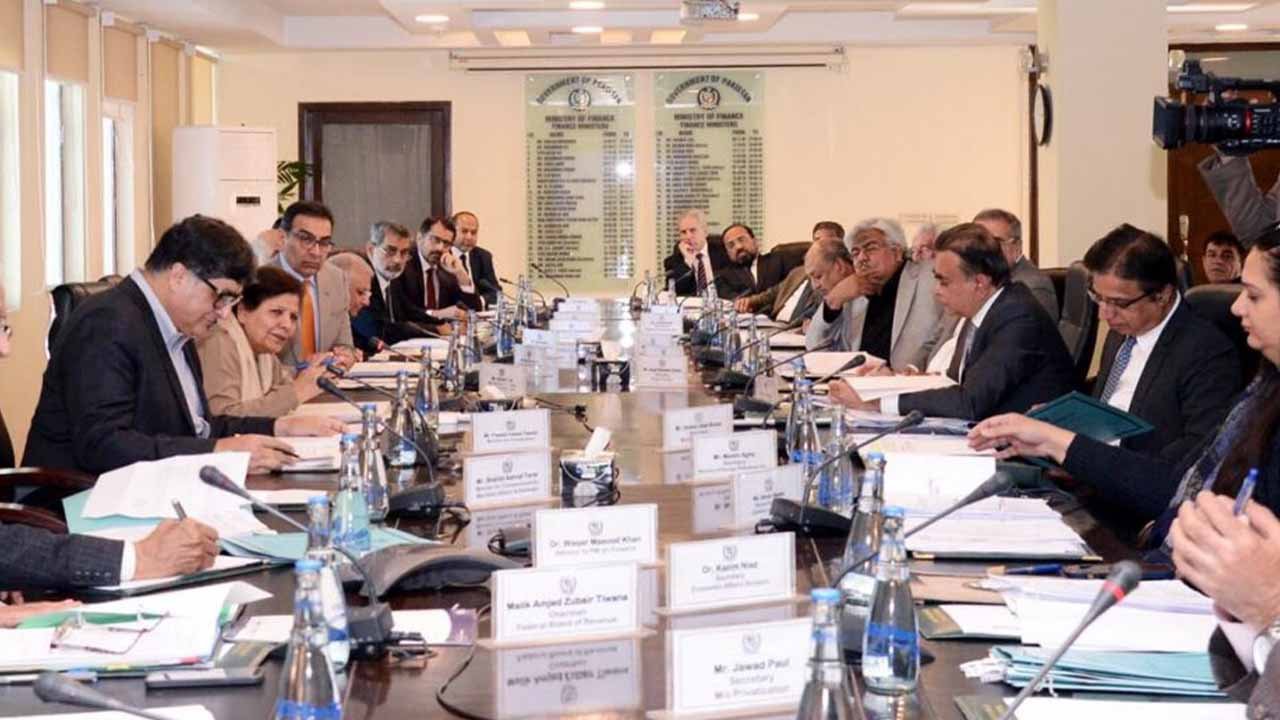
    In a significant move to provide relief to the general public during the upcoming Ramazan, the Economic Coordination Committee (ECC), in its latest meeting chaired by the Federal Minister for Finance, Revenue, and Economic Affairs, Dr Shamshad Akhtar, approved the Ramzan Relief Package-2024.

    The approved package, with a net amount of Rs7.49 billion, is specifically designed to benefit targeted beneficiaries of the Benazir Income Support Programme (BISP). This allocation is part of the budget for the fiscal year 2023-24.

    During the meeting, the committee also discussed and gave the green light to a summary from the Ministry of Commerce’s Tariff Policy Wing.

    The summary pertained to “Individual Tariff Rationalization Proposals from Different Sectors for Review of Custom Duties.” Following thorough deliberations, the committee advised that tariff rationalization should be coordinated with the overall trade policy.

    Furthermore, a proposal related to the “Permission to Import Wheat and Export of Wheat Flour under Export Facilitation Scheme 2021” was presented by the Ministry of Commerce.

    The ECC not only approved this proposal but also directed the relevant ministries to prepare comprehensive plans aimed at enhancing opportunities for value-added exports.

  • Minister urges officials to use PBS monitoring app for ensuring price stability across provinces 

    Minister urges officials to use PBS monitoring app for ensuring price stability across provinces 

    In a bid to ensure consistent prices across provinces, Muhammad Sami Saeed, the Caretaker Minister for Planning, urged Deputy Commissioners and Assistant Commissioners on Tuesday to rigorously utilise the Decision Support System (DSS) app developed by the Pakistan Bureau of Statistics (PBS) for effective price monitoring. 

    According to a press release issued today, Muhammad Sami Saeed chaired a meeting of the National Price Monitoring Committee (NPMC) in Islamabad.  

    The gathering focused on essential aspects such as the prices and supply of essential commodities, the margin between wholesale and retail prices, and the availability of necessary items. 

    During the meeting, the Chief Statistician from PBS presented the price movements of 51 essential items collected from the markets in 17 cities.  

    Minister Saeed stressed the importance of maintaining price stability across provinces and urged participants to oversee the supply of essential items, available stock levels, and pricing mechanisms. 

    Highlighting the critical role of administrative oversight and monitoring, Minister Saeed emphasised the need for vigilance in ensuring price stability.  

    The meeting also explored the potential utilization of remote sensing technology provided by SUPARCO to enhance monitoring of cropped areas and predict the supply situation of essential food items in the provinces. 

    Encouraging the exploration and implementation of remote sensing capabilities, the minister aimed to strengthen monitoring and oversight capacities.  

    He underscored the importance of continued vigilance and proactive measures to address fluctuations in commodity prices and ensure a smooth supply chain. 

    Representatives from the Ministry of Industries and Commerce, utility stores, and provincial governments attended the meeting, signifying a collaborative effort to maintain stability in commodity prices. 

  • Pakistan earned $1,523 million by providing IT services to various countries: report

    Pakistan earned $1,523 million by providing IT services to various countries: report

    Pakistan has earned US$1,523.280 million by providing different Information Technology (IT) services to various countries during the first seven months of the current fiscal year 2022-23, according to the Pakistan Bureau of Statistics (PBS).

    This represents a growth of 2.38 per cent as compared to US$1,487.865 million earned during the same months of the fiscal year 2021-22.

    During July-January (2022-23), the export of computer services climbed by 2.87 per cent as it increased from US$1,191.575 million last fiscal year to US$1,225.730 million this year.

    The exports of software consultancy services saw an increase of 5.57 per cent, from US$430.309 million to US$454.283 million while the exports of hardware consultancy services also rose by 158.07 per cent from US$1.357 million to US$3.502 million.

    According to APP, the export and import of computer software-related services surged by 11.89 per cent, from US$312.484 million to US$349.635 million whereas the exports of repair and maintenance services increased to US$1.594 million from US$0.770 million.

    The export of telecommunication services also witnessed an increase of 0.60 per cent as these went up from US$293.180 million to US$294.950 million during the months under review, the data revealed.

    Among the telecommunication services, the export of call centre services rose by 2.30 per cent during the period as its exports increased from US$118.669 million to US$121.398 million whereas the export of other telecommunication services decreased by 0.55 per cent, from US$174.511 million to US$173.552 million during the period under review, the PBS data revealed.

    Moreover, the exports of other computer services witnessed a decline of 6.70 per cent going down from US$446.655 million to US$416.716 million.

    Meanwhile, the export of information services during the period under review declined by 16.40 per cent going down from US$3.110 million to US$2.600 million.

  • Weekly Inflation jumps 34.5% from last year due to petrol and food prices

    Weekly Inflation jumps 34.5% from last year due to petrol and food prices

    According to official statistics released on Friday, prices rose at their fastest pace in more than four months in the outgoing week, mostly due to rises in the cost of food and petroleum.

    Sensitive Price Indicator (SPI) data showed that as a result, short-term inflation increased from the previous week’s 32.6 per cent to 34.5 per cent on an annual basis for the week that ended on February 2, according to the Pakistan Bureau of Statistics (PBS).

    The week-on-week inflation figure also jumped to 2.8 per cent from 0.45 per cent a week ago. Of the 51 items tracked, prices of 32 items increased, one item decreased, whereas those of 18 items remained unchanged.

    The 34.5 per cent surge in prices is the highest increase since the week ending Sept 15, 2022, when the SPI inflation was recorded at 40.6 per cent.

    The items whose prices increased the most compared to the previous year were onions (up 556.36 per cent), chicken (90.9 per cent), eggs (81.7 per cent), diesel (81.4 per cent), petrol (68.8 per cent), tea (63.9 per cent), broken basmati rice (63.4 per cent), rice Irri-6/9 (62.4 per cent), pulse moong (61.1 per cent), bananas (57.4 per cent), gram pulse (53.2 per cent), bread (48.8 per cent), wheat flour (48.4 per cent), powdered salt (48.1 per cent), maash pulse (46.2 per cent), LPG (43.8 per cent), mustard oil (42.1 per cent), and washing soap (42 per cent).

    Prices of tomatoes (62 per cent), powdered chillies (15.3 per cent), electricity (12.3 per cent) and gur (0.27 per cent) dropped.

    On a week-on-week basis, the highest change was noted in the prices of garlic (17.1 per cent), gram pulse (7.1 per cent), bananas (4.8 per cent), chicken (4.4 per cent), mash pulse (3.9 per cent), masoor pulse (3.9 per cent), mustard oil (3.5 per cent), eggs (3.4 per cent), moong pulse (2.3 per cent), sugar (2.3 per cent), vegetable ghee (2.13 per cent), and broken basmati rice (2.12 per cent), LPG (17.6 per cent), petrol (16.2 per cent), and diesel (15.3 per cent).

    The SPI increased by 1.71 per cent for the lowest-income group (i.e. people earning below Rs17,732 per month) and by 3.3 per cent for the group with a monthly income of more than Rs44,175, according to the PBS.