Tag: peace

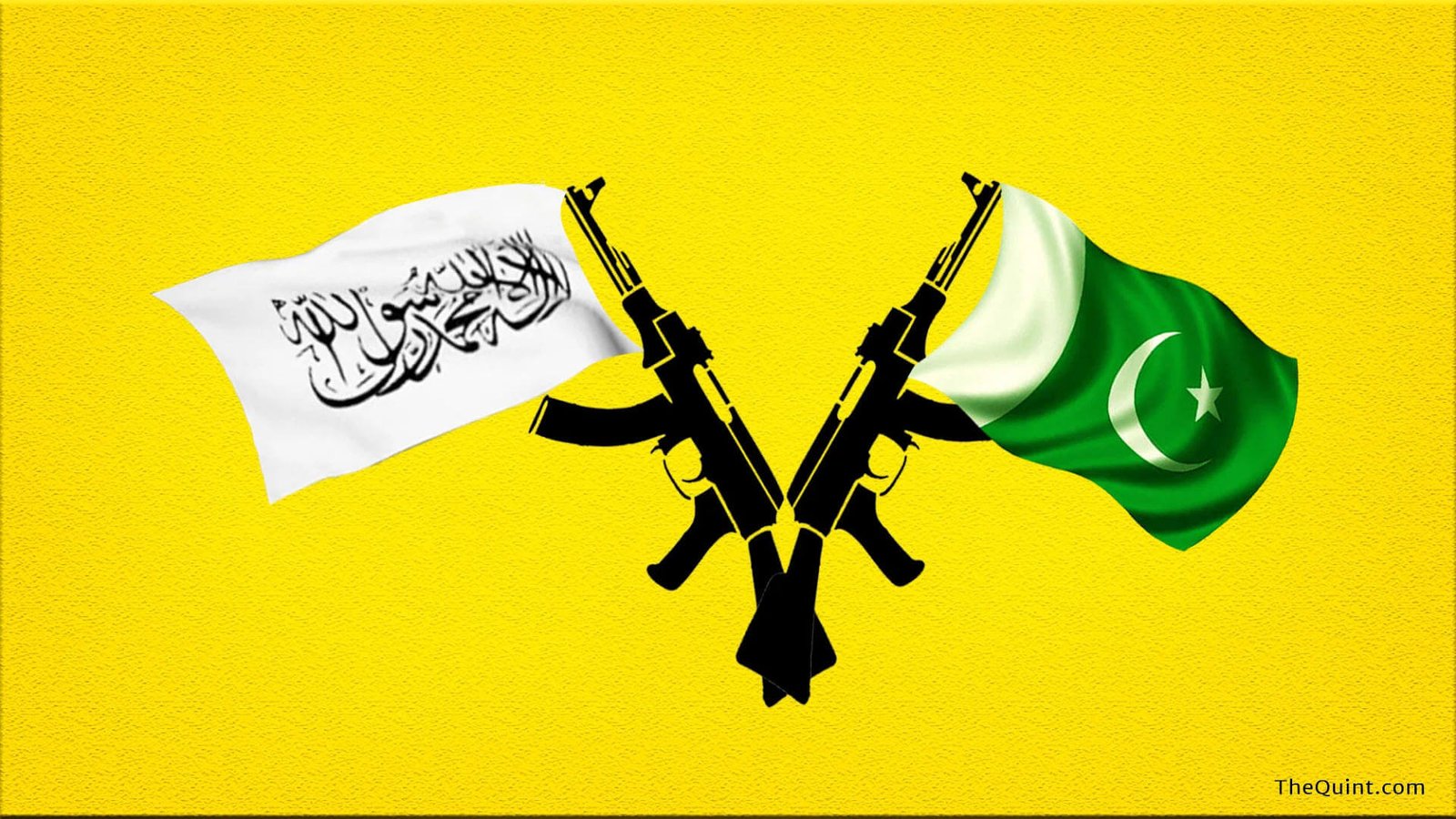
  • Pakistan says no to talks with Taliban

    Pakistan says no to talks with Taliban

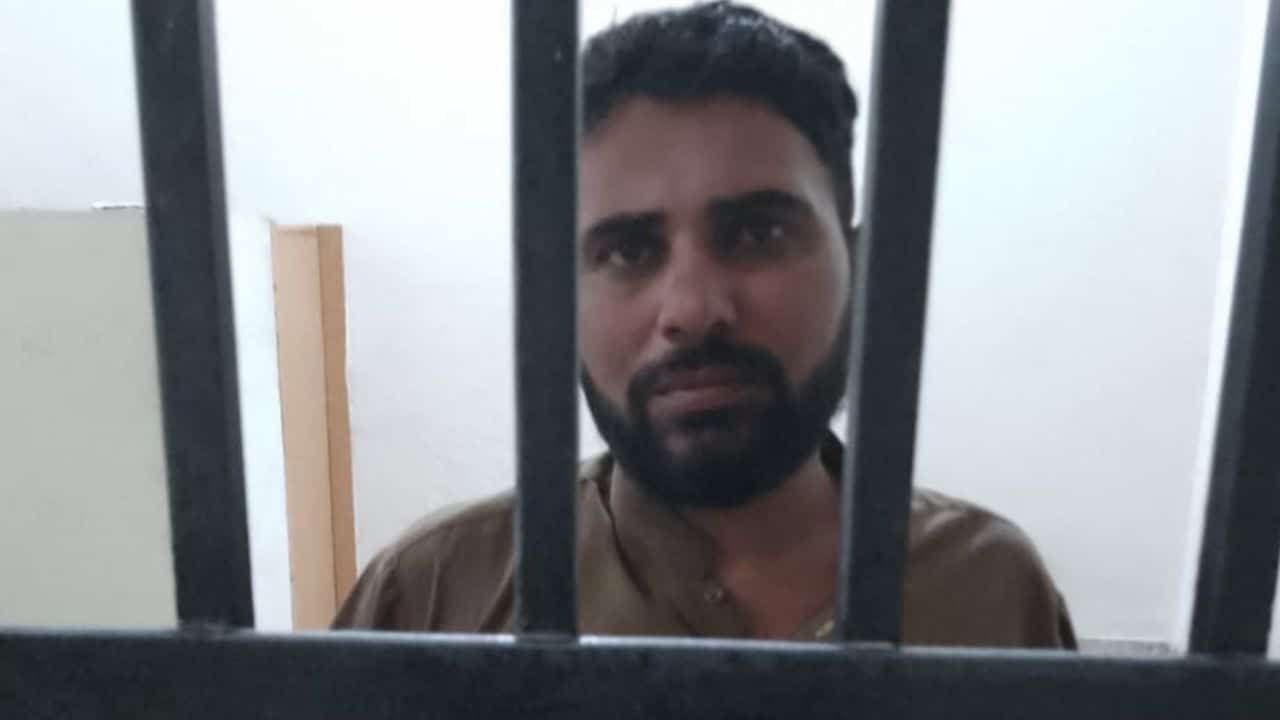
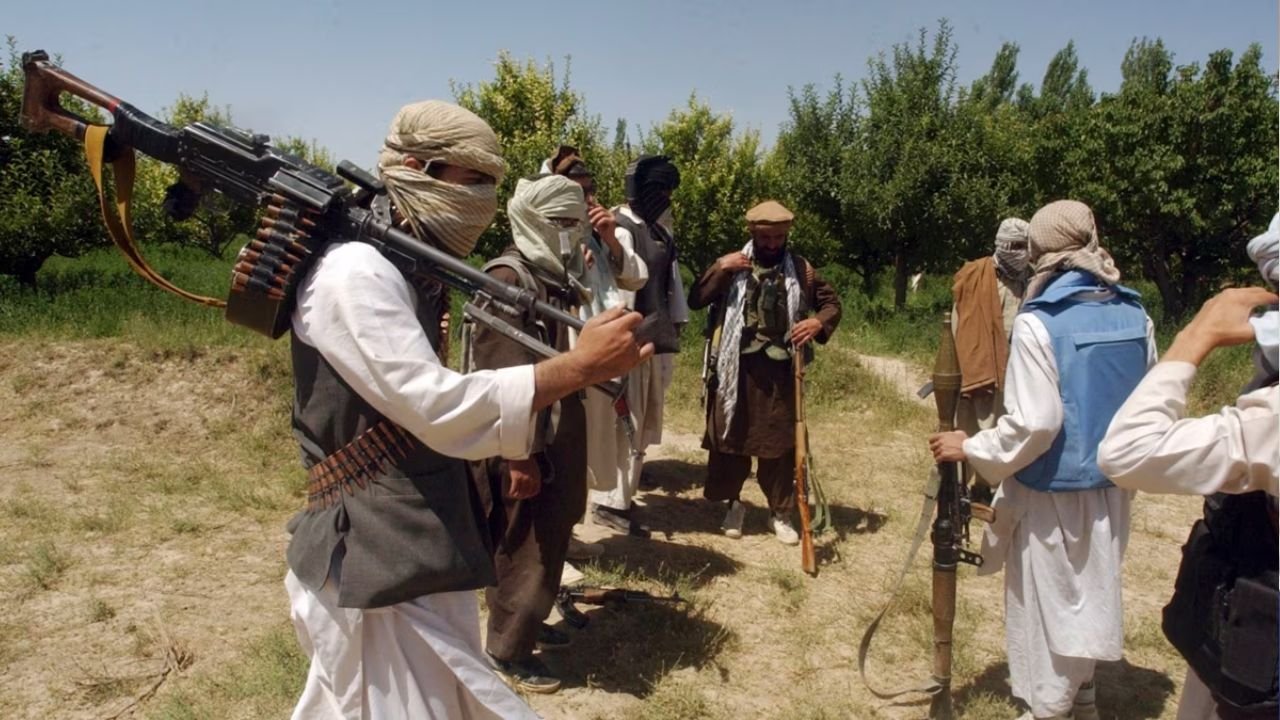
    Foreign Ministry spokesperson Mumtaz Zahra Baloch has said that Pakistan is not engaged in peace talks with the proscribed group Tehreek-e-Taliban Pakistan (TTP), emphasising that neither does it plan to hold such talks in future.

    She remarked in a press briefing, “I will reiterate what we have said in the past. Pakistan is not holding any talks with the terrorist organisation, the TTP. We have no plans to hold these talks with TTP.”

    Recently, a video gained traction on social media showing the Afghan deputy interior minister advising Pakistan to resolve issues with TTP through talks because Pakistani military could not win this war. He also underscored that TTP does not enjoy public support at all that is why they should mediate with Pakistani authorities too.

    When asked about the Afghan minister’s comments, Baloch replied, “Islamabad expects the Afghan authorities to take action against these terror groups and their leadership for the crimes they are committing and terrorist attacks for which they are responsible in Pakistan.”

    The strong statement came after a terror attack in Shangla targeted Chinese nationals. CTD’s investigation hints that the attack was planned in Afghanistan.

  • Nobel winner Yunus convicted in Bangladesh labour law case

    Nobel winner Yunus convicted in Bangladesh labour law case

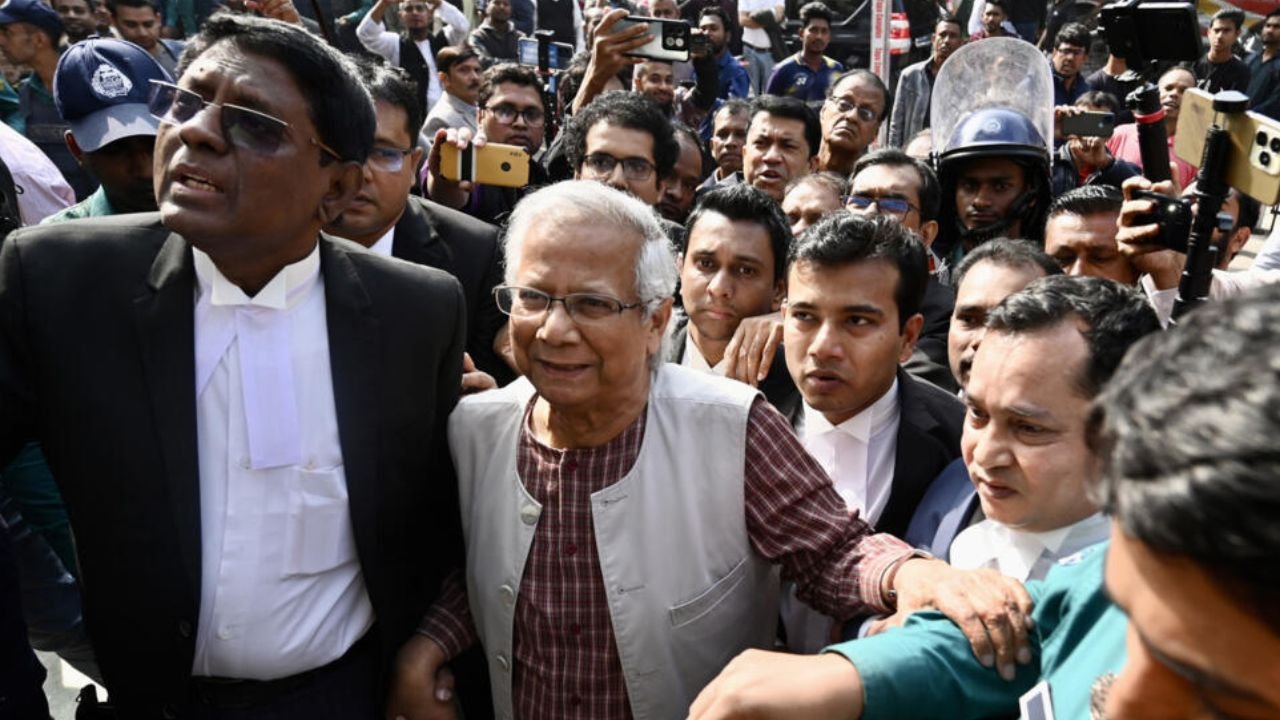
    Dhaka (AFP) – Nobel peace laureate Muhammad Yunus was convicted on Monday of violating Bangladesh’s labour laws in a case decried by his supporters as politically motivated.

    Yunus, 83, is credited with lifting millions out of poverty with his pioneering microfinance bank but has earned the enmity of longtime Prime Minister Sheikh Hasina, who has accused him of “sucking blood” from the poor.

    Hasina has made several scathing verbal attacks against the internationally respected 2006 Nobel Peace Prize winner, who was once seen as a political rival.

    Yunus and three colleagues from Grameen Telecom, one of the firms he founded, were accused of violating labour laws when they failed to create a workers’ welfare fund in the company.

    A labour court in the capital Dhaka convicted and sentenced them to “six months’ simple imprisonment”, lead prosecutor Khurshid Alam Khan told AFP, adding that all four were immediately granted bail pending appeals.

    All four deny the charges. Dozens of people staged a small demonstration of support outside the court for Yunus, who left without speaking to media.

    “This verdict is unprecedented,” Abdullah Al Mamun, a lawyer for Yunus, told AFP. “We did not get justice.”

    Yunus is facing more than 100 other charges over labour law violations and alleged graft.

    He told reporters after one of the hearings last month that he had not profited from any of the more than 50 social business firms he had set up in Bangladesh.

    “They were not for my personal benefit,” Yunus said.

    Another of his lawyers, Khaja Tanvir, told AFP that the case was “meritless, false and ill-motivated”.

    “The sole aim of the case is to harass and humiliate him in front of the world,” he said.

    ‘Travesty of justice’

    Irene Khan, a former Amnesty chief now working as a UN special rapporteur who was present at Monday’s verdict, told AFP the conviction was “a travesty of justice”.

    “A social activist and Nobel laureate who brought honour and pride to the country is being persecuted on frivolous grounds,” she said.

    In August, 160 global figures, including former US president Barack Obama and ex-UN secretary-general Ban Ki-moon, published a joint letter denouncing “continuous judicial harassment” of Yunus.

    The signatories, including more than 100 of his fellow Nobel laureates, said they feared for “his safety and freedom”.

    Critics accuse Bangladeshi courts of rubber-stamping decisions made by Hasina’s government, which is all but certain to win another term in power next week at elections boycotted by the opposition.

    Her administration has been increasingly firm in its crackdown on political dissent, and Yunus’s popularity among the Bangladeshi public has for years earmarked him as a potential rival.

    Amnesty International accused the government of “weaponizing labour laws” when Yunus went to trial in September and called for an immediate end to his “harassment”.

    Criminal proceedings against Yunus were “a form of political retaliation for his work and dissent”, it said.

  • In a rare move, UN secretary-general invokes Article 99 on Gaza

    In a rare move, UN secretary-general invokes Article 99 on Gaza

    The UN Secretary-General Antonio Guterres has invoked Article 99 of the UN Charter, calling on the Security Council to declare a ceasefire to put a stop to Israeli atrocities committed in Gaza.

    Invoking Article 99 is one of the few powers that the Charter gives the UN Secretary-General.

    In a letter written to the council’s president, Guterres cites the responsibility of the 15-member Security Council that has the obligation to maintain international peace and security, stating that the situation in Gaza and Israel “may aggravate existing threats to the maintenance of international peace and security.”

    He added that the humanitarian crisis in Gaza can have “potentially irreversible implications for Palestinians as a whole and for peace and security in the region.”

    UN Spokesperson Stéphane Dujarric explained that the move has been taken “given the scale of the loss of human life in Gaza and Israel, in such a short amount of time.”

    He described the use of Article 99 as a “dramatic constitutional move” made by Guterres in the hope that it would put more pressure on the Council – and the international community at large – to demand a ceasefire between the warring parties.

    “I think it’s arguably the most important invocation”, Dujarric told reporters at UN Headquarters, “in my opinion, the most powerful tool that he [the Secretary-General] has.”

  • Palestinian and Israeli women come together for peace

    Palestinian and Israeli women come together for peace

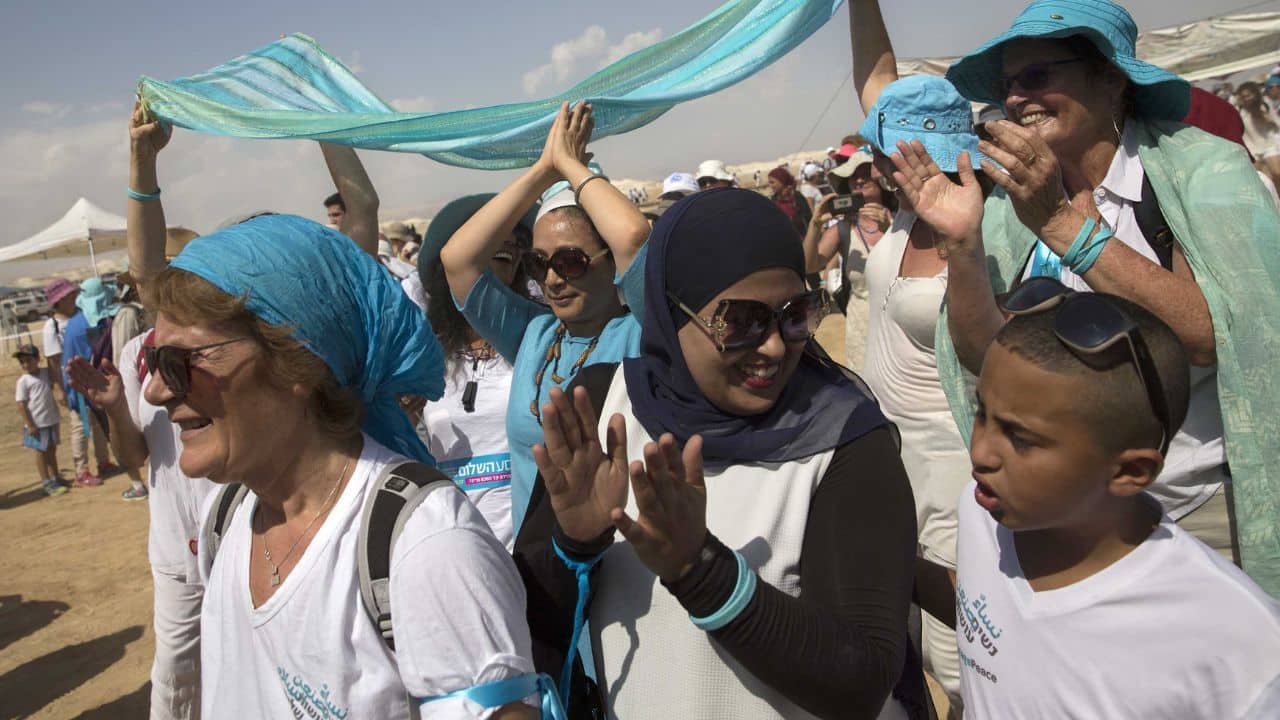
    Hundreds of Palestinian and Israeli women rallied in the occupied West Bank to demand an end the Israeli occupation of Palestine.

    According to foreign media, the protesters were chanting “We want peace.”

    Many women wore white dresses and carried placards that read “Stop killing our children.”

    On this occasion, a Palestinian woman said, “We want our children to live instead of dying.”

    Palestinian activist and director of the Alliance for Middle East Peace NGO Huda Abu Arqoub said that this is the first association between Israeli and Palestinian women on an equal footing.

    According to Arab media, at least 243 Palestinians and 32 Israelis have been killed in the Israeli-Palestinian conflict so far this year.

  • America, Pakistan both agree: Taliban need to make sure Afghanistan isn’t used for deshatgardi

    America, Pakistan both agree: Taliban need to make sure Afghanistan isn’t used for deshatgardi

    The United States of America has reiterated that the Taliban administration is responsible for ensuring that Afghanistan is not used for terrorist activities against other countries.

    The development comes as Pakistan blames the Taliban government of harbouring terrorists linked to the banned Tehreek-e-Taliban Pakistan (TTP).

    “Taliban has the responsibility to prevent Afghanistan from being used as a safe haven for launching terrorist attacks,” US State Department spokesperson Matthew Miller said during a press briefing.

    Earlier, in an unusual statement, the Pakistan Army slammed the sanctuaries available to TTP in Afghanistan for harming Pakistan’s security.

    At the 258th Corps Commanders Conference (CCC) under the chairmanship of Chief of Army Staff (COAS) General Syed Asim Munir, the army noted that the TTP had obtained access to the latest weaponry due to their sanctuaries in Afghanistan.

    The military also threatened to take an “effective response” after 12 soldiers were martyred in two attacks.

  • PTI rejects PM Shehbaz letter of regional peace, security to Modi

    PTI rejects PM Shehbaz letter of regional peace, security to Modi

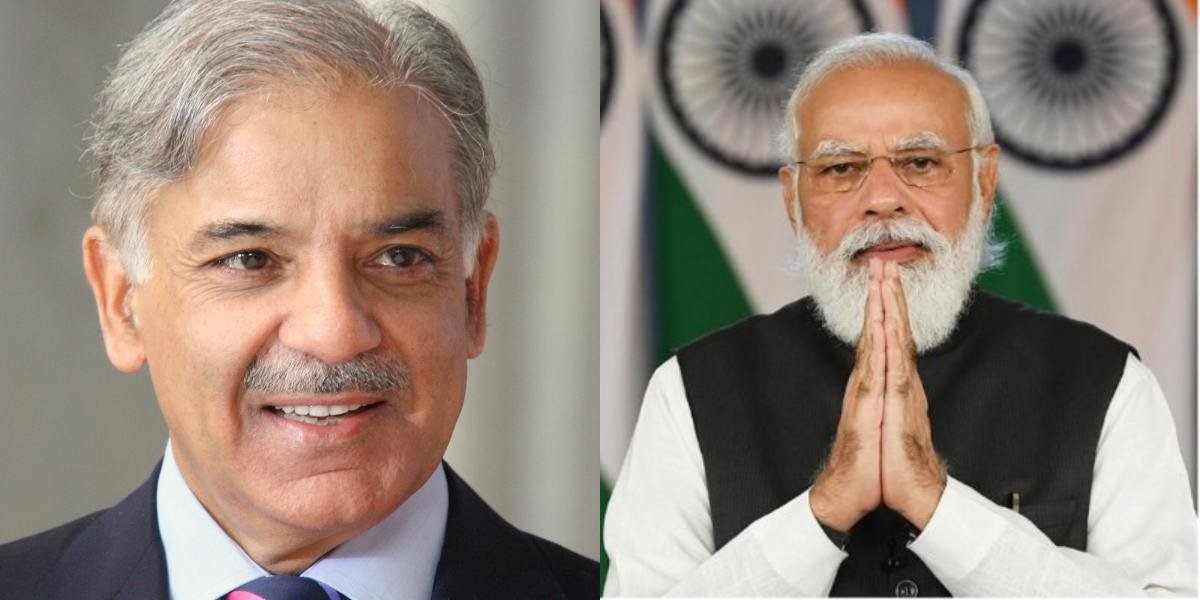
    Prime Minister Shehbaz Sharif has written a letter in response to Indian PM Narendra Modi’s letter. In his letter, Modi had expressed his desire for developing constructive relations with Pakistan.

    “Reciprocating your sentiments, I wish to convey that Pakistan remains committed to the maintenance of regional peace and security. Our sacrifices and contributions in fighting and eliminating terrorism are well known and globally acknowledged,” wrote PM Shehbaz.

    PM Shehbaz added that peaceful and cooperative ties between Pakistan and India are “imperative for the progress and socio-economic uplift of the people of the two countries as well as for the region”.

    “This can be best achieved through meaningful engagement and peaceful resolution of all outstanding disputes, including the core issue of Jammu & Kashmir,” wrote PM Shehbaz. “Let’s secure peace and work for the progress and prosperity of our people.”

    Pakistan Tehreek-e-Insaf (PTI) leader Fawad Chaudhry criticised Shehbaz Sharif’s letter to Modi.

    “We reject this letter. We will not let imported government to bargain away Kashmir. Until and unless Modi restores Kashmir’s status, any offer to talk will tantamount to betraying the people of Kashmir.”

  • ‘If TTP lay down arms, we can forgive them and they become normal citizens’: PM Khan

    Prime Minister Imran Khan has said that if the Tehreek-e-Taliban Pakistan (TTP) lay down their arms, “we can forgive them and they can become normal citizens”. PM Khan said this in an interview with journalist Ali Mustafa, which will air on TRT World Now.

    “Pakistani Taliban groups actually want to talk to our government for some peace, for some reconciliation and we are in talks with some of those groups,” added PM Khan.

    “Is the Afghan Taliban helping you in this process?” questioned Ali Mustafa.

    “In a sense that the talks are taking place in Afghanistan so yes, you can say it in this sense.”

    Mustafa asked if Pakistan was expecting some sort of an agreement or a deal to come out from the Taliban.

    “Yes, I repeat I do not believe in military solutions. I’m anti-military solutions, so I always believe that being a politician, political dialogue is the way ahead, which I always believed was the case in Afghanistan,” added the premier.

    Last month, President Dr Arif Alvi had said that if anyone wants to leave the ideology of the banned TTP and work as per the Constitution of Pakistan, the government may consider a general amnesty.

    President Alvi said, “The TTP is a threat to us. We have been told that they will stay with them [Afghan Taliban] but do nothing against Pakistan.”

    “It’s one step, Pakistan will consider general amnesty, if anyone surrenders,” further added Alvi.

    A few days after the president’s statement, Foreign Minister Shah Mahmood Qureshi in an interview with The Independent also said that the government would be “open to giving” a pardon to members of the banned TTP if they promise not to get involved in terrorism and follow the Constitution of Pakistan.

    Qureshi added, “If [the TTP] are willing to mend fences and not take the law into their hands and not get involved in terrorist activities and they submit and surrender to the writ of the government and the Constitution of Pakistan, we are even open to giving them a pardon.”

    “But as long as they do not come and start undertaking terrorist activities [in Pakistan]. That is our concern,” the foreign minister stressed.

  • UAE-brokered Pak-India peace a ‘tactical move’

    United Arab Emirates-brokered backdoor diplomacy has brought a thaw in otherwise mounting tensions between nuclear-armed Pakistan and India, but it is no more than a “tactical move”, foreign media reports quoted local experts as saying.

    Senior Pakistani and Indian intelligence officials held a series of secret meetings in Dubai in January this year in an attempt to stem the escalating tensions along the Line of Control (LoC), a de facto border that divides the disputed Kashmir valley between the two neighbors.

    Last month, the two militaries agreed to honor the 2003 cease-fire along the LoC, followed by an exchange of letters between the two premiers, which was widely viewed as an outcome of the backdoor diplomacy.

    The UAE’s ambassador to the US, Yousef Al Otaiba, confirmed Wednesday that the Gulf state is mediating between New Delhi and Islamabad to help them reach a “healthy and functional” relationship.

    Addressing a virtual session with Stanford University’s Hoover Institution, Otaiba said his country had a role behind the cease-fire at the Kashmir border, which hopefully ultimately would get relations back to a “healthy level.”

    “The ongoing cease-fire [at the Kashmir border] is certainly the outcome of the backdoor diplomacy, which is benefitting Kashmiris living on both sides of the border,” retired Lt. Gen. Talat Masood, an Islamabad-based defense analyst, told Anadolu Agency.

    “But this is all merely tactical. How long this (thaw) survives, we’ll have to wait and see,” said Masood, who served in the Pakistan Army from 1952 to 1990.

    This, he added, is not the first time that back-channel contacts have helped ease tensions between the two arch rivals.

    “It has happened on several occasions,” he said.

    Echoing Masood’s view, Ikram Sehgal, a Karachi-based defense and security expert, appeared to be skeptical about the significance of the latest developments.

    “Certainly, the UAE has interests both in India and Pakistan, and it will do its best to normalise things between the two neighbors. But in the given circumstances, it will not last long,” Sehgal told Anadolu Agency, referring to a host of land and sea disputes between the two neighbors, mainly over Kashmir.

    “One should try to be optimistic about these developments, which, although, are not very significant,” he maintained.

    Relations between India and Pakistan plummeted to a new low after August 2019, when India scrapped the longstanding special status of Jammu and Kashmir, prompting Islamabad to downgrade its diplomatic ties with New Delhi.

    Islamabad says the normalisation of ties with New Delhi is linked to a review of the Aug. 5 decision and ultimate resolution of the Kashmir dispute.

    ‘NO CHANGE IN STANCE ON KASHMIR’:

    Masood does not see any change in both countries’ stand on Kashmir following the back-channel diplomacy.

    “There is a zero chance of change in India’s current position on Kashmir. It will not reverse its August 2019 decision because it feels that Pakistan cannot do anything except for diplomatic lobbying,” he went on to argue, adding “New Delhi is more interested in talks on trade, business and tourism, whereas Islamabad’s focus is on Kashmir.”

    “India will be happy with backdoor or open diplomacy as long as it serves to maintain the current status on Kashmir,” he further said.

    “In my opinion, open and backdoor diplomatic contacts will continue, however the level of flexibility to resolve the disputes is the most important factor to watch.”
    Sharing a similar view, Sehgal, who is editor of a local defense magazine, Defense Journal of Pakistan, said New Delhi’s “downplaying” of actual issues with Islamabad is the main hurdle in the normalisation of ties.

    CHINA FACTOR:

    The two experts believe that normalisation of ties between Pakistan and India will benefit both countries but may offend Islamabad’s longtime ally China.
    “Normalisation of ties [with Pakistan] will help India focus on China and the economy, whereas it will benefit Islamabad in terms of trade and the economy,” Masood said, adding that the move, however, may irk China, which sees India as a US proxy in the region.

    Sehgal said “China is our diehard supporter on Kashmir and other issues. We cannot afford to displease it at the cost of relations with India.”

    India and China confront each other along the Line of Actual Control (LAC), a de facto border line between the two nations in the Ladakh region of the disputed Jammu and Kashmir region, where 20 Indian soldiers were killed last June.

    Border tensions between the two countries span over seven decades. China claims territory in India’s northeast, while New Delhi accuses Beijing of occupying its territory in the Aksai Chin plateau in the Himalayas, including part of the Ladakh region.

    “This is all not as simple as it seems. Many geopolitical and geoeconomic factors are involved in this process,” said Masood.

    “We may say it’s another good beginning, but a rocky terrain lies ahead.”
  • UAE Royals brokering Pak-India peace: Bloomberg

    About 24 hours after military chiefs from Pakistan and India surprised the world last month with a rare joint commitment to respect a 2003 cease-fire agreement, the top diplomat of the United Arab Emirates (UAE) popped over to New Delhi for a quick one-day visit.

    The official UAE readout of the Feb 26 meeting gave few clues of what Foreign Minister Sheikh Abdullah bin Zayed spoke about with Indian counterpart Subrahmanyam Jaishankar, noting they “discussed all regional and international issues of common interest and exchanged views on them.”

    Yet behind closed doors, the Pakistan-India ceasefire marked a milestone in secret talks brokered by the UAE that began months earlier, according to officials aware of the situation who asked not to be identified. The cease-fire, one said, is only the beginning of a larger roadmap to forge a lasting peace between the neighbors, both of which have nuclear weapons and spar regularly over a decades-old territory dispute.

    The next step in the process, the official said, involves both sides reinstating envoys in Islamabad and New Delhi, who were pulled in 2019 after Pakistan protested India’s move to revoke seven decades of autonomy for the disputed Muslim-majority state of Jammu and Kashmir.

    The article originally appeared on Bloomberg 

  • Malala dreams to see Pakistan and India as ‘good friends’

    Nobel laureate Malala Yousafzai has expressed her desire to see Pakistan and India as ‘good friends’.

    Read more – Ceasefire, at last

    Talking about her book I Am Malala: The Story of the Girl Who Stood Up for Education and was Shot by the Taliban on the last day of the 14th Jaipur Literature Festival, Malala said: “It is my dream to see India and Pakistan become true good friends and that we can visit each other’s countries. You can continue to watch Pakistani dramas, we can continue to watch Bollywood movies and enjoy cricket matches.”

    “You are Indian and I am Pakistani and we are completely fine, then why is this hatred created between us? This old philosophy of borders, divisions and divide and conquer… they just don’t work anymore. As humans we all want to live in peace,” said Malala.

    The young activist added that the real enemies of both countries are “poverty, discrimination and inequality”.

    She also stressed upon the importance of giving rights to minorities in both countries.

    “Minorities are at risk,” said Malala. “Minorities’ rights are not given to them. Be it Hindus and Christians in Pakistan, Muslims, Dalits and other minorities in India… Palestinians, Rohingya refugees. It is not [just] religion. It is the exploitation of power, it is just elites vs the poor and minorities.”

    Talking about her cause of girls’ education, Malala said that she also dreams of the day when every girl would get to go to school and have access to quality education.

    Malala, who was shot in the head by the Taliban as she was returning home from school in Swat Valley, was awarded the Nobel Peace Prize in recognition of her efforts for children’s rights in 2014. The young activist recently also graduated from Oxford University.

    Read more – US Congress passes ‘Malala Yousafzai Scholarship Act’ for Pakistani women

    She is now internationally known for human rights advocacy, especially the education of women and children.