Tag: PECA laws

  • Woman sentenced to death for online blasphemy under PECA laws

    Woman sentenced to death for online blasphemy under PECA laws

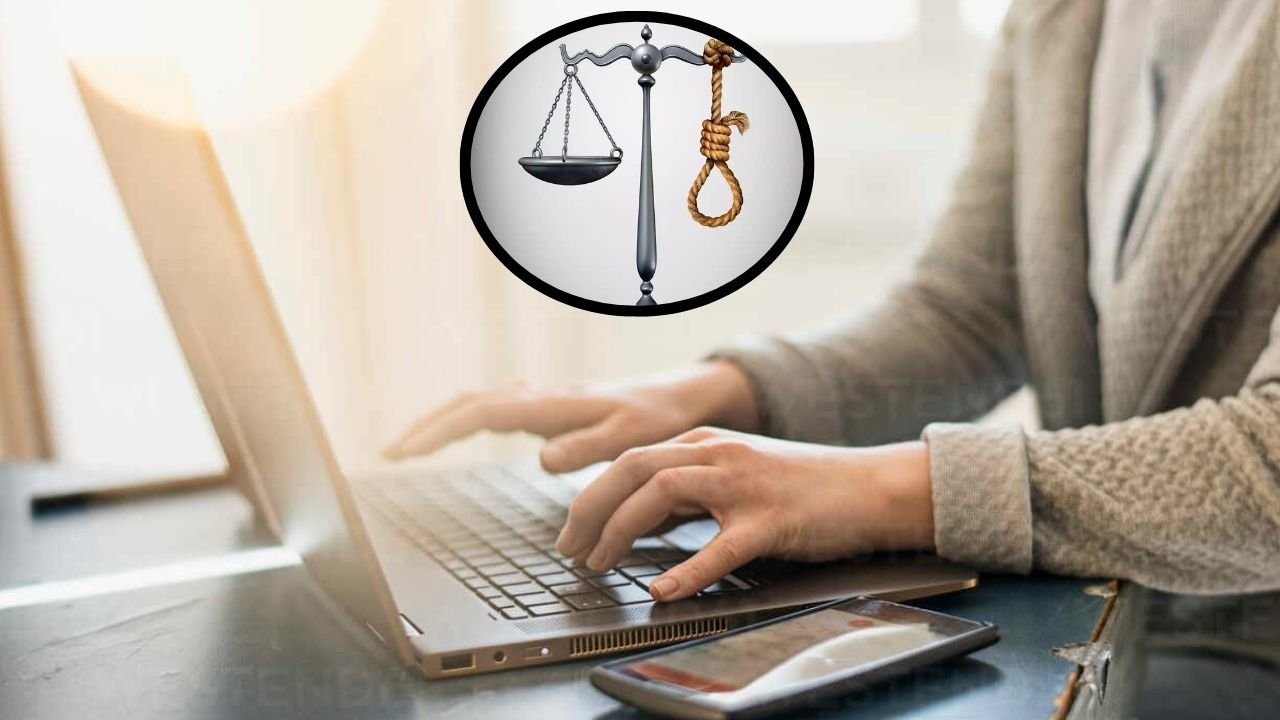
    A Christian woman was senten­ced to death on Thursday for committing online blasphemy under the Prevention of Electronic Crimes Act (PECA).

    Dawn reports that the woman is a mother of four. She had previously sought bail from both the trial court and the Islamabad High Court (IHC), but her bail applications got rejected by both.

    Judge Mohammad Afzal Majoka convicted the woman under Section 295 of the Pakistan Penal Code (PPC) and Section 11 of PECA laws. While Section 295 strictly pertains to blasphemy laws, Section 11 of PECA laws deals with hate speech.

    The law states that “whoever prepares or disseminates information, through any information system or device, that advances or is likely to advance interfaith, sectarian, or racial hatred shall be punished with imprisonment for a term which may extend to seven years or with a fine or with both”.

    Along with the death penalty, the court also imposed a fine of Rs100,000 on the woman.

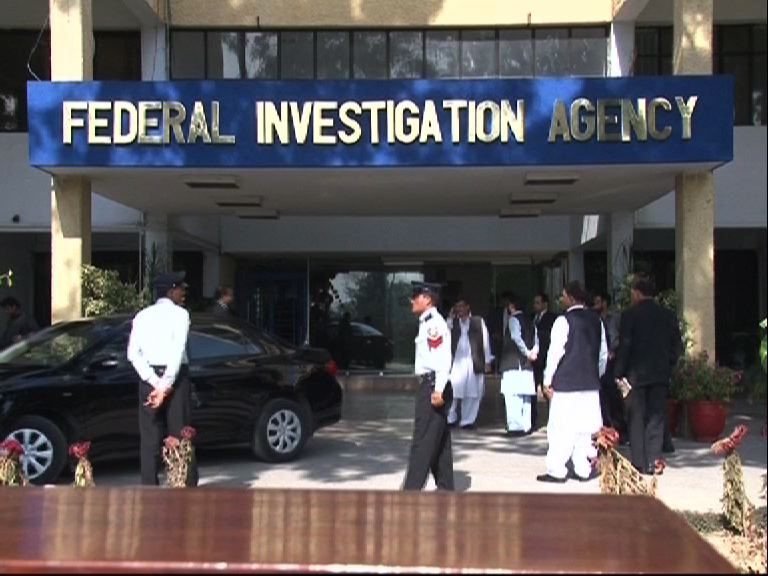
    A private citizen by the name of Shiraz Ahmed lodged a complaint against the woman in the Federal Investigation Agency’s (FIA) cyber crime wing. The case was then brought to the court.

    The first information report (FIR) states that the womam is accused of pos­ting blasphemous content about the Holy Prophet (PBUH) on social media in September 2020.

    However, FIA registered the case against her on July 29, 2021.

  • International Press Freedom Day marked by increased arrests of Pakistani journalists

    International Press Freedom Day marked by increased arrests of Pakistani journalists

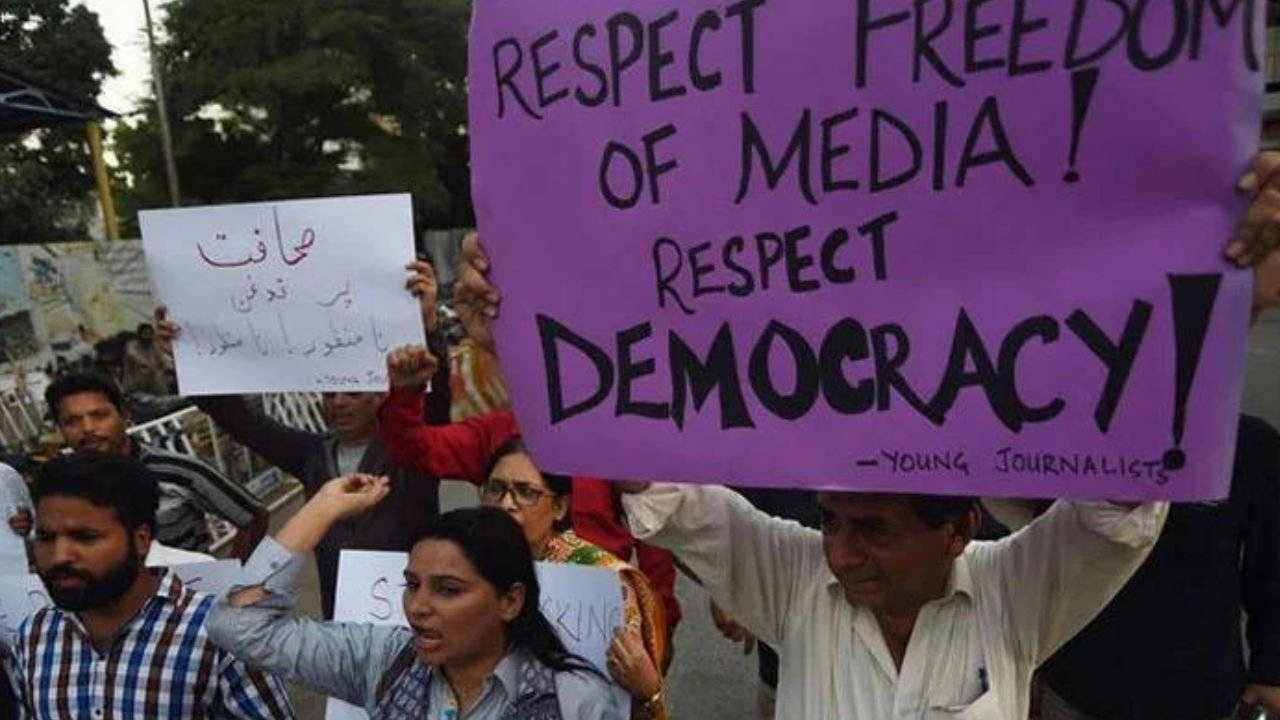
    May 3 is celebrated as International Press Freedom Day worldwide, however, Pakistan is considered one of the most dangerous countries in the world for journalism.

    In a report released by Freedom Network, it was revealed that four journalists were killed in the last one year while more than 104 cases were registered while more than 200 journalists were also issued notices in Pakistan.

    Geo’s Asif Bashir Chaudhary lays out that Pakistan is among the three countries in the world where cases are registered under the black law of PICA even for giving an opinion on an online forum, while in the rest of the world, action is taken under the laws of defamation.

  • 7,000 cases closed after PECA repelled by court: Federal Investigation Agency

    7,000 cases closed after PECA repelled by court: Federal Investigation Agency

    The Federal Investigation Agency (FIA) has closed almost 7,000 inquiries and actions initiated under section 20 of the Prevention of Electronic Crimes (Amendment) Act (Peca) Ordinance 2022, a couple of days after the Islamabad High Court (IHC) declared the amended law as “unconstitutional”.

    Majority of these complaints were registered on charges of defamation and serious threats received by citizens via Twitter and Facebook profiles.

    The IHC further directed the federal government to probe abuse of the law and sought a report in this regard within 30 days.

    According to Dawn News, quoting sources, “the action was initiated on 70 percent of the total complaints filed by the women who were harassed on social media by “known and unknown persons.”

    FIA officials stated that over 60 percent of the total complaints of women were registered on charges of sexually harassment through Facebook accounts.

    Furthermore, following the IHC verdict, the FIA’s cyber crime division has stopped receiving complaints under Peca section 20.

    Read more- Civil society, political collectives condemn PECA Ordinance

    Why was the law so controversial?

    PECA received criticism from all quarters of society. According to critics, the law would make it illegal to send text messages without the recipient’s authorisation, be tried and jailed for sending fake whatsapp forwards or to use social media to criticise the government.

    Digital Rights activist Usama Khilji, while talking exclusively to The Current said that “the section of PECA related to sexual harassment is sections 21 and 24 which are very much still a part of the law. Only the harm to reputation part of section 20 has been struck down by the Islamabad High court because it had become a tool in the hands of the powerful to shut down any criticism against them through a criminal defamation case. Defamation is decriminalised in most democracies today. “

    He continued by adding, “the short-lived amendment ordinance only worsened section 20 by criminalising harm to the reputation of public officials as well as organisations and institutions, and making it non-bailable, non-compoundable and cognizable which means that the FIA could arrest accused without warrant, file a case on their own, and not give them bail. it was necessary to preserve basic rights and democracy the unconstitutional and authoritarian ordinance was struck down.”

  • PM Khan strongly dislikes Pakistani media: Foreign Policy report

    PM Khan strongly dislikes Pakistani media: Foreign Policy report

    “Pakistan’s government is tightening its control of media with laws and oversight bodies that critics say enhance its power to censor and punish journalists. New laws potentially extend control to social media such as YouTube and Twitter, snuffing out investigative journalism and critical commentary,” says a report published in Foreign Policy (FP) magazine.

    The report says that Prime Minister Imran Khan “has long had deep antipathy for the media and rarely voices support for journalists who are attacked or disappeared for their work”. It adds that Committee to Protect Journalists (CPJ) Asia programme coordinator, Steven Butler, was denied entry to Pakistan in 2019. “Journalists who find outlets abroad to publish their work and provide income are branded foreign agents intent on the destruction of the Pakistani state,” says the FP report.

    “Our society is a democratic society, and people do realise why these journalists are not on air, are not speaking, why their voices are not being heard,” said Asma Shirazi. “These critical voices are a blessing in democracies. But now that they are not there, there is a huge gap. And people know this, they see this, and they know why it is.”

    Self-censorship by journalists is an insidious consequence of the harassment, she said. “But we have been here before. We know how to deal with it—we keep fighting.”

    PECA Ordinance 2022

    In February, the Prevention of Electronic Crimes Amendment (PECA) Ordinance 2022 was promulgated by President Arif Alvi. Talking exclusively to The Current, Information Minister Fawad Chaudhry said, “A person who forwards fake news over WhatsApp can be fined and go to jail under the new law.”

    Civil society, political collectives, journalists and rights activists condemned the new PECA Ordinance.

    Islamabad High Court (IHC) Chief Justice Athar Minallah said that it seems like no one told the premier that there are laws for contempt other than PECA. “It seems like PM Khan was not assisted correctly over PECA Ordinance,” said Justice Minallah, adding that the law is used against critics here.

    PM Khan defends PECA Ordinance

    “The PECA law was made in 2016. We are only amending it,” said PM Khan on Monday. He said that “filth” such as child pornography was being shared on social media. He also accused journalists of taking money and blackmail.

    Joint statement by Amnesty International and Human Rights Watch

    On Monday, Amnesty International and Human Rights Watch (HRW) said in a joint statement that the government’s amendment to its cybercrimes act “is the latest in a concerted campaign to restrict freedom of expression and stifle dissent”.

    “PECA has been used to silence freedom of expression on the pretext of combating ‘fake news,’ cybercrime, and misinformation,” said Nadia Rahman, acting deputy regional director for South Asia at Amnesty International. “This amendment not only violates the Pakistan Constitution, but also puts anyone who questions the government or other state institutions at further risk. It particularly endangers journalists, human rights defenders, and political opponents who run the risk of prosecution for merely doing their jobs.”

    “The Prevention of Electronic Crimes Act neither protects the public from legitimate cybercrime concerns nor respects fundamental human rights,” said Patricia Gossman, Asia associate director at Human Rights Watch. “The new amendments will further embed violations of basic rights with a thin veneer of legality.”

  • Two dozen Pak journalists prosecuted under Peca in two years

    Two dozen journalists in Pakistan have been prosecuted (2019-21) over the past under the Prevention of Electronic Crimes Act (Peca), states a report by the Freedom Network. November 2 marks the International Day to End Impunity for Crimes against Journalists.

    Most complainants against journalists charged under the Peca sought punishment rather than settlement.

    Investigative Journalist Umar Cheema reported for The News that the report’s findings were based on the analysis of cases of 23 journalists and information practitioners who were either sent notices by the Federal Investigation Agency (FIA) under Peca or charged with offenses under the same law.

    The report states: “Opinions or criticism of the military and the intelligence agencies is the most frequent complaint against journalists pursued under the Peca. Criticism in general – whether against the executive or the judiciary triggered the most complaints against journalists pursued under the Peca law. The prime nature of the complaint was alleged defamation.”

    The report provides evidence that Peca has emerged as the primary legal instrument to silence Pakistani journalists because it criminalises online expression.

    The executive director of Freedom Network Jean Bruggeman has said that Pakistani journalists are increasingly using online spaces to share independent news and critical commentary that is suppressed on traditional media.

    According to the report, Punjab has turned out to be the most dangerous region as 10 of the 23 cases were reported in the province. Federal capital Islamabad comes second when it comes to being targeted under the Peca with eight cases.

    Two-third of them are private citizens whereas opinions or criticism of the military and the intelligence agencies is the most frequent complaint pursued under the Peca.

    Furthermore, it found that the cases were registered against 56 per cent of journalists and informational practitioners who were involved in conflict with Peca between 2019 and 2012. Out of the individuals who were formally charged, around 70 per cent were arrested and half of them were tortured in custody.

    Over a third of the freelancers were targeted as they are almost equally likely to be targeted under Peca.

  • Eight PPP leaders summoned to FIA

    Eight PPP leaders summoned to FIA

    The Federal Investigation Agency (FIA) has issued notices to eight members of the Pakistan People’s Party (PPP), including provincial ministers. FIA has summoned them in person, reported Hum News.

    FIA notices have been issued to Nasir Shah, Saeed Ghani, Nafisa Shah, Qadir Patel, Shahida Rahmani, Naz Baloch, Shela Raza, and Qadir Khan Mandokhel.

    PPP leader Nafisa Shah said that the PPP members have been summoned after receiving a message from a nominee in a case regarding anti-Chief Justice speech.

    “The members have been notified by the FIA by issuing notices under the Prevention of Electronic Crimes Act (PECA),” stated Nafisa Shah.

    “State machinery is being used to silence PPP spokespersons and leaders. Receiving a message from a person on WhatsApp does not constitute a crime nor does the PECA law apply,” added Nafisa Shah.

    The PPP leader said, “Political leaders receive thousands of messages. If receiving messages is criminalised, the whole world will be in jail.”

    She said that the PPP could not be silenced by such tactics and that the FIA ​​is misusing its powers.

    “Like the National Accountability Bureau (NAB), FIA is being used by the Pakistan Tehreek-e-Insaf (PTI) for political engineering,” said Nafisa Shah.


  • The Silencing Act

    “The biggest threat to gender justice right now are defamation laws and the FIA.”

    “Women are harassed and so we must introduce a law to protect them,” went the PML-N narrative in favour of enacting the Prevention of Electronic Crimes Act (PECA), 2016. This line peddled was mainly by the then minister for state for information technology and telecom, Anusha Rahman, to shut down critique levelled at the draconian provisions of the law, criminalising various forms of speech in an overbroad manner.

    Criticism of the law was deflected by making wild accusations and false imputations against critics, what actually qualifies as defamatory statements: foreign-funded agents working against the interests of the country and religion. As recorded in the House Debates on August 11, 2016, the day PECA 2016 was passed into law, dismissing all concerns raised regarding the violation of rights, Rahman remarked women were committing suicide as a result of online harassment, ‘what about them?’

    In 2017, news broke of Sindh University student, Naila Rind’s death. According to reports, she “committed suicide due to exploitation and blackmailing by a man who had befriended her on WhatsApp.” She was found hanging by the neck in her hostel room. Just last month in September 2020, a woman who had filed a complaint with the Federal Investigation Agency (FIA) committed suicide. Reportedly, she had contacted the investigation officer just hours before deciding to end her life. A law purportedly enacted to shield women from harassment and provide them with legal recourse has done no such thing.

    PECA In Practice

    While much haste was made to pass PECA, once enacted it took over a month to designate FIA as the investigation agency. It was not until March 2017 that courts to try PECA cases were notified. Meanwhile, complainants and litigants were left hanging. Many women who attempt to file a complaint through the online web form say it does not work or they do not hear back. Several women who visit FIA offices to file in-person complaints talk about the misconduct of investigation officers. Among the complaints that do make it to court, some complainants are advised – and at other times coerced – to withdraw and settle. Compromises are facilitated even in non-compoundable cases, which the law does not allow. Women who wish to see their cases through to the end are punished.

    In a case registered in 2016, FIA “lost” the evidence file. It was only after the complainant petitioned the Sindh High Court against the FIA that the file was “recovered.” Four years after the registration of the case, the trial has not concluded because the FIA’s investigation officers, who are required to appear as prosecution witnesses in order to complete evidence, do not show up. This is routine. Case diaries are replete with show-cause notices, bailable and non-bailable warrants to compel FIA officers to attend court hearings. But this has little effect on them.

    Women who participated in the Aurat Marches and were targeted online, women journalists who filed complaints with the FIA and are consistently attacked online, share the experience of so many others: the FIA does nothing about their complaints. Instead, the priority for the FIA is to register cases when men complain their reputation has been damaged by women alleging harassment. On September 29, 2020, an FIR was registered against singer Meesha Shafi and eight others under Section 20 of the PECA read with Section 109 of the Pakistan Penal Code. This FIR comes after a spate of summons issued last year by the FIA in response to a complaint made by singer Ali Zafar. Section 20, referred to as the criminal defamation section of PECA, has been weaponised by the state to silence journalists but also private complainants against women alleging sexual harassment or violence.

    In July 2019, several people received a summon by the FIA requiring their attendance in Lahore. Many received summons once the date for appearance written on it had already passed. The summons themselves were vague. They contained no details about what the investigation pertained to or the section of the law it was under. Requests for a copy of the complaint were met with yet another summon. In violation of the law and investigation Rules under PECA, “sources” within the FIA leaked names to the press during the 2019 investigation, even though the law requires confidentiality to be maintained and the Rules bar disclosure of identities of both the complainant and accused.

    Despite responding in writing and, in the case of some, appearing in person at the FIA office, an FIR was registered. Those summoned earlier and now named in the FIR include those who have spoken up in support of Shafi, spoken of their own experiences and covered the cases in a journalistic capacity. Many found out about the FIR through news reports. While a civil defamation trial was already underway, now a criminal case has also been lodged, not only against Shafi but also witnesses in her case. The purpose and intent of this exercise is nothing but to further harass and intimidate. It is also a tactic to scare away witnesses and diminish their credibility in the court of law.

    The Chilling Effect

    An FIR in another city entails contacting a lawyer, applying for protective/transitory bail. The amount is decided by the court and typically can be anywhere between Rs. 30,000-100,000. This is usually granted for a period of a week in which time arrangements have to be made to travel to the city the FIR is registered in — in this case, Lahore. A second lawyer, in the city where the FIR was lodged, must apply for pre-arrest bail. Then the investigation has to be joined which essentially means going to the FIA office and giving a statement that is included in the investigation report. This is all at the pre-trial stage. The trial itself has no specified time frame and can go on for years. As an accused in a criminal case, it is mandatory to attend hearings unless a special exemption is granted by the court. All this adds up to monetary expenses, time and psychological strain, affecting work, life and mental health. The cost of ostensibly one or a few social media posts.

    It is a myth that the FIA does not act in a coercive manner against women. This is not the first time an FIR has been registered by the FIA against a woman after she levelled an allegation of sexual violence and harassment. There are other cases in which the FIA obtained search and seizure permissions and moved arrest applications at the investigation stage, while a petition against harassment by the investigation officer and validity of the search and seizure order was pending before the High Court.

    The immediate fall out of summons by the FIA and now an FIR, is a chilling effect. Not only do people stop speaking about issues and self-censor to protect themselves, but those implicated in cases, depending on the level of support they enjoy and resources at their disposal, end up settling by retracting and apologising. This then serves as a narrative win for the other party. In the public domain, the outcome – retraction or apology – becomes the subject of debate, useful also to vindicate in ongoing legal proceedings. Hanging a criminal case over someone’s head to force certain terms and extract such an outcome never becomes public knowledge or the subject of discussion – for obvious reasons.

    What Next?

    A statement released by the Women’s Action Forum – Karachi chapter in August 2019, pointed to an emerging pattern of criminal defamation laws being used as a silencing tool against those speaking about sexual harassment and violence, both in relation to online calls outs but also against women who filed cases of harassment before legal forums. In September 2019, this issue was taken up with the Senate’s Functional Committee on Human Rights. The committee was apprised of the illegal and unconstitutional manner in which the FIA acts against citizens — in this case women. Proposals to repeal criminal defamation laws – 499 and 500 of the PPC and Section 20 of PECA – were laid before the committee and recommendations on fixing the civil defamation procedure in relation to cases of harassment, were also made. Since then, summons and investigations have turned into challans and FIRs. The onus lies on parliamentary committees to take this up again. The MeToo movement, women’s marches and more recently, the motorway rape has sparked conversations around everyday misogyny, harassment and a culture that enables harassment and rape. Laws and the criminal ‘justice’ system are being weaponised against women and their supporters, to suppress disclosures of harassment and sexual violence. Especially, PECA.

    The biggest threat to gender justice right now are defamation laws and the FIA. Repealing Section 20 of PECA, 499 and 500 of the PPC, fixing civil defamation law and procedures to prevent their misuse, and holding the FIA to account for its excesses is imperative.