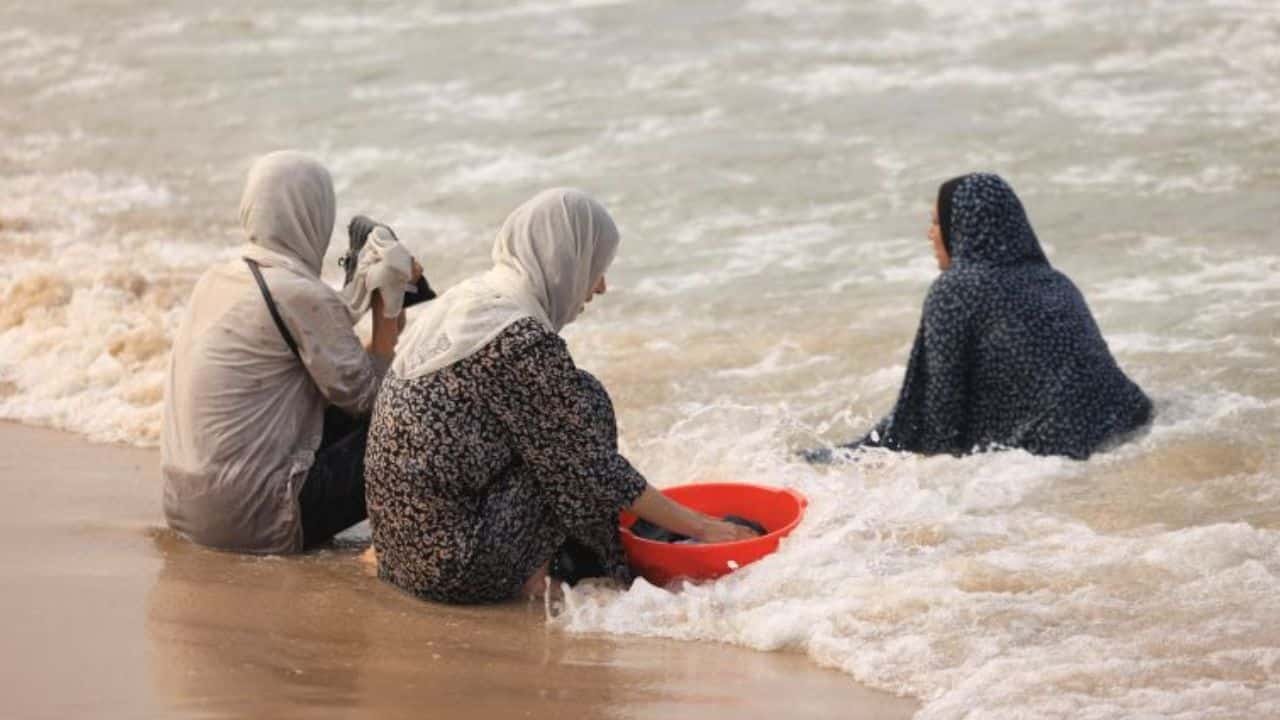
Linah Alsaafin and Ruwaida Amer from Al Jazeera have reported from Gaza on Palestinian women who have been struggling to cope with menses at a time when medical supplies have been cut and the region is under heavy military attacks by Israel.
Since Hamas’s attack on Israel on October 7, Gazans have been internally displaced, living in poor conditions among a large number of people with no privacy, and no access to water or menstrual hygiene products like sanitary napkins and/or tampons. To counter this major problem, women are resorting to norethisterone tablets that are usually prescribed in times of severe menstrual bleeding, endometriosis, and painful periods.
While these pills have side effects like irregular vaginal bleeding, nausea, changes to the menstrual cycle, dizziness and mood swings, Palestinian women do not have any choice for now.
Al Jazeera spoke to 41-year-old Salma who fled her hometown, Tel al-Hawa, and is now at a relative’s place in Deir el-Balah refugee camp. She is in a “constant state of fear, discomfort and depression, which has taken a toll on her menstrual cycle”.
“I am experiencing the most difficult days of my life during this war,” Salma says. “I got my period twice this month so far – which is very irregular for me – and suffered heavy bleeding.”
Nevin Adnan, a psychologist and social worker based in Gaza City, explained to Al Jazeera that while normally, women may experience psychological and physical symptoms before and during periods (changes in mood and lower abdominal, back pain); these symptoms, however, can worsen under stress.
“Displacement causes extreme stress and that affects the woman’s body and her hormones,” she said.
“There can also be an increase of the physical symptoms associated with menstruation, such as abdominal and back pain, constipation and bloating,” she said, adding that they may also experience insomnia, constant nervousness and extreme tension.
This is why, Adnan asserts, more women are taking period-delaying pills “to avoid embarrassment and shame due to the lack of hygiene, privacy, and available health products”.
“In war, we are forced to do everything we can,” says Salma.
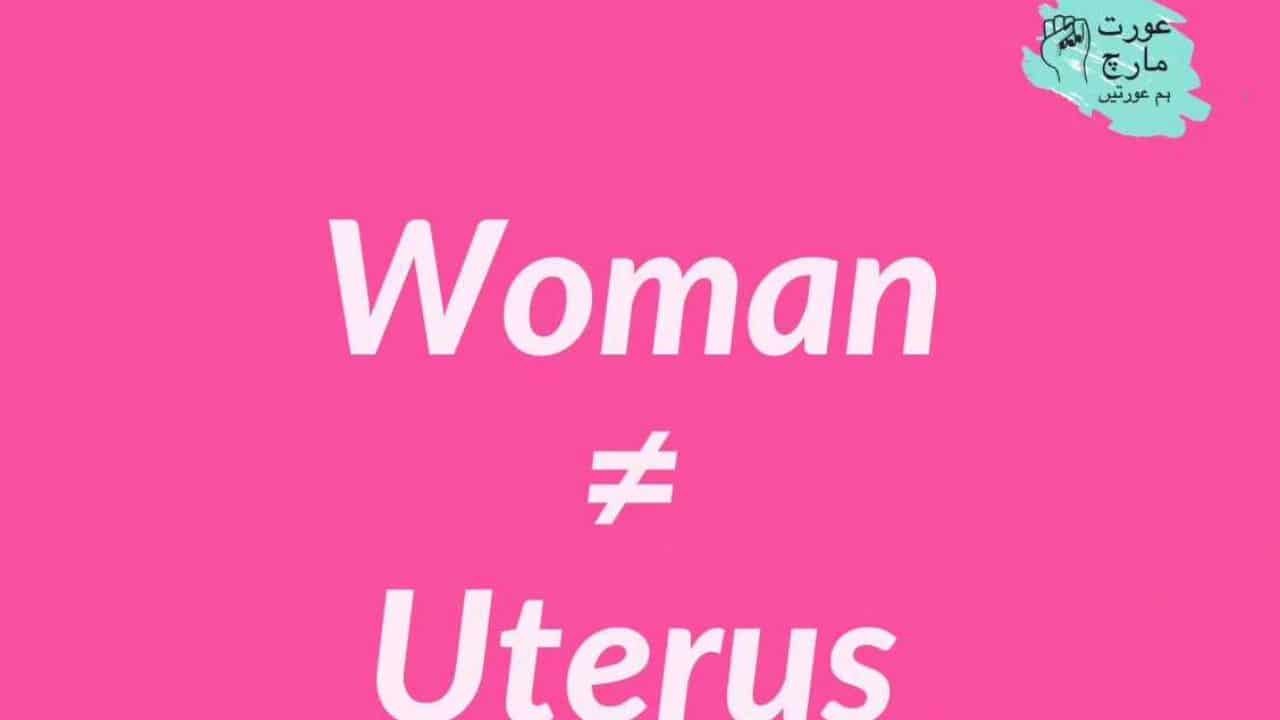
Three days ago, the women rights movement Aurat March’s Karachi page uploaded a detailed statement on their Twitter account addressing the backlash surrounding the term ‘people with uteruses’. The term was used in a statement announcing a feminist baithak a few days ago, where women and people of other genders were invited to discuss the topic “Mensturation and Misogyny”.
In their statement, Aurat March explained why mensturation has less to do with gender, because it’s a biological process since the uterus, or the womb is the main organ involved in it.
“Mensturation is a biological process, with the uterus or the womb being the main organ involved in it. Needless to say, it has to do with the sex a person is assigned at birth rather than their gender. It only makes sense, then, to call anyone who mensurates a ‘person with uterus’ or ‘mensturator’.”
“This form of criticism revolves around the deeply ingrained, patriarchal belief that a woman’s identity is inherently tied to her uterus, other reproductive organs, and ability to conceive and bear children. It is deeply misogynist, especially in our context, where many CIS women are considered baby making machines and girls are married off at a young age (often even in their teenage) with the belief that they would bear more children, often at the cost of the girl’s health or even life.”
We understand that there hasn’t been enough conversation about using the terminology ‘person with uterus’ in our context, which is why we think it’s imperative that we continue the conversation by writing this statement. We invite everyone to engage in this crucial dialogue. pic.twitter.com/lDiwtR3LUY
In their next post, Aurat March detailed on the misogynist attitude towards periods- and how it affects every person, woman or not.
“Given that the majority of uteruses bleed almost every month for four decades, it is crucial to realize that the misogynist attitudes towards periods affect every person who mensurates- whether woman or not. We use the word misogyny here because the patriarchy views mensuration as inherently feminine thing (and hence, as cause of inferiority); therefore, this misogyny extends also to non-binary and trans-masculine mensurators.”
“The bottom line is that the uteruses of many women, transgender men and non-binary persons (who were assigned female at birth) have been bleeding for centuries and will continue to do so.”
By referring to “people with uteruses” instead of just women when discussing menstruation, we aim to challenge the patriarchal perspective that women exist solely because they have a uterus or because they are available for reproduction.#AuratMarch2023#MenstrualRightsForAllpic.twitter.com/YviEkfzSvP
The statement was slammed by several Twitter users as misogynist towards women, with Youtubers like Muzamil stepping in to label the movement elitist. To get to the bottom of the controversy and how can we craft more spaces for women, and people from the transgender community, to talk openly about their mensuration without facing backlash, we spoke with Aurat March organiser *Rosa.
Q. What inspired you to write this statement, and did you anticipate that there would be such backlash?
Truth be told, we did not expect the response to be this big. Aurat March regularly hosts baithaks where we discuss our politics with the poeple but also amongst ourselves. The use of inclusive and misogyny-aware language is something we’ve been consistently using over the years. Our movement is feminist and takes pride in the fact that we stand for all genders that are suppressed under patriarchy. We think the fact the tweet started with the word “people with uteruses” is what had people read it and have it make rounds.
Q. Given the criticism the post has received, do you feel Aurat March could have worded the statement differently or toned it down?
No. The criticism for a feminist voice in the political space has been there since day one. People criticize us mindlessly for anything that we do. They place an unfair burden of championing every single feminist issue in the country while those same men might not have gotten off their horses of privilege to raise a single finger for the feminist cause. The criticism is bandwagon-ish, misogynistic and transphobic, and it shows how much work we have to do in terms of the discourse around menstruation, the people it impacts, and the trauma of internalized misogyny that women in Pakistan carry. The hate isn’t even necessarily centered around the statement; it’s centered around Aurat March and what it represents.
Q. Several users, including the YouTuber Muzzamil, criticised the post saying its proof that Aurat March is an elitist movement, that doesn’t address the ongoing issues faced by women in Pakistan. Do you feel this perspective is justified?
We think its funny that out of all the people, Muzzamil came out to call the Aurat March an elitist movement while he sits and tweets this from Dubai. There are several tiers of responses as to how the perspective isn’t justified.
The burden to prove whether AM is an elitist movement is not just unfair in the first place, it’s impossible to prove as well. Our marches regularly pulls in more than half of its audience from the working class communities we work with. We go and visit these hidden, impoverished and disenfranchised communities all year round: Zia Colony, Mauripur, Orangi Town, Kausar Niazi, Mehran Town, Race Course, Shikarpur, Surjani, Ibrahim Hyderi, Lyari are only some of the names. We then arrange their transport from their communities to the march as well.
But not just that, all that one has to do see where our priorities lie as a movement is go through our Instagram. For the last month or so, we’ve been working with effectees from Jaranwala, raising voices and protesting for the rehabilitation, protesting at Teen Talwar for recovery of Hindu missing persons while a delegation from our team has been facing harassment and abuse from the police at Jaranwala as we speak.
But of course, men like Muzzamil wouldn’t see the groundwork that Aurat March has done because he’s never visited these places himself, or maybe he doesn’t have binoculars big enough that can help him see all the way from Dubai. The truth is, our politics doesn’t revolve around just creating a feminist discourse or space on twitter, but a lot of people see it that way. They like to think that politics that does not exist beyond this digital space, and we couldn’t care less about these keyboard warriors. The work that we do, impacts the people we work with and it makes a difference in their lives, and that is all that the feminist cause is at the end of the day.
Q. The ongoing backlash surrounding menstruation can have some implications on the mental health of Pakistani women because they don’t feel its safe for them to express their concerns out loud, even on social media. How can we continue to create spaces to openly speak about the issues Pakistani women want to talk about.
We think it’s important to clarify our politics and position in this context. We believe it’s important to see a woman beyond her uterus. In many instances, this “bachadani” holds more value than her life. Her worth is gauged up on her ability to reproduce, her identity is centered around her motherhood, and her final goal is set out to become a mother. So many women lose their lives in forced pregnancies, so many battle uterine cancer and so many see their childhoods end the moment their uteruses start bleeding, married off to a man twice or thrice her age. So of course, when AM tries to separate the woman’s identity from her uterus, people lose their minds.
It’s funny people think ‘people with uterus’ is dehumanizing language when so many people see only a uterus when they look at a woman. To think about how this experience might not be inherent to their existence would then, of course, be thought of as radical. At that same time, it’s important to remember that many women don’t necessarily have a uterus either. Alot of them have their removed due to complications, while many are simply born without one; the language is inclusive of their womanhood and identity, too. All the while, we also acknowledge all the people that menstruate or have uteruses but might not necessarily identify as women either, such transmen or non binary folks. The movement is just as much as for them and by them as it is for any gender.
And understandably so, it becomes difficult for a woman to voice out her concerns regarding her body on social media. When our comments section becomes places of spewing hate or become dominated by men who think they’re invited to share their opinions about women’s bodies, they drown out any chances of having an open engagement and discussion on these topics.
Pakistan is in the throes of devastating floods that have wreaked havoc across all four provinces. The scale of devastation has been estimated to be more than $10 billion. And yet with thousands of lives lost, and millions homeless, we are still debating on whether sending sanitary napkins to the flood-affected areas is a good idea or not. As per an estimate, 8.2 million women in flood-affected areas are of reproductive age. Menstruating women in disaster-hit areas require access to safe and clean menstruation hygiene products. We need to understand that periods don’t pause during floods or rains. It’s a natural process that keeps happening every month to every woman of age. There are women who are pregnant. There might be a few girls who will get their periods for the time. Due to the present conditions when there is no clean water, the use of cloth can be dangerous as well. There are reports that women have had to resort to using leaves in the flood-affected areas during their periods.
In times like these when every human matters, why does it happen that women are so conveniently put under the radar and a product that is a basic need for any woman of age, becomes a topic of debate in terms of whether it is a luxury or a necessity? When will people learn to accept that talking or educating about periods is not taboo? It’s about a woman’s hygiene and health. We all need to understand that men and women all need to be treated the same way, with dignity and equality. All of them need the same basic facilities.
It will take a lot of effort and manpower to provide the rehabilitation and relief needed for millions of people. It’s time we hit pause on always putting women under the radar and for once act with reason and responsibility towards them. We need to learn to empathise with the flood victims without gender discrimination.
The devasting floods have killed at least 1,191 people in the country. Balochistan and Sindh are the most affected provinces of the country. Hundreds of thousands of people who were displaced by the floods since June are currently residing in camps or with host families.
As per an estimate, 8.2 million women in flood-affected areas are of reproductive age. Menstruating women in disaster-hit areas require access to safe and clean menstruation hygine products.
Many organisations are donating sanitary pads for women. However, a debate has been going around for days that whether sanitary pads should be donated or not. Some give the arguments that rural women do not use and do not know how to use sanitary pads, and donating them sanitary pads is a waste of already limited resources. While others give an argument that disposing of sanitary pads pollutes the environment.
“One study has suggested that there may be an increased risk of urogenital infections, such as yeast infection, vaginosis or urinary tract infections, when women and girls are not able to bathe and/or change or clean their menstrual supplies regularly,” a report published by the United Nations Population Fund reads.
Here is the United Nations Children’s Fund (UNICEF) Guide to Menstrual Hygiene Materials:
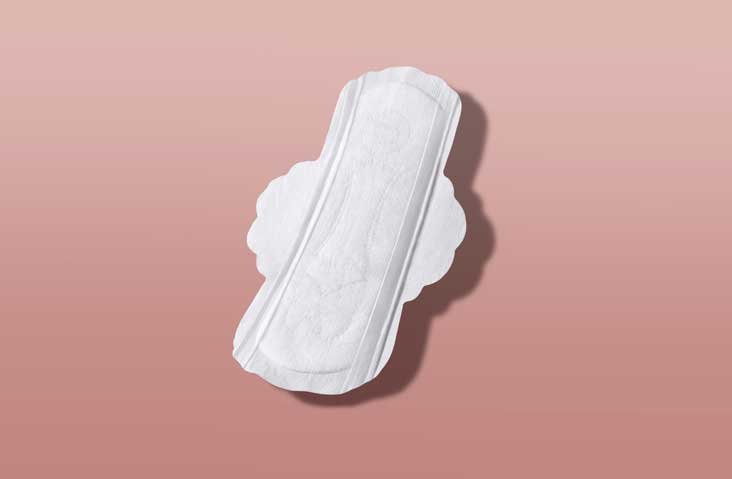
Pads are arguably the most widely used period product the sanitary pad/napkin has been commercially available for more than a century. They are worn inside the user’s underwear and absorb menstrual blood through layers of absorbent material, often rayon, cotton, and plastic. Pad design has changed over the decades to become considerably more absorbent and pleasant, with a wide selection available to suit different flows.
Talking about the arguments going around regarding the negative consequences of using disposable pads environment Lawyer Ahmad Rafay Alam while talking to The Current about the issues said, “Women are as entitled to their dignity as men. Screaming plastic pollution at a time like this is disingenuous at best. We can work out plastic pollution issues soon. Let’s first deal with the millions of women who menstruate.”
Dr Alia Haider, who is working for the relief of flood victims in Khyber Pakhtunkhwa (KP), while talking to The Current said that women in flood-affected areas do not have access to sanitary pads or the clothes they would normally use, as all of their belongings were completely destroyed.
Talking about the need of donating sanitary pads in flood-affected areas Haider said, “It would be very unfair to give women medicines but not sanitary pads,” adding that sanitary pads are not a luxury but a basic human need.
However, she said that donating sanitary pads is not enough, a tutorial about how to use them should be sent along or people distributing them should go and teach the flood-affected women.
“When I was working in medical camps in those areas, women came to me and said they don’t need it because they don’t know how to use them, then I used to take a group of 10 to 15 women in a room and used to teach them how to use sanitary pads. I made sure that they know that these are disposable.
She continued by adding, “We can also find and coordinate with women from those communities and backgrounds who know how to use sanitary pads and they can teach their fellow community members” So we need to connect with them on a community level.”
“When I was in Rajanpur, Taunsa, a woman did not know how to use sanitary pads so a guy came to me and said do get it to them. I asked the guy if he knows someone who knows how to use sanitary pads, to which the boy replied that his wife knows how to use them. Then I asked him to bring his wife, she knew how to use it and she offered that she would teach women in that community how to use sanitary pads.”
“We can’t sit idle and say oh my God that this is not the need of the time. Not maintaining menstrual hygiene can lead to many issues including Urinary tract infection (UTI), fungal infection, and prolonged use of clothing cause menorrhagia (excessive bleeding). During my visit to flood-affected areas, almost 60 to 70 per cent of women were suffering from Menorrhagia and other infections.”
She said that she does not think there is any other option than sanitary pads because even if they are provided with clothes, they will not have the resources to wash them or reuse them. Sanitary pads are accessible and disposable so they are the best option available according to Dr Alia’s assessment.
Where can you donate?
Bushra Mahnoor, who is leading a campaign called “Mahwari Justice” along with her friend Anum, while talking to The Current said that they started the campaign when the floods hit Pakistan at the end of June.
Mahwari is an Urdu word for Menstruation and Mahwari Justice means justice for women who menstruate and who are in dire need of menstrual assistance.
Talking about why she felt compelled to start the campaign, Bushra said,” I was a kid when the 2010 foods hit Pakistan. A lot of areas near my hometown Attock were flooded. My parents would collect goods and would take them to relief camps.”
Once when she went along with her parents to a relief camp, she saw a girl who was a year or two older than her. The girl’s shirt and shalwar (trousers) were spotted with large blood stains.
“My mother approached the girl and gave her a shawl to cover herself and a piece of clothing to use [as a pad]. The young girl explained to my mother that her periods started in the relief camp and she had nothing to use as a sanitary cloth. The girl was using her dupatta to manage periods but it was barely doing the job.”
“When floods hit Pakistan this year, the image of that little girl flashed into my mind and I knew I had to do something,” said Mahnoor. She then contacted Anum and they both decided that they had to do something for the women in flood-affected areas.
“Women and their needs get neglected not only by the state but by relief campaigners as well.”
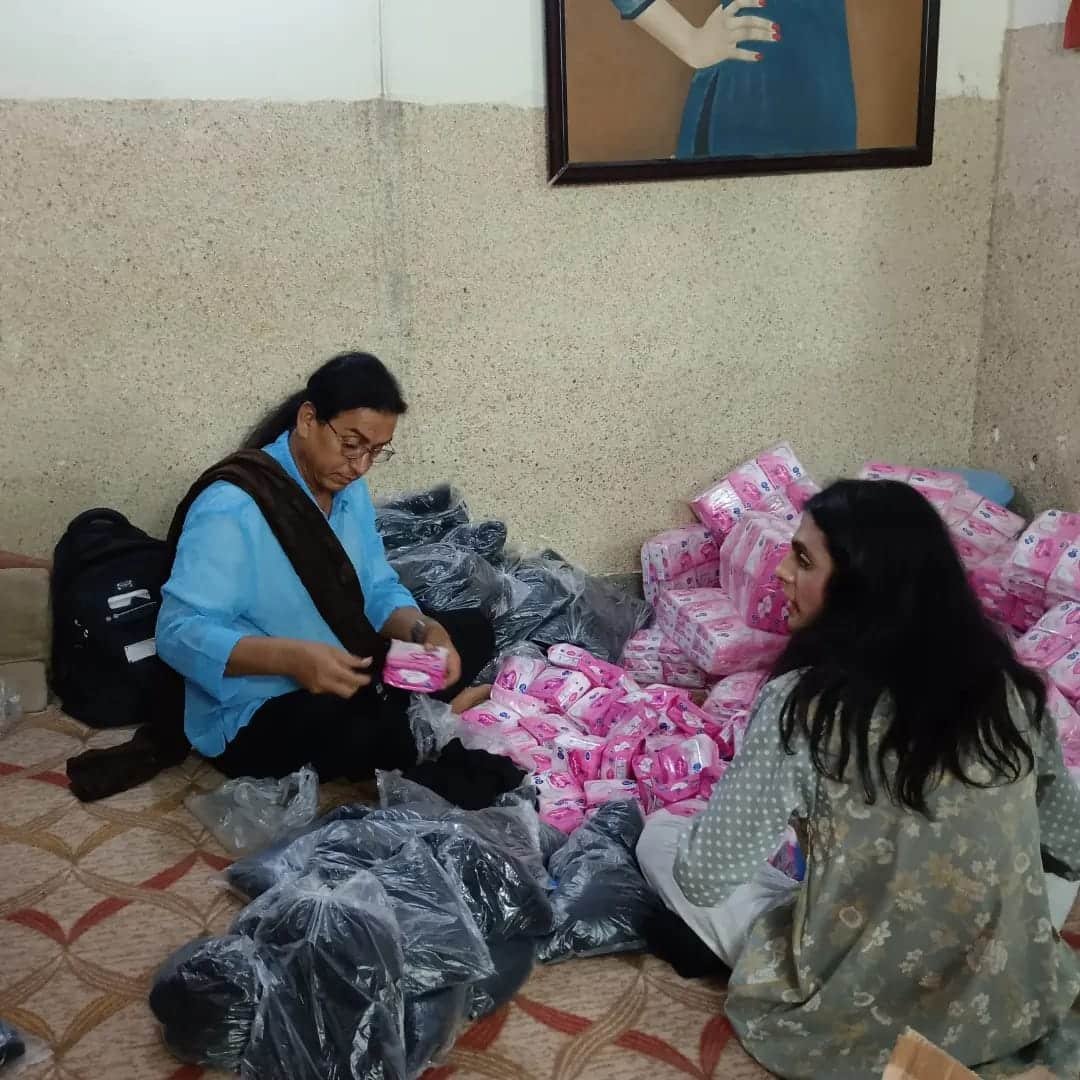
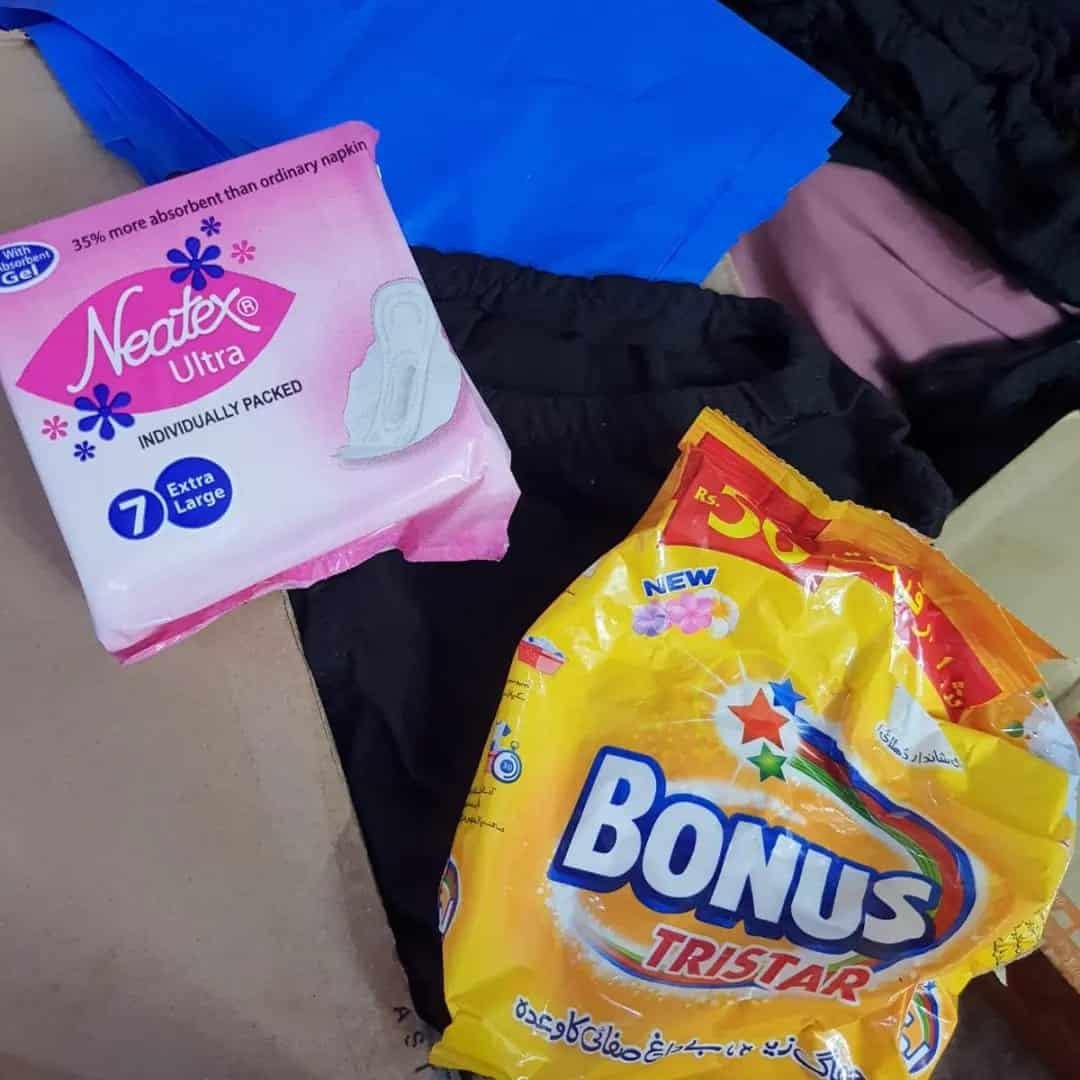
Mahnoor told The Current that Mahwari Justice is collecting sanitary napkins, cloth pads, cotton pads, underwear and sheets which they then donate to women in disaster-hit areas.
“There are many people who are saying that women in rural areas do not use sanitary pads. Why don’t they use sanitary pads? Because they do not have access to them and the critique is mostly coming from those who maybe have never used a cloth pad in their lives,” she stated.
Bushra comes from a lower-income background and for most of her life, she used a cloth pad. “Do you even realise, how uncomfortable and how unhygienic and how itchy the cloth pads are?” she wondered, adding: “I had to use cloth pads because we did not have the resources to buy sanitary napkins. It was difficult to afford sanitary napkins for six people every month.”
Mahoor further said that she agrees that sanitary pads have many problems too, but she does not understand why people think it is okay to preach about climate impact when an urgent crisis has hit the country.
“Pakistan is only contributing one per cent to the global carbon emission and women in rural areas do not make even a fraction of that one per cent.” She said she doesn’t understand why people are so worried about the waste that will be generated.
Anum Khalid, who started this campaign with Mahnoor while talking to The Current said, “If a flood victim is thirsty and you are giving them water in a plastic bottle, does that not harm the environment?”.
She continued by saying, “Bushra and I started this campaign to provide immediate relief to women or other menstruators from the issues they face from continuous bleeding.”
United Nations (UN)’s report on Guide to Menstrual Hygiene products suggests that consultation should be done on what products women are comfortable using because different materials and products are utilised for this purpose.
Anam said that they now send information about how to use sanitary pads along with their sanitary kits. They are also providing cloth pads for women in the areas where women ask for them because of their cultural preferences.
She continued by adding that our volunteers are teaching women in rural areas in their own language how to correctly use sanitary napkins.
She concluded by saying that the debate about whether something is a luxury or a basic need in times of crisis was tragic. “Our justice campaign, I believe, is helping to change the belief that sanitary pads are luxury,” she stressed.
Appeal for donations
Help us reach more flood-affected women and girls!
The legislation was first proposed by Labour Member of the Scottish Parliament (MSP) Monica Lennon.
The Period Products Act means councils and education providers in Scotland have to make sanitary products free to those who need them.
The government has provided funding for an educational website for employers, improved menstrual health resources available for schools, and implemented a successful anti-stigma campaign.
Lennon, who has been campaigning to end period poverty since 2016, described the change in the law as a “big milestone which shows the difference that progressive and bold political choices can make”.
“I am proud to have pioneered the Period Products Act which is already influencing positive change in Scotland and around the world,” Lennon said.
Since 2017, the Scottish Government has spent around £27 million to fund access to period products in public settings. In 2018, Scotland became the first country in the world to make period products free to students in schools, colleges and universities.
Finance Minister Miftah Islamail has clarified there is no import ban on sanitary pads or their raw materials.
“There is no ban on any industrial raw material. The ban is only on some luxury or non-essential goods. And there is certainly no ban on sanitary pads or diapers (or their raw materials), which are obviously essential goods. We will issue further official clarification on Monday.”
There is no ban on any industrial raw material. The ban is only on some luxury or non-essential goods. And there is certainly no ban on sanitary pads or diapers (or their raw materials), which are obviously essential goods. We will issue further official clarification on Monday. https://t.co/FCdissqyBq
Head of the Prime Minister’s Strategic Reforms, Salman Sufi, tweeted that the news circulating regarding ban on saintry pads is “absolutely incorrect”.
“Women’s health is of paramount importance and shall never be compromised,” said Sufi.
The news being circulated about ban on raw material for women’s sanitary products is absolutely incorrect.
Women’s health is of paramount importance and shall never be compromised. #TeamPMO
— Salman Sufi (Get New Covid Booster Today) (@SalmanSufi7) May 29, 2022
It was reported earlier that government has added raw materials for sanitary napkins to the list of non-essential luxury items in its recent import ban, which will affect the production of pads in Pakistan.
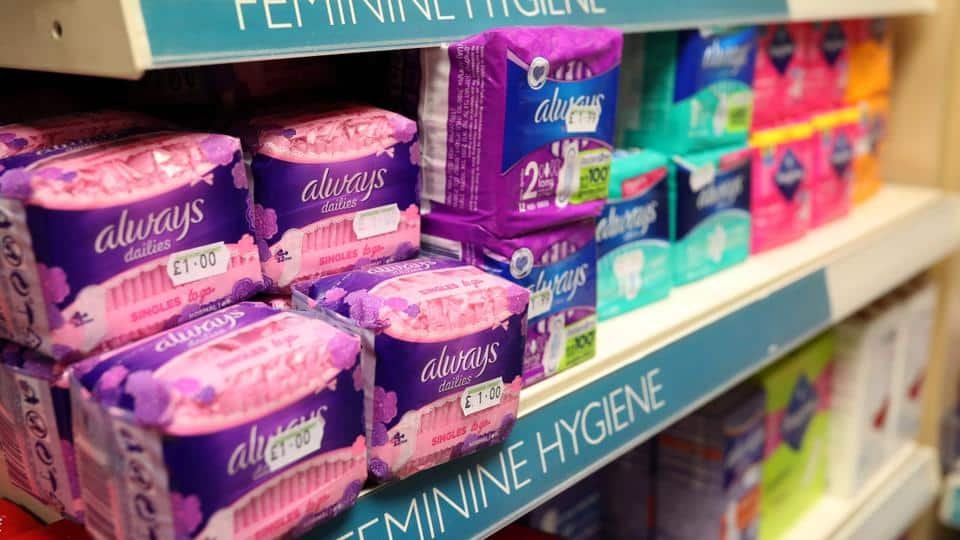
A major chunk of sanitary napkins is produced by two companies in Pakistan — P&G and Santex, which make Always and Butterfly respectively. The production of sanitary napkins of one of these brands has been majorly affected, reports Dawn.
“Though all of our products are produced in Pakistan, two of the core raw materials that form the base of the napkin are imported. The ban would mean the factory would have to shut down eventually because we can’t manufacture them anymore after the current supply runs out,” said Muhammad Kamran, Chief Operating Officer of Santex while talking to Dawn.
The main components in question, he explained, are sap paper and wadding cellulose fibre. These items are classified as HS Code 4803.000, which is prohibited under the new import ban according to the Ministry of Commerce.
“[These] are basic raw materials utilised in the manufacturing of female sanitary napkins. These items are neither tissues nor luxury but are included in S.No 63 of the SRO,” he added.
“We’ve sent an application to the Ministry of Commerce that will take 15 to 20 days to review. We’re hoping for a positive response.”
On May 19, 2022, the federal cabinet issued a list of 41 items, which will be banned from being imported for two months. This is in an attempt to address the current account deficit.
Mariyam Nafees wants people to normalise not pretending to fast when you are not.
“Brothers, don’t ask a sister why she’s not fasting,” wrote the actor on social media. “In fact, don’t ask anybody who’s not fasting why they’re not fasting.”
Taking a dig at the moral bigrade, Nafees said: “Apne rozay pe dihaan do bhai. Ajeeb!”
“Go offer your prayers instead,” she added. Nafees also used the hashtag ‘#RozayKeThaikedaar’ to assert her point.
• Brothers, don’t ask a sister why she’s not fasting. In fact, don’t ask anybody who’s not fasting why they’re not fasting. Apne rozay pe dihaan do Bhai. Ajeeb! Go offer your prayers instead.
Scotland has become the first country in the world to offer free and universal access to menstrual products, including tampons and pads.
According to reports, the Scottish Parliament voted unanimously in favour of the Period Products (Free Provision) (Scotland) Act, under which the Scottish government will introduce a nationwide program that will place a legal duty on all local authorities to make feminine hygiene products like tampons and pads freely available for those who need them.
It means period products will be available to access in public buildings including schools and universities across Scotland. According to the new rules, it will be up to local authorities and education providers to ensure the products are available free of charge.
The campaign for free menstrual products was spearheaded by Scottish Labour’s health spokeswoman, Monica Lennon, who told media outlets that it was “a proud day for Scotland”.
“This will make a massive difference to the lives of women and girls and everyone who menstruates,” said Lennon. “There has already been great progress at a community level and through local authorities in giving everyone the chance of period dignity.”
She added: “Periods don’t stop for pandemics and the work to improve access to essential tampons, pads and reusables has never been more important.”
Period poverty – the struggle to pay for basic sanitary products on a monthly basis – reportedly surged during the coronavirus pandemic. Research has revealed that period poverty has a significant impact on women’s hygiene, health and wellbeing.
The new law was praised by a number of equality and women’s rights groups as well as politicians from across the parties represented in the Scottish Parliament.
“It’s an important message in the middle of a global pandemic that we can still put the rights of women and girls high up the political agenda,” remarked Lennon.