Tag: petrol prices

  • Khan lashes out at govt on fuel hike

    Khan lashes out at govt on fuel hike

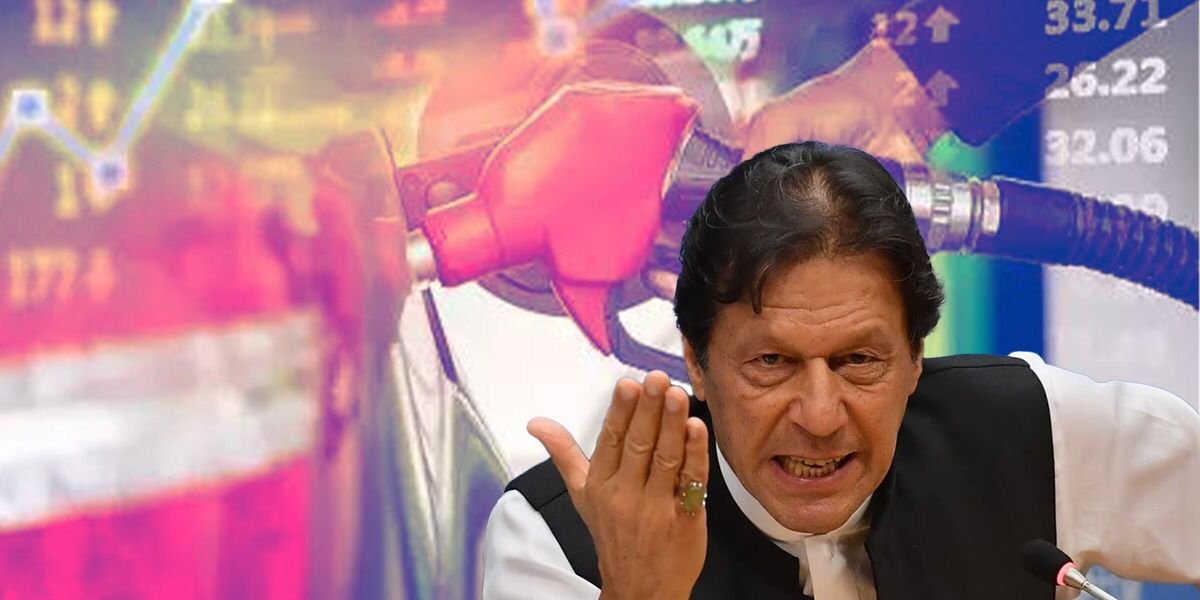
    Pakistan Tehreek-e-Insaf (PTI) Chairman and former Prime Minister (PM) Imran Khan lashed out at the incumbent government for Sunday’s surprise hike in petroleum prices.

    In a tweet, he said, “Total mismanagement of our economy by a corrupt and incompetent imported govt has crushed masses and salaried class with the latest hike in petrol and diesel prices”.

    Moreover, he claimed that 35 per cent “unprecedented inflation” is expected with Rs 200 billion mini-budget.

    Earlier in the day, Finance Minister Ishaq Dar announced that the federal government has decided to hike the prices of petrol and diesel by Rs 35 per litre.

    The decision came days before International Monetary Fund’s (IMF) officials are scheduled to visit Pakistan to discuss the stalled ninth review of the country’s current funding programme.

  • Petrol price to remain unchanged at Rs214.80 per litre for next fortnight

    Petrol price to remain unchanged at Rs214.80 per litre for next fortnight

    Finance Minister Ishaq Dar announced on Saturday that the government will maintain the price of petroleum products for the next two weeks.

    In a video statement, he said that the Oil and Gas Regulatory Authority (OGRA) requested an increase in domestic rates of petroleum products because of the upward trend in oil prices. However, he said that the price revision was rejected by the government.

    The price of petrol will remain unchanged at Rs214.8 per litre while diesel will be sold at Rs227.80 per litre till mid-January 2023.

    Kerosene oil will be sold at Rs171.83 per litre while light diesel oil will be sold at Rs169 per litre.

    “Kerosene is used by the low-income segment for heating needs,” the finance minister said.

    Previously, the market anticipated that the cost of petroleum products would remain unchanged.

  • Business confidence in Pakistan drops to negative 4%

    Business confidence in Pakistan drops to negative 4%

    Major multinational companies with operations across a variety of sectors in Pakistan have lost faith in the country’s economy. In the previous six months, the Business Confidence Score (BCS) as a whole decreased by 21 percentage points to a negative 4 per cent.

    In the earlier survey, which was conducted in March–April 2022, the score (BCS) was positive 17 per cent. In general, more than half of respondents (56 per cent vs. 19 per cent in the prior study) had a “poor” opinion of the business environment in the previous six months.

     “Going forward, only a net 2 per cent (versus 18 per cent in the previous survey) were ‘positive’ for the next six months and 35 per cent of respondents cited no plans to invest,” according to the “Business Confidence Index Survey Wave 22” of the Overseas Investors Chamber of Commerce and Industry (OICCI), which was held from September to November 2022.

    According to Express Tribune, political unrest, currency depreciation, and rising fuel prices were the top three factors contributing to the recent drop in business confidence. The other two top-five factors contributing to the recent drop in company confidence were the current energy crisis (high power costs) and inadequate commercial and trade policies.

    The services industry experienced a confidence decline of 24 per cent, followed by the retail and wholesale trade sectors (22 per cent), and the industrial sector (20 per cent). 25 per cent of respondents were from the retail and wholesale trade, 33 per cent from the services industry, and 42 per cent from the manufacturing sector.

    Commenting on the survey results, OICCI President, Ghias Khan said in a statement that “The substantial decline in the overall business confidence to negative 4 per cent is regrettable but not surprising considering the highly challenging political and economic situation witnessed during the past six months.”

    “The record level of rains during August leading to severe flooding in Sindh and other parts of the country further restricted business activities,” he added.

    “Foreign investors’ feedback could have been more positive but for serious concerns on a few critical issues like the undue delay in revising the pharma pricing and the extreme delays in overseas (outward) remittances for goods, services and dividends. Such actions are seriously counter-productive when trying to attract FDI (foreign direct investment) into the country,” Khan expounded.

    The main factors affecting business confidence in the country are anticipated to remain political unrest, rising fuel prices, and rupee depreciation.

    OICCI Vice President, Amir Paracha noted that “These are challenging times. Authorities are doing all they can to navigate the situation, including controlling inflation, managing the economy with restricted availability of foreign exchange and other resource constraints.”

    “The key stakeholders, especially foreign investors, will continue to support the authorities in taking long-term policy measures to streamline the economic fundamentals, including fair taxation for all, and facilitate business and investment into the country,” he added.

    According to the most recent survey results, the confidence index for business expansion (extra investment) plans over the next six months has decreased to 18 per cent from 34 per cent in the previous survey/W21.

    Similarly, capital investment (new) plans for the following six months fell sharply to 2 per cent (from 21 per cent in the previous wave).

    Compared to Wave 21, just 7 per cent of respondents in Wave 22 reported an increase in overall employment. A drop in overall employment over the previous six months was mentioned by almost 11 per cent of respondents.

    According to the trade body, “OICCI is the collective voice of major foreign investors. Over 200 members, from 31 different countries, have a presence in 14 sectors of the domestic economy and contribute over one-third of Pakistan’s total tax revenue.”

    In the meantime, on Wednesday, the interbank market saw the rupee fall 0.02 per cent (or Rs0.05), falling to a two-month low of Rs224.16 against the US dollar.
  • Top driving techniques for reducing fuel consumption

    Top driving techniques for reducing fuel consumption

    The price of petrol in Pakistan is unforgivably high and motorists have no recourse since fuel is the basic and continuous expense for gasoline-powered vehicles. Still, the vast majority of auto owners want to lower their monthly fuel costs.

    Fuel economy may not be a huge concern if an individual rarely drives a car for short trips, but regular commuting and lengthy excursions make it challenging to save fuel.

    Here are a few tried-and-true tips that are well-known to increase mileage:

    Go easy on the accelerator

    This entails just accelerating the car when necessary. Frequent braking and engine revving increase fuel consumption whereas keeping the speed of the vehicle steady reduces fuel consumption. This is why you get greater mileage on long routes or motorways.

    It is strongly advised to maintain a low RPM (preferably less than 2,500), and if your automobile has an eco-mode, it would be helpful to frequently use it. Depending on the vehicle, this mode is especially made to improve fuel efficiency and can reduce fuel consumption by up to 15%.

    Watch your speed

    If your car has a small engine (under 1300cc), it will use more gasoline when travelling at speeds of 100 km/h or greater. To provide higher output, the engine must push harder, which raises the RPM and petrol usage.

    Bigger engines may generate greater power at lower RPMs, hence they are often unaffected by higher speeds as they require less power and repeated flooring.

    Be aware that hybrid engines are less affected by this as they may employ electric motors to maintain a high power output while consuming little fuel.

    Drive smartly

    A motorist may handle traffic more effectively by keeping an eye on the surroundings, maintaining safe distances, and analysing the driving habits of other drivers. By doing this, the motorist may prepare for obstacles including roadblocks, red lights, road closures, and bumps.

    Additionally, it aids in intelligent acceleration and deceleration. Ultimately, smart driving is one of the best ways to increase safety and reduce fuel consumption.

    Avoid idling

    This is the most basic fuel-saving advice offered by automotive specialists. It is clear that idling for an extended period of time wastes fuel. In addition, warming up a car shouldn’t take more than 60 seconds.

    Use AC when needed

    When the air conditioner (AC) is on, cars use more petrol. More fuel is saved by just using the AC when necessary.

    Still, driving with your windows down in the summer only to save on fuel is not advised, especially on highways. The automobile experiences higher drag when the windows are rolled down, especially at high speeds. As a result, the automobile encounters higher air resistance and requires more engine power to maintain the same speed.

    This is why while driving at faster speeds, such as on a highway, the driver would be wise to put on the AC rather than rolling down the windows.

    Remove excess weight

    Many automobile owners ignore this underrated advice. If your trunk is empty, it might not make much of a difference, but if you have heavy items within your car, this could be the cause of your excessive fuel usage.

    The engine is put under more stress as the automobile gets heavier because it requires more power to move ahead, which increases fuel consumption.

    Perform regular maintenance

    Every automobile owner’s primary priority should be maintenance. Regularly having your automobile serviced is crucial since there may be many underlying problems and components under the hood that you are unable to inspect or maintain.

  • ‘Our patience won’t last long’: Imran Khan wants early elections

    ‘Our patience won’t last long’: Imran Khan wants early elections

    Pakistan Tehreek-e-Insaf (PTI) Chairman Imran Khan, in an address to the nation has once again demanded early elections, warning that PTI’s patience was wearing thin.

    “If we want to save the country from discord and chaos, free and fair elections need to be announced immediately,” he said.

    “Our patience won’t last long if you continue like this, we will have to give a call to the nation,” said Khan, addressing the government.

    “If there is no political stability, the economy won’t stabilise. So I want to tell my people today that we need to have elections quickly to save Pakistan from this quagmire,” the former Prime Minister insisted, adding that it was his fear that there will be no economic progress without political stability.

    “The incumbent government does not have any credibility, both inside and outside Pakistan, especially in the financial markets,” alleged Khan, mentioning that the prices of fuel and electricity across Pakistan had reached an all-time high and warned that they would further increase in the near future.

    Unemployment is increasing, inflation is rising, and businesses are closing down, Imran said. “The danger I am seeing right now […] Our credit rating has fallen to negative […] do you know what this means? They think Pakistan doesn’t have the ability to repay and due to this, the cost of loans will increase,”‘ he warned.

  • Petrol price may go down by Rs9.63 per litre for the next fortnight

    The price of petrol is expected to decrease by Rs9.63 per litre for the next two weeks, while diesel prices are anticipated to increase.

    According to reports, the Oil and Gas Regulatory Authority (OGRA) has advised lowering gasoline prices for the final fifteen days of the current month, September.

    However, a final decision about increased petroleum pricing would only be made after receiving Prime Minister Shehbaz Sharif’s approval.

    For the specified period, the cost of diesel is probably going to go up by Rs3.04 per litre, bringing the price from Rs247.26 per litre to Rs250.30.

    The federal government announced an increase in the price of gasoline and diesel for the first two weeks of September on August 31.

    The price of gasoline increased by Rs2.07 to reach Rs235.98 per litre, while the price of high-speed diesel increased by Rs2.99 to reach Rs247.43.

    According to Express Tribune, various strategies have reportedly been used by the government and OGRA to maintain low petroleum prices in order to avert political reaction.

  • ‘I am an easy target’: Miftah Ismail reacts to criticism after another petroleum hike

    ‘I am an easy target’: Miftah Ismail reacts to criticism after another petroleum hike

    Finance Minister (FM) Miftah Ismail once again explained how the petrol prices are calculated after receiving criticism for the increase in petroleum prices.

    Responding to senior journalist Hamid Mir on Twitter, he said the government has not imposed any tax on petroleum products.

    Clarifying his position, the minister said that he did not say that the price will not be increased.

    “Mir sahib I said I will not add one penny of new taxes or levies to the price. And I have not. But you know Hamid sahib that the fuel price summary is moved by OGRA and sent to Finance division through the Petroleum division. We get it only a few hours before prices are set.”

    “I am an easy target. Which is fine. But this price change only reflects the change in PSO costs and doesn’t have any new taxes,” said Miftah Ismail.

    The finance minister added that people are welcome to critique or criticise him.

    “I know I am sincere to my country and have saved it from default and working to the best of my ability.”

    Zardari unhappy with govt’s decision to increase petrol prices

    Pakistan People’s Party (PPP) Co-Chairperson Asif Ali Zardari distanced himself from the recent increase in the petroleum prices by the government.

    Zardari said the PPP is a part of the government and supports it, but there must be consultations on such decisions.

    “We are all here in this government to give relief to the people and that should be our top priority. We are with the prime minister and will meet him soon and talk about the economic team,” he added.

    ‘I am not involved in this decision’: Nawaz Sharif leaves party meeting over increase in petrol prices

    Pakistan Muslim League-Nawaz (PML-N) leader Maryam Nawaz took to Twitter and said that PML-N supremo Nawaz Sharif was unhappy with the government increasing the petrol prices and as a result left the meeting.

    “Mian Sahib strongly opposed this decision and even said that I cannot burden the people with one more penny. And if there is any compulsion of the government, I am not involved in this decision and he left the meeting,” tweeted Maryam.

    She further tweeted, “I stand with the people. Cannot support this decision.”

    The government increased the price of petrol by Rs6.72 per litre and decreased the price of high-speed diesel (HSD) by Rs0.51 and kerosene oil by Rs1.67 per litre.

    Read more: Govt raises petrol price by Rs6.72 to Rs233.91 per litre

    The price of light diesel oil (LDO) was raised by Rs0.43 per litre by the government.

    Prior to this, the coalition administration had decreased the cost of petrol and LDO starting on August 1 by Rs3.05 and Rs0.12, respectively.

  • Govt may reduce petrol prices before midnight: Miftah Ismail

    Govt may reduce petrol prices before midnight: Miftah Ismail

    The government will lower petroleum prices before midnight, according to Finance Minister Miftah Ismail, who also announced that Prime Minister (PM) Shehbaz Sharif has received a report from the Oil and Gas Regulatory Authority (Ogra) recommending the drop.

    Speaking to the media, he emphasised that the International Monetary Fund (IMF) had no issues with the government’s decision.

    The announcement came the same day the IMF announced that it had reached a staff-level agreement with Pakistan for the conclusion of the combined seventh and eighth reviews of the Extended Fund Facility; the agreement is now awaiting the Executive Board’s approval.

    Additionally, he declared that the government will lower oil prices now rather than wait until July 15th (14 July). “PM Shehbaz wants to announce immediate relief to the people of Pakistan,” he said. “The public stood with the government during difficult times and bore the burden of inflation and now we want to provide relief.”

    In its conclusion, Ogra suggested lowering the cost of gasoline by Rs18 per liter and diesel by more than Rs20 per liter.

    The decision to lower petroleum product prices was made in response to recent sharp declines in the price of crude oil on the world market.

    The government approved a price increase for petroleum products on June 30. The increase brought the new ex-depot price of gasoline to Rs248.74 per liter (up Rs14.85), and diesel to Rs276.54 (after a hike of Rs13.23).

    On July 1, the new rates became effective. In the pricing structure, a petroleum levy of Rs10 had been added to the cost of gasoline, and Rs5 had been added to the cost of kerosene, high-speed diesel, and light diesel oil per liter.

  • No memes: Twitter is angry over another petrol price hike

    No memes: Twitter is angry over another petrol price hike

    The federal government increased the price of all petroleum products yesterday (June 15). This includes an increase of Rs24 per litre for petrol and Rs59.16 per litre for high-speed diesel (HSD). This is the third hike in petroleum prices in less than a month.

    Federal Minister for Finance and Revenue Miftah Ismail criticised the PTI government for reaching an erroneous agreement with the International Monetary Fund (IMF), which tied the incumbent’s hands and forced it to raise oil prices to get the economy back on track.

    Prime Minister Shehbaz Sharif tweeted, “Acutely aware of the impact that a fuel price hike causes. Govt is left with no choice but to raise the prices due to IMF deal that PTI govt signed.”

    Read more-Govt hikes price of diesel by Rs59, petrol by Rs24

    People on social media are expressing their anger and exasperation after the latest petrol bomb was dropped by the government.

    https://twitter.com/Noobiy12/status/1537272865426395136
    https://twitter.com/Zohadtweets/status/1537250462994407424
  • Energy sector to get a massive portion of the Rs699 billion subsidy

    Energy sector to get a massive portion of the Rs699 billion subsidy

    The government has proposed allocating Rs699 billion to multiple sectors in order to provide relief to the masses during the new fiscal year 2022-23.

    According to budget estimates, the government plans to boost subsidies by Rs17 billion to Rs699 billion for the next fiscal year, up from Rs682 billion in the previous fiscal year.

    The government has reduced power sector subsidies by Rs26 billion to Rs570 billion for the next fiscal year, down from Rs596 billion in the previous fiscal year and proposed increasing the total subsidy for the power sector for PEPCO by Rs18 billion to Rs275 billion. The budget 2022-23 proposed reducing the subsidy amount for K-Electric by Rs5 billion to Rs80 billion.

    Moreover, subsidies for Independent Power Producers (IPPs) are slashed by Rs39 billion to Rs215 billion for the coming fiscal year.

    The amount of petroleum subsidy has been upped from Rs51 billion to Rs71 billion. During the next fiscal year, the Utility Stores Corporation (USC) will receive a Rs17 billion subsidy. PASSCO will also receive Rs7 billion subsidy.

    During the next fiscal year, Rs8 billion has been set aside for wheat subsidies to Gilgit-Baltistan. For the coming fiscal year, the subsidy for the metro bus service has been increased to Rs4 billion. Similarly, the fertiliser plant subsidy has been increased to Rs15 billion.

    Read more: Govt unveils Rs9.5 trillion budget 22-23, focused on sustainable growth

    The new government has reduced the Naya Pakistan Housing and Development Authority (NAPHDA) subsidy amount to Rs500 million for the next fiscal year, down from Rs30 billion in the previous fiscal year. NAPHDA’s markup subsidy has also been reduced, from Rs.3 billion to Rs.500 million for the coming fiscal year.