Tag: petrol

  • 914 road accidents reported in Punjab during last 24 hours

    914 road accidents reported in Punjab during last 24 hours

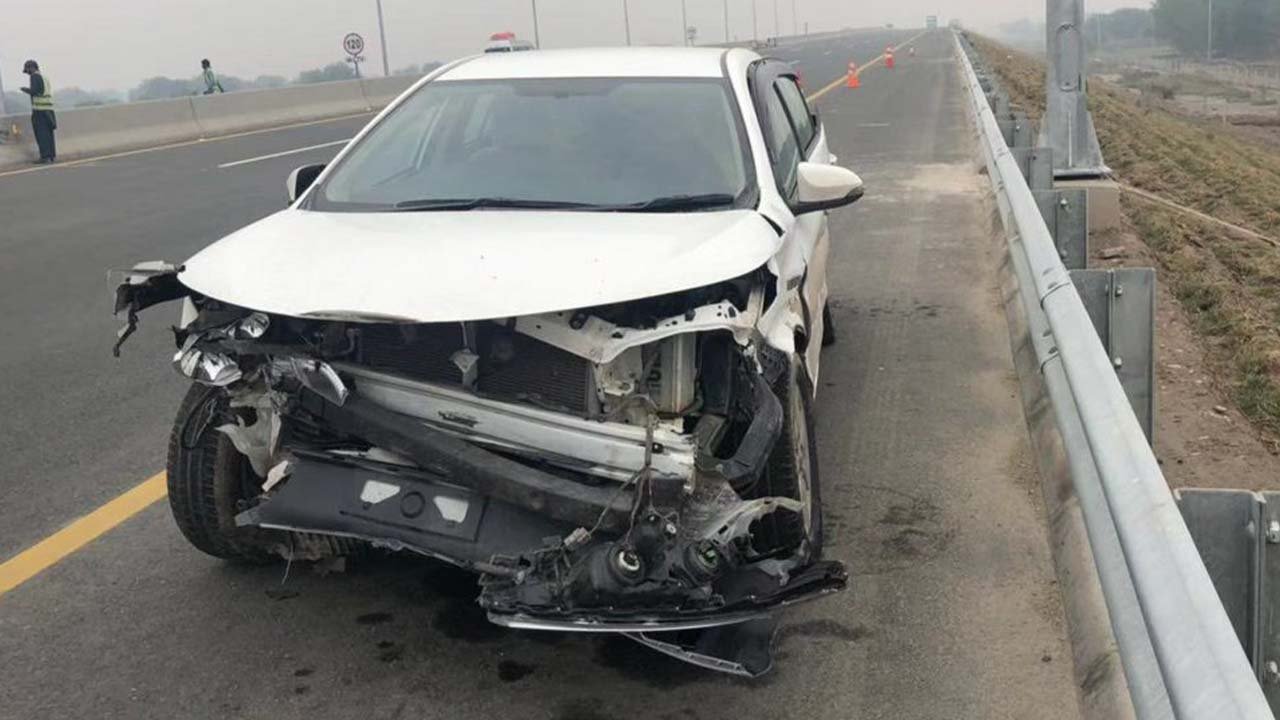
    During the last 24 hours, at least eight people were killed and 962 were injured in 914 road accidents across all 37 districts of Punjab.

    577 people were seriously injured and taken to various hospitals, while 385 people with minor injuries were treated on the spot by rescue medical teams. Once again, Lahore remained at the top in reporting highest number of accidents.

    According to the findings, 450 drivers, 27 underage drivers, 104 pedestrians, and 388 passengers were killed in traffic accidents. The road accidents involved a considerable number of two-wheelers as it involved 807 motorcycles, 82 auto-rickshaws, 74 motorcars, 22 vans, 11 buses, 17 trucks, and 100 other types of auto vehicles and slow-moving carts.

    Considering the statistics, 239 road accidents were reported in Lahore, affecting 238 people, putting the provincial capital at the top of the list, followed by 80 in Faisalabad with 85 victims and 53 in Multan with 50 victims.

  • IMF programme will only revive if Govt hikes fuel, electricity prices

    IMF programme will only revive if Govt hikes fuel, electricity prices

    The International Monetary Fund (IMF) has stated unequivocally that the loan programme under the Extended Fund Facility (EFF) will not be revived unless oil and electricity prices are increased. The Pakistani delegation, on the other hand, has asked for more time to withdraw the subsidy.

    The delegation would meet with Prime Minister (PM) Shehbaz Sharif to discuss it. Both parties have agreed to continue discussions. Apart from the withdrawal of the subsidy, officials claim that all other issues have been resolved.

    Pakistan was unable to persuade the IMF despite a week of discussions in Doha, Qatar, from May 18 to May 25.

    IMF postponed the rollback of Pakistan’s stalled $6 billion External Financing Facility (EFF) programme late Wednesday as the government hoped that the revival would bring stability to the financial markets, the rapid weakening of the local currency with depleting foreign exchange reserves.

    In a statement, the Fund underlined the elimination of petroleum and energy subsidies, among other conditions, as a prerequisite for the program’s restoration. Following the conclusion of the talks, Nathan Porter, the IMF Mission Chief for Pakistan, stated that the Fund held meaningful talks with Pakistani representatives.

    “The Mission has engaged in highly constructive discussions with Pakistani authorities in order to reach an agreement on policies and reforms that will lead to the completion of the awaiting seventh evaluation of the authorities’ reform programme, which is backed by an IMF Extended Fund Facility arrangement”.

    As per Porter, significant progress was made during the mission, including the need to continue addressing massive inflation and rising fiscal and current account shortfalls, whereas ensuring sufficient protection for the weakest.

    The Fund also lauded the State Bank of Pakistan’s (SBP) decision to raise the policy rate from 12.25 per cent to 13.75 per cent in order to combat rising inflation. However, the mission chief noted that there were fiscal deviations from the policies agreed upon in the previous review, reflecting in part the fuel and power subsidies announced by the authorities in February.

    The PTI-led government initially concurred to increasing the prices of energy and petroleum products, but Imran Khan announced a subsidy on both commodities later in March, and the present government is proceeding with the same arrangement.

    As per Porter, the IMF team highlighted the importance of tangible policy actions, including the removal of fuel and energy subsidies and the FY2023 budget, to achieve programme objectives. He went on to say that the IMF team is looking forward to proceeding with its discussion and close engagement with the Pakistani government on policies to ensure price stability for the benefit of all Pakistanis.
  • Here’s where you can get petrol in Lahore

    Here’s where you can get petrol in Lahore

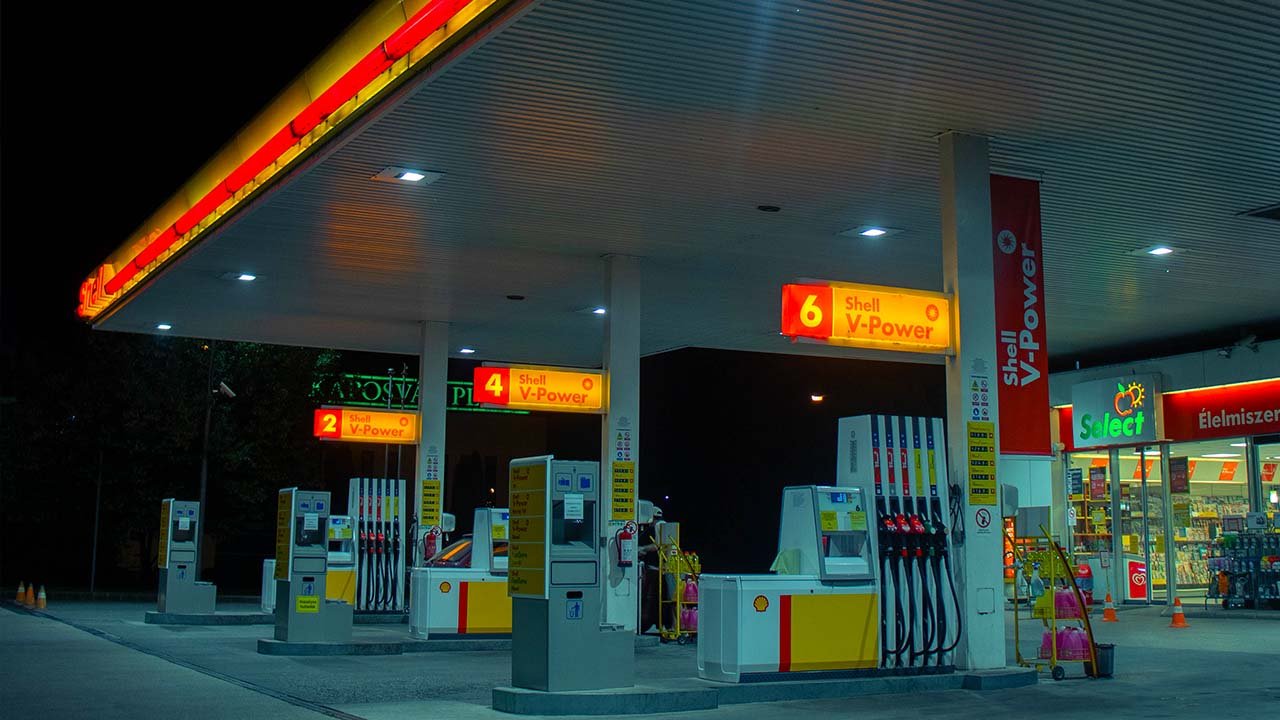
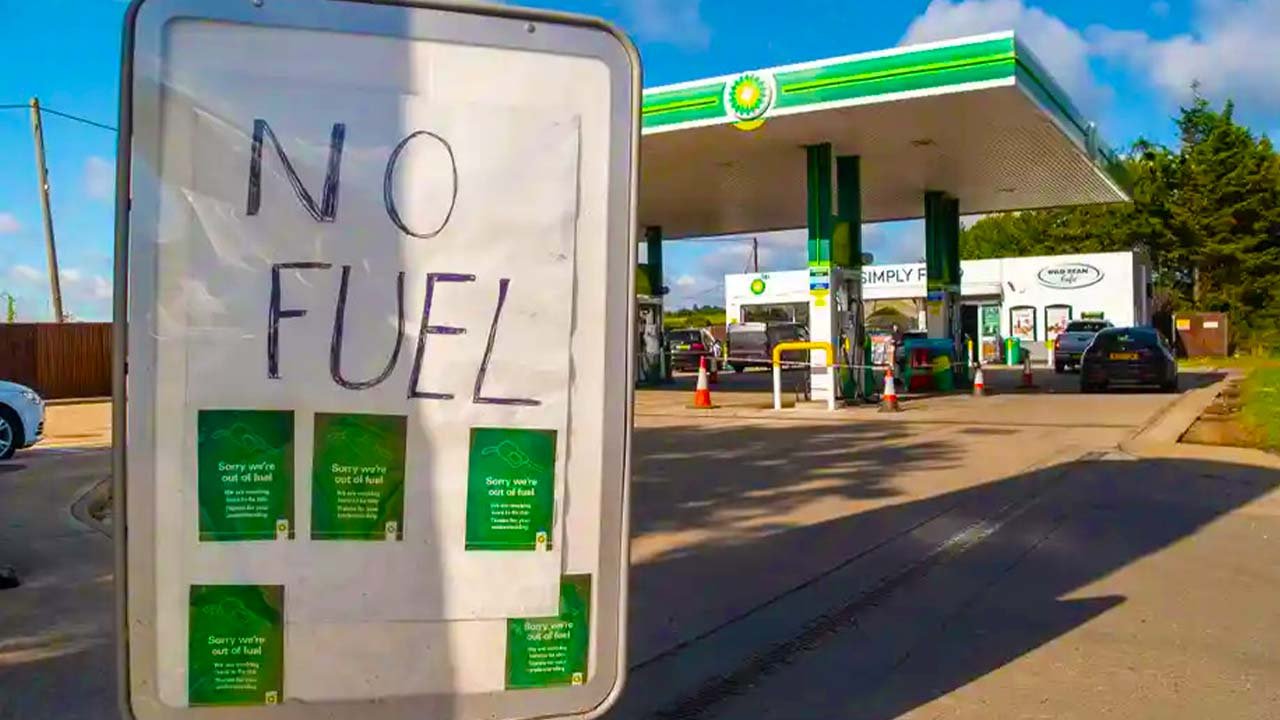
    Following oil industry’s warning of possible petroleum product shortages in Punjab and neighbouring areas due to road and highway blockades, a number of petrol pumps in the city have been closed.

    Majority of petrol pumps in Lahore have been shut, particularly in the Cantt, DHA, Gulberg, and Johar Town area. When asked, the majority of retailers refused to comment on when petroleum sales would resume.

    We have, however, contacted multiple managers of prominent petrol pumps in Lahore and asked if they are currently selling fuel.

    Here are a few filling stations in different parts of the city that are still selling fuel:

    1. Euro Oil petrol pump opposite Shahnawaz Mercedes-Benz Showroom Gulberg
    2. Total parco Mazang road, Mazang Chungi
    3. Hascol DHA phase 2 U Block, opposite DHA cinema
    4. PSO Chowk Thokar Niaz Baig , Multan Road

    Earlier, Oil Companies Advisory Council (OCAC) said that oil marketing companies are supplying fuel to retailers but the deliveries could be slowed owing to road blockages in Punjab’s major cities.

  • OCAC warns of petrol supply shortages due to roadblocks

    OCAC warns of petrol supply shortages due to roadblocks

    Oil Companies Advisory Council (OCAC) said that oil marketing companies are supplying fuel to retailers but the deliveries are being slowed owing to road blockages in Punjab’s major cities, which could affect deliveries to filling stations.

    It warned provincial authorities in Punjab that the road blockades have severed connectivity between major cities and neighboring areas, affecting fuel supplies inside the province.

    The Oil Companies Advisory Council affirmed that there are sufficient stockpiles of gasoline products throughout the country, including depots in Punjab.

    It also highlighted fears about the current scenario of roadblocks and the rumoured assumption of minimal stocks spreading on numerous platforms and asked the public to refrain from panic buying. Despite the roadblocks, there are enough stockpiles of petrol and high-speed diesel (HSD) in Punjab, and OMCs are constantly working to restock retail outlets on time.

    OCAC expressed its concerns to the Chief Secretary of Punjab, requesting the local administration’s assistance in ensuring the safe and secure transit of tankers from different depots to different petrol outlets across the province till the scenario stabilizes.

  • The recent ban on imports might barely make a dent

    The recent ban on imports might barely make a dent

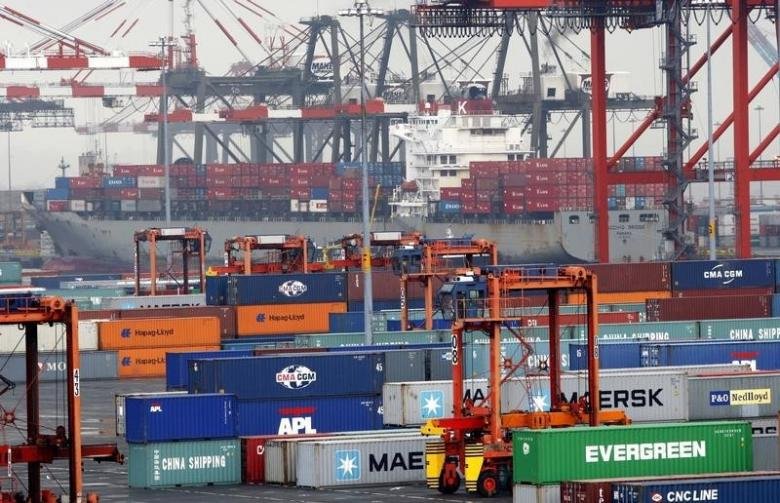
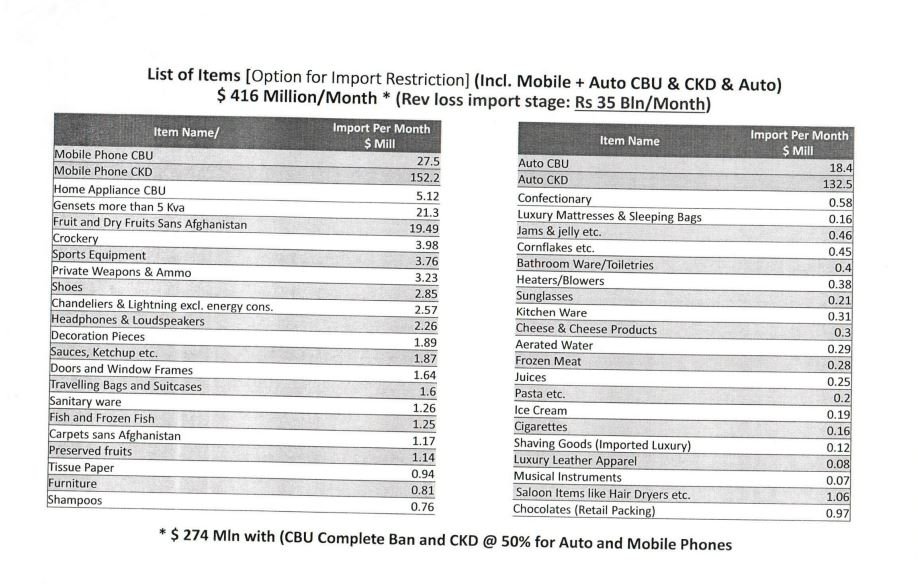
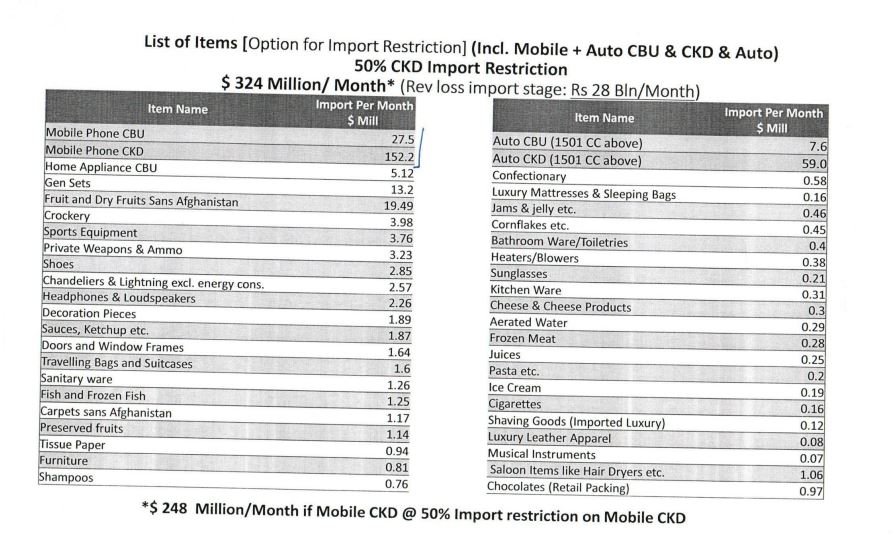
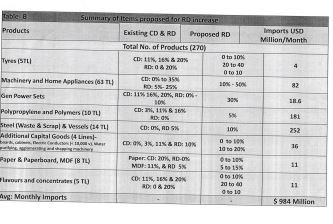
    On Thursday, May 19th, 2022, the federal cabinet issued a list of 41 items which will be banned from being imported for two months. This is in an attempt to address the current account deficit. The list of products is banned from being imported into the country, which means that essentially any shops or restaurants which rely on using these products will be forced to find local alternatives.

    These products will be banned regardless of what branding or packaging they use and only on the basis of whether the specific product is imported or not. Even products which are imported from abroad but packaged locally, will now be banned.

    Economists, university professors and business journalists took to Twitter to analyze and assess the merits and demerits of this decision. The discussion around luxury products and the fact that a lot of products which are labelled as “luxury items” are actually essential. Sanitary imports, valued at $16.4m are wrongly categorized as non-essential and although local alternatives also exist but it is definitions like these which disallow such decisions to be founded in research and expertise.

    The valuation of these imports which was published by the Pakistan Bureau of Statistics, was being quoted to ridicule the decision by many. What’s interesting to note is that most brands which appear to be entirely local, import a major chunk of their supply and will now be forced to smuggle goods instead.

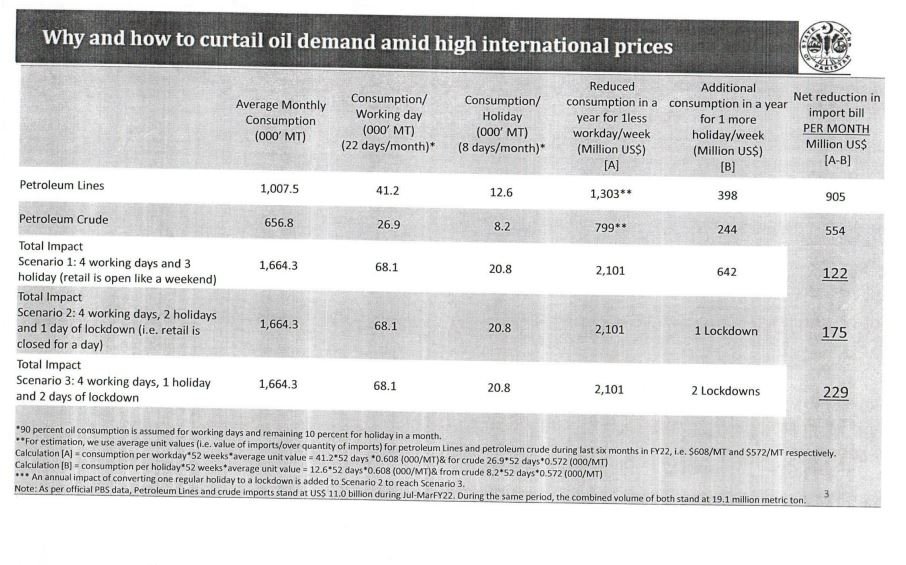
    Only from the data shared by PBS it becomes clear that for the fiscal year 2022, June to March, the total value of petroleum imports was $11 billion, while the total value of banning all these non-essential “luxury” items is a total $984 million, which forms only about 8.9% of the total value of petroleum imports.

    In conversation with Profit Magazine’s Ariba Shahid, she clarified that this would still prove to be a largely fruitless move since the most significant chunk of the import bill is still being used up to run the energy sector without any thought being given to the humongous fuel subsidies . “For a very long time the State Bank of Pakistan has been talking about how if we remove the oil component from it, the current account deficit is improving, which is true and basically means that people are not spending money to buy other items and most of the import bill is petrol and soy bean oil.”

    Economists Ammar Khan and Atif R Mian also took to Twitter to analyze this decision of “patchwork economics”. Commenting on this unsustainable gap in Pakistan’s balance of payment, on April 15th, 2022 during a discussion on Pakistan’s economy at Princeton University, he explains that for Pakistan to grow it is a necessary condition for Pakistan to deal with this problem and digs deeper into the structure of the economy. He particularly takes apart urban land reforms, the necessity to levy a capital gains tax on speculative real estate transactions and analyzes how Pakistan is not even economically stable enough to grow at the rate of India and Bangladesh and it is primarily due to the elite capture of the economy that disallows the economy to attempt to fix its loopholes.

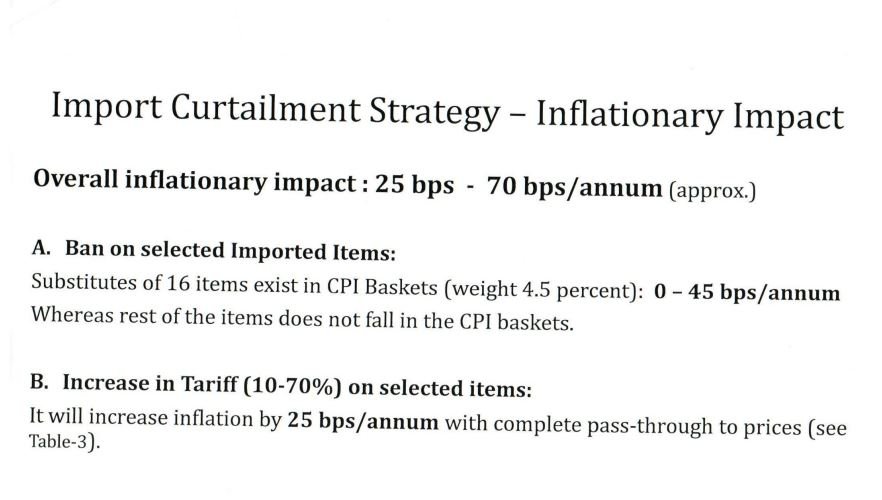
    Echoing similar sentiments, Ariba Shahid explained that due to a weaker economy, the import bill is not as significantly high due to a reduced demand pull because of a lowered purchasign power and hence banning these products will be insignificant and might barely make a dent in the current account deficit. “The need of the hour is to reverse the fuel subsidy,” says Shahid, “This decision will swell up the grey market economy and smuggling will increase.”

  • Crisis-hit Sri Lanka has enough petrol left for one day, PM warns

    Crisis-hit Sri Lanka has enough petrol left for one day, PM warns

    As the country suffers its greatest economic crisis in more than 70 years, Sri Lanka’s new Prime Minister (PM) declared that the country is headed to its last day of petrol stock.

    PM Ranil Wickremesinghe said the country urgently needed $75 million in foreign currency to pay for crucial imports in a televised address. In order to pay government salaries, he claims the central bank will have to print money.

    Sri Lankan Airlines, which is owned by the government, may be privatised, according to PM Wickremesinghe.

    The pandemic, soaring energy prices, and populist tax cuts have all wreaked havoc on the island nation’s economy. Medicines, fuel, and other essentials were in low supply due to a chronic shortage of foreign cash and rising inflation.

    Auto rickshaws, the city’s most popular mode of transportation, and other vehicles have been queuing at gas stations in Colombo.

    The country has enough petrol for one day at the time. Mr Wickremesinghe, who was appointed Prime Minister last week, cautioned that the next few months will be the hardest of our lives.

    He noted that shipments of petrol and diesel using an Indian credit line could provide fuel supplies in the coming days.

    Mr Wickremesinghe stated that the nation’s central bank will have to print money to assist the government in meeting its salary bill and other obligations.

    The PM stated that he is forced to allow the printing of money against his will in order to pay state employees and purchase vital products and services. However, the nation must keep in mind that printing money causes the local currency to depreciate.

    Read more: CNG prices pushed to Rs140 per kg for sales tax collection

    As part of his efforts to stabilise the country’s finances, he advocated selling out Sri Lankan Airlines. In the fiscal year ended March 2021, the airline lost 45 billion rupees ($129.5 million; £105 million).

  • ‘Please don’t go out in the heat to get tanks filled’: Miftah Ismail

    ‘Please don’t go out in the heat to get tanks filled’: Miftah Ismail

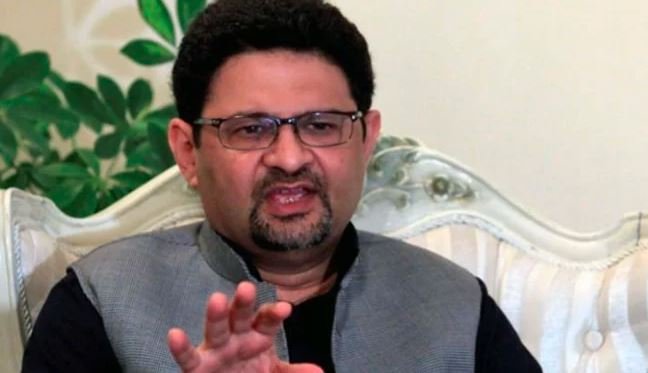
    Finance Minister Miftah Ismail said on Sunday that the government has no plans to raise the price of petroleum goods for the time being.

    Addressing a press conference, the finance minister said that Prime Minister Shehbaz Sharif had rejected the proposal of increasing petroleum prices today, adding that the government could not burden the people any further.

    “We are not increasing prices today. Please do not go out in this heat to get your tanks filled,” said Miftah Ismail.

    However, Miftah later tweeted, “But due to changing circumstances and international oil prices, we may have to revisit our decision soon.”

    The finance minister stated that he will be part of a delegation travelling to Qatar for talks with the International Monetary Fund (IMF) next week and he hoped the negotiations would be productive for the country.

  • Safe to fill up fuel tanks to the max in this heat?

    Safe to fill up fuel tanks to the max in this heat?

    Considering Pakistan’s scorching summer and rising petroleum prices, a claim has been made regarding how much fuel should be topped inside a vehicle.

    According to a viral image being attributed to Pakistan State Oil (PSO), motorists should not fill gasoline to the full capacity of the tank owing to rising temperatures since it may trigger an explosion in the tank. Drivers can fill half of their tank and leave the rest for air.

    Conversely, there has been no official word from the oil company in this regard; however, a similar image went viral years ago when PSO clarified that filling fuel tanks to their full capacity poses no harm to automobiles or passengers.

    The announcement came after a Whatsapp message went viral on the internet in 2018. In view of rising temperatures, the message falsely claimed that PSO had warned the public against filling gasoline tanks to full capacity.

    According to the statement from PSO, the auto-igniting temperature of gasoline is far higher than the peak summer temperatures in Pakistan. Filling a petrol tank to the maximum capacity poses no danger to the automobile or its occupants, and is considered fully safe and advantageous to the vehicle’s operation.

    Read more: CNG prices pushed to Rs140 per kg for sales tax collection

    Also, the idea that filling the vehicle’s gasoline tank to the full capacity will cause an explosion defies scientific logic.

    This is because the auto-ignition temperature for petrol is 495°F (257°C), which is the lowest temperature required to ignite a gas or vapour in air without the presence of a spark or flame. The highest recorded temperature on earth was 56.7°C (134°F), observed on July 10, 1913, at Greenland Ranch, Death Valley, California, USA.

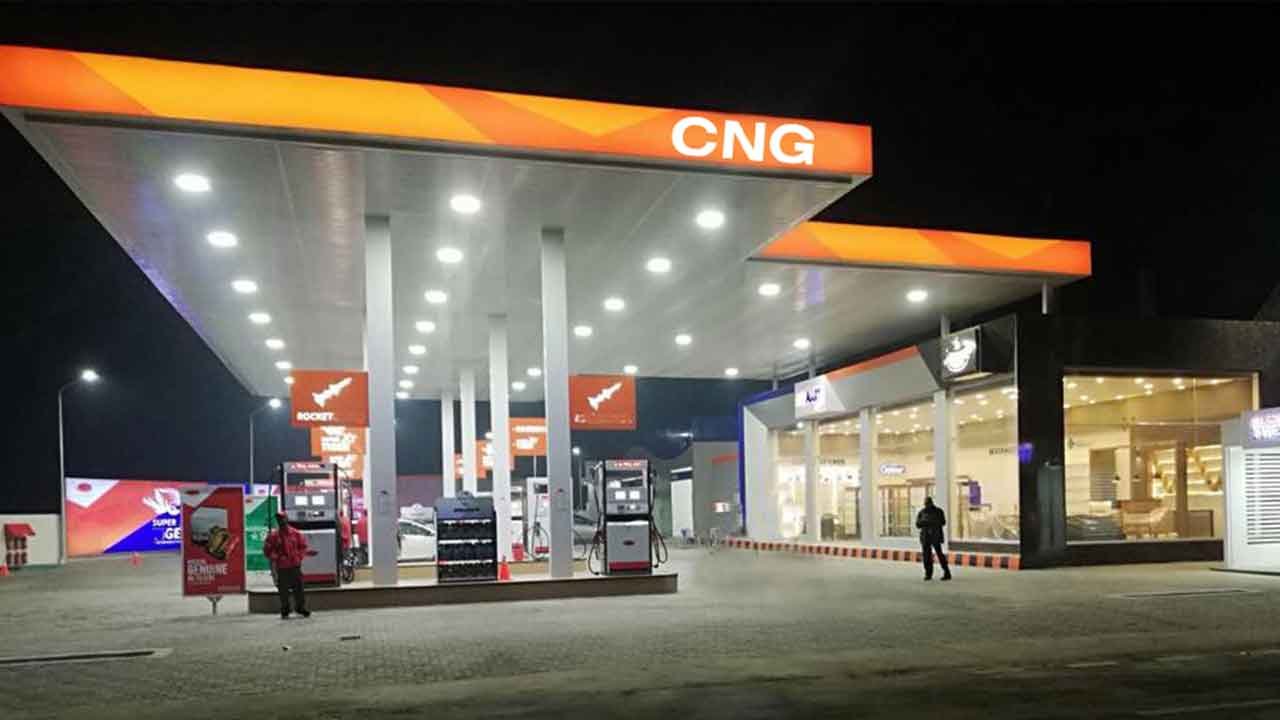
  • CNG prices pushed to Rs140 per kg for sales tax collection

    CNG prices pushed to Rs140 per kg for sales tax collection

    The Federal Board of Revenue (FBR) has raised the sales tax rate on compressed natural gas (CNG) supplies to customers.

    On Tuesday, the FBR published S.R.O. 587(I)/2022 to replace S.R.O. 39(I)/2022, which was issued on January 8, 2022. It has amended the value of compressed natural gas (CNG) supply to consumers in order to charge sales tax from CNG stations.

    It has set the value of supply to CNG customers in order for gas generation and distribution businesses to charge sales tax from CNG stations.

    CNG rates

    The price of CNG in Region-I, which includes Khyber Pakhtunkhwa, Balochistan, and Potohar, has been raised from Rs134.57 per kg to Rs140 per kg (Rawalpindi, Islamabad, and Gujar Khan).

    Read more: Pakistani Rupee crashes to a record low against US dollar 

    Moreover, the cost of CNG has been raised from Rs128.11 per kg to Rs135 per kg in Region-II, which covers Sindh and Punjab except for the Potohar region.

  • NEPRA hikes power tariff by Rs2.86 per unit

    NEPRA hikes power tariff by Rs2.86 per unit

    The National Electric Electricity Regulatory Authority (NEPRA) has increased the power price by Rs2.86 per unit for the month of March 2022 due to Fuel Charges Adjustment (FCA) and also issued a notification in this regard.

    As per NEPRA’s notice, power consumers of Ex Wapda Distribution Companies (DISCOS) will be charged an increase of Rs2.86 per unit on account of FCA for March 2022 in their electricity bills for May 2022, resulting in an added strain of Rs29 billion on consumers, along with General Sales Tax (GST).

    The Central Power Purchasing Agency (CPPA) had urged the administration to raise the electricity tariff by Rs3.16 per unit. Except for lifeline and K-Electric (KE) customers, the hike will apply to all consumer categories.

    Read more: Pakistan starts oil and gas production from Dhok Sultan DS X-1

    Moreover, the authority also announced Rs1.38 per unit increase for K-Electric customers. For the month of February 2022, Karachi Electric (KE) requested an increase of Rs3.45 per unit. The hike will be billed to electricity customers in May 2022, according to the announcement. Except for lifeline customers who use less than 100 units per month, the tariff increase would affect all KE customers.