Tag: petrol

  • Petrol price increased to historic high of Rs305.36 per litre

    Petrol price increased to historic high of Rs305.36 per litre

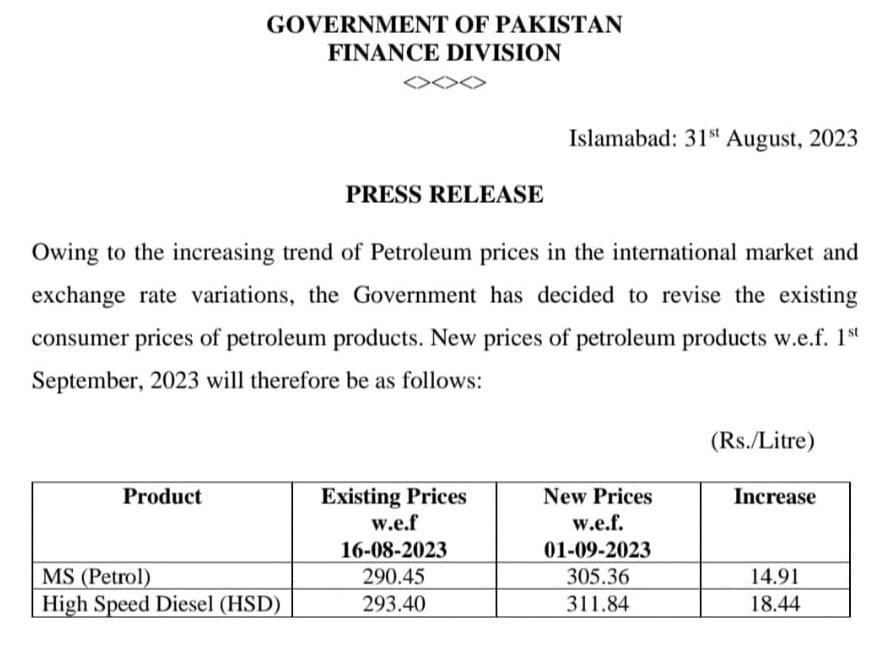
    For the first time in Pakistan’s history, the price of petrol has crossed the Rs300 mark due to a recent hike of Rs14.91. This brings the new petrol price to Rs305.36 per litre. The diesel price has also increased by Rs18.44, now at Rs311.84 per litre.

    The government has attributed these revisions to the upward trajectory of global petroleum prices and the consequential fluctuations in exchange rates.

    A statement issued by the finance ministry highlights that due to the escalating trend of petroleum prices in the international market and the subsequent shifts in exchange rates, the Government has opted to recalibrate the prevailing consumer prices of petroleum products.

    In the days ahead, the effects of these significantly heightened petrol and diesel prices will become evident. These price fluctuations are poised to have a substantial impact on individuals who rely on personal vehicles, such as bikes and cars, as well as those who depend on public transportation services.

  • Petrol price increased by Rs17.50 to Rs290.45 per litre

    Petrol price increased by Rs17.50 to Rs290.45 per litre

    The caretaker government has increased the petrol price by Rs17.50 to Rs290.45 per litre while diesel price has been increased by Rs20 to Rs293.40 per litre.

    The situation appears to be worsening for the already burdened population, who were already facing challenges in affording expensive petrol. Now, an additional financial strain is looming as they will be obligated to pay even higher prices.

    The Finance Division, addressing the recent developments, explained that the escalation of petroleum prices in the international market over the past two weeks has necessitated a revision in consumer prices within Pakistan. This decision has been made in response to the global market dynamics impacting local prices.

    This announcement follows a substantial price hike in fuel that was announced by the former Pakistan Democratic Movement (PDM)-led government on August 1.

    At that time, a significant increase of Rs19 per litre in the prices of both petrol and diesel was introduced. This move was attributed to the mounting global oil prices.

  • Govt hikes petrol and diesel prices by nearly Rs20 per litre

    Govt hikes petrol and diesel prices by nearly Rs20 per litre

    In a move to fulfill its commitment with the International Monetary Fund (IMF), Pakistan’s Finance Minister Ishaq Dar has announced a substantial increase in petrol and diesel prices. The revision has taken effect immediately today (August 1st), with petrol price rising by Rs19.95 per litre and diesel price climbing by Rs19.90 per litre.

    Here are the new petrol and diesel prices:

    Product Old prices New prices Increase
    Petrol Rs253 Rs272.95 Rs19.95
    Diesel Rs253.50 Rs273.40 Rs19.90

    Minister Dar stated that the price hike was necessary to comply with the IMF’s requirement to impose a petroleum development levy (PDL) on the rates. He mentioned that despite attempts to mitigate the impact on inflation-weary citizens, the government had little room to maneuver due to the binding agreement with the IMF.

    The announcement was originally scheduled for July 31, but the government delayed the decision as officials sought ways to minimise the impact on the general public. The Finance Minister, making this announcement for the last time before his government’s term ends on August 12, emphasised that the decision was taken in the “national interest.”

    Dar clarified that if it were not for the IMF agreement, the government would have attempted to reduce the PDL to provide relief to the masses. He referred to the measures taken by the previous government that decreased petrol prices but resulted in a breach of commitments with the IMF.

    Explaining the reasons behind the price hike, the finance minister highlighted the surge in international market prices of high-speed diesel, which necessitated adjustments in local rates. He stressed that it was crucial to pass on the minimum amount to the consumers, considering the nation’s interests.

    The sudden increase in fuel prices is likely to have significant implications on the overall economy, including its impact on inflation rates and the cost of living for ordinary citizens. With the government’s term ending soon, the incoming administration will face the challenge of managing economic stability and addressing public concerns over rising fuel costs.

  • Petroleum dealers’ strike averted: Govt approves Rs1.64 per litre profit margin increase

    Petroleum dealers’ strike averted: Govt approves Rs1.64 per litre profit margin increase

    The government has successfully reached an agreement with the Pakistan Petroleum Dealers Association (PPDA) to avert the strike they had threatened last week. After extensive negotiations, the government agreed to increase the profit margin on petroleum products for dealers by Rs1.64 per litre.

    Chairman of the PPDA, Abdul Sami Khan, made the announcement regarding the deal. Initially, the government had proposed a lower increase of Rs1.64 per litre, but the dealers, who had originally sought a higher increase of Rs5 per litre, resisted, deeming it insufficient to cover their rising business costs. Eventually, they accepted the government’s offer.

    The new profit margin for dealers will be implemented in four phases. Every fortnight, it will be raised by Rs0.41 per litre, culminating in a full raise of Rs1.6 per litre within two months. This will bring the dealers’ margin to Rs7.6 per litre, up from the current Rs6 per litre.

    The decision to strike was initially announced by the PPDA in response to the ongoing inflation crisis. The association stated that increasing interest rates and inflation had severely impacted their businesses and demanded a raise in the dealership margin to cope with the challenges they were facing. They also pointed out a decline in sales by 30%, partly due to the smuggling of Iranian fuel into the country.

    Read more: Petroleum dealers and Minister set to meet today to resolve profit margin dispute

    However, the strike was deferred for two days after the PPDA members engaged in discussions with the State Minister for Petroleum, Musadik Malik. The minister’s visit to Karachi was aimed at convincing the PPDA to call off the nationwide strike.

    In summary, following negotiations with the government, the Pakistan Petroleum Dealers Association has agreed to suspend their planned strike, and the government will increase their profit margin on petroleum products in a phased manner over the next two months.

  • Here are the revised diesel and petrol prices effective July 16, 2023

    Here are the revised diesel and petrol prices effective July 16, 2023

    Finance Minister Ishaq Dar announced on Saturday that the prices of petrol and diesel will be reduced in the upcoming fortnightly review.

    During a televised address, the minister said that petrol prices will be reduced by Rs9 per litre, while diesel prices will see a decrease of Rs7 per litre. These adjustments were made due to changes in the international market over the past 15 days, with one petroleum product’s price increasing and the other decreasing.

    Following these revisions, the new price for petrol will be Rs253 per litre, and high-speed diesel (HSD) will be priced at Rs253.50 per litre. Minister Dar clarified that the petroleum development levy (PDL), which was previously raised to Rs60 per litre in response to the International Monetary Fund’s (IMF) request, will remain unchanged.

    The new prices will take effect on July 16, Sunday. Minister Dar also highlighted that the local currency has strengthened against the US dollar in the last 15 days, following Pakistan’s successful negotiation of a $3 billion Stand-By Arrangement (SBA) with the IMF.

    Here are the new diesel and petrol prices effective from tomorrow (July 16, 2023):

    Petroleum Product Previous Price Reduction Revised Price
    Petrol Rs263 per litre Rs9 per litre Rs254 per litre
    Diesel Rs260.50 per litre Rs7 per litre Rs253.50 per litre
  • Govt increases levy on petrol to Rs55 per litre, maintains Rs50 levy on diesel

    Govt increases levy on petrol to Rs55 per litre, maintains Rs50 levy on diesel

    In a recent development, the government has decided to raise the petroleum development levy (PDL) on petrol in accordance with a staff-level agreement worth $3 billion signed with the International Monetary Fund (IMF).

    Starting from today, the PDL on petrol will be increased from Rs50 to Rs55 per litre, while there will be no change in the development levy on high-speed diesel (HSD), which remains at Rs50 per litre.

    The announcement was made by Finance Minister Ishaq Dar, who clarified that petrol prices would not be affected by this decision. However, diesel prices will see an increase of Rs7.50 for the next two weeks, with the new price becoming effective from July 1.

    Minister Dar emphasised this during a late-night press conference, ensuring that there would be no change in the price of petrol.

    To enable this adjustment, the government sought the power to amend the Petroleum Products (Petroleum Levy) Ordinance, 1961 (XXV of 1961) through the Finance Act 2023-24. This amendment grants the government the authority to increase the petroleum levy, eliminating the requirement for parliamentary approval to determine the maximum limit of the levy.

    According to The News, the Ministry of Finance shared with the Senate Standing Committee on Finance that the PDL has been set at Rs60 per litre, aiming to generate revenue of Rs879 billion in the upcoming fiscal year. This target surpasses the revised target of Rs542 billion for the previous financial year, which concluded on June 30, 2023.

  • Govt keeps petrol price unchanged, implements Rs7.50 hike in diesel rate

    Govt keeps petrol price unchanged, implements Rs7.50 hike in diesel rate

    The Finance Minister, Ishaq Dar, announced that the price of petrol will remain unchanged while the price of diesel will see an increase of Rs7.50 per litre for the next fortnight. 

    During a late-night press conference, Minister Dar clarified that there would be no adjustments made to the price of petrol, but the price of diesel would experience a rise of Rs7.50 per litre. The revised price for diesel will take effect from 12:00 am on July 1.

    As per the government’s announcement, the existing price of petrol, as of June 30, 2023, will be maintained at Rs262 per litre. There will be no change in the petrol price. 

    On the other hand, the existing price of diesel, also as of June 30, 2023, stands at Rs253 per litre. However, starting from July 1, 2023, the new price for diesel will be Rs260.50 per litre, reflecting an increase of Rs7.50 per litre.

    It is worth noting that earlier reports had indicated a potential increase of Rs5 in the Petroleum Development Levy (PDL) for both petrol and diesel, scheduled to be implemented on July 1. 

    The government had been considering raising the petroleum levy from Rs50 to Rs55 per litre for both fuels. The adjustment in the PDL is set to commence at the start of the next fiscal year.

    To enable this change, the government has sought the authority to amend the Petroleum Products (Petroleum Levy) Ordinance, 1961 (XXV of 1961), specifically in the Fifth Schedule, column (1), through the Finance Act 2023-24. This amendment grants the government the power to adjust the petroleum levy as required.

  • Petrol price slashed by Rs8 to Rs262 per litre for next fortnight

    Petrol price slashed by Rs8 to Rs262 per litre for next fortnight

    In a televised address on Wednesday, Finance Minister Ishaq Dar announced a significant reduction in the prices of petroleum products by the federal government.

    Effective from 12 am tonight, the price of petrol will be lowered by Rs8 per litre, bringing it down to Rs262 per litre. Similarly, the price of diesel will be reduced by Rs5 per litre, making it Rs253 per litre.

    Minister Dar said that these revised prices would remain unchanged for the next fortnight, providing stability and predictability for consumers. He further stated that this reduction in prices is part of a cumulative effort, as the government has already decreased the prices of petrol and diesel by Rs20 and Rs35 per litre respectively throughout the month of May.

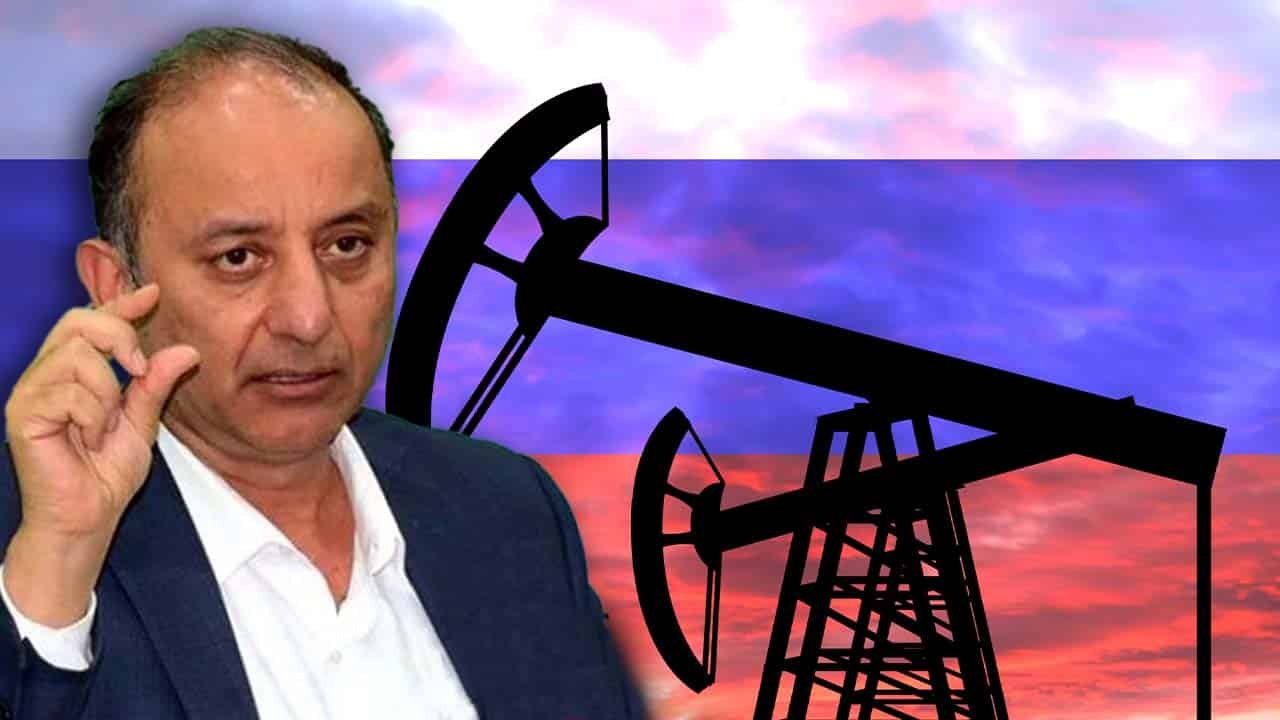
  • Russian oil imports expected to reduce fuel prices slowly, says Musadik Malik

    Russian oil imports expected to reduce fuel prices slowly, says Musadik Malik

    At the Pakistan Energy Conference 2023, Minister of State for Petroleum, Musadik Malik, reassured the nation that the arrival of cheap oil from Russia would eventually lead to a decline in fuel prices. However, he cautioned that an immediate decrease should not be expected until a continuous supply of oil from Moscow is established.

    Minister Malik said that the import of Russian oil was not merely a promise or rhetoric. He confirmed that ships carrying the much-anticipated oil had already reached Oman and would commence supply to Pakistan within a week. While acknowledging that a single shipment would not significantly impact fuel costs, Malik expressed confidence that once a persistent supply was established, the price of fuel would gradually decrease.

    The government’s ambitious objective is to fulfill one-third of Pakistan’s crude oil requirements with affordable oil sources, including imports from Russia. The aim is to address the chronic energy shortages that Pakistan, the world’s fifth most populous country, has been grappling with. Currently, Pakistan imports 84 per cent of its petroleum products, primarily from Gulf Arab allies Saudi Arabia and the United Arab Emirates.

    The import of cheap Russian oil represents one of Pakistan’s strategies to alleviate its energy crisis, as global efforts are underway to restrict Russia’s oil exports due to its invasion of Ukraine. During a visit to the United States earlier this month, Minister Malik confirmed that Pakistan had placed its first order for Russian oil, which is expected to arrive within a month. Upon evaluating the impact of this initial shipment, Pakistan will decide on the extent of future imports.

    When asked about the possibility of pursuing more Russian imports, Malik responded that Pakistan would prioritise cheaper energy sources to meet its energy requirements. The minister further emphasised that the government’s objective was to ensure a sustainable and affordable supply of low-cost energy, highlighting accessibility, sustainability, and affordability as the key pillars of this vision.

    In addition to the import of Russian oil, Malik mentioned the Iran-Pakistan Gas Pipeline project as another avenue to address the country’s energy needs. The government has conveyed to Iran its intention to access energy through the pipeline while remaining responsible and avoiding potential sanctions. Talks are underway with both sanctioning countries and Iran to find a creative solution to this matter.

    With Pakistan eagerly awaiting the arrival of cheap Russian oil, the government remains committed to securing a sustainable and affordable energy supply to meet the needs of its citizens. The gradual decline in fuel prices is expected to provide much-needed relief to the nation, addressing its chronic energy shortages and boosting economic growth in the process.
  • Petrol price unchanged, diesel price slashed by Rs5 per litre

    Petrol price unchanged, diesel price slashed by Rs5 per litre

    The federal government has announced a reduction in the price of diesel by Rs5 per litre, effective immediately, while maintaining the price of petrol for the next two weeks.

    Finance Minister Ishaq Dar said that the prices are revised to provide “maximum relief” to the public, following the directives of Prime Minister Shehbaz Sharif. In addition to the decrease in diesel prices, there will be a reduction of Rs10 per litre in the prices of Kerosene oil and Light Diesel Oil (LDO).

    The new prices have been set at Rs282 per litre for petrol, Rs288 per litre for high-speed diesel, Rs176.07 per litre for kerosene oil, and Rs164.68 per litre for light diesel oil. Diesel is widely used in the transport and agriculture sectors, so the price reduction could have a positive impact on inflation and provide some relief to farmers, particularly as the crop-harvesting season is underway.

    However, consumers are already facing high prices, which are especially burdensome for the low-income group who use motorbikes and small cars.

    In its previous fortnightly announcement, the federal government increased the price of petrol by Rs10 and the price of kerosene oil by Rs5.78, citing the increase in petroleum prices in the international market and exchange rate variations as the reason for the increase.