Tag: petrol

  • Mazeed mehnga petrol: Oil prices may go up by Rs4 per litre

    Mazeed mehnga petrol: Oil prices may go up by Rs4 per litre

    The government is expected to marginally increase the price of petroleum products for the next two weeks in order to collect revenue from local consumers.

    According to an official of the Petroleum Division, price increases for petroleum products may range from Rs3 to Rs4 per litre.

    He noted that in order to fulfill its promise to the International Monetary Fund, the government was anticipated to adjust tariffs on petroleum goods (IMF). In an effort to increase revenue, it has already increased the petroleum duty on petrol and high-octane blending component (HOBC) to Rs50 per litre.

    The petroleum charge on Super and HOBC is at an all-time high, yet there is no general sales tax on petroleum goods.

    According to sources in the petroleum industry, oil products’ ex-refinery prices could decrease marginally during the next two weeks. According to them, the price of gasoline might drop by about Rs1.6 per litre and the price of high-speed diesel (HSD) by Rs3, although they said that these figures did not account for exchange rate loss adjustments. As a result, given that the government skipped it the last time, there might be an addition of around Rs 4 to the price of HSD per litre.

    Additionally, they noted that the previous oil price revision had resulted in a negative Inland Freight Equalisation Margin (IFEM) of roughly Rs 5 per litre for HSD consumers; however, it was anticipated that this would change in the new price announcement.

    In addition to this, changes in the petroleum levy on HSD and the imposition of general sales tax on both gasoline and HSD also affect price revision.

    Oil prices had previously been held steady for the seven days of November 1–15.

    For the first week of November, it was anticipated that the price of gasoline would decrease by Rs2.86 per litre and the price of HSD would increase by Rs3.70 per litre in accordance with the Platts trading platform and exchange rate movement. The government, however, refused to lower the price of petrol for the public.

    HSD currently costs Rs235.30 per litre, while a litre of petrol costs Rs224.80. Light diesel oil costs Rs186.50 per litre, while kerosene costs Rs191.83 per litre.
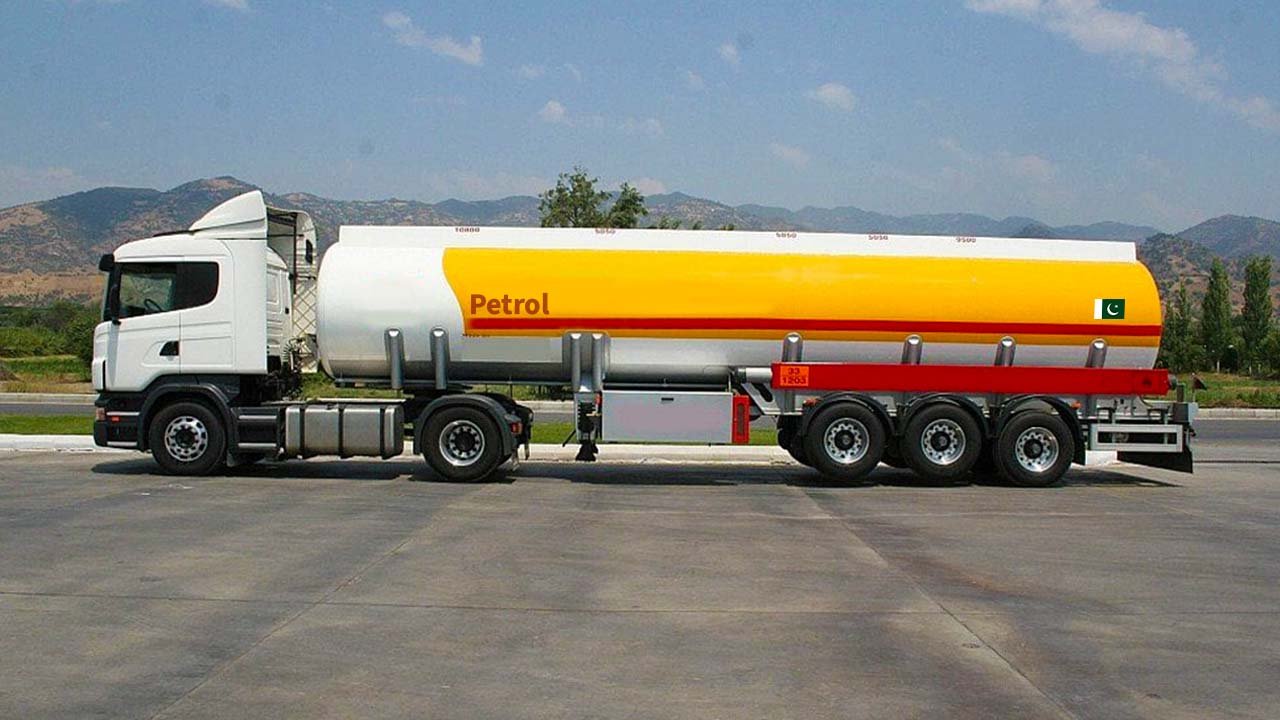
  • Pakistan seeks to import 1.5 million tonnes of petrol from UAE at a negotiated price

    Pakistan seeks to import 1.5 million tonnes of petrol from UAE at a negotiated price

    In an attempt to begin the process of signing an intergovernmental agreement (IGA), Pakistan will write to the United Arab Emirates this week. The country is looking for a government-to-government contract to import 1.5 million tonnes of gasoline annually.

    According to The News, Pakistan would import 1.5 million tonnes of motor spirit (Mogas) over a five to eight-year period, or 30 cargoes. The nation would receive two to three shipments from the gulf nation each month.

    The IGA with Oman, Qatar, Saudi Arabia, and some other nations has already been signed by the energy ministry. UAE will receive the same contract. Both nations will begin negotiating the GtG deal for the import of petrol, crude oil, and jet fuel once the agreement is finalised.

    Leading representatives from both sides agreed to sign a GtG agreement for the import of petrol, crude oil, and jet fuel at the Abu Dhabi negotiations held in the first week of the current month.

    This will enable Pakistan to have a sufficient supply of petroleum products.

    ADNOC (Abu Dhabi National Oil Company), on behalf of the UAE, and Pakistan State Oil (PSO), on behalf of Pakistan, will begin negotiations for a commercial deal on a going-to-market basis after the IGA has been finalised and signed.

    Before December 31, 2022, Pakistan wants both IGAs and business agreements signed so that beginning in January 2023, oil imports from the UAE could begin on a GtG basis.

    Under the terms of the GtG agreement, PSO obtains diesel from KPC (Kuwait Petroleum Company) and pays significant premiums for gasoline purchased on the open market, which is determined by the costs of goods on the global market.

    Now, as part of the GtG agreement, PSO would purchase gasoline from ADNOC at a negotiated rate. Additionally, because the nation’s refineries typically meet jet fuel needs, PSO would also import it as needed.

  • Pakistan has sufficient petrol and diesel to meet domestic demand: Petroleum Division

    Pakistan has sufficient petrol and diesel to meet domestic demand: Petroleum Division

    The Petroleum Division said on Tuesday that the country has sufficient petrol and High-Speed Diesel (HSD) in stock to meet domestic demand after allowing Oil Marketing Companies (OMCs) to recover Rs10 per litre on HSD for the next two months (November-December 2022) by raising the premium limit to $15 per barrel.

    The OCAC had cautioned the federal government about a likely shortage of petrol and HSD in the coming days due to limited imports and limited local availability.

    According to the OCAC’s letter to the Oil and Gas Regulatory Authority (Ogra), the gap is due to limited supply and excessive premiums on fuel stocks on the international market.

    The Economic Coordination Committee (ECC), led by Finance Minister Ishaq Dar, approved the summary proposed by the Ministry of Energy on Friday (Petroleum Division).

    The ministry aimed to secure sustainable HSD imports for November-December 2022 by loading the country’s risk factors of $6 bbl, with an upper limit premium of $15 to the OMCs for pricing computation.

  • Oil industry warns OGRA of looming petrol, diesel shortage

    Oil industry warns OGRA of looming petrol, diesel shortage

    Due to limited imports and constrained domestic supplies, the oil industry has warned the government that the country may witness a shortage of petrol and high-speed diesel (HSD) in the upcoming days.

    The Oil & Gas Regulatory Authority (OGRA) has been written about the shortfall by the Oil Companies Advisory Council (OCAC), an organisation that represents the oil industry.

    The Oil Marketing Companies (OMCs) were given permission to import motor spirit/petrol and HSD in accordance with their demand in the product availability review of products for the month of November 2022, the OCAC stated. This decision followed considerable consideration.

    A shortage of 210,000 MT of HSD and 147,000 MT of gasoline was calculated during the product review. Due to restricted supply on the global market and extremely expensive premiums, it was noted at the meeting that HSD imports in November would be difficult. As a result, only PSO has so far reserved supplies from Flow Petroleum of 220,000 MT and 10,000 MT.

    Alarmingly, though, fuel import that corresponds to the expected sales volume and the stock cover has also not been scheduled. According to the OCAC letter, the importers were supposed to finalise the import plan, but as of now, there is a gap in the import plan.

    The conference with representatives from the industry held on November 1 also brought up this crucial issue, but no clear guarantees have been obtained in writing from the importing OMCs, it stated.

    According to Geo, the OMCs, who were expected to bring imports for use in October, got their shipments in the final week of the month; hence, the product wasn’t ready for usage during the month it was intended for. Similar to how OMCs who were permitted to import goods the month before for usage the following month had already used the shipments, the letter observed.

  • Petroleum prices to remain unchanged for next fortnight

    Petroleum prices to remain unchanged for next fortnight

    For the upcoming two weeks, the government has decided to keep petroleum product prices unchanged.

    Ishaq Dar, the finance minister, made the announcement during a press conference.

    This means that the price of petrol will remain unchanged at Rs224.80 per liter, high-speed diesel (HSD) at Rs235.30, light diesel oil (LDO) Rs186.50, while kerosene will be sold at Rs191.83.

    It is important to note that the administration did not change the prices during the most recent fortnightly review. The government refused to lower the price of gasoline for the general population by raising the petroleum development levy (PDL) by Rs14.84.

    Dar also stated that the government will clear the outstanding letters of credit (LCs) after speaking with the State Bank of Pakistan (SBP), with the cap increasing to $100,000 from the existing $50,000 as of November 1.

    Despite the relief, locals are forced to buy petrol for their daily commute at outrageously high costs. Contrarily, it is anticipated that CNG stations in Punjab and Sindh may be closed for longer than four months, which has made the issues of the populace much worse.

  • Petrol price may go down by Rs7.24 to Rs230.19 per liter

    According to industry projections, the ex-depot cost of petrol has declined by Rs7.24 per litre to Rs230.19 per litre for the upcoming fortnight from the current price of Rs237.43 per litre, as reported by The News.

    Considering recent reports, this might lead to a fall in the price of petrol by Rs7.24 per litre and diesel by Rs16.61 per litre in Pakistan at the upcoming fortnightly review if the government does not raise taxes to offset the effects of the declining worldwide market.

    Expected new prices

    In comparison to the present price of Rs247.43 per litre, the ex-depot price of diesel has fallen by Rs16.61 to Rs230.82 per litre for the upcoming two weeks.

    In comparison to the current fortnight, the ex-depot price of light diesel decreased by Rs10.87 to Rs186.41 per litre.

    Kerosene’s ex-depot price fell from Rs197.28 per litre to Rs187.82 per litre, a decrease of Rs14.20.

    The oil sector bases its prices on the current taxes levied by the government. Petroleum goods are exempt from general sales tax (GST), which is charged at a rate of Rs37.42 for petrol and Rs7.58 for diesel per litre.

    There has been a considerable decline in international oil prices, but it is unclear if the government would pass the impact through to the public or offset it by increasing taxes.

  • Petrol, diesel prices likely to go down as International oil prices fall

    Petrol, diesel prices likely to go down as International oil prices fall

    Due to a dramatic drop in oil rates on global markets, POL prices are expected to fall by Rs15 from October 1st.

    According to experts, the price of diesel could drop by Rs15 and the price of petrol could drop by Rs5 for the next two weeks, reports Geo.

    They stated that the new price would be determined based on the price of oil on the global markets through September 29.

    On Monday, oil prices fell for a second day due to concerns about weaker fuel consumption from an anticipated global recession brought on by rising global interest rates as well as the fact that non-dollar buyers of crude are less able to purchase it due to the strengthening US dollar.

    At 06:40 GMT, the price of Brent crude futures for November settlement fell $1.35, or 1.57 per cent, to $84.80 per barrel. The contract dropped to $84.51, its lowest price since January 14.

    The November delivery price of US West Texas Intermediate (WTI) oil futures fell $1.15, or 1.46 per cent, to $77.59 a barrel. WTI dropped to $77.21, its lowest level since January 6.

    The government is required to levy a fee on petroleum products as part of an agreement with the International Monetary Fund. The application of a petroleum levy on gasoline is currently set at Rs37.50 per litre and on diesel at Rs7.50 per litre, according to a notification released on September 1.

  • British pound hits 37-year low against US dollar as recession fears grow

    British pound hits 37-year low against US dollar as recession fears grow

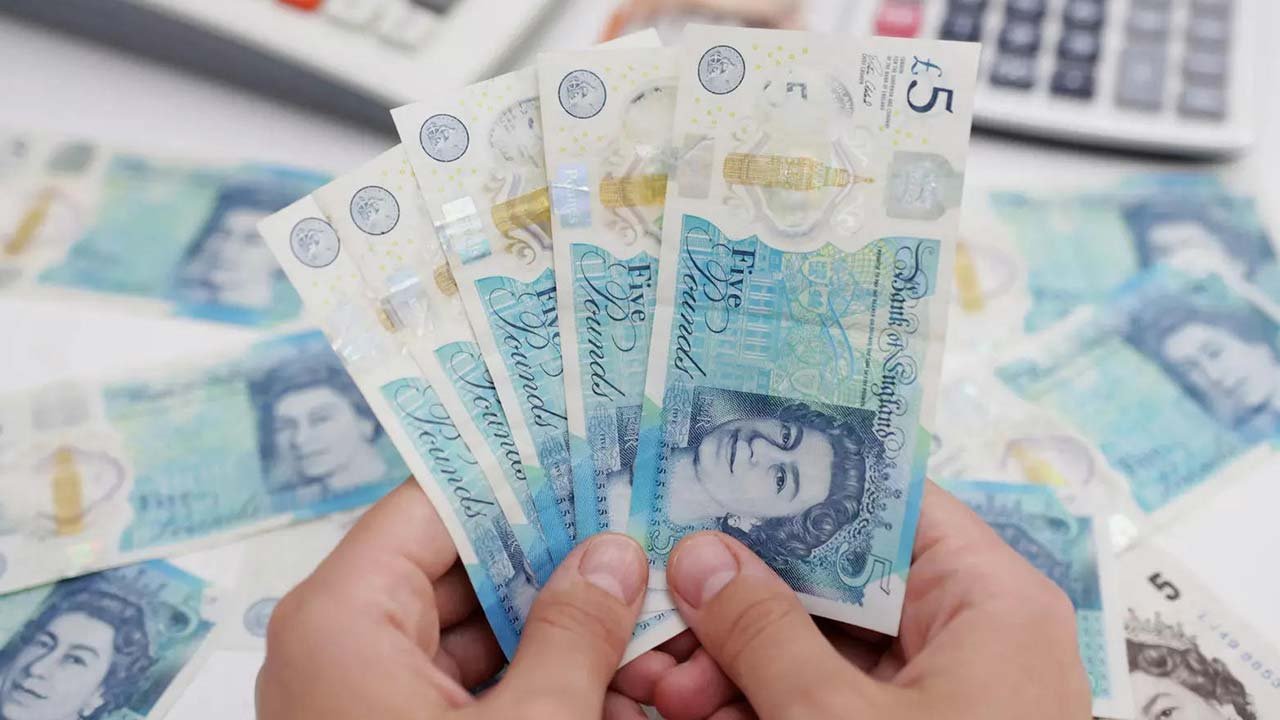
    As central banks raised interest rates to combat soaring inflation, the pound fell to a record 37-year low versus the US dollar on Friday, raising concerns among traders about the economy’s outlook.

    Following the Bank of England’s Thursday increase in borrowing prices by 50 basis points, the value of the pound dropped as low as $1.1151, its lowest level since early 1985.

    That came after the Federal Reserve raised interest rates by three-quarters of a point on Wednesday and hinted at further increases.

    Additionally, the dollar rose versus the euro, with the euro trading at $0.9753, a fresh 20-year low.

    The Fed has taken a notably hawkish stance, stating it would not relent until the inflation, which is near four-decade highs, is controlled, even at the expense of the economy, while central banks around the world are raising borrowing prices.

    The focus of traders is now on London, where the new finance minister Kwasi Kwarteng is scheduled to present a mini-budget to assist individuals and companies.

    On Thursday, Kwarteng announced he would repeal a recent salary tax introduced by his predecessor Rishi Sunak and would disclose the price tag for the new administration’s proposal to cap energy costs for both homes and companies.

    It occurs when the Bank of England issues a warning that Britain is on the verge of entering a recession as a result of skyrocketing gasoline and food prices.

  • Govt increases petrol price instead of decreasing, new rate stands at Rs237.43 per litre

    Govt increases petrol price instead of decreasing, new rate stands at Rs237.43 per litre

    The government officially announced the amended prices for petroleum products on Wednesday after a delay of almost a week, notifying consumers of an increase of Rs1.45 in the price of petrol.

    According to the notification, the price of gasoline has gone up from Rs235.98 to Rs237.43, while the price of high-speed diesel (HSD) has remained the same at Rs247.43.

    Light diesel oil’s price has dropped from Rs201.54 to Rs197.28 by Rs4.26, and kerosene’s price has dropped from Rs210.32 to Rs202.02 by Rs8.3.

    According to initial reports, the cost of petroleum products were expected to decrease from Rs235.98 per litre to Rs226.36 per litre on Friday, September 16, after a reduction of Rs9.62 per litre for the next two weeks.

    The new petroleum prices were expected to be revealed on September 16, but the administration postponed the announcement.

  • Govt may announce revised petrol prices today

    Govt may announce revised petrol prices today

    After Prime Minister (PM) Shehbaz Sharif returns to Pakistan from Uzbekistan today, the federal government is expected to announce revised petroleum product prices.

    Amid these rumours, fuel pump owners have stopped buying petroleum goods, according to Geo News.

    Reportedly, the Prime Minister’s Office has notified the Finance Ministry of the POL price announcement.

    According to sources, the Oil and Gas Regulatory Authority (OGRA) did not advise lowering gasoline and diesel prices in its brief given to the finance division. Instead, a minor increase in POL costs is predicted. However, the final decision on POL prices is likely today.

    Previously, it was expected that the price of petrol would fall from Rs235.98 per litre to Rs226.36 after a Rs9.62 per litre reduction over the next two weeks.

    Moreover, the price of diesel is likely to rise by Rs3.04 per litre, raising the rate from Rs247.26 to Rs250.30 during the specified period.

    KP Finance and Health Minister Taimur Khan Jhagra took to Twitter to criticise the government’s delay in announcing revised POL pricing, sparking a debate on the social media platform.