Tag: petrol

  • No plan proposed to raise petrol prices at pre-budget seminar, clarifies Miftah

    No plan proposed to raise petrol prices at pre-budget seminar, clarifies Miftah

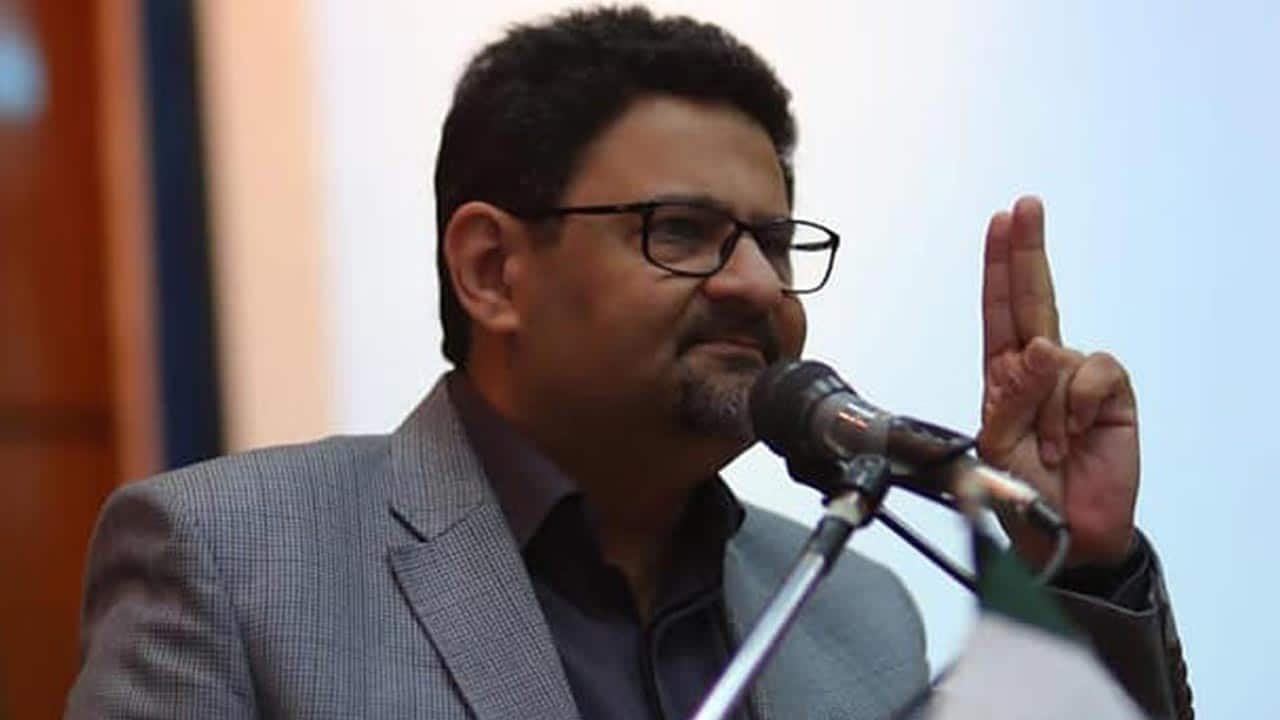
    After a tremendous increase of Rs60 in less than a month, Finance Minister Miftah Ismail announced Tuesday that the price of petroleum goods in the country would rise even more.

    Ismail mentioned in his statement at the one-day pre-budget business conference that if the government had followed ex-prime minister Imran Khan and former finance minister Shaukat Tarin’s contract with the International Monetary Fund (IMF), petrol would have cost Rs300 per liter.

    “The previous government had agreed with the IMF that they would not give subsidies,” the finance minister said, lashing out at the Khan-led government for messing up the economic policies of the country.

    Furthermore, The News reports that the government cannot simply withdraw subsidies without also imposing taxes on petroleum items.

    “The IMF has asked for 100 per cent withdrawal of subsidy on POL products. Once the subsidy is over, then the government will have to impose taxes and petroleum levy,” the publication reported, adding that there is still a subsidy of Rs9.32 per liter on petrol and Rs23.05 per liter on diesel.

    The finance minister had ruled out the potential of a financial emergency in the country the day before, as the government took efforts to address the country’s continued economic upheaval.

    No petrol hike discussed at the pre-budget meeting

    UPDATE: Miftah Ismail, on the other hand, has clarified that he never mentioned a hike in petroleum prices during the pre-budget meeting, despite the fact that social media and known channels have been swamped with headlines of yet another hike, with several netizens sharing images of folks rushing to petrol pumps yet again. “Channels running these tickers are doing a disservice to their viewers,” said the Finance Minister.

    “In the pre-budget seminar I never even spoke about petroleum prices. Channels running these tickers are doing a disservice to their viewers. There will be no increase in prices today and there is no summary or plan to raise prices,” he tweeted.

  • What to expect from the upcoming budget 2022-23

    What to expect from the upcoming budget 2022-23

    Pakistan is escalating efforts in order to revive the stalled loan from International Monetary Fund (IMF) programme, as the prerequisites are steadily being completed.

    The revival of the bailout will provide much-needed relief in order to keep Pakistan’s economy afloat and avoid default as Pakistani currency has plummeted 9 per cent in the last month, recording the poorest performance among Asian currencies.

    According to Geo, the key policy rate was recently raised by 150 basis points to 13.75 per cent, while the price of fuel has now risen by Rs60 a litre in less than a month and is being sold at from Rs209 to Rs212 (depending on the area).

    In an interview with a private channel, the finance minister discussed the government’s decision to raise petroleum product pricing, saying that despite the difficult decision, the government is still losing money on gasoline and diesel.

    These moves are highly affecting the masses, but they are essential as the IMF programme is crucial to fix the country’s economy. Also, petroleum prices are projected to continue to rise along with power tariff.

    Increase in income tax

    An increase in income tax is a major policy recommendation from the international lender in the approaching budget for the fiscal year 2022-23.

    All suggestions are expected to enhance Pakistan’s tax income.

    The IMF issued the following rules for Personal Income Tax (PIT) in its February conditions:

    1. Lower the number of tax bands.
    2. Cut tax credits and allowances (excluding disabled and old persons, as well as Zakat receipts).
    3. Implement special tax processes for very small taxpayers.
    4. Increase the number of people who pay taxes. As the change maintains the present PIT threshold, low-income households will be safeguarded (almost three times income per capita).

    If these policy recommendations for the forthcoming budget are enacted, the tax system will be simplified and the income tax regime will be more progressive.

    These recommendations are anticipated to increase the country’s tax revenue. It will also make the system more progressive, as people with higher incomes will be required to pay more.

    Salaried class

    The burden on the salaried class, which is already heavily under pressure, may be increased. It will make working less appealing because a large portion of the wage will be devoted to direct personal income tax.

    The IMF proposed taxing the upper-middle class and wealthy individuals with monthly incomes ranging from Rs104,000 to Rs1 million at a uniform rate of 30 per cent.

    The idea demonstrates inequality in taxation, and if approved, it might leave the majority of salaried workers worse off in the face of double-digit inflation.

    On the other hand, Federal Minister for Finance and Revenues Miftah Ismail categorically stated last month that the government would not add to the burden on the salaried class and pensioners in the coming budget. 

    According to sources, the maximum rate of 30 to 35 per cent for salaried and business class individuals earning Rs20 million per year could be increased.

    Special tax proposal for small taxpayers

    Imposing a tax on small taxpayers can overcome the long-term structural problems and correct internal and external imbalances. Our tax-to-GDP ratio has remained below 11 per cent, which is lower than regional standards.

    Two-thirds of our overall taxation is made up of indirect taxation. This level of indirect taxation is not only excessive, but it also makes the system less progressive.

    Currently, a labourer pays the same amount of GST as the country’s richest man.

    Agriculturalists and real estate barons are the most important import consumers. As a result, the lack of taxation in agricultural and real estate contributes to the underlying imbalances in the external sector.

    Low-income households

    Low-income households are expected to be protected from policy interventions after the government publishes the upcoming budget, as the Personal Income Tax (PIT) threshold of three times per capita income would stay in place.

    Genuine taxpayers can also decrease their tax payments by clever investments under the Income Tax Ordinance 2001, taking into account all of the foregoing.

    In the fiscal year 2022-23, policymakers must aim to increase the tax net and the tax-to-GDP ratio as there is no chance for the country to progress without it.

    Pakistan must pay $21 billion in foreign debt payments by next year, according to the Finance Minister, while the current account deficit is $10-12 billion.

    He said, “We will also try to tilt away from the wealthy elite towards to low incoming masses, I will impose more taxes on the wealthy, but no taxes will be levied on the salaried class”.

    The wealthy and capable must prepare to pay their fair share of taxes, or the country will soon be back on the IMF’s doorstep.
  • Khyber Pakhtunkhwa reduces free fuel allocation for ministers and govt officials

    Khyber Pakhtunkhwa reduces free fuel allocation for ministers and govt officials

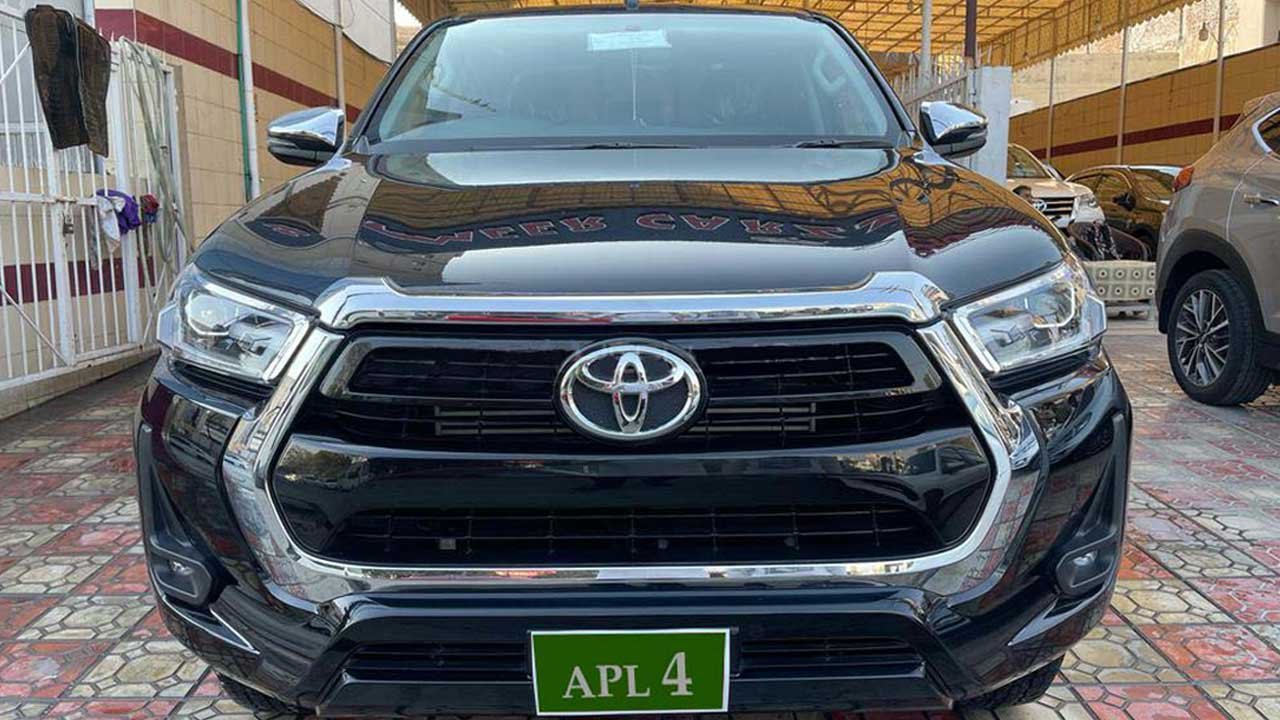
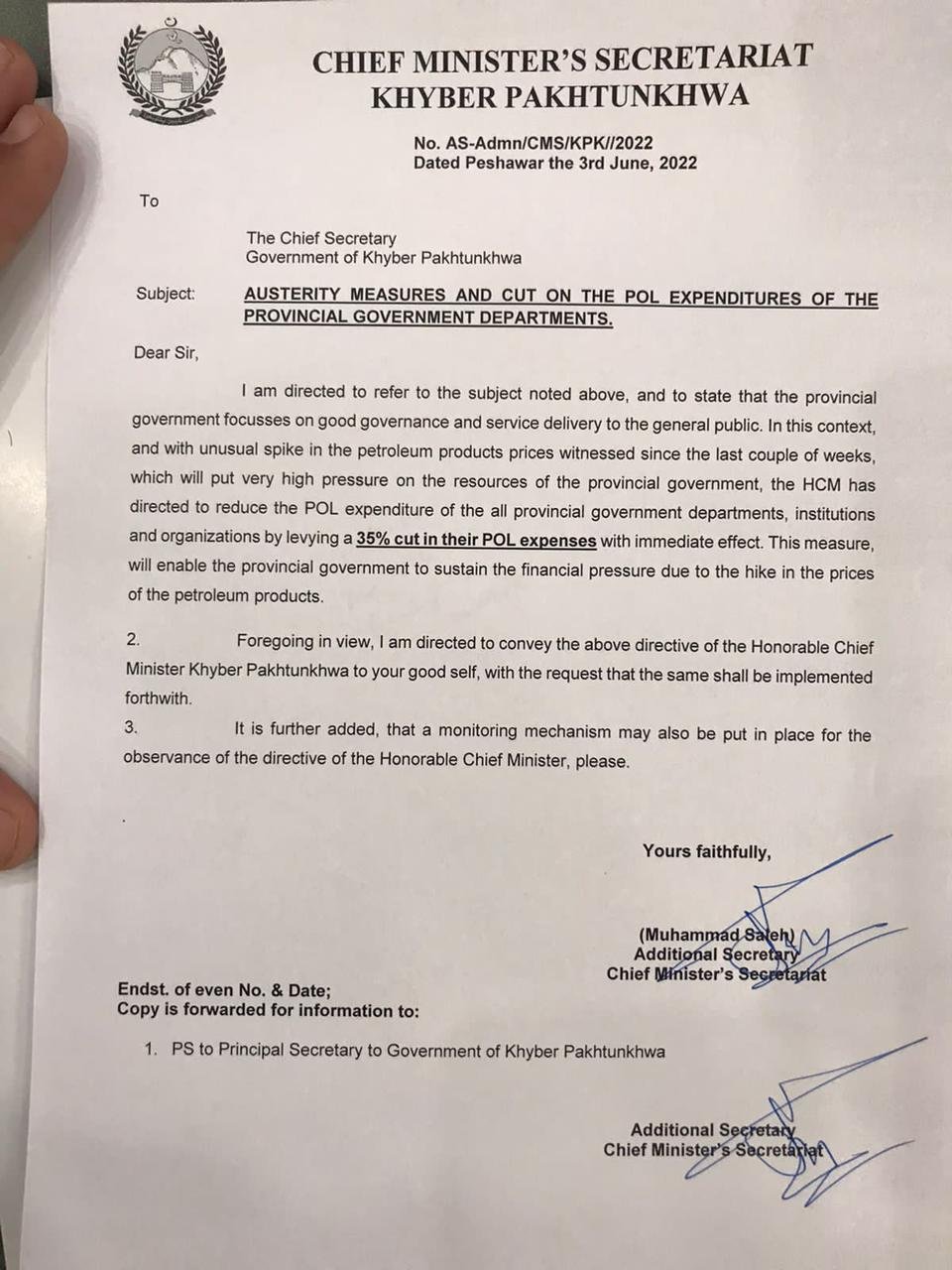
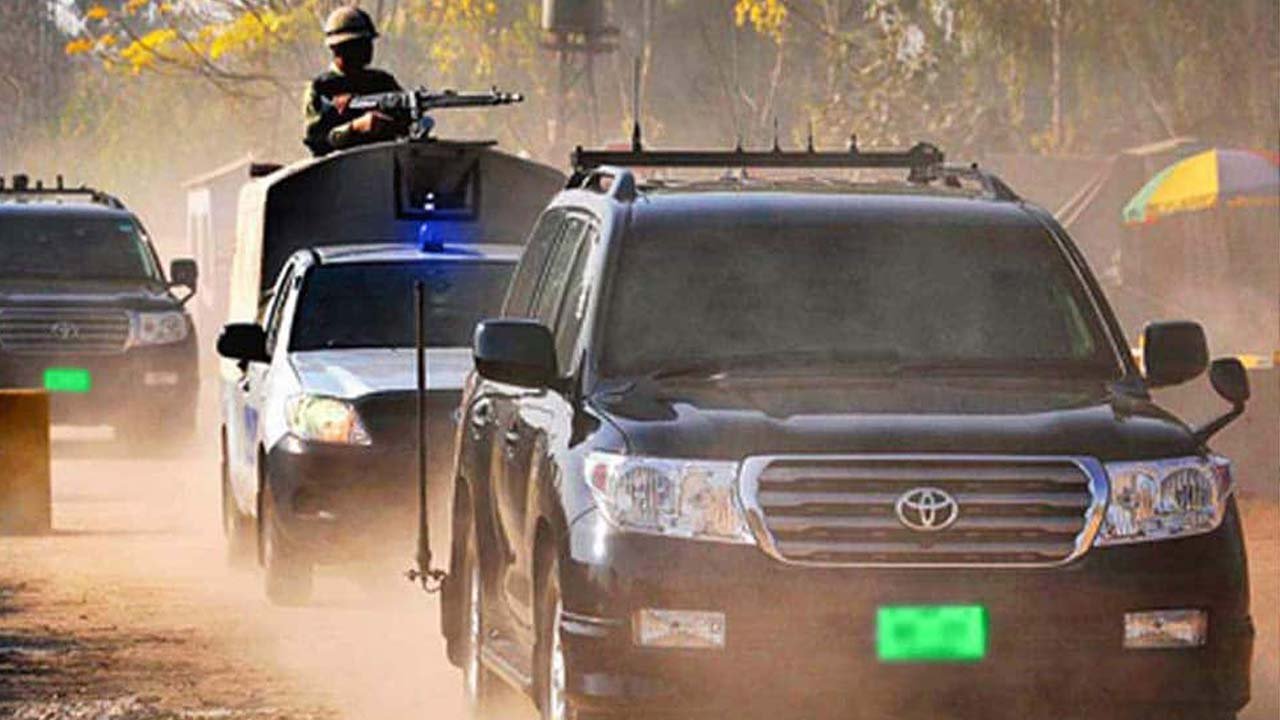
    Following Sindh, the Khyber Pakhtunkhwa (KP) government has decreased free petroleum quotas for all provincial government departments, institutes, and organisations.

    Chief Minister of KP, Mehmood Khan, has approved a 35 per cent reduction in the free gasoline allotment, according to an official notification issued by the KP Chief Secretary.

    The news comes just hours after the Sindh government decided to reduce the Chief Minister’s (CM), ministers’, and provincial government employees’ free fuel quotas.

    Keeping in view a substantial spike in POL prices within the last few days, the decision was made to limit spending and decrease the strain on the national kitty.

    Read more: Petrol quota for ministers, govt officials in Sindh lowered by 40 per cent

    The latest petrol price hike came just hours after the National Electric Power Regulatory Authority (NEPRA) approved a power tariff hike of Rs7.91 per unit.

  • Khan or Shehbaz: Who should be blamed for the massive petrol bomb?

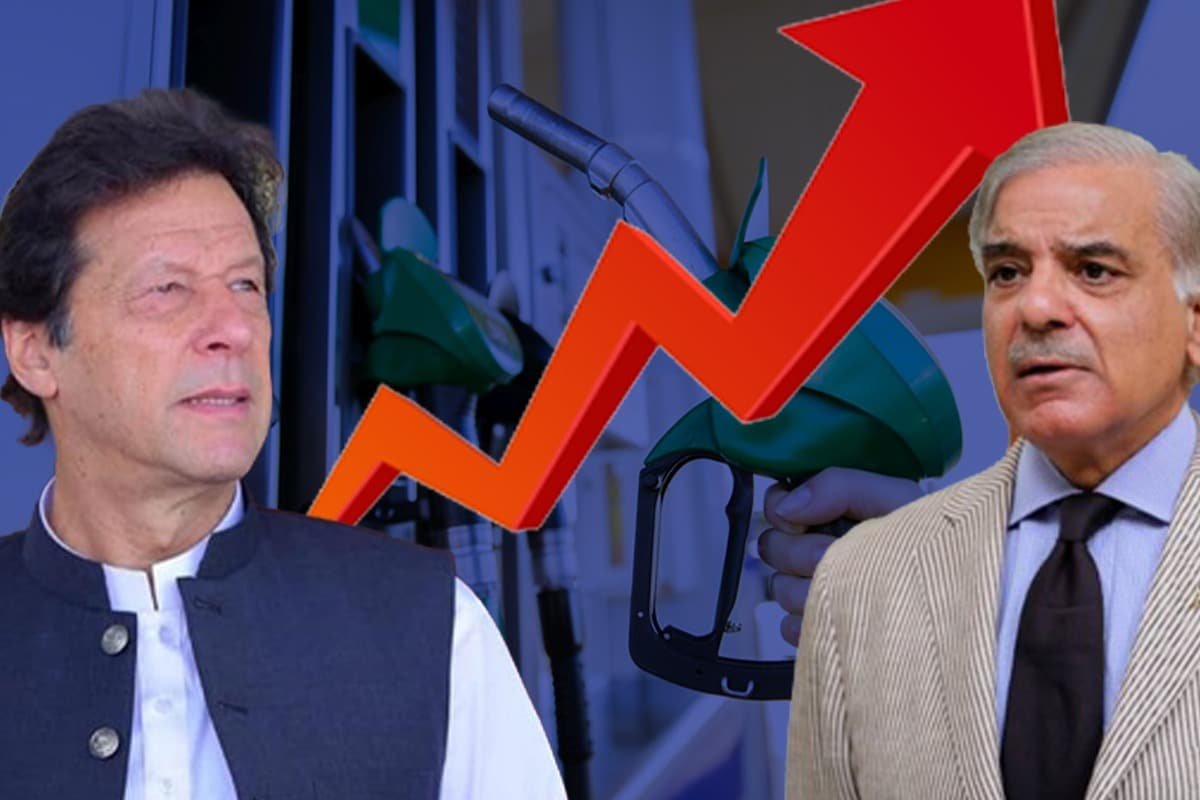
    Khan or Shehbaz: Who should be blamed for the massive petrol bomb?

    The incumbent government on Thursday unleashed another massive gasoline bomb on the country after another hike of Rs30. In less than a month, the price of petrol has risen by Rs60 to Rs209.86. The recent hike has been made to meet the International Monetary Fund’s (IMF) conditions.

    The latest petrol price hike came just hours after the National Electric Power Regulatory Authority (NEPRA) approved a power tariff hike of Rs7.91 per unit.

    The question remains who should the Pakistanis blame for the burden the governments of the past and present putting them?

    The interfering ex-prime minister is distracting the government with his constant threats

    The Economist magazine in its recent article titled, “Imran Khan is jeopardising Pakistan’s attempts to fix its economy” has blamed the former Prime Minister (PM) Imran Khan as the reason for what is happening in Pakistan.

    “The reserves are at their lowest level since 2019, when Pakistan last sought help from the IMF. Only half the $6bn bail-out agreed at the time has been disbursed. Mr Khan, then prime minister, originally agreed to cut subsidies and reform the economy but reduced fuel prices instead. The country is running deficits on both its budget and its current account. It needs some $37bn worth of financing for the fiscal year beginning in June, reckons the finance minister,” writes The Economist.

    The Economist further writes about how the federal capital witnesses a protest once every year where the state gets questioned and those in power are demanded answers. But this time it was a former premier whose continuous marches and threats are creating instability. “The interfering ex-prime minister is distracting the government with his constant threats.”

    “Mr Khan does not appear to be giving up hope. He is petitioning the Supreme Court to guarantee safe passage for potential follow-up marches. The coming spate of painful economic moves will supply him with plenty of excuses to paint the government as American stooges and enemies of the people. The appointment of a new army chief, due in November, will add yet more uncertainty to the political balance. To fix its economy, Pakistan badly needs stability. It will spend the coming months with anything but,” writes The Economist.

    Hesitation to get cheap oil from Russia

    The Current reached out to Pakistan Tehreek-e-Insaf’s (PTI) Spokesperson on Economy and Finance, Muzzammil Aslam and he said, ” First international markets, second lack of planning by the current government, and the hesitation to get cheap oil from Russia is the reason for the recent petrol bomb.”

    “The price pass-through could be lower if they cut the refinery margins. Lastly, it is not necessary to raise prices, one can make up subsidies by imposing windfall taxes, wealth taxes etc,” says Aslam.

    Read more: Fact Check: Imran Khan did not arrange a 30% cheaper oil deal with Russia

    Decreasing prices was a selfish political move by PTI, but PMLN led-govt should have fixed it immediately

    The Current reached out to Geo News’ Anchorperson Shahzad Iqbal to ask for his point of view on the present conditions being faced by the people. Commenting on the issue Iqbal said, “Decreasing prices was a selfish political move by the PTI government to either survive or to create hurdles for the incoming government. But Pakistan Muslim League-Nawaz (PML-N) led government should have fixed it immediately.”

    “The delay by the sitting government cost Pakistan Rs150 billion,” said Iqbal.

  • Petrol quota for ministers, govt officials in Sindh lowered by 40 per cent

    Petrol quota for ministers, govt officials in Sindh lowered by 40 per cent

    Sindh Chief Minister (CM) Murad Ali Shah lowered the petrol allotment of ministers and government officials by 40 per cent this week as part of his moderation campaign following another spike in petroleum prices.

    Keeping in view a substantial spike in POL prices within the last few days, the decision was made to limit spending and decrease the strain on the national kitty.

    “The rise in petrol price should not be a burden on the exchequer,” Sindh CM Murad Ali Shah said, increasing the treasury’s load entails intensifying the burden on individuals.

    To meet the International Monetary Fund’s (IMF) conditions, the government has unleashed another big gasoline bomb on the country after another hike of Rs30. In less than a month, the price of petrol has risen by Rs60 to Rs209.86.

    The latest petrol price hike came just hours after the National Electric Power Regulatory Authority (NEPRA) approved a power tariff hike of Rs7.91 per unit.

    The price hike sparked riots in Karachi, with protesters wrecking a petrol pump and torching tyres on University Road. Despite expressing their dissatisfaction with the situation, the general public has requested that the government tightens its belt instead of putting the weight on the populace.

    Senator Mustafa Nawaz Khokar, a top PPP lawmaker, also shared this attitude, suggesting a 50 per cent wage cut for politicians, generals, judges, and senior bureaucrats.

    “Why should common folk shoulder the failures of the political, military and judicial elite? This joke has to end”.

    If the average citizen is compelled to narrow his belt, Khokar believes that politicians, generals, judges, and top bureaucrats’ income should be halved and all amenities, including free utilities, should be removed.

    The administration warned on June 2 that it would raise fuel prices by Rs30 for the second time in ten days, as an attempt to obtain the remaining funds from IMF.

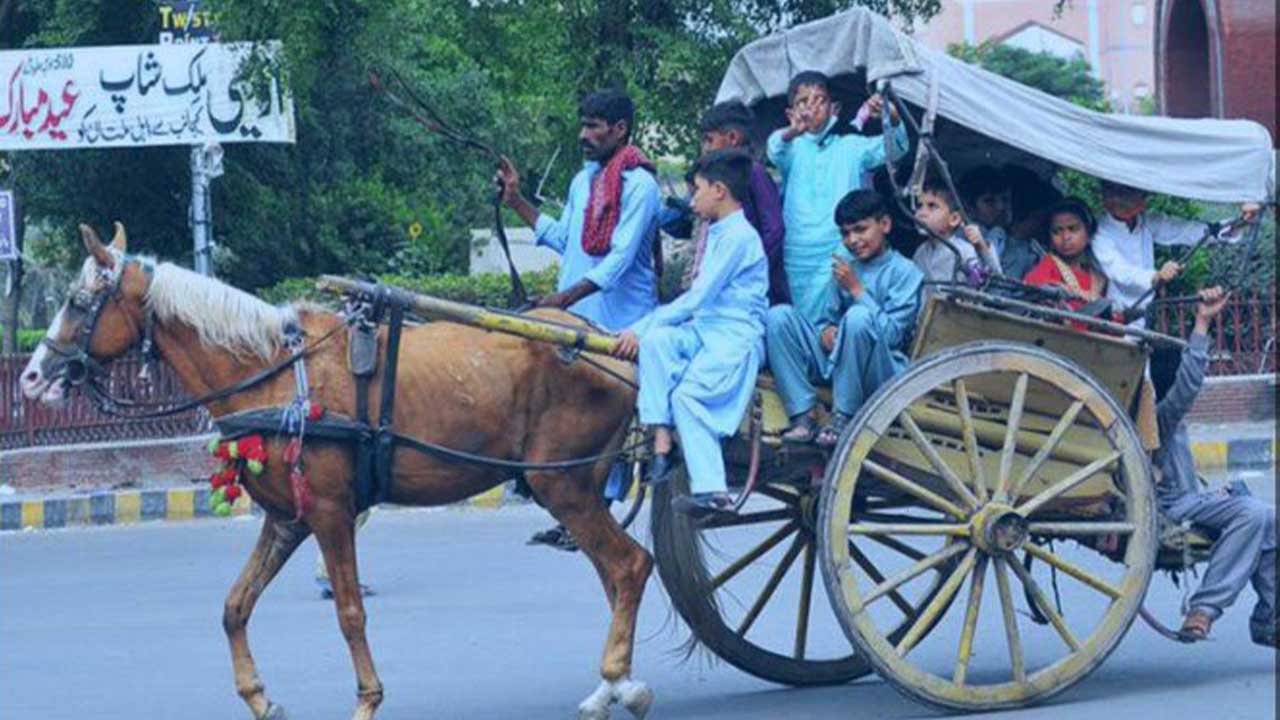
  • Netizens want ‘tangas’ back on roads as petrol hits Rs209.86

    Netizens want ‘tangas’ back on roads as petrol hits Rs209.86

    To meet the International Monetary Fund’s (IMF) conditions, the government has unleashed another big gasoline bomb on the country after another hike of Rs30. In less than a month, the price of petrol has risen by Rs60 to Rs209.86.

    The latest petrol price hike came just hours after the National Electric Power Regulatory Authority (NEPRA) approved a power tariff hike of Rs7.91 per unit.

    In an attempt to save money, a large number of people rushed to nearby petrol pumps to fill up their tanks before midnight. Numerous two-wheelers, as well as sedans and full-fledged SUVs, formed long lines outside gas stations.

    Several traffic bottlenecks were observed in key areas of Lahore, Karachi and Islamabad due to long queues of automobiles.

    Netizens expressed their displeasure on social media platforms, alleging that petrol had become out of reach for the general public.

    Despite hefty price increases that would unleash a strong wave of inflation, Pakistan is still far from reaching an agreement with the IMF which requires a budget agreement for fiscal year 2022-23.

    Petrol now costs Rs209.86 per litre, high-speed diesel (HSD) costs Rs204.15, kerosene oil costs Rs181.94 and light diesel oil costs Rs178.31, thanks to the rise.

    The Finance Minister, Miftah Ismail went on to say that the government is holding talk with the IMF on a daily basis. “We cannot accede to all of their requests, but we must agree on certain aspects”.

    He insisted that the petroleum subsidy announced by former Prime Minister Imran Khan had to be rescinded to avoid financial losses.

    Journalist Kazmi Wajahat described the chaotic scene outside gas stations just before the higher rates went into effect at 12 am.

    The decision to remove the gasoline subsidy should have been made sooner, according to economists, who also warned that the worst is still to come.

    One-unit price of electricity has increased from Rs16.91 to Rs24.82 as a result of the new raise. The hike has been reported to the federal government by Nepra. According to a statement, the increased tariffs will take effect after the government issues its final notification. Recent hike in tariffs has been attributed to the rupee’s depreciation and increased oil prices on the foreign market.

  • OGRA slashes LPG prices by Rs13 per kilogram

    OGRA slashes LPG prices by Rs13 per kilogram

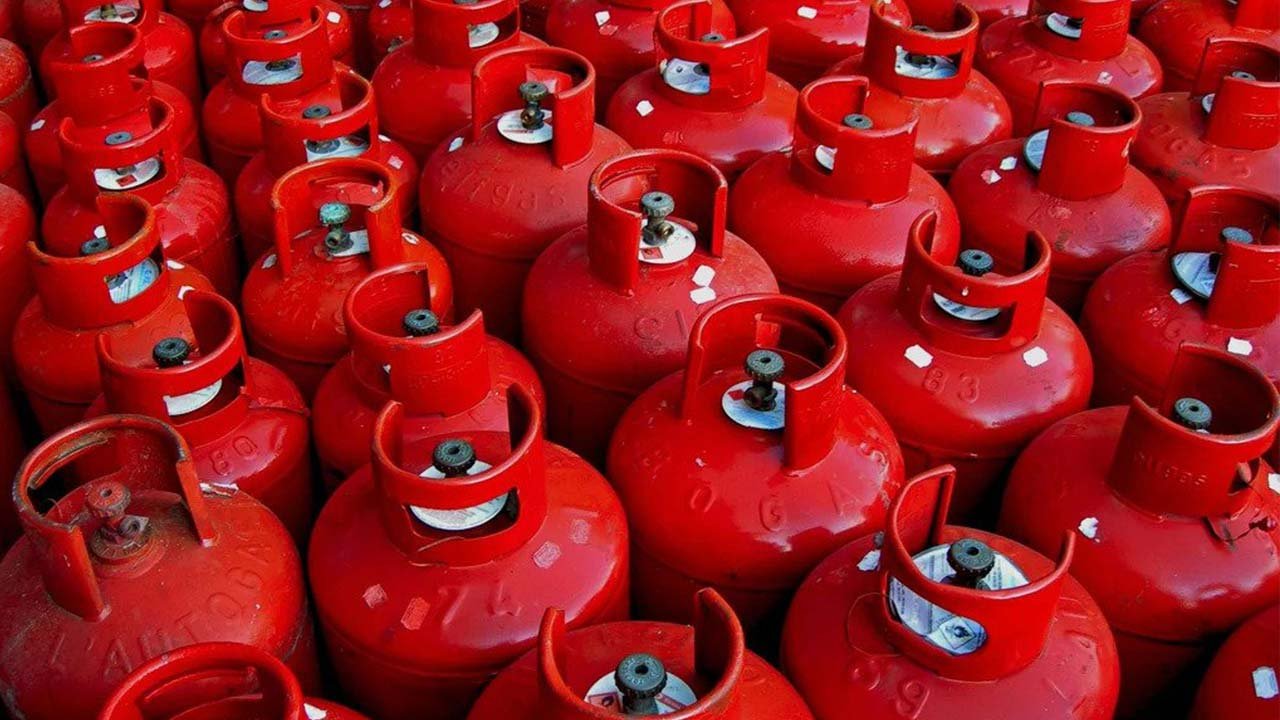
    The Oil and Gas Regulatory Authority (OGRA) has announced a Rs13 per kilog price cut for liquefied petroleum gas (LPG).

    The cost of an LPG household cylinder has been decreased by Rs155, according to a notification released today. Under the revised tariffs, it will be offered for Rs2,581.35, which includes the sale of a commercial cylinder for Rs9,931.65.

    Chairman of the LPG Distributors Association Pakistan, Irfan Khokhar, commented on the matter, claiming that LPG is 45 per cent cheaper than petrol and diesel at present pricing.

    If the government focuses on the sector, he claims that LPG prices can be decreased by another 60 to 65 per cent.

    This is somewhat good news, as many house owners in developing housing societies lack access to Sui Gas connections and rely on LPG cylinders, which are offered at exorbitant costs. The recent price reductions may help consumers cope with the effects of inflation.

    It is important to note that LPG is an alternative and fuel that is mostly utilised for cooking, heating, and lighting especially in rural and hilly sections of the country where natural gas pipelines are not available.

  • 40-50 per cent hike expected in gas tariff

    40-50 per cent hike expected in gas tariff

    The government plans to hike the system gas tariff by up to 50 per cent as part of its efforts to gain access to the International Monetary Fund (IMF) bailout.

    The Ministry of Energy anticipates the Oil and Gas Regulatory Authority (OGRA) determining the revenue requirement for the coming fiscal year in June. As per The News, which cited sources, the tariff increase will take effect on July 1, 2022.

    Sui Southern Gas Company Limited (SSGC) and Sui Northern Gas Pipelines Limited (SNGPL), according to an Energy Ministry official, have suffered massive combined losses of Rs550 billion in recent years.

    Both are losing money since the system gas rate has not been raised in a long time. SNGPL is expected to lose Rs350 billion, while SSGC is expected to lose roughly Rs200 billion.

    OGRA will now calculate the system gas tariff under the modified OGRA statute. The IMF has encouraged the government to ensure that gas firms do not lose money as a result of the gas tariff’s stagnation, as well as to follow the modified OGRA law in its entirety.

    It’s worth noting that the government raised the price of petroleum goods by Rs30 per liter last week after the IMF stated that the bailout package would not be resumed unless the country ended petroleum product subsidies.

  • PM Shehbaz to announce relief package for the poor

    PM Shehbaz to announce relief package for the poor

    Prime Minister (PM) Shehbaz Sharif will announce a relief package soon for those who are unable to afford fuel after a massive hike imposed by the government.

    This is undoubtedly an excellent news for the lower-income strata, as the recent petrol hike has weighed heavily on the inflation-stricken masses.

    Finance Minister Miftah Ismail announced last night a gigantic increase in the price of oil products in an attempt to reestablish the International Monetary Fund (IMF) plans to assist the country’s fragile economy.

    The decision was made in light of IMF guidelines, which required the removal of oil subsidies in order to restart Pakistan’s much-needed programme. On a talk show, Miftah Ismail slammed former Prime Minister Imran Khan for his contract with the IMF.

    “Imran Khan promised the IMF a Rs30 levy and a 17.5% sales tax on petroleum products,” he explained.

    The government is losing Rs120 billion per month as a result of Imran Khan’s unilateral decision to provide petrol subsidies, according to the finance minister.

    “Prime Minister Shehbaz Sharif had to make a difficult choice. However, he will announce a relief package for those who cannot afford high fuel prices in his address to the nation today,” Ismail added.

    According to Miftah, the government has already stated that the IMF programme will not begin unless petroleum subsidies are eliminated.

    Miftah Ismail voiced concerns about losing political capital as a result of the current decision to raise fuel prices, saying, “honestly telling you, we have admitted that by deciding on hiking fuel prices, we will suffer politically, but this is our country, and we will sacrifice to fix its issues”.

    Ismail acknowledged that the current increase in gasoline prices will shift the burden to the masses and increase inflation.

    Miftah dismissed the possibility of a default, saying, “I’m guaranteeing two things: the IMF programme will be restored, and Pakistan will not go bankrupt”.

  • Toyota Pakistan to launch first-ever locally assembled Hybrid crossover

    Toyota Pakistan to launch first-ever locally assembled Hybrid crossover

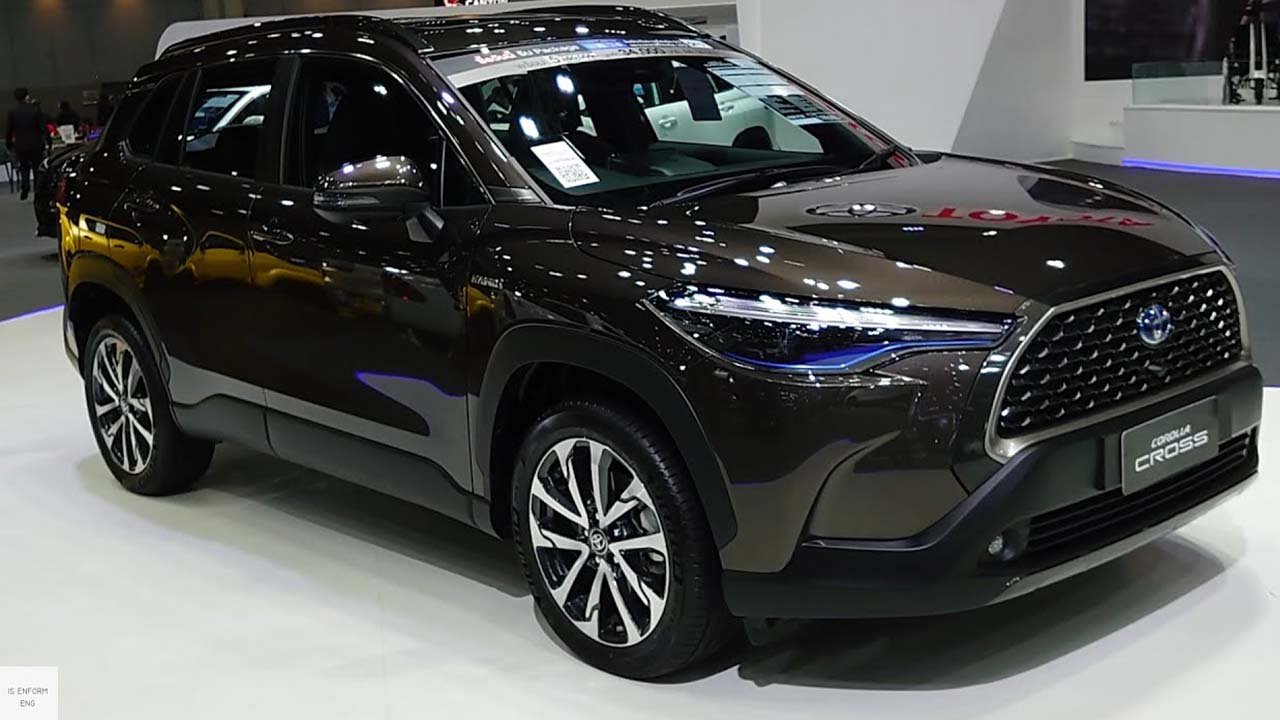
    Toyota Indus Motor Company (IMC), Pakistan’s most prominent automaker, is upgrading its manufacturing plant in preparation for the start of local production of hybrid electric vehicles (HEVs) by 2023.

    Toyota IMC CEO Ali Asghar Jamali revealed that the locally assembled Toyota Corolla Cross will be available in 2023. It is worth noting that this crossover will be the first ever locally assembled Hybrid vehicle by the Japanese manufacturer in Pakistan.

    He stated that the company intends to launch its hybrid crossover SUV in the Rs5 to Rs7 million price range, which may not be possible given the country’s economic and overall situation. Experts predict that the Crossover will be priced between Rs9-10 million.

    Given the current economic situation and the government’s plan to raise car taxes, Toyota IMC will reveal its final price next year.

    Jamali also discussed the company’s plans for overall HEV localization. He stated that Toyota has already invested $100 million in Pakistan to produce HEVs and plans to introduce electric vehicles (EVs) in the future when the country is ready for this technology.

    Jamali emphasised that HEVs are a midterm solution before EVs because Pakistan lacks the infrastructure for the latter, and that converting all cars to HEVs could reduce Pakistan’s oil imports by up to 50%.

    As most of Pakistan’s electricity is produced using fossil fuels, EVs will increase local LNG, coal, and crude oil imports, while investment in improving distribution and creating a charging infrastructure will also be required, according to Jamali.