Tag: petroleum

  • OGRA announces ‘reduction’ of Rs0.81 per kg in LPG price

    OGRA announces ‘reduction’ of Rs0.81 per kg in LPG price

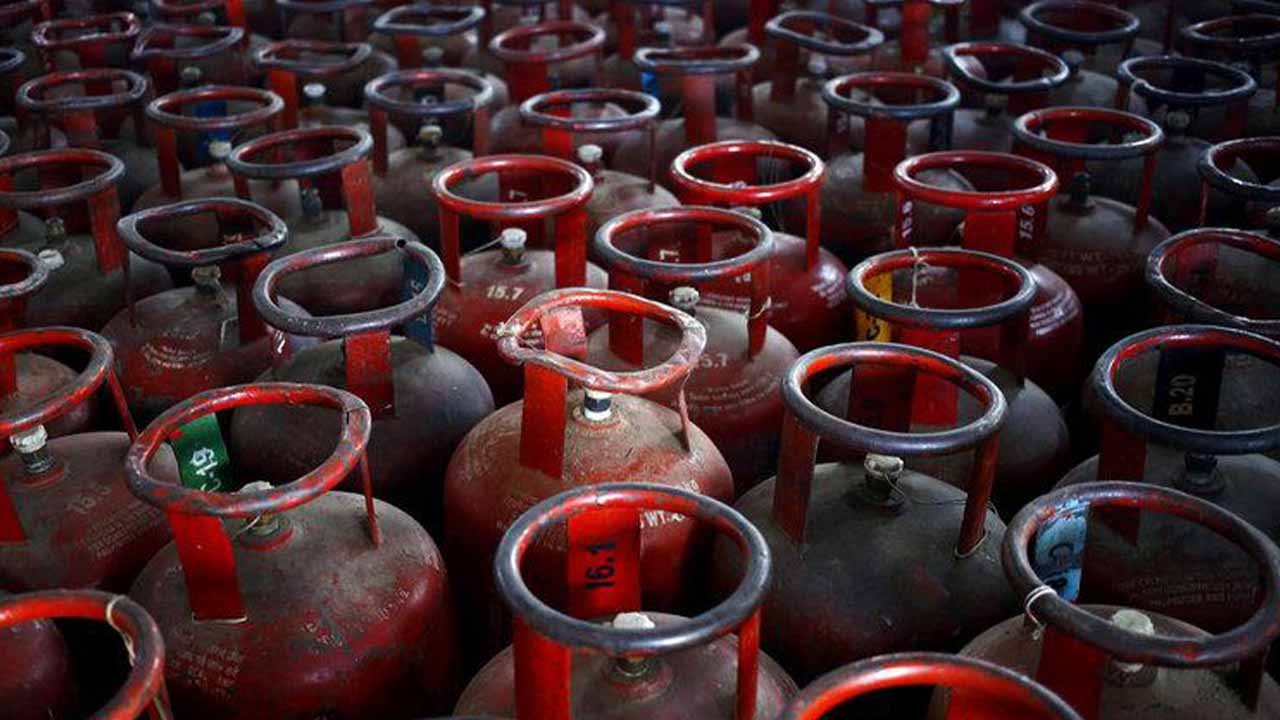
    The Oil and Gas Regulatory Authority (OGRA) has implemented a modest reduction in the price of Liquefied Petroleum Gas (LPG) by Rs0.81 per kg, effective from March 01, 2024.

    The previous consumer price for LPG stood at approximately Rs257.59 per kg. With the latest adjustment, consumers can now avail themselves of LPG at the revised rate of Rs216.79 per kg, indicating a notable decrease.

    For consumers relying on an 11.8 kg LPG cylinder, the cost has been adjusted to Rs3,030.12. This represents a decrease of Rs9.51 per cylinder from the previous price of Rs3,039.63, providing some relief to households and businesses alike.

    The move by OGRA to reduce LPG prices aims to alleviate the financial burden on consumers amid fluctuating economic conditions.

    This adjustment reflects the Authority’s commitment to ensuring fair pricing and accessibility of essential commodities for the public.

    Consumers are encouraged to verify and adopt the new rates, as OGRA continues its efforts to maintain transparency and affordability in the energy sector.

  • Govt expected to increase petrol price by Rs3.5 for first half of March

    Govt expected to increase petrol price by Rs3.5 for first half of March

    In a possible move that could impact consumers, the government is considering a hike in petrol prices by Rs3.5 per litre for the initial half of March 2024.

    As of the latest estimates until February 27, 2024, the ex-refinery price of petroleum has seen a noticeable rise, reaching Rs195.75 per litre. This reflects an increase of approximately Rs3.58 compared to the preceding fortnight’s price of Rs192.17 per litre.

    Contrary to petrol, there might be no significant adjustment in the price of high-speed diesel (HSD), with the government likely to maintain the current rate due to marginal changes in its pricing structure.

    The national currency has experienced a modest appreciation against the USD since the previous fortnight’s decision, settling at a weighted average rate of approximately PKR 279.37 per USD.

    It is crucial to highlight that, with two more sessions pending before the next pricing update, the final prices will be subject to global market fluctuations and exchange rate variations.

    The official announcement revealing the new prices is scheduled for midnight on February 29, 2024. If approved, these adjustments will remain effective for the first half of March. 

  • Gas shortage worsens in Pakistan amid rising demand and low reserves

    Gas shortage worsens in Pakistan amid rising demand and low reserves

    Minister of State for Petroleum, Musadik Malik, stated on Wednesday that the general public cannot receive gas 24/7 due to a decline in the commodity’s reserves, which is a significant reason. Pakistan relies heavily on natural gas for energy, and with increasing demand and insufficient supply, load shedding has become a daily occurrence in many areas of the country. This situation worsens during Ramadan when Pakistanis consume more gas for cooking and other purposes, particularly during sehri and iftar timings.

    During a conversation with journalists in Karachi, the minister mentioned that gas load shedding would end during sehar and iftar but did not specify when. “We cannot provide gas for 24 hours as our reserves have decreased,” he stated. Recently, the issue of gas scarcity in Karachi has caught the attention of Prime Minister Shehbaz Sharif, who has directed relevant officials to ensure an uninterrupted supply of the commodity. He has instructed that the supply of gas must be monitored, and no negligence should be tolerated.

    Due to the widening gap between gas supply and demand, the Sui Southern Gas Company (SSGC) has announced its decision to suspend supplies to captive power plants and industries. The gas utility has stated that this decision has been made due to low gas supply, and the volume of gas in pipelines has decreased. In response, the Karachi Chamber of Commerce and Industry (KCCI) has called for immediate government action to address the shortage of gas supply to Karachi’s industries, stating that the industries cannot operate without gas and would be forced to halt production.

    KCCI President Muhammad Tariq Yousuf said, “It is highly unfair to have such an attitude towards Karachi’s business community, which, despite facing so many challenges, contributes around 54 per cent in terms of exports and more than 68 per cent in terms of revenue.”

    While talking to journalists, Malik said that his visit to Karachi was aimed at resolving the gas supply issues faced by the people and urged them to pay their utility bills. “The gas bill of the rich and poor has been separated; rich people will have to pay more now,” he said, adding that the separation of gas bills for the rich and the poor was now in effect.

  • Govt announces Rs50 per litre petrol subsidy for low-income individuals

    Govt announces Rs50 per litre petrol subsidy for low-income individuals

    The government has announced a relief package for low-income individuals in the form of a petroleum subsidy worth Rs50 per litre. This announcement was made during a meeting chaired by Prime Minister (PM) Muhammad Shehbaz Sharif on Sunday.

    The Prime Minister directed that consumers using small vehicles such as motorcycles, rickshaws, and 800-CC vehicles will be included in the subsidy scheme. He also instructed relevant authorities to finalise the scheme as soon as possible to ensure its effective implementation.

    The Prime Minister emphasized that this subsidy will provide much-needed relief to low-income individuals, as they are the primary users of small vehicles. Despite the severe economic difficulties faced by the country, the government is committed to assisting the poor in every way possible.

    During the meeting, Minister of State for Petroleum Musadik Malik briefed participants on the strategy for implementing the subsidy to low-income individuals.

  • Russia agrees to supply blended crude oil to Pakistan, rates to be finalised next month

    Russia agrees to supply blended crude oil to Pakistan, rates to be finalised next month

    A delegation from Moscow will visit Islamabad in January 2023 to talk about the potential sale of Russian oil.

    Officials from Russia and Pakistan met via video link to discuss purchasing crude oil and petroleum products from Moscow, according to government sources.

    Musadik Malik, Pakistan’s State Minister for Petroleum, and the Secretary for Petroleum took part in the online meeting.

    Due to Pakistan’s inability to refine crude oil of a single specification, Russia has offered to supply Pakistan with blended crude oil. The offer represents a portion of the daily supply of 100,000 barrels of crude oil.

    Senior officials from the Petroleum Division and representatives from the oil industry made up the Pakistani side, which was chaired by State Minister for Petroleum Dr Musadik Malik, while senior officials from the Russian energy ministry and relevant departments constituted the Russian side.

    The Pakistani government informed its Russian counterparts that their nation needs crude oil, petroleum products, gas, and infrastructure investment, according to sources with knowledge of the meeting’s activities.

    According to The News, when a delegation from Russia visits Pakistan, the Russian side stated that they will further consider their intentions to collaborate with the Pakistani authorities.

  • Exports from Pakistan witness 35.7% increase in first four months of FY23

    According to data from the Pakistan Bureau of Statistics (PBS), exports from Pakistan increased by 35.77 per cent in rupee terms during the first four months of the current fiscal year (2022-23) compared to the same time previous year.

    According to Geo, exports from July through October (2022-23) were Rs2,131,776 million, up from Rs1,570,136 in the corresponding period the previous year. This represents a growth of 35.77 per cent.

    In comparison to October 2021, when exports were Rs423,063 million, the country’s exports rose by 24.29 per cent to Rs525,831 million in October 2022.

    When compared to the exports of Rs563,714 million reported in September 2022, the exports climbed by 6.72 per cent in October 2022 on a monthly basis.

    The main commodities of exports during October 2022 were:

    Knitwear (Rs86,400 million), readymade garments (Rs60,778 million), bedwear (Rs47,895 million), cotton cloth (Rs37,407 million), rice other than basmati (Rs20,344 million), towels (Rs17,553 million), made-up articles, excluding towels & Bedwear (Rs12,758 million), fish products (Rs12,057 million), rice Basmati (Rs11,375 million) and cotton yarn (Rs10,819 million).

    On the other side, imports increased by 12.87 per cent from July through October 2022 to a total of Rs4,701,648 million, compared to Rs4,165,590 million during the same time previous year.

    Imports totaled Rs1,039,036 million in October 2022 compared to Rs1,232,299 million in September 2022 and Rs1,093,545 million in October 2021, a drop of 15.68 per cent over September 2021 and 4.98 per cent over October 2021.

    The major imports during October 2022 were:

     Petroleum products (Rs100,436 million), petroleum crude (Rs82,124 million), natural gas, liquified (Rs65,485 million), palm oil (Rs59,739 million), plastic materials (Rs47,301 million), iron & steel (Rs38,517 million), raw cotton (Rs29,943 million), iron & steel scrap (Rs26,037 million), electrical machinery & apparatus (Rs24,058 million) and medicinal products (Rs23,234 million).

  • Saudi Arabia to set up $12 billion refinery, petrochemical complex in Pakistan

    Saudi Arabia to set up $12 billion refinery, petrochemical complex in Pakistan

    The government has convinced Saudi Arabia to resume a significant project to build a cutting-edge deep conversion refinery and petrochemical complex in Pakistan.

    A high-ranking team from the kingdom led by Crown Prince Mohammad Bin Salman will visit Pakistan in the final week of November, when a formal announcement is anticipated in this regard, according to a top official at the Energy Ministry.

    According to Geo, the Pakistani government reportedly made a tremendous effort to convince the kingdom to uphold the memoranda of understanding and invest in Pakistan. Riyadh and Washington are at odds over a reduction in the supply of oil on the world market, and Islamabad has thrown its support behind Riyadh in this dispute.

    Saudi Arabia signed MoUs in February 2019 during Mohammad Bin Salman’s visit to Pakistan for an investment of $21 billion in a number of economic sectors, including the $12 billion deep conversion refinery and petrochemical complex project.

    At this regard, the Saudi oil tycoon Aramco also carried out research, which concluded that building a refinery in Gwadar was not practical. However, the official claimed that it may be erected in Hub, Balochistan, or close to Karachi.

    Later, the insider claimed, when relations between Imran Khan’s administration and Saudi Arabia became tense, the kingdom’s top leaders essentially put $21 billion in MoUs on hold that had been inked in February 2019.

    According to the source, the Ministry of Petroleum is currently updating the draught for the refining policy in order to attract investment for the construction of new refineries.

    In addition to broadening the tax holiday’s application, the government is considering offering investors profitability at 14–15% instead of the 9% that was previously promised in the PTI administration’s plan for policy refinement.

  • Govt raises petrol price by Rs6.72 to Rs233.91 per litre

    Govt raises petrol price by Rs6.72 to Rs233.91 per litre

    Despite several reports of an expected decrease in prices of petroleum products, the government increased the price of petrol by Rs6.72 per litre and decreased the price of high-speed diesel (HSD) by Rs0.51 and kerosene oil by Rs1.67 per litre.

    The price of light diesel oil (LDO) was raised by Rs0.43 per litre by the government.

    Prior to this, the coalition administration had decreased the cost of petrol and LDO starting on August 1 by Rs3.05 and Rs0.12, respectively.

    However, starting on August 1, 2022, the government had increased the price of HSD by Rs8.95 per litre and kerosene oil by Rs4.62 per litre.

    With the most recent announcement, the price of petrol has gone up from Rs227.19 per litre to Rs233.91 per litre, and that of LDO has gone up to Rs191.75 from Rs191.32 per litre; and that of HSD has gone up to Rs244.95 from Rs244.44.

    Kerosene oil is now available for Rs199.40 per litre as opposed to its earlier price of Rs201.07 per litre.

    The rapid depreciation of the rupee against the dollar had previously also been a significant determinant of oil prices.

    The standing of the rupee against the dollar had improved recently. In spite of this, the cost of gasoline had increased.

    Additionally, there had not been a significant decrease in the cost of diesel, which is widely used in the nation’s transportation and agricultural sectors.

  • OGDCL confirms gas discovery near Ghotki, Sindh

    OGDCL confirms gas discovery near Ghotki, Sindh

    On Wednesday, the Oil and Gas Development Company Limited (OGDCL) announced the finding of gas from an exploration well near Ghotki, Sindh.

    “The joint venture (JV) of Guddu Block comprising Oil & Gas Development Company Limited as an operator (70 per cent), SPUD Energy PTY Limited (SEPL) (13.5 per cent), IPR Transoil Corporation (IPRTOC) (11.5 per cent), and Government Holdings (Private) Limited (GHPL) (5 percent) has discovered Gas from an exploratory well namely Umair South East # 01, which is located in District Ghotki, Sindh,” the company stated in a notice.

    The Umair South East # 01 well, according to OGDCL, was spudded on May 9, 2022, as an exploration well to investigate the hydrocarbon potential of the Pirkoh Formation and Habib Rahi Limestone (HRL) to a projected depth of 785m.

    “Based on the interpretation of wireline logs, successful Drill Stem Test-1 in HRL tested 1.063 million standard cubic feet per day (mmscfd) gas through choke size 32/64” at 210 pounds per square inch (PSi) Well Head Flowing Pressure (WHFP)”.

    The finding of Umair South East-1 is the outcome of Guddu Joint Venture Partners’ aggressive exploration approach, according to the Pakistani oil and gas business.

    “It has opened a new route and will favourably contribute to alleviating energy demand and supply gaps from indigenous resources, while also adding to OGDCL’s and the country’s hydrocarbon reserves base,” it said.

    The discovery comes at a fortunate time for Pakistan, which has recently experienced huge power outages and a gas scarcity.

    Mari Petroleum Company Limited (MPCL) discovered gas/condensate earlier this month in the Bannu West-1 ST-1 Exploration Well, which was drilled in the Bannu West Block in North Waziristan, Khyber Pakhtunkhwa.

  • Pakistan pushed into darkness due to Europe’s decision to cut off Russian fuel

    Pakistan pushed into darkness due to Europe’s decision to cut off Russian fuel

    The European attempt to abandon Russian oil is intended to punish Moscow for its invasion of Ukraine. It’s also wreaking havoc thousands of miles away, throwing Pakistan into darkness, destabilising one regime, and jeopardising the country’s new leadership’s stability.

    According to Bloomberg, Pakistan invested heavily in liquefied natural gas and inked long-term contracts with Italian and Qatari suppliers. Some of those suppliers have now defaulted, although continuing to sell into the more lucrative European market, putting Pakistan in the very situation it hoped to avoid.

    The country took particular precautions a decade ago to protect itself from the sorts of price increases that are currently shaking the market.

    Last month, the government spent about $100 million on a single LNG shipment from the spot market to avert outages during the Eid holiday, a record for the cash-strapped country.

    The country’s LNG costs could reach $5 billion in the fiscal year ending in July, more than double what they were a year ago. Even still, the government is powerless to protect its citizens: the IMF is in talks to bail out the country on the condition that it reduces fuel and energy subsidies.

    Outages lasting more than 12 hours

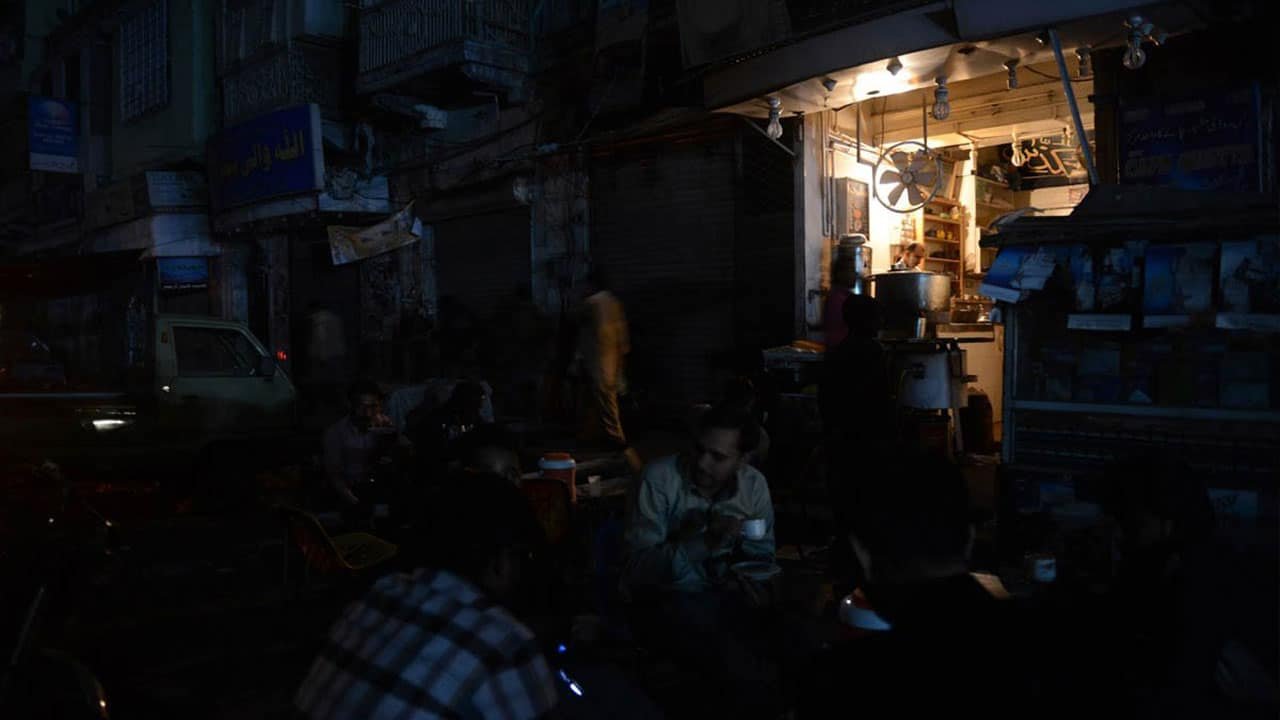
    Parts of Pakistan are currently suffering scheduled blackouts lasting more than 12 hours, reducing the ability of air conditioning to provide respite during the current heat wave. The former prime minister continues to gather enormous audiences to demonstrations and marches, exacerbating voters’ discontent with 13.8 per cent inflation. The hosts of prime-time talk shows frequently discuss how Pakistan will obtain the petroleum it requires and how much it would have to spend.

    The administration introduced a fresh set of energy-saving measures last week. Civil servants were relieved of their normal Saturday shifts, and the security budget was slashed by half.

    Prime Minister (PM) Shehbaz Sharif remarked in an April tweet before of the Eid holiday, “I am acutely aware of the sufferings people are facing”. That same week, he ordered his government to resume purchasing costly overseas natural gas shipments.

    He also warned earlier this month that they don’t have the money to keep importing gas from other countries.

    Rerouted supply to power plants

    There will be more than just outages as a result of the supply shortage. The government has rerouted existing natural gas supply to power plants, causing fertiliser manufacturers to be shortchanged. This approach could jeopardise the next harvest, resulting in even higher food prices the following year. Backup generators are being used by cellphone towers to keep service going during the blackouts, but they, too, are running out of fuel.

    There’s not much hope in the future. LNG prices have risen by over 1,000 per cent in the previous two years, first due to post-pandemic demand and subsequently due to Russia’s invasion of Ukraine. Russia is Europe’s largest natural gas supplier, and the possibility of supply disruptions pushed spot rates to an all-time high in March.

    Increasing LNG demand in Europe

    Meanwhile, Europe is increasing its need for LNG. Europe’s LNG imports have increased by 50 per cent so far this year compared to the same period last year, and show no signs of slowing down. As they cut ties with President Vladimir Putin’s regime over the crisis in Ukraine, European Union policymakers created a plan to considerably increase LNG deliveries as an alternative to Russian gas.

    Floating import terminals are being built at a breakneck pace in countries like Germany and the Netherlands, with the first ones set to open in the next six months.

    “Europe is draining LNG from the rest of the globe,” according to Steve Hill, executive vice president of Shell Plc, the world’s largest LNG trader. “However, this means that less LNG will be sent to developing markets”.

    Pakistan was formerly thought to be the LNG industry’s bright future. Demand for the fuel had peaked in developed markets by the mid-2010s. However, technological developments had reduced the costs and time it took to build import terminals, and new gas sources had reduced the cost of the fuel itself.

    Poor nations could finally contemplate the gasoline at the new, lower prices. Suppliers flocked to these new markets, and when Pakistan published a request for long-term LNG supply, over a dozen businesses competed for the contract.

    Pakistan chose Italy’s Gunvor Group Ltd to sell LNG to the country for the next decade in 2017. The terms were favourable at the time, and the prices were lower than those of a comparable arrangement struck with Qatar the previous year.

    Delay in supplies

    However, due to the rise in European gas prices, the two suppliers have postponed more than a dozen shipments slated for delivery between October 2021 and June 2022.

    According to Bruce Robertson, an expert at the Institute for Energy Economics and Financial Analysis, such defaults are nearly unheard of in the LNG market. Bloomberg spoke with traders and industry insiders who couldn’t recall the last time so many cargoes were rejected without being linked to a big outage at an export terminal.

    Eni and Gunvor stated they had to cancel because they were experiencing their own supply problems and didn’t have enough LNG to export to Pakistan. When exporters confront such difficulties, they typically replace deliveries by purchasing a consignment on the spot market, but Eni and Gunvor have not done so.

    Vendors are generally averse to cancelling orders. It harms the company connection and is often extremely costly. In established markets, fines for “failure to deliver” might be as high as 100 per cent.

    “It’s quite rare for LNG suppliers to renege on long-term contracts beyond force majeure occurrences,” says Valery Chow, an analyst at Wood Mackenzie Ltd.

    Pakistan’s contracts stipulated a lower cancellation penalty of 30 per cent, most probably in exchange for cheaper overall costs. The European spot market prices are currently high enough to more than compensate for the penalties.

    Pakistan’s $12 million LNG supply contract

    As per sources, an LNG supply to Pakistan for delivery in May under a long-term contract would cost $12 per million British thermal units. In comparison, spot cargoes to Europe for May delivery were trading for more than $30. Eni and Gunvor have kept their promises to customers in the region.

    As a result, Pakistan is back to square one, in a weaker negotiation position than before. After a dispute with Pakistan’s army over a variety of problems, including his management of energy supply and the greater economy, Prime Minister Imran Khan was deposed in April.

    Shehbaz Sharif, the new prime minister, has directed the state-owned importer to obtain the petroleum at any cost in order to end the debilitating blackouts. It’s also attempting to reach new long-term LNG purchase agreements, albeit the conditions will almost probably be harsher than six years ago.

    High risk of default

    The cost is having its own cascading repercussions. The government is now “at high risk of default,” according to a paper published last month by the Institute for Energy Economics and Financial Analysis. Moody’s Investors Service reduced Pakistan’s outlook from stable to negative, citing financial worries including a potential IMF bailout delay.

    Pakistan’s dependency on LNG, as well as its suppliers’ tendency to default, has exacerbated the country’s energy dilemma. Pakistan isn’t alone in this regard. Emerging economies all around the world are trying to meet their residents’ requirements while staying within their budget restrictions.

    It has also prompted them to purchase electricity from Russia, reducing the impact of Europe’s attempts to isolate them.

    Pakistan seeks LNG supply contract with Russian companies

    According to reports, Pakistan is also looking at long-term LNG supply agreements with Russian companies. India has already increased its purchases from Russia, and this trend is likely to continue. The government has directed power plants to purchase fuel from overseas in response to the scorching summer heat.

    Other cash-strapped importers, such as Bangladesh and Myanmar, are likely to suffer as a result of Pakistan’s problems. Bangladesh’s state-owned utility recently purchased the country’s most expensive LNG shipments on the spot market to keep the grids functioning and industry stocked, while Myanmar has stopped importing LNG for the past year owing to price increases.

    Other nations, such as India and Ghana, may be prompted to reconsider long-held plans to increase their reliance on super-chilled fuel as a result of Europe’s major change. Instead, governments would increase their reliance on polluting coal or oil, thwarting efforts to meet ambitious emission reduction objectives this decade.