Tag: petroleum industry

  • OGRA announces ‘reduction’ of Rs0.81 per kg in LPG price

    OGRA announces ‘reduction’ of Rs0.81 per kg in LPG price

    The Oil and Gas Regulatory Authority (OGRA) has implemented a modest reduction in the price of Liquefied Petroleum Gas (LPG) by Rs0.81 per kg, effective from March 01, 2024.

    The previous consumer price for LPG stood at approximately Rs257.59 per kg. With the latest adjustment, consumers can now avail themselves of LPG at the revised rate of Rs216.79 per kg, indicating a notable decrease.

    For consumers relying on an 11.8 kg LPG cylinder, the cost has been adjusted to Rs3,030.12. This represents a decrease of Rs9.51 per cylinder from the previous price of Rs3,039.63, providing some relief to households and businesses alike.

    The move by OGRA to reduce LPG prices aims to alleviate the financial burden on consumers amid fluctuating economic conditions.

    This adjustment reflects the Authority’s commitment to ensuring fair pricing and accessibility of essential commodities for the public.

    Consumers are encouraged to verify and adopt the new rates, as OGRA continues its efforts to maintain transparency and affordability in the energy sector.

  • Govt maintains petrol price at Rs281.34, cuts diesel price by Rs7 per litre 

    Govt maintains petrol price at Rs281.34, cuts diesel price by Rs7 per litre 

    On Thursday, the caretaker government announced its decision to maintain the current petrol price at Rs281.34 per litre while implementing a reduction of Rs7 per litre for high-speed diesel (HSD) for the upcoming two weeks. 

    As per the official notification from the finance ministry, the revised price for high-speed diesel will be Rs289.71 per litre starting on December 1. 

    Additionally, the prices for kerosene and light diesel oil have decreased by Rs3.82 and Rs4.52, respectively. 

    Following these adjustments, kerosene will now be priced at Rs201.16 per litre, and light diesel oil will be available at Rs175.93 per litre. 

    This decision comes in response to factors such as an IMF review and the recent global decline in oil prices. 

    Notably, the postponement of a ministerial meeting by Opec+ (the Organisation of the Petroleum Exporting Countries and allies, including Russia) to November 30 contributed to a midweek tumble in global oil prices. 

    Brent crude futures experienced a 0.4 per cent decline, down 37 cents to $80.21 per barrel, while US West Texas Intermediate (WTI) crude futures lost 0.4 per cent, down 29 cents to $75.25. 

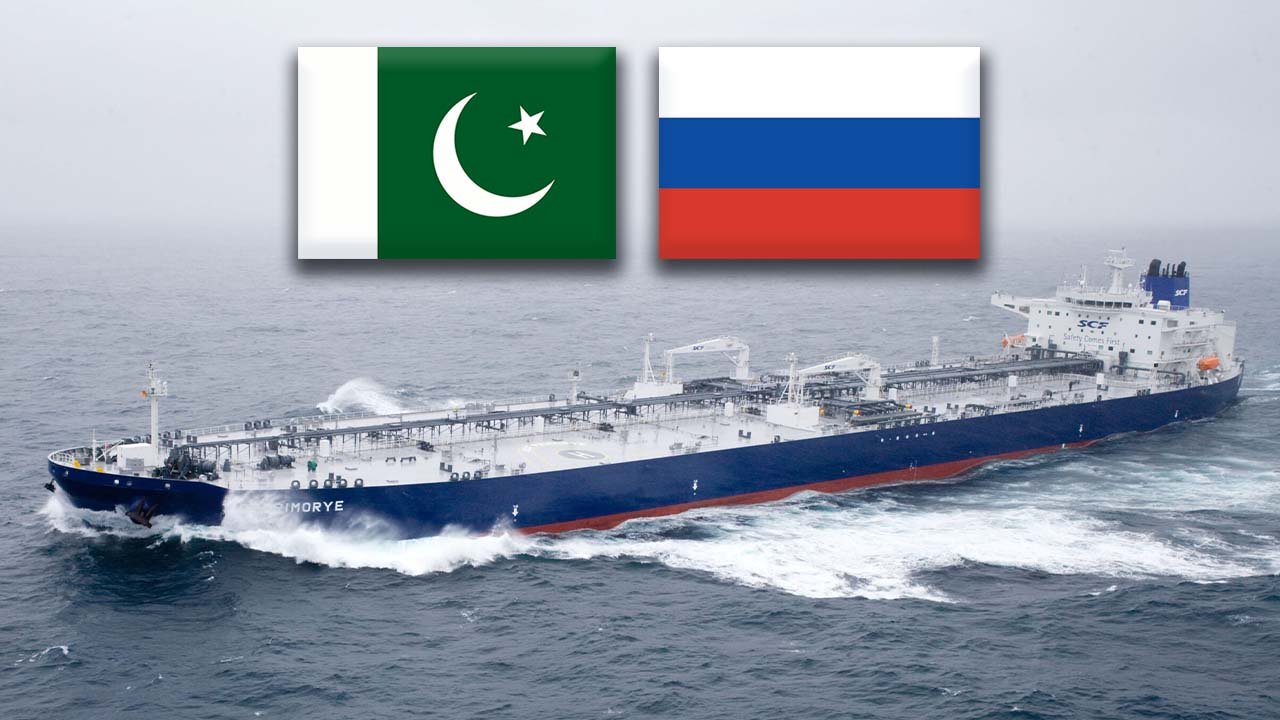
  • Pakistan receives second shipment of discounted Russian crude oil

    Pakistan receives second shipment of discounted Russian crude oil

    On Tuesday, the second shipment of discounted Russian crude oil, comprising a total of 55,000 tonnes, reached the Karachi port.

    The vessel carrying Urals oil, named ‘Clyde Noble’, had been en route to the port of Karachi in the Arabian Sea, according to earlier reports from reliable sources. Once the ship’s berthing plan is finalized, it will be docked at the oil pier.

    An insider from the oil industry had previously informed The News that the vessel was expected to reach Karachi Port by Tuesday. Originally scheduled to arrive on June 20, the second cargo faced a one-week delay due to limited storage space in the tanks of Pakistan Refinery Limited (PRL).

    The PRL, being the first domestic refinery to receive crude oil from Russia under the government-led deal, encountered logistical challenges.

    Pakistan had received its initial shipment of Russian crude oil on June 12 when a tanker carrying 45,000 tonnes of crude oil docked at the Karachi port. The government had placed an order of 100,000 tonnes of Russian crude oil in April of this year after months of negotiations with Moscow to finalize the terms and conditions of the agreement.

    As per the terms of the deal, Russia dispatched the first oil tanker carrying 100,000 metric tonnes of crude, which arrived at the Omani port earlier this month.

    However, due to the Pakistani port’s limitations in handling heavy ships carrying over 50,000 tonnes of oil cargo, it was decided to transport the crude to Pakistan using smaller vessels.

    It is noteworthy that the vessel, loaded with Ural crude on April 21 at a Russian port, faced a 10-day delay due to technical issues. Subsequently, it reached Egypt’s Suez Canal on May 17, where it endured a 12-day wait in a lengthy queue before crossing the canal.

    Currently, Pakistan imports 70 per cent of its crude oil, which is refined by PRL, National Refinery Limited, Pak Arab Refinery Limited, and Byco Petroleum. The remaining 30 per cent is domestically produced and refined by Attock Refinery Limited.

    To meet the demand for petroleum products, PRL is presently in the process of refining the Russian crude oil, blending it with Arabian crude that arrived a few days ago following a PRL order.
  • Russian oil imports expected to reduce fuel prices slowly, says Musadik Malik

    Russian oil imports expected to reduce fuel prices slowly, says Musadik Malik

    At the Pakistan Energy Conference 2023, Minister of State for Petroleum, Musadik Malik, reassured the nation that the arrival of cheap oil from Russia would eventually lead to a decline in fuel prices. However, he cautioned that an immediate decrease should not be expected until a continuous supply of oil from Moscow is established.

    Minister Malik said that the import of Russian oil was not merely a promise or rhetoric. He confirmed that ships carrying the much-anticipated oil had already reached Oman and would commence supply to Pakistan within a week. While acknowledging that a single shipment would not significantly impact fuel costs, Malik expressed confidence that once a persistent supply was established, the price of fuel would gradually decrease.

    The government’s ambitious objective is to fulfill one-third of Pakistan’s crude oil requirements with affordable oil sources, including imports from Russia. The aim is to address the chronic energy shortages that Pakistan, the world’s fifth most populous country, has been grappling with. Currently, Pakistan imports 84 per cent of its petroleum products, primarily from Gulf Arab allies Saudi Arabia and the United Arab Emirates.

    The import of cheap Russian oil represents one of Pakistan’s strategies to alleviate its energy crisis, as global efforts are underway to restrict Russia’s oil exports due to its invasion of Ukraine. During a visit to the United States earlier this month, Minister Malik confirmed that Pakistan had placed its first order for Russian oil, which is expected to arrive within a month. Upon evaluating the impact of this initial shipment, Pakistan will decide on the extent of future imports.

    When asked about the possibility of pursuing more Russian imports, Malik responded that Pakistan would prioritise cheaper energy sources to meet its energy requirements. The minister further emphasised that the government’s objective was to ensure a sustainable and affordable supply of low-cost energy, highlighting accessibility, sustainability, and affordability as the key pillars of this vision.

    In addition to the import of Russian oil, Malik mentioned the Iran-Pakistan Gas Pipeline project as another avenue to address the country’s energy needs. The government has conveyed to Iran its intention to access energy through the pipeline while remaining responsible and avoiding potential sanctions. Talks are underway with both sanctioning countries and Iran to find a creative solution to this matter.

    With Pakistan eagerly awaiting the arrival of cheap Russian oil, the government remains committed to securing a sustainable and affordable energy supply to meet the needs of its citizens. The gradual decline in fuel prices is expected to provide much-needed relief to the nation, addressing its chronic energy shortages and boosting economic growth in the process.