Tag: Petroleum prices

  • Petroleum sales in Pakistan drop to six-month low

    Petroleum sales in Pakistan drop to six-month low

    The sale of total petroleum products in Pakistan fell to 1.1 million tonnes in April 2024, a 6 per cent decrease compared to 1.17 million tonnes in the same month last year.

    According to data released by brokerage house Topline Securities, this is the lowest level recorded in the past six months, reflecting a trend influenced by reduced demand for petrol and furnace oil (FO).

    Despite the overall decline, high-speed diesel (HSD) sales showed a modest improvement, rising by 2 per cent year-on-year, reaching 0.469 million tonnes in April.

    Meanwhile, the sale of MS (petrol) dropped by 9 per cent, totaling 0.53 million tonnes, and FO sales saw a dramatic 59 per cent decrease, settling at 0.03 million tonnes.

    Topline Securities attributed this sharp decline in FO sales to a reduction in power generation from FO-based power plants.

    Month-on-month, petroleum offtake declined by 4 per cent compared to 1.15 million tonnes in March 2024. FO experienced the most significant drop, decreasing by 33 per cent month-on-month in April.

    Looking at the broader picture, the first ten months of fiscal year 2024 saw total petroleum sales drop by 11 per cent year-on-year, totaling 12.443 million tonnes.

    Product-wise data indicate a downturn in all categories, with MS, HSD, and FO offtake settling at 5.83 million tonnes, 5.05 million tonnes, and 0.869 million tonnes, respectively. This represents a decrease of 6 per cent for MS, 4 per cent for HSD, and 53 per cent for FO.

    In terms of individual company performance, Pakistan State Oil (PSO) experienced a 3 per cent decline in offtake year-on-year in April 2024, with a 7 per cent drop in MS sales and a 4 per cent decrease in HSD. FO sales for PSO also fell by 22 per cent.

    However, despite these decreases, PSO’s market share improved from 49 per cent in April 2023 to 51 per cent in April 2024.

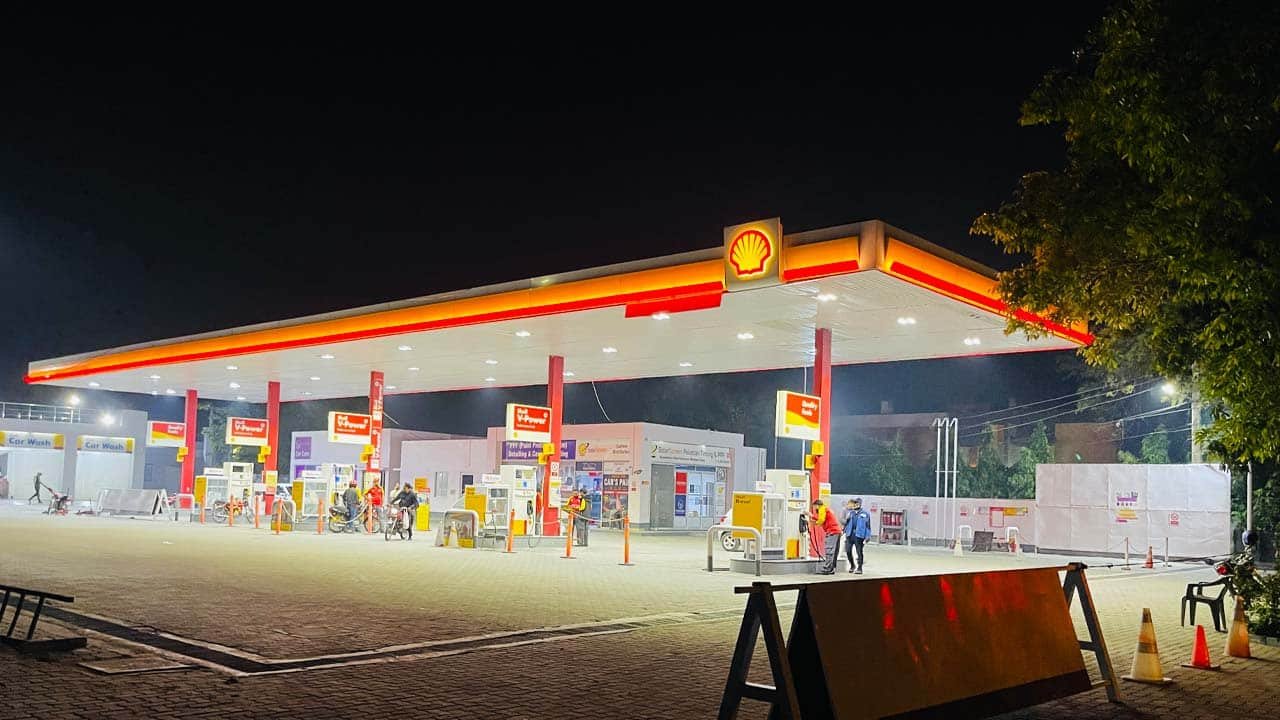
    Shell Pakistan Limited (SHEL) recorded a 7 per cent year-on-year decline in sales, with reductions across all product categories.

    Hascol Petroleum Limited (HASCOL) saw a significant 23 per cent year-on-year drop in sales, primarily due to a 42 per cent reduction in MS sales.

    Attock Petroleum Limited (APL) also witnessed an 18 per cent decline in sales compared to April 2023.
  • Travellers suffer as transporters jack up prices before Eid

    Travellers suffer as transporters jack up prices before Eid

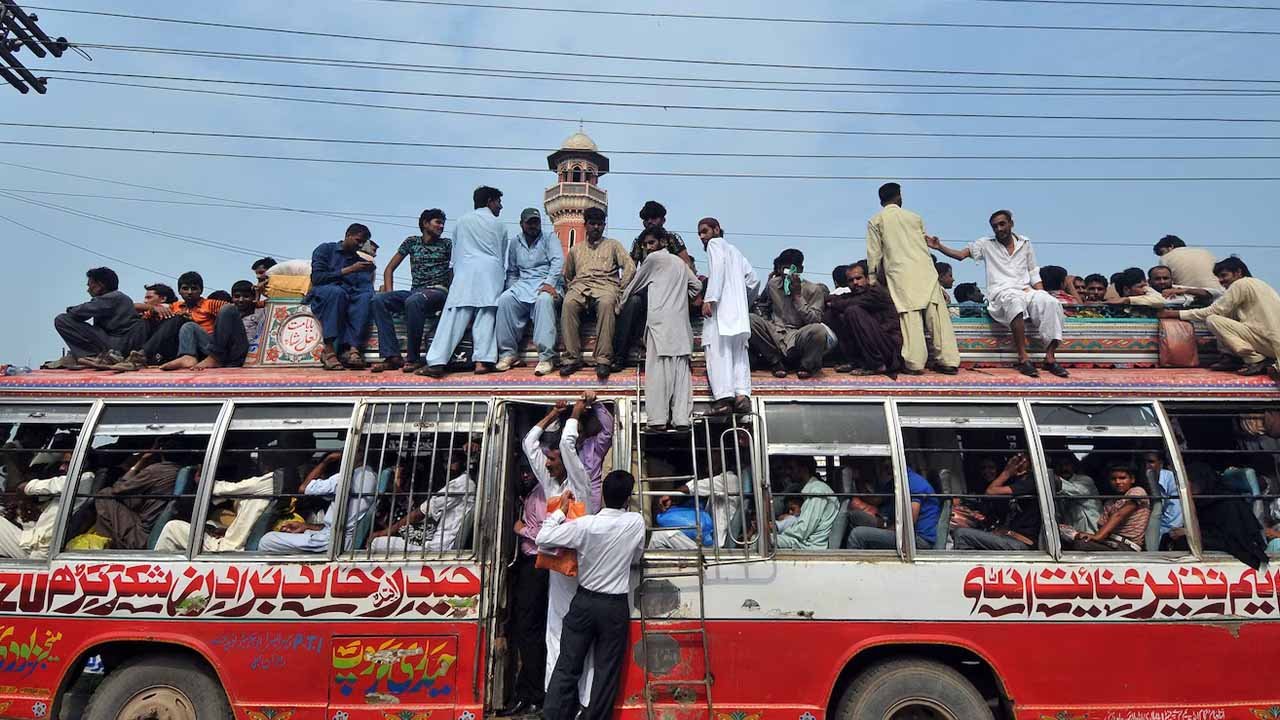
    The recent spike in petroleum prices has triggered a transportation crisis as transporters exploit passengers by hiking fares.

    With Eidul Fitr set for April 10, families are flocking to their hometowns, crowding terminals and the Rawalpindi Railway Station.

    The government’s decision to raise petroleum prices has made long-distance travel challenging for the public.

    Transporters, citing increased fuel costs, have raised fares by 30 to 40 per cent, with some even doubling the usual rates. Despite this, authorities appear indifferent to commuters’ plight.

    Secretary of the District Regional Transport Authority (DRTA), Muhammad Rashid, promises action to curb overcharging during Eid. He pledges strict measures, including fines and vehicle confiscation, and personally oversees terminals to enforce regulations.

    Many families express frustration with the timing of the official Eid holidays, urging for an earlier start to aid travel plans.

    Consequently, a significant number of non-local residents have already left, with more planning to depart by ‘Chand Raat.’ Concerns about overcrowded transportation hubs persist, especially at Rawalpindi Railway Station.

    To avoid anticipated congestion, many office-goers have sent their families ahead. Rashid Mehmood, bound for Lahore, recounts past experiences of exploitation by private transporters during festivals.

    Crowds gather at various terminals, eager to secure tickets for their journeys. However, irregularities in ticket sales emerge, with allegations of seat hoarding and ticket reselling at inflated prices.

    Further complaints arise about the lack of available vehicles despite valid tickets, highlighting systemic failures in managing overcharging and overloading concerns.

    As Eid approaches, addressing these issues becomes urgent, emphasising the need for swift regulatory measures to protect travellers’ rights and ensure fair access to transportation services.

  • PM Kakar calls for reduction in prices of essential items and services after petrol price cut 

    PM Kakar calls for reduction in prices of essential items and services after petrol price cut 

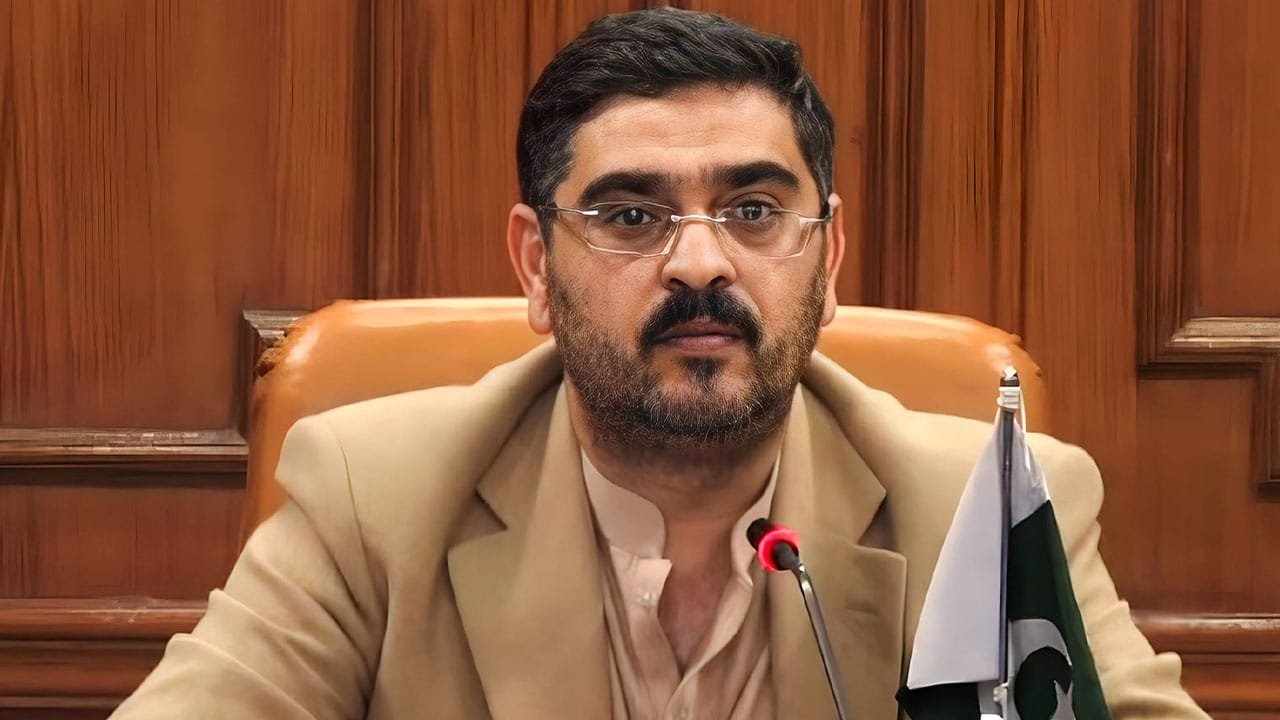
    On Monday, Caretaker Prime Minister (PM) Anwaar ul Haq Kakar called upon the chief ministers to take decisive action in lowering the prices of essential goods and services in response to a significant reduction in fuel costs. 

    In a momentous development, the government has implemented a substantial reduction of Rs40 in the price of petrol. 

    Prime Minister Anwaar ul Haq Kakar issued clear directives at both the federal and provincial levels, urging the implementation of a stringent price control mechanism. 

    PM Kakar stressed that all endeavours must be focused on ensuring that the benefits of reduced petroleum prices are passed on to the citizens of Pakistan. 

    The prime minister emphasised the unwavering enforcement of his directives. 

    Prior to this decision, the cost of petrol had seen a remarkable reduction of Rs40 per litre in Pakistan. 

    As per a notification issued by the Oil and Gas Regulatory Authority, the price of petrol now stands at Rs283.38 per litre, reflecting a reduction of Rs40 per litre

    Meanwhile, the price of high-speed diesel (HSD) has been lowered by Rs15 per litre to reach Rs303.18, while kerosene oil prices have witnessed a reduction of Rs22.43 per litre, now standing at Rs214.85. 

  • Petrol price may drop by Rs41 per litre: AHL

    Petrol price may drop by Rs41 per litre: AHL

    Petroleum prices may decrease in the upcoming announcement due to a significant drop in global oil prices and the strengthening of the Pakistani rupee against the US dollar, according to Arif Habib Limited (AHL), a brokerage house.

    In the next fortnightly pricing cycle starting on October 16, 2023, AHL predicts a reduction of Rs41 per litre for petrol and Rs19 per litre for diesel in local prices.

    AHL’s projection is based on several factors. International oil prices have fallen considerably in the past week due to concerns about demand, a stronger US dollar, inflationary pressures, and increased oil supplies. 

    The prices of WTI, Brent, and Arab Light have dropped by approximately 9 per cent to 11 per cent compared to the previous fortnightly averages. International gasoline (MS) prices have plummeted by 15 per cent to $84.3 per barrel, while high-speed diesel (HSD) prices have dipped by 10 per cent to $110.6 per barrel compared to the previous fortnightly averages.

    Additionally, the Pakistani rupee has appreciated by 2.7 per cent against the US dollar, standing at 283.87 compared to the previous fortnightly average of 291.65. 

    AHL’s calculations, factoring in these price changes and the assumption of stable international prices and currency rates over the next 10 days, suggest that local petrol and diesel prices are expected to decrease by Rs41 per litre and Rs19 per litre starting on October 16, 2023.

    AHL also mentioned that in the previous fortnightly pricing, there was an exchange rate adjustment of Rs11.9 per litre for MS and a negative adjustment of Rs2.8 per litre for HSD. 

    Even assuming similar currency adjustments for MS and no adjustment for HSD in the upcoming fortnightly prices, AHL anticipates that MS and HSD prices will decrease by Rs28.6 per litre and Rs19.3 per litre, respectively.

    In terms of inflation, AHL revised its October CPI inflation estimate to 27.5 per cent. Last week, the interim government announced a reduction of Rs8 per litre for MS and Rs11 per litre for HSD, resulting in new prices of 323.38 and 318.18 per litre for petrol and diesel, respectively, effective from October 1.

  • Petroleum prices expected to decline as rupee gains ground against US dollar 

    Petroleum prices expected to decline as rupee gains ground against US dollar 

    As reported by Geo News on Saturday, there’s an expectation that starting on October 1st, petroleum prices will see a decrease due to the stability of the Pakistani rupee (PKR) against the US dollar (USD). This shift is also attributed to a decline in international market prices. 

    The final decision on these petroleum prices will be made by the Ministry of Finance following consultations with interim Prime Minister Anwaar-ul-Haq Kakar. 

    In recent news, the Oil and Gas Regulatory Authority (OGRA) cautioned against prematurely speculating about petroleum product pricing. This comes after federal ministers suggested that rates for petroleum, oil, and lubricants (POL) might decrease in the next fortnightly review. 

    Earlier statements by Caretaker Federal Commerce and Industries Minister Gohar Ejaz and Interim Federal Minister for Information and Broadcasting Murtaza Solangi hinted at a potential drop in POL prices, thanks to the recent strengthening of the Pakistani rupee against the US dollar. 

    Over the past two weeks, the Pakistani rupee has gained about Rs19 against the US dollar. This is significant because Pakistan, as a net importer of POL products, conducts transactions in US dollars. 

    In the previous fortnightly review, the caretaker government had raised petrol prices by more than Rs26 per litre and diesel prices by over Rs17 per litre, reaching record highs at Rs331.38 and Rs329.18 per litre, respectively. 

    OGRA emphasised that the pricing of petroleum products in Pakistan depends on international market trends and the exchange rate between the US dollar and the Pakistani rupee. While international petroleum prices have risen recently, the exchange rate between the US dollar and the Pakistani rupee has improved. 

    However, OGRA pointed out that there’s still one week left before the official announcement of new prices. So, any speculations about price changes during this period are speculative and could disrupt the smooth operation of the oil supply chain. 

  • Things will get more expensive amidst soaring petroleum prices: Finance Ministry

    Things will get more expensive amidst soaring petroleum prices: Finance Ministry

    Due to the persistent escalation in energy and petroleum prices, it is anticipated that inflation will maintain its elevated trajectory in the months ahead.

    In its latest monthly economic update, the Ministry of Finance has presented a forecast indicating that inflation is poised to remain at an elevated level during the upcoming months. The report projects inflation to fall within the range of 29 per cent to 31 per cent for the month of September 2023, primarily attributing this surge to the notable uptick in prices of petroleum products and electricity.

    Furthermore, the report identifies several contributing factors to this inflationary pressure, including the possibility of surging transportation costs, a dearth of essential services and commodities, and the depreciation of the dollar, which has had a mitigating effect on imported inflation.

    In response to these challenges, the finance ministry has implemented rigorous measures to combat illegal currency exchanges and stockpiling activities while actively working to stabilise the exchange rate.

    The report also highlights a global trend of decreasing food grain prices, albeit with notable exceptions such as rice and sugar, whose prices have surged due to the ongoing conflict between Russia and Ukraine.

  • Federal ministers predict petrol price reduction, oil authority cautions against speculation

    Federal ministers predict petrol price reduction, oil authority cautions against speculation

    The Oil and Gas Regulatory Authority (OGRA) has cautioned against engaging in speculative discussions regarding the future pricing of petroleum products. This advisory comes in response to recent statements made by federal ministers suggesting potential reductions in Petroleum Oil and Lubricants (POL) rates during the upcoming fortnightly review.

    Caretaker Federal Commerce and Industries Minister Gohar Ejaz and Interim Federal Minister for Information and Broadcasting Murtaza Solangi had asserted last week that POL prices might see a decrease, attributing this possibility to the strengthening of the Pakistani rupee against the US dollar.

    Over the past two weeks, the rupee has appreciated by approximately Rs16 against the dollar, prompting these statements. It’s important to note that Pakistan, as a petroleum importer, conducts its transactions in US dollars.

    In the preceding fortnightly review, the caretaker government had substantially raised the prices of petrol and diesel, setting historic highs at Rs331.38 and Rs329.18 per litre, respectively.

    In light of the ministers’ remarks, OGRA has released a statement reiterating the importance of refraining from speculative discourse concerning petroleum product prices. The regulatory authority clarified that these prices in Pakistan are primarily influenced by international market rates and the prevailing dollar-to-ruble exchange rate.

    OGRA pointed out that recent times have witnessed an upsurge in global petroleum prices, while the rupee has demonstrated an improvement against the dollar. However, OGRA emphasised that there is still one week remaining before the announcement of the new pricing structure.

    The statement from OGRA further underscores that any conjecture regarding price fluctuations during this interim period is highly speculative and could potentially disrupt the efficient functioning of the petroleum supply chain.

  • One rupee relief: Petroleum Division reveals ‘benefit’ of importing Russian crude

    The Petroleum Division has presented a comprehensive briefing to the caretaker Prime Minister, Anwaar ul Haq Kakar, regarding the potential impact of Russian crude oil on petroleum prices in Pakistan.

    According to The News, the Petroleum Division highlighted that the projected benefit to consumers resulting from the import of Russian crude oil remains relatively modest, at approximately Re1 per litre for both petrol and diesel. This assessment takes into account various operational intricacies and market dynamics.

    Importing Russian crude oil carries two notable risks, the division stated. The first pertains to the duration of transportation, which spans between 30 and 36 days, and the second revolves around the production of furnace oil.

    Approximately 60 per cent of furnace oil generated from Russian crude must be exported, incurring a 25 per cent loss in the process.

    It is significant to note that, currently, only the Pakistan Refinery Limited (PRL) has expressed readiness to refine Russian oil. However, if PRL assumes the responsibility of refining Russian oil exclusively, only a nominal Re1 relief can be passed on to consumers for each litre of gasoline and diesel.

    In a potential collaborative effort, the prime minister was informed that if PARCO (Pak-Arab Refinery Company) and NRL (National Refinery Limited) jointly undertake the refining of Russian oil, the benefit to consumers could potentially increase to Rs3 per litre. The magnitude of this relief would be contingent on the volume of Russian crude involved in the process.

    PARCO, as a comparatively modern refinery with superior facilities, is expected to contribute to enhanced yields from Russian crude and, consequently, a reduction in the production of furnace oil. However, it was also revealed that both PARCO and NRL have declined the proposition to refine Russian oil.

    The caretaker Prime Minister, Anwaar ul Haq Kakar, has expressed the need for a thorough evaluation of the situation, considering the potential benefits, risks, and the willingness of refineries to participate in the process. The decision regarding the import and refining of Russian crude oil remains a pivotal concern as Pakistan navigates its energy landscape in the coming days.

    This development emphasises the intricate balance between economic considerations and strategic decisions in the energy sector that Pakistan faces as it grapples with global oil market dynamics.

  • Sharp rise in petrol price drives weekly inflation up, worsening daily struggles for Pakistanis

    Sharp rise in petrol price drives weekly inflation up, worsening daily struggles for Pakistanis

    The Sensitive Price Index (SPI) in Pakistan has risen by 1.30 per cent compared to the previous week, intensifying the financial burden on the already struggling population. The nation is grappling with ever-depreciating financial resources as it faces a sharp increase in petroleum prices and food inflation.

    One of the major contributors to the rising costs is the persistent increase in petroleum and oil prices over the past year-and-a-half. This increase directly affects commuters who have to bear the brunt of higher transportation costs, making it more challenging for them to manage their daily expenses, particularly when it comes to purchasing essential goods like food items.

    Although the SPI has seen a significant decline since reaching its highest level of 48.35 per cent on May 4, the overall inflation remains a concern. The International Monetary Fund (IMF) predicts the Consumer Price Index (CPI) for the current fiscal year to be 25.9 per cent, which is still high despite being lower than the 29.6 per cent recorded in 2022-23.

    According to the latest data released by the Pakistan Bureau of Statistics, the SPI has witnessed a staggering 29.83 per cent jump compared to the same week last year. This increase followed the government’s decision to hike petrol and high-speed diesel prices by Rs19.95 and Rs19.90 per litre, as well as a substantial increase in the rate of liquefied petroleum gas (LPG).

    The outgoing government, whose constitutional term is about to expire on Aug 12, defended the decision to increase fuel prices, citing the recently reached $3 billion IMF deal as being in the national interest.

    The SPI, which covers 51 essential items, has seen prices of 23 items go up, 7 items go down, and 21 items remaining unchanged compared to the previous week. The largest week-on-week rise was observed in the prices of tomatoes, increasing by 16.85 per cent, followed by chillies powder (7.58 per cent), garlic (5.71 per cent), onions (5.50 per cent), powdered milk (5.17 per cent), eggs (3.86 per cent), and rice basmati broken (2.06 per cent).

    Looking at the year-on-year comparison, the prices of wheat flour have surged by a staggering 131.40 per cent, while rice basmati broken and rice Irri-6/9 have increased by 82.86 per cent and 72.73 per cent, respectively. This is alarming as wheat flour and rice are staple foods for the majority of the population, and such steep price hikes can exacerbate the existing nutritional deficiencies and lack of protein in the daily diet.

    Adding to the concern is the rising cost of pulses, lentils, chicken, eggs, potatoes, and other vegetables, which are crucial components of the daily diet. This trend points towards a looming food insecurity crisis in Pakistan.

    The situation is expected to worsen as Pakistan must implement the harsh IMF conditions, which revolve around higher prices of utilities and fuel. This will make it even more challenging for the inflation-hit people to sustain the required food intake, leading to further hardship for the already struggling population.

  • Petrol price slashed by Rs8 to Rs262 per litre for next fortnight

    Petrol price slashed by Rs8 to Rs262 per litre for next fortnight

    In a televised address on Wednesday, Finance Minister Ishaq Dar announced a significant reduction in the prices of petroleum products by the federal government.

    Effective from 12 am tonight, the price of petrol will be lowered by Rs8 per litre, bringing it down to Rs262 per litre. Similarly, the price of diesel will be reduced by Rs5 per litre, making it Rs253 per litre.

    Minister Dar said that these revised prices would remain unchanged for the next fortnight, providing stability and predictability for consumers. He further stated that this reduction in prices is part of a cumulative effort, as the government has already decreased the prices of petrol and diesel by Rs20 and Rs35 per litre respectively throughout the month of May.