
Tag: PIDE

  • Why do you want to leave Pakistan?

    Why do you want to leave Pakistan?

    The Pakistan Institute of Development Economics (PIDE) found that 62 per cent of the male population of Pakistan aged between 15 to 24 years wants to leave the country. The survey reveals that slightly more people in urban Pakistan (40 per cent) than in rural Pakistan (36 per cent) desire to leave the country.

    The question we need to ask is: why do these young men have a desperate urge to leave Pakistan?

    The thing which is most striking in this scenario is that they are young boys and have a full life ahead of them. Yet the need to leave? The only thing that might make sense is that these young individuals want a better lifestyle and for that they need better opportunities. They want a better chance at life itself. Unfortunately in Pakistan, there are hardly any opportunities available for our younger generation. With a struggling economy, these educated youngsters with college and university degrees are unable to either find jobs in the first place and if they do, those jobs hardly pay well. With rising inflation, it is already difficult to make ends meet for most people but with no jobs in the market, the younger generation’s disillusionment and disappointment with the country is understandable.

    Life in Pakistan is a struggle for everyone now. People want to leave the country to carve out a better financial future for their families. They choose to be away from family, leave their comfort and not live in their own homeland just to ensure that their next generation’s future is secure.

    Pakistan takes pride in its men and women. Yet there is so little the governments have done to improve the quality and standard of the people’s lives. How hard will it be to provide a place filled with opportunity, a strong education system and a strong economy. Is the youth asking too much for survival? Or is it just the bare minimum? From what we see, it’s the bare minimum. Our governments and leaders have an obligation towards the youth. To provide and nurture them. To give them the belief that their motherland holds them near and dear, so that they can grow and become successful in life.

    Despite trying, we are failing the youth. Maybe the problem lies somewhere else. The younger generation deserves leaders who are genuinely willing to invest in their people. We hope the future is better for the young men and women. May they always choose their country above anything else in life. May Pakistan not let the dreams of the young shatter.
  • 40 per cent educated women are jobless in Pakistan, 1.5 million people applied for peon position

    40 per cent educated women are jobless in Pakistan, 1.5 million people applied for peon position

    The Pakistan Institute of Development Economics (PIDE) informed the Senate Standing Committee on Planning and Development that 40 per cent of educated women across the country are jobless, Nadir Guramani reports for Dawn.

    The PIDE in its briefing, stated that 24 per cent of educated people were jobless, adding that the unemployment rate in the country has reached an alarming figure of 16 per cent contrary to the government’s claim of 6.5 per cent.

    The meeting was chaired by the Deputy Chairman of the Senate, Saleem Mandviwala.

    According to the PIDE, the study was done by a company abroad as no research has been conducted by the government, although several research institutes were operating in the country.

    The study also states that 80 per cent of people get themselves enrolled in M.Phil after failing to get a job and they have not been included in the given statistics.

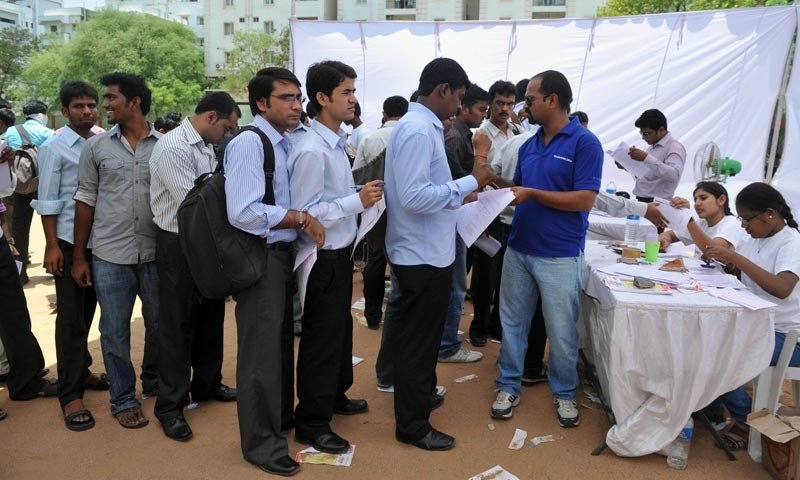
    The Senate committee was told that at least 1.5 million people applied for a peon’s position in a high court that was recently advertised. “Among those applying for the job included M.Phil degree holders,” PIDE officials stated.

    The officials proposed that laws should be made to grant licenses to hawkers to enable them to get a job, this would create 20 to 30 million employments for the citizens. They also debated that universities in Pakistan were approved through a “flawed” bill by the Higher Education Commission (HEC).

    In June, the Economic Survey 2020-21 revealed that the spread of the coronavirus pandemic had severely affected businesses and other economic activities due to the imposition of lockdowns which left approximately 20.71m workers jobless.

  • Why do businesses not grow in Pakistan?

    Why do businesses not grow in Pakistan?

    CEO Maple Leaf Capital, Waleed Saigol, has said that businesses grow in Pakistan but at a slow pace, and the problem lies within the policies and mindset of the country’s power groups.

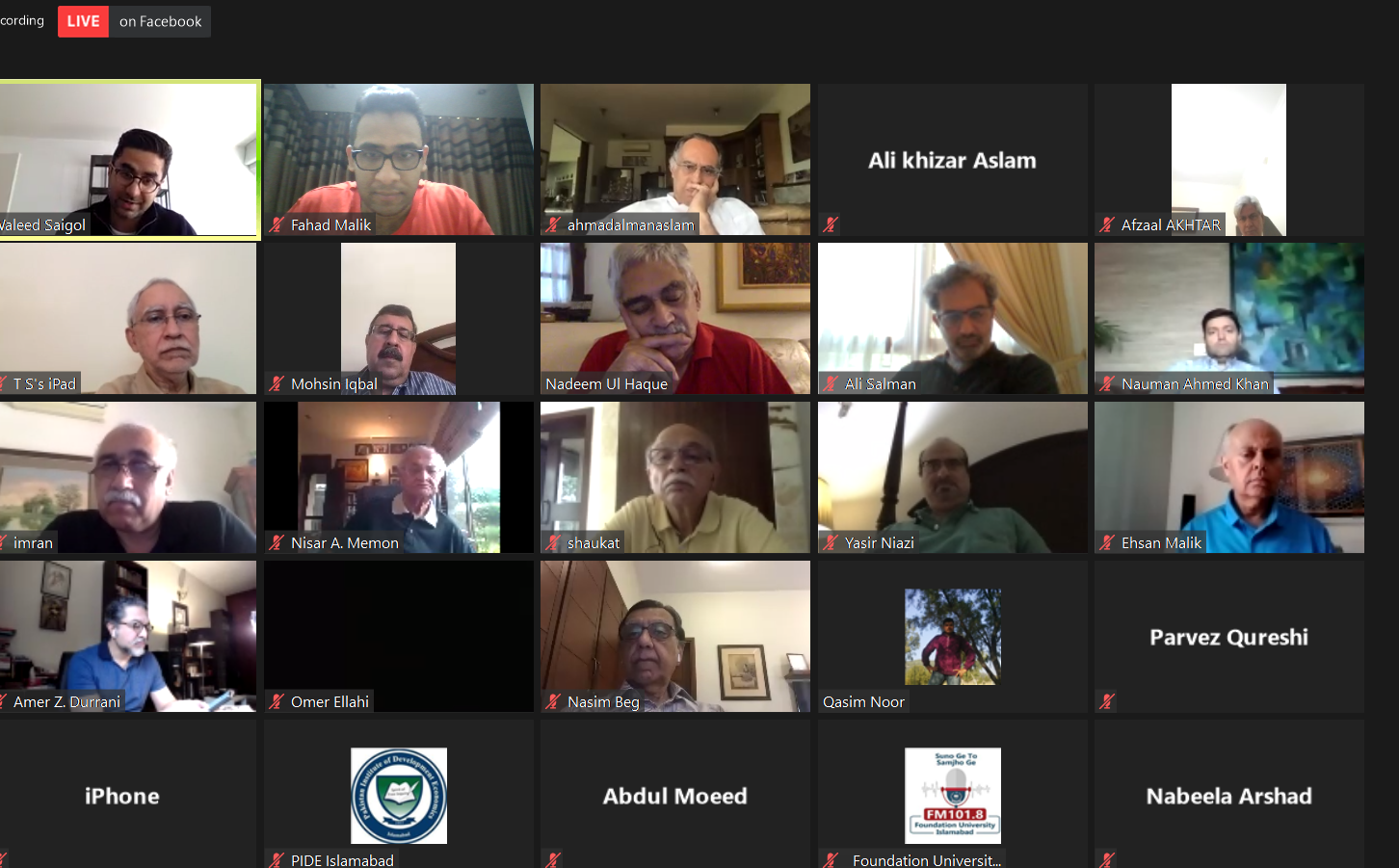
    Speaking at a virtual conference hosted by Pakistan Institute of Development Economics (PIDE) on Thursday, with prominent businessmen, including over a hundred chief executive officers (CEOs) and leaders of the business community, in attendance to discuss “Why Businesses Do Not Grow in Pakistan?”, he said that ironically, Pakistan had developed nuclear bombs under pressure, however, state institutions “didn’t prioritise economic and business growth”.

    “The role of media is also questionable… our news anchors do not bring these issues to the public, besides, we as a nation like to discuss controversies to malign each other. If we want to see business growth in Pakistan, we have to sort out interference by the country’s institutions,” Saigol maintained.

    In response to Saigol, Dr Nadeemul Haq, the vice chancellor of PIDE, said, “Undoubtedly, Pakistan is a talent-repellent state. All our talented people go and serve in big companies around the world rather than working here.”

    While moderating the conference, Dr Haq took the conversation to Alman Aslam, who is a business advisor to local and foreign companies.

    “We need to understand why all this is happening in Pakistan. A businessperson here has to do many things that have nothing to do with business growth, but for the mere survival of his or her company,” Aslam said.

    “Company owners are harassed by corrupt tax collection authorities of Pakistan,” he alleged, adding that it reminded him of centuries-old tax collection practices.

    “The court system is flawed, take a matter to court and you will not get justice in 20 years. Besides, how can private companies excel when the government is intervening in every business? We have authorities like the Lahore Development Authority (LDA) that bully and interfere in the matters of private companies. If you want companies to grow, just allow them to grow.”

    An argument was raised in the discussion that Pakistani businessmen cannot think globally, in response to which Saigol said, “We cannot think globally because we are not allowed to think globally.”

    “The illogical policies of the government don’t let businessmen make viable investments here in Pakistan or anywhere abroad. Similarly, no foreign company will come here to invest. It took Lucky Cement Group two years to send $50 million to Africa to set up their plant,” Saigol added, lamenting that to transfer $1 million, you needed an approval from the State Bank of Pakistan (SBP), and to make a payment of more than $10 million, you needed an approval from the Economic Corridor Committee (ECC).

    “Just imagine the level of regulations here,” he concluded.