Tag: PKR

  • Pakistani rupee witnesses biggest single-day decline against dollar in more than two decades

    Pakistani rupee witnesses biggest single-day decline against dollar in more than two decades

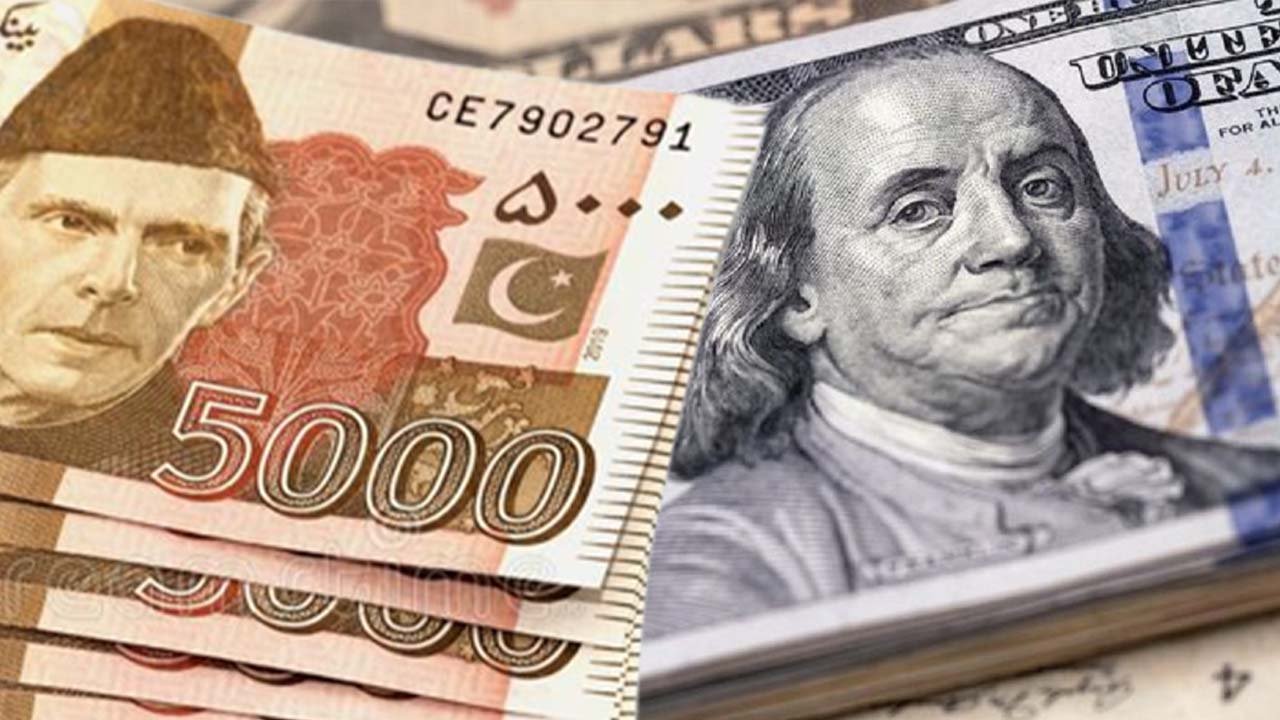
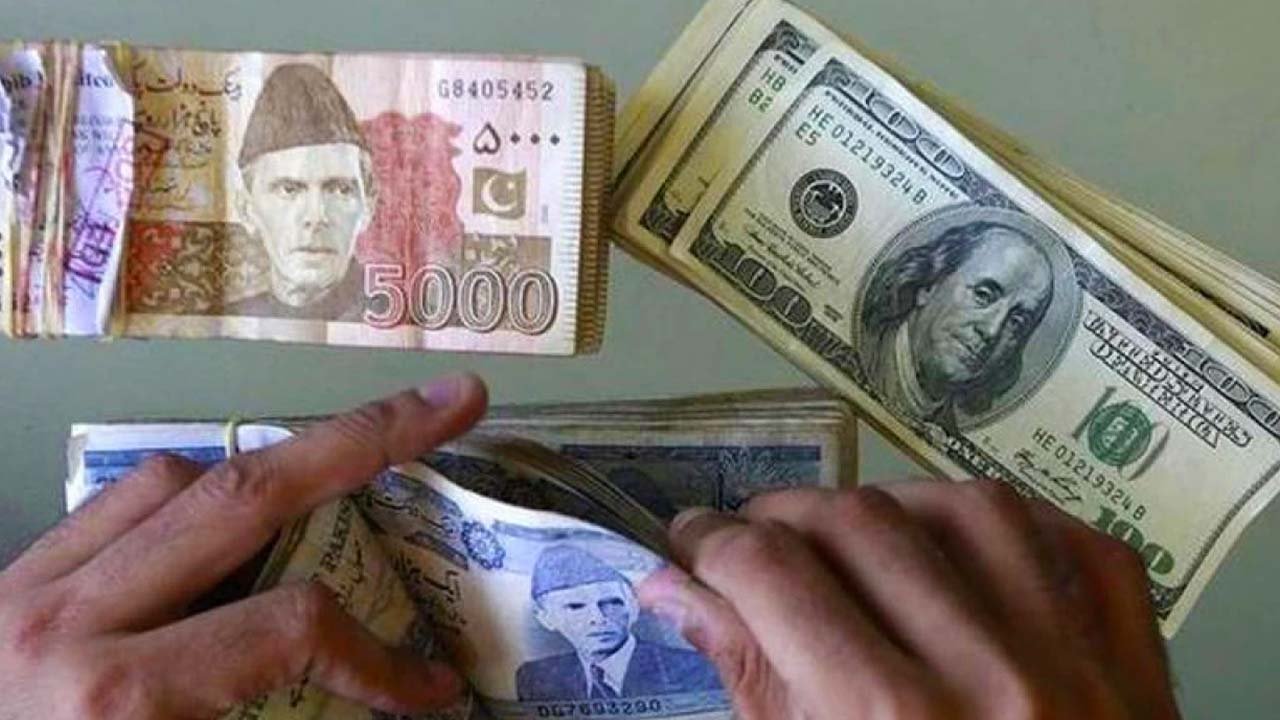
    Pakistani rupee dropped significantly against the US dollar in the interbank market on Thursday, as it fell more than 9 per cent during the intraday trade. Around 1:30 PM, the dollar’s intraday quote was Rs254.75, which represents a depreciation of Rs23.86.

    According to Ismail Iqbal Securities, “This is the largest single-day decline in both absolute and percentage terms, at least since 2000.”

    Earlier in the day the local unit was trading under Rs231.

    Experts predicted that as Pakistan attempted to meet the International Monetary Fund’s (IMF) requirements to renew its bailout programme, the local currency would depreciate significantly in the coming days.

    While speaking to Brecorder, the Head of Research at Ismail Iqbal Securities Limited, Fahad Rauf, said it seems like the rupee has been let go today.

    “This is a market-driven rate,” Rauf said. “This is a sign that we are moving closer to reviving the stalled IMF programme.”

    The market expert said the development was much-needed, as capping the interbank rate only led to the creation of the grey market. He said that the development will improve the greenback supply to a significant extent.

    On Wednesday, the rupee registered a loss for the 26th successive session against the dollar to settle at Rs230.89, a decrease of Re0.49 or 0.21 per cent.

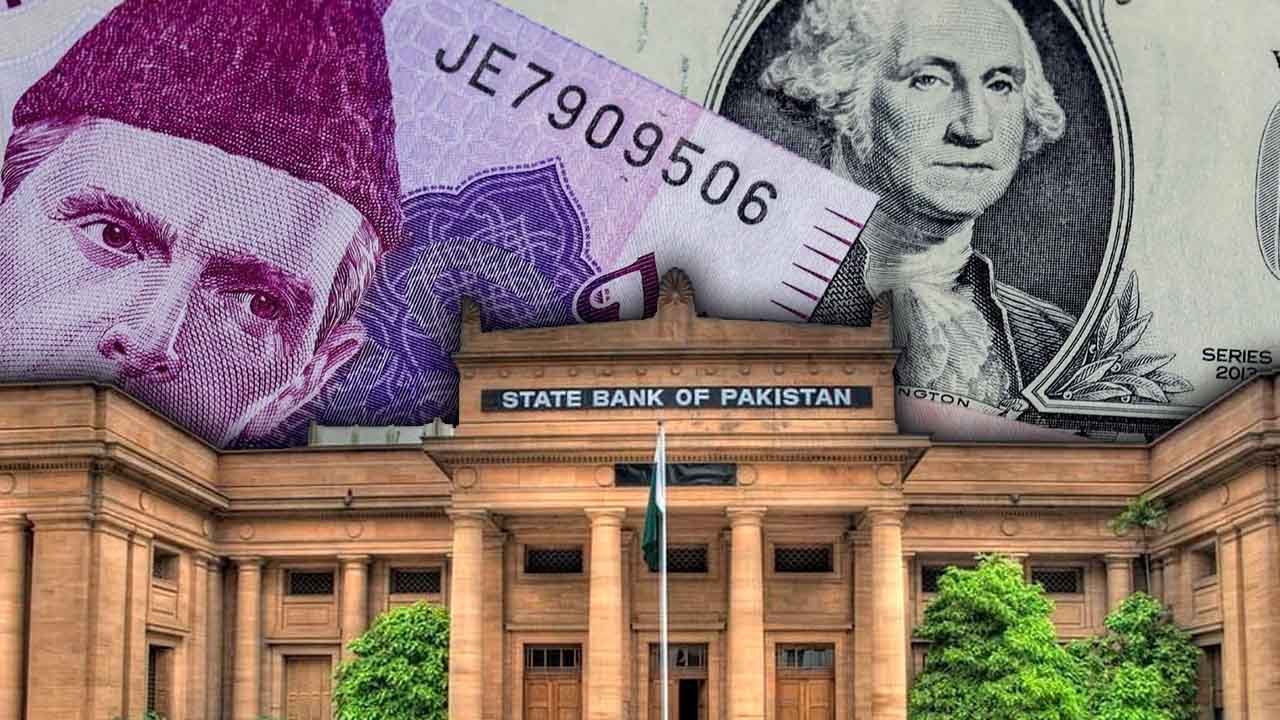
    Pakistani rupee on Thursday fell 9.61 per cent or Rs24.54 to a shocking all-time low of Rs255.43, according to the State Bank of Pakistan (SBP).
  • Pakistani banks start charging dollar transactions at open market rates

    Pakistani banks start charging dollar transactions at open market rates

    Pakistani banks have announced that they will settle debit and credit card transactions made with foreign retailers and websites at the open market exchange rate for the US dollar.

    The conversion rate for the transactions would be calculated by the open market rate in place at the time, which might not match the rate listed on the foreign merchant’s website.

    Customers were advised by the banks in a statement that they could only settle debit or credit card purchases with foreign retailers or websites by buying dollars on the open market. As a result, the conversion rate for these transactions will be determined by the current open market rate.

    The statement, according to bankers, was made in response to several client concerns over the increased exchange rate.

    On Friday, the Pakistani rupee lost Rs0.02 to the US dollar in the interbank market, continuing its downward trajectory.

    The State Bank of Pakistan (SBP) reported that the exchange rate of the local currency for the dollar was Rs227.12. Which shows a 0.01 per cent decline from the close of Rs227.12 on Thursday.

    According to SBP, the Pakistani rupee is valued at Rs227–228 against the dollar. However, in the open market, the greenback is priced above Rs250 and goes as high as Rs275.

  • Experts predict gold price may reach Rs200,000 per tola soon

    Experts predict gold price may reach Rs200,000 per tola soon

    On Wednesday, the price of gold reached another record high as it continued its upward trend. The price of precious yellow metal in Pakistan is currently higher than the global market.

    Gold prices increased by Rs900 per tola and Rs772 per 10 grammes, respectively, according to the All-Pakistan Sarafa Gems and Jewellers Association (APSGJA). These prices now stand at Rs188,600 and Rs161,694 respectively.

    Owing to the Pakistani rupee’s depreciation against the US dollar during the present cycle and the lack of US dollars, traders predict that the price of gold would reach Rs200,000 per tola.

    According to market analysts, the $6–$8 billion inflow from multilateral and bilateral creditors will pop Pakistan’s gold price bubble.

    Silver’s price per tola, however, stayed constant at Rs2,150. The cost of 10-gramme silver remained essentially constant at Rs1,843.27.

    Gold prices increased more than 1 per cent on Wednesday, reaching their highest level since mid-June due to a weaker rupee and mounting predictions that the Federal Reserve will raise interest rates gradually rather than aggressively.

    The markets have now priced in the possibility that the central bank may raise interest rates by a full 50-100 basis points on January 23 after Pakistan’s December inflation data was revealed on Monday.

    Greater interest rates increase the opportunity cost of owning non-yielding metal, despite the fact that gold is regarded as a safe investment during times of uncertainty and a hedge against higher inflation.

  • PKR remains largely stable after Pakistan receives $500 million

    PKR remains largely stable after Pakistan receives $500 million

    Strangely, the Pakistani rupee (PKR) did not increase or decrease at the time of closing on Tuesday. The PKR’s closing rate was Rs223.95 and showed no change from its previous closing rate of Rs223.95.

    The local currency only declined by one paisa on Monday.

    After falling for four straight days, the rupee’s slide against the US dollar came to an end today. The market confidence was bolstered by the Finance Division’s earlier confirmation of receiving $500 million from the Asian Infrastructure Investment Bank (AIIB).

    What do Pakistanis think of the current dollar exchange rate?

    Some Twitter users claim that the government is controlling exchange rates, which will harm the economy in the long run since exporters are reluctant to accept payments made through banking channels and question why they should sell dollars to banks for less when the open market price is more than Rs250.

    The daily dollar rate announcement from SBP, according to a Twitter user, has lost all relevance because “the rate is controlled and not determined by market forces. The hefty difference between the interbank rate and the open market rate proves the point.”

  • Pakistani rupee continues to fall against USD for the third consecutive session

    Pakistani rupee continues to fall against USD for the third consecutive session

    For the third session in a row, the Pakistani rupee lost 97 paise in the interbank market on Friday as it fell against the dollar.

    The local currency depreciated by 0.44 per cent from yesterday’s finish of Rs221.5 to settle at Rs222.47 per dollar, according to the State Bank of Pakistan.

    Data gathered by Mettis Global show that the value of the PKR has decreased by Rs16.64 or 7.52 per cent since the beginning of this fiscal year.

    This week’s first day saw the sovereign default risk rise to its highest level since November 2009. On October 25, the country’s five-year credit default swap (CDS), which functions as a form of insurance against the risk of sovereign default, climbed by more than three per centage points, reaching 52.8pc, a 13-year high.

    Investors’ decreasing confidence in Pakistan’s capacity to repay its international loans is reflected in the growing CDS level.

  • 4th consecutive decline: PKR drops by 46 paisas to Rs218.89

    4th consecutive decline: PKR drops by 46 paisas to Rs218.89

    The Pakistani Rupee (PKR) lost ground against the US Dollar (USD) today, reversing last week’s gains.

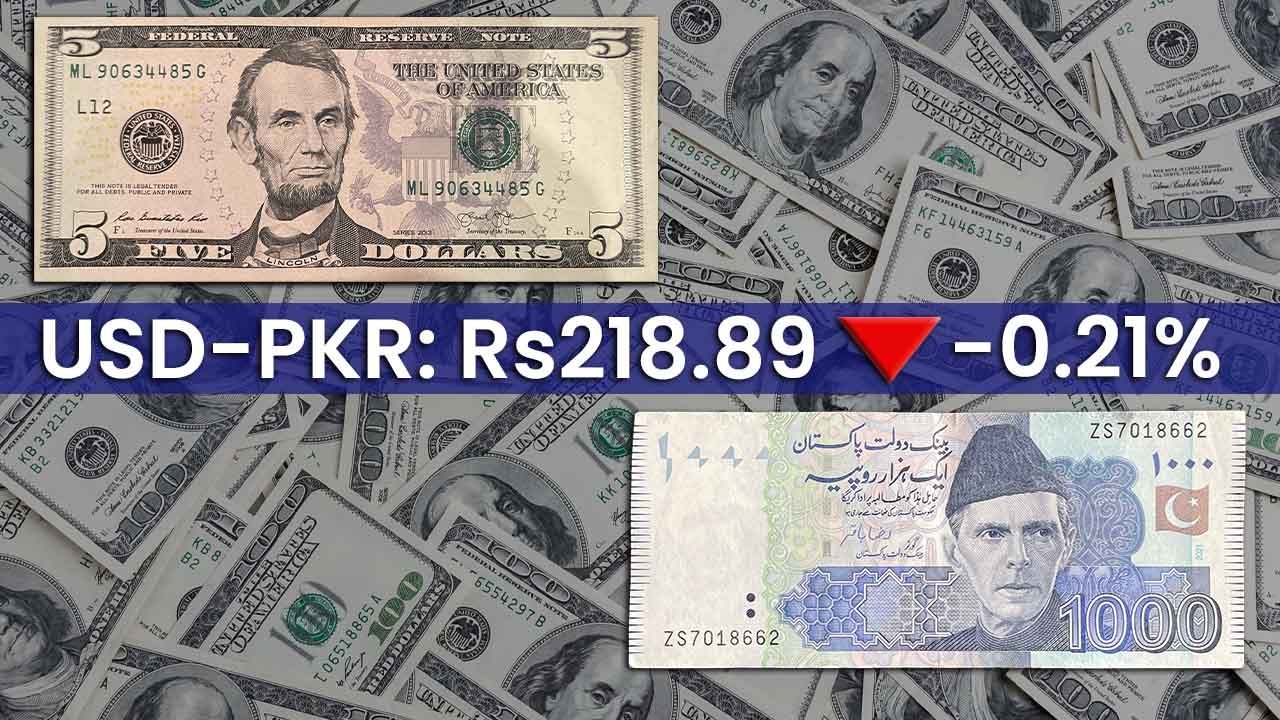
    The local unit fell 0.21 per cent against the US dollar today, closing at Rs218.89 after losing 46 paisas in the interbank market. During today’s open market session, the rupee hit an intraday low of Rs219.500 against the US dollar.

    When trade resumed against the greenback, the local unit was all red and opened trade at Rs219.00 in the open market. By midday, the dollar had risen to Rs219.25 against the rupee. After 2 pm, the local currency remained in the red and remained at Rs218 against the top foreign currency before the interbank close.

    Today was the fourth consecutive day that the rupee fell against the US dollar. Money changers are sceptical of a PKR recovery unless the government enacts stringent policies to combat the forex slowdown.

    According to one regular trader, the market is also reacting to Imran Khan’s Pakistan Tehreek-e-Insaf (PTI) winning six National Assembly seats in a by-election on Sunday, which was viewed as a direct contest between the former ruling party and the current ruling coalition.

    While the market watches for any changes in monetary policy, the local unit is expected to fall further against the dollar. The State Bank of Pakistan (SBP) has begun clearing importers’ letters of credit (LCs), but money changers say the process could be put on hold if another shortage hits the dollar aisle in the coming days.

  • Pakistani rupee continues to rise for 13th consecutive session

    Pakistani rupee continues to rise for 13th consecutive session

    The Pakistani rupee is strengthening versus the US dollar in the interbank market and increased by more than 0.4 per cent on Tuesday morning.

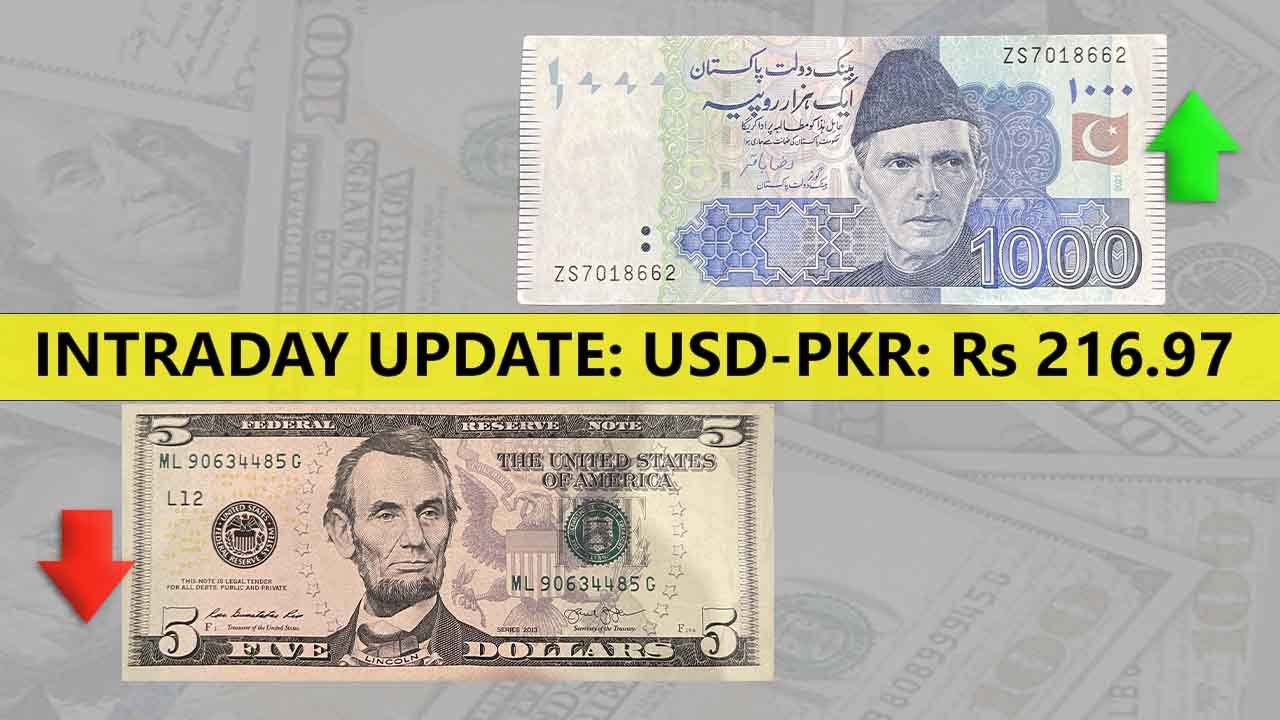
    During intra-day trading, the rupee was quoted at Rs216.97 at around 10:40 am, up Rs1 or 0.46 per cent against the US dollar.

    On Monday, the rupee continued its upward trend against the US dollar for the 12th straight session and appreciated Rs1.95 or 0.89 per cent to settle at Rs217.97.

    The Monetary Policy Committee (MPC) of the central bank maintained its benchmark policy rate at 15 per cent on Monday, which was a significant development.

    However, market observers attribute the rupee’s recent increase to the central bank and other authorities’ efforts to curb market speculation.

    According to Brecorder, the United Nations Development Programme issued a grim warning on Tuesday, stating that there was a debt problem that was rapidly worsening in a number of developing countries, including Pakistan.

    Without prompt assistance, the poverty rate in at least 54 countries would increase, according to UNDP, and “critical investments in climate adaptation and mitigation will not happen.”

    Sri Lanka, Pakistan, Tunisia, Chad, and Zambia are the nations most at risk right now, according to UNDP head economist George Gray Molina.

    In other countries, the dollar loomed big over precarious financial markets on Tuesday, worrying investors with concerns about rising interest rates, global growth, and geopolitical tensions.

    The 20-year high of Rs114.78 that it reached late last month was not far away; the US dollar index was up 0.053 per cent at Rs113.12 at the time.

    An increase in COVID-19 cases in China and a stronger US dollar contributed to Tuesday’s decline in oil prices, a major measure of currency parity, as they sparked worries about a faltering global economy.

  • Pakistani rupee gains Rs2 to close at Rs221.94

    Pakistani rupee gains Rs2 to close at Rs221.94

    On Thursday, the Pakistani rupee (PKR) strengthened by Rs2 or 0.90 per cent against the dollar to close at Rs221.94.

    According to the Forex Association of Pakistan (FPA), the local currency was trading at Rs221.75 per $1 at 9:46 am, up 0.98 per cent from yesterday’s close of Rs223.94.

    The rupee has been strengthening since September 22, when it nearly hit an all-time low of Rs239.71. In the last nine sessions, it has increased by Rs15.77 or 6.58 per cent.

    The State Bank of Pakistan’s (SBP) and finance ministry’s joint investigation into banks making obscene profits from their dollar sales, according to Mettis Global Director Saad bin Naseer, has calmed the interbank market.

    SBP On Tuesday, Governor Jameel Ahmad told a National Assembly committee that eight banks were under investigation for the initial round of currency rate manipulation. In the following stage, the other banks would be looked into.

    He said that a smaller trade deficit in September and the Asian Development Bank’s (ADB) pledge of approximately $2.3–2.5 billion in aid were the key reasons for the rupee’s recovery on the open market.

    FAP Chairman Malik Bostan listed the ADB announcement and hopes of a sustained drop in imports as the factors that contributed to the rupee’s rise.

  • 8 prominent banks under investigation for involvement in exchange rate manipulation: SBP

    8 prominent banks under investigation for involvement in exchange rate manipulation: SBP

    On Tuesday, Jameel Ahmad, the governor of the State Bank of Pakistan (SBP), told the National Assembly’s Standing Committee on Finance and Revenue that inquiries had been initiated against eight banks for their alleged involvement in exchange rate manipulation.

    According to Ahmad, the first part of the investigation focused on Bank Al Habib, Habib Bank Limited (HBL), National Bank of Pakistan (NBP), Meezan Bank Limited, United Bank Limited (UBL), Allied Bank Limited (ABL), and Standard Chartered. The name of eighth bank was not disclosed.

    He told the tribunal that ABL, NBP, and Standard Chartered had each received show-cause warnings. The governor continued by saying that in the following stage, the other banks will be looked into.

    The committee’s chairman, MNA Qaiser Ahmad Sheikh, gave SBP instructions to take the proper action against all banks and exchange firms implicated in the manipulation of the currency rate during today’s meeting.

    According to a news release from the National Assembly Secretariat, he requested that the central bank assess the severity of the violations by both parties and take the necessary action to ensure that nobody “has the audacity to play with the economy of the country.”

    According to Dawn, the committee believed that the banks made enormous profits during the recent volatility in the exchange rate and the differential between the interbank rate and the rate provided by exchange providers.

    Ahmad has told the committee that after the investigation is complete, anyone who violated the rules will be punished.

    Members of the Committee, the Secretary of Finance, the Chairman of the FBR, the Governor of the State Bank, and other senior executives from the relevant agencies attended the meeting of the Committee.

    Prior to this, Dawn claimed that banks had quadrupled their purchases of US money and were using credit cards to move it outside as the government struggled to stop dollar withdrawals.

    In a media interview the next week, Finance Minister Ishaq Dar declared that manipulating the exchange rate would not be permitted.

    Dar stated that the rupee is now not in the proper position and added that he was aware of some speculators who were playing this game and advised them to quit right away.

  • US dollar will go below Rs200 in coming months, says Ishaq Dar

    US dollar will go below Rs200 in coming months, says Ishaq Dar

    Finance Minister Ishaq Dar said on Monday that the actual worth of the US dollar is less than Rs200 and that the Pakistani rupee (PKR) will strengthen in the coming months with the correct policy measures.

    Dar predicted that eventually, the value of the US dollar will go below Rs200 while speaking on the Geo News show Capital Talk.

    According to Geo, the minister stated that the local currency value had been manipulated and threatened speculators with harsh punishment. He noted that the British pound just hit an all-time low against the dollar but added that the rupee will strengthen since it is currently undervalued despite the growth of the US currency.

    It is important to note that the Pakistani rupee strengthened today in relation to the US dollar by 0.51 per cent, closing at Rs227.29 after gaining Rs1.16 in the interbank market. The rupee has risen against the dollar for seven days running.

    It is important to note that after Ishaq Dar was appointed finance minister, currency speculation seems to have decreased.