Tag: PKR

  • PSX witnesses recovery as KSE-100 index surpasses 41,000-mark

    PSX witnesses recovery as KSE-100 index surpasses 41,000-mark

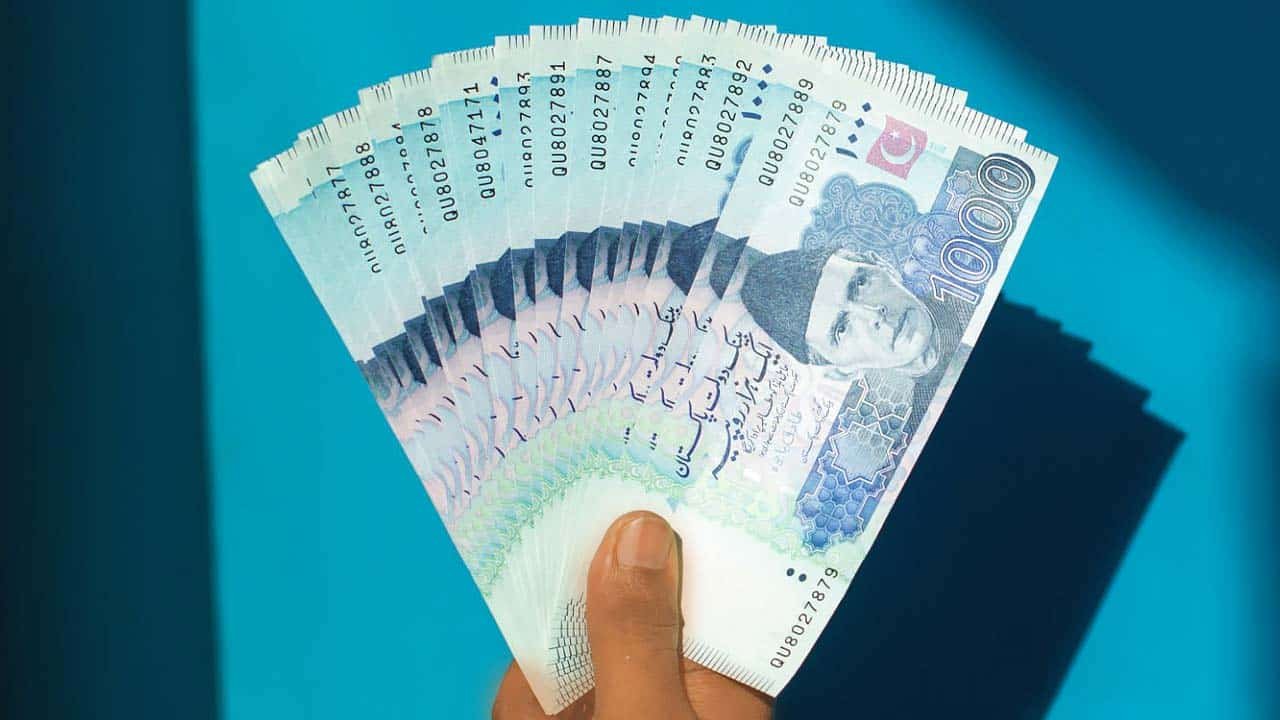
    The week started off well for shares at the Pakistan Stock Exchange (PSX), with analysts attributing the rise to the Pakistani rupee’s robust rebound, which was supported by a drop in global oil prices.

    By 10:45 AM, the benchmark KSE-100 index had risen 411 points, or 1.01 per cent, to 41,031 points.

    The PSX had optimistic activity in early trade, according to Ahsan Mehanti of Arif Habib Corporation, as a result of a higher rupee and the impending appointment of a new finance minister, which is expected to stabilise economic uncertainties.

    At 10 AM, the Pakistani rupee was trading at Rs235.5 per US dollar, up Rs4.15 from earlier today.

    Furthermore, Ishaq Dar is scheduled to return to Pakistan today and take charge as Pakistan’s finance minister. Senior PML-N officials met Miftah Ismail on Sunday after he submitted his resignation. Dar’s appointment as finance minister was announced by Nawaz Sharif and PM Shehbaz, according to a statement issued following the meeting.

    Amir Shehzad, the director at First National Equities Limited, concurred with Mehanti’s assessment, stating that the sentiment that built in anticipation of Dar’s return and the optimism that the situation would get under control was the main driver of the index’s advances and a reason for increased investor confidence.

    The industry with the greatest potential to raise the index’s point total, according to Shehzad, is cement.

    Raza Jafri, Head of Research at Intermarket Securities, stated that the KSE-100 was recovering as a result of a number of factors, including lower oil prices, the West’s apparent willingness to consider Pakistan’s requests for debt restructuring, and the belief that Senator Dar might be able to control the PKR.

    No negative political developments over the weekend are also fostering positive sentiments, he continued.

    In light of the terrible floods, which are estimated to have cost $30 billion in losses, PM Shehbaz had last week made a plea to the globe and wealthy nations for an immediate debt relief.
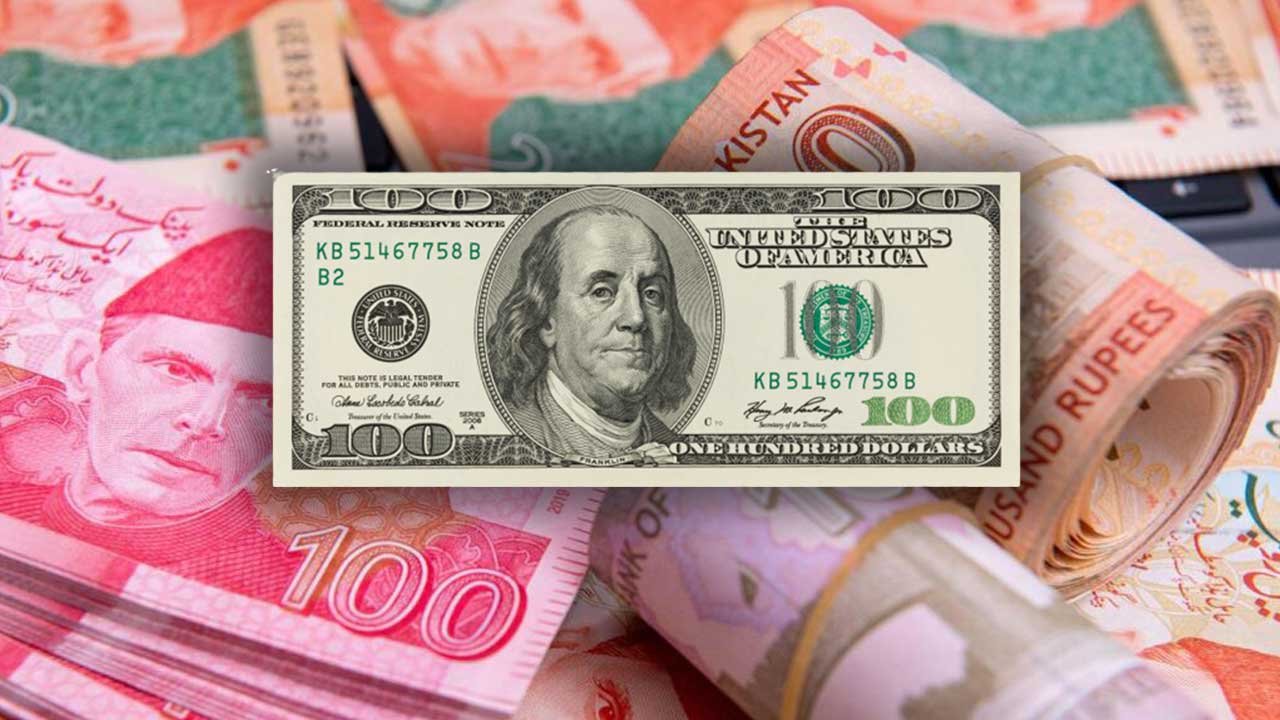
  • Pakistani rupee makes strong recovery against dollar during intraday trade

    Pakistani rupee makes strong recovery against dollar during intraday trade

    In the first hours of trading on Monday, the Pakistani rupee advanced significantly versus the US dollar, rising by more than 1.5 per cent.

    In intraday trade, the rupee appreciated by Rs3.66 (1.6 per cent), or around 10:30 am, to Rs235.99 against the US dollar.

    The local unit fared somewhat better the week before after the US Federal Reserve announced raising the main interest rate, ending the week 1.2 per cent weaker versus the US dollar.

    Before eventually snapping a 15-session losing streak to settle at Rs239.65 on Friday, the rupee lost value in four of the five sessions, edging perilously close to its all-time low in the inter-bank market.

    However, Monday’s triumph is the result of political development. Miftah Ismail, the Federal Minister of Finance and Revenue, stated in a statement on Sunday that he will submit his formal resignation after orally resigning at a party meeting in London.

    Ishaq Dar, a senior PML-N leader, would take Miftah’s post as finance minister.

    Dar is largely seen as an advocate for a higher rupee, and experts claim that since he was appointed finance minister, markets have tended to be optimistic on the local currency.

    Furthermore, in another significant step, the nation’s central bank on Friday prohibited ECs for cash sale transactions of $2,000 and above in order to further improve the regulatory regime for Exchange Companies (ECs) and promote the use of banking channels.

    According to the SBP’s new guidelines, ECs must now complete all foreign currency selling transactions against PKRs totaling $2,000 or more through banking channels.

  • Pakistani rupee inching towards all-time low once again

    Pakistani rupee inching towards all-time low once again

    In the first hours of trade on Tuesday, the Pakistani rupee (PKR) fluctuated between Rs238 and Rs239 as it lost value versus the US dollar in the interbank market.

    During intra-day trade at roughly 10:20 am, the rupee was quoted at Rs237.99, a devaluation of Rs0.08 or 0.03 per cent versus the greenback.

    In the interbank market on Monday, the local currency fell for the 12th straight session to end at Rs237.91 as pressure on the currency increased due to the expectation of a higher import bill and the globally strong dollar.

    The PKR has continued to lose value after receiving the IMF tranche of $1.2 billion at the beginning of September and has not yet seen a positive session this month.

    According to experts, the country’s borrowing requirements would rise in the wake of the devastating flash floods, which will also boost the cost of imports. As floods destroy standing crops in Sindh and lower Punjab, the country’s borrowing requirements may rise further in the near future.

  • Pakistani rupee crashes against US dollar for 11th day in a row

    Pakistani rupee crashes against US dollar for 11th day in a row

    For the eleventh session in a row, Pakistan’s rupee has lost value versus the US dollar, falling 0.41 per cent on Friday in the interbank market as the dollar gained momentum throughout the world and investors’ concerns about the increasing trade imbalance intensified.

    The rupee dropped by Rs0.96, according to the State Bank of Pakistan (SBP), and ended the day at Rs236.84. The rupee has lost Rs18.24, or 7.7 per cent, overall over the last 11 trading sessions against the US dollar.

    In the interbank market on Thursday, the Pakistani rupee declined against the US dollar for the tenth straight session as investors expected funding from allies and foreign creditors. It ended the day down 0.66 per cent at Rs235.88.

    The local currency increased in value last month as a result of Pakistan fulfilling all previous IMF requirements, which allowed the programme to resume. This development enabled Pakistan to receive $1.17 billion under the Extended Fund Facility (EFF).

    The local currency has recently, however, been under intense pressure once more and is currently hovering close to its all-time low as funding anticipated from allies has not yet materialised.

    Additionally, the State Bank of Pakistan’s (SBP) foreign exchange reserves decreased by $176 million, reaching $8.62 billion as of September 9, 2022, according to information made public on Thursday.

    According to the SBP, the nation possessed $14.32 billion in liquid foreign reserves. Commercial banks held $5.7 billion in net foreign reserves.

    Globally, the dollar remained close to recent highs on Friday as Treasury yields rose and the demand for the currency persisted on expectations that the Federal Reserve would need to raise rates further to control inflation.

    The US dollar index, which compares the value of the dollar to a basket of other currencies, increased to Rs109.69, which is not far from its two-decade high of Rs110.79.

    In the meantime, oil prices—a crucial factor in determining currency parity—were largely stable on Friday, but they were headed for a weekly decrease due to worries about sudden interest rate hikes that would likely slow global economic growth and fuel demand.

  • Pakistan continues to face liquidity crunch despite IMF programme’s revival

    Pakistan continues to face liquidity crunch despite IMF programme’s revival

    Even though the International Monetary Fund (IMF) programme has resumed after a seven-month hiatus, Pakistan continues to struggle with a major dollar liquidity crunch as the catastrophic floods have exacerbated the macroeconomic conditions.

    According to Geo, since many politicians and economists advocated for Pakistan to ask the IMF for a Rapid Financing Instrument (RFI) or Natural Calamity Response-related Funding Facility, the Pakistani government has not yet submitted a new request in anticipation of the Washington-based international lender’s unenthusiastic response.

    After being put on hold in February 2022 by the previous PTI-led government’s provision of unfunded fuel and energy subsidies, the IMF project under $6.5 billion was restarted in late August.

    Since then, there has been pressure on Pakistan’s currency; nevertheless, the recent devastating floods have hurt the economy, contrary to what experts had anticipated would happen with the restart of the IMF programme.

    The rupee has dropped 9 per cent against the US dollar in recent days due to intense pressure on the currency rate.

    According to reports, the issue has gotten worse as demand for imports has multiplied and there are not enough dollars in the country. Pakistan’s macroeconomic risks are not going away without greater dollar inflows.

    The early estimates of damages have now increased to almost $18 billion as a result of the severe flooding, with Pakistan’s agriculture industry taking the biggest hit.

    The worst agricultural performance will put pressure on rising import demand for commodities, and if Pakistan cannot attract the appropriate levels of dollar inflows, food shortages may occur in the ongoing financial year.

    In contrast to the projected aim of 3.9 per cent for the current fiscal year 2022–2023, the agriculture growth could remain zero or perhaps turn negative.

  • IMF report exposes incorrect PTI policies that led to rupee’s devaluation

    IMF report exposes incorrect PTI policies that led to rupee’s devaluation

    The International Monetary Fund (IMF) has issued its country report for Pakistan, exposing erroneous policies implemented by the PTI administration that, according to the Fund, undermined the country’s currency reserves and led to the rupee’s devaluation.

    The study also discloses what the present administration, led by the PML-N, has promised the international lender, according to Samaa.

    The study does not identify any political party, but it does mention rising GDP, which the PTI has said is the outcome of its policies. Pakistan’s GDP increased by 6 per cent in fiscal year 2021-22 (FY22), which ended less than three months after Imran Khan was overthrown by parliament in early April.

    According to experts, the increase in GDP was driven by unsustainable expansion, which resulted in economic overheating. The IMF study comes to the same conclusion.

    According to the Fund, GDP growth in FY22 was “driven by permissive fiscal policy and a delayed monetary reaction to inflationary pressures.”

    These factors, together with worldwide food and fuel price shocks, resulted in a major worsening of the external situation, including an unsustainable current account deficit, a considerable decrease in reserves, and a significant devaluation of the rupee.

    The PTI administration failed to respond to the worldwide commodity price increase, and its policies caused the rupee to depreciate and currency reserves to dwindle, according to the international lender.

    Pakistan is at a crossroads in its economic development. Internal demand reached unsustainable levels as a result of a challenging external environment paired with procyclical domestic measures. According to the IMF, the resulting economic overheating resulted in high fiscal and external deficits in FY22, contributed to increasing inflation, and destroyed reserve buffers.

    The PTI administration broke its pledges quickly after collecting roughly $1 billion from the IMF. Following the completion of the sixth evaluation, programme implementation worsened. In the midst of a volatile political scene, planned fiscal adjustment was reversed, and some significant EFF agreements were honoured, as per the report.

    According to the report, the present administration has informed the Fund that it would reimpose the general sales tax (GST) on petroleum products and will not provide any fuel subsidies.

    The current administration will not declare a tax amnesty unless Parliament first approves it. It will also simplify the sales tax on services throughout the country. Currently, different provincial territories apply varying rates of sales tax on services.

    The Fund takes notice of the actions implemented by the PML-N administration to re-establish the IMF programme, including a budget based on a basic surplus, a rise in interest rates, and the elimination of fuel subsidies.

    The IMF has advised the government to maintain a market-based currency rate, enhance tax income, and strengthen foreign reserves. The IMF also said that the lending programmes entail exceptional risks even after policy adjustments.

  • Honda reduces car prices to pass on the forex impact

    Honda reduces car prices to pass on the forex impact

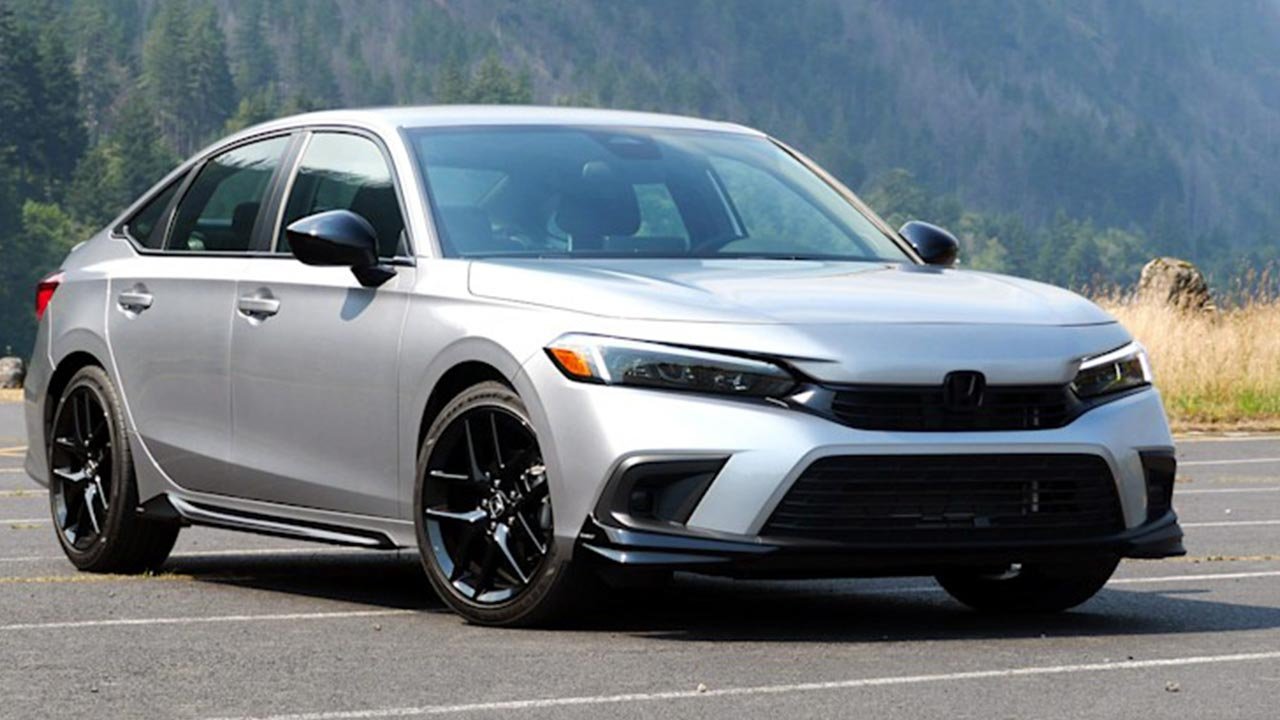
    Honda Atlas Cars Limited (HACL) has reduced the prices of its entire lineup, like its rival Toyota.

    According to a notification from the automaker, the latest price reduction is an outcome of the Pakistani rupee’s strengthening versus the US dollar, and the company wants to pass on the forex impact to its “valued” customers.

    Here are the new prices of Honda cars in Pakistan, effective from August 17:

    Model  Old invoice New price Decrease
    City Manual 1.2L Rs4,049,000 Rs3,769,000 Rs280,000
    City CVT 1.2L Rs4,199,000 Rs3,899,000 Rs300,000
    City CVT 1.5L Rs4,439,000 Rs4,139,000 Rs300,000
    City Aspire Manual 1.5L Rs4,609,000 Rs4,299,000 Rs310,000
    City Aspire CVT 1.5L Rs4,799,000 Rs4,479,000 Rs320,000
    BR-V CVT S Rs5,299,000 Rs4,939,000 Rs360,000
    Civic 1.5L M CVT Rs6,799,000 Rs6,349,000 Rs450,000
    Civic 1.5L Oriel M CVT Rs7,099,000 Rs6,599,000 Rs500,000
    Civic RS 1.5L LL CVT Rs8,099,000 Rs7,549,000 Rs550,000
    Honda Cars Latest Price List – August 2022

    Despite the most recent drop, the ‘cheapest’ Honda car still costs more than Rs3.7 million, making it out of reach for low-income individuals.

  • Toyota announces price cut for all vehicles

    Toyota announces price cut for all vehicles

    Toyota Indus Motor Company (IMC) has announced a reduction in car prices after the Pakistani rupee’s spectacular comeback against the US dollar.

    It is worth mentioning that Toyota had increased car prices up to Rs3.16 million less than two weeks ago.

    The latest car prices for Toyota’s Completely Knocked Down (CKD) units are listed below:

    Vehicle Old Price New Price Reduction
    Toyota Yaris
    Yaris 1.3 Gli M/T Rs3,799,000 Rs3,539,000 Rs260,000
    Yaris 1.3 Gli CVT Rs4,039,000 Rs3,769,000 Rs270,000
    Yaris 1.3 ATIV M/T Rs3,999,000 Rs3,729,000 Rs270,000
    Yaris 1.3 ATIV CVT Rs4,209,000 Rs3,929,000 Rs280,000
    Yaris 1.5 ATIV X M/T Rs4,309,000 Rs4,009,000 Rs300,000
    Yaris 1.5 ATIV X CVT Rs4,569,000 Rs4,259,000 Rs310,000
    Toyota Corolla
    Corolla Altis 1.6 M/T Rs4,899,000 Rs4,569,000 Rs330,000
    Corolla Altis 1.6 A/T Rs5,139,000 Rs4,789,000 Rs350,000
    Corolla Altis SE 1.6 A/T Rs5,639,000 Rs5,279,000 Rs360,000
    Corolla Altis 1.8 CVT Rs5,679,000 Rs5,269,000 Rs410,000
    Corolla Altis 1.8 Grande CVT Beige Interior Rs6,149,000 Rs5,709,000 Rs440,000
    Corolla Altis 1.8 Grande CVT Black Interior Rs6,189,000 Rs5,749,000 Rs440,000
    Toyota Hilux Revo
    Hilux Revo G 2.8 M/T Rs9,819,000 Rs9,169,000 Rs650,000
    Hilux Revo G 2.8 A/T Rs10,299,000 Rs9,609,000 Rs690,000
    Hilux Revo V 2.8 A/T Rs11,349,000 Rs10,599,000 Rs750,000
    Hilux Revo Rocco Rs11,999,000 Rs11,179,000 Rs820,000
    Toyota Fortuner
    Fortuner G A/T Rs12,489,000 Rs11,579,000 Rs910,000
    Fortuner V A/T Rs14,279,000 Rs13,259,000 Rs1,020,000
    Fortuner Sigma 4 A/T Rs15,069,000 Rs13,969,000 Rs1,100,000
    Fortuner Legender Rs15,839,000 Rs14,699,000 Rs1,140,000
    Toyota cars latest price list effective from 16 August 2022

    The automaker decreased the price of Corolla variants by Rs330,000-Rs440,000. The price of the Corolla 1.6 manual model was reduced by Rs330,000, from Rs4.899 million to Rs4.569 million. After a reduction of Rs350,000, the Corolla 1.6 automatic model is now priced at Rs4.789 million.

    Similar reductions were made in the price of Yaris variants, which were reduced between Rs260,000 and Rs310,000. The Yaris 1.5 CVT received the largest price reduction in the aforementioned category, falling by Rs310,000 to a new price of Rs4.259 million from its previous price of Rs4.569 million.

    The price of Hilux Revo was reduced between Rs650,000 to Rs820,000. While the invoice of Revo V AT Rocco dropped from Rs11.999 million to Rs11.179 million, the cost of Revo G MT reduced from Rs9.819 million to Rs9.169 million.

    Read more: Cheapest new cars to buy in Pakistan

    IMC also reduced the prices for the Fortuner models between Rs910,000 and Rs1.14 million.

    After a drop of Rs910,000, the Toyota Fortuner Lo Petrol variant is now offered for Rs11.579 million. The Fortuner Diesel Legender model witnessed a major price decrease, dropping from Rs15.839 million to Rs14.69 million.

  • Rupee gets stronger by Rs2.11 to close at Rs224.04 against US dollar

    Rupee gets stronger by Rs2.11 to close at Rs224.04 against US dollar

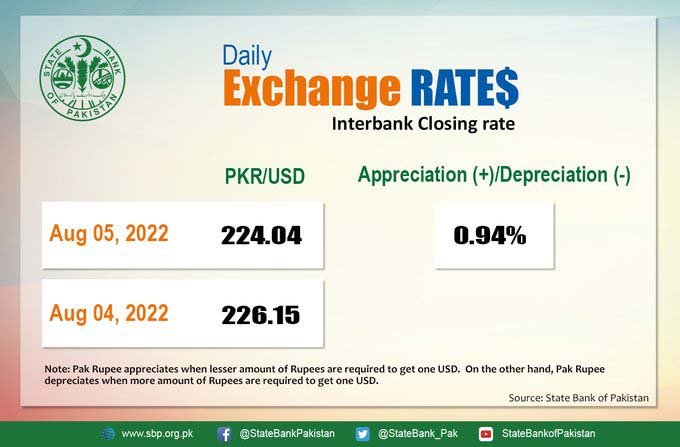
    During intraday trade on Friday in the interbank market, the Pakistani rupee (PKR) climbed by Rs2.11 against the US dollar for the sixth session in a row.

    In the course of the day’s trading, the local currency gained Rs2.11 or 0.94 per cent versus the dollar and closed at Rs224.04, down from Thursday’s closing of Rs226.15.

    Dollar to PKR rate – Friday 8 August 2022

    At yesterday’s closing, the rupee marginally increased by Rs2.65 or 1.17 per cent.

    Following the government’s austerity measures, which caused a sharp rise in inflation but also prevented the nation’s economy from collapsing, the rupee has been on the upswing.

    On Wednesday, PKR increased by Rs9.58 against the US dollar, the local currency saw a significant gain. The biggest one-day rise since 1999, it grew by 4 per cent.

    In his speech at an event at the Pakistan Stock Exchange (PSX), Finance Minister Miftah Ismail said that if the nation can manage imports, exports may be increased through a number of strategies.

    After the coalition partners made unpopular decisions, Miftah stated Pakistan was “on the right track” and that the pressure on the rupee will continue to lessen in the days ahead as it strengthened against the dollar.

  • Gold price drops by Rs8,600 per tola as rupee strengthens

    Gold price drops by Rs8,600 per tola as rupee strengthens

    The price of 24 karat gold decreased by Rs8,600 per tola and Rs7,373 per 10 grams to settle at Rs145,300 and Rs124,571, respectively, in the local market, according to figures released on Wednesday by All Sindh Sarafa and Jewellers Association (ASSJA).

    The latest decrease was in accordance with what the traders anticipated that the market would correct itself after achieving fresh heights in earlier sessions.

    On July 28, the price of a tola of gold rose to an all-time high of Rs162,500.

    The local currency made a significant comeback against the US dollar, rising by nearly Rs9 or 4 per cent, which diminished the shine of the precious metal.

    In the last three sessions, the price of gold has fallen by a total of Rs14,300 per tola, from Monday to Wednesday.

    Read more: Pakistan rupee appreciates Rs9.58 against US dollar, closes at Rs228.8

    Compared to Dubai, the price of gold in Pakistan is Rs2,000 per tola less.

    Bullion prices also fell $14 per ounce to close at $1,766 on the global market.