Tag: play store

  • WhatsApp to introduce biometric chat locks for enhanced privacy and security

    WhatsApp to introduce biometric chat locks for enhanced privacy and security

    A number of Android OS skins from prominent brands such as Xiaomi offer app lock capabilities, whereby individual apps require authentication to gain access, sometimes by way of biometric verification.

    Stock Android can also be endowed with this feature by utilising various apps accessible on the Play Store, though their reliability can be called into question. Given the confidential nature of WhatsApp conversations, Meta’s ongoing development of a per-chat biometric lock embedded into the app is a positive move in the right direction.

    For an app that is advertised as having a strong focus on privacy and security, the absence of in-app biometric authentication options is highly noticeable. Luckily, according to WABetaInfo, the latest WhatsApp beta update available on the Play Store (v2.23.8.2) gives indications of a new feature being developed. This feature will allow users to lock individual chats using either a passcode or fingerprint, even though only the latter’s toggle is visible. It is suspected that the fingerprint unlock will require a passcode to be set up as a backup.

    Screenshots imply that it will be possible to lock sensitive group chats from the group info section. It also appears that all locked chats will be relocated to a vault-like space, separated from regular chats, hence requiring authentication only once. While it isn’t apparent from the shared screenshots, WABetaInfo reports that WhatsApp will erase the chat if users wish to unlock it by force, such as in the event of forgetting the passcode.

    There is little information available about how notifications for these chats will be displayed, what will happen to the media in the conversations, and how many chats can be locked. WhatsApp is one of the most well-known encrypted messaging apps in existence, yet it is not at the forefront of this feature. For instance, Telegram has allowed passcode or fingerprint unlocking since around 2018, but it is for the app as a whole rather than individual chats. It is somewhat perplexing why WhatsApp has not followed this path.

  • WhatsApp to replace phone numbers with usernames for identifying unknown contacts in group chats

    WhatsApp to replace phone numbers with usernames for identifying unknown contacts in group chats

    According to WaBetaInfo, the Meta-owned messaging platform WhatsApp is developing a new feature that will simplify the identification of messages received from unknown contacts in WhatsApp group chats.

    The latest WhatsApp beta for Android 2.23.5.12 update has been released by the instant messaging app, which enhances the functionality introduced in December 2022 by swapping numbers with push names in the message bubble of group chats.

    As per the report, a push name will be shown every time a user receives a message from an unknown contact in a group chat, rather than the mobile number, in the chat list. This change makes it easier for the recipient to recognize who the unknown contact is without having to save the number as a new contact.

    This is particularly useful in large group chats where identifying unknown group members can be difficult. The push name may even appear instead of the phone number in different sections of the app, such as the group participants list.

    The new feature has also been made available to some iOS beta testers after installing the WhatsApp beta for iOS 23.5.0.73 update. The report notes that the new feature is currently accessible to some beta testers who install the latest updates of WhatsApp beta for Android from the Play Store, and it is anticipated to be made available to even more users in the coming days.

  • Samsung introduces AI-powered fridge with 32-inch smart touchscreen

    Samsung introduces AI-powered fridge with 32-inch smart touchscreen

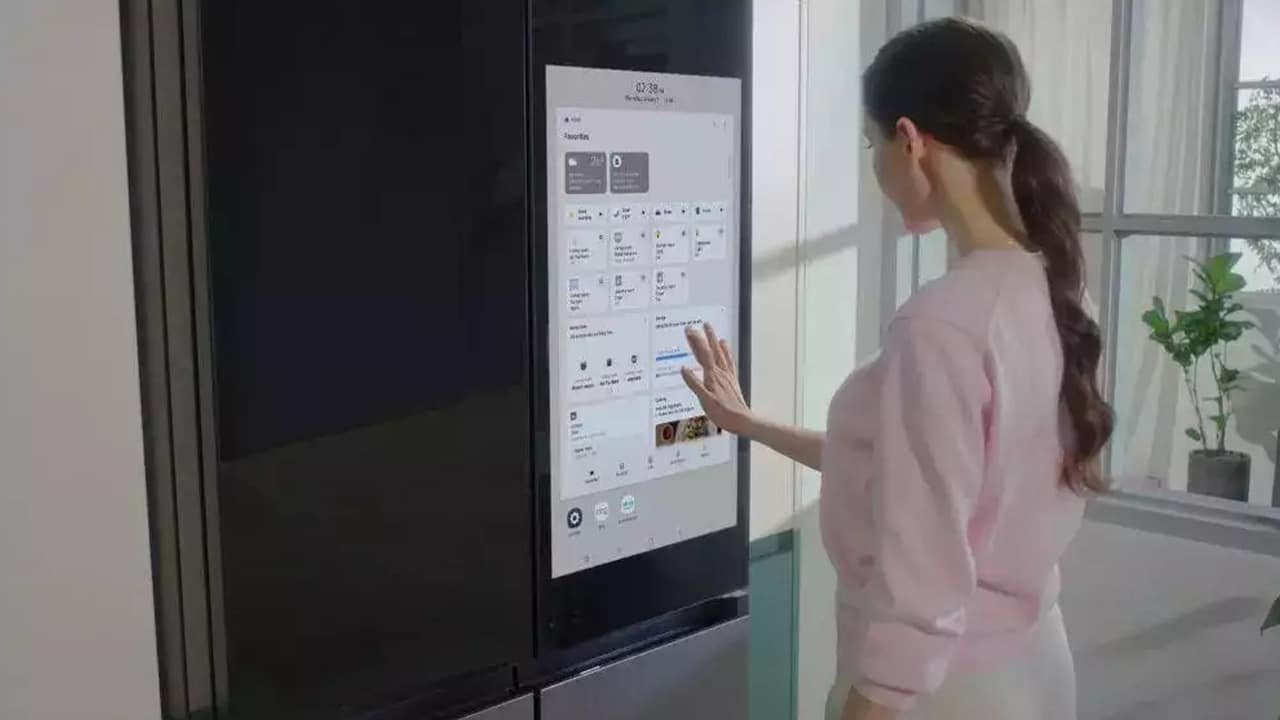
    Samsung has launched the “Bespoke Refrigerator Family Hub Plus,” its latest fridge with a built-in 32-inch HD touchscreen display.

    Its display, which can be used to watch films, prepare digital shopping lists for Amazon delivery, and operate SmartThings-compatible smart home gadgets, is substantially bigger at 32 inches than the 21.5-inch screen featured on earlier versions of Samsung Family Hub refrigerators.

    The Family Hub Plus, which was unveiled in a press release in Korean, comes with the free Samsung TV Plus service, which enables customers to view 190 TV channels in the US or about 80 stations in South Korea via the Samsung TV Plus app.

    The vertical orientation of the display also makes it ideal for viewing social media content like TikTok videos and YouTube Shorts. It also has a picture-in-picture (PIP) mode that allows you to watch films in a floating window while using the rest of the screen for other purposes.

    Along with the OneDrive integration that was previously present on Samsung’s Family Hub refrigerators, Google Photos users may now share material made on the Family Hub to any mobile device thanks to Samsung’s addition of support for the Google Photos cloud.

    The Family Hub Plus allows for the download and display of images from Google Photos. If you prefer to exhibit artwork and paintings rather than family photos, the Family Hub Plus now supports Samsung’s Bespoke Atelier app.

    The integrated SmartThings hub offers six SmartThings Home Life services: Air Care, Home Care, Pet Care, Clothing Care, Energy, and Cooking. It may be used to control and monitor various SmartThings devices.

    Other details (such the display refresh rate or resolution) as well as the cost and release date of Samsung’s new Family Hub refrigerator have not been made public.

  • Google to ban call recording apps in the next update

    Google to ban call recording apps in the next update

    From May 11, a new policy of the Google Play Store will prohibit third-party call recording applications from being downloaded.

    Modifications to the Google Play Policy mean that developers’ access to the Accessibility API will be restricted even more. This has been used as a workaround for remote call audio recording, however starting May 11, Google will no longer allow apps on the Play Store to use the Accessibility Service.

    In addition, Google clarified potential misunderstandings about the change in policy through a recent developer webcast.

    Numerous apps allow recording audio from a call without the other party knowing. As a result, this policy change only affects third-party apps on the Play Store. On some devices, several default dialer apps, such as Google Phone, Mi Dialer, and others, have a native call recording feature built-in. The update would not affect the default dialer apps on devices like Pixel and Xiaomi handsets.

    “Remote in this sense refers to call audio recording where the person on the other end is unaware that the recording is taking place,” said Moun Choi, Google content operations lead, during the special developer webinar.

    “Accessibility capability is not necessary to get access to the incoming audio stream if the app is the phone’s default dialer and also pre-loaded”. As a result, there would be no infringement. Because this is a clarification of an existing policy, the new language will take effect on May 11th for all apps”.

    Read more: Netflix loses 200,000 subscribers in Q1 2022, projects deeper losses in Q2

    In other words, you won’t lose functionality if you can record calls using your pre-installed dialer programme. Call recording may not be possible in the future if you use an app downloaded from the Google Play Store.

  • Chinese phone makers: A big threat to Google Play

    China’s top smartphone makers Huawei, Oppo, Xiaomi, and Vivo have collaborated to build a shared platform to compete with Google’s Play store, latest reports have revealed. The move is believed to be a direct threat to the $1 trillion parent Alphabet company and the de-facto US dominance of Android.

    Manufacturers in China rely on Android to run their devices but they use domestic app stores inside China, where Google services are blocked. Chinese manufacturers have continued to reply to pre-installed Google Play, offering the users the most popular social apps like Facebook and WhatsApp that are not available for download in China.

    The four Chinese handset makers together shipped around 40pc of the world’s smartphones in the fourth quarter of 2019.

    They will now let foreign app developers like Facebook upload and update the software to all the respective stores, through the new platforms, with a single click.

    If this initiative materializes successfully, this will create a new universe of apps which will be in direct competition with Google Play Store.