Tag: PM

  • Government decides to file cases against Ali Amin Gandapur, Bushra Bibi

    Government decides to file cases against Ali Amin Gandapur, Bushra Bibi

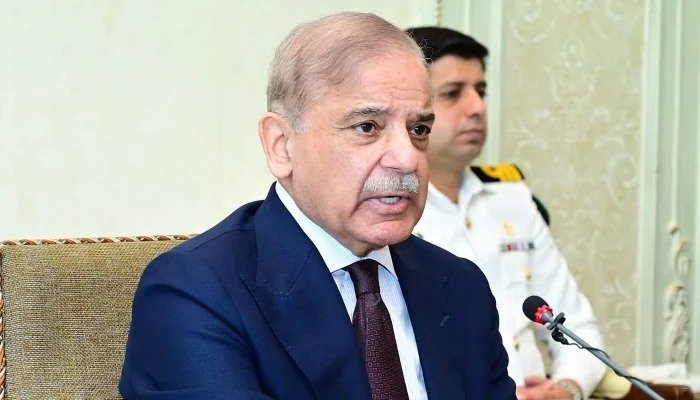
    Prime Minister (PM) Shahbaz Sharif’s government has decided to tighten the noise around founder of Pakistan Tehreek-e-Insaf (PTI) Imran Khan’s party leaders by filing cases against them.


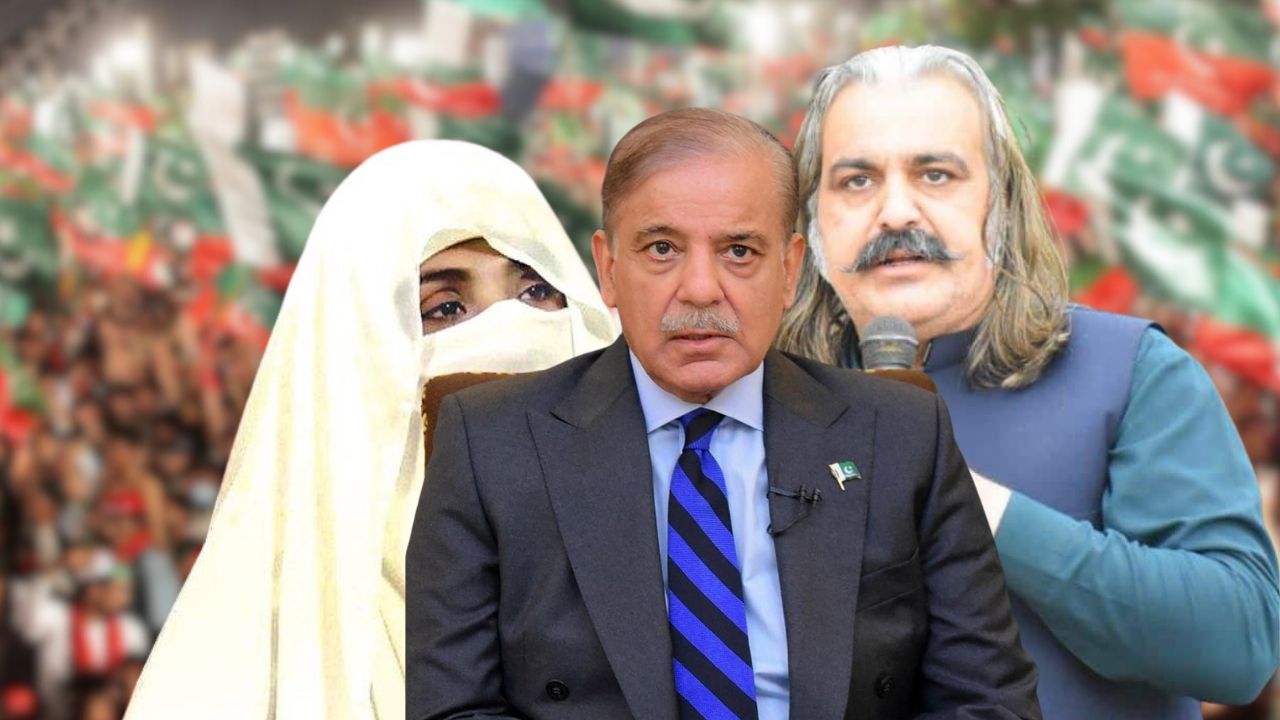
    Shahbaz Sharif chaired a high-level meeting on Friday in which it was decided that cases would be lodged against Chief Minister (CM) Khyber Pakhtunkhwa (KP) Ali Amin Gandapur, and founder PTI Imran Khan’s spouse, Bushra Bibi; both were leading the recent protest march towards the federal capital in which multiple people were killed, including four law-enforcing officers. 


    “This is not a political party [PTI] but a fitna [mischief] and a group of terrorists,” Shahbaz Sharif said.


    Chief of Army Staff (COAS) General Syed Asim Munir, Punjab’s Chief Minister (CM) Maryam Nawaz, federal ministers and other security officials attended the meeting.


    After a “final call” given by incarcerated Imran Khan, CM KP Ali Amin Gandapur and former First Lady led a convoy from Peshawar to Islamabad, which started on November 24 and ended on November 26 night after security forces cracked down on the demonstrators.


    On Tuesday (November 26) night, grand operations were initiated to disperse the opposition’s biggest party protestors, in which multiple casualties were reported and hundreds of protestors were wounded.


    Attendees of the meeting told Dawn News that it was also decided in a top-level meeting to register cases against the PTI leaders and workers who were allegedly involved in the killing of security officials during the recent protest march.


    A press release issued by the Prime Minister’s Office (PMO) noted, “Prime Minister Shehbaz Sharif established a task force under the chairmanship of Interior Minister Syed Mohsin Naqvi to identify the people involved in spreading chaos and violence in Islamabad earlier this week and take strict action against them.”


    Federal Law Minister Azam Nazeer Tarar, Economic Affairs Minister Ahad Cheema, Federal Minister for Information and Broadcasting Attaullah Tarar and officials of security departments will also be members of the task force.


    Furthermore, it was also decided to modernise the federal capital Safe City project along with strengthening the federal prosecution service. It has been observed that the quality of the project is so poor that its cameras cannot recognise people, particularly at night and when travelling in vehicles.


    Previously, Pakistan Muslim League-Nawaz (PML-N) leader Rana Muhammad Fayyaz submitted a resolution in the Punjab Assembly secretariat seeking a ban on arch-rivals PTI.


    The resolution demands stringent action against former PM Imran Khan’s PTI, labelling the party a “disruptive group” operating under the guise of a political party, and calls for those responsible for the November 24 protests to be brought to justice.

  • All hail the economic expert; PM drops British economist for Ishaq Dar

    All hail the economic expert; PM drops British economist for Ishaq Dar

    In a major plot twist, Prime Minister Shehbaz Sharif, “unimpressed” with British economist Stefan Dercon’s work on a new economic agenda, has delegated the responsibility of developing the new agenda to PML-N’s all-weather economic tsar, Ishaq Dar.

    Previously, the PM sought the British economist’s expertise overseeing the government’s new economic agenda for the next five years.

    It was reported that the PM would announce the agenda on August 14, Pakistan’s Independence Day; however, this wasn’t the case.

    According to a notification, the premier has constituted a seven-member ministerial committee, chaired by Dar, to review the draft of the Dercon Plan.

    Interestingly, Shehbaz Sharif came under intense criticism from experts for his decision to hire a foreign economist.

    Express Tribune reported that the Deron plan essentially reiterated ideas already known to the public and experts.

    “There is nothing new or extraordinary in Stefan Dercon’s plan,” a senior cabinet member remarked.

    Ishaq Dar is currently heading nearly two dozen committees, mainly dealing with economic issues and managing relations with political allies.

  • Azma Bukhari slams FIA cybercrime wing for ‘incompetence’; requests PM to shut it down

    Azma Bukhari slams FIA cybercrime wing for ‘incompetence’; requests PM to shut it down

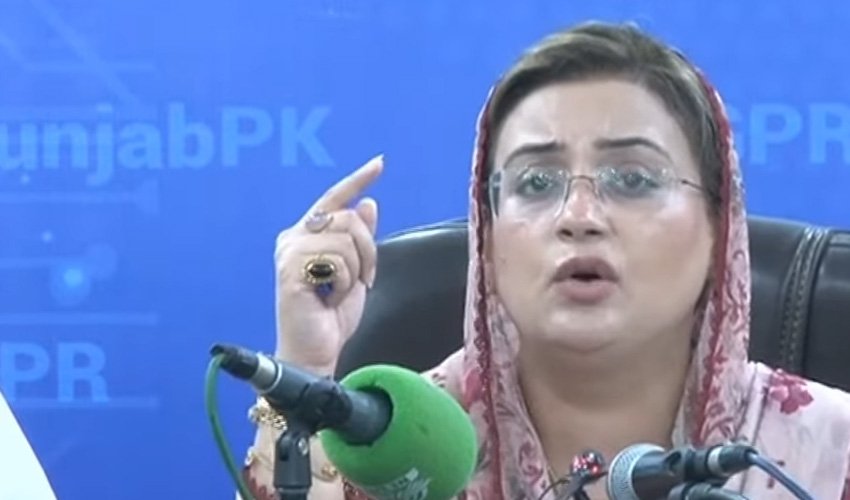
    Punjab Minister for Information and Culture, Azma Bukhari has lashed out at the Federal Investigation Agency (FIA) Cyber Crime wing for incompetence while requesting Prime Minister Shehbaz Sharif to shut it down.

    Talking to media outside the Lahore High Court (LHC), Bukhari expressed her trust in Chief Justice Aalia Neelum, she said, “I think that the Chief Justice wants to get to the bottom of this matter.”

    A few days ago, an explicit fake video of the minister was circulated online, which received widespread condemnation.

    Bukhari stated, “FIA cyber wing has no expertise in its field, and it is not worth it. Cybercrime does not know anything, and they do not know what they are supposed to do.”

    She also said that, ever since a “fitna” party came to light, these kinds of incidents have become common, a thinly veiled dig at arch-rivals Pakistan Tehreek-e-Insaf.

    Bukhari also stated that her party and personal ethics disallow her from making such fake videos; otherwise, she would know how to do such things.

  • Is Saudi Arabia going to invest $1billion in Balochistan mines?

    Is Saudi Arabia going to invest $1billion in Balochistan mines?

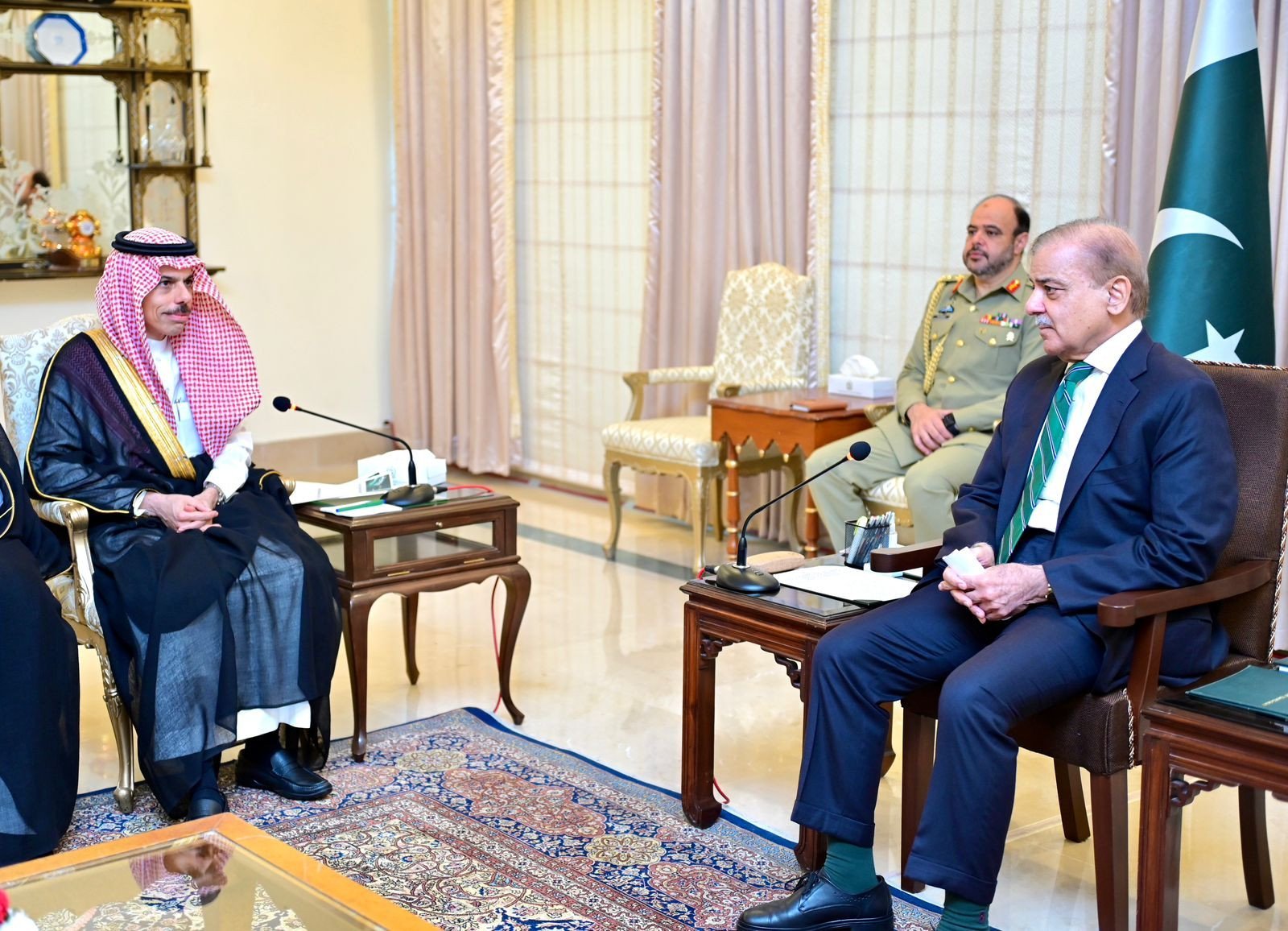
    Prime Minister Shehbaz Sharif has said on Tuesday that the current visit of Saudi Foreign Minister Prince Faisal bin Farhan to Islamabad will mark the beginning of a fresh era of strategic and commercial partnerships between the two long-standing allies.

    The Saudi foreign minister came to Islamabad for a two-day visit to boost economic cooperation between the two countries and advance investment deals that were agreed upon earlier.

    “The visit is the beginning of a new era of strategic and commercial partnership between Pakistan and Saudi Arabia,” Sharif was quoted as saying in a statement from his office after he met Prince Faisal. “Pakistan wants to further promote cooperation in the fields of trade and investment between the two countries.”

    The PM stated that Pakistan is actively promoting foreign investment and making partnerships mutually beneficial for allies. He added that Islamabad appreciates the Saudi leadership for increasing investment.

    In a statement shared with media on Monday, the Pakistan information ministry said the Saudi delegation would consult with Pakistani officials “on the next stages of investment and implementation issues.”

    The ministry announced that they would discuss Saudi Arabia’s planned investment in the Reko Diq gold and copper mining project during the visit. The development comes after the media reported that Saudi Arabia is likely to invest $1 billion in the mine project in Balochistan.
    The investment will reportedly focus on energy, IT, minerals, defence, and agriculture sectors.

  • ’Four salary bonus’, PM Shehbaz is reportedly rewarding his staff

    ’Four salary bonus’, PM Shehbaz is reportedly rewarding his staff

    A few days before leaving for Washington to ask the International Monetary Fund (IMF) for a new bailout package to avoid a default, Prime Minister Shehbaz Sharif approved a proposal to give up to four salaries in bonuses to his staff. He also asked his finance minister to concur with it.

    The PM is being faced with criticism that the policy to hand out such big awards to bureaucrats amidst such deeply serious economic conditions is against an austerity drive.

    Also, analysts are asking whether this move would bode well for the new IMF bailout package as the IMF discourages bloated government expenditures.

    The rewards were approved for staff officers because of ‘their extraordinary efforts in the completion of tasks’, according to the Express Tribune.

    More importantly, the cost for these bonuses will be paid to these government servants by taking loans from banks at a 23 per cent interest rate.

  • PM vows to uphold 18th Amendment

    PM vows to uphold 18th Amendment

    Agreeing with Pakistan Peoples Party (PPP) Chairman Bilawal Bhutto-Zardari’s remarks, Prime Minister Shehbaz Sharif vowed to transfer all relevant ministries and departments back to provinces – which are constitutionally under the purview of provinces.

    The Prime Minister stated that the federation will strengthen the provinces by devolving all relevant ministries under the 18th Amendment and national expenditures will be minimized to cut loss.

    During the campaign for the general elections, Bilawal suggested that if his party were elected, then the federation would eliminate 17 federal ministries to save the taxpayers’ Rs.300 billion.

    Similarly, the former foreign minister has suggested that 17 federal ministries should be devolved to provincial authorities.

    The 18th Amendment, passed on April 8, 2010, was a landmark bill that gave provinces autonomy. It devolved multiple federal ministries and powers to provinces. It divested the president of all his executive authority and made him a ceremonial head of the state.

  • ‘You’re asking the cat who drank the cream’; Fawad Chaudhry jokes about PM’s inquiry commission

    ‘You’re asking the cat who drank the cream’; Fawad Chaudhry jokes about PM’s inquiry commission

    Former federal Information Minister Fawad Chaudhry has quipped that the commission to investigate the six judges’ letter is akin to “asking a cat to investigate who has drank the milk.”

    Chaudhry had been detained by authorities on graft charges since November 2023. His office page on X, formerly Twitter, posted the video of him being presented to the court for a hearing where he gave the humorous remarks about the inquiry commission.

    On Tuesday, six judges of Islamabad High Court (IHC) wrote an explosive letter to Supreme Judicial Council (SJC) alleging egregious meddling by the executive, including spy agencies, in judicial affairs. Following this, the Prime Minister Shehbaz Sharif met with the Chief Justice of Pakistan (CJP) Qazi Faez Isa.

    It was decided that the PM would constitute an inquiry commission headed by a retired judge to probe into the allegations levelled against intelligence agencies.

  • Email kholo! SIFC to officials

    Email kholo! SIFC to officials

    The Special Investment Facilitation Council (SIFC) has ordered all the focal persons of ministries to regularly check and respond to their emails after it was revealed that no one responded to UAE companies interested in investing in renewable energy projects in Pakistan.

    The event unfolded when the Foreign Office (FO) of Pakistan noted that when its ambassador to UAE held a meeting with Abu Dhabi Development Holding Company (ADQ) focal person to receive an update on the seven bilateral investment MoUs signed with UAE in November 2023.

    It was then revealed that the ADQ had tried to establish contacts with the concerned focal persons through formal channels of communication – emails. However, they received no reply in over a month and despite reminders, they await our response.

    Considering the recent developments, SIFC has requested all focal persons to establish official communication channels with a proper record keeping mechanisms in place. Email is regarded as the official means of communication while WhatsApp is treated as an informal tool.

  • Mazay Khatam; No more 1st class for PM and five-star hotels for ministers 

    Mazay Khatam; No more 1st class for PM and five-star hotels for ministers 

    In a bid to curb expenses, the federal government has rolled out a stringent travel advisory affecting top-tier officials, including the president, prime minister, chief justice, services chiefs, and bureaucrats. 

    Effective immediately, the advisory mandates specific classes for air travel, categorizing officials based on their positions.

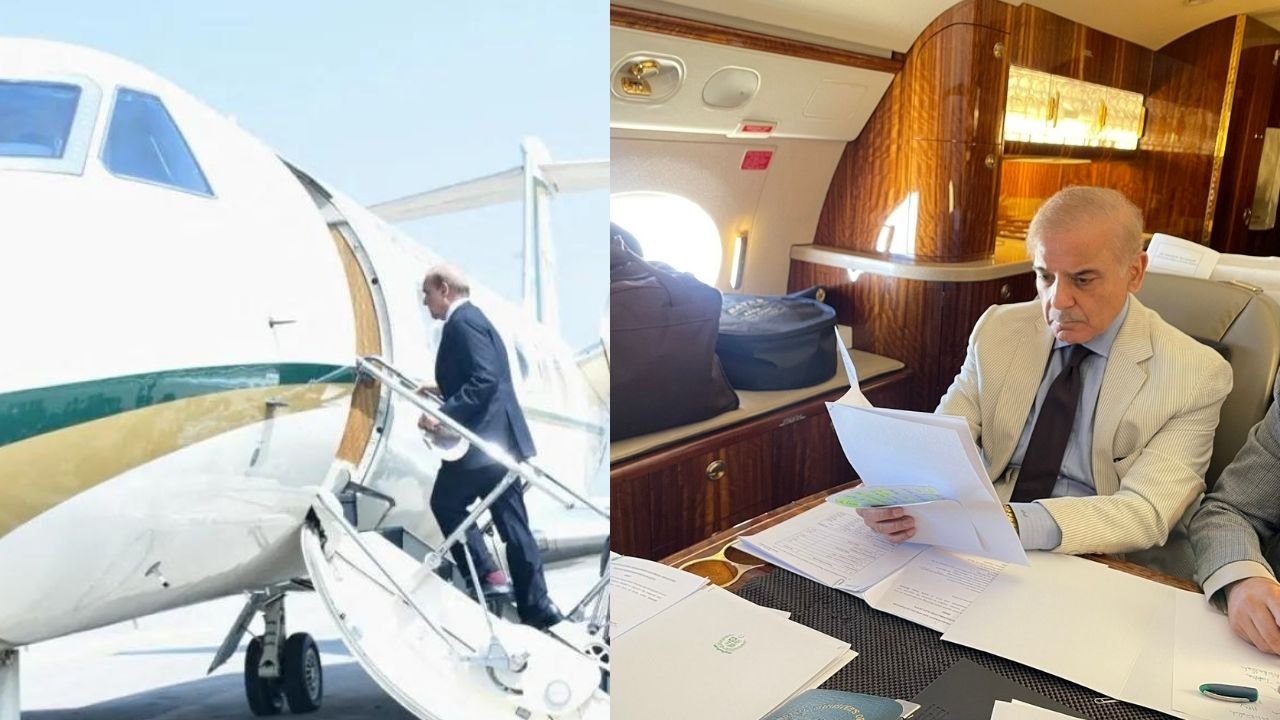
    Cabinet Division said the president and the CJP will travel in ‘class-1’, whereas the PM, Senate chairman, National Assembly speaker, ministers, services chiefs, MNAs, federal secretaries, grade-22 officers, and ambassadors will travel in business class.

    Other officers of the federal government, attached departments, autonomous and semi-autonomous bodies, corporations, and other institutions under the administrative control of various ministries/divisions will travel in economy class.

    Obligatory Visits Only

    According to the advisory, foreign travel of officers shall be allowed only in cases of obligatory visits and that too in the economy class.

    This move comes as part of a new foreign travel policy aiming to rationalize overseas visits, instill austerity measures, and enforce accountability.

    Key provisions of the policy include obtaining permission from an austerity committee for non-essential visits, providing comprehensive travel details to the Foreign Ministry, and a ban on simultaneous foreign trips by ministers and secretaries unless under unavoidable circumstances approved by the prime minister.

    No Five Star Hotels

    Additionally, the policy discourages stays in five-star hotels, prohibits support staff from accompanying government officers, and encourages teleconferencing as a viable alternative. Ministers, ministers of state, advisers, and assistants are limited to three foreign visits per year, with exceptions granted in special cases.

    Furthermore, ministers are prohibited from traveling during National Assembly or Senate sessions, and all foreign visit details must be submitted to the Foreign Ministry within 15 days.

    The guidelines also address diplomatic relations, mandating adherence to the ‘One China Policy’ for interactions with Taiwan and requiring special permission for contacts with Korea. Visiting India necessitates permission from the interior and foreign ministries.

    Lastly, hosting foreign companies is discouraged, and visits by experts and consultants are permitted only during bilateral discussions.

  • Do you know how Speaker, Deputy Speaker, Prime Minister, and Leader of Opposition are elected in assembly?

    Do you know how Speaker, Deputy Speaker, Prime Minister, and Leader of Opposition are elected in assembly?

    By constitutional obligation, Speaker Raja Pervaiz Ashraf has convened a session of the newly elected National Assembly, scheduled for February 29th, following the general elections on February 8th. President Arif Alvi’s reluctance to fulfill this duty prompted Speaker Ashraf to take matters into his own hands, ensuring the timely commencement of parliamentary proceedings.

    Oath-Taking Ceremony for Newly Elected Members

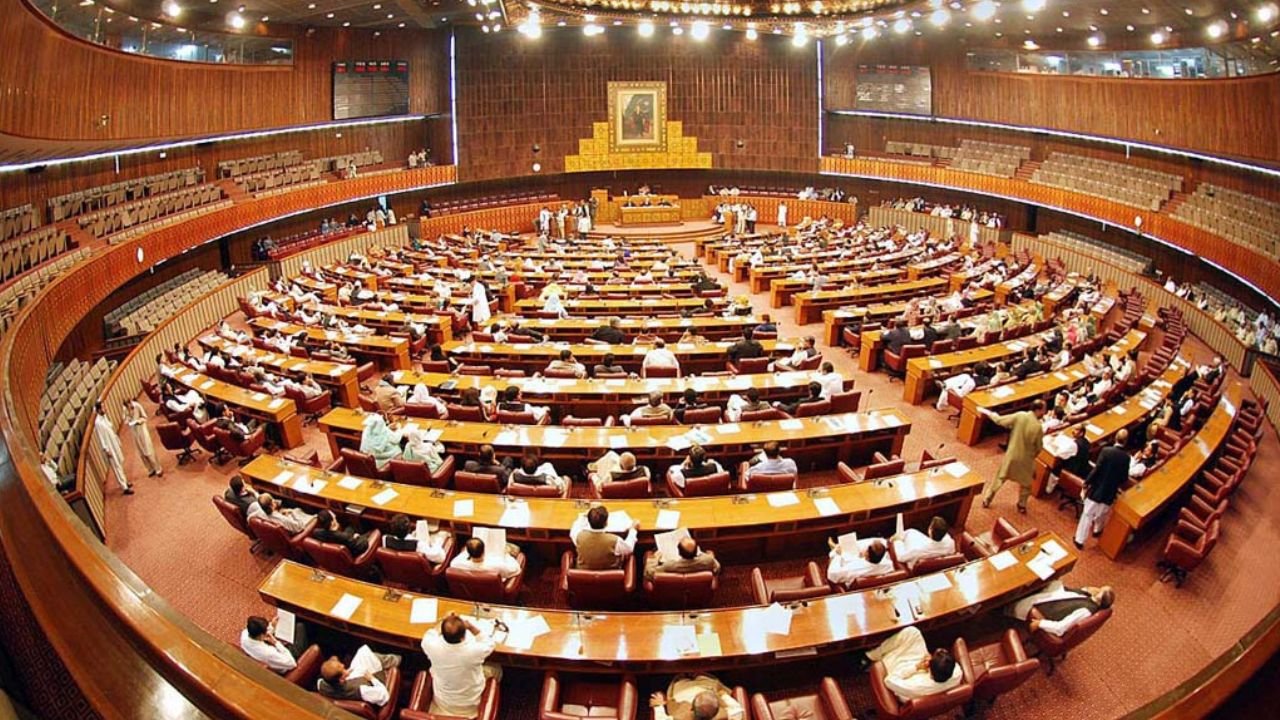
    The inaugural session of the new assembly will first see all the lawmakers take oath. In the 336-member house, 60 seats are reserved for women and 10 for minorities.

    Allocation of Reserved Seats

    The Election Commission of Pakistan (ECP) has already allocated 40 reserved women seats to different political parties. These include 20 out of 32 of Punjab, two out of 10 of Khyber Pakhtunkhwa, all 14 of Sindh and all four of Balochistan.

    Seven out of 10 seats reserved for minorities have also been allocated. The ECP is yet to allot reserved minority and women seats to the Sunni Ittehad Council (SIC), which has allied with the PTI.

    Election of Speaker and Deputy Speaker

    Speaker Ashraf, continuing in his role until a successor is elected, will preside over the session’s proceedings.

    “At the first meeting of the Assembly, following a general election, after the members have made oath and before the transaction of any other business, the Assembly shall proceed to elect a Speaker under clause (1) of Article 53, by secret ballot,” states Rules of Procedure and Conduct of Business in the National Assembly, 2007.

    Article 53 of the Constitution of Pakistan says, “After a general election, the National Assembly shall, at its first meeting and to the exclusion of any other business, elect from amongst its members a Speaker and a Deputy Speaker and, so often as the office of Speaker or Deputy Speaker becomes vacant, the Assembly shall elect another member as Speaker or, as the case may be, Deputy Speaker.”

    “At any time before 12:00 noon on the day preceding the day on which the election is to be held, any member may propose another member for election as Speaker by delivering to the Secretary a nomination paper signed by him and accompanied by a statement by the member whose name is proposed that he is willing to serve as Speaker, if elected,” states the official procedure.

    The voting process will be conducted through a secret ballot, and whoever receives more votes will be elected the new speaker of the house. In case the speaker’s election ends in a tie, the election will be held again.

    Subsequently, the new speaker will announce the schedule for the deputy speaker’s election. In the same manner, through a secret ballot, the deputy will be elected.

    Prime Ministerial Election Process

    Once the Speaker and Deputy Speaker are elected, the schedule for the Prime Minister’s election, also known as the leader of the house, will be announced. This process, outlined in Section 91(3) of the Constitution, involves nominations and an open vote by division, requiring a simple majority for victory.

    Section 91(3) of the Constitution says: “After the election of the speaker and the deputy speaker, the National Assembly shall, to the exclusion of any other business, proceed to elect without debate one of its Muslim members to be the Prime Minister.”

    In the same way, nomination papers for the prime minister’s election will be submitted to the assembly’s secretariat.

    While the election for the speaker, his deputy, and the leader of the opposition are free from any religious limitation, the prime minister’s election is open to only the Muslim members of the house.

    “Before voting commences, the Speaker shall direct that the bells be rung for five minutes to enable members not present in the chamber to be present. Immediately after the bells stop ringing, all the entrances to the lobby shall be locked and the assembly staff posted at each entrance shall not allow any entry or exit through those entrances until the voting has concluded,” according to the official procedure for recording of votes in the Second Schedule.

    Under the supervision of the speaker, an open vote will take place — by division.

    For instance, if there are two candidates, the speaker would say that ‘whoever wants to vote for candidate A can go to lobby A’ and ‘whoever wants to vote for candidate B, can go to lobby B’.

    At the entrance of the said lobbies, there will be an member of the assembly secretariat staff who will record every MNAs name in their register. This whole process will be open and people sitting in the galleries will be able to see who votes for whom.

    Here, the political parties have to vote collectively and every member has to vote for the candidate that their party is voting for.

    After every member has picked their lobby and registered their vote, the speaker will call them back and announce the result. To be selected as the prime minister, one needs a simple majority — more than half of the votes in the house i.e. 169 votes out of the total 336.

    Section 91(4) of the Constitution states, “The Prime Minister shall be elected by the votes of the majority of the total membership of the National Assembly: Provided that, if no member secures such a majority in the first poll, a second poll shall be held between the members who secure the two highest numbers of votes in the first poll and the member who secures a majority of votes of the members present and voting shall be declared to have been elected as Prime Minister: Provided further that, if the number of votes secured by two or more members securing the highest number of votes is equal, further poll shall be held between them until one of them secures a majority of votes of the members present and voting.”

    This means that the two most-voted candidates will contest another round of elections till one ultimately gets 51 percent of votes or more, and wins.

    Selection of Leader of the Opposition

    After the Prime Minister’s election, the Speaker will facilitate the nomination of candidates for the Leader of the Opposition, a position crucial for parliamentary balance. The selection process entails the submission of candidate names along with signatures, with the individual garnering the most support from opposition members being appointed.

    “After the [election of the Prime Minister] the Speaker shall inform the members about the date, time and place for submission of a name for the Leader of the Opposition under their signatures,” says the official procedure in Chapter V 39(2).

    The third point of the same section adds, “The Speaker shall declare a member as Leader of the Opposition having the greatest numerical strength after verification of the signatures of the members: Provided that any member who is not signatory to the proposal, if he presents himself before the count, and signs the proposal, shall be included in the count.”

    This announcement will be made right after the prime minister’s election but submission of these lists can take time.

    Changes in Selection Procedures

    Before the implementation of the 18th Amendment to the Constitution, the designation of the opposition leader rested solely with the discretion of the speaker.

    During the era of Parvez Musharraf, this discretionary power was perceived to be misused, notably when Fazlur Rehman was appointed as the opposition leader despite the clear majority held by the PPP and PML-N.

    However, the process has transformed now. In the current scenario, if multiple candidates are contending for the position, they are required to submit lists of opposition members, along with their signatures, to the speaker. The candidate who garners greater support from opposition members will be conferred the title of the leader of the opposition.

    Furthermore, it’s worth noting that in each of the aforementioned elections, the votes of the candidates themselves will also be taken into account.