Tag: POL Products

  • Petrol price increased to historic high of Rs305.36 per litre

    Petrol price increased to historic high of Rs305.36 per litre

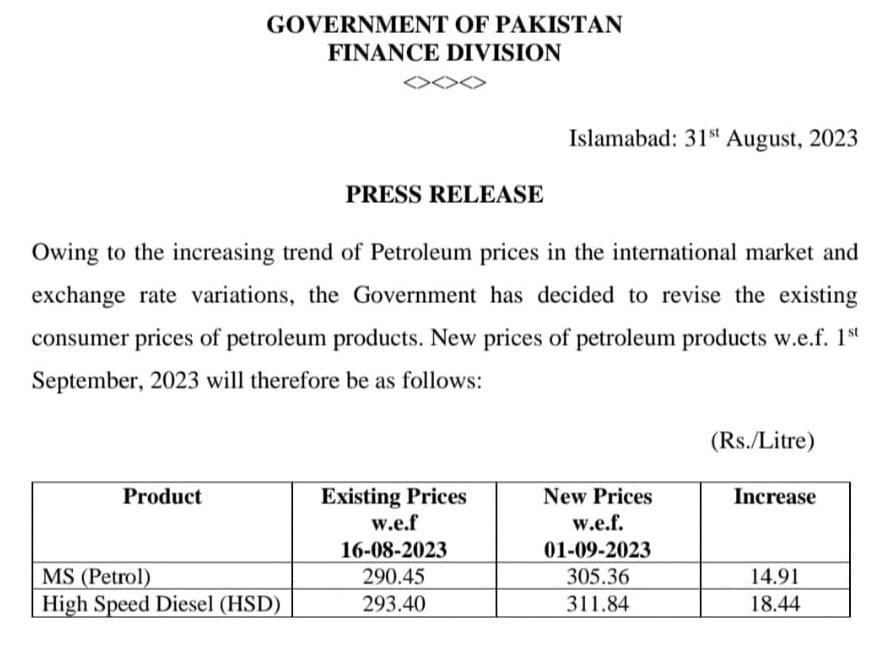
    For the first time in Pakistan’s history, the price of petrol has crossed the Rs300 mark due to a recent hike of Rs14.91. This brings the new petrol price to Rs305.36 per litre. The diesel price has also increased by Rs18.44, now at Rs311.84 per litre.

    The government has attributed these revisions to the upward trajectory of global petroleum prices and the consequential fluctuations in exchange rates.

    A statement issued by the finance ministry highlights that due to the escalating trend of petroleum prices in the international market and the subsequent shifts in exchange rates, the Government has opted to recalibrate the prevailing consumer prices of petroleum products.

    In the days ahead, the effects of these significantly heightened petrol and diesel prices will become evident. These price fluctuations are poised to have a substantial impact on individuals who rely on personal vehicles, such as bikes and cars, as well as those who depend on public transportation services.

  • Petrol price likely to rise by Rs20 per litre in upcoming review

    Petrol price likely to rise by Rs20 per litre in upcoming review

    Oil industry sources report that there may be a Rs20 per litre increase in petrol prices at the upcoming review on February 15, 2023. The increase is based on calculations of the international price of petrol, specifically on a free on board (FOB) basis.

    During the previous fortnightly review of fuel prices, the government implemented a substantial increase of Rs35 per litre. Currently, the government imposes a petroleum levy (PL) of Rs50 per litre, while the general sales tax (GST) has not yet been levied.

    Sources suggest that the price of petrol could increase further if the foreign exchange rate is adjusted at the next review. They noted that the exchange rate is currently unfavorable, negating any potential benefits or reductions for local consumers.

    Despite a decrease in international petrol prices, the sharp depreciation of the rupee against the dollar has offset gains, adversely affecting domestic consumers. Additionally, the sources warned that the government may implement a Rs20 per litre adjustment to account for the exchange rate, which could result in an overall increase of up to Rs40 per litre.

    The price of diesel, as reported by sources, has not seen any increase on FOB without exchange rate adjustments. However, they stated that diesel prices could potentially increase in the next review if the exchange rate is adjusted. The government previously adjusted Rs14 per litre on diesel due to the exchange rate, but the recent appreciation of the dollar has effectively negated this adjustment from the last review.

    While global diesel prices have reportedly decreased by five to six dollars per barrel, the depreciation of the rupee prevents the government from passing on the reduction to local consumers.

    The most recent price adjustment of petroleum products was made on January 29, 2021, by the federal government. Following the review, petrol was priced at Rs249.80 per litre, high-speed diesel at Rs262.80 per litre, kerosene oil at Rs189.83 per litre, and light-speed diesel at Rs187 per litre.

    The government implemented an increase in petrol and high-speed diesel prices by Rs35 per litre each, and raised the rates of kerosene oil and light diesel oil by Rs18 per litre each on January 29, 2023.

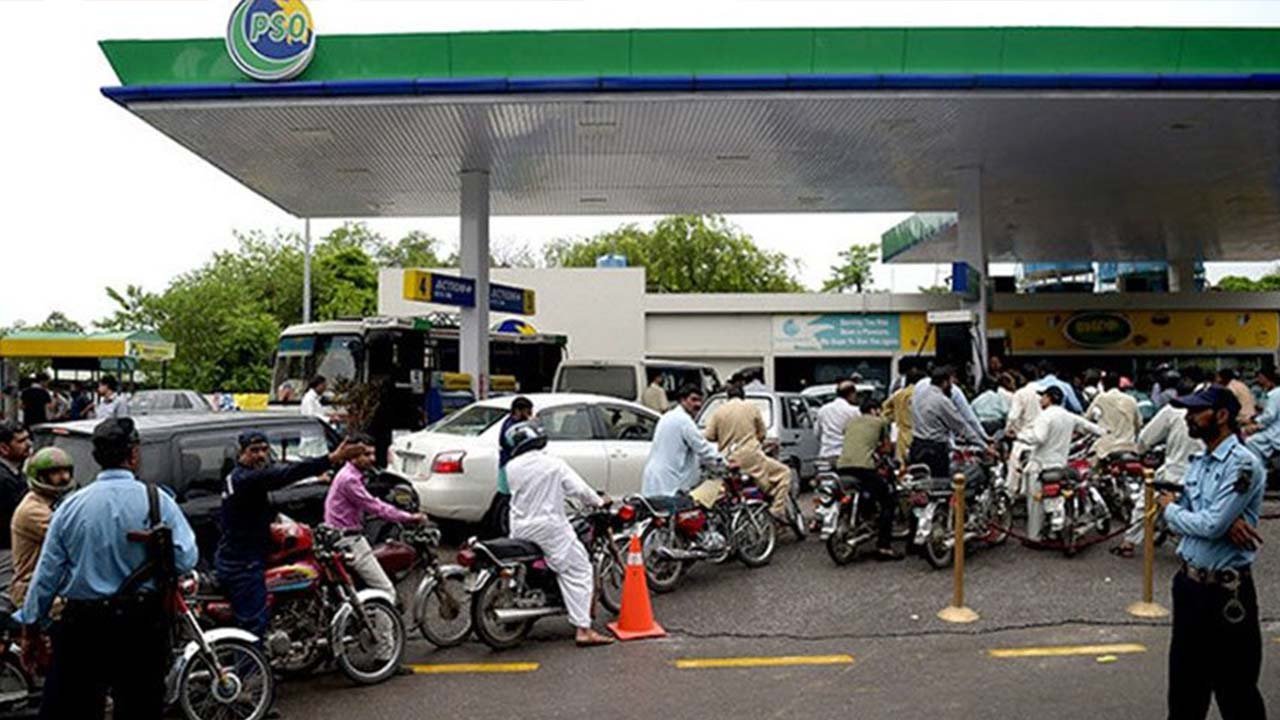
    Pakistan is currently experiencing a shortage of petrol, with its most populous province, Punjab, being hit the hardest. The crisis has affected major and minor cities, towns, and villages in Punjab, with the shortage being attributed to petroleum dealers.

    Sources previously reported that in addition to a low import of petrol by most Oil Marketing Companies (OMCs), petroleum dealers were also involved in hoarding petrol in anticipation of an expected price increase in mid-February.
  • Petrol price may go down by Rs7.24 to Rs230.19 per liter

    According to industry projections, the ex-depot cost of petrol has declined by Rs7.24 per litre to Rs230.19 per litre for the upcoming fortnight from the current price of Rs237.43 per litre, as reported by The News.

    Considering recent reports, this might lead to a fall in the price of petrol by Rs7.24 per litre and diesel by Rs16.61 per litre in Pakistan at the upcoming fortnightly review if the government does not raise taxes to offset the effects of the declining worldwide market.

    Expected new prices

    In comparison to the present price of Rs247.43 per litre, the ex-depot price of diesel has fallen by Rs16.61 to Rs230.82 per litre for the upcoming two weeks.

    In comparison to the current fortnight, the ex-depot price of light diesel decreased by Rs10.87 to Rs186.41 per litre.

    Kerosene’s ex-depot price fell from Rs197.28 per litre to Rs187.82 per litre, a decrease of Rs14.20.

    The oil sector bases its prices on the current taxes levied by the government. Petroleum goods are exempt from general sales tax (GST), which is charged at a rate of Rs37.42 for petrol and Rs7.58 for diesel per litre.

    There has been a considerable decline in international oil prices, but it is unclear if the government would pass the impact through to the public or offset it by increasing taxes.

  • Petrol price may go down by Rs9.63 per litre for the next fortnight

    The price of petrol is expected to decrease by Rs9.63 per litre for the next two weeks, while diesel prices are anticipated to increase.

    According to reports, the Oil and Gas Regulatory Authority (OGRA) has advised lowering gasoline prices for the final fifteen days of the current month, September.

    However, a final decision about increased petroleum pricing would only be made after receiving Prime Minister Shehbaz Sharif’s approval.

    For the specified period, the cost of diesel is probably going to go up by Rs3.04 per litre, bringing the price from Rs247.26 per litre to Rs250.30.

    The federal government announced an increase in the price of gasoline and diesel for the first two weeks of September on August 31.

    The price of gasoline increased by Rs2.07 to reach Rs235.98 per litre, while the price of high-speed diesel increased by Rs2.99 to reach Rs247.43.

    According to Express Tribune, various strategies have reportedly been used by the government and OGRA to maintain low petroleum prices in order to avert political reaction.

  • Petroleum prices may increase by Rs28.44 on Monday

    Petroleum prices may increase by Rs28.44 on Monday

    The Oil and Gas Regulatory Authority (OGRA) has calculated a price increase for petroleum products of up to Rs28.44 per litre that could go into effect on August 1.

    According to regulatory agency sources, the estimated ex-depot price of gasoline may increase by Rs6.53, high-speed diesel (HSD) by Rs28.44, kerosene oil (SKO) by Rs11.02, and light diesel oil (LDO) by Rs5.64 per litre based on the current rate of petroleum levy (PL).

    On Saturday (today), the Finance Division will move a summary calling for an increase in gasoline prices of up to approximately 11 per cent beginning August 1. The prime minister will, as usual, make the final choice in this matter.

    The cost of gasoline and HSD will also increase if the government decides to include the Rs7 per litre petroleum dealer’s per centage in the pricing structure. The Economic Coordination Committee (ECC) had earlier that day approved the petroleum dealers’ increased margin.

    The Petroleum Division had given the dealers assurances that the government would implement the margin as of August 1, 2022.

    According to these projected prices, the price of gasoline would increase from Rs230.24 to Rs236.77 per litre, the price of HSD from Rs236.00 to Rs264.44 per litre, the price of SKO from Rs196.45 to Rs207.47 per litre, and the price of LDO from Rs191.68 to Rs197.32 per litre.

    Presently, the PL on gasoline is Rs10 per litre, the PL on HSD, SKO, and LDO are each Rs5, and there is no sales tax.

    In order to reach the budgetary goal of Rs750 billion set in the Finance Bill 2022–23, the National Assembly has approved a rise in the maximum limit of PL from Rs30 per litre to Rs50 per litre.

    Read more: Petrol, diesel prices may increase by Rs10-17 per litre

    However, sources in the Petroleum Division believed that, at the current rate, the government was unlikely to collect Rs750 billion from PL in the current fiscal year, as that would only amount to a maximum of Rs14 billion per month.

    In addition, if the 17.5 per cent general sales tax (GST) is not imposed on these goods, a revenue shortfall of Rs45 billion per month is likely.