In January, Pakistan experienced a boost in economic activity, thanks to the financial aid provided by the International Monetary Fund (IMF), as reported by Bloomberg Economics Tracker.
However, there are three key developments that may impact future economic conditions.
Firstly, the aftermath of the inconclusive February 8 election has resulted in persistent political instability, presenting a potential obstacle to new investments.
Secondly, there is a likelihood of more stringent conditions associated with additional IMF loans. Lastly, there is an increasing probability that the State Bank of Pakistan will delay rate cuts.
Despite the challenges, January saw a positive trend with a 0.9 per cent increase in economic activity compared to December, breaking a four-month contraction streak.
The injection of IMF loans and eased trade restrictions contributed to this improvement, enabling increased purchases of essential import supplies.
Looking ahead, the unresolved election outcome may prolong political uncertainty, affecting potential investments.
The recent hike in gas prices on February 15 will likely drive inflation higher, further reducing the chances of a March rate cut.
Considering these developments, Bloomberg Economics is considering revising its growth outlook.
While Bloomberg currently predicts 2.1 per cent GDP growth through June 2024 (up from a 0.2 per cent contraction in the previous fiscal year), the consensus estimate is 2.5 per cent, and the IMF forecasts 2 per cent.
It’s essential to note that the Bloomberg Economics monthly tracker assesses inflation-adjusted indicators of activity.
Pakistan has weeks of political uncertainty ahead following its indecisive election, analysts said Monday, with dozens of constituency results facing challenges in court and rival parties negotiating possible coalitions.
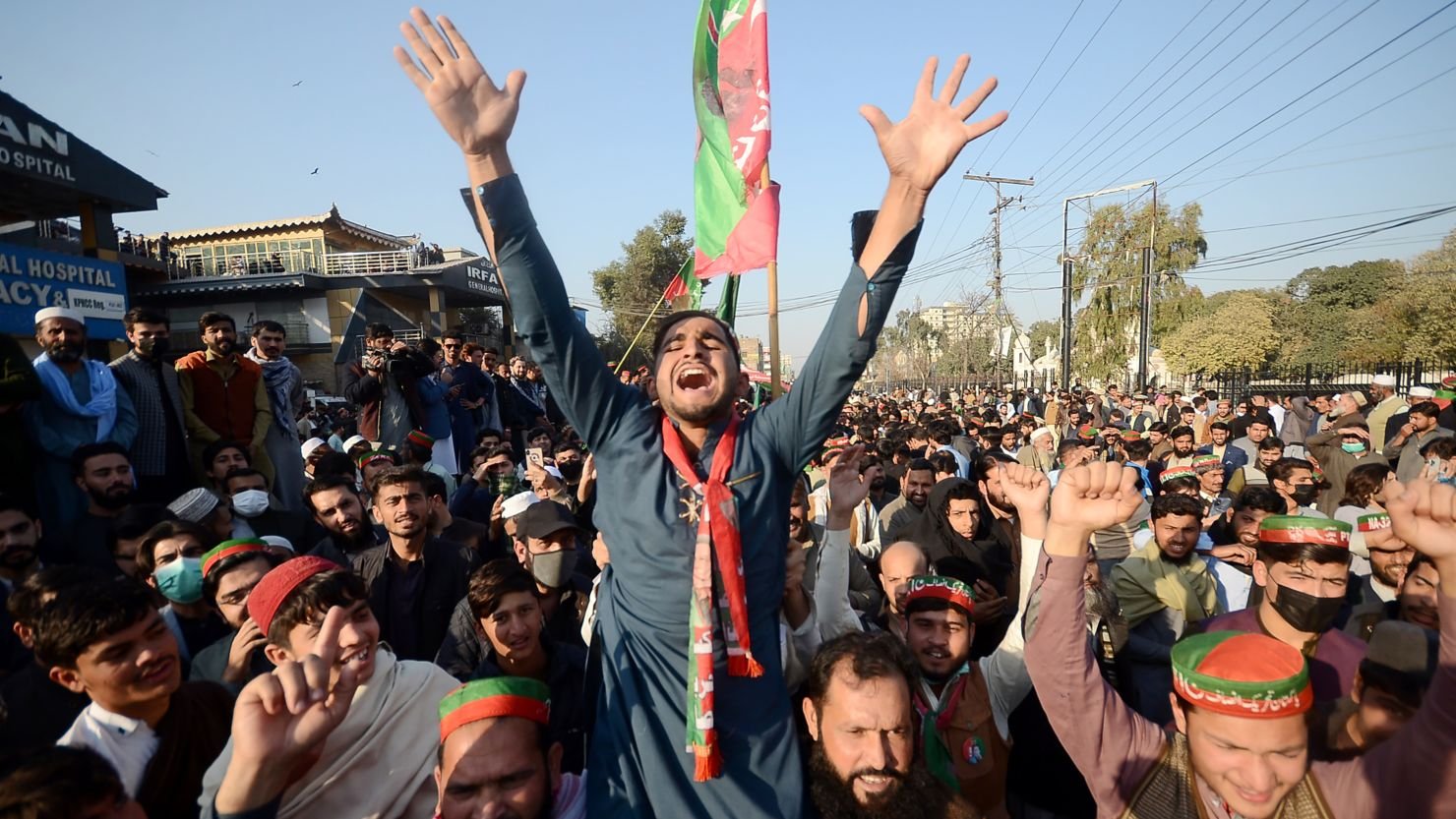
Independent candidates loyal to jailed former prime minister Imran Khan took most of the seats in Thursday’s polls, scuppering the chances of the army-backed Pakistan Muslim League-Nawaz (PML-N) from securing a ruling majority.
Khan’s Pakistan Tehreek-e-Insaf (PTI) defied a months-long crackdown that crippled campaigning and forced candidates to run as independents to emerge as the winners of the vote.
There were widespread allegations of vote-rigging and result manipulation after authorities switched off the nation’s mobile phone network on election day, ostensibly on security grounds, and the count dragged on for more than 24 hours.
“Three potential challenges are linked to the legitimacy of the elections through prolonged legal proceedings, protests and potential for violence,” said Pakistan-based political analyst Amber Rahim Shamsi.
Despite independents winning 101 seats in the national assembly, a government can only be formed by a recognised party, or coalition of parties, so they would have to join another group to become an effective bloc.
Desperately needed reforms
A coalition between the PML-N and the Pakistan People’s Party — who formed the last government after ousting Khan with a vote of no confidence in April 2022 — still seems a most likely outcome.
“In the short-term, any coalition birthed through a highly controversial election in a highly charged political environment will find it challenging to enact unpopular reforms that Pakistan desperately needs,” Shamsi told AFP.
At least half a dozen minor parties won just one or two seats in the election, and would welcome the addition of the independents to their ranks.
That would give them access to an additional 70 seats reserved for women and religious minorities and allocated according to election results — although it has never been done on this scale before and faces legal challenges.
“The courts have a very delicate role at this moment,” said legal expert Osama Malik.
“They will (also) need to decide whether to order recounts in various constituencies. However, recounts in multiple constituencies could also delay the calling of parliament so the courts have to be wary of that as well.”
PTI leaders insist they have been given a “people’s mandate” to form the next government.
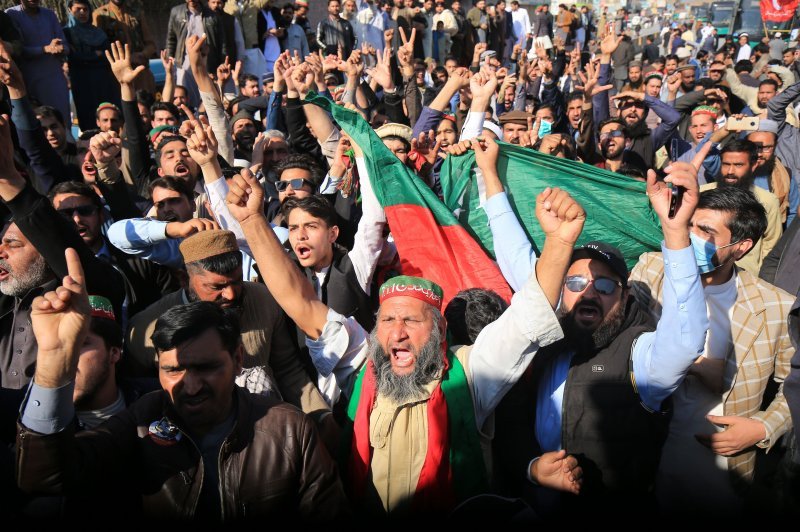
“The people have decided in favour of Imran Khan,” party chairman Gohar Ali Khan said at the weekend, before urging party supporters to picket election offices where he said rigging had taken place.
The potential for violent protest is ever present in Pakistan and police fired tear gas to disperse PTI supporters on Sunday after vowing to crack down hard on illegal gatherings.
Hundreds of party leaders and supporters were picked up last year when Khan was hit with more than 150 criminal cases he says were trumped up by the military-led establishment to stop him from contesting the election.
Earlier this month he was sentenced to lengthy jail terms after being found guilty of treason, graft and having an un-Islamic marriage.
Defections common
But disgrace rarely lasts long in Pakistan politics — the PML-N’s three-time premier Nawaz Sharif was himself sentenced to lengthy jail terms and exile abroad, only to have the convictions quashed when his party’s fortunes improved.
Dozens of constituencies will have to have by-elections even without the results being challenged.
Several candidates won in multiple constituencies — a quirk allowed under Pakistan law — so they will have to choose one and have fresh elections in the others.
And party defections are also common, with at least two winning independents who pledged loyalty to Khan before the election already announcing they were joining the PML-N.
More are expected to follow.
Whatever the outcome, the next government faces myriad challenges.
Deeply in debt, the economy has for decades been propped up by successive bailouts from the International Monetary Fund and loans from wealthy gulf Arab nations that use Pakistanis as cheap labour.
Inflation is galloping at nearly 30 percent, the rupee has been in freefall for three years — losing nearly 50 percent of its value since 2021 — and a balance of payments deficit has frozen imports, severely hampering industrial growth.
“No government will have the luxury of time and political security after these elections,” said Shamsi.
“There are also fears that this political insecurity will continue until the next elections, which could be earlier than five years.”
In the face of mounting economic uncertainty, import restrictions, and complications surrounding Letter of Credit (LC) transactions, Chery Pakistan has been forced to implement a significant price hike on one of its popular crossover SUVs.
According to Pakwheels, the Chery Tiggo 4, a favoured choice among Pakistani car enthusiasts, will now come with a heftier price tag, soaring from Rs6,399,000 to Rs6,999,000, reflecting an increase of Rs600,000. This move comes as Chery Pakistan grapples with the multifaceted challenges posed by a volatile economic landscape and supply chain disruptions, as the company revealed in an official statement.
The surge in pricing has been attributed to the prevailing precarious economic conditions and the stifling supply constraints that have been a constant thorn in the side of numerous industries, including the automotive sector. Nevertheless, Chery Pakistan aims to mitigate the impact on its customers by extending a price lock guarantee to all new bookings for the Chery Tiggo 4, providing a semblance of stability amidst the tumultuous market fluctuations.
The price escalation, while not entirely unexpected, underscores the current tribulations faced by Pakistan’s local auto industry. As a sector heavily reliant on imported components, particularly critical vehicle parts, the domestic car manufacturing industry is inherently susceptible to the ripple effects of foreign exchange rate fluctuations.
Compounding the challenges are the import restrictions introduced by governmental authorities, leading to a cascade of delays and, in some instances, complete production standstills for various car manufacturers.
The predicament has been further exacerbated by the non-issuance of LCs by the State Bank of Pakistan (SBP), casting a darker shadow over an already beleaguered landscape. Industry experts predict that the situation is poised to persist for the foreseeable future, with a grim timeline of at least 2–3 years for the auto sector to regain its footing.
The intertwining of persistent economic woes with a backdrop of political instability paints a disheartening picture, further clouding the prospects of a swift recovery.
Eid-ul-Fitr is an important religious holiday celebrated by Muslims around the world, marking the end of the holy month of Ramadan.
During Ramadan, Muslims fast from dawn until sunset and abstain from food, drink, and vices like gossip and lying. It is a period of self-reflection and a reminder to be charitable to the less fortunate.
Observed first day of Shawwal, the tenth month of the Islamic calendar, Eid-ul-Fitr is a time for Muslims to come together with family and friends to offer prayers, exchange gifts, and share meals. It is also a way for Muslims to show their gratitude to Allah for giving them the strength to fast and to seek forgiveness for any sins committed during the year.
However, in Pakistan, small shops and businesses are struggling to make ends meet during this year’s Eid-ul-Fitr celebrations. The high levels of inflation, which have hit their highest levels in decades, have left many businesses unable to make enough money to cover their monthly expenses, including rent and utility bills.
For many small shops and businesses in Pakistan, the last days of Ramadan or before Eid-ul-Fitr used to be a guaranteed earner—a big-spending week that could match the take from the rest of the year. However, this year, many worry they will not even make enough to pay for their monthly expenses.
A tailor in Canal Bank, Lahore, stated that each year, he was fully booked and had so many orders that he couldn’t take orders after the middle of the month of Ramzan. However, this year, he said, “For the first time, we are accepting orders in the last week of Ramzan as there is not much work.”
Tailors in Lahore who used to charge Rs1,500 are now charging Rs2,500 or Rs2,200. Even well-known brands or shops are charging more, which is leaving consumers with no option but to go for cheap ready-made clothes or clothes that are available on sale.
The South Asian country of more than 220 million people saw year-on-year inflation hit 35.4 per cent in March. Food prices surged more than 47 per cent in 12 months, with transport costs rising by 55 per cent.
Pakistan is deeply in debt and needs to introduce tough reforms to unlock a tranche of a $6.5 billion bailout from the International Monetary Fund in order to avoid default. The economy has been wrecked by years of financial mismanagement and political instability—a situation exacerbated by a global energy crisis and devastating floods that left a third of the country under water last year.
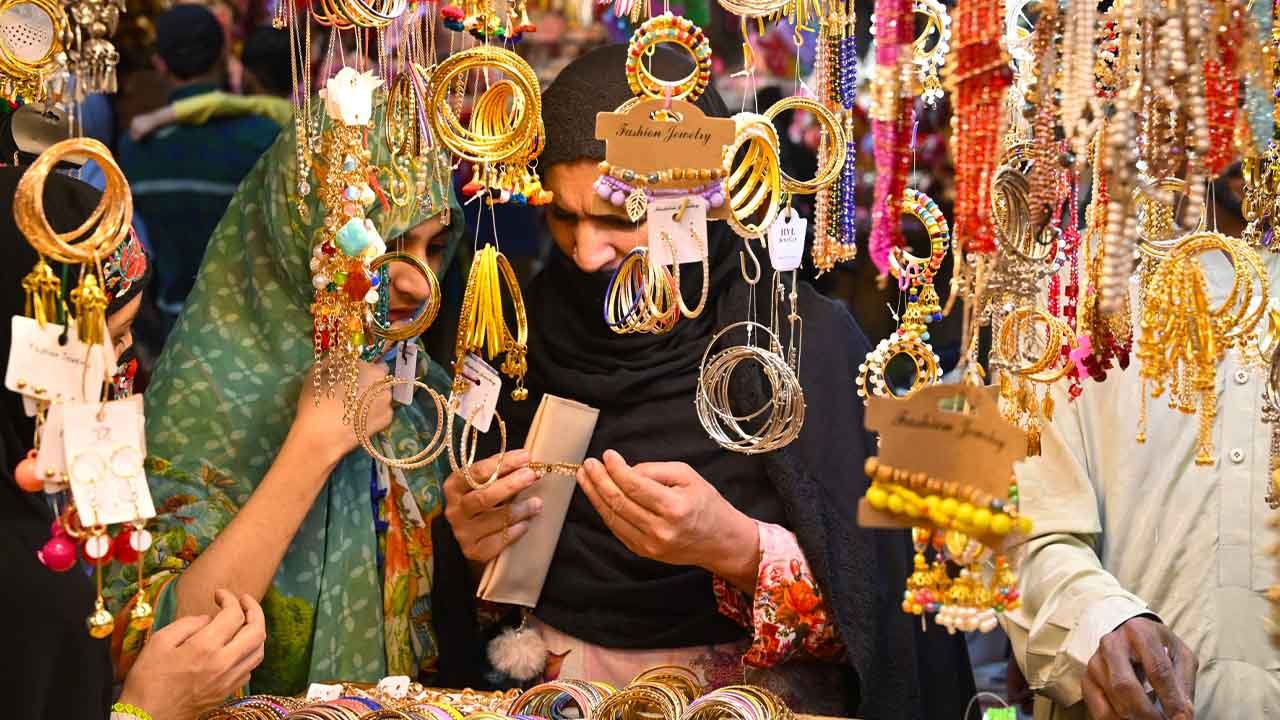
An artificial jewelry shop owner in Anarkali, Lahore, Zaryab, said, “There is a significant difference between last year’s sales and this year’s. People come to our stall, see 3-4 necklaces or bangles, ask the price, and then leave.”
The high inflation has significantly reduced the purchasing power of Pakistanis, and people are mostly focusing on fulfilling their essential needs. Noman Khan, an electrical engineer at ACE Pakistan, stated that this Eid, he has not been able to buy clothes for himself as he had to buy clothes for his two kids and wife. He added that “From artificial jewelry to kids’ clothes, everything is so expensive this year that I have no option but to wear old clothes. Although, I made sure that my kids and wife at least get what they want to wear this Eid.”
In conclusion, the struggle for small businesses in Pakistan during Eid-ul-Fitr celebrations is a stark reminder of the country’s economic challenges. While many Pakistanis are still managing to celebrate the holiday, the high levels of inflation have made it difficult for many to enjoy the festivities.
Dr Musadik Malik, the State Minister for Petroleum, issued a warning on the potential increase of petroleum product prices due to the significant decline in the value of the Pakistani rupee against the US dollar.
During an appearance on the Geo News program “Capital Talk” on Thursday, Dr Malik stated that the depreciation of the rupee could lead to an upsurge in the prices of petroleum products in the upcoming days. He also shared that the negotiations between Pakistan and Russia on oil imports were progressing well.
According to Dr Malik, the sudden increase in the US dollar’s price was due to political instability, making it difficult to govern the country in such an uncertain environment. Notably, during the last fortnight’s review, Finance Minister Ishaq Dar announced a reduction in petroleum prices.
As a result, the government cut the price of petrol by Rs5 per litre, setting it at Rs267 per litre, while the price of diesel remained steady at Rs280 per litre.
In addition, the price of light diesel oil decreased by Rs12 per litre, bringing it down to Rs184.68 per litre. Furthermore, the cost of kerosene oil was reduced by Rs15 per litre, bringing its price to Rs187.73.