Tag: Political Turmoil

  • Gold prices in Pakistan remain unaffected by political uncertainties

    Gold prices in Pakistan remain unaffected by political uncertainties

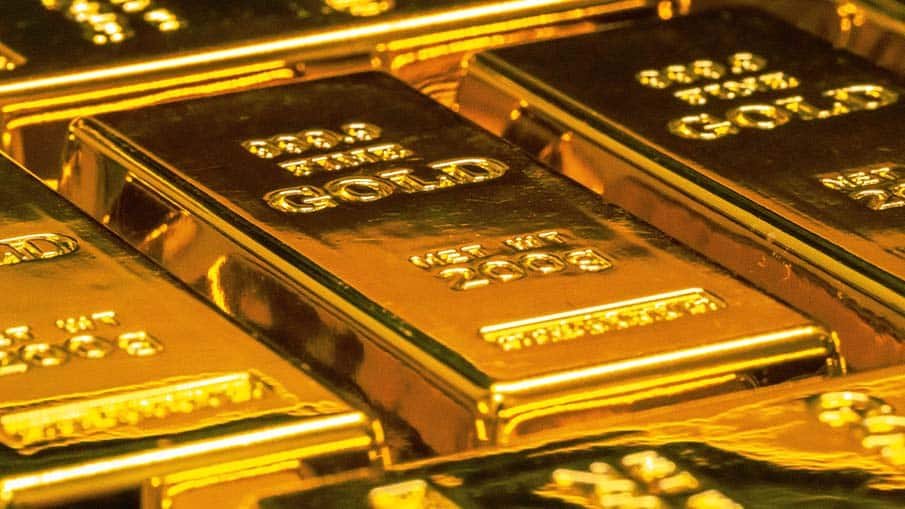
    Despite political uncertainties, the domestic bullion market exhibited stability, with 24-karat gold maintaining its price at Rs215,500 on Friday, showing no deviation from the previous session.

    This stability is indicative of the domestic gold market functioning normally, aligning with international gold rates and the exchange rate.

    The Karachi Sarafa Association reported that the prices of 10-gramme 24-karat gold and 10-gramme 22-karat gold also remained constant at Rs184,756 and Rs169,360, respectively.

    Similarly, silver prices showed resilience in the domestic market, with 24-karat silver being traded at Rs2,600 per tola and Rs2,229.08 per 10-gramme.

    On the global stage, the international spot gold exhibited minimal fluctuations, standing at $2,033.5 as of 12:40 pm.

    This stability in both domestic and international markets suggests a steady scenario despite the prevailing political uncertainties.

  • Gold price increases to Rs240,000 per tola amid political turmoil and IMF loan delay

    Gold price increases to Rs240,000 per tola amid political turmoil and IMF loan delay

    On Wednesday, the price of gold surged massively in Pakistan due to political turmoil following the arrest of the former prime minister and Pakistan Tehreek-e-Insaf (PTI) Chairman, Imran Khan.

    According to the All Pakistan Sarafa Gems and Jewellers Association (APSGJA), the price of gold (24 carats) rose by Rs9,900 per tola and Rs8,487 per 10 grams to reach Rs240,000 and Rs205,761, respectively.

    However, there was no increase in the international market price, which remained at $2,031 per ounce. The primary reason for the increase in gold’s price is the latest political storm that has caused violent protests across the country and led to the army’s deployment in three provinces.

    People in Pakistan are purchasing gold to protect themselves against inflation and currency depreciation, as the economy is already in dire straits. Furthermore, the delay in the revival of the International Monetary Fund (IMF) program, which negatively impacts the currency market, is bolstering the demand for gold.

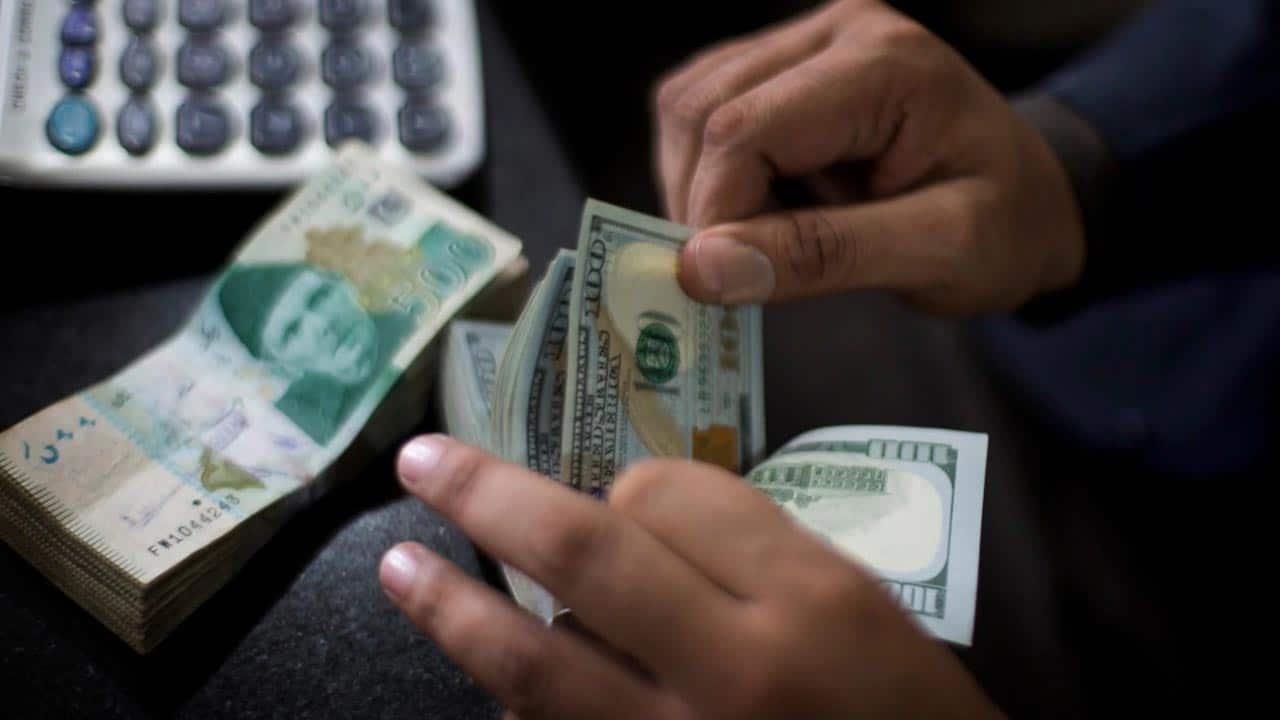
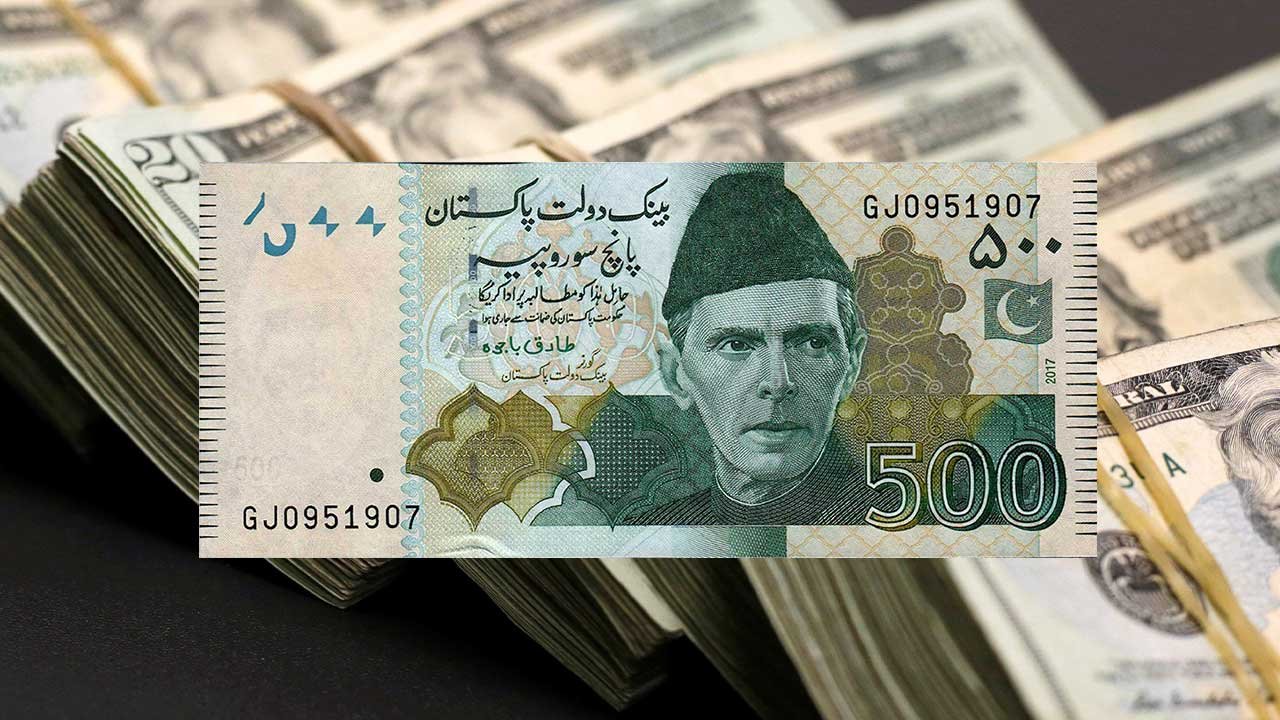
    According to Brecorder, the rupee also fell to a fresh low of Rs290.22 against the US dollar in the interbank market on Wednesday, after losing Rs5.38 or 1.89 per cent. The APSGJA also reported that the price of silver reached a new high, rising by Rs100 per tola and Rs85.75 per 10 grams to settle at Rs3,100 and Rs2,657.7, respectively.

  • Pressure on Pakistani rupee may decrease in August

    Pressure on Pakistani rupee may decrease in August

    Finance Minister Miftah Ismail expressed his continued faith in Pakistani rupee’s (PKR) ability to withstand pressure despite the PKR continuing to hit historic lows versus the US dollar and suffering its biggest weekly slide in more than 20 years.

    The finance minister stated in an interview with Radio Pakistan that the political climate and the fact that import payments are being made for shipments beginning in June are both contributing factors to the pressure on the PKR.

    “Import of $80 billion were made during the last fiscal year. We are still making payments for energy commodities purchased last month. Therefore, the rupee is under pressure. However, as we are importing less in July, its effect would be reflected from next month or, I should say, next week.”

    “The rupee’s fall is connected to the political situation as well. Before July 17, the situation wasn’t like this,” he added.

    Miftah also spoke about Pakistan’s economic issues, stating that the poor export base continues to be a matter of concern.

    The local currency has continued to depreciate against the US dollar, losing 7.6 per cent last week, more than what businesses typically account for in terms of annual currency depreciation, as the inter-bank market experienced a turbulent five sessions due to renewed political uncertainty and increased worries about Pakistan’s external financing needs.

    He also revealed that one friendly country is ready for an instant investment in Pakistan.

    It is worth noting that Pakistan anticipates receiving the next International Monetary Fund (IMF) tranche before the end of the following month following the board meeting.

  • Pakistani rupee plunges to Rs227 against US dollar at midday trading

    Pakistani rupee plunges to Rs227 against US dollar at midday trading

    On Thursday, the rupee’s decline against the US dollar reached an all-time low of Rs227 in the interbank market.

    Experts blame the losses on political unrest and the fact that the dollar is bolstering against other currencies as well, according to DAWN. On Wednesday, the rupee had a closing value of Rs224.92.

    According to the Foreign Exchange Association of Pakistan (FAP), the local currency fell by Rs2.08 to Rs227 versus the US dollar when the session started today at 10:57 AM.

    According to experts, the country’s political unrest had reduced investor confidence, which had caused importers to worry and “unnecessarily” buy dollars from the market. He claimed that as a result, there was an increase in the interbank market’s demand for dollars.

    Furthermore, over the past week, the dollar’s value had increased against over 40 currencies, including the British pound and the Japanese yen, which had an impact on the local market’s use of the rupee, according to Bostan.

    After reaching Rs211.93 on June 22, the local currency climbed to Rs204.56 in the first week of July. When the country’s staff-level agreement with the international lender was reached on July 15, it briefly appreciated but again continued to depreciate against the US dollar.

  • SBP determined to curb inflation, improve foreign exchange reserves

    SBP determined to curb inflation, improve foreign exchange reserves

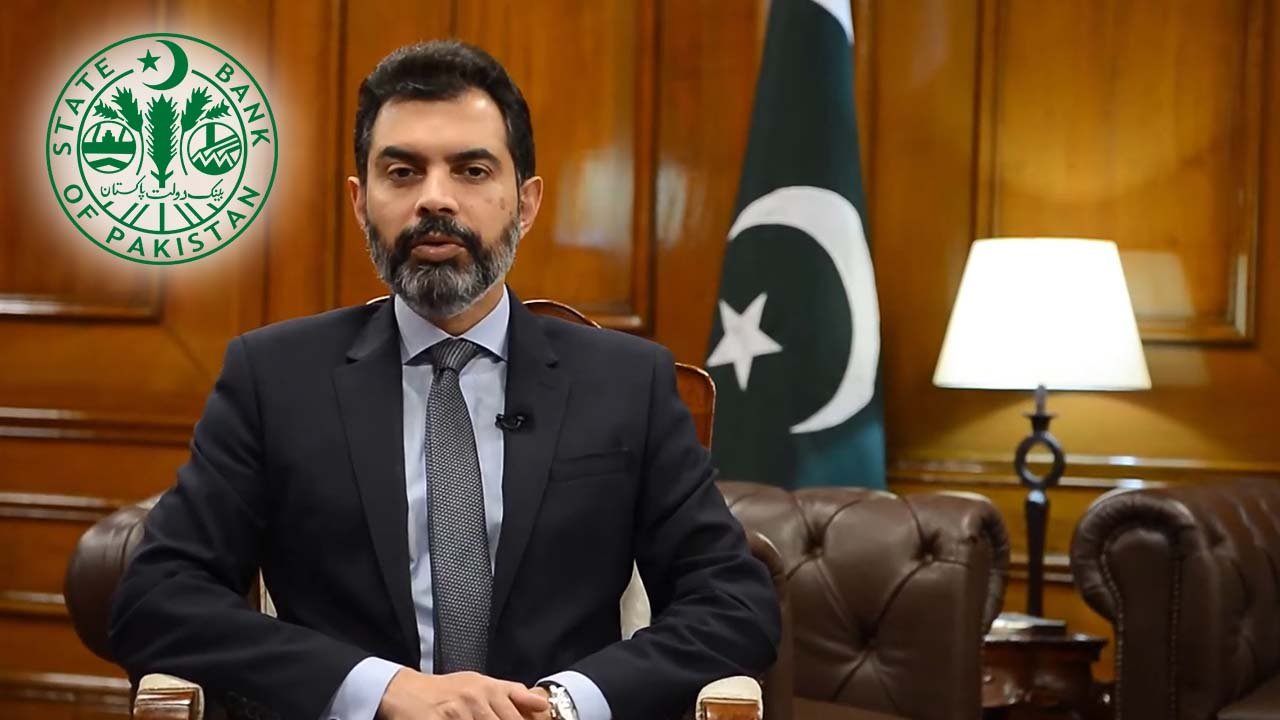
    In a recent interview, the Governor of the State Bank of Pakistan (SBP), Dr. Reza Baqir expressed concern over the continuous deterioration in foreign exchange reserves but remained optimistic that a renewal of loans will be witnessed in the near future, which, coupled with SBP’s initiatives, will enhance market confidence.

    He claimed that the decline in reserves is “clearly alarming, but we are convinced that the central bank’s initiatives will prevent further deterioration”.

    According to data issued by the central bank on April 7, the reserves massively declined by $728 million to $11.32 billion as of April 1.

    The decline, according to SBP, is primarily attributable to debt repayment and government payments linked to the settling of an arbitration judgment.

    In addition to this, the currency even hit new lows in the week, forcing the SBP to intervene by boosting the policy rate, declaring a 100 per cent cash margin on 177 commodities with instant effect, and hiking the markup percentage by 2.5 per cent for borrowing under the Export Finance Scheme (EFS).

    In response to the Monetary Policy Committee’s (MPC) recent rate hike, Baqir stated that the move was made to tackle growing inflation and lessen external pressures. “The foreign exchange market has been under a lot of pressure for more than a month. A number of factors contributed to it: first, there was political uncertainty; second, our reserves were drained due to debt payments”.

    Consequently, the Pakistani rupee ended its devaluation run on April 8, and the KSE-100 Index witnessed positive sentiment, ending the day with an impressive gain of 658 points.

    The SBP Governor also discussed the skyrocketing petrol prices, which remain elevated because of the Russia-Ukraine conflict, adding more pressure on the local currency.

    The central bank made a determined decision after analyzing the statistics to lower inflation, improve foreign exchange reserves, and boost business confidence.