Tag: political uncertainty

  • Moody’s upgrades Pakistan’s credit rating to Caa2, citing improved economic stability

    Moody’s upgrades Pakistan’s credit rating to Caa2, citing improved economic stability

    Moody’s Investors Service has upgraded Pakistan’s long-term issuer rating from “Caa3” to “Caa2” with a stable outlook, reflecting a moderate improvement in the country’s macroeconomic conditions and external financial position.

    This decision follows a similar move by Fitch Ratings in July, which upgraded Pakistan’s credit rating from “CCC” to “CCC+.”

    Moody’s stated that the upgrade is a result of reduced default risks, which are now more consistent with a Caa2 rating.

    This improvement is partly due to greater certainty in Pakistan’s external financing, bolstered by the sovereign’s staff-level agreement with the International Monetary Fund (IMF) on 12 July 2024, for a 37-month Extended Fund Facility (EFF) worth $7 billion. The IMF Board is expected to approve the EFF in the coming weeks.

    Pakistan’s foreign exchange reserves have nearly doubled since June 2023, although they remain below the levels required to meet its external financing needs. The country continues to rely on timely support from official partners to fully meet its external debt obligations.

    Despite the upgrade, Pakistan’s Caa2 rating still reflects very weak debt affordability, which poses a significant risk to debt sustainability. Moody’s expects interest payments to consume about half of the government’s revenue over the next two to three years. The rating also takes into account the country’s weak governance and high political uncertainty.

    The stable outlook indicates a balance of risks, with potential for further improvement if the government can reduce its liquidity and external vulnerability risks and achieve better fiscal outcomes, supported by the IMF programme.

    Sustained implementation of reforms, particularly those aimed at increasing government revenue, could enhance debt affordability. Timely completion of IMF reviews would enable Pakistan to secure continued financing from official partners, essential for meeting external debt obligations and rebuilding foreign exchange reserves.

    The upgrade to Caa2 from Caa3 also applies to the backed foreign currency senior unsecured ratings for The Pakistan Global Sukuk Programme Co Ltd, which Moody’s views as direct obligations of the Government of Pakistan. The outlook for The Pakistan Global Sukuk Programme Co Ltd is positive.

    Additionally, Moody’s has raised Pakistan’s local and foreign currency country ceilings to B3 and Caa2 from B3 and Caa1, respectively.

    The two-notch gap between the local currency ceiling and the sovereign rating is due to the government’s significant role in the economy, weak institutions, and high political and external vulnerability risks.

    The two-notch gap between the foreign currency ceiling and the local currency ceiling reflects limited capital account convertibility and relatively weak policy effectiveness.

  • Gold prices in Pakistan remain unaffected by political uncertainties

    Gold prices in Pakistan remain unaffected by political uncertainties

    Despite political uncertainties, the domestic bullion market exhibited stability, with 24-karat gold maintaining its price at Rs215,500 on Friday, showing no deviation from the previous session.

    This stability is indicative of the domestic gold market functioning normally, aligning with international gold rates and the exchange rate.

    The Karachi Sarafa Association reported that the prices of 10-gramme 24-karat gold and 10-gramme 22-karat gold also remained constant at Rs184,756 and Rs169,360, respectively.

    Similarly, silver prices showed resilience in the domestic market, with 24-karat silver being traded at Rs2,600 per tola and Rs2,229.08 per 10-gramme.

    On the global stage, the international spot gold exhibited minimal fluctuations, standing at $2,033.5 as of 12:40 pm.

    This stability in both domestic and international markets suggests a steady scenario despite the prevailing political uncertainties.

  • PSX faces record single-day plunge, shedding 2,534 points 

    PSX faces record single-day plunge, shedding 2,534 points 

    On Tuesday, Pakistan Stock Exchange’s (PSX) KSE-100 index experienced a significant downturn, plummeting by 2,534 points, or 4.11 per cent, culminating in a closure at 59,171—a record for the largest single-day drop in absolute points. 

    Since its zenith on December 13, the index has incurred a substantial loss of 7,923 points, reflecting an 11.81 per cent decline.

    The market correction intensified during today’s session, attributed to pronounced selling pressures in the final week of the year, compounded by prevailing political uncertainty. 

    In the latest session, the index showcased a wide trading range of 2,607.74 points, registering an intraday high of 61,634.55 (down by 70.54 points) and a low of 59,026.81 (down by 2,678.28 points). The total volume of the KSE-100 index reached 396.481 million shares.

    Within Tuesday’s session, 5 out of the 100 index companies closed higher, 91 closed lower, 1 remained unchanged, and 3 were untraded. 

    The decline of the KSE-100 index was particularly influenced by sectors such as oil and gas exploration companies (-508.87 points), commercial banks (-386.15 points), power generation and distribution (-271.96 points), cement (-211.88 points), and fertiliser (-194.77 points).

  • Pakistan navigates economic turbulence in 2023: A year of challenges and resilience 

    Pakistan navigates economic turbulence in 2023: A year of challenges and resilience 

    2023 posed significant challenges for Pakistan’s economy, characterised by a sharp slowdown, escalating inflation, and a near-default situation. However, amidst the turbulence, glimpses of progress emerged, suggesting a potential path towards recovery. 

    To meet International Monetary Fund (IMF) conditions, the government undertook stringent fiscal reforms, such as raising taxes and cutting subsidies. Despite being unpopular, these measures were deemed necessary to control the budget deficit and rein in inflation. 

    The latter part of the year witnessed positive indicators. Inflation, though still elevated, began to exhibit a downward trend. The agricultural sector experienced a robust comeback, particularly in cotton and rice production, while large-scale manufacturing showed a modest improvement. 

    Despite these positive developments, Pakistan’s economic recovery remains precarious. The global economic slowdown and geopolitical tensions continue to pose external challenges. Internal factors, such as political uncertainty and ongoing security issues, further contribute to the risks. 

    Throughout 2023, Pakistan consistently made headlines, grappling with economic crises, food shortages, mass protests, political arrests, and election-related upheavals. Here’s a recap of the key events in Pakistan during the year: 

    In 2023, Pakistan faced new lows, with the Pakistani rupee hitting an all-time low, surpassing the PKR 300 mark against the US dollar in August. Foreign reserves with the State Bank of Pakistan (SBP) dwindled to a concerning $3.1 billion in January 2023. 

    The country struggled to secure funding from the IMF, leading the SBP to raise interest rates by 300 basis points to 20 per cent, the highest since October 1996. Additional taxes were introduced, accompanied by increases in gas and electricity prices. Despite occasional reductions, petrol prices remained above Rs250 per litre. 

    The Consumer Price Index (CPI) reached an unprecedented 38.0 per cent YoY in May 2023, as per the CEIC database. Although it moderated to 26.9 per cent YoY in October, essential items like milk and onions became prohibitively expensive. 

    To combat inflation, Pakistan launched a free flour scheme, particularly in Punjab, under the Ramzan package. However, a tragic stampede in Karachi in April-March resulted in over 10 casualties at a free food distribution centre. 

    In a significant development, Pakistan secured a staff-level agreement with the IMF for a $3 billion, nine-month standby arrangement (SBA). The IMF executive board is set to convene on January 11, 2024, to consider final approval for the next $700 million tranche. 

    Summing up 2023 for Pakistan, the year was marked by elevated bank credit costs, volatile energy supplies, import restrictions, political instability, and weakened law and order. While some sectors, such as sugar, fertilisers, cement, and IT services, performed relatively well, others, like textiles, automotive, and pharmaceuticals, faced considerable distress. 

    Entrepreneurs faced unprecedented challenges, with a myriad of crises affecting the business landscape. Experts described the first six months as particularly challenging, citing uncertainty, a balance of payments crisis, and a shortage of foreign exchange. 

    The latter half of the year saw some alignment of factors, but challenges persisted, including inflation, unemployment, and continued monetary policy tightening. Despite these, there was improvement in donor relationships, credit rollovers, and foreign exchange inflows. 

    The automotive industry faced an extremely challenging year with import restrictions and demand suppression contracting the market. Despite absorbing the impact, optimism prevails for long-term gains from the envisioned economic restructuring. 

    For sustainable economic growth, Pakistan must commit to fiscal prudence, structural reforms, and export diversification. Investments in human capital, especially in education and healthcare, are crucial for long-term success. 

    In the backdrop of Pakistan’s economic challenges, its relations with neighbouring countries, particularly Afghanistan and India, continue to play a pivotal role in shaping the economic landscape.

    Islamabad’s interactions with Kabul and New Delhi remain tense, adding another layer of complexity to the existing economic challenges.

    Pakistan faces persistent challenges in its relationship with Afghanistan, characterized by sporadic skirmishes along the Afghanistan-Pakistan border.

    These clashes, involving Pakistani and Taliban forces, result in temporary cross-border closures and gunfire exchanges.

    In September 2023, a key closure led to an estimated $1 million loss over one week. Diplomatic efforts to curb cross-border attacks and pressure the Taliban demonstrate the evolving nature of these regional ties.

    Furthermore, Pakistan’s implementation of the Illegal Foreigners Repatriation Plan in late 2023 triggered widespread public unrest, particularly impacting nearly 2 million undocumented Afghan refugees.

    The policy raised concerns about its implications for cross-border trade and travel, leading to protest campaigns along the Chaman-Spin Boldak border.

    Unlike the Russia-Ukraine war, the ongoing Israel-Palestine conflict has had a limited economic impact on Pakistan. The main consequence is an increased cost, which, fortunately, has remained around six per cent thus far.

    Officials in the planning ministry and the State Bank closely monitor Middle East developments, formulating strategies to mitigate potential adverse impacts on the economy.

    While the likelihood of an Arab oil embargo is low, vigilance is crucial, especially for a country with a fragile economy. Contingency plans should be in place to address various possible scenarios, considering the potential for disruptions in global markets and supply chains.

    Global conflicts and economic stability

    Conflicts worldwide, including the Russia-Ukraine war, have demonstrated the potential for disruptions in fuel and food prices. Middle East nations, as key global oil suppliers, significantly influence Pakistan’s economy.

    The intensifying Middle East conflict poses challenges, impacting oil prices, currency fragility, and potential cost escalations in goods and services.

    Given Pakistan’s historical ties with Western countries, including FDI, the conflict raises concerns about the stability of the economy. The textile industry emphasises the necessity for early elections and a stable elected government to effectively address challenges arising from the conflict.

    Business organisations, such as the Federation of Pakistan Chamber of Commerce and Industry (FPCCI), view the situation as evolving and refrain from taking a stance at this point.

    The president of Pakistan’s textile industry advocates for early elections and a stable government to address challenges effectively.

    Economists highlight Pakistan’s susceptibility to oil price fluctuations and the potential impact of the Gulf crisis on remittance inflows.

    While some businesses anticipate no major shift in consumer preferences regarding Western brands, concerns linger about negative sentiments affecting certain brands. Calls to boycott Western brands may arise, although consistent follow-through remains uncertain.

    In the midst of these regional and global challenges, Pakistan’s economic resilience is being tested. Successful navigation through these complexities requires strategic planning, continued reforms, and a steadfast commitment to stability and prosperity.
  • Gold price increases by Rs6,200 to Rs221,000 per tola

    Gold price increases by Rs6,200 to Rs221,000 per tola

    On Tuesday, the gold price in Pakistan experienced a significant increase, aligning with the international market trends and the depreciation of the Pakistani rupee.

    The All-Pakistan Sarafa Gems and Jewellers Association (APSGJA) reported that the price of 24-carat gold rose by Rs6,200 per tola and Rs5,316 per 10 grammes, reaching Rs221,000 and Rs189,472 respectively.

    Simultaneously, the global market witnessed a $10 rise in the price of gold, settling at $1,967 per ounce.

    In contrast, the prices of silver per tola and 10 grammes remained unchanged at Rs2,650 and Rs2,271.94 respectively. The gold rate in Pakistan has shown volatility in recent times due to ongoing political and economic uncertainty, coupled with high inflation.

    Read more: Pakistan’s current account surplus soars to $334 million in June

    Furthermore, the Pakistani rupee displayed weakness against the dollar in the interbank market on Tuesday, depreciating by Rs3.78, as per data from the State Bank of Pakistan.

  • Gold price increases to Rs209,000 per tola amid depreciation of Pakistani rupee

    Gold price increases to Rs209,000 per tola amid depreciation of Pakistani rupee

    The price of gold in Pakistan experienced a slight increase at the beginning of the week, corresponding to the devaluation of the rupee against the dollar.

    As per the data released by the All-Pakistan Sarafa Gems and Jewellers Association (APSGJA), the price of 24-carat gold rose by Rs800 per tola and Rs686 per 10 grammes, reaching Rs209,000 and Rs179,184 respectively.

    In contrast, the international market maintained a stable price for gold at $1,925 per ounce. The gold market in Pakistan has displayed volatility in recent times, influenced by ongoing political and economic uncertainties, as well as high inflation. Consequently, individuals tend to view gold as a secure investment and a hedge during such periods.

    Data provided by the association indicates that the price of silver remained unchanged at Rs2,480 per tola and Rs2,26.20 per 10 grammes. During the previous session on Saturday, the price of gold experienced a decrease of Rs200 per tola.

    Meanwhile, the local currency underwent a marginal depreciation of 0.68 per cent against the US dollar in the interbank market, as reported by the State Bank of Pakistan (SBP). The rupee concluded the day at Rs279.80 against the dollar.

  • Fourth consecutive decline: Gold price drops by Rs1,800 to Rs218,700 per tola

    Fourth consecutive decline: Gold price drops by Rs1,800 to Rs218,700 per tola

    In line with the reduction in international rates, the per tola gold price in Pakistan experienced a significant decline of Rs1,800 on Wednesday. This marks the fourth consecutive day of falling prices for the precious metal.

    The All-Pakistan Sarafa Gems and Jewellers Association (APSGJA) released data indicating that the price of 24-carat gold decreased by Rs1,800 per tola and Rs1,543 per 10 grammes, settling at Rs218,700 and Rs187,500, respectively.

    Internationally, the price of gold plummeted by $17, reaching $1,934 per ounce in today’s market. Pakistan’s gold rate has exhibited volatility in recent times, largely due to ongoing political and economic uncertainty, high inflation, and currency depreciation. Amid such fluctuations, individuals often turn to gold as a safe investment and a hedge against market instability.

    While gold prices experienced a notable decline, the price of silver saw only nominal losses. Data shared by the APSGJA revealed that the price of silver fell by Rs50 per tola and Rs42.87 per 10 grammes, settling at Rs2,550 and Rs2,186.21, respectively.

    In other market developments, the local currency made nominal gains against the dollar, increasing by Rs0.24 or 0.08 per cent. The interbank market witnessed the closing exchange rate of Rs286.98 on Tuesday.

    The recent downward trend in gold prices in Pakistan reflects the influence of international market conditions. Despite these fluctuations, gold remains a sought-after investment during times of economic and political uncertainty, providing individuals with a secure and reliable asset.

  • Pakistani rupee falls to historic low of Rs288.43 against dollar

    Pakistani rupee falls to historic low of Rs288.43 against dollar

    On Wednesday, the Pakistani rupee (PKR) reached a new record low, falling to Rs288.43 against the US dollar in the interbank market.

    The State Bank of Pakistan (SBP) reported that the rupee slid by Rs1.34 against the greenback before closing at Rs288.43. Meanwhile, the Forex Association of Pakistan (FAP) has reported that the selling rate of the dollar in the open market was recorded at Rs295.

    This comes after the rupee had closed at Rs287.09 per US dollar the day before, with the greenback trading at over Rs291 in the open market. Additionally, on April 5, the rupee had closed at Rs287.85 per US dollar, while the greenback was trading at over Rs293 in the open market.

    Experts suggest that the drop in the rupee’s value can be attributed to various factors such as economic challenges, political uncertainty, and depleting foreign exchange reserves.

    It is worth noting that a staff-level agreement between the International Monetary Fund (IMF) and Pakistan was scheduled to take place on February 9.

  • Ishaq Dar cancels trip to the US for IMF and World Bank spring meetings

    Ishaq Dar cancels trip to the US for IMF and World Bank spring meetings

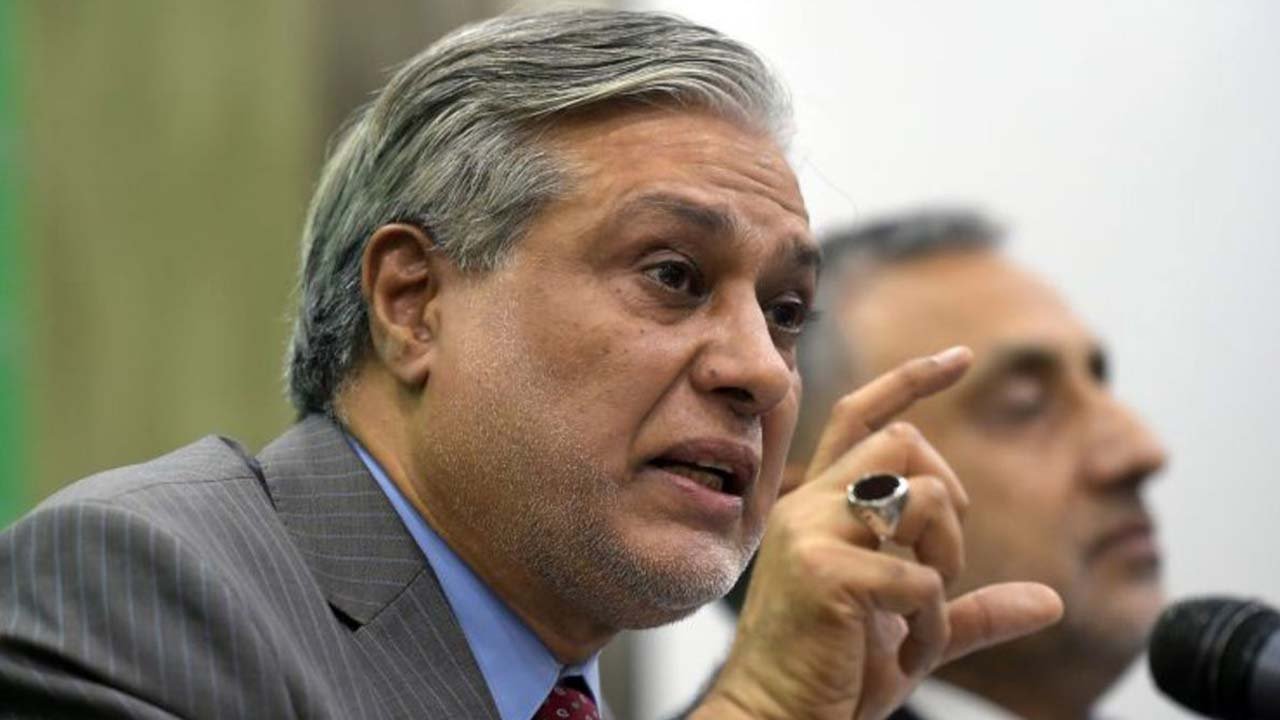
    Finance Minister, Ishaq Dar, has cancelled his scheduled trip to the United States next week to meet with the International Monetary Fund (IMF) and World Bank. The reason cited for the pull-out is the “domestic state of affairs” in the country, as the deepening political uncertainty has made it difficult for Dar to attend the World Bank-IMF spring meetings that were supposed to take place in Washington from April 10 to 16.

    Dar’s original plan was to address concerns about the government’s continuity, future economic plans, and bridging the trust deficit with multilateral lenders. However, with his withdrawal, the Minister of Economic Affairs, Sardar Ayaz Sadiq, will also not travel to the United States. The government will now be represented by Finance Secretary Hamed Yaqoob Sheikh and Economic Affairs Secretary Kazim Niaz at the WB-IMF spring meetings.

    The decision by the finance minister to withdraw may also result in the cancellation of meetings with his Saudi Arabian counterpart and the UK state minister for development. Dar was supposed to begin his trip on Monday with a meeting with Nathan Porter, the IMF’s Mission Chief in Pakistan, which was critical as Pakistan and the IMF were no longer actively negotiating following the government’s decision to announce petrol subsidies.

    Besides the IMF and WB, Dar was scheduled to meet with representatives from the three international credit rating agencies that had downgraded Pakistan. The finance ministry had also scheduled meetings with foreign commercial banks to persuade them to release loans.

    However, the Pakistan delegation may still get to meet with IMF’s deputy managing director Antoinette Sayeh, who follows Pakistan closely. It is uncertain whether a meeting with Managing Director Kristalina Georgieva would take place or not. Some reports have cited diplomatic protocol issues that prevent low-ranking dignitaries from meeting presidents/directors/leaders of various multilateral institutions and finance ministers from various countries.