Tag: politics latest

  • Notices issued to Bajwa and Faiz over ‘controversial’ interviews

    Notices issued to Bajwa and Faiz over ‘controversial’ interviews

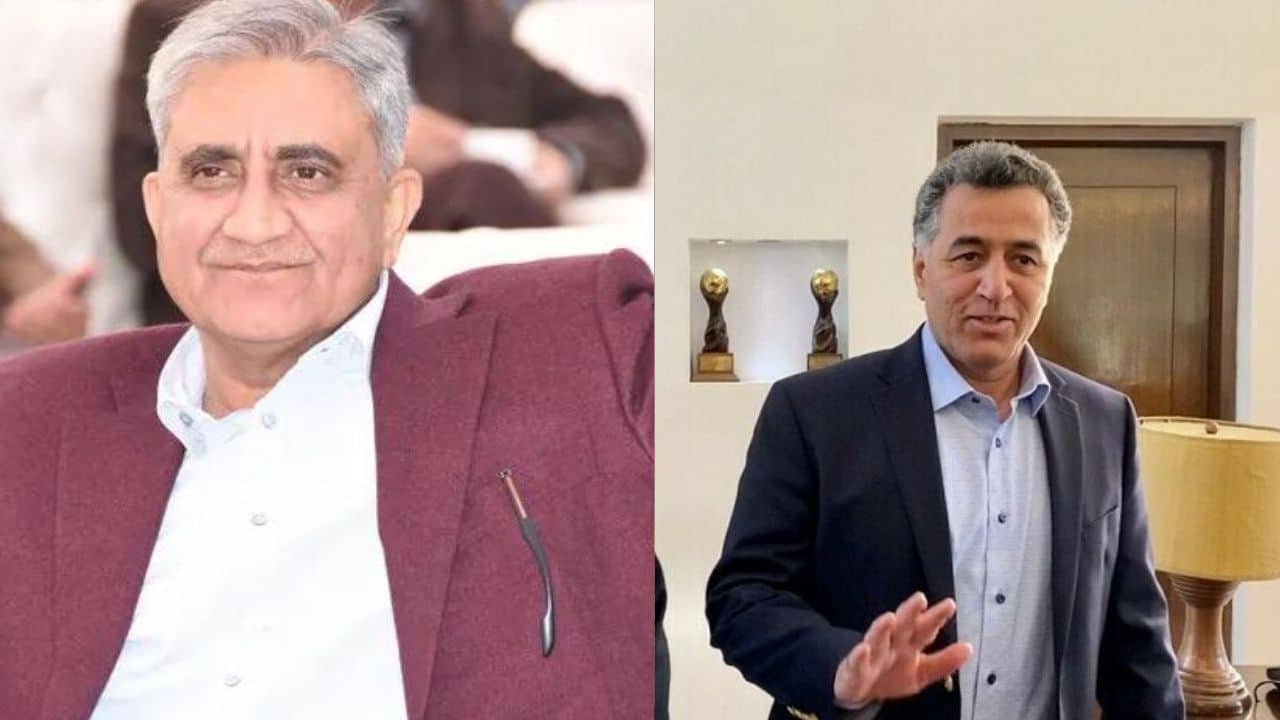
    The Islamabad High Court (IHC) has issued notices to former Army Chief General (retired) Qamar Javed Bajwa and former ISI Chief Lieutenant General (retired) Faiz Hameed over allegations of violating rules by giving interviews after their retirement, where they are accused of misrepresenting events.

    The notices were issued in response to a complaint filed by a private citizen named Atif Ali.

    The petition says that journalists Shahid Maitla and Javed Chaudhry conducted interviews with Bajwa and Faiz for the sake of viewership which had a “negative impact” on society. The petitioner said that he had been taken aback when he saw the articles as they could “pollute” society. It added that the garb of freedom of expression was used for a “criminal act”.

    The petition further alleges that events were misrepresented in the interviews and that the “criminal act” was conducted through connivance between the journalists and the generals.

    The petition says that the interviews portrayed a negative image of the institution and tried to create a rift between it and the people of Pakistan. Copies of the articles have also been attached to the petition.

    In addition to Gen. Bajwa and Lt. Gen. Hameed, notices have also been issued to the Pakistan Electronic Media Regulatory Authority (PEMRA) and the Press Association of Pakistan. Two journalists, Shahid Maitla and Javed Chaudhry, who conducted the interviews in question, have also been summoned by the court.

    Islamabad High Court’s Chief Justice, Aamer Farooq, in a written order issued on Monday, expressed dissatisfaction with the Federal Investigation Agency (FIA) for not responding to the petitioner’s repeated requests to file a complaint.

  • Imran Khan objects to treatment in Adiala jail

    Imran Khan objects to treatment in Adiala jail

    Pakistan Tehreek-e-Insaf (PTI) Chairman Imran Khan’s attorney, Salman Safdar, said on Monday that the former Prime Minister has objected to the way he is being treated at Adiala jail.

    Salman Safdar said that Imran Khan has been kept in jail like any other prisoner.

    “The chairman protested that he was provided with a room where it was difficult to live. It is also difficult to move or walk in the cell,” said Safdar. He added that he felt that the PTI chief’s blood pressure was high during today’s hearing.
    “The PTI chief strongly protested during the hearing in the court,” said Safdar.
    Moreover, Imran Khan’s attorney requested that the trial be conducted in an open court so that the public could be aware of it, adding that it is not “right” to conduct the trial in jail.

    On the other hand, Khan’s other lawyer, Sher Afzal Marwat, has said that Imran Khan and PTI’s vice chairman, Shah Mahmood Qureshi, were standing in a “cage” during the hearing. Terrorists are not even presented before court in this manner, the indignant lawyer commented.
    The special court also announced that PTI leaders will be indicted in the cipher case on October 17.

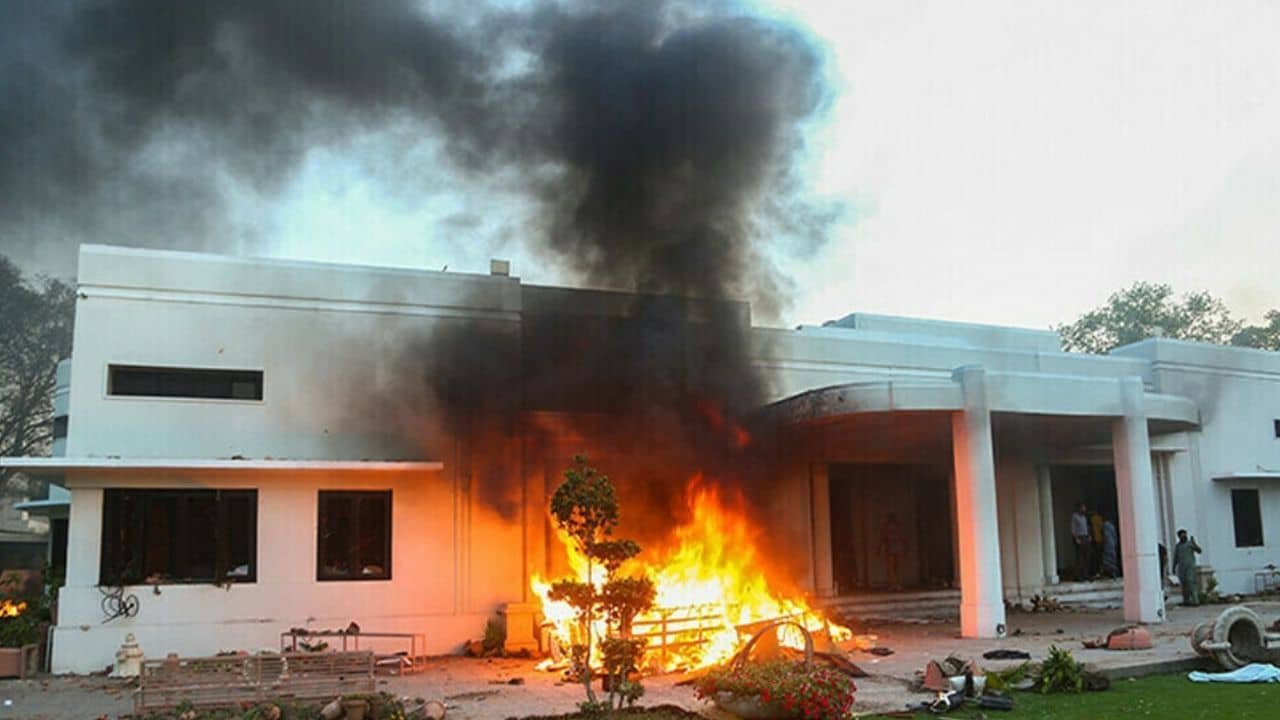
  • Jinnah House Trial to be completed in 1.5 months

    Jinnah House Trial to be completed in 1.5 months

    In a recent development, Punjab’s Special Prosecutor, Syed Farhad Ali Shah, revealed that the Home Department has issued a notification to conduct the trial of the May 9 cases within the confines of a jail facility.

    Speaking about the matter, Syed Farhad Ali Shah stated, “The Jinnah House trial is set to be completed within a timeframe of one to one and a half months.” He also confirmed that the challan (charge sheet) has been submitted to the court.

    The notification issued by the Home Department specifies that not only the Jinnah House case but also the arson and siege cases related to Askari Tower and Shadman police station will be conducted within jail premises. The move aims to streamline legal proceedings and enhance security during the trials.

    In a related development, Justice Ali Baqir Najfi of the Lahore High Court (LHC), on Monday, directed Punjab government prosecutors to apprise the court in the Khadijah Shah case after taking directions from the government.

    The petitioner, through a lawyer, pleaded that she was unduly implicated in the May 9 riots incidents and Gulberg police station had illegally involved her in the case against the facts.
    “The Anti-Terrorism Court dismissed the bail by ignoring the facts,” Khadija Shah pleaded via her lawyer in the provincial apex court.

    Earlier, the LHC had conditionally dismissed the registrar’s objections to Khadija Shah’s bail plea, deciding to remove objectionable documents from the application and dismissing the objection itself.

    In another recent development, an anti-terrorism court (ATC) has ordered the release of Sanam Javed Khan, a prominent Pakistan Tehreek-e-Insaf (PTI) activist, and eight other party members in connection with the Jinnah House attack case. The decision comes after a series of legal proceedings surrounding the incident earlier this year.

    Presiding over the case, ATC Judge Arshad Javed announced the verdict, granting bail to the nine suspects involved in the Jinnah House attack. The court approved their bail pleas, requiring surety bonds worth Rs 0.1 million each, thereby paving the way for their release.

  • No restrictions on PTI: caretaker government

    No restrictions on PTI: caretaker government

    Caretaker Minister for Information and Broadcasting, Murtaza Solangi, has asserted that there are no restrictions on Pakistan Tehreek-e-Insaf (PTI) contesting the upcoming general elections, emphasizing that announcing a date for polls is not the responsibility of the caretaker government.

    The election will be held on the date announced by the Election Commission of Pakistan (ECP), Solangi said, showing confidence in the ECP as an autonomous body mandated with conducting elections.

    The caretaker minister said that all the registered political parties have equal opportunities, including PTI. “All the parties and their leadership have the freedom to give their point of view on an important issue,” he added.

    “There are no restrictions on PTI as a political party,” said Solangi.

    Commenting on Nawaz Sharif’s homecoming on October 21, the caretaker information minister stressed that the interim setup has nothing to do with the Pakistan Muslim League-Nawaz (PML-N) supremo’s return.

  • No social media allowed for Punjab Government employees

    No social media allowed for Punjab Government employees

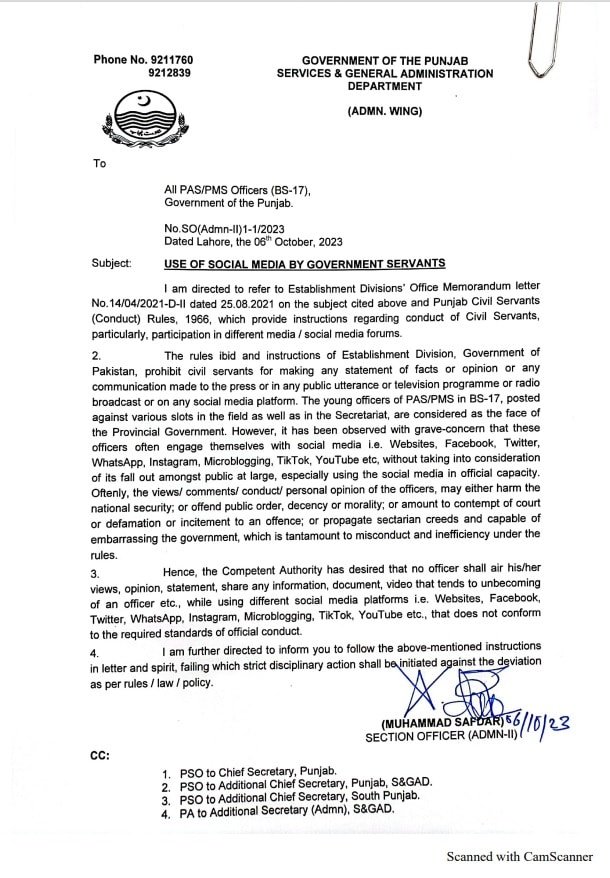
    The Services and General Administration Department Punjab has issued a letter to government officers restricting them from expressing their personal opinions on social media and commenting on conventional as well as social media.

    In view of the increasing trend of using social media among newly recruited government officers, the Punjab government has imposed a ban on Grade 17 officers, including assistant commissioners, on expressing their opinions on social media and media.
    The letter says that according to the civil services rules, giving statements in the media and social media based on one’s personal opinion is a violation of the rules.

    The letter says, “The young officers of PAS/PMS in BS-17, posted against various slots in the field as well as in the Secretariat, are considered as the face of the Provincial Government. However, it has been observed with grave-concern that these officers often engage themselves with social media i.e. Websites, Facebook, Twitter, WhatsApp, Instagram, Microblogging, TikTok, YouTube etc, without taking into consideration of its fall out amongst public at large, especially using the social media in official capacity.”

    It further states, “Often, the views/ comments/ conduct/ personal opinion of the officers, may either harm the national security; or offend public order, decency or morality; or amount to contempt of court or defamation or incitement to an offence; or propagate sectarian creeds and capable of embarrassing the government, which is tantamount to misconduct and inefficiency under the rules.”

    It also warned that strict action will be taken against those violating the instructions.

  • What is Form 45 and why is it important in elections?

    What is Form 45 and why is it important in elections?

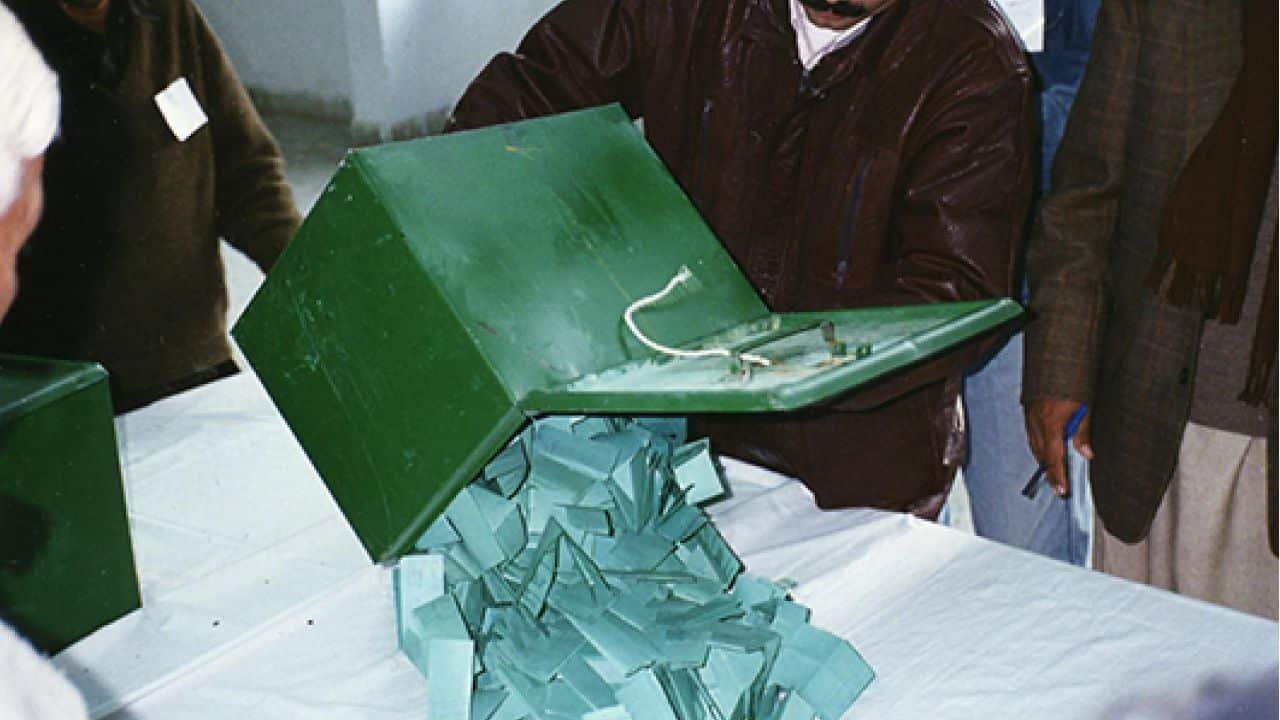
    The Election Commission of Pakistan (ECP) has recently made changes to Form 45, a document used for counting results.

    According to the ECP, from now on, date and time will also be entered into Form 45. The Commission said that objections to the amendment can be submitted till October 20.

    What is Form 45

    Form 45, commonly known as the “Result of the Count” form, is a significant record in the Pakistani electoral process. It plays a pivotal role in documenting and revealing voting outcomes at specific polling stations. Here, we delve into the importance of Form 45 and its role in Pakistan’s electoral process:

    Purpose: Form 45 is a cornerstone of transparency and accountability in Pakistan’s elections. Its primary goal is to create an official record of voting outcomes at specific polling stations. This documentation is indispensable for compiling and verifying results at the constituency level.

    Contents: Form 45 includes details like the polling station number, constituency name, the total number of registered voters at that station, the total votes cast, and a comprehensive breakdown of votes garnered by each candidate.

    Signatures: Form 45 is signed by the Presiding Officer responsible for overseeing the voting process. Additionally, representatives of candidates present at the polling station also sign the form as witnesses. These signatures are crucial for confirming the accuracy of recorded results.

    Transparency and Verification: Form 45 is instrumental in maintaining transparency throughout the voting process. It empowers candidates and their representatives to independently validate results recorded at the polling station and cross-reference them with the final results. This robust verification process minimizes the potential for irregularities or manipulation in election outcomes.

    Compilation and Reporting: After polling concludes, the Presiding Officer completes Form 45 and promptly submits it to the Returning Officer overseeing the respective constituency. The Returning Officer’s role is pivotal, as they collect and consolidate Form 45 from all polling stations within the constituency to determine final election results.

    Public Accessibility: In a dedicated effort to promote transparency, the Election Commission of Pakistan (ECP) mandates Presiding Officers to prominently display Form 45 outside polling stations for public scrutiny. This transparency measure enables voters, candidates, and their representatives to openly observe, verify, and validate election results, fostering confidence in the electoral process.

  • Is Nawaz Sharif leaving the London office?

    Is Nawaz Sharif leaving the London office?

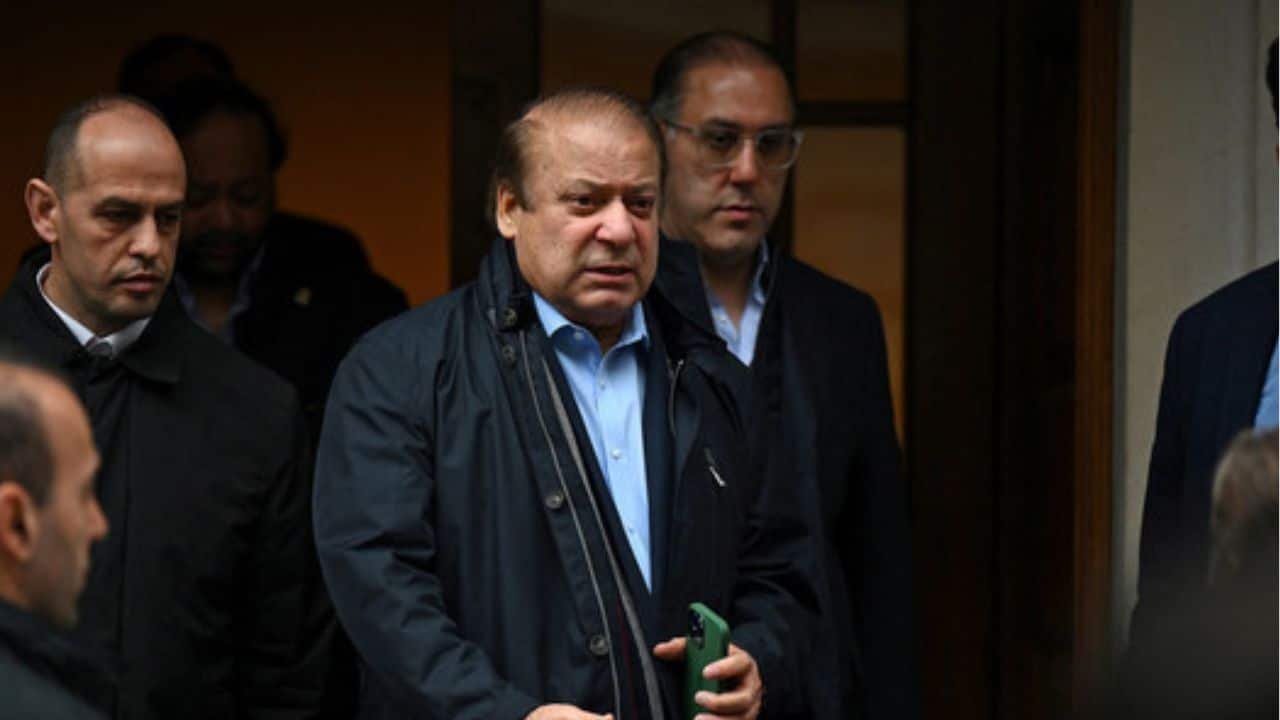
    Former Pakistan Prime Minister and leader of the Pakistan Muslim League-Nawaz (PML-N), Nawaz Sharif, announced that October 6 is his last day at the London office, indicating his imminent departure to Pakistan.

    While talking to journalists, Nawaz Sharif expressed his gratitude to all reporters who have covered his activities in London, regardless of their stance, be it in favor or against him.

    Recognizing the pivotal role journalism plays in society, Nawaz Sharif stressed the significance of the public’s reliance on journalists’ opinions. He underscored the importance of journalists avoiding sensationalism and defamation, instead calling for constructive criticism and reform.

    Notably, Nawaz Sharif questioned the effectiveness of protests staged by Pakistanis in London over the past four years, particularly those involving figures like Maryam Aurangzeb. He suggested that if people wished to engage in protests, they should do so within Pakistan.

    During a press conference in Lahore, PML-N President Shehbaz Sharif stressed that the question regarding Nawaz’s return shouldn’t be repeated since he will be coming back.

    He also redefined the party’s slogan of ‘vote ko izzat do’.

    “Giving respect to the ballot doesn’t mean it is an anti-establishment slogan. It means serving the voters,” he said, asking whether raising anti-establishment slogans would help overcome the people’s problems.

    He also clarified a comment which was “wrongly attributed” to him. “I had never said that I am a darling of the (military) establishment. Actually, a journalist during a media interaction the other day had said that I had been a darling of the establishment for decades.”

    It is pertinent to know that the former three-time prime minister will return to Pakistan on October 21 and address a public gathering at 6 p.m. at Minar-e-Pakistan on the same day, senior PML-N leader Rana Sanaullah revealed on Tuesday.

  • Is Nawaz Sharif ‘fit’ to travel to Pakistan?

    Is Nawaz Sharif ‘fit’ to travel to Pakistan?

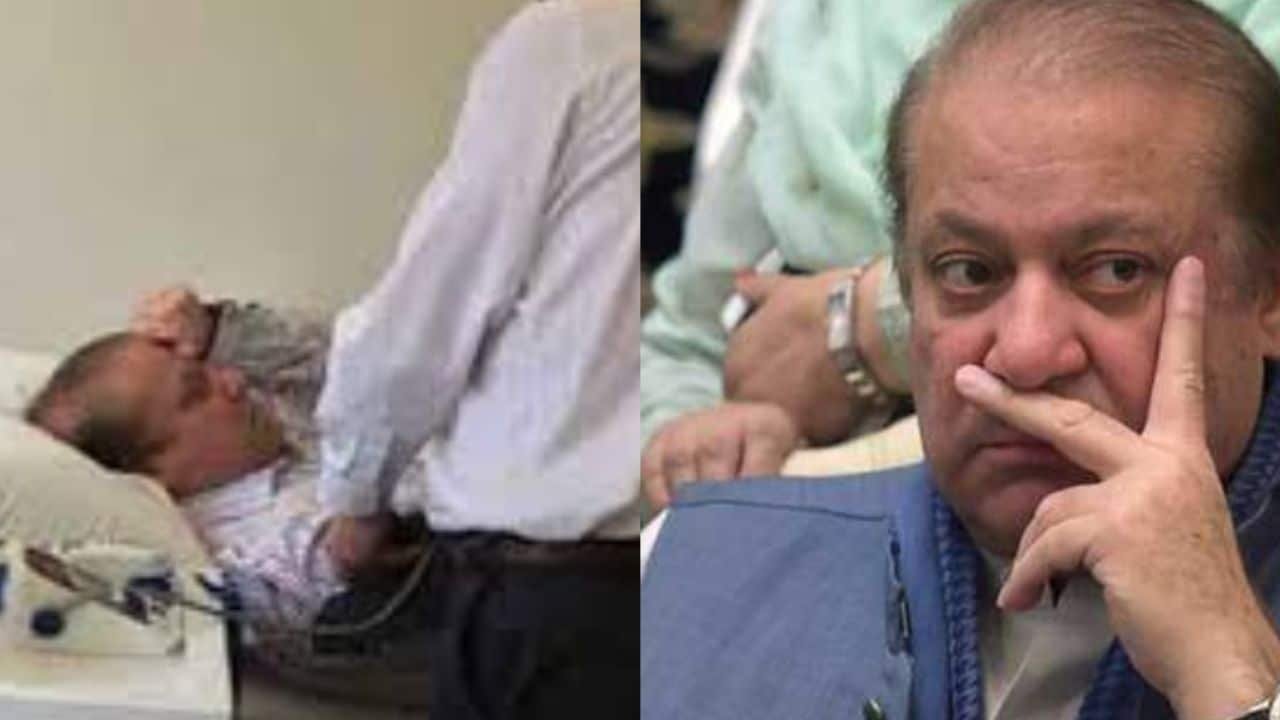
    Just days ahead of former Prime Minister Nawaz Sharif’s anticipated return to Pakistan, a new medical report has been submitted to the Lahore High Court (LHC) on Friday by the legal team of the former Prime Minister, Geo has said.

    Nawaz Sharif, the leader of the Pakistan Muslim League-Nawaz (PML-N), had been granted permission by the LHC in November 2019 to travel abroad for medical treatment based on his deteriorating health.

    Since then, Nawaz Sharif has resided in London. The court, meanwhile, has ordered him to regularly submit medical reports to keep authorities updated about his health conditions.

    In September 2023, PML-N President Shehbaz Sharif announced that his elder brother would be ending his self-imposed exile of four years and returning to Pakistan on October 21.

    The latest medical report, filed by Nawaz Sharif’s legal team, features insights from Professor Carlo di Mario of London’s Royal Brompton Hospital, who has been providing medical care to the former Prime Minister throughout his stay in London over the past years.

    Professor Carlo di Mario, an expert in Interventional Cardiology, detailed Nawaz Sharif’s medical history, stating, “We initially attempted medical treatment, strengthening his antianginal therapy.”

    However, due to persistent anginal symptoms and the challenges posed by the COVID-19 pandemic, the decision was made to perform an angioplasty in November 2022 to cure a blocked left circumflex artery.

    The procedure included rotational atherectomy, intravascular lithotripsy, and the deployment of multiple stents under IVUS guidance. Despite these interventions, the medical report indicates that Nawaz Sharif still experiences some residual anginal symptoms, and continuous monitoring is recommended.

    The report also highlights the complexity of Nawaz Sharif’s medical condition, mentioning “diffuse distal coronary disease in a patient with diabetes and multiple other comorbidities that would require frequent follow-up investigations both in London and Pakistan.”

    With this fresh medical report submitted to the Lahore High Court, Nawaz Sharif’s health status remains a focal point as the date of his return to Pakistan draws nearer.

  • Election Commission takes notice of violations in Sindh

    Election Commission takes notice of violations in Sindh

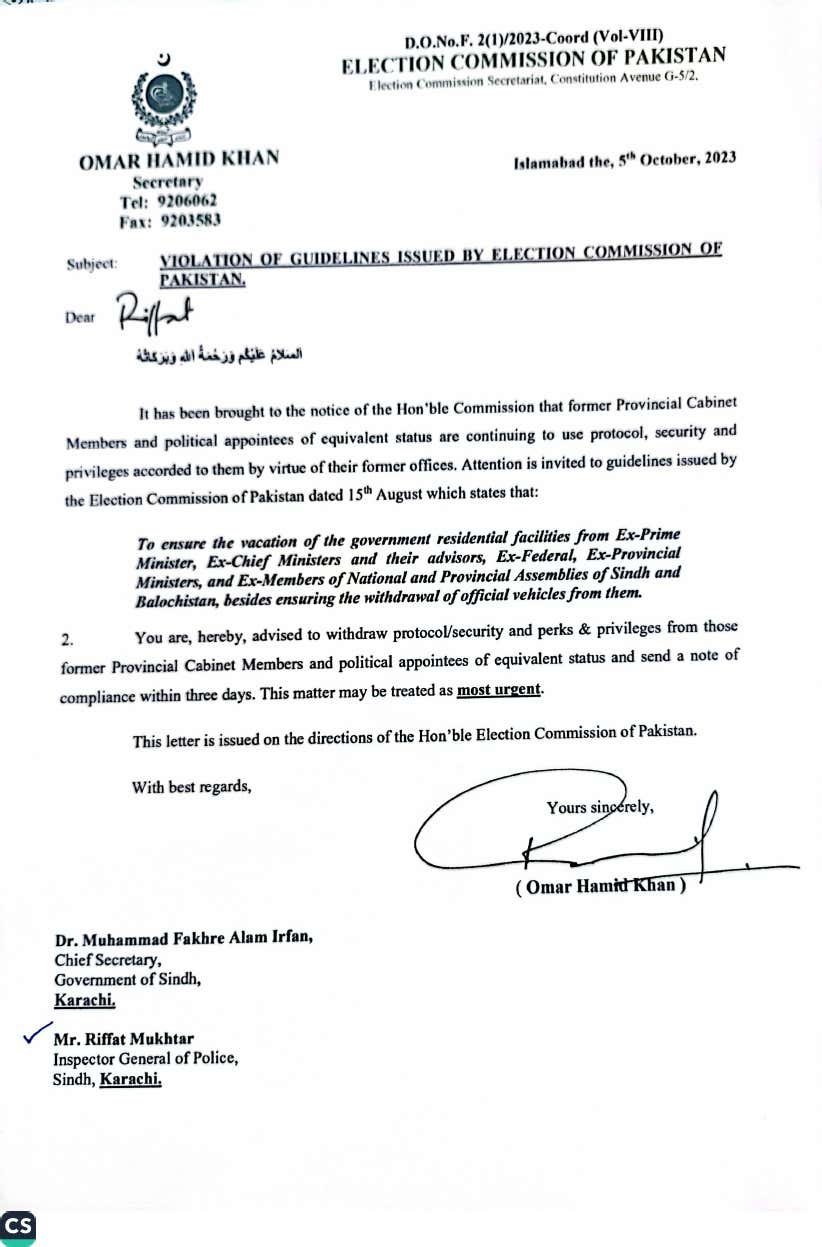
    The Election Commission of Pakistan (ECP) has issued a directive instructing the Chief Secretary of Sindh to immediately withdraw security, privileges and protocols from former members of the provincial cabinet and government officials. The decision follows the conclusion of the provincial government’s tenure and the upcoming general elections scheduled for the beginning of next year, after the delimitation process.

    In a letter addressed to the provincial secretary and inspector general, Election Commission Secretary Omar Hamid highlighted that former officials and cabinet members were still benefiting from the perks and privileges associated with their former positions.

    The letter stated, “You are, hereby, advised to withdraw protocol/security and perks and privileges from those former provincial cabinet members and political appointees of equivalent status and send a note of compliance within three days. This matter may be treated as most urgent.”

    The ECP had earlier on August 15 sent a letter to provincial authorities for withdrawal of the official protocol of the then members of former Chief Minister Murad Ali Shah-led cabinet and government officials.

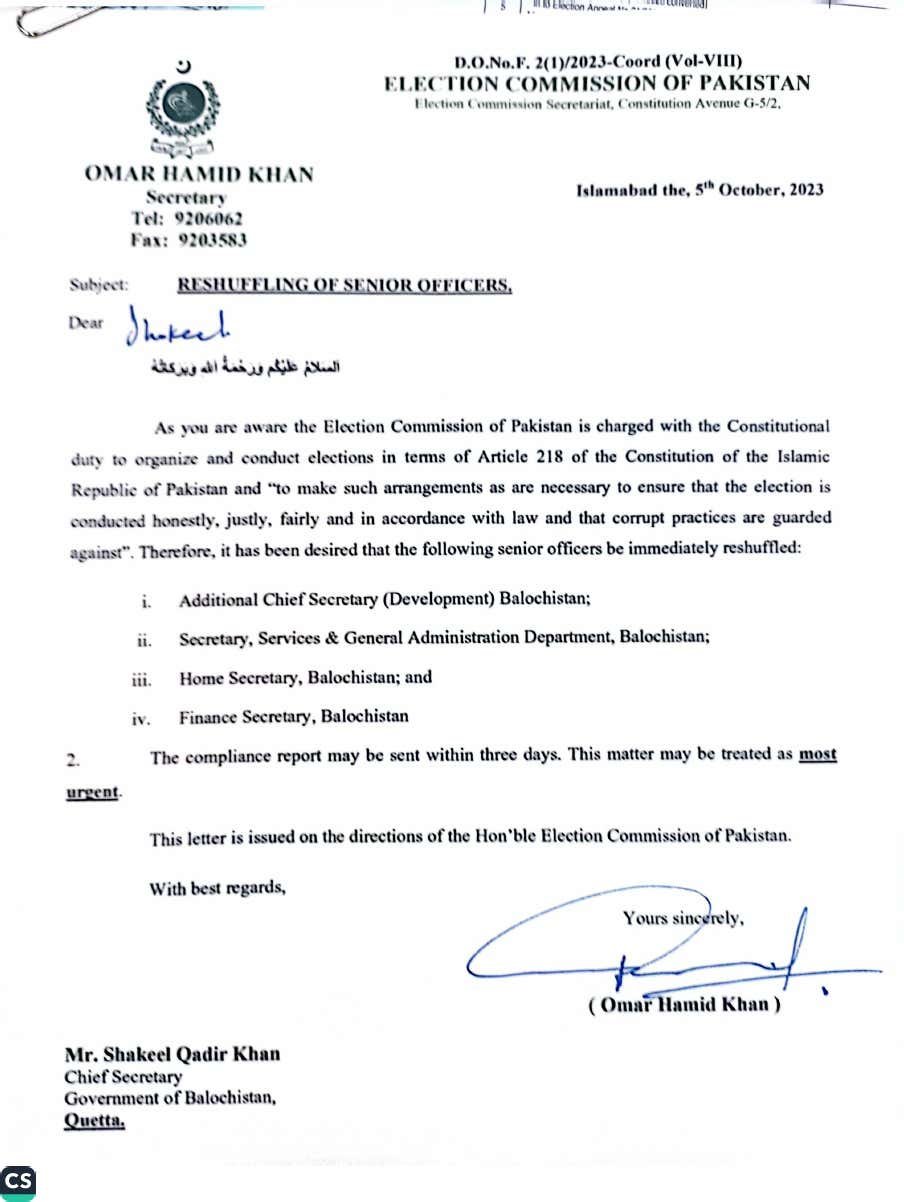
    Additionally, in a separate communication to the Balochistan chief secretary, the Election Commission directed the immediate replacement of existing officials with new appointees for specific positions.

    The letter states, “As you are aware the Election Commission of Pakistan is charged with the Constitutional duty to organize and conduct elections in terms of Article 218 of the Constitution of the Islamic Republic of Pakistan and “to make such arrangements as are necessary to ensure that the election is conducted honestly, justly, fairly and in accordance with law and that corrupt practices are guarded against. Therefore, it has been desired that the following senior officers be immediately reshuffled:

    1. Additional Chief Secretary (Development) Balochistan
    2. Secretary, Services & General Administration Department, Balochistan
    3. Home Secretary, Balochistan
    4. Finance Secretary, Balochistan”

    The ECP has requested a compliance report from the concerned authorities within three days.

  • What does Bushra Bibi want to give Imran Khan in jail?

    What does Bushra Bibi want to give Imran Khan in jail?

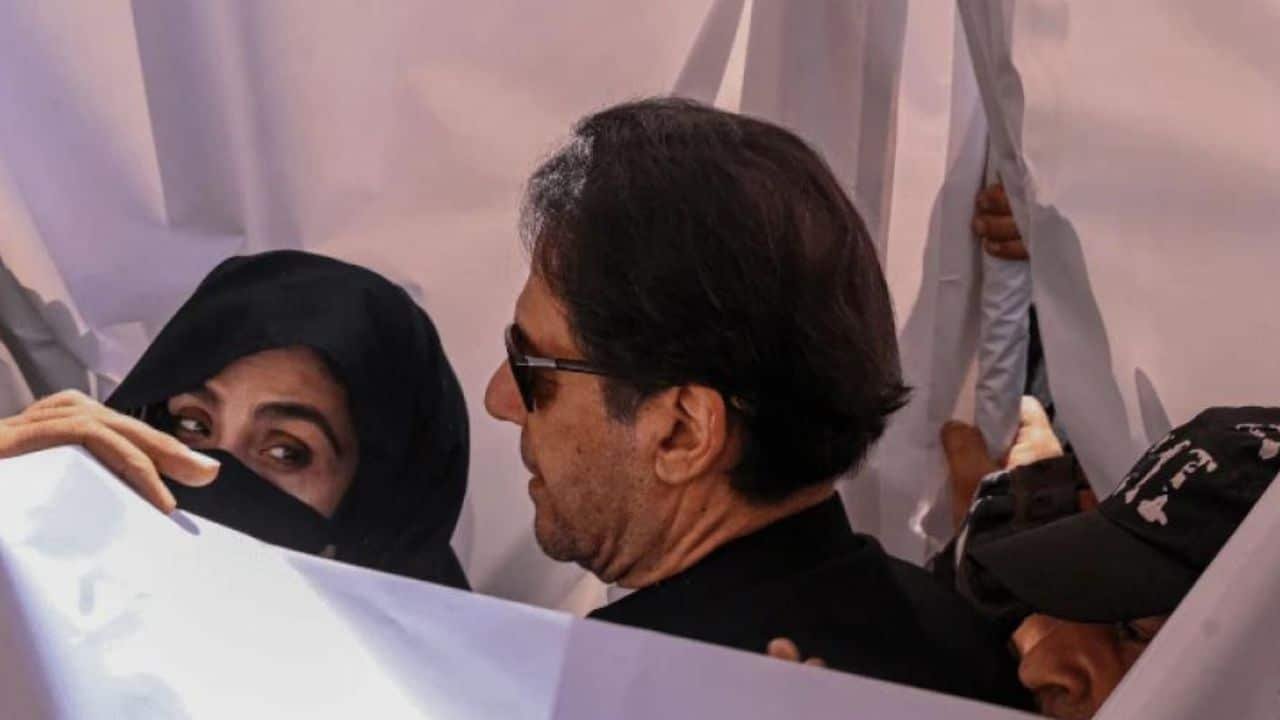
    Imran Khan’s wife, Bushra Bibi, has approached the Islamabad High Court seeking protection for her husband and expressing concerns about his safety in jail. She has requested permission for homemade food for Imran Khan, while his legal team has claimed that his life is in danger.

    The IHC has issued notices to respondents in Bushra Bibi’s case and is considering her request to provide homecooked food to Imran Khan. The court has adjourned the hearing until next week.

    Imran Khan, the Chairman of PTI, has taken his case to the Islamabad High Court (IHC) in an effort to suspend a trial court’s verdict in the Toshakhana case. This move comes after the IHC previously suspended his three-year sentence in the same case about a month ago.

    In August, a trial court in Islamabad found Imran Khan guilty of “corrupt practices” related to concealing details of state gifts and sentenced him to three years in prison. While Additional District and Sessions Judge Humayun Dilawar had ordered the capital police chief to arrest Imran, he was instead arrested by the Punjab police, who took him to the Attock district jail. The Supreme Court later acknowledged “procedural defects” in Imran’s conviction by the trial court, suspending his sentence.

    Following the suspension of his Toshakhana case sentence, Imran Khan was detained in the cipher case and has been in judicial remand, which was extended until October 10. Recently, he was moved to Adiala jail from Attock jail under the IHC’s directives.

    Imran Khan, represented by senior lawyer Sardar Latif Khosa, has filed a petition with the IHC seeking the rectification of the order that suspended the Toshakhana case verdict. The petition requests the suspension of the order until the final appeal decision and also seeks permission to make the state a respondent in the appeal.

    The petition argues that the IHC has the authority to suspend the impugned order and sentence under the relevant sections of the Criminal Procedure Code. It highlights an omission in recording the counsel’s request for suspension of the trial court verdict, which has affected Imran Khan’s rights, including his disqualification from elections by the Election Commission of Pakistan (ECP).

    The petition further alleges mala fide intentions on the part of the ECP in disqualifying Imran Khan and mentions attempts to remove him from the leadership of PTI and prevent him from participating in general elections.

    In a related development, the Special Court (Official Secrets Act) handling the cipher case against Imran Khan and former foreign minister Shah Mehmood Qureshi is expected to indict both leaders on October 9. The case involves the disclosure of classified diplomatic information.

    During the trial behind bars, the prosecution requested in-camera proceedings, but the judge ruled that the trial would commence after framing charges against the suspects and that proceedings were already being conducted inside Adiala Jail. The IHC rejected the FIA’s request for an in-camera hearing of their post-arrest bail petitions in the cipher case.