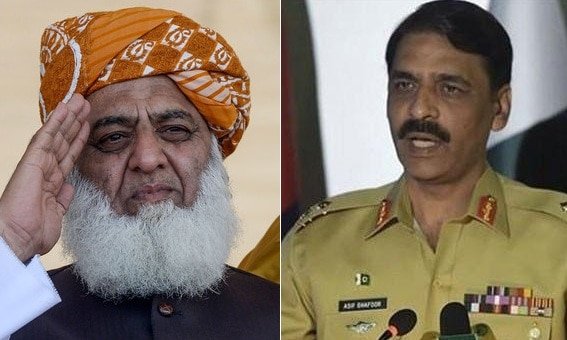
Inter-Services Public Relations (ISPR) Director General (DG) Major General Asif Ghafoor has said that Pakistan Army is an impartial institution and its support lies only with the democratically elected government.
Speaking to a private media outlet on Friday night, the military spokesperson said that Jamiat Ulema-e-Islam-Fazl (JUI-F) chief Maulana Fazlur Rehman was a senior politician and he should elaborate as to which institution he was talking about in his Azadi March address.
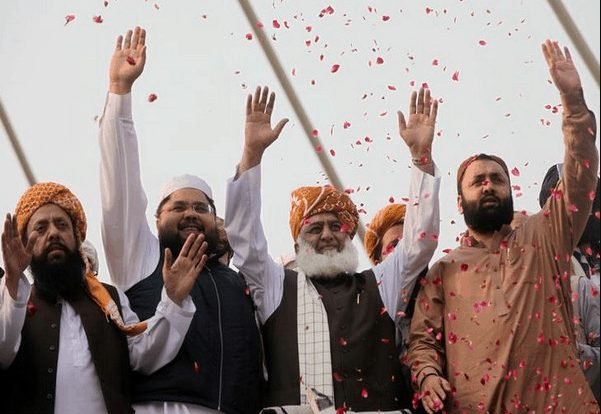
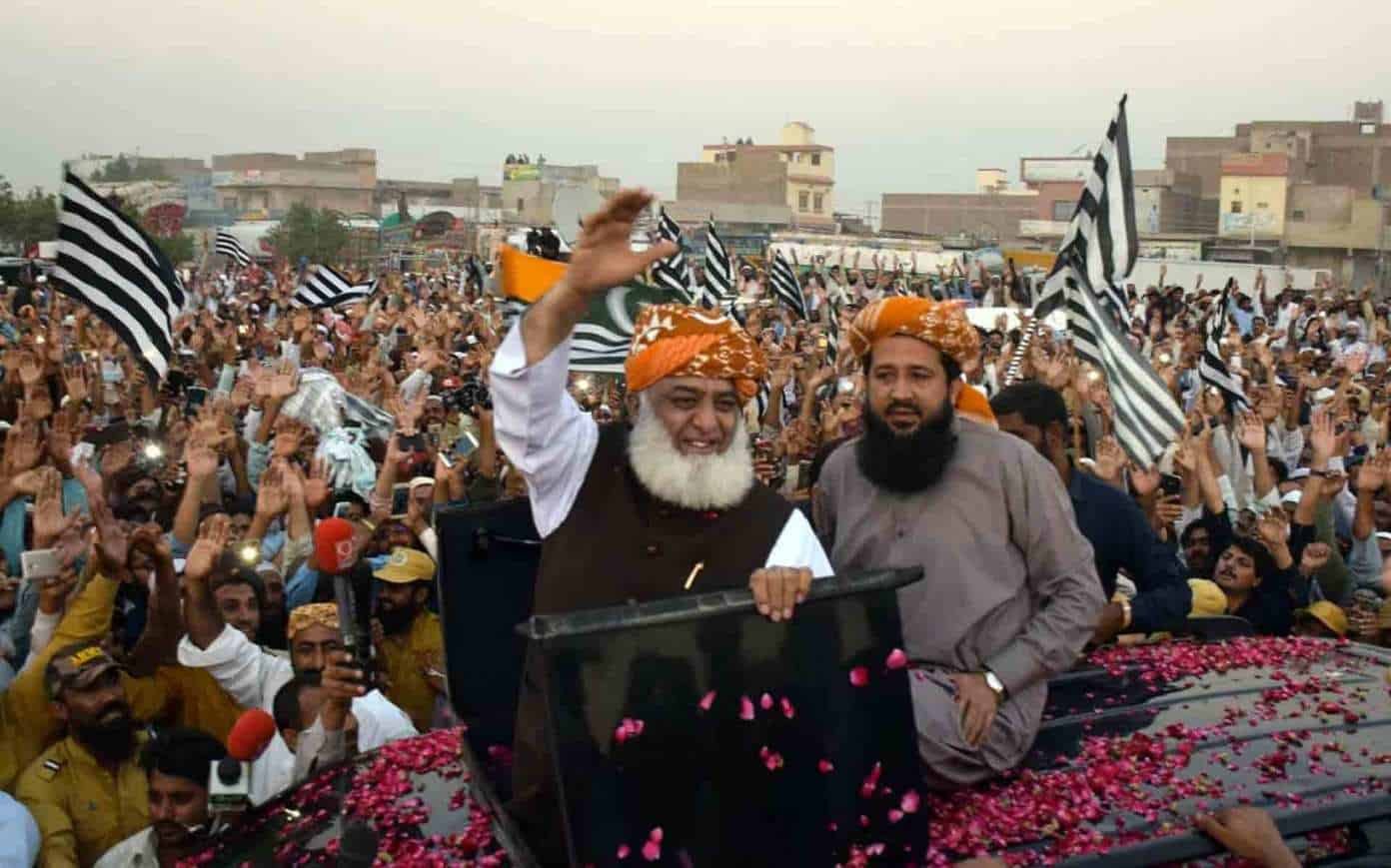
Maj Gen Asif Ghafoor’s statement came as JUI-F’s anti-government march on Friday reached Islamabad and Fazl trained guns at the “illegitimate” Pakistan Tehreek-e-Insaf (PTI) government.
Addressing the protesters, he said that they did not want any confrontation with the institutions, but wanted them to be impartial. “We are giving you two days to stop backing the government,” he said, reiterating his demand for the institutions to be impartial.
WATCH VIDEO:
Following the JUI-F chief’s fiery speech, the ISPR DG said that the army had only discharged its constitutional and legal duties during the 2018 election. “The opposition should take its reservations to the authorities concerned.”
He added that unrest at such a crucial time was not in the better interests of the country.
“So far there has been good coordination between the government and opposition committees,” Maj Gen Asif Ghafoor said and added that democratic issues should only be resolved democratically.
He also said that no one will be allowed to harm the country’s stability.
FAZL’S REACTION:
“We don’t know on what basis he [Maj Gen Asif Ghafoor] has issued the statement,” the JUI-F chief said later in the day while speaking to media after attending a multi-party conference of opposition leaders at his residence.
Fazl added that the statement should have come from a politician instead of the ISPR chief since he represents the institution of army.
Earlier, the JUI-F chief gave Prime Minister (PM) Imran Khan two days’ time to tender his resignation. “After this, we will make our own decision. We will not wait anymore.” He expressed his readiness to have a dialogue with the institutions, but said that the government had to go.
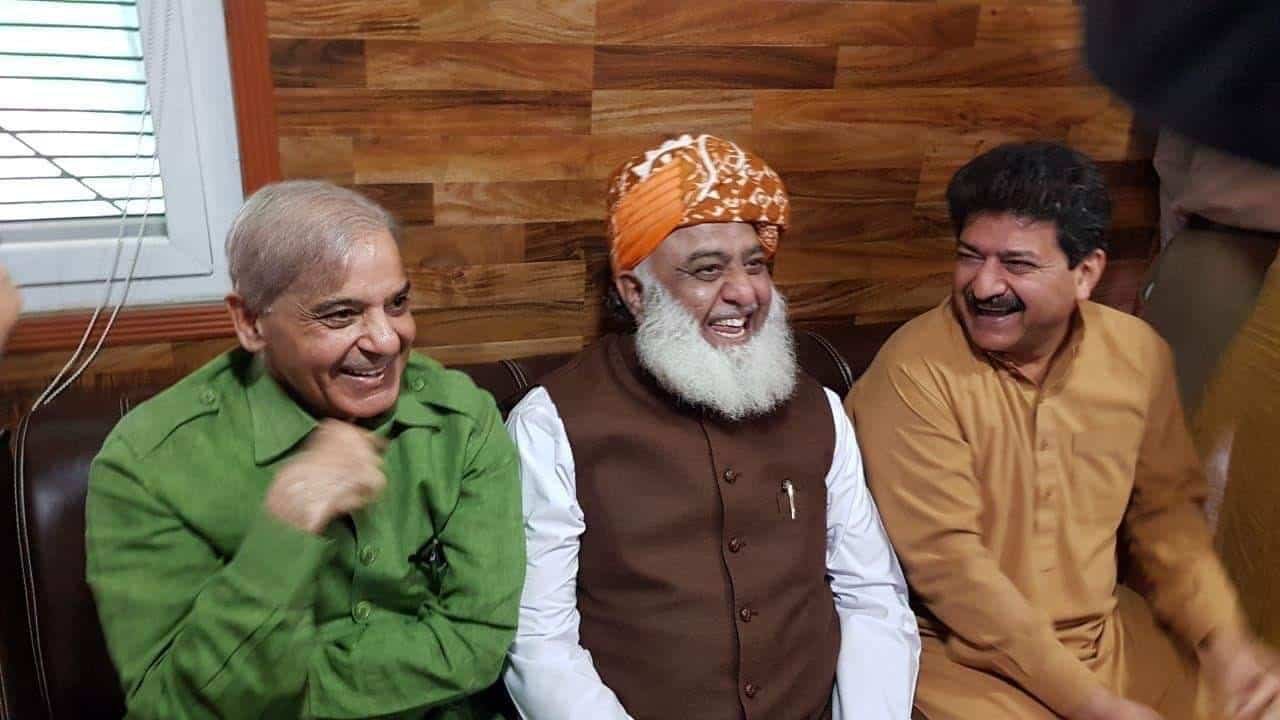
A journalist affiliated with BBC has claimed that senior journalist and analyst Hamid Mir on Friday advised Pakistan Muslim League-Nawaz (PML-N) chief Shehbaz Sharif to run off ahead of Maulana Fazlur Rehman’s fiery speech against the Imran Khan government.
“A few moments ahead of the Jamiat Ulema-e-Islam-Fazl (JUI-F) chief’s dangerous speech, Mir advised Shehbaz to take flight,” Rifatullah Orakzai tweeted.
آزادی مارچ کے کنٹینر میں مولانا فضل الرحمان کی تقریر سے چند لمحے پہلے حامد میر نے از راہ تفنن شہباز شریف سے کہا کہ اس پہلے کہ مولانا ایک خطرناک تقریر شروع کریں آپ موقع سے فرار ہو جائیں اور سب ہنس دئیے@HamidMirPAK@juipakofficial @yousafzai_aqeel @Alikhanyzaipic.twitter.com/X37wxk4Rl1
— Rifatullah Orakzai رفعت اللہ اورکزئی (@RifatOrakzai) November 1, 2019
Sharing an image of the trio laughing inside Fazl’s Azadi March container, Orakzai further wrote that Mir’s advice had the JUI-F chief, Shehbaz and Mir himself in fits of laughter.
Earlier, the journalist also addressed the protesters from atop the container to guarantee that women journalists would be permitted to cover the Azadi March.
“I addressed the gathering after I got a ton of grumblings from women reporters that they were not being permitted to cover the jalsa,” Mir said later, adding that he was approached by JUI-F leadership to make the declaration from the phase that women columnists could cover the walk and that they were permitted to report the occasion.
WATCH VIDEO:
“I, at that point, made the declaration on stage and expressed gratitude towards Fazl,” he said.
A number of women journalists had on Friday complained that the conservative JUI-F was barring them from covering its anti-government sit-in in the federal capital.
The revelations had come amid criticism for the religio-political party for having no women participation in its Azadi March.
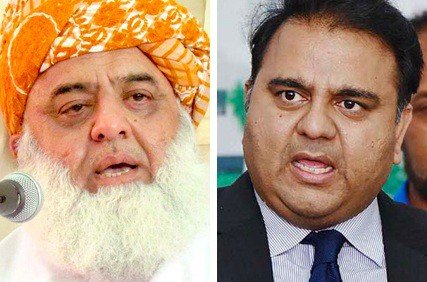
Federal Minister for Science & Technology Fawad Chaudhry has warned Azadi March protesters against underestimating the Pakistan Tehreek-e-Insaf (PTI) government, saying that it is “exercising self-restraint only on Prime Minister (PM) Imran Khan’s call”.
Maulana Fazlur Rehman’s Jamiat Ulema-e-Islam- Fazl (JUI-F) is currently holding a sit-in in Islamabad against the “illegitimate” Pakistan Tehreek-e-Insaf (PTI) government that they say “stole people’s mandate”.
Protesters belonging to the JUI-F as well as other opposition parties on Friday reached Islamabad as Fazl gave the premier a two-day deadline for his resignation following fiery speeches by Leader of the Opposition in National Assembly Shehbaz Sharif and Pakistan People’s Party (PPP) chief Bilawal Bhutto-Zardari.
With government members stepping up to support PM Imran, Minister Fawad Chaudhry on Saturday tweeted to warn the opposition members.
Dont dare to under estimate #PTIGovernment we are exercising self restraint because @ImranKhanPTI has desired so, if he makes a call these bunch of opportunists ll not find a place to hide in Pakistan
“Don’t dare to underestimate #PTIGovernment we are exercising self-restraint because @ImranKhanPTI has desired so, if he makes a call these bunch of opportunists ll not find a place to hide in Pakistan,” he wrote.
Opposition parties are yet to react to the federal minister’s statement.
A report titled ‘Hostile Bytes – a study of online violence against women journalists’ launched by Media Matters for Democracy (MMfD) says that 95 percent of women journalists feel online violence has an impact on their professional choices, while 77 percent self-censor as a way to counter online violence.
It also says that 105 out of 110 women believe online violence impacts the mental health of female journalists.
“The sexualised and personal nature of abuse directed towards them not only affects them on a personal level, but also affects journalism in general that is heavily occupied by men leaving no room for women’s voices. In times when their voices should be amplified, hate campaigns against women journalists is a very well-thought out strategy to ensure systemic oppression of women in professional spaces,” says Hija Kamran, programs manager at MMfD and the author of the study.
For more details about the report, read this Twitter thread:
Hi, I authored a research “Hostile Bytes” that looks at the experiences of women journalists facing and trying to combat #DigitalAttacks directed at them as they do their job. The findings are pretty shocking. A thread… or as Jack Dorsey says, #IDEI2019#EndImpunityhttps://t.co/tXgPdcIEDl
Ministry of Interior has expressed fear that terrorists can attack the ongoing ‘Azadi March’ of the Jamiat Ulema-e-Islam (JUI-F), targeting Maulana Fazlur Rehman,ARY News reported.
According to the details, the Ministry has issued a fresh alert saying that terrorists want to attack JUI-F chief and for that, they can use an explosive-laden vehicle.
The interior ministry has directed officials for the provision of Maulana’s security and has informed Home Secretaries of Punjab and Khyber Pakhtunkhwa in this regard.
Earlier on October 25, the interior ministry had issued an alert notice of possible terror attacks by banned militant outfits. The copies of the notice were also sent to chief secretaries of all province by the authorities.
The notice stated, “The protest march announced by JUI-F increased risks for the internal security of the country besides creating the situation of instability. The notice warns that anti-state elements could take benefit of the instability by targeting public gatherings”.
Dubbed the ‘Azadi’ March, the caravan, which set off from the Sindh province, left Punjab’s city Lahore on Wednesday and culminated its journey last night in Pakistan’s capital city, Islamabad.
Maulana Fazalur Rehman is leading the Azadi March, which after reaching Islamabad, has demanded the Prime Minister’s resignation. Maulana has given PM Khan two days to resign or face the consequences, which include “another strategy,” and that, “we [opposition] will not be able to exercise any patience after that point.”
Khan himself, while addressing a rally in Gilgit said that, “”When Maulana Fazlur Rehman is there [in Islamabad] we have no need of foreign conspiracies,” he said, adding, “The way the Indian media is celebrating [this march], it makes it seem he [Rehman] himself is (an Indian) national.”
After Khan’s comments, almost declaring Maulana a traitor who is cohorting with India, social media exploded with memes and images of Maulana photoshopped with Modi.
In a television program when Special Assistant to the PM on the Media, Firdous Ashiq Awan was questioned about why Khan was suggesting that Maulana was a traitor, Firdous said that Khan was a Pakistani citizen and every Pakistani had a right to question who their well wishers are.
Fazlu is the Ambassador of India, in Pakistan. 1- He oppose operation against TTP. 2- He called terrorists as “Shaheed” but security forces as “dead”. 3- He called “Kashmir Jihad” terrorism. 4- He supported PTM agenda. 5- Divert attention from Kashmir issue.#FazluCreatingChaospic.twitter.com/0jMP5xmQKm
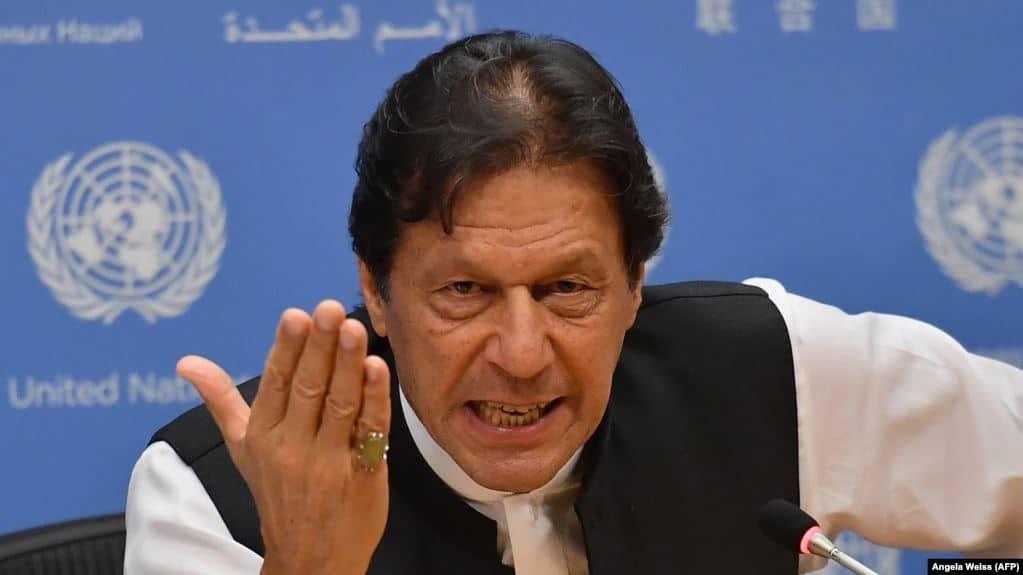
Prime Minister (PM) Imran Khan on Friday came hard on Jamiat Ulema-e-Islam-Fazl (JUI-F) chief Maulana Fazlur Rehman and said that the latter “can sell his Islam over a diesel permit or Kashmir Committee chairpersonship”.
Religio-political leader Fazl, who is also the former chairperson of the Parliamentary Special Committee on Kashmir, is currently in Islamabad as part of his Azadi March against the “illegitimate” government led by Imran.
Speaking of the JUI-F-led opposition parties’ protest in the federal capital, the premier on Friday regretted the “use of Islam for shoring up votes” as he addressed a gathering in Gilgit.
“Gone are the days when one could use Islam to gain power. This is a new Pakistan. Sit for as long as you want to. When your food runs out, we will send more. But we will not give you an NRO [National Reconciliation Ordinance],” declared the premier.
WATCH VIDEO:
“We are celebrating your independence while an Azadi March [is ongoing in Islamabad]. Who are they wishing to gain freedom from?” he asked the crowd as people in Gilgit observed their 72nd Independence Day.
“I want the media to go there and ask people who they wish to free themselves from,” said the premier, stating that all his opponents appeared disjointed in their thoughts and aims.
He also accused Fazl of being a conspirator and said that Indian media was celebrating the march that suggested the right-wing leader was “himself an Indian national”.
Newsline was always so much more than just a publishing project… it was always about making the dream of editorial integrity a reality
The announcement that the December issue of Newsline magazine would be its last, was greeted by rather emotional comments on social media from people who had been associated with the venture or somehow touched by it.
Their often emotional comments expressed a real sense of sadness and almost personal loss, and while these remarks may have seemed surprising to those unfamiliar with the Newsline project, they really resonated with those who had lived through General Zia’s — direct as well as indirect — martial law periods.
This is because Newsline was not just another publication: for those in journalism, it was a venture that symbolised hope — the hope of the triumph of the journalist over the seth or owner/proprietor/media baron.
Newsline was founded by a group of women journalists in late 1988. The team was led by Razia Bhatti, the longtime editor of The Herald, the Dawn Group monthly that was famous for its stylish production values and its hard-hitting content.
Razia, perhaps the best editor Pakistan has ever produced, was summoned by management and told it was time for her (after some two decades) to leave. This happened soon after General Zia dismissed the civilian government and announced fresh elections and it was a time when the military establishment was seeking to regain control of the political narrative and tame the increasingly outspoken media.
The editorial team was so appalled by the management’s decision to get rid of Razia that most of us opted to resign in protest and leave with her. I was a newcomer in the group (as was Tehmina Ahmed). I’d been with the team for less than a year, but my other colleagues were well-known names in the field, particularly Rehana Hakim, Samina Ibrahim and Sairah Irshad. Talat Aslam stayed on as did Zahid Hussain, our star reporter, who then joined us several months later.
Soon afterward, Razia had the bright idea that we should start our very own magazine. It seemed a complete impossibility, but we began to work on developing the idea anyway. Zia, the cause of most of our woes, had been killed in the Bahawalpur crash and within a few months of that the country’s publishing laws were liberalised and we were able to get a publishing license or ‘declaration’.
We decided we must have a controlling interest and so we invested whatever we could in the company and were also lucky enough to find some investor friends who wanted to come in not for the profit (there never were any), but because they had faith in the venture.
The first issue came out in July 1989 and the legend of Newsline gained strength with every new issue. The legend was that the journalists had won, that editorial integrity would not be compromised, that the news narrative was not tailored according to financial or political interests.
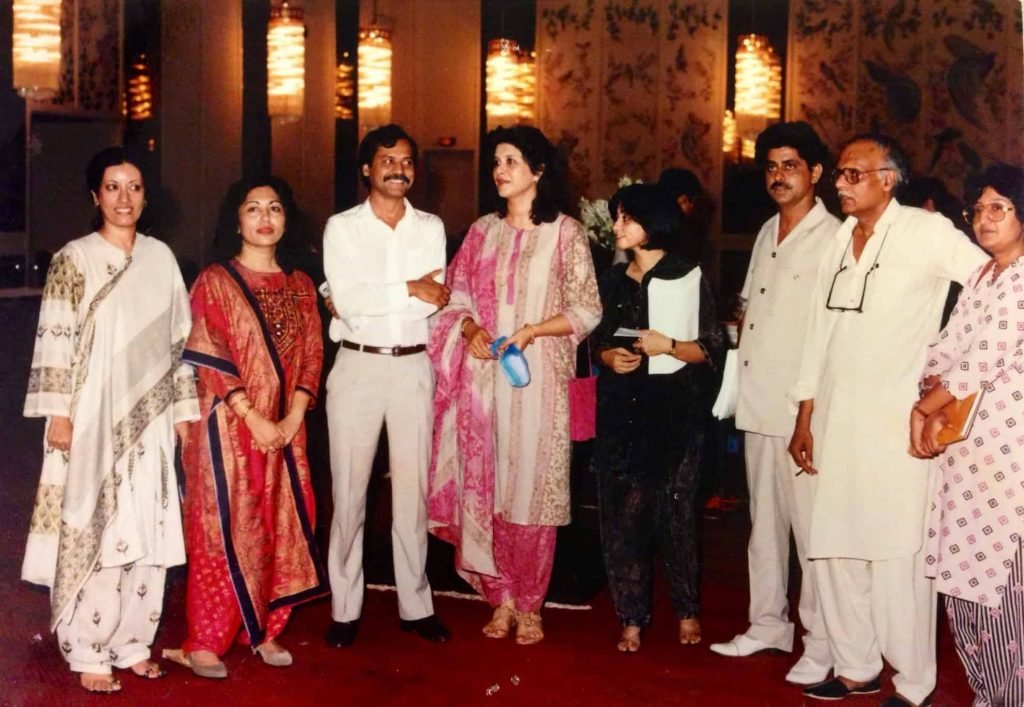
The Newsline launch, Karachi July 1989. L to R: Rehana Hakim, Razia Bhatti, Zahid Hussain, Samina Ibrahim, Umber Khairi, S.A. Baqri, Baseer Ashraf, Tehmina Ahmed
But keeping the legend alive and carrying the torch for this sort of idealism was not an easy task. Financially we struggled and the pressures we faced were many, but we carried on.
Even after Razia died suddenly in 1996, Rehana and the team kept the flame of this hope alive. The names of staffers who passed through the intense training ground that was the Newsline office reads like a Who’s Who of journalism, politics, literature and academia (Abbas Nasir, Mohammed Hanif, Nafisa Shah, Naziha Syed Ali, Marvi Memon, Kamila Shamsie to name just a few). But apart from the commitment of the core team what perhaps helped most to keep the venture alive was the support and good wishes of so many people – friends, colleagues and readers.
But eventually, we reached a stage where the magazine could no longer function as a small independent operation and we became part of a media group (again) when we sold Newsline to the HUM group. When I told a friend about this she asked, “If you sold it and it didn’t belong to you, why are you getting so worked up about it?”
She’s right of course. Legally, we no longer owned Newsline and the decision to cease publication was rightfully the owner’s, but emotionally and idealistically perhaps we will always own Newsline because it was always so much more than just a publishing project… it was always about making the dream of editorial integrity a reality.
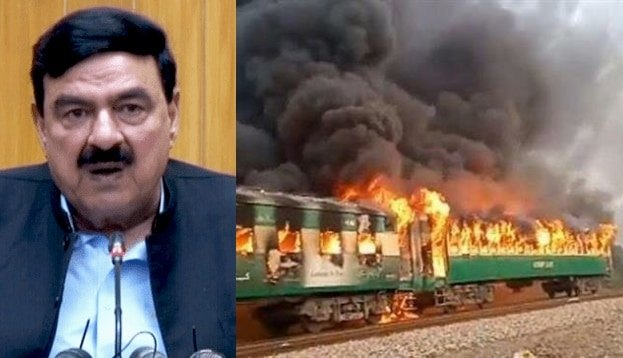
Pakistan Railways (PR) has suffered a loss of whopping Rs213 million as three of Tezgam’s carriages were reduced to ashes in the fire that shook the entire nation on Thursday, a private media outlet reported.
At least 74 people were killed and over 40 others injured after three gas cylinders exploded in a train travelling from Karachi to Rawalpindi. The fire destroyed three of the train’s carriages, including two economy class carriages and one business class carriage.
Footage over both mainstream and social media showed flames engulfing the ill-fated train as people cry for help following the mishap near Punjab’s Rahim Yar Khan district.
It wasn’t later that Federal Minister for Railways Sheikh Rashid Ahmed blamed passengers for the fire, while people across the country stepped up to condemn the minister’s remarks and accuse PR of criminal negligence.
“It isn’t PR’s fault and passengers are to be blamed for it,” the minister said while speaking to journalists after the tragedy.
“It is unfortunate that passengers take cylinders with them. They don’t fear the law,” he said, adding that several people jumped to their deaths from the burning train.
While Rasheed promised an inquiry to ascertain how the passengers had managed to carry cylinders with them, his statements were not very well received by the people who demanded the minister’s resignation amid rising number of train mishaps.
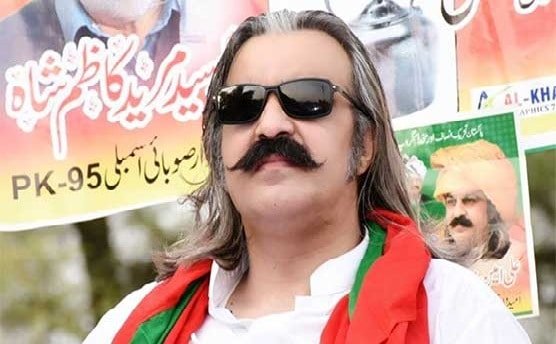
Minister for Kashmir Affairs and Gilgit Baltistan, Ali Amin Gandapur, is no stranger to controversy. From claiming that the previous government had let go of Kulbhushan Jadhav. He was also unaware of the Jadhav case at the International Court of Justice.
Gandapur has made another faux pas — this time he has threatened countries supporting India over the Kashmir issue.
Addressing a public gathering, Gandapur said, “If tensions with India rise on Kashmir, Pakistan will be compelled to go to war. Those countries backing India and not Pakistan [over Kashmir] will be considered our enemy and a missile will be fired at India and those nations supporting it.”
What’s even more interesting is that when challenged on Waseem Badami’s show, Gandapur did not back down from his threats.