Tag: politics latest

  • ‘If Khan,Bushra Bibi are not wanted in other case, they are free’: Judge Afzal Manoka

    ‘If Khan,Bushra Bibi are not wanted in other case, they are free’: Judge Afzal Manoka

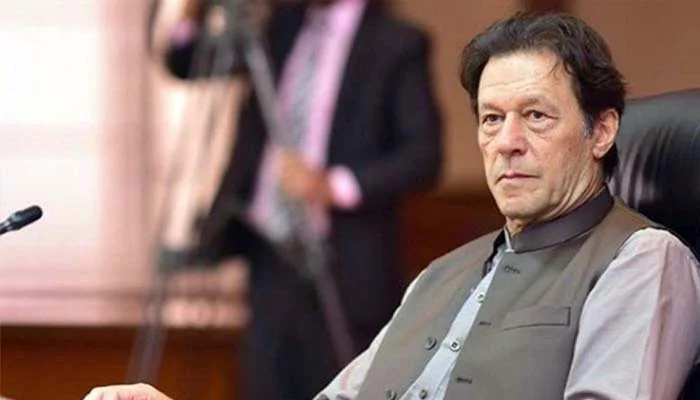
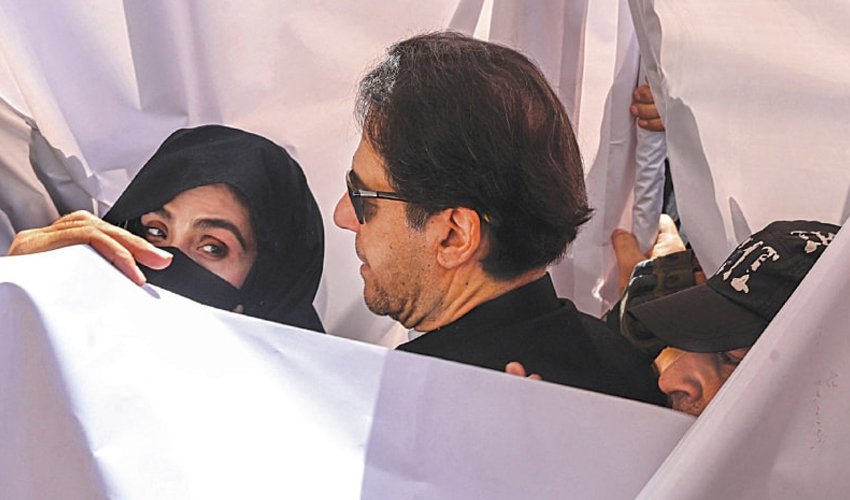
    An Islamabad district and sessions court accepted appeals filed by former Prime Minister Imran Khan and his wife, Bushra Bibi, against their conviction in the Iddat case, clearing them of the last known legal cases against them.

    Khan and his spouse were sentenced to seven years in prison and awarded a fine of Rs500,000 each, in February earlier this year after a trial court found their nikah to be fraudulent.

    The couple challenged their conviction and moved the IHC, seeking varying relief from the court.

    The recent verdict, a significant milestone for the founder of PTI, holds immense importance. Imran Khan has been incarcerated since August last year in the Toshakhana case, and this decision could potentially change his circumstances.

    While Khan got relief in significant cases like Toshakhana and cipher cases earlier this month, he remained behind bars in the Iddat case.

  • After major relief by SC, trouble for Khan in May 9 case

    After major relief by SC, trouble for Khan in May 9 case

    A day before the Supreme Court granted major relief to Pakistan Tehreek-e-Insaf (PTI) in the reserved seats case, an Anti-Terrorism Court (ATC) affirmed the allegations of Imran Khan’s involvement in the May 9 conspiracy against the state in its verdict.

    Senior journalist Ansar Abbasi has stated that while Friday’s SC verdict was a major political victory for PTI and Khan, the verdict by ATC Lahore is a major setback for them.

    Lahore’s anti-terrorism court has become the first judicial forum to uphold that Imran Khan and senior PTI leaders hatched an anti-state conspiracy on May 9.

    Justice Khalid Arshad of the ATC Lahore upheld the prosecution’s view that Khan, in collusion with PTI’s top leadership, was involved in a conspiracy and war against the state on May 9 of last year.

    The court also rejected Khan’s bail application while pointing out that the court was not convinced by founder PTI’s allegation that he was being targeted with politically motivated case.

  • Omar Ayub calls for initiating treason case against CEC Sikandar Raja

    Omar Ayub calls for initiating treason case against CEC Sikandar Raja

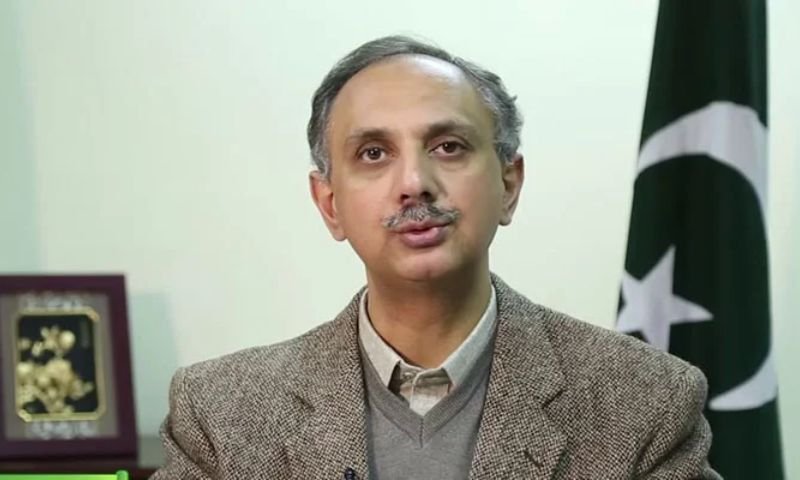
    Pakistan Tehreek-e-Insaf (PTI) Secretary General Omar Ayub Khan has called for the invocation of Article 6 (Guilty of high treason) against the members of the Election Commission of Pakistan (ECP) because they misinterpreted the Constitution, leading to the removal of the party’s electoral symbol—the bat.

    His remarks came after the recent Supreme Court verdict granting PTI reserved seats for women and minorities—a right previously revoked by the ECP.

    “I congratulate the entire Pakistan on this auspicious day and the entire legal team,” Ayub said, hailing the Supreme Court’s ruling in a press conference.

    He also stated that the Chief Election Commissioner of Pakistan, Sikandar Sultan Raja, and four other members of the ECP should resign from their offices immediately.

  • PTI Wins: What does the Supreme Court verdict mean?

    PTI Wins: What does the Supreme Court verdict mean?

    In a significant political and symbolic win for the Pakistan Tehreek-e-Insaf (PTI), a thirteen-member bench of the Supreme Court on Friday ruled that the party has the legal and constitutional right to reserved seats.

    It was Justice Mansoor Ali Shah who, with his announcement of the 8-5 majority verdict, dismissed the Peshawar High Court’s (PHC) order that had upheld the Election Commission of Pakistan’s (ECP) ruling denying reserved seats to the Sunni Ittehad Council, which was backed by PTI.

    Geo News reported that eight Justices, Justices Athar Minallah, Shahid Waheed, Muneeb Akhtar, Muhammad Ali Mazhar, Ayesha Malik, Syed Hassan Azhar Rizvi, and Irfan Saadat Khan supported the verdict.

    The Supreme Court, in its verdict today, declared that a party’s lack of electoral symbol does not affect its legal rights to participate in an election.

    The Supreme Court also stated that the Election Commission of Pakistan (ECP) ‘misinterpreted’ its January 13 verdict of taking away PTI’s bat symbol and they never ruled that PTI could not participate in the elections.

    “PTI was and is a political party, which secured general seats in the national and provincial assemblies in the general elections of 2024,” emphasised the verdict.

    The ruling said that PTI should present a list of eligible candidates for the reserved seats to the electoral body within 15 days after the verdict.

    TIMELINE

    On 13 January 2024, the Supreme Court upheld the Election Commission of Pakistan’s (ECP) decision to revoke PTI’s electoral symbol ‘bat’. PTI leadership called the decision “unfair and damaging to democratic constitutionalism.”

    Following this landmark decision, PTI members contested the general elections as the party-backed independent candidates with their own allotted electoral symbols.

    Following the February 8 elections, PTI-backed independents won the highest number of seats, making history in the country.

    To get the reserved seats according to proportional representation, PTI-backed independents joined the Sunni Ittehad Council (SIC) because the laws dictated that only a political party could be eligible for the allocation of reserved seats.

    The SIC then approached the ECP on February 21 seeking allocation of reserved seats. However, the PTI suffered a setback after the electoral body, citing the party’s failure to submit its list of candidates, denied allocating the reserved seats to the SIC via its 4-1 majority verdict on March 4.

    The party then approached the Peshawar High Court on March 6, which, in yet another setback to the party, upheld the electoral body’s decision on the matter in its March 14 ruling.

    Subsequently, on April 2, the SIC moved the SC seeking to set aside the PHC verdict.
  • ‘Aisi baaten hi na karo jin par dar ho’; Rana Sanaullah on call tapping

    ‘Aisi baaten hi na karo jin par dar ho’; Rana Sanaullah on call tapping

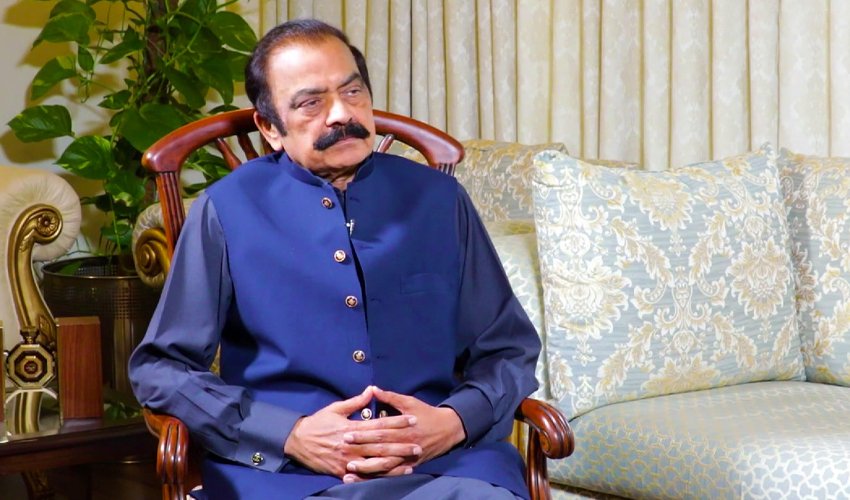
    Prime Minister Shehbaz Sharif’s Adviser on Political and Public Affairs Rana Sanaullah, appearing on the Geo News programme Capital Talk, has stated that people shouldn’t engage in such controversial conversations that lead to fear that their calls are being tapped.

    The federal government has authorised the country’s top spy agency, Inter-Services Intelligence (ISI), to intercept and trace calls and messages to apprehend an offence against national security.

    “If somebody is worried over their conversations being ‘heard’, then they should not engage in such verbal exchanges to begin with,” Sanaullah reiterated, echoing the government’s stance on the issue.

    “If the content of my call is something I cannot face, something I cannot defend or something that I can be blackmailed over – then I shouldn’t be engaging in that in the first place,” said the advisor.

  • Hafiz Naeem wants Army Chief and bureaucrats to give up their privileges

    Hafiz Naeem wants Army Chief and bureaucrats to give up their privileges

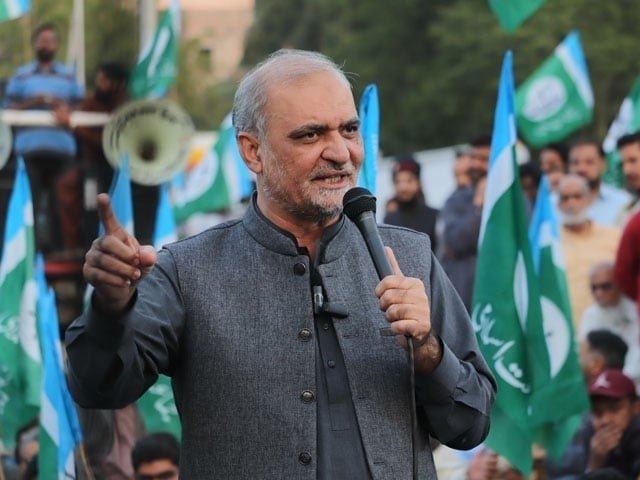
    Central Ameer of Jamaat-e-Islami Pakistan Hafiz Naeem-ur-Rehman has demanded that bureaucrats and the Army Chief give up their extra privileges as the country grapples with exorbitant taxes.

    Addressing a media group dinner in Lahore, Hafiz Naeem said that the country is facing a severe and immediate “brain drain.” The Army Chief should announce the withdrawal of extra privileges, and the country’s bureaucracy should also withdraw their privileges.

    He lamented the country’s socioeconomic problems, saying, “People are leaving Pakistan, and the education system is getting worse.”

    Furthermore, he stated, “Installing solar panels is not the solution to the problem because electricity tariffs should be reduced.”

  • IMF proposes 45 percent tax on agriculture income

    IMF proposes 45 percent tax on agriculture income

    The International Monetary Fund (IMF) has suggested that the government impose income tax of up to 45 percent on agriculture income as Pakistan seeks another multi-billion dollar bailout to stabilise its economy.

    The condition is part of the structural benchmarks the IMF has set for Pakistan to follow in order to access the next IMF loan that the country is negotiating with the global lender, Tribune reported.

    It also reported that the IMF has set October 2024 as the deadline for amending provincial tax laws to align with federal tax laws.

    Under the constitution, the federal government cannot impose taxes on agricultural income, as it is the provinces’ responsibility.

    Currently, the provinces are authorised to collect taxes from the agriculture sector, which contributes 24 percent to the economy but does not contribute even 0.1 percent of the total taxes collected across the country.

    President Asif Ali Zardari expressed apprehension at the move, saying the government was planning to tax agricultural income as per the IMF’s condition. Still, the provincial governments will lead the initiative to tax large land-holding farmers per their profitability and expenditures.

  • HRCP condemns government’s decision to allow phone tapping

    HRCP condemns government’s decision to allow phone tapping

    The Human Rights Commission of Pakistan (HRCP) has raised concerns about the government’s “unconstitutional notification”, which gives immense power to security agencies to trace calls of any citizen.

    “HRCP is deeply concerned by the recent unconstitutional notification issued by the federal government giving intelligence personnel carte blanche to intercept and trace the calls of any citizen in the interest of ‘national security’,” the commission wrote in a post on X (formerly Twitter).

    On Monday, the federal government gave the authority to Inter-Services Intelligence (ISI) to trace the calls and messages of citizens to deal with terrorism in the country.

  • Pervez Khattak testifies against Khan in Al-Qadir trust case

    Pervez Khattak testifies against Khan in Al-Qadir trust case

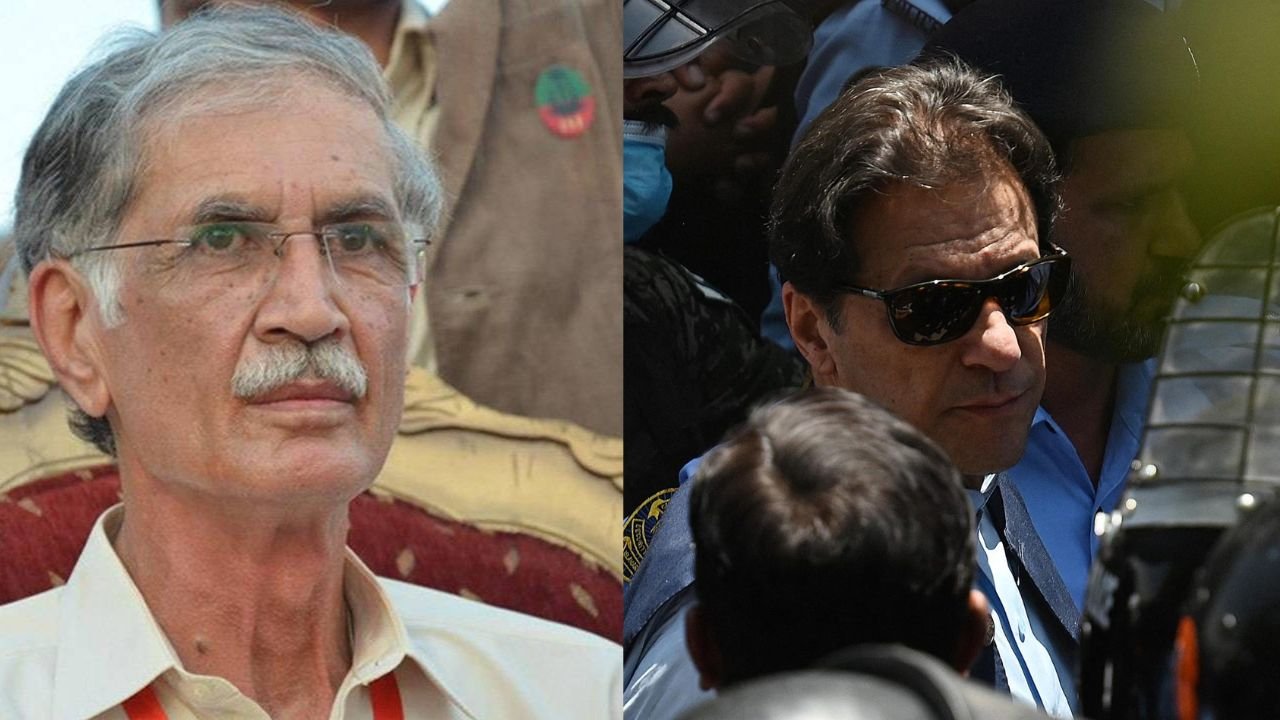
    Former Chief Minister of Khyber Pakhtunkhwa, Pervez Khattak, testified against Imran Khan, the founder of Pakistan Tehreek-e-Insaf (PTI), in the Al-Qadir Trust case on Wednesday.

    The case alleges that Imran Khan and Bushra Bibi obtained billions of rupees and land worth hundreds of kanal from Bahria Town to legalise the amount through the federal cabinet.

    Before parting ways with the party, Khattak was a close aide of Khan and served as the defence minister of Pakistan, which he claimed had approved a confidential deed to transfer money to Malik Riaz.

    This is not the first time Khan’s former allies have testified against him in cases. His ex-secretary Azam Khan testified against him in the cipher case, while Aun Chaudhry recorded his statement in the Iddat case.

    Dawn News reported that Imran Khan usually does not move from his chair when witnesses record statements. But in yesterday’s hearing, Khan rose from his chair and approached the witness box to look at his former ally, who had now turned against him.

  • Khawaja Asif supports phone tapping to deal with terrorism in country

    Khawaja Asif supports phone tapping to deal with terrorism in country

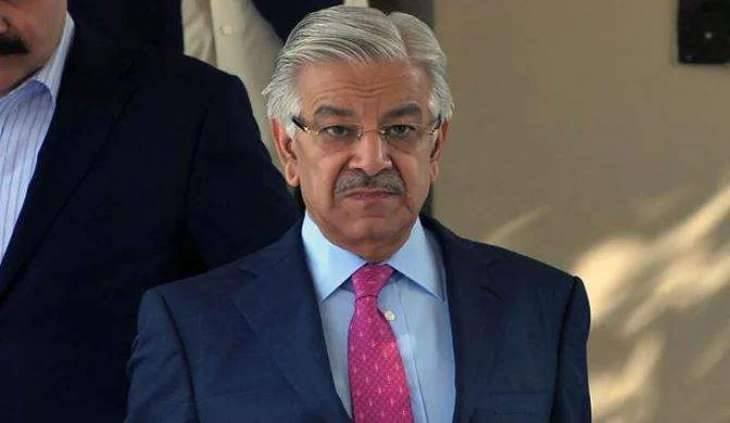
    Defense Minister Khawaja Asif strongly supports intelligence agencies tapping the phones of citizens, stressing that it is necessary at the moment to fight terrorism in the country.

    On the other hand, Pakistan Tehreek-e-Insaf (PTI) leader Omar Ayub criticized tapping citizens’ mobile phones.

    “We are in the midst of war against terrorism. I will support phone tapping in the current situation,” the Defense Minister told Arab News.

    “When Imran Khan was on good terms with the establishment, every legitimate and illegitimate thing seemed acceptable to him. Today, his followers find the same thing hateful,” Khawaja Asif pointed out.