Tag: politics

  • Firdous Ashiq Awan made Central Secretary Information of Istehkam-e-Pakistan Party

    Firdous Ashiq Awan made Central Secretary Information of Istehkam-e-Pakistan Party

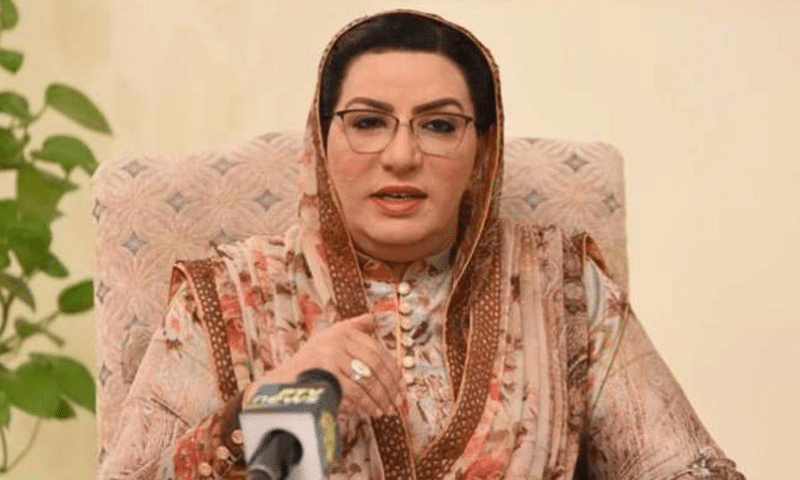
    Jahangir Khan Tareen has confirmed in a tweet that former federal minister Fridous Ashiq Awan will be the Central Secretary Information of his newly launched Istehkam-e-Pakistan party.

    Tareen has already tweeted about the designations of other party members including Auwn Chaudhary, Aleem Khan and Amir Mahmood Kiyani, all three considered close aides of Pakistan Tehreek-e-Insaf (PTI) Chairman Imran Khan. Tareen himself was once considered one of the key figures in PTI, largely credited for getting independent candidates to join the party in 2018, paving the way for the formation of a coalition government.

    Firdous Ashiq Awan has previously held information portfolios in various governments.
    In 2019, she was appointed as special assistant to Prime Minister Imran Khan for information and broadcasting. On November 2, 2020, she got appointed as Special Assistant for information to Chief Minister Punjab, Usman Buzdar.

  • ‘Country will take off after Nawaz Sharif returns’: Maryam Nawaz

    ‘Country will take off after Nawaz Sharif returns’: Maryam Nawaz

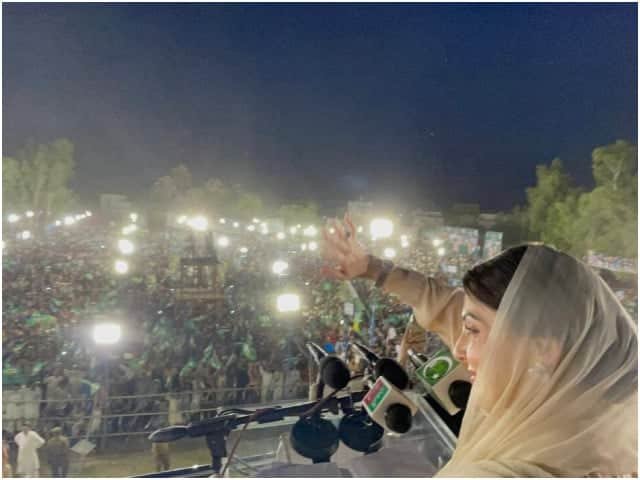
    Pakistan Muslim League Nawaz (PML-N) Senior Vice President, Maryam Nawaz, criticised Chairman Pakistan Tehreek-e-Insaf (PTI) Imran Khan on Sunday, accusing him of being the mastermind of the May 9 riots.

    Addressing a public rally in Shujabad, she further said that Imran is now begging for forgiveness.

    Calling the events of May 9- when PTI supporters clashed with law enforcement agencies- “painful”, Maryam Nawaz observed that it was good that the enemy of the country has been recognized. “The chapter of temptation and mischief is closed. Now the journey of development will begin,” she said.

    She also said that hands that build the country do not vandalize the country, rather they vandalize the vandals, promising that the country will take off after her father, former Prime Minister, Nawaz Sharif, returns to Pakistan.

    Maryam Nawaz was also given a gold tiara and a traditional chadar at the workers convention.

  • Jisko mai PTI ka ticket doonga, woh Insha’Allah jeetega: Imran Khan

    Jisko mai PTI ka ticket doonga, woh Insha’Allah jeetega: Imran Khan

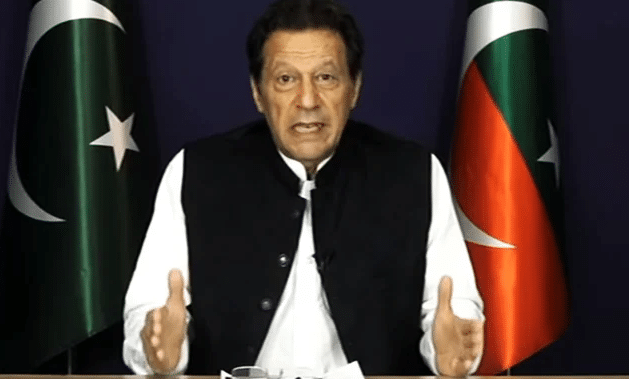
    Pakistan Tehreek-e-Insaf (PTI) Chairman Imran Khan addressed party workers on Wednesday through a video link. During his speech, Imran said he was ready to constitute a committee to hold talks “with anyone in power”.

    Imran questioned why the powers-that-be wanted to conduct elections in October. “Because they wanted to crush PTI,” he claimed.

    “I am forming a committee. It will talk to anyone who is in power on two matterss — if it helps the country according to ‘them’, I will leave politics. Second, how is it beneficial for the country if elections are held in October,” said Khan in his address.

    “Convince us on these two things. If they believe and satisfy the committee that my leaving politics will benefit the country, I will step back and leave politics,” he promised.

    Without naming anyone, Imran said that “they” have benefitted from arson at the Lahore Corps Commander House (Jinnah House) and used it to crack down on his party.

    “[Such] a crackdown has never been seen in the history of the country,” he said.

    “They have jailed the entire leadership and even those who are not even a part of the party,” added Imran.
    Khan also requested his party workers to remain steadfast. During the address Imran said that who ever he gives a party ticket to, will win.

    “Your captain is standing till there is blood in his body,” he said. “Your captain fights till the last ball, there is no question of accepting defeat. Whatever they are going to do, I am ready for it,” he added.

  • China will not attend G20 meeting to be held in Indian-Occupied Kashmir

    China will not attend G20 meeting to be held in Indian-Occupied Kashmir

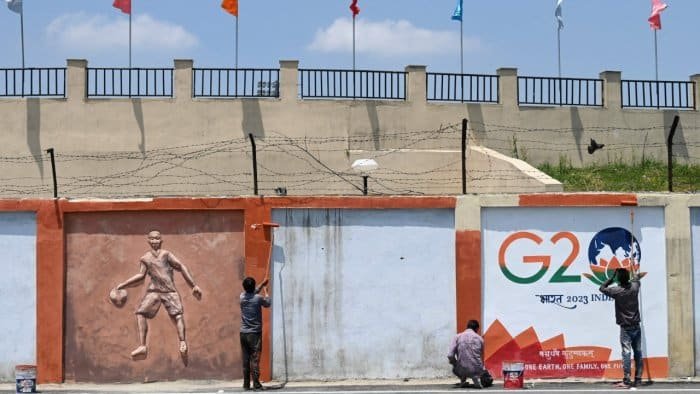
    China has said that it is opposed to a G20 tourism meeting next week in the disputed Himalayan territory in Indian-Occupied Kashmir, confirming that it will not attend, handing a significant diplomatic victory to Pakistan.

    “China is firmly opposed to holding any kind of G20 meetings in disputed territory, and will not attend such meetings,” Chinese Foreign Ministry spokesperson Wang Wenbin said.

    India, which holds the chair of G20 this year, has organised a series of meetings across the country in the run-up to the summit in New Delhi in September.

    Srinagar, the capital of the occupied territory of Jammu and Kashmir, will host a meeting of the tourism working group for G20 members on May 22-24.

    Despite backlash for holding the meeting in disputed territory, the Modi-led government has not backed off from its plans to do so.

  • JI chief Siraj-ul-Haq attacked by suicide bomber in Balochistan

    JI chief Siraj-ul-Haq attacked by suicide bomber in Balochistan

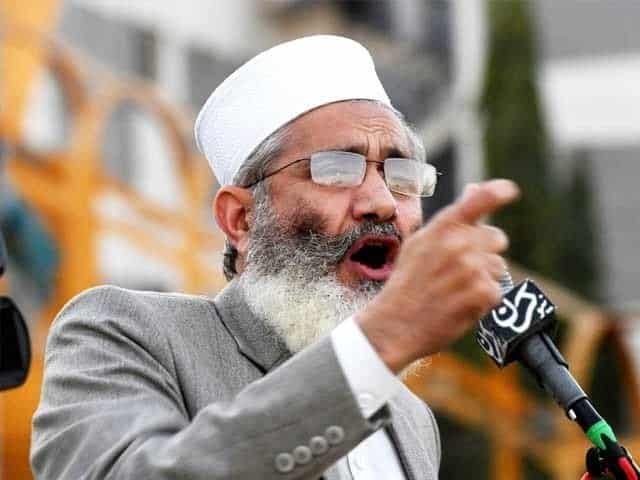
    A convoy led by Siraj-ul-Haq, the Ameer of Jamaat-e-Islami (JI), was attacked by a suicide bomber on Friday in Zhob, Balochistan.

    The Secretary General of the party, Ameer ul Azeem, has confirmed that an explosion took place near the convoy. He further said that the attacker has been killed.

    Siraj-ul-Haq and all members of his convoy are safe.

    The JI chief was on his way to address a rally in Zhob when the attack took place.

  • ‘Aik aadmi faislay kar raha hai iss mulk ke’: Imran Khan blames Army Chief for his arrest

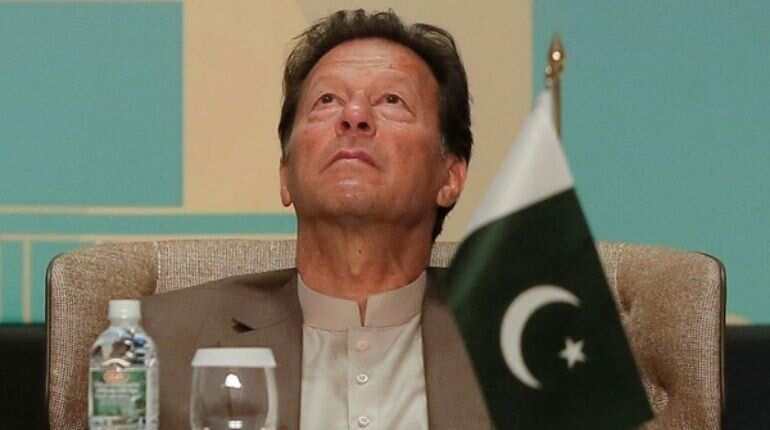
    Pakistan Tehreek-e-Insaf (PTI) Chairman Imran Khan— who is currently facing charges on multiple counts in various cases—has said that there is only one man who is deciding every matter.

    Without naming Chief of Army Staff (COAS) General Asim Munir, Imran said that one person fears that if he comes into power, his seat will be gone, however, he has no intention of doing that.

    According to the PTI chief, this one man has harmed the country more than any enemy did. “He is pushing the country towards disaster”, said Khan.

    Sitting inside the Islamabad High Court (IHC) as he waits for written orders, he thanked the judiciary for releasing him.

    He once again claimed that he didn’t know about the violent protests going on across the country as he was under arrest at the time.

    According to him, the attacks on Corps Commander House by protestors are not his fault because he was put in jail as a terrorist.

    He revealed that no deal with the government has taken place.

    Khan has been given relief as he can’t be arrested as per court orders till Monday morning.

    On Tuesday, the former PM was arrested from IHC by NAB authorities in the Al-Qadir case, however, two days later Supreme Court termed the arrest illegal.

    In March, after the Zaman Park operation episode took place, Khan accused the establishment of interfering in politics, emphasising that nothing happens in the country without the permission of COAS Munir.

  • ‘Stop making false allegations’: ISPR warns Imran Khan

    ‘Stop making false allegations’: ISPR warns Imran Khan

    The Inter-Services Public Relations (ISPR) has termed Pakistan Tehreek-e-Insaf (PTI) Chairman Imran Khan’s allegations against General Faisal Naseer “highly irresponsible”.

    Strongly condemning his allegations, the media wing of the army said that the accusations are baseless and noted that, “This has been a consistent pattern for last one year wherein military and intelligence agencies officials are targeted”.

    Moreover, ISPR warned Khan to “stop making false allegations” because the “institution reserves the right to take legal course of action against patently false and malafide statements and propaganda.”

    Zardari, Shehbaz defend General Faisal also known as Khan’s ‘Dirty Harry’ after Khan’s allegations

    Earlier, prominent politicians including Prime Minister (PM) Shehbaz Sharif and Pakistan People’s Party (PPP) co-chairperson Asif Ali Zardari strongly denounced the accusations made by Khan against General Faisal Naseer.

    In a tweet, Shehbaz condemned the accusations, writing that, “Khan’s leveling of allegations without any proof against Gen Faisal Naseer and officers of our Intelligence Agency cannot be allowed and will not be tolerated.”

    Replying to Shehbaz, Imran Khan asked whether he has a right as a citizen “to nominate those who he feels are responsible for assassination attacks.”

    Former President Zardari also slammed Khan, saying that the allegations against General Faisal are actually an attack on the institution with which the whole of Pakistan stands.

    “A person is fooling his innocent workers with lies and deceit, I see the downfall of this person”, Zardari added.

    Punjab Interim Chief Minister (CM) Mohsin Naqvi also came to rescue General Faisal, stating that, “We will not allow anyone to humiliate or threaten our institutions and Intelligence agencies in Punjab.”

    Earlier, Khan made serious allegations that the general plotted his assassination. Khan alleged that he is behind journalist Arshad Sharif’s murder and Swati’s custodial torture.

  • Pakistan’s history of IMF bailouts: A look at 75 years of economic challenges

    Pakistan’s history of IMF bailouts: A look at 75 years of economic challenges

    Pakistan is currently facing yet another economic crisis, a recurring issue that has caused the country to repeatedly seek help from the International Monetary Fund (IMF) for financial assistance.

    Unfortunately, most of the previous 13 bailouts granted since the late 1980s were left unfinished, as Pakistan failed to implement any meaningful structural changes to rein in government spending or boost revenue.

    The country’s current government, led by Prime Minister Shehbaz Sharif, is currently in talks to revive its latest $6.5 billion loan programme as a result of the ongoing economic downturn, exacerbated by last year’s devastating floods and continued political instability. However, the implementation of the necessary belt-tightening measures may prove to be challenging, given the upcoming national elections planned for later this year.

    Pakistan and the IMF had agreed to a $6 billion bailout program in 2019, but disputes over monetary policies have prevented the release of over $1 billion. Furthermore, donors and lenders have demanded structural reforms before providing any further financial aid to Pakistan.

    Pakistan’s traditional partners have made it clear that their assistance is conditional upon the revival of the IMF program and the successful implementation of reforms, including the expansion of tax collection.

    Based on the prevailing Special Drawing Rights (SDR), also known as XDR, rates, the International Monetary Fund (IMF) has approved loans totaling $31.629 billion for Pakistan.

    It is worth noting, however, that not all of the approved funds have been disbursed, with only one out of 22 loans having been fully transferred to Pakistan. This highlights the complex political and economic dynamics that underlie IMF programs.

    Pakistan’s history of borrowing from the IMF

    Pakistan has a history of borrowing from the International Monetary Fund (IMF), which can be divided into four distinct periods. The early years of borrowing spanned from 1950 to 1988, followed by the Benazir and Nawaz Sharif era from 1988 to 1999. The third period was marked by the Musharraf and Zardari administrations from 2000 to 2013. The current period is led by Nawaz Sharif and Imran Khan.

    During these periods, each government worked with the IMF differently, especially in the past two decades. While the Benazir and Nawaz Sharif administrations alternated in seeking IMF programs in the 1990s, the Musharraf government, despite experiencing substantial foreign currency inflows, also had to turn to Washington for financial assistance.

    The Zardari administration, on the other hand, abandoned the largest-ever IMF program when it deemed it expedient to do so. This trend illustrates how Pakistan’s borrowing from the IMF has been characterised by inconsistency and shifting priorities.

    2013-2022

    Pakistan’s recent history of borrowing from the IMF has been marked by different governments seeking assistance in their own unique ways. While the Imran Khan government initially refused to seek assistance from the IMF, it eventually sought an Extended Fund Facility (EFF) loan worth SDR4.268 billion in July 2019. This was due to the country’s financial deterioration and instability, which had eroded the stability gains made since late 2016.

    Under Imran Khan’s government, the IMF disbursed a total of SDR3,159.5 million to Pakistan in four tranches. However, talks for the fourth tranche proved challenging and the government sought help from the US Assistant Secretary of State Donald Lu. Despite receiving SDR750 million in February 2022, then-Prime Minister Imran Khan announced a subsidy on petrol and diesel, effectively breaking the agreement with the IMF. As a result, the IMF suspended Pakistan’s $6 billion loan programme in March 2022.

    Negotiations for the revival of the fund facility did not commence until May, when Shehbaz Sharif of the PML-N took over the government. Talks on reviving the fund facility were concluded in late June, but only after the government took some harsh decisions, including withdrawing tax relief for salaried individuals. The next tranche will only be released after the IMF Executive Board takes up the combined 7th and 8th reviews.

    2000-2013

    During Pervez Musharraf’s government, Pakistan received significant foreign aid in the form of military and civil assistance, resulting in a low reliance on IMF loans for financial support. However, Pakistan did receive two IMF loans in the first two years of Musharraf’s regime, totaling SDR520 million. The first loan was a stand-by arrangement of SDR465 million, of which SDR150 million were disbursed, and the second was an extended credit facility of SDR1.033 billion, of which only SDR315 million were disbursed. Pakistan did not require IMF assistance from 2001 to 2008, as foreign aid prevented a balance of payment crisis.

    However, the aid failed to boost Pakistan’s forex reserves, which experienced a sharp decline between 2006 and 2008. In 2008, the Pakistan Peoples Party government negotiated with the IMF for the largest-ever loan of SDR7.235 billion, also the largest stand-by arrangement. Only SDR5.2 billion were disbursed between 2008 and 2010 in three tranches. Afterward, the PPP government did not complete the program as it received funds under the Kerry-Lugar program until 2013, when the United States ceased funding. The PPP government was unable to implement tough reforms demanded by the IMF due to impending elections.

    1989-1999

    During the 1990s, Benazir Bhutto and Nawaz Sharif sought eight bailouts from the IMF due to the consequences of the Soviet-Afghan war and political instability in Pakistan. In 1988, Bhutto signed up for two IMF packages, totaling SDR655 million. The IMF made two payments of SDR122.4 million and SDR189.5 million in 1991 and 1992. In 1993, Nawaz Sharif negotiated a loan of SDR265.4 million, with the IMF paying SDR88 million that year.

    Bhutto’s government signed three IMF programs of SDR379 million, SDR606 million, and SDR562 million between 1994 and 1995, with lower disbursements of SDR123 million, SDR133 million, and SDR107 million before being removed in 1996. Sharif then negotiated two loans in 1997 of SDR682.4 million and SDR454.9 million, respectively, with SDR250 million disbursed before his government was toppled in 1999. Bhutto negotiated a total of five programs of SDR2.2 billion, receiving SDR676.26 million, while Sharif signed up for three programs of SDR1.4 billion, with Pakistan receiving only SDR608 million. The instability of the government prevented the implementation of IMF reforms, which often led to increased tariffs and taxes, causing a negative perception of the IMF in the country.

    1958-1988

    The Zia-ul-Haq government received the largest amount of foreign aid from the International Monetary Fund in Pakistan’s history, surpassing the sum of all seven previous programs approved since 1958. In 1980, the IMF granted SDR1.268 billion to the government, followed by another program of SDR919 million in 1981. The Zia-ul-Haq administration received SDR1.079 billion out of the total SDR2.187 billion approved by the IMF.

    Before that, Zulfikar Ali Bhutto signed four loan programs with the IMF between 1972 and 1977 for a total of SDR330 million, of which SDR314 million was withdrawn. In 1958, Ayub Khan initiated Pakistan’s first loan from the IMF, seeking only SDR25 million, and in 1968 and 1969, two more programs of SDR37.5 million and SDR75 million were approved, respectively. The Ayub government received SDR112 million of the total SDR137.5 million approved.

    Pakistan has received a total of SDR23.656 billion in IMF-approved programs, of which SDR14.189 billion was disbursed. Pakistan was offered three long-term Extended Credit Facilities, five medium-term Extended Fund Facilities, at least 12 short-term Standby Arrangement loans, and one Structural Adjustment Facility over 63 years.

    This news story was created by compiling information from various news platforms as well as the IMF website.
  • ‘Kabhi petrol bomb phainknay waalon se mazaakraat nahin hotay: Javed Latif calls PTI ‘terrorist’

    Pakistan Muslim League-Nawaz (PML-N) leader Javed Latif, has expressed disapproval of the ongoing talks between the government and Pakistan Tehreek-e-Insaf (PTI), saying that dialogue should never be held with a “terrorist wing” and the “ones who throw petrol bombs”.

    Addressing a press conference, Latif, who is considered close to PML-N head Nawaz Sharif, went on to say that dialogue could never be held with a person who “is spreading anarchy in the country, especially at a time when Pakistan’s economy is stabilising and the country is progressing without IMF’s aid”.

    He urged “individuals in institutions” to take responsibility for “producing” a person like Imran Khan, Chairman of PTI, and for the consequences of their actions. He also claimed that some people are trying to reinstate the PTI chairman as Prime Minister.

    The PML-N leader said that the elections won’t be held without the participation of his party supremo Nawaz Sharif.

    The third and final round of talks will be held tomorrow. As of yet, no census is in sight.

  • Fawad or Marriyum: Whose idea was PTV Flix anyway?

    Federal Minister for Information Marriyum Aurangzeb on Sunday announced the launch of the online platform PTV Flix, which will allow users to access thousands of movies, television shows and documentaries online. In a tweet, the Pakistan Muslim League-Nawaz (PML-N) politician revealed that the was an initiative quite close to her heart, as countless iconic shows like ‘Dhoop Kinaray’, ‘Tanhaiyaan’ and ‘Ainak Wala Jin’ can now be easily accessed online.

    Aurangzeb also thanked the team at PTV and the Ministry of Information and Broadcasting, who had helped in making this idea in to a reality:

    “I would like to thank and congratulate the team at PTV and the Ministry of Information and Broadcasting for all their hard work which has made this idea a reality. I would also like to thank our entertainment legends Bushra Ansari Sba, Javed Sheikh Sb and Khalid Abbas Dar Sb for joining me at the launch event.”

    However, many tweeps began tagging Pakistan Tehreek-e-Insaf (PTI) leader and former Information Minister, Fawad Chaudhry, crediting him for the initiative. Chaudhry later put up a tweet revealing that this was a project he had began during his tenure.

    To which Aurangzeb had a cheeky response, but really who was the person to kickstart PTV Flix?

    If we look back, it was Chaudhry who during his tenure as the Minister of Science and Technology, had announced in 2020 in a tweet that his team was working on setting up Pakistan’s version of Netflix, and had already asked regulatory authorities to draft a guideline about the content.