Tag: politics

  • Bajwa’s resignation amid political uncertainty affects stock market

    Bajwa’s resignation amid political uncertainty affects stock market

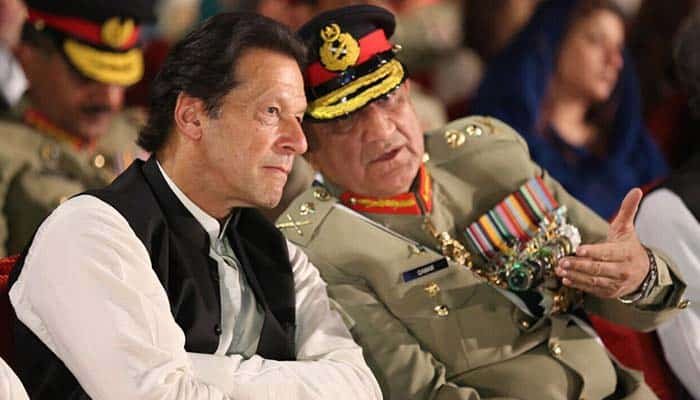
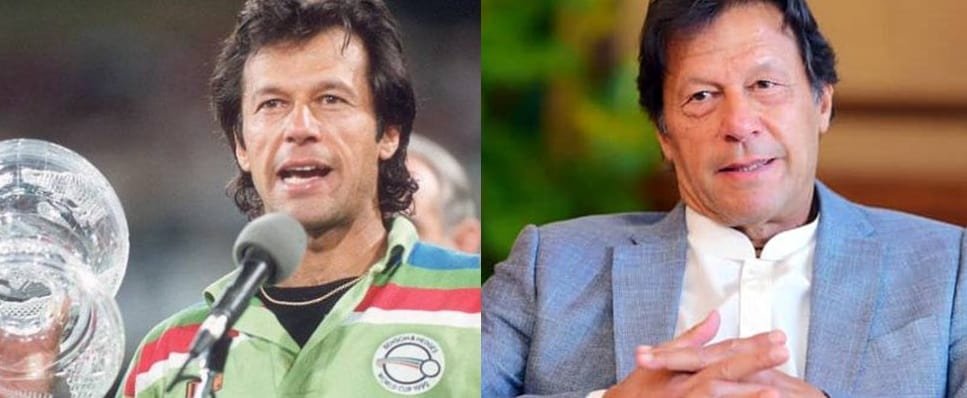
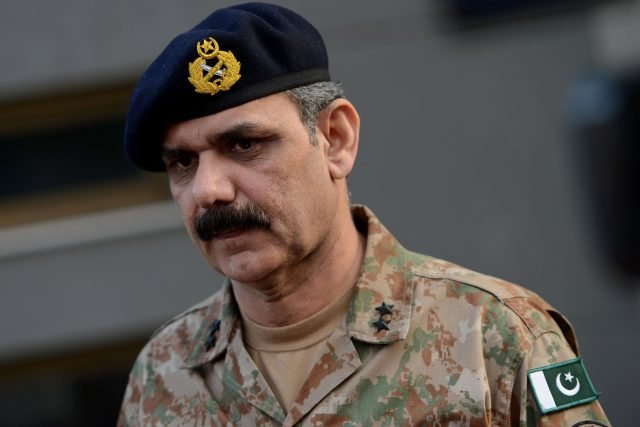
    Pakistan’s stocks reversed gains on Monday as Prime Minister (PM) Imran Khan’s Special Assistant on Information (SAPM) Lt Gen (r) Asim Saleem Bajwa resigned ahead of protests planned by opposition parties, raising concerns of increased political uncertainty, foreign media reported.

    “Imran Khan approved my request to relinquish the additional post,” Asim Bajwa tweeted Monday.

    The resignation of Imran’s key spokesperson comes amid increasing challenges to his about two-year-old government as he struggles to contain inflation and revive the country’s economy. Meanwhile, an alliance of 11 opposition parties is planning on holding its first protest rally this week, which is the start of a series of such meetings aimed at ousting Imran Khan.

    The benchmark KSE-100 index closed down 1.4%, reversing earlier gains of as much as 0.6%. The stocks have advanced 48% since touching this year’s low on March 25. “The investors are being cautious and booking profits after recent events including Bajwa’s resignation and the opposition’s planned protest add to the uncertainty,” said Qasim Shah, head of international sales at JS Global Capital Ltd in Karachi.

    The premier had turned down Bajwa’s earlier request to resign.

  • ‘Military has no direct or indirect role in politics,’ says Gen Bajwa in ‘meeting with politicians’

    ‘Military has no direct or indirect role in politics,’ says Gen Bajwa in ‘meeting with politicians’

    After Federal Minister for Railways Sheikh Rasheed Ahmed, Federal Minister for Communications Murad Seed has also confirmed that parliamentary leaders had met the military leadership and discussed matters related to the country, to which the army had stressed that it should be kept away from political parties’ matters.

    “They target institutions and then ask for time for meetings,” Saeed said, referring to opposition leaders. He had said that the clear message from the military leadership was to “not involve the military in politics”.

    According to reports, the military had conveyed clearly that the army was “not involved, directly or indirectly, in any political process of the country”.

    “If the need arises, the army will stand with the civilian government,” a senior military official had told parliamentary leaders in the meeting.

    The meeting was attended by Chief of Army Staff (COAS) General Qamar Javed Bajwa and Inter-Services Intelligence (ISI) Director-General Lt Gen Faiz Hameed. Gilgit-Baltistan’s (GB) administrative affairs were also on the meeting’s agenda.

    The military leadership had told the civilians that the army was not involved in either electoral reforms or problems related to the National Accountability Bureau (NAB) and other political matters. It had also told them that it was the responsibility of the political leadership to work out such matters between themselves.

  • May the force be with you

    “Are elected governments regarded as inconvenient guests?”

    Thirty years ago, troops rolled into Islamabad and took up positions around ‘key installations’ and buildings in the Capital. Just over an hour later, around 5 pm, the elected government had been dismissed and the National Assembly dissolved. Benazir Bhutto, who had been prime minister for just twenty months, was sent packing. 

    Two years before that particular dismissal, another prime minister, Mohammad Khan Junejo, had been dismissed in a similarly humiliating manner: while he was addressing a press conference on his return from a foreign tour, the journalists there started leaving and hurrying over to the presidency where they had been told they would hear some big news. There the president, General Ziaul Haq had announced dismissing the government. Junejo was also sent packing without completing his term.

    By the time Bhutto was dismissed on August 6, 1990, General Zia was dead but the idea that elected civilian leaders could be unceremoniously dismissed had become something of a conviction in the minds of General Zia’s army leadership. In the eleven years between 1988 and 1999, five governments were toppled in this manner: Junejo, Bhutto, Sharif, Bhutto, Sharif. Of these PMs, Sharif and Bhutto were popularly elected, Junejo was elected in Zia’s non-party based polls but even though he had been handpicked by the general, he refused to be a puppet PM and once in office, began making all sorts of decisions to try to establish civil supremacy. Bhutto would later be assassinated while campaigning in a bid to be elected a third time while Sharif, though later able to be PM yet again, was forced to step down in a haze of allegations regarding his wealth and offshore accounts. He was charged, convicted and incarcerated. 

    Talking to various people about the 1990 dismissal brought to the fore just how difficult a time this was for civilian politicians to function in government. The main problem was, of course, a hostile establishment — a military and bureaucracy steeped in the Zia era thinking who regarded these elected politicians as troublesome outsiders, to be allowed into government for as long as they could be tolerated — and booted out as soon as they started trying to assert themselves or do anything at all that was not in line with what the forces wanted. The way in which elected leaders were treated as intruders and interlopers — almost as enemies — is instructive. Kamran Shafi, who was Butto’s press secretary at the time, recalls how her speechwriter Farhatullah Babar had to go out and get her speech printed from elsewhere because obstructive bureaucrats refused to sanction ink for a printer. It was such a hostile environment that everything was a struggle and there was a feeling that half of the administration and the staff were actually working against the PM and the government. 

    Benazir Bhutto came to power after a long period of incarceration and exile following the overthrow and execution of her father by General Zia, and she was always regarded with distrust by the military establishment but what is very interesting is that any PM (of any political hue) who tries to be a PM and implement any policy that challenges defence interests in any way is similarly despised and disposed of.

    Here, the example of Nawaz Sharif is very interesting: groomed politically and elevated during the martial law years, Sharif was the generals’ man in Punjab, extremely useful to the ‘powers that be’ as a cunning and aggressive opponent to Bhutto. However, once he came to power and tried to assert his own authority, Sharif suffered the same fate as Bhutto and he was sacked unceremoniously.

    His ‘mein dicatation nahin loonga’ (I refuse to take dictation) speech from April 1993 is a classic expression of this tussle between elected and martial forces in Pakistan. Unfortunately, that speech has disappeared from the archives and everywhere else. In his second stint as PM, Sharif actually fired the chief of army staff, one General Musharraf, and he replaced him with General Ziauddin Butt. The footage of the relevant ceremony was shown on only one PTV news bulletin because then Sharif’s government was overthrown and Pakistan Television Centre, taken over. While the video footage of the installation of the new army chief also disappeared, this process of enforced disappearances was actually quite useful in controlling the narrative.

    But what is important now is to try to prevent key chapters of the country’s political history from being disappeared from the records and erased from public memory. What happened in the 90s in Pakistan is, to some extent, still happening now.

    Because the idea that elected prime ministers are just short term visitors or inconvenient guests still prevails as does the process of constantly destabilising and smearing political governments. To fill in the gaps, we need to speak to people who were witnesses to key events, we need to question official histories and we need to search try to understand — through people’s experiences — how certain systems actually work.

  • VIDEO: Khawaja Asif, Fawad Chaudhry trade barbs in National Assembly

    VIDEO: Khawaja Asif, Fawad Chaudhry trade barbs in National Assembly

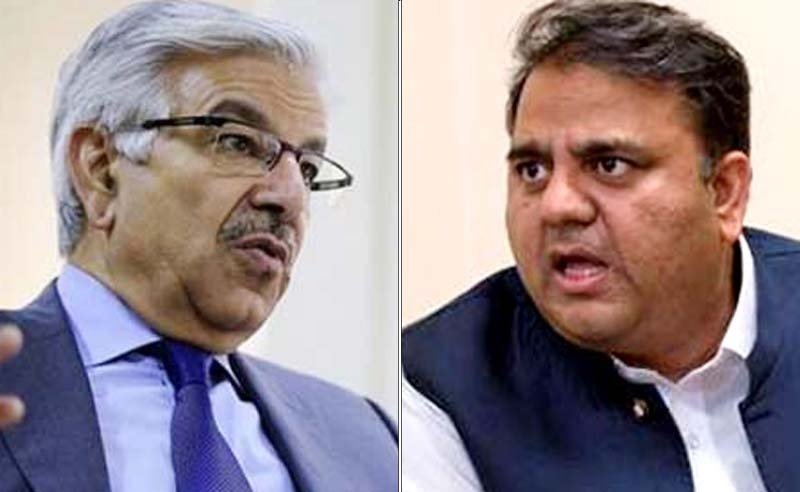
    The National Assembly (NA) on Monday approved the federal budget for the fiscal year 2020-21. The session, however, was yet again marred by an altercation, this time between Pakistan Muslim League-Nawaz (PML-N) leader Khawaja Asif and Federal Minister for Science and Technology Fawad Chaudhry.

    “Sir, bass vee kar deo [sir, please stop]” Fawad was heard as saying as Asif addressed the Lower House of the parliament.

    To this, Asif replied, “Tuvaaday mutalak mai aisiyaan aisiyaan gallaan karaanga, Khuda di qasam tavanu jagaah nayi labnni ais hall ich [I will say such things about you that you will not find a place in this hall].”

    Asif went on to say that for the past few days, Fawad had been “involved in some activities”, to which the federal minister said the PML-N leader would not “find any space in Sialkot — Asif’s hometown — either” and asked him to apologise for his remarks.

    NA Speaker Asad Qaiser kept on asking both the lawmakers to stop.

    “No cross talk please… sit down please. Please, Fawad Sahib. Take a seat. Khawaja Sahib, continue please.”

    “No, how can you let this happen? How can one person say anything and not apologise? How dare he? He must apologise!” Fawad said.

    WATCH VIDEO:

    Speaking to The Current, Fawad said he was discussing something with Deputy Speaker Qasim Suri.

    “Khawaja Asif got upset because we were not paying attention to his speech. Then he made up some lies about me, for which I asked him to apologise.”

  • Fawad Ch seeks abolition of Ruete Hilal Committee, again

    Fawad Ch seeks abolition of Ruete Hilal Committee, again

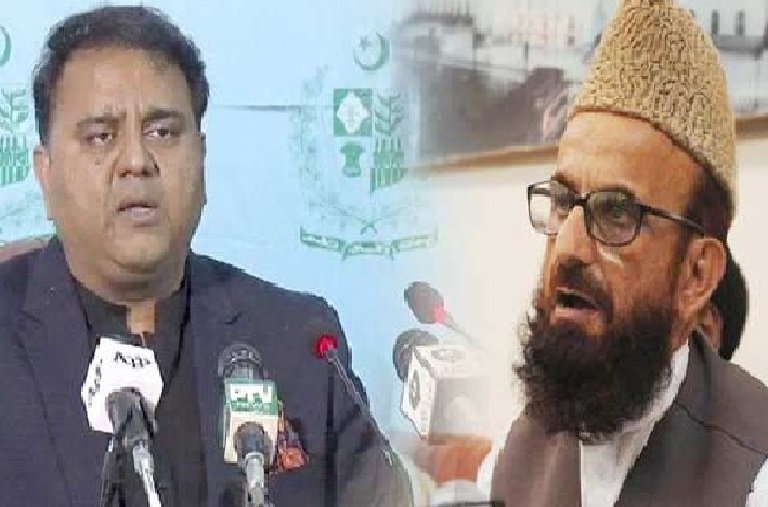
    Federal Minister for Science and Technology Fawad Chaudhry has once again demanded the abolition of the Central Ruete Hilal [moon-sighting] Committee.

    Fawad, while criticising the committee, argued that there was no need for such a committee in the modern era.

    He also claimed that the committee, which is headed by Mufti Muneebur Rehman, wants Eid to fall on Monday, May 25 instead of Sunday, announcing to reveal motives of the committee behind such a move during a press conference.

    Last year, the minister had proposed that a scientific committee should replace the Central Ruete Hilal Committee for the sighting of the moon, which had led to the committee taking strong exception.

    Chairman Mufti Muneebur Rehman had asked Prime Minister (PM) Imran Khan to “rein in” his ministers after Fawad had accused clerics of making lunar sighting for Islamic months a controversial affair every year as well as opposing the creation of Pakistan.

    “Fawad Chaudhry’s statement against the opposition is his personal matter, but he should exercise restraint while commenting on religious scholars and not misquote history,” he said. “Who knows… one of them might also have a role in your [Fawad] appointment.”

    He had urged the premier to “control his passionate ministers”, who “lack knowledge about the system”.

  • President Alvi endorses video removed by YouTube for spreading coronavirus misinformation

    President Alvi endorses video removed by YouTube for spreading coronavirus misinformation

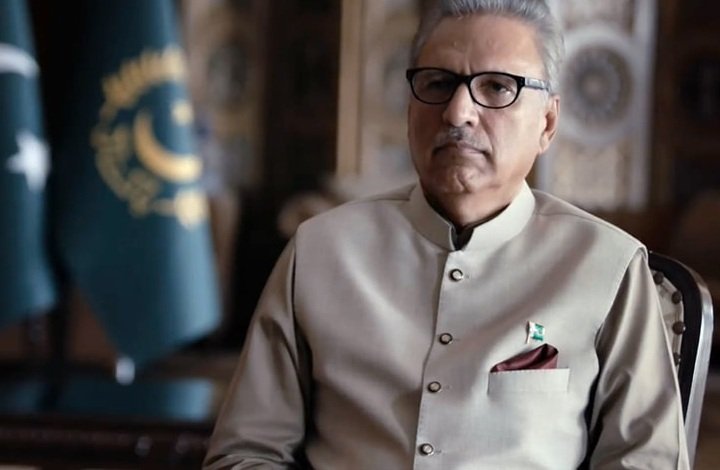
    President Arif Alvi retweeted a tweet by his son, Awab Alvi, on April 26, and said: “Lockdown or No Lockdown? Coronavirus is new so there is a major difference of opinion in the world & in Pakistan on how to handle it. As data comes in, opinions change. So please keep an open mind. This is long but a must-watch for all our opinion-makers including politicians.”

    The tweet was a video by doctors who were arguing that people should develop resistance to COVID-19.

    In a Twitter thread, President Alvi’s son Dr Awab Alvi goes on to say: “Historically of the human race and medical outbreak We’ve always “quarantined the sick” NEVER have we “quarantined the healthy” In the panic of the unknown we are reacting (may have been right earlier) but now we know this better and we need the population to develop resistance. [sic]”

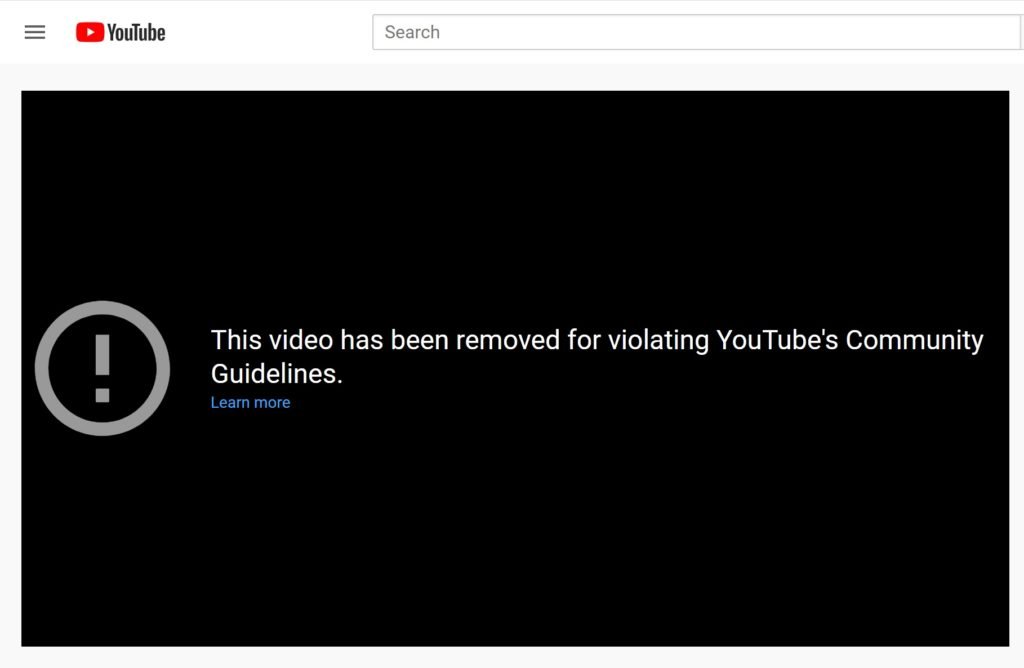
    But if you click on the YouTube video shared by Dr Awab Alvi, it says the video has been removed. Link here: https://www.youtube.com/watch?v=xfLVxx_lBLU&feature=youtu.be

    The video has been taken down by YouTube for violating YouTube’s Community Guidelines. YouTube has recently been taking down videos spreading misinformation about the novel coronavirus.

    Twitter recently also updated its guidelines on misinformation regarding COVID-19. Last month, Twitter and Facebook removed posts shared by Brazilian President Jair Bolsonaro for including coronavirus misinformation that violates the social media companies’ rules against posting harmful content.

    Facebook said it took down a video that had been shared on both Facebook and Instagram, in which Bolsonaro said the anti-malaria prescription drug hydroxychloroquine was an effective treatment for COVID-19.

    Twitter earlier had removed two videos that also showed Bolsonaro praising hydroxychloroquine and encouraging the end of social distancing. It is rare for Facebook to take down a post from a head of state, but the coronavirus pandemic has led tech companies to move aggressively to filter out unfounded medical advice, hoaxes and other false information that they say could risk public health.

    Facebook has a policy against sharing posts that could cause users physical harm, a spokesperson said.  “We remove content on Facebook and Instagram that violates our Community Standards, which do not allow misinformation that could lead to physical harm,” the company said in a statement. Twitter, too, has a policy that requires people to remove tweets that recommend cures or advice that goes against the recommendations of public health authorities.

    As coronavirus cases continue to increase in Pakistan and across the globe, the World Health Organization (WHO) recently warned that COVID-19 cases in Pakistan can rise to 200,000 by July.

  • PTI govt moves FIA against Khalid Butt for mocking Imran Khan

    PTI govt moves FIA against Khalid Butt for mocking Imran Khan

    According to journalist Anas Mallick, the Pakistan Tehreek-e-Insaf (PTI) government is moving FIA against Khalid Butt, Faysal Chaudary and Mustafa Chaudhry for their political satire mocking Prime Minister Imran Khan.

    Mallick claims that the PTI government is seeking to register an FIR against the satire team.

    Khalid Butt and his team host a satirical show on Neo News. In January, they poked fun at PM Khan’s statement that nurses at Shaukat Khanum Hospital, who looked after him after he fell from the stage back in 2013, looked like hoors (companions from paradise) following painkillers.

    PM Khan is not the only one Khalid Butt and his team have mocked. They made fun of Leader of the Opposition Shehbaz Sharif after the PML-N voted in favour of the extension of the army chief. Meray Paas Tum Ho fame Danish and his subsequent death in the finale was also recreated by them.

    After Anas Mallick’s tweet, Khalid Butt tweeted: ‘Bring it on’ while journalist Kamran Yousaf sarcastically said that yes Khalid Butt & co should “immediately be arrested” since they are responsible for all the problems and all the U-turns taken by Prime Minister Imran Khan. “They must be booked under Article 6.”

  • I love Pakistan but I am in exile forever: Aasia Bibi

    I love Pakistan but I am in exile forever: Aasia Bibi

    Recounting the hellish conditions of eight years spent on death row on blasphemy charges but also the pain of exile, Aasia Bibi has broken her silence to give her first personal insight into an ordeal that caused international outrage.

    The Pakistani Christian was sentenced to death on blasphemy charges by the Lahore High Court (LHC) in 2010 but she was acquitted by the Supreme Court on October 31 in 2018. She now lives in Canada at an undisclosed location.

    French journalist Anne-Isabelle Tollet, who has co-written a book about her, was once based in the country where she led a support campaign for her.

    She is the only reporter to have met Aasia during her stay in Canada.

    In the book “Enfin libre!” (“Finally Free”) – published in French on Wednesday with an English version due out in September – Aasia recounts her arrest, the conditions of the prison, the relief of her release but also the difficulty of adjusting to a new life.

    “You already know my story through the media,” she said in the book.

    “But you are far from understanding my daily life in prison or my new life,” she said.

    “I became a prisoner of fanaticism,” she said.

    In prison, “tears were the only companions in the cell”.

    She described the horrendous conditions in squalid jails in Pakistan where she was kept chained and jeered at by other detainees.

    “My wrists are burning me, it is hard to breathe. My neck… is encased in an iron collar that the guard can tighten with a huge nut,” she wrote.

    “A long chain drags along on the filthy ground. This connects my neck to the handcuffed hand who pulls me like a dog on a lead.

    “Deep within me, a dull fear takes me towards the depths of darkness. A lacerating fear that will never leave me.”

    Many other prisoners showed her no pity. “I am startled by the cry of a woman. ‘To death!’ The other women join in. ‘Hanged!’ Hanged!’.”

    Her acquittal on the charges, which stemmed from an incident in 2009 when she argued with a Muslim co-labourer, resulted in violent protests that paralysed the country led by Tehreek-e-Labbaik Pakistan (TLP) chief Khadim Hussain Rizvi.

    Aasia, who vehemently denied the charges against her, argued in the book that the Christian minority in Pakistan still faces persecution.

    “Even with my freedom, the climate (for Christians) does not seem to have changed and Christians can expect all kinds of reprisals,” she said.

    “They live with this sword of Damocles over their head.”

    And while Canada gives her a safer and more certain future, Aasia also has to come to terms with likely never setting foot in her homeland again.

    “In this unknown country, I am ready for a new departure, perhaps for a new life. But at what price?

    “My heart broke when I had to leave without saying goodbye to my father or other members of the family.”

    “Pakistan is my country. I love my country but I am in exile forever,” she said.
  • Punjab govt gives an ultimatum to Nawaz Sharif

    Punjab govt gives an ultimatum to Nawaz Sharif

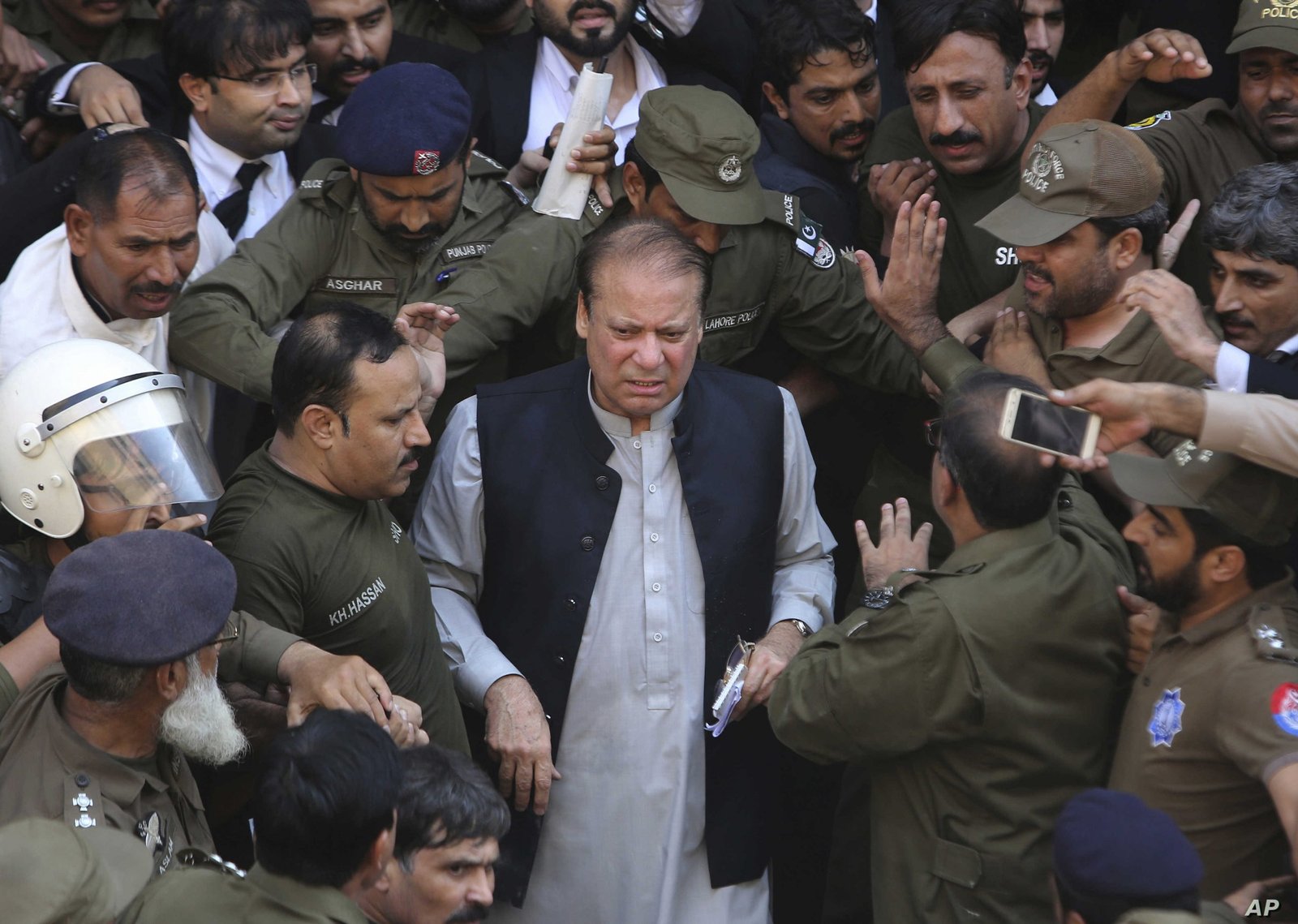
    The Punjab government on Thursday gave former Prime Minister Nawaz Sharif an ultimatum to submit his medical records within three days. If Sharif doesn’t submit his records, the relevant authority would then decide if his application for an extension to stay abroad for medical treatment should be accepted or not.

    Punjab Home Department sent a letter to Sharif, dated January 28, which said: “It is, therefore, required from your side to provide requisite reports within next three days, failing thereby, the competent authority will decide the matter of your application as per the available facts brought on record.”

    On January 15, Sharif’s legal team had submitted four different reports prepared by Dr David Lawrence before the High Court. According to those reports, Nawaz Sharif’s condition has not stabilised yet. He requires surgery, which cannot be conducted until his health improves.

    The PML-N supremo is suffering from hypertension, sugar and kidney ailments. Doctors are taking steps to maintain his blood platelets count, according to the medical reports submitted earlier this month.

  • Pakistan’s FBR using ‘pirated’ US software

    The US has accused Pakistan’s Federal of Board of Revenue (FBR) of using ‘pirated’ version of its software. According to Business Recorder, the US has urged Pakistan to refrain from engaging in such practices. Principal Deputy Assistant Secretary of State for South and Central Asian Affairs Alice Wells raised this piracy issue during her recent visit to Pakistan.

    According to sources, Wells maintained that FBR was using the pirated version of VMware illegally. Ms Wells urged Pakistan to buy the software instead of illegally using it. FBR denied these allegations and officials said this is simply not true. Shabbar Zaidi is currently serving as Chairman FBR.

    VMware, Inc. is a publicly traded software company listed on the NYSE under stock ticker VMW. Dell Technologies is a majority shareholder. VMware provides cloud computing and virtualisation software and services. VMware’s desktop software runs on Microsoft Windows, Linux, and macOS, while its enterprise software hypervisor is for servers.