Tag: polls 2024

  • Ab ki baar, 400 nahin hua paar; Why did Modi falter in Indian elections?

    Ab ki baar, 400 nahin hua paar; Why did Modi falter in Indian elections?

    Elections in 2024 are surprising, to say the least. Many polls across the globe have given a jolt to political pandits, dismantling their expectations. Be it in Pakistan or in neighbouring India; the results sent a shock wave among observers. In India, particularly, the result defied exit polls and set a precedent of what is called the power of vote.

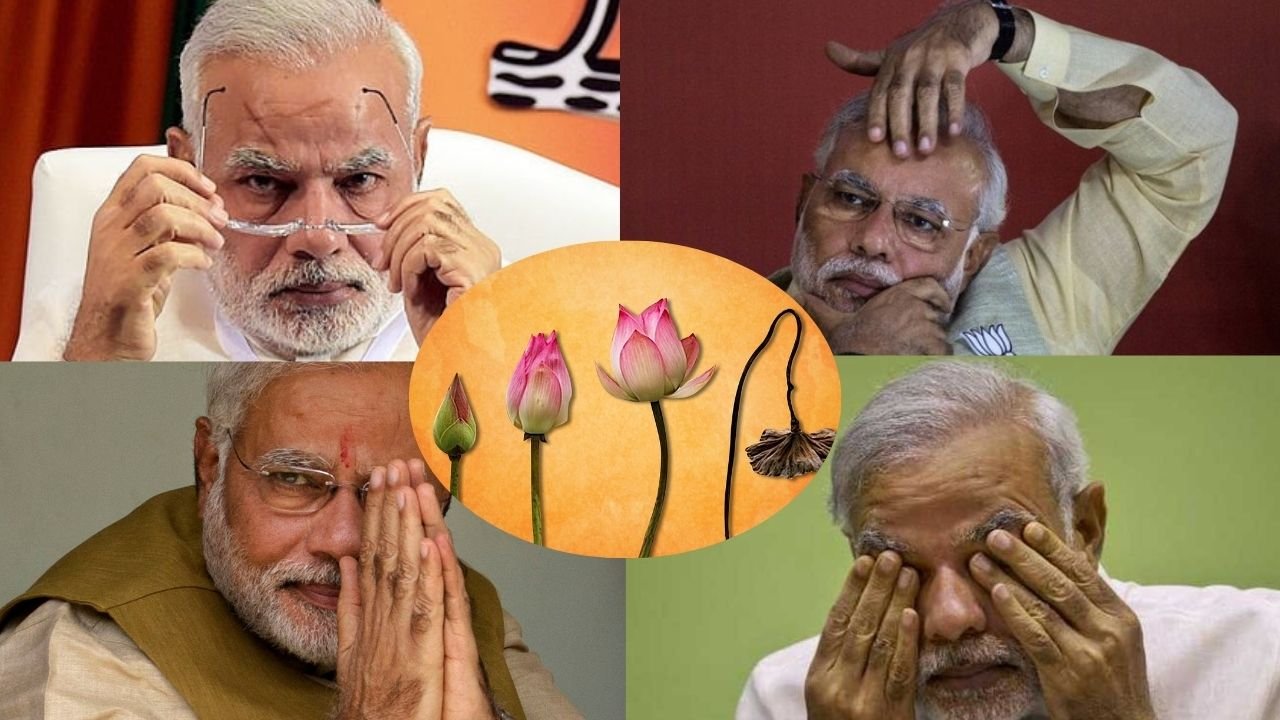
    While the expected Leader of the Opposition, Rahul Gandhi, was on a country-wide tour titled “Bharat Joro Yatra,” Prime Minister Narendra Modi and the leading party, BJP, were conniving for a change in the constitution.  Campaigning for a third time in the office, “400 paar” was the slogan Modi chanted all along. With more than 65 percent voter turnout and a six-week-long grueling process of polls amid the heatwave, the climax showcased the fruit of the exhaustive exercise. The total number of seats won by the ruling party was 240, far behind the magic number of 272, and it lost 63 seats compared to the election of 2019. Economist and author Parakala Prabhakar called this “a very clear tight slap on PM’s face,” but what led to the results?  

     In the span of the last five years, the BJP government led by Narendra Modi outrightly showed hate against minorities, especially Muslims, and promoted the saffron-tainted movement of Hindutva. It started off with the revocation of the Special Status of Kashmir, followed by the Citizen Amendment Act, and culminated with the inauguration of Ram Mandir. 

    303 seats in 2019 enabled BJP to strip Kashmiris of their statehood on August 5, 2019, because it was seen as the biggest hurdle in the drive for development in the region. However, in the garb of this modernization, the aim was to alter the disputed area’s demographics eventually.  

    With CAA, the Modi government further pushed Muslims to the periphery. This “fundamentally discriminatory” piece of law endangered the citizenship of a large number of Muslims in the country. It declared them illegal immigrants, but the Modi government remained unfazed in the face of all criticism. 

    The mishandling of the pandemic, coupled with the high unemployment rate of eight percent, proved to be a catalyst, but it was the largest farmer’s protest in Punjab that turned out to be a major blow. Millions on the road, the police crackdown on protestors, and the rigidity of the government made headlines all across the globe. Resultantly, Congress dominated the polls in Punjab with a high voter turnout of 62.80 percent.

    Islamophobic rhetoric, anti-Dalit sentiment, a spiraling economy, and unconstitutional motives of the sitting government resulted in the BJP’s defeat in Uttar Pradesh and Maharashtra, the two most significant states. 

    The party of “saffron parakeets” kept on ignoring the pulse of the nation and inaugurated Ram Mandir with glitz and glamour in Ayodhya, above the ruins of the demolished Babri Masjid. Modi proudly claimed that the Mandir will be a “temple of national consciousness”. The voters ironically consciously rejected him. Though the BJP will again form the government under the umbrella of the National Democratic Alliance, this will be a coalition government, weak at its core and unable to execute the idea of changing the system of governance from Parliamentary to Presidential.

    Although it is true to democratic traditions, the credit for this stupendous result goes to the voices of reason, who relentlessly stood in the way of Modi’s aim to establish his “taana shahi”.  YouTuber Dhruv Rathee, who has been named by renowned publications as one of the “factors,” made it his mission to create awareness of all the inconsistencies in the election process, scandals in Modi’s governance, and the wildly objectionable things Modi has said and done. His videos were watched by a whooping number of 476 million people, got screened in some areas while he flexed as the “power of the common man”. Some journalists like Rana Ayuub and Karan Thapar and writers like Arundhati Roy chose to call a spade a spade and will go down in history for being on the right side. 

    With the coalition government in place, will there be a new more introspective Modi or a rather aggressive one? It is yet to be seen, but he surely wouldn’t be the same as he was in the last five years.
  • Educated Pakistani women barred from voting by their husbands

    Educated Pakistani women barred from voting by their husbands

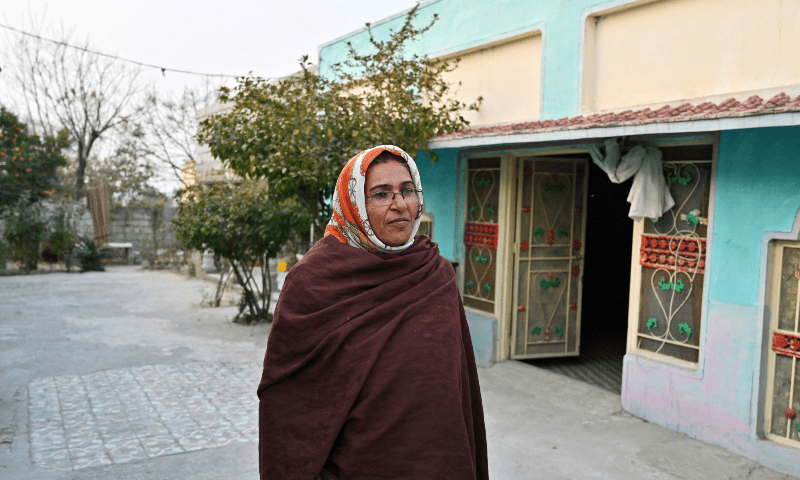
    Perched on her traditional charpai bed, Naeem Kausir says she would like to vote in Pakistan’s upcoming election — if only the men in her family would let her.

    Like all the women in her town, the 60-year-old former headmistress and her seven daughters — six already university-educated — are forbidden from voting by their male elders.

    “Whether by her husband, father, son or brother, a woman is forced. She lacks the autonomy to make decisions independently,” said Kausir, covered in a veil in the courtyard of her home.

    “These men lack the courage to grant women their rights,” the widow told AFP.

    Although voting is a constitutional right for all adults in Pakistan, some rural areas in the socially conservative country are still ruled by a patriarchal system of male village elders who wield significant influence in their communities.

    In the village of Dhurnal in Punjab, spread across crop fields and home to several thousand people, men profess myriad reasons for the ban of more than 50 years.

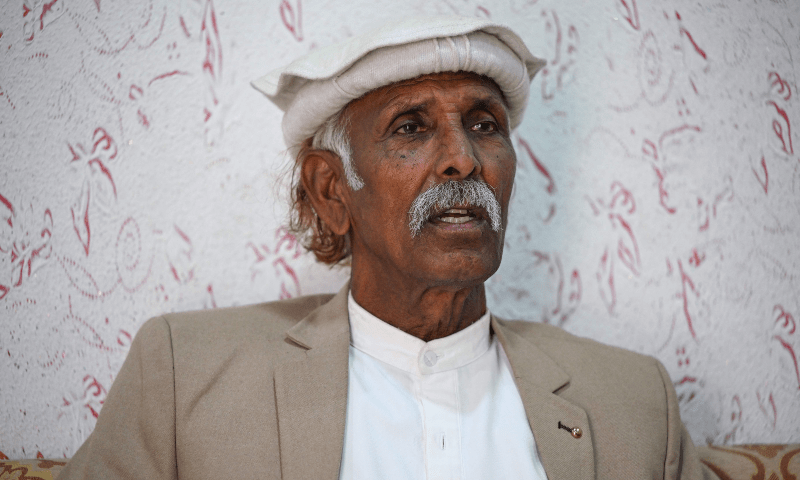
    “Several years ago, during a period of low literacy rates, a council chairman decreed that if men went out to vote, and women followed suit, who would manage the household and childcare responsibilities?” said Malik Muhammad, a member of the village council.

    In this photograph taken on January 29, 2024, Malik Muhammad, a member of the village council, speaks during an interview with AFP in Dhurnal of Punjab. — AFP

    In this photograph taken on January 29, 2024, Malik Muhammad, a member of the village council, speaks during an interview with AFP in Dhurnal of Punjab. — AFP

    “This disruption, just for one vote, was deemed unnecessary,” he concluded.

    Muhammad Aslam, a shopkeeper, claims it is to protect women from “local hostilities” about politics, including a distant occasion that few seem to remember in the village when an argument broke out at a polling station.

    Others told AFP it was simply down to “tradition”.

    The Election Commission of Pakistan (ECP) has stressed that it has the authority to declare the process null and void in any constituency where women are barred from participating.

    In reality, progress has been slow outside of cities and in areas that operate under tribal norms, with millions of women still missing from the electoral rolls.

    The elders in Dhurnal rely on neighbouring villages to fill a government-imposed quota which maintains that 10 percent of votes cast in every constituency must be by women.

    Those who are allowed to vote are often pressured to pick a candidate of a male relative’s choice.

    In the mountainous region of Kohistan in Khyber Pakhtunkhwa province home to almost 800,000 people, religious clerics last month decreed it un-Islamic for women to take part in electoral campaigns.

    Fatima Butt, a legal expert and a women’s rights activist, said women are allowed to vote in Islam, but that religion is often exploited or misunderstood in Pakistan.

    “Regardless of their level of education or financial stability, women in Pakistan can only make decisions with the ‘support’ of the men around them,” she said.

    Pakistan famously elected the world’s first Muslim woman leader in 1988 — Benazir Bhutto, who introduced policies that boosted education and access to money for women, and fought against religious extremism after military dictator Zia ul-Haq had introduced a new era of Islamisation that rolled back women’s rights.

    However, more than 30 years later, only 355 women are competing for national assembly seats in Thursday’s election, compared to 6,094 men, the election commission has said.

    Pakistan reserves 60 of the 342 National Assembly seats for women and 10 for religious minorities in the Muslim-majority country, but political parties rarely allow women to contest outside of this quota.

    Those who do stand often do so only with the backing of male relatives who are already established in local politics.

    “I have never seen any independent candidates contesting elections on their own,” Zara Butt added.

    Forty-year-old Robina Kausir, a healthcare worker, said a growing number of women in Dhurnal want to exercise their right to vote but they fear backlash from the community if they do — particularly the looming threat of divorce, a matter of great shame in Pakistani culture.

    In this photograph taken on Jan 29, 2024, Robina Kausir, a healthcare worker, looks on during an interview with AFP in Dhurnal of Punjab. — AFP
    In this photograph taken on Jan 29, 2024, Robina Kausir, a healthcare worker, looks on during an interview with AFP in Dhurnal of Punjab. — AFP

    She credits part of the shift to access to information as a result of the rising use of smartphones and social media.

    “These men instil fear in their women — many threaten their wives,” she told AFP.

    Robina, backed by her husband, is one of the few prepared to take the risk.

    When cricketing legend Imran Khan swept to power in the 2018 election, Robina arranged for a minibus to take women to the local polling station.

    Only a handful joined her, but she still marked it as a success and will do the same on Thursday’s election.

    “I was abused but I do not care, I will keep fighting for everyone’s right to vote,” Robina said.

  • PTI’s “Baingan Campaign” is ruling Twitter like no other

    Pakistan Tehreek-e-Insaf (PTI) has always remained ahead of others when it comes to the use of social media in Pakistan’s political landscape. As for elections 2024, the party has not been given one symbol, in fact, candidates have different symbols now. Making the best of bad circumstances, the party has come up with entertaining campaigns that are enthralling Twitter (now X).

    Baingan (desi name for eggplant) is ruling the internet, surpassing all levels of creativity with this campaign. The symbol has been allotted to Alamgir Khan in Karachi and Amir Mughal from Islamabad. The constituency of the former is NA 236 and that of the latter is NA 46.

    The chant they have invented is “Ab zulm ka badla baingan se, ab sitam ka badla baingan se.”

    The candidates have designed posters of an eggplant in varying ways. Alamgir Khan shared a video of an Indian animated film of a farmer and his wife getting rich by cultivating eggplant in their farm. That has people in fits.

    Alamgir also posted a funny video from a Bollywood film where he showed how the opposition (previously PDM) was seen beaten up by PTI.

    Amir Mughal also posted about how baingan will be seen everywhere as he posted a picture of a baingan being placed among flowers.

    An internet user even used a clip of the army chief along with ex-Prime Minister Shehbaz Sharif to promote Baingan.

    Another user showed his appreciation for baingan by making it a part of his salad with PTI engraved in it.

    Netizens used a clip of the Pakistani drama where a mother was telling her daughter about the benefits of baingan from making the skin glow to bone strength.

    Arsalan Khan, a twitter user, incorporated all the symbols including vegetables in a video of a man relating his recipe of making eggplants.

    A user even shared the picture of a baingan and rhymed his chant as, Baingan stands tall, a symbol for all.

    Twitter is enjoying the new trend of #voteforbaingan as a user commented: “I bet they’re regretting giving him the baingan symbol. This is hilarious.”

    A user even tagged Alamgir Khan and said he better has a feast of dishes having baingan at his constituency.

  • No Bat for PTI ka matlab kya, jo bhi? PTI candidate election campaigns that scream creativity

    No Bat for PTI ka matlab kya, jo bhi? PTI candidate election campaigns that scream creativity

    Pakistan Tehreek-e-Insaf (PTI) has always remained ahead of others when it comes to the use of social media in Pakistan’s political landscape.

    Data shared in a report from Digital Pakistan 2023 states that the number of internet users in Pakistan swelled to a record 87.35 million in January last year, showing a 4.4 million increase between 2022 and 2023.

    The number of social media users also increased to a record 71.70 million in 2023, including 37.30 million users of Facebook, 71.70 million users of YouTube, 12.95 million on Instagram, and 16.51 million on TikTok.

    Similarly, about 11.95 million people are using Facebook Messenger, 9.30 million Linkedin, 25.70 million Snapchat, and 4.65 million users of X — formerly Twitter — in the wake of an increase in mobile connections to 191.8 million in January 2023 in Pakistan.

    The importance of social media is made very clear by the fact that there is news circulating that the internet might be shut down two days prior to the election. Young Pakistanis will be turning to social media for the truth on election day and if the election is to be seen as free and fair, social media will be the judge and the jury, senior producer and journalist Marium Chaudhary said while talking to TheCurrent.

    The results show the importance of social media in the election arena. Its power was fully exhibited when a huge number of supporters turned up online using VPNs when the internet was down during PTI’s virtual jalsa.

    Senior Journalist Benazir Shah recently tweeted that according to a google search, PTI has emerged as the most searched political party in the last fortnight.
    As the elections are approaching in less than a month, the party is in a crisis because they have been stripped from their preferred election symbol of a cricketing bat.

    The candidates however have been issued varying symbols from a human eye to an eggplant.

    PTI’s candidate Zain Pervaiz from PS-99 has been given the symbol of human eye and he used a creative way to propagate it. He made a rip-off of the famous Tahir Shah’s song Eye to Eye.

    In another video, a clip from a cartoon film is extracted to publicise the symbol of eye.

    The same candidate, Zain Parvez, came up with a clip from a Pakistani Drama where the heroine is seen saying that she will only what Zain wants her to do.

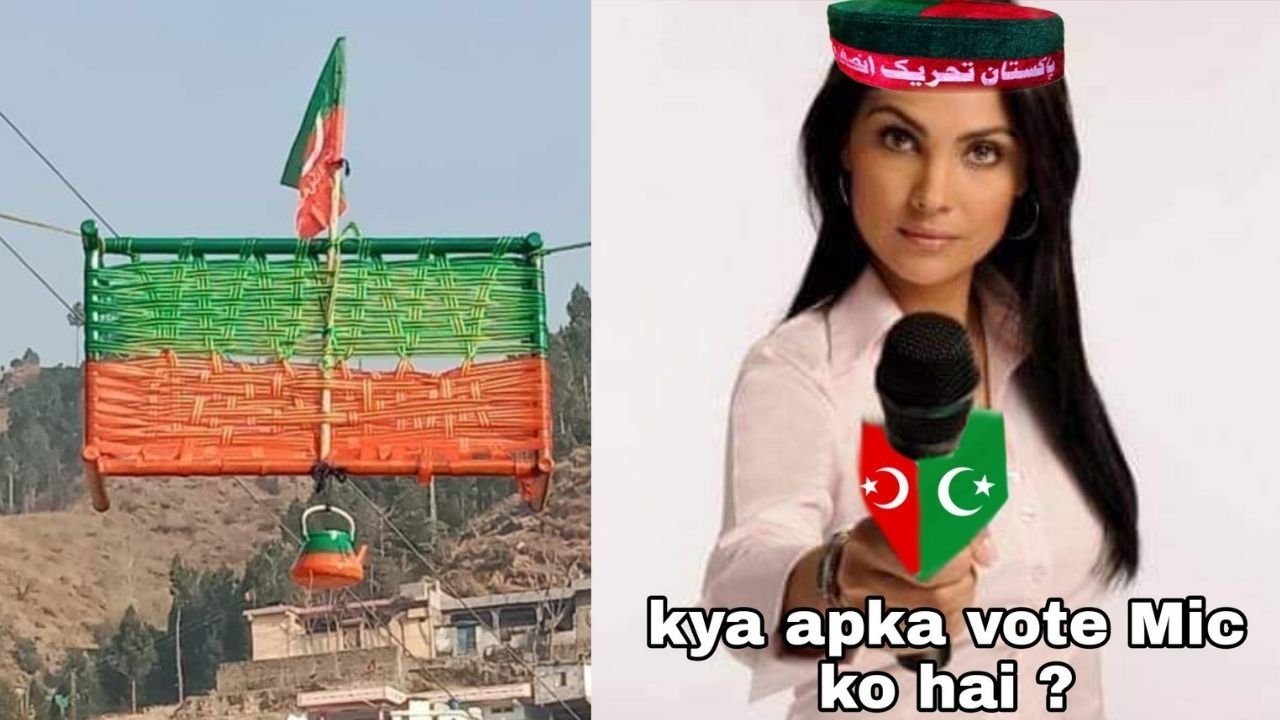
    As a candidate was allotted the symbol of a desi bed (charpayi), he got a charpayi painted in colours of the PTI flag. Along with that they were seen chanting the slogan, “Aye Aye Charpayi”.

    The same candidate got a charpayi made adorned with fairy lights and released a song titled, “Charpayi da nishan, Rakho yad meri jan”.

    The candidate alloted the sign of brinjal has taken a huge leap of creativity by releasing a “baingan song”. This symbol of is given to the candidate of PTI from NA 46.

    The meme brigade were tickled enough to promote the different election symbols including a wheelchair where the punch line was give vote to wheelchair to be able to get the system back on foot.

    The meme for the symbol tap, that is “Nalka” shows a clip from an Indian movie.

    Summing up the whole confusion folk singer Malko released a song with lyrics implying, whatever the symbol is, vote will be cast to Khan.

    Apart from the hilarious campaigns by PTI, the party is also seriously pursuing the upcoming elections by using social media. The party has launched an online portal containing detailed information of candidate names & symbols to avoid disinformation.