Tag: Poor

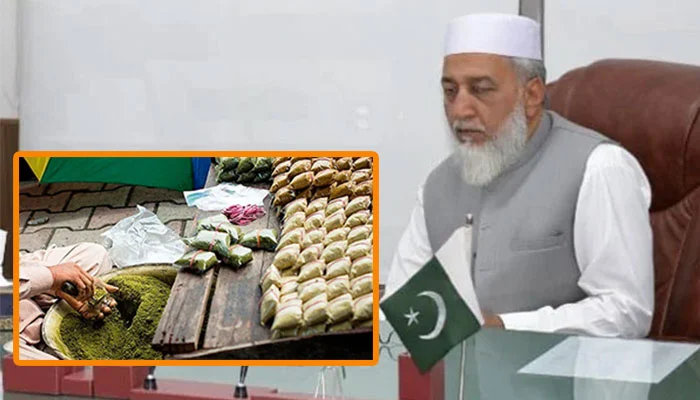
  • Naswar is drug of poor, not forbidden in Sharia: KP Agriculture Minister

    Naswar is drug of poor, not forbidden in Sharia: KP Agriculture Minister

    Khyber Pakhtunkhwa (KP) agriculture minister Major (ret) Sajjad Khattak has said that the provincial government has imposed a tax on tobacco used in Naswar, adding that the usage of Naswar is neither a sin nor a reward.

    The provincial agriculture minister told the provincial assembly that Naswar is the drug of the poor and it is not even forbidden in Sharia.

    Opposition members of the KP assembly, including Sobia Shahid and Ahmad Kundi, tabled a bill demanding more tax on Naswar and cigarettes, as they are luxuries, and that the tax on private schools should be abolished.

    Pakistan Muslim League-Nawaz (PML-N) leader Sobia Shahid said that the tax on tobacco exports should be increased, and that it should be abolished in schools and colleges.

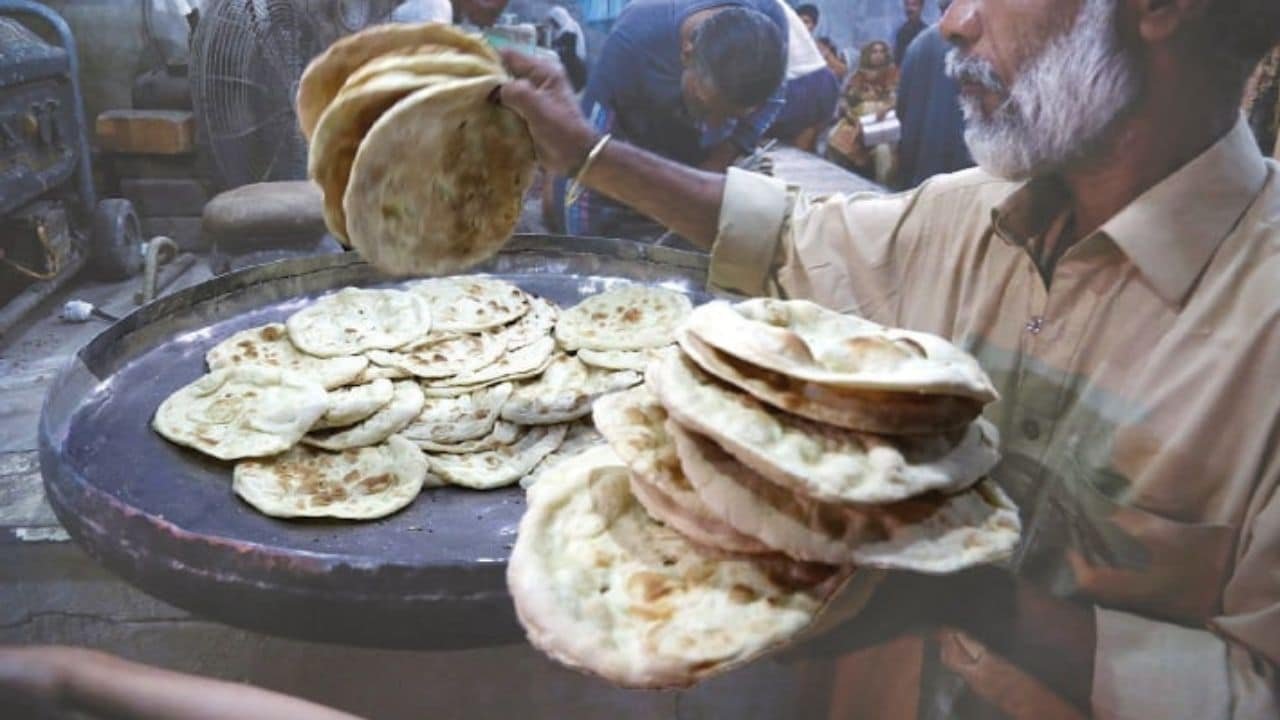
  • Sindh govt’s Rs2 roti plan may trigger shortage, price inflation in the near future

    Sindh govt’s Rs2 roti plan may trigger shortage, price inflation in the near future

    Sindh Governor Kamran Tessori has announced a subsidised food programme for the poor. As part of this initiative, the government will provide roti (flatbread) at a price of Rs2.

    Tessori stated that the provision of roti at a reduced price is aimed at helping people affected by inflation and will be implemented in specific areas of the metropolis. He emphasised that this noble cause will be pursued as a mission.

    During a ceremony on Sunday, the governor announced the establishment of up to 300 tandoors (traditional clay ovens) across the Sindh capital, where roti will be sold for only Rs2. Additionally, he reiterated that ration bags would be distributed among one hundred thousand deserving families in the port city.

    While it may seem beneficial for the inflation-hit people of Karachi to have access to roti at a significantly lower price of Rs2 compared to the Rs20-25 market price, there could be unintended consequences.

    If the government sets up 300 temporary tandoors selling roti at Rs2, the majority of people may opt to buy from them rather than purchasing roti from tandoors selling it at a higher price. Consequently, the tandoors selling roti for Rs20 may be forced to close as they would be unable to compete with these subsidised tandoors.

    Once the government discontinues the cheap roti scheme or ceases to offer it at reduced rates, there is a potential for a shortage to arise. With only a limited number of tandoors available for citizens to purchase roti from, the scarcity could drive up the price of roti to Rs30 or even higher.

    This highlights the possibility that the government’s initiative of selling roti at a reduced rate may not be sustainable in the long run. The temporary availability of roti at Rs2 might not be as beneficial as initially perceived. Only time will tell whether this programme will provide temporary relief to the masses or worsen the situation.

  • Pakistan did not consult IMF regarding discounted petrol for low-income people: Esther Perez

    Pakistan did not consult IMF regarding discounted petrol for low-income people: Esther Perez

    According to the International Monetary Fund (IMF), Pakistan’s government did not seek advice from the multilateral lender regarding the discounted petrol for the low-income group.

    The government’s plan to increase fuel costs for more affluent drivers to pay for a subsidy for those with lower incomes, according to Esther Perez, the IMF’s resident representative for Pakistan, was not discussed with the international lender.

    “Fund staff are seeking greater details on the scheme in terms of its operation, cost, targeting, protections against fraud and abuse, and offsetting measures, and will carefully discuss these elements with the authorities,” said Perez.

    Earlier, the federal government announced that it would reduce the price of petrol up to Rs100 for motorcycle riders and owners of vehicles up to 800 cc in order to lessen the impact of rising petrol costs on people who are already suffering from inflation. According to Malik, Prime Minister Shehbaz Sharif has ordered that low-income individuals receive petrol subsidies of up to Rs100 per liter instead of Rs50.

    Under a comprehensive strategy, cheap petrol will be offered to motorcyclists and owners of vehicles up to 800 cc, while owners of vehicles beyond 800 cc will be charged full price. The minister made it clear that this is not a subsidy but a cross-subsidy.

    According to Malik, “the owners of big vehicles will pay more for petrol.” The rich will pay Rs100 more for petrol, while the poor will pay Rs100 less. 210 million people are poor in a population of 220 million, and we stand with poor Pakistanis.”

    He said the decision to provide fuel at lesser rates will be implemented within six weeks.

  • Latest gas price hike will hit the rich, not the poor: Petroleum Minister

    Latest gas price hike will hit the rich, not the poor: Petroleum Minister

    Minister of State for Petroleum Dr Musadik Malik stated that the latest hike in gas tariff was implemented without imposing a burden on the low-income segment. In a media briefing, he added that the government separated the poor and rich segments to protect low-income individuals from its impact.

    However, Malik admitted that the low-income segment in Pakistan is facing tough times. He also shared that 60 per cent of the Pakistani public will remain unaffected by the gas price hike, and the low-income segment might even see a decrease in their bills.

    Malik agreed with former finance minister Miftah Ismail that Pakistan is experiencing elite capture. He emphasized that Pakistan is different for the high-income and low-income segments, and the gas tariff has mostly increased for the high-income segment.

    During the speech, Malik criticised the developed countries for fancying development and progress, which he believed have put most of the world’s population – nearly 5 billion – at peripheries.

    According to Dawn, the minister said that the development has not been inclusive and countries like Pakistan were paying the price despite having “zero” contribution in carbon emissions and lately, it became the third most affected country from global warming.

    He made these comments after the government raised gas prices in line with the International Monetary Fund’s recommendation. As a result, the weighted average cost of gas has increased by 43 per cent from Rs620 to Rs885 per million British thermal units.

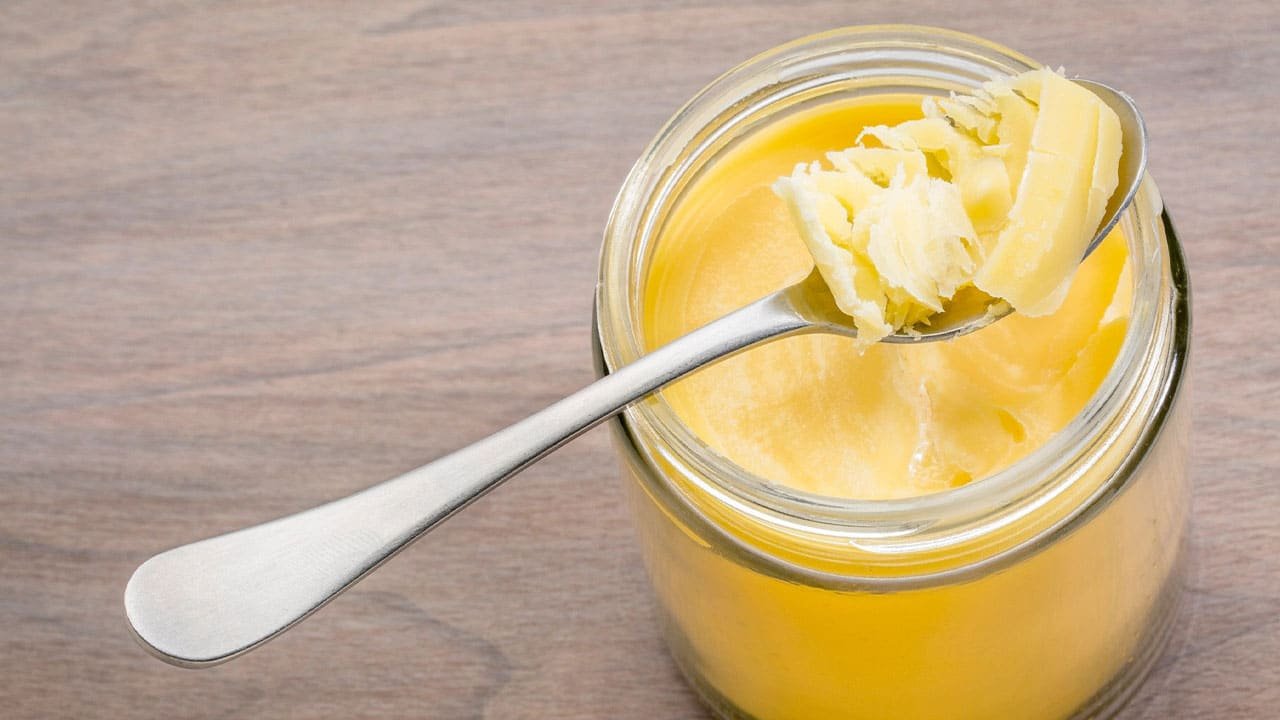
  • Govt announces Rs3 billion subsidy to provide ghee at discounted rate

    Govt announces Rs3 billion subsidy to provide ghee at discounted rate

    The Minister for Information and Broadcasting Marriyum Aurangzeb announced on Monday that the government would provide a Rs3 billion subsidy to lower the price of ghee to assist the masses.

    She told a press conference that the market price of ghee is currently Rs550 per kg, but it is being sold at Rs300 per kg in utility stores across the country, according to AAJ News

    “The government is bearing a cost of Rs250 per kg,” she added, adding that the price of ghee was Rs150 per kg when the Pakistan Muslim League-Nawaz (PML-N) handed over the office to the Pakistan Tehreek-e-Insaf (PTI) in 2018.

    On the other hand, the government has increased the price of ghee and cooking oil at other retailers.

    She further stated that a 10 kg wheat bag could be purchased for Rs400 at any utility store in Pakistan.

    The minister said that on June 6, about one hundred mobile vans were added to the Utility Stores Corporation (USC) network, citing residents of Khyber-Pakhtunkhwa (KP) having difficulty obtaining discounted items due to limited distribution of utility stores.

    9,500 new utility stores

    “In addition, on June 9, 500 new USC stationary stations were set up to deliver wheat, and 100 more items are being added today,” she stated. “Since June 6, the USC network has grown by 700 units”.

    Price control committees have also been established, according to her, to keep hoarding and reselling of USC materials under check. The availability of items at utility retailers, she said, was also being watched.

    The minister stated that Rs17 billion had been set aside to give the public with low-cost sugar, ghee, and wheat.

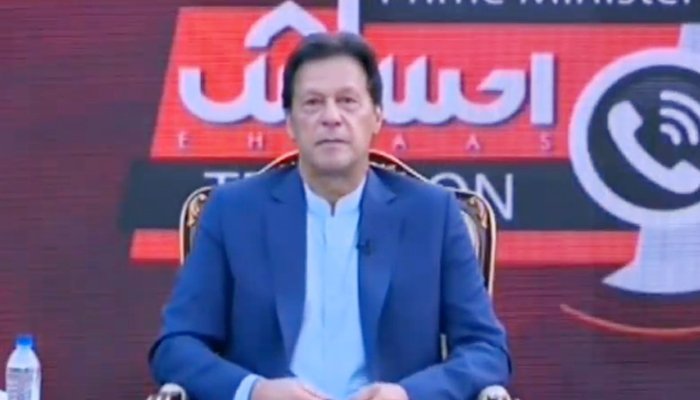
  • Pakistan ready to share Ehsaas project with India: PM

    Pakistan ready to share Ehsaas project with India: PM

    Prime Minister (PM) Imran Khan has offered sharing his government’s cash transfer flagship programme that successfully dealt with the negative fallout of COVID-19 on vulnerable communities, with India.

    “I am ready to offer help and share our successful cash transfer programme, lauded internationally for its reach and transparency, with India,” the premier said in a tweet while sharing a report that 34 per cent households across India will not be able to survive for more than a week without assistance.

    He said his government successfully transferred Rs120 billion in nine weeks to over 10 million families in a transparent manner to deal with the economic fallout of the virus.

    A study titled “How are Indian households coping under the COVID-19 lockdown? Eight key findings”, carried out by experts at the University of Pennsylvania, the University of Chicago and the Mumbai-based Centre for Monitoring the Indian Economy (CMIE) reveals that nearly 84 per cent of Indian households are seeing decreases in income since the lockdown began. Nearly a third of all households will not be able to survive beyond a week without additional assistance.

    “Direct and immediate transfers of food and cash are a very high priority,” said Heather Schofield, assistant professor of medical ethics and health policy at the Perelman School of Medicine and a Wharton professor of business economics and public policy.

    When a nationwide lockdown began in late March, India’s Ministry of Labour and Employment asked private and public organisations not to terminate jobs on the pretext of prevailing conditions. But these pleas hardly made any difference and large-scale retrenchments that took place as cope with the contagion.

    However, the study found a “sharp and broad negative impact on household income” as the pandemic diminished their staying capacity, adding that the unemployment rate in the country had crossed 27 percent in early May, up nearly four-fold from levels in January-February.

    The fall in incomes affected people in the lower and middle segments of the income distribution most severely, the study found. “Households in the lowest of the five income groups had average monthly per-capital earnings of less than Rs3,800 (about $50), while those at the high end made between Rs12,374 and upwards of Rs100,000 ($167 to $1,370 and more).”

    Households in the middle-income groups are hurt disproportionately more perhaps because they are most likely to be dependent on sources of income that are hit due to the lockdown, the study’s authors stated.

    Rural households have seen disproportionately more distress than those in urban India during the lockdowns. Incomes have fallen at some 88% of rural households, compared to 75% of urban households, the study found.

    Only 30% of households are able to survive one month or more without additional assistance. “Crucially, 14% of the sample is already out of funds and risks immediate and severe deprivation if they are unable to borrow or receive additional benefits,” the report warned.

    “Rapid distribution of in-kind or cash transfers is needed to prevent a sharp increase in malnutrition and severe deprivation. Such transfers will also likely promote a more robust recovery as the country is able to reopen.”

    The need for additional resources is also affected by where the household is located. “The urban poor have the least time before their resources are depleted,” the study said.

    Nearly two-thirds of urban households that earn less than median income households will run out of resources in two weeks. Rural households in similar income groups have relatively more resilience, the study found, as 54% of them have sufficient resources for the same period of time.