The bodies of a 32-year-old father and his five-year-old son were recovered from a private hotel room in Naulkha area of Lahore.
Danish had booked a hotel room with his son Ayaan, but when he did not come out of the room, the hotel management contacted the police.
Police say that when they entered the room, the child was dead while Danish’s body was hanging from the fan.
Dawn News has reported that the father killed his son first and then himself because of poverty and unfavourable circumstances. The family has decided against registering the case but police and forensic teams have collected the evidence and the case is under investigation.
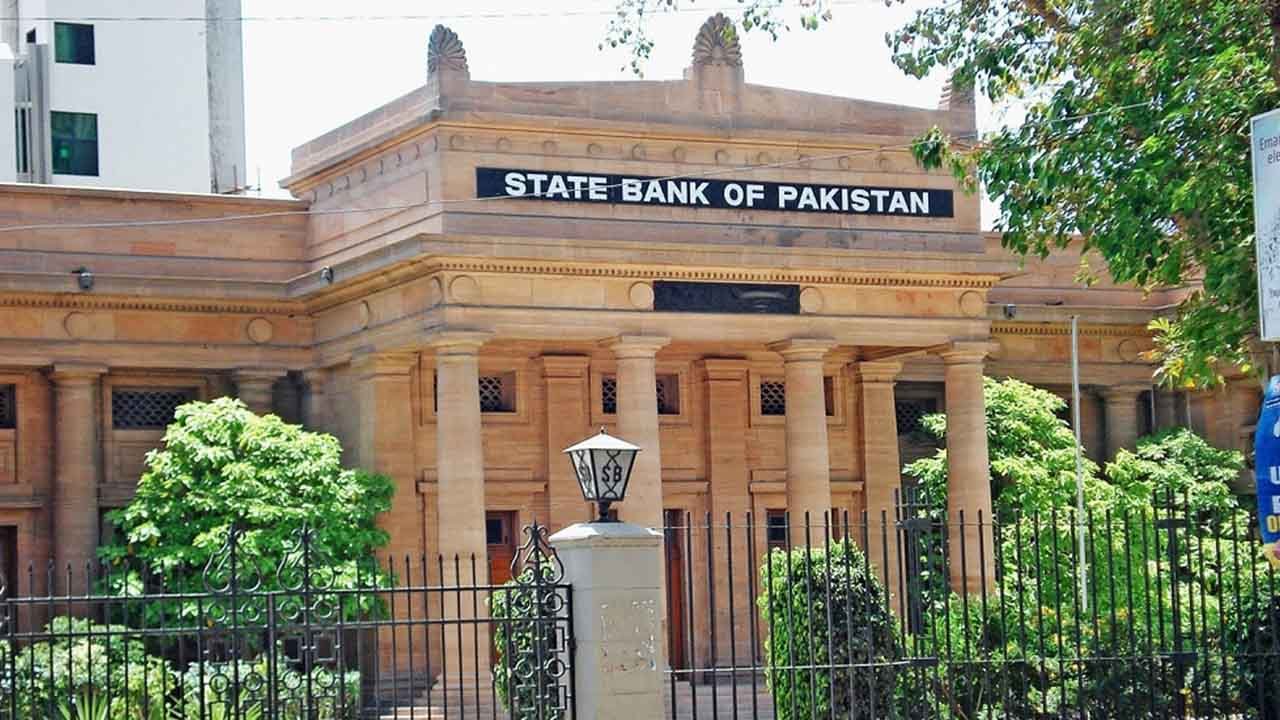
The State Bank of Pakistan (SBP) is expected to maintain its record 22 per cent interest rate at its upcoming policy meeting on Monday.
This marks the seventh consecutive meeting with rates held steady, as Pakistan navigates discussions with the International Monetary Fund (IMF) for a new long-term funding arrangement.
The central bank’s decision comes ahead of an IMF Executive Board meeting to discuss a $1.1 billion disbursement, the final tranche of a $3 billion Stand-By Arrangement.
A Reuters poll of 14 analysts predicts the SBP will hold its rate, though there are mixed forecasts within the group.
Four analysts anticipate a 100-basis-point (bps) cut, while two expect a 50-bps cut. Eight believe the SBP will cut rates before securing a new IMF programme.
The central bank’s next Monetary Policy Committee (MPC) meeting is scheduled for June 10, potentially before Pakistan’s expected new IMF agreement.
Finance Minister Muhammad Aurangzeb mentioned that discussions with the IMF for a longer-term programme will begin next month, aiming for a staff-level agreement by early July.
Pakistan’s last rate hike was in June 2023 to combat inflation and meet IMF requirements. Consumer Price Index (CPI) data for March showed a 20.7 per cent increase from the previous year, with a peak of 38 per cent in May.
However, inflation is slowing, partly due to the “base effect,” with April’s CPI expected to be around 17.5 per cent, according to businessman Arif Habib.
The SBP’s monetary policy decisions will consider various factors, including inflation trends and geopolitical tensions affecting fuel prices.
Tahir Abbas, head of research at Arif Habib Limited, suggests rates won’t be cut until a new IMF programme is in place.
Looking ahead, Mustafa Pasha, Chief Investment Officer at Lakson Investments, predicts a small rate reduction in the current quarter, with significant cuts in the September quarter.
According to Business Recorder, this is driven by the need to roll over approximately 6.7 trillion rupees in domestic treasury bills in late 2024 and expected stabilization in inflation and foreign exchange inflows.
He forecasts that the interest rate could settle around 17 per cent by December.
The World Bank’s latest Pakistan Development Update has shed light on the country’s ongoing battle with poverty.
Despite efforts, the poverty headcount rate, measured at the lower-middle-income country poverty line of $3.65/day in 2017 purchasing power parity (PPP), is anticipated to hover around 40 per cent from FY24 to FY26.
The report highlights several key factors contributing to this stagnation in poverty reduction. Weak economic growth, stagnant real labor incomes, and persistently high inflation are cited as primary culprits.
Importantly, the continuation of import management measures and potential cuts in public spending on social sectors are expected to exacerbate the situation.
This could disproportionately affect poorer households, already struggling with depleted savings and reduced incomes.
The combination of chronic inflation and policy uncertainty poses additional challenges, potentially leading to social unrest and negative welfare impacts.
To mitigate these risks, increased targeted transfers are identified as crucial to safeguarding the most vulnerable segments of society.
Moreover, the report warns of potential consequences on education and healthcare. The escalating cost of living, coupled with rising transportation expenses, may result in an increase in out-of-school children and delayed medical treatments, particularly among disadvantaged families.
Food security remains a pressing issue, particularly in rural areas affected by natural disasters such as the 2022 floods.
In 43 rural districts across Khyber Pakhtunkhwa, Sindh, and Balochistan, acute food insecurity is projected to rise from 29 per cent to 32 per cent in the second and third quarters of FY24.
Lastly, the report underscores the persistent challenge of poor air quality and smog during autumn and winter months.
With 71 per cent of the population affected nationwide, these environmental hazards continue to pose significant public health risks.
The chart was made after analyzing the cost of living, rent, cost of living plus rent, groceries and restaurant prices prevalent in the countries included.
The World Bank has issued a grave warning regarding Pakistan’s economic state, urging the nation to take swift action. They propose taxing key sectors like agriculture and real estate while reducing wasteful expenditures to stabilise the economy. This endeavour aims for a significant fiscal adjustment, equivalent to over 7 percent of Pakistan’s economic size.
The World Bank also revealed alarming statistics, with poverty levels surging to 39.4 percent in the last fiscal year, pushing an additional 12.5 million people below the poverty line. Currently, nearly 95 million Pakistanis live in poverty.
To address these challenges, the World Bank has drafted a set of policy recommendations in collaboration with stakeholders, focusing on low human development, unsustainable fiscal practices, overregulation in the private sector, and issues in the agriculture and energy sectors.
Immediate measures include raising the tax-to-GDP ratio by 5 percent and reducing expenditures by about 2.7 percent of GDP, primarily targeting previously protected sectors.
Tobias Haque, the lead country economist at the World Bank, underscores the need for substantial policy changes, given Pakistan’s economic and human development crises.
According to Express Tribune, the World Bank’s recommendations encompass a range of fiscal reforms, including the removal of tax exemptions, increased taxation on real estate and agriculture, and mandatory use of CNIC for transactions.
Furthermore, the institution advises cutting energy and commodity subsidies, implementing a single Treasury account, and adopting temporary austerity measures for short-term savings. Medium-term savings entail streamlining federal spending and enhancing the quality of development expenditures.
Najy Benhassine, the country director for Pakistan at the World Bank, emphasises the importance of political consensus and domestic solutions to address Pakistan’s challenges.
The World Bank highlights the need to address the human capital crisis, reduce energy subsidies, and promote inclusive, sustainable, and climate-resilient development in Pakistan. These measures are imperative to stabilise the nation’s precarious economic situation and alleviate the growing poverty crisis.
International Monetary Fund (IMF) Managing Director (MD) Kristalina Georgieva has urged Pakistan to increase taxation for the rich and safeguard the well-being of the less privileged. She said that these actions align with the desires of the people in Pakistan.
According to Geo News, speaking on the sidelines of the 78th United Nations General Assembly (UNGA) session in New York, she stated, “What we are asking in our programme is that you please collect more taxes from the wealthy and please protect the poor people of Pakistan. I do believe this is in line with what people in Pakistan would like to see for the country.”
In a separate social media post after a meeting with Pakistan’s caretaker prime minister, Anwaar ul Haq Kakar, Georgieva stated, “Very good meeting with Pakistan’s PM today on Pakistan’s economic prospects. We agreed on the vital need for strong policies to ensure stability, foster sustainable and inclusive growth, prioritise revenue collection, and provide protection for the most vulnerable in Pakistan.”
Furthermore, the Prime Minister’s Office (PMO) released a statement expressing gratitude for the IMF’s approval of a $3 billion stand-by agreement (SBA) to support Pakistan’s economy. The arrangement, approved by the IMF’s Executive Board in July, is set for its second review in November.
The statement mentioned that Kakar briefed the MD IMF on various measures taken by the Government of Pakistan to stabilise and revive the country’s economy, with a focus on creating a stable environment for sustainable economic growth and investment, particularly for vulnerable segments of society.
Kristalina Georgieva commended Pakistan’s concerted efforts in implementing policies and reforms to revive the economy and assured continued engagement with Pakistan.
In July, Pakistan secured a last-minute SBA with the IMF, providing relief to its economy, which had long grappled with a boom-and-bust cycle due to the absence of meaningful structural reforms. High inflation and a balance-of-payments crisis have led to economic distress, prompting the Asian Development Bank (ADB) to revise its growth outlook for the country.
Low foreign exchange reserves have resulted in import restrictions as debt payments remained high and avenues for dollar inflows were limited.
Anwaar-ul-Haq Kakar also called upon the international community to find a lasting solution to the debt issues faced by 59 countries in debt distress, emphasising the need for global and regional cooperation to achieve sustainable development goals.
He highlighted the importance of resources for developing countries and reiterated Pakistan’s commitment to supporting the Global Development Initiative. Kakar also noted the significance of China’s Belt and Road Initiative (BRI) and China-Pakistan Economic Corridor (CPEC) in achieving sustainable development goals.
Khudkaar, now known as xWave, started when Wardah Noor, 23, visited far-flung areas of district Layyah during a ration drive in the lockdown period. She observed how laborers were distraught while their economic conditions worsened day by day. That urged her to start something sustainable in case such circumstances arise again and “people have something to eat at home.” She decided to take a gap year from her university and work on the idea for a couple of months.
She was enrolled in B.A. LLB from LUMS at the time. The first half of Wardah’s gap year was consumed in traveling across Pakistan including KP and Sindh, visiting different institutes in Karachi, and residing in Islamabad for some time to see what is happening in other cities. That’s when she learned that skills training and development is something that might result into sustainability. In the second half, she started crowdfunding; her friends who were running other social ventures donated laptops, furniture, books and, “that’s how we started in Layyah.”
Today for me in pictures: Out of 10 people who joined stage, 7 were women and that is what’s gonna change the future. More representation, more say and more power. SO SO HAPPY SEEING THESE WOMEN PARTICIPATE. @khudkaarpic.twitter.com/PLRLO3j7xD
“During crowdfunding, we asked people that a minimum of Rs100 and a maximum of whatever they can pledge for a year. We used to meet our monthly expenditures, and for furniture, different people donated different things,” she said. She started the venture in a room at her home where they initially made a computer lab and, in another section, women were taught stitching.
She was able to secure The Spark Fund- Global Fund for Children through which they managed the finances for next year. Till now they are crowdfunding and simultaneously applying for grants. Recently they have started enrolling wealthy students who pay a certain amount of fee which helps in covering a small part of expenditure. She believes that this venture has given a direction to her life.
“This has given me a purpose which gives me satisfaction too. I have the energy to get up every morning and work on this idea. I initiated another startup during my gap year. I prepared a curriculum for overseas Pakistanis to give them Urdu tuition and I taught people the Urdu language because it is not their first language,” she added.
She explains that this helped her in saving money, but it distracted her from her focus. She eventually took a decision at the start of this year, ending the Urdu tuition startup and giving all her energies to enhance xWave. The salary she has started drawing from xWave after a donor’s funding is 5 times less than what she was earning from her Urdu startup, but this gives her satisfaction, and she is determined to live and die for the cause. What gives her energy, and an adrenaline rush is knowing the success stories of her students and fellows.
Happy to share that I am starting a new venture named @xWavePak , going to Balochistan and Sindh tomorrow.
We will be training youth of flood affected areas in web 3.0 technologies in the first phase & our target is to create economic impact of $14M in the next 10 years. pic.twitter.com/jFRPSmVD0I
Shazia Gull, a 23-year-old young woman, hailing from Layyah couldn’t continue her studies due to personal reasons. She used to stay at home and got to know about this center through her cousin. She secured admission there and started learning illustration and 2D animation. She had no source of earnings prior to this.
She says, “I am working on multiple projects, I have a full-time job at xWave, and earning a good amount of money. I am instructing about teaching-related courses at Coursera to enhance my skills and earn more.”
Another student of xWave, Muhammad Zain Abbas, also a resident of Layyah, got to know about this institute through his college teacher. He joined last year to learn video editing. “I made my account on Fiver a year ago and I have earned 150 dollars so far. I bought a decently working mobile phone as it was important for my work and I am hopeful that I will earn around 5000 dollars per month in the future,” he said.
Afshan kawal, a student of video editing living in Layyah, has shown remarkable dedication and hard work in pursuing her passion for video editing.
According to data released by the Ministry of IT and Telecommunication (MoITT), 2022 saw a growth of 2.74% as the remittance inflows stood at $397.328 Million as compared to 396.243 Million in 2021. There were around 3 Million freelancers in Pakistan in 2022, as per the report released by MoITT, which have possibly increased in 2023.
Pakistani freelancers earn an average of $20 per hour, and the majority of freelancers in Pakistan are under the age of 30. The most popular payment gateway for freelancers in Pakistan is Payoneer. The global freelance industry is valued at $3.5 Billion, and the Pakistan industry accounts for 9% of the global market.
According to data released by Payoneer and Upwork, women make up 47% of the freelance market in Pakistan, which is more than the 35% global average.
40% of freelancers in Pakistan are from Punjab, 29.5% from Sindh, 14.7% from KPK, 10.5% from Balochistan, and 5.3% from Azad Kashmir.
Karachi, Lahore, Islamabad, and Rawalpindi collectively account for 88% of Pakistan’s freelancing industry.
Wardah Noor is an inspiration for young Pakistanis, and she advises others to dream big.
“Keep struggling, you have unlimited opportunities and endless avenues to learn from. Don’t look for shortcuts to be rich overnight; learn as many skills as you can consistently. You can achieve anything in your life,” she says.
In the recently published Global Hunger Index (GHI-2022), Pakistan has been ranked 99th out of 121 countries assessed for their hunger levels.
The GHI report, launched in Islamabad on Tuesday, revealed a drop in Pakistan’s score from 38.1 in 2006 to 26.1 in 2022, but the hunger level is still considered serious, reported Dawn.
The Global Hunger Index is an annual pre-reviewed report jointly published by Welthungerhilfe and Concern Worldwide. Its primary objective is to raise awareness and understanding of the challenges faced in the fight against hunger worldwide.
According to the report, the combination of armed conflicts, climate change, and the coronavirus pandemic has exacerbated hunger issues, forcing approximately 828 million people into hunger globally. Moreover, it highlights that 46 countries are not on track to achieve even a low level of hunger by 2030, signaling the need for urgent action.
The regions most affected by hunger are Africa, specifically South of the Sahara, and South Asia, with the latter being the worst-hit. Notably, South Asia has the highest child stunting rate and the highest child wasting rate among all world regions.
Pakistan, with a serious level of hunger, faces significant challenges in eradicating this issue. As the nation strives to address this pressing problem, stakeholders are urged to collaborate and implement solutions that involve local communities and diverse voices in shaping effective policies for food security.
The Global Hunger Index serves as a vital tool in identifying and tackling hunger-related problems, and it is hoped that with collective efforts, progress will be made towards achieving a hunger-free world.
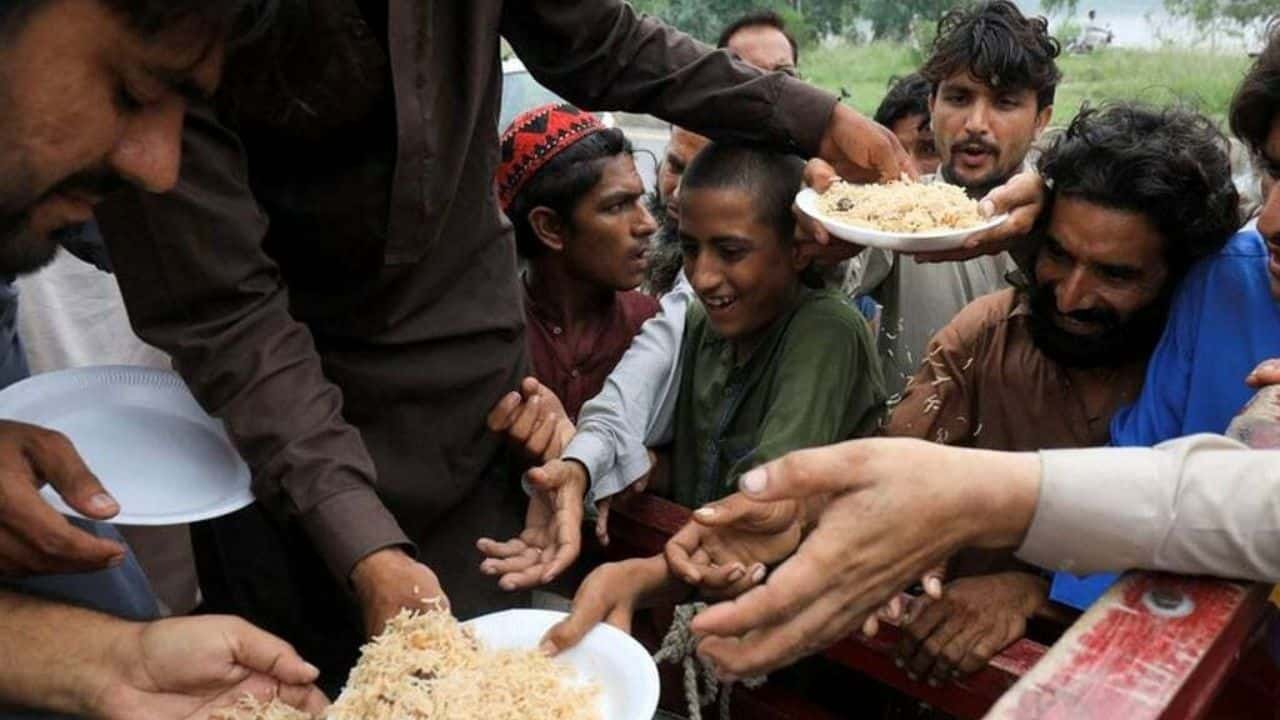
A man in Dera Ismail Khan died of a heat stroke while collecting free flour in Baisakhi ground.
The deceased’s father, a resident of Zafarabad Colony, informed the authorities that his son, Waqas, fell sick and began vomiting upon arriving home from the collection centre. He was immediately taken to District Headquarters Hospital, where unfortunately, he was declared dead on arrival. A medical professional at the hospital’s trauma center stated that the cause of death was heat stroke.
As per Dawn, the individuals who had come to obtain free flour at the distribution site claimed that inadequate amenities were responsible for the fatality. They reported arriving in the morning and waiting in lines under the scorching sun throughout the day.
Officials from food and revenue departments present at the distribution site were accused of distributing flour unfairly based on nepotism and favoritism. The individuals present also mentioned the absence of any facilities at the distribution center.
According to recent reports, the finance ministry’s expectations of high inflation were met due to market frictions caused by the relative demand and supply gap of essential items, exchange rate depreciation, and recent upward adjustment of administered prices of petrol and diesel. However, there was a monthly decline in the inflation rate, which dropped to 3.7 per cent in March compared to February.
Despite this, the inflation situation has worsened significantly over the months, causing mass distress due to the high prices of almost every edible item. The core inflation rate, which excludes volatile energy and food prices, increased in March to 18.6 per cent in urban areas and 23.1 per cent in rural areas. Experts believe that Pakistan is now heading towards hyperinflation, where prices are out of control and expected to surge by 50 per cent.
The Pakistan Bureau of Statistics (PBS) reported that the inflation rate in rural areas reached 38.9 per cent, while it surged to 33 per cent in the cities. Food inflation rose sharply to 50.2 per cent in rural areas and increased to 47.1 per cent in urban areas last month. Supply chain disruptions and weak checks have led to a substantial rise in the food inflation rate.
Unfortunately, both the federal and provincial governments are unable to provide steady essential food supplies, and the prices of most consumer goods remain out of reach for the people. This surge in prices coincides with a significant economic slowdown, and poverty and unemployment levels are rising.
A majority of the surge in prices was seen in rural areas where income levels were already low. The food group prices rose by 47.15 per cent in March compared to the same month last year. Both perishable and non-perishable food items witnessed unprecedented increases in prices.
The Wholesale Price Index (WPI), which monitors prices in the wholesale market, also rose sharply to 37.5 per cent in March compared to 23.8 per cent in the same month last year. The inflation rate has remained above 20 per cent since June after the coalition government curtailed imports.
The overall inflation rate recorded an increase in both urban and rural areas, with urban areas surging to 33 per cent in March, while rural areas soared to 38.9 per cent over the same month last year. In March last year, the inflation rate in urban areas was 11.9 per cent, while in rural areas, it stood at 13.9 per cent.
The non-food inflation rate increased to 24.1 per cent in urban areas and 28.5 per cent in rural areas compared to 10.4 per cent and 12.5 per cent in the same month last year. Prices of non-perishable food items surged by 46.44 per cent on an annualized basis, and the prices of perishable goods surged by 51.81 per cent year-on-year.