Tag: poverty

  • ‘More mouths to feed than we can cope with’: Street Kitchen ‘Khana Ghar’ feeds millions of Pakistanis amid inflation

    Due the ongoing inflation crisis in Pakistan, food and petrol prices have risen astronomically, leading to many families finding it difficult to afford basic necessities like rice or flour. Writing for The Guardian, Zofeen T Ebrahim has covered the story of the street kitchen ‘Khana Ghar’ set up in Karachi’s poorest district by Parveen Saeed, who has been serving food to families for the past 22 years.

    Opening up to The Guardian, Saeed said that the kitchen has become even more busy since Ramzan began, as more families have arrived to receive one-month food rations:

    “But we can only give one bag to one family, and we need their ID cards to check that,” she said. “There are more and more mouths to feed than we can cope with.”

    Saeed, who had received the Pride of Performance award in 2021, sells salan and roti to families for only Rs 3. Before the Covid-19 lockdown, the kitchen provided meals for 6,000 people, but afterwards it rose to 7000, and now currently stands at 8,200.

    Saeed revealed that people stand in line for long hours in order to eat, because the ongoing political and economic instability has made it difficult for people to make a living:

    “These people are not beggars, they have become destitute..where are the jobs?”

    “Food prices have hit the sky. It is heartbreaking as they have waited for a couple of hours, only to leave empty-handed.”

    The newspaper also spoke to some of the regulars who visit Khana Ghar. Former construction worker Mohammad Shakeel, a father of six, suffered a head injury and broken wrists after which finding work became incredibly hard. He said the food was a ‘Godsend’ because “with a kilo of flour costing 150 rupees, we would not be able to survive the jump in food prices.”

    A widow who has been relying on Khana Ghar to feed her polio ridden daughter and toddler grandson said, “Had it not been for Parveen, we would have died from hunger.”

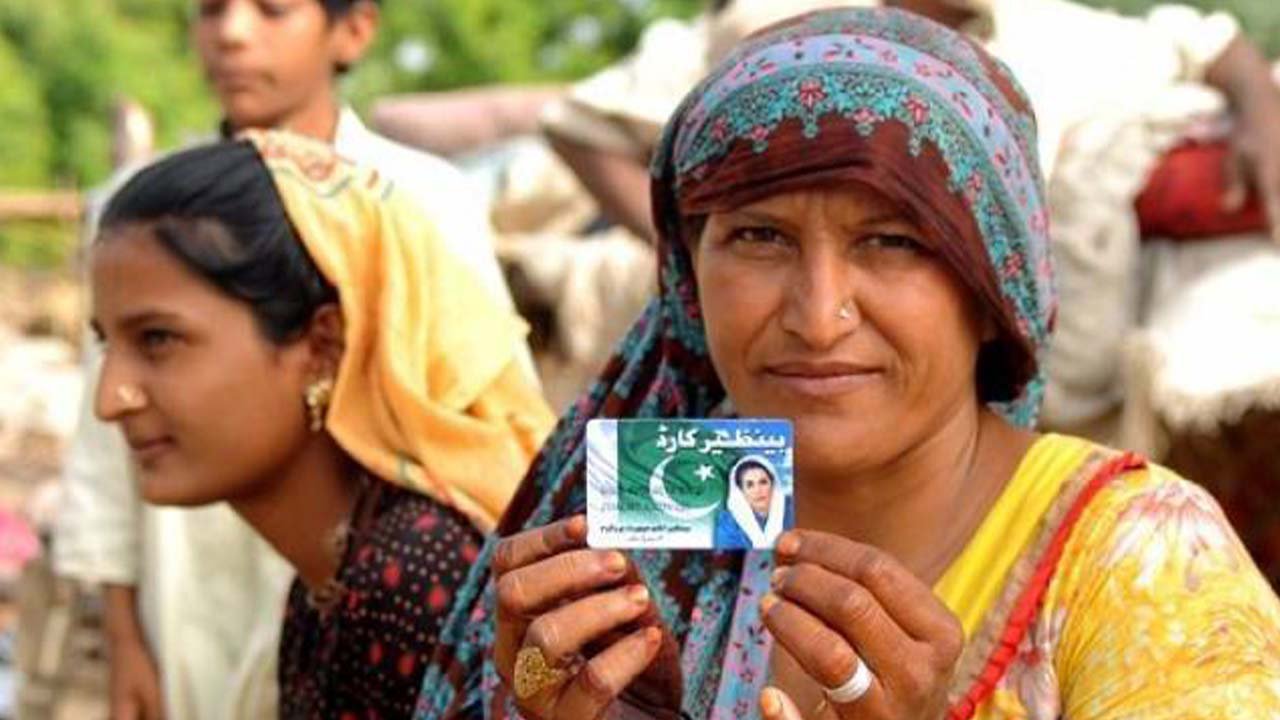
  • Pakistan’s proposal to increase number of beneficiaries for BISP rejected by IMF

    Pakistan’s proposal to increase number of beneficiaries for BISP rejected by IMF

    The International Monetary Fund (IMF) rejected the Pakistani government’s proposal to increase the number of beneficiaries of the Benazir Income Support Programme (BISP) and expand its scope to cover 20-30 per cent of the population living in poverty.

    The proposal aimed to provide quarterly stipends to those below the poverty line. While the IMF approved an increase in the BISP allocation by Rs40 billion, increasing it from Rs360 billion to Rs400 billion for the current fiscal year for 8.9 million beneficiaries, the proposal to expand coverage could not be implemented due to a shortage of budgetary resources.

    According to sources, the IMF refused to increase the Proxy Mean Test (PMT) ceiling for enhancing coverage and providing monthly stipends to around 30 per cent of the population living below the poverty line, citing a lack of budgetary resources. The Finance Ministry official stated that there was no disagreement, and the government has been providing a quarterly stipend of Rs7,000 to 8.9 million beneficiaries.

    The IMF staff suggested increasing tax revenues and abolishing un-targeted subsidies but did not initially oppose the idea of expanding coverage. The IMF high-ups recommended using the National Socio-Economic Registry (NSER) of the BISP to provide targeted subsidies on electricity, gas, and provision of POL for motorcycles and small vehicles.

    According to Geo, different proposals to start a targeted subsidy mechanism were discussed but ultimately dropped due to various reasons. The weekly Sensitive Price Index (SPI) touched 45.64 per cent on a weekly basis, and Consumer Price Index (CPI) crossed 31.5 per cent on a monthly basis in February 2023. Both the CPI and SPI are expected to rise further in the weeks and months ahead of the current fiscal year.

    To protect vulnerable segments from falling below the poverty line, there is no other option but to implement a targeted subsidy mechanism over the short and medium-term period. Pakistan and the IMF will need to place a target subsidy mechanism, given the possibility of a new IMF program after the expiration of the current one under the Extended Fund Facility in June 2023.

  • Father of two commits suicide due to poverty

    Father of two commits suicide due to poverty

    A 30-year-old married man who was upset over his poverty and inability to pay back a loan hung himself on Tuesday in the Kahna area, near Lahore.

    According to The News, the victim, identified as Fayaz, was depressed owing to his poor financial situation. Additionally, he had taken on a debt that he was unable to pay back.

    He hung himself in a closed room inside his home on the day of the incident. The father also requested an apology from his kids in a message that he penned.

    Rising inflation

    The growing inflation rate in Pakistan is having an impact on many low-income individuals who are unable to pay for basic essentials including food. Meanwhile, even those with good incomes are struggling to cover their expenses.

    Pakistan’s inflation rate has increased to 26.6 per cent in October 2022 from 23.2 per cent in September, placing it along with Ukraine at the 19th rank out of 184 countries where levels of deflation have been measured by institutions specialising in gathering and tabulating economic data.

  • World Bank approves $1.69 billion financing for flood-hit Sindh

    World Bank approves $1.69 billion financing for flood-hit Sindh

    The Board of Executive Directors of the World Bank approved funding for five projects totaling $1.692 billion on Tuesday in order to support those residing in Sindh, Pakistan’s flood-affected areas.

    According to Geo, out of the five initiatives, three support rehabilitation, home reconstruction, and the restoration of crop production for vulnerable populations, according to a statement released by the World Bank. Two of the three projects have a combined value of $500 million, while the third is worth $292 million.

    “Sindh was the province worst affected by the 2022 floods. There were huge damages to the housing, health, and agriculture sectors and people lost their livelihoods. Beyond the rehabilitation and reconstruction of damaged houses and infrastructure, our engagement in the flood response effort is an opportunity to strengthen resilience, and reform institutions and governance structures”, said Najy Benhassine, World Bank Country Director for Pakistan.

    The “Sindh Flood Emergency Rehabilitation Project,” which will cost $500 million, will prioritize creating short-term livelihood opportunities and enhancing the province’s ability to respond to emergencies.

    “The project will help restore and improve critical irrigation and flood protection infrastructure, water supply schemes, roads, and related infrastructure. At least 2 million people—approximately 50 per cent of whom are women—in the most flood-affected districts will benefit from the restoration and the resilient reconstruction of critical infrastructure”.

    About 100,000 households will get short-term financial support through a community-level cash-for-work program.

    “The $500 million Sindh Floods Emergency Housing Reconstruction Project will support owner-driven and multi-hazard resilient reconstruction of core housing units. A housing subsidy will provide reconstruction and restoration grants for 350,000 housing units (almost 20 per cent of the total housing rehabilitation needs for Sindh). Cash grants will be provided for houses with structural damage to partially finance reconstruction or restoration. “

    To increase access to water and sanitation, twin pit latrines and simple rainwater collection systems will also be provided.

    Furthermore, the $292 million approved for the “Sindh Water and Agriculture Transformation Project” will enhance integrated water resource management, boost agricultural water productivity, and enable farmers who were impacted by the flood to resume crop production.

    “More than 385,000 households (approximately 1.9 million people) are expected to benefit from the project. As an immediate response to the floods, the project will provide cash transfers to approximately 300,000 flood-affected farming households to help restore crop production through the purchase of seeds, fertilizer, and other critical inputs. In the medium term around 70,000 households will benefit from improved irrigation services and agricultural support that will help boost farming income. An estimated 14,000 households will receive direct financial benefits from the pilot smart subsidy schemes targeting small- and medium-sized farmers,” the WB said.

    By improving access to and use of mother and child health services, the Sindh Strengthening Social Protection Delivery System Project ($200 million) will also boost the province’s social protection delivery system. As part of the project, the Federal National Database Registration Authority will be aligned and connected, and conditional cash transfers (CCTs) will be given to 1.3 million mothers and their kids to support better maternal and child health outcomes, particularly in the wake of service disruption caused by the floods.

    The CCTs will be made available to Sindh’s bottom 15 districts, selected depending on the Multidimensional Poverty Index (MPI), and will cover 65 per cent of the province’s total flood-affected areas. They are intended to help lessen the effects of the floods, particularly food insecurity, and to maintain access to maternal and child health services open.

    The Sindh Integrated Health and Population Project have been granted $200 million by the lender. The project will assist in raising the standard and uptake of fundamental nutrition, and maternal, neonatal, child, and adolescent health care. Additionally, it will aid in the repair and reconstruction of health infrastructure that was harmed during the floods and impeded the provision of these services.

    The initiative would enhance the population’s access to high-quality healthcare services in Sindh’s flood-affected settlements as well as in distant and peri-urban areas, particularly for women, girls, and children.

    “The World Bank will continue to support the Government and people of Pakistan to recover from the recent flood emergency and strengthen long-term resilience to such climate-related shocks,” the statement concluded.

  • IT sector’s GDP contribution will increase from 2.7% to 13% by 2025: MoITT

    IT sector’s GDP contribution will increase from 2.7% to 13% by 2025: MoITT

    According to estimates from the Ministry of Information Technology and Telecommunication (MoITT), the GDP share of the digital and information technology (IT) sectors would rise to 13 per cent by 2025 as a result of the rapid growth of the digital economy over the next five years.

    MoITT’s offical documents reveal that the size of the digital economy will significantly increase over the next five years as Pakistan’s adoption of digital technology expands. In the upcoming years, the GDP’s share of the digital economy will increase, according to Brecorder.

    While the GDP contribution of the digital and IT sectors will rise from 2.7 per cent to 13 per cent, the GDP contribution of the Information and Communication Technology (ICT) core industry will rise from 1.2 per cent to 8.15 per cent.

    According to the data that is currently available, Pakistan’s digital economy is measured in two ways, i.e. The key industries of ICT, digital technology, and IT. The ICT core industry’s share of the global GDP in 2019 was 1.2 per cent. The IT and telecom industry in Pakistan makes about 2.7 per cent of the country’s GDP.

    Modern ICTs have the ability to accelerate social and economic growth, and this promise will be further realised with the maturation of four enabling technologies: IoT, cloud computing, big data analytics, and AI.

    The cornerstone for nations to build a digital economy and improve their overall economic competitiveness and well-being is ICT infrastructure and services. They can support sustainable cities and communities by lowering poverty and hunger, improving health, generating new jobs, reducing climate change, and enhancing energy efficiency.

    In low- and middle-income nations, mobile remains the main method by which many users access the internet (LMICs). The Information Technology University (ITU) estimates that 87 per cent of broadband connections in developing nations occurred through mobile devices in 2019. Mobile networks and devices are propelling economic growth by connecting consumers and businesses and delivering public and commercial e-services across a range of industries.

    According to the report, Pakistan’s mobile ecosystem is becoming more and more crucial to the country’s economic development due to its direct impact on GDP and the productivity and efficiency benefits it fosters in a variety of economic sectors.

    The majority of nations currently use 4G as the cornerstone of mobile broadband, and this number is continually increasing. The switch from 4G to 5G is happening at the same time all across the world.

    In 2019, 4G connections made up more than 50 per cent of all mobile connections worldwide for the first time, according to the most recent GSMA research. In low and middle-income countries (LMICs), 4G covered 82 per cent of the population compared to 90 per cent for 3G. Compared to 10 years for 3G, LMICs took about seven years to reach more than 80 per cent coverage for 4G.

  • Police arrests 106 professional beggars in a crackdown

    Police arrests 106 professional beggars in a crackdown

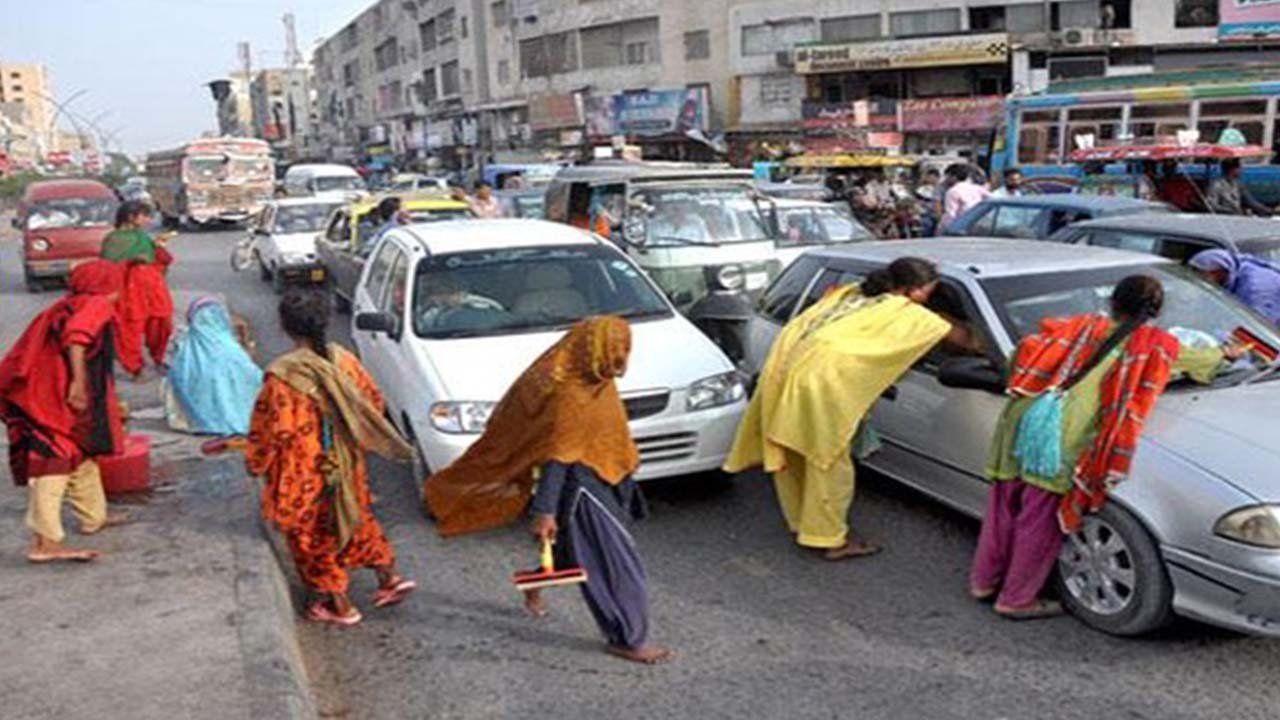
    In a crackdown against professional beggars, the Rawalpindi Police arrested 106 beggars over the course of three days in an effort to reduce the issue of panhandling and lower the risk of traffic accidents caused by jaywalking.

    According to a police spokesman, the anti-beggary squads carried out raids in various neighborhoods, took action against professional beggars, and detained them in various police stations throughout the city on the orders of Senior Superintendent of Police, Operations Rawalpindi, Waseem Riaz.

    SSP Riaz claimed that specialised anti-begging squads were making a valiant effort to combat the rise in professional beggars.

    “The professional beggars stand on various highways and squares of Rawalpindi city and not only affect the flow of traffic but also increase the risk of accidents. Therefore, the public is requested not to serve alms to them, as discouraging such factors will not only improve the society, but also the flow of traffic,” he said.

  • Famous Afghan anchor forced to sell street food after Taliban takeover

    Afghan journalist Musa Mohammadi was spotted selling street food in order to make ends meet. After the Taliban takeover, the country has experienced economic turbulence, forcing professionals like Mohammadi into a state of poverty.

    Kabir Haqmal, lecturer at Kabul University and former journalist, shared Mohammadi’s picture on Twitter with the caption, “Mohammadi worked for years as an anchor and reporter on different TV channels. He now has no income to feed his family and sells street food to earn some money.”

    In another tweet, Haqmal added, “It is also important to look at how the well-to-do people in a country have reached this stage, and what will happen to the poor. We don’t know what to call the change.“

    The viral post drew the attention of Ahmadullah Wasiq, Director of the National Radio and Television, who ensured Mohammadi’s employment in his response.

    Wasiq’s responded: “Unemployment of Musa Mohammadi, a spokesman for a private television station, was highlighted on social media. As the director of the National Radio and Television, I assure him that we will appoint him within the framework of the National Radio and Television. We need all Afghan professionals.”

    https://twitter.com/WasiqAhmadullah/status/1537122260212977665?s=20&t=7i3XCpZ0jBaS_7mpTMgEdA

    Like Mohammadi, Afghan journalists have been facing never-ending challenges since the Taliban’s takeover. Last month, Afghan female TV presenters were forced to cover their faces while appearing on air.

    This ruling was widely criticised by many, calling it another step by the Taliban to promote extremism.

  • Beggar gifts PKR 234,000 motorbike to wife, both continue begging together

    Beggar gifts PKR 234,000 motorbike to wife, both continue begging together

    A beggar from Madhya Pradesh begged for four years and purchased a motorcycle worth Rs234,000 (INR90,000) for his wife.

    He spent all of his savings on the bike as his wife complained about a backache from sitting on the tricycle he owned earlier. This story is from Amarwara village, where the beggar, Santosh Sahu, expressed his love for his wife by purchasing a small motorcycle.

    Sahu is a disabled man who rides a tricycle and begs for money with his wife, Munni Sahu. Munni drags Sahu’s tricycle forward while the two beg.

    Munni would occasionally fall while attempting to push the tricycle due to the poor road conditions. As a result, Santosh decided to purchase her a moped.

    The pair begs for money at different spots from bus stops to mosques and temples, earning up to Rs1,000 (400 INR) per day. Santosh began saving money every day in order to purchase his wife’s dream bike. The couple is now back to their regular practise of begging in their freshly purchased motorcycle.

  • Massive hike of Rs83.5 for petrol, Rs119 for diesel proposed by OGRA

    Massive hike of Rs83.5 for petrol, Rs119 for diesel proposed by OGRA

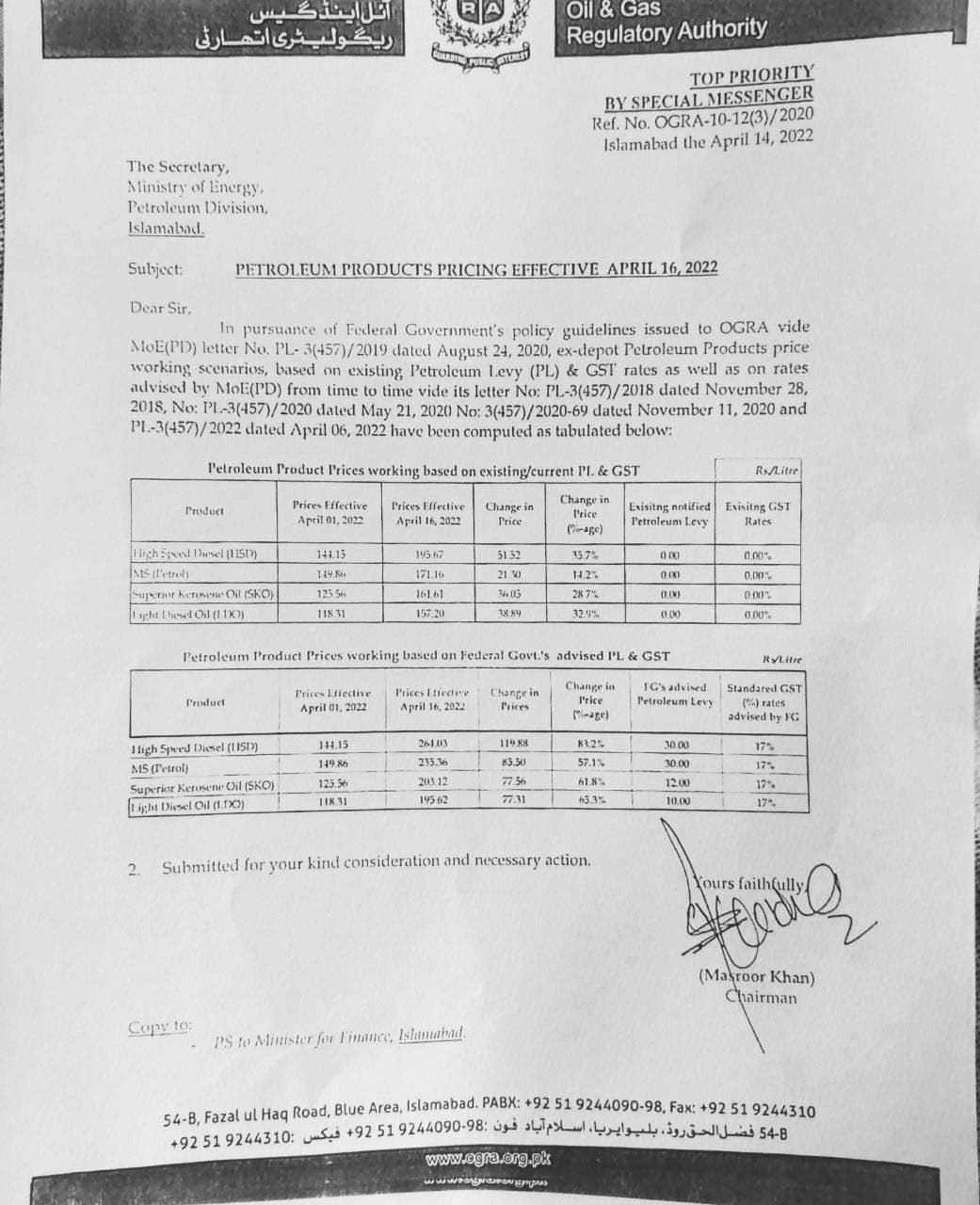
    The Oil and Gas Regulatory Authority (OGRA) suggested the federal government elevate fuel prices by up to Rs83.5 per liter for petrol and Rs119 for diesel.

    A summary to the petroleum division was presented by OGRA for the huge increase in petroleum rates to come into effect on April 16 in Pakistan.

    The proposed raise was calculated using a 70 per cent GST rate plus a Rs30 per liter levy. It is worth noting that the current duty on fuel and diesel is Rs30 per liter, plus 17 per cent GST.

    On the basis of complete levy and taxes, the body has recommended raising petrol prices by Rs83.5 per liter, while diesel prices should be raised by Rs119 per liter.

    According to reports, the OGRA proposed raising the petrol price to Rs21.53 per liter in line with the current tax rate, Rs51.3 for diesel, and Rs77.56 for kerosine oil on the grounds of full tax and levy.

    Read more: Gold prices go up by Rs350 per tola to Rs130,300

    Concerning other oil products, a full tax rate and levy hike of Rs77.31 was suggested for light diesel, Rs36.5 for kerosine oil, and Rs38.89 for light diesel. According to sources, the finance ministry would make the final decision on the OGRA summary after briefing Prime Minister Shehbaz Sharif.

  • 46% unhappy, 32% satisfied with Punjab govt: Survey

    46% unhappy, 32% satisfied with Punjab govt: Survey

    46 per cent of the people in Punjab are rating the Pakistan Tehreek-e-Insaf (PTI) provincial government’s performance as bad, while the PTI still enjoys the support of a good 32 per cent who are satisfied with their performance, reported The News.

    The Institute for Public Opinion Research (IPOR) conducted an all-Punjab survey to gauge the feelings of voters and measure their understanding of the current political situation.

    The voters had a mixed reaction to the situation, on the one hand, half of the voters (49 per cent) were not happy with the rising prices of daily essentials and (57 per cent) declaring things were not heading in the right direction, while on the other hand, despite all these problems, majority 52 percent of the voters said they are still willing to let the current government complete its five-year term.

    49 per cent of the respondents reported inflation as the most important issue they are facing these days, while 19 per cent said unemployment, followed by 13 per cent poverty, and another 09 per cent said corruption.