Tag: poverty

  • Pakistanis appreciate PM Imran for ‘Koi Bhooka Nahi Soye Ga’ programme

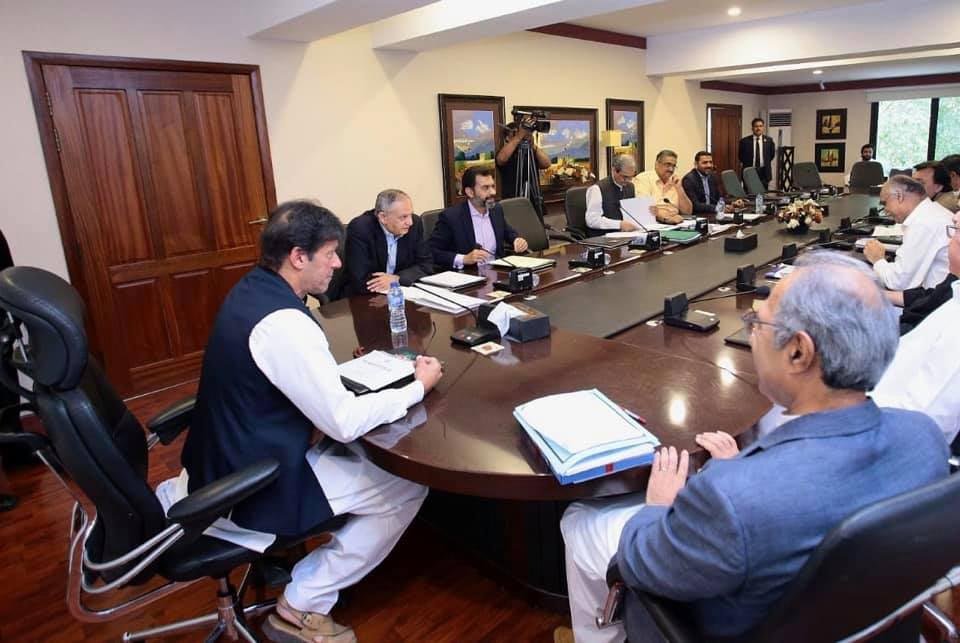
    Prime Minister Imran Khan on Wednesday launched the ‘Koi Bhooka Nahi Soye Ga (No one will sleep hungry)’ program under the administration of Ehsaas Programme and Bait-ul-Maal. Under the scheme, free meals will be distributed among the poor through food trucks in all major cities of Pakistan.

    As per details, freshly cooked food will be distributed twice a day, among 1000-1500 people on daily bases in portable food trucks. Initially, the food trucks will operate in Islamabad and Rawalpindi only, with daily wage workers the main beneficiary of the programme.

    Speaking at the launch, PM Khan expressed his desire to spread the programme in every city of the country. The premier added that the launch of this food drive is a step forward towards a welfare state.

    “I always feel happy to see that deserving people are given shelter and food with honour and dignity at various Panahgahs established across Pakistan,” said PM Imran.

    VIDEO: Bushra Bibi makes rare public appearance, visits Panah Gah in Lahore

    He also announced to launch a subsidy programme under which direct money will be transferred to 30 million deserving families.

    The scheme is being highly appreciated by Pakistanis on social media. Check out some reactions below:

    https://twitter.com/MuhammadMobinK4/status/1369694559643566085

  • PM offers Sri Lanka to join CPEC, says trade links vital to eradicate poverty

    PM offers Sri Lanka to join CPEC, says trade links vital to eradicate poverty

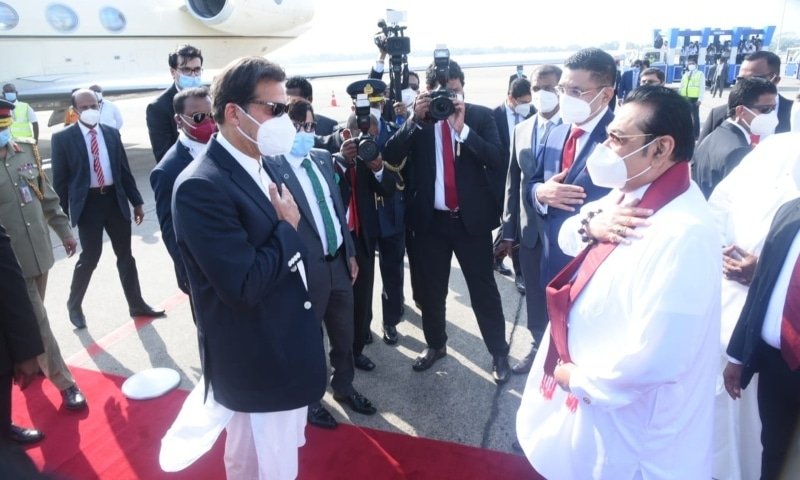
    Prime Minister Imran Khan on Wednesday invited the Sri Lankan businessmen to invest in Pakistan, saying trade connectivity among the countries of the Asian sub-continent was vital for poverty alleviation.

    Addressing the Pakistan-Sri Lanka Trade and Investment Conference held in Colombo which he jointly chaired with his Sri Lanka counterpart Mahinda Rajapaksa, Imran proposed establishing trade links, as existed among the European countries, for the prosperity of the Asian sub-continent.

    The PM also urged the Sri Lankan government to become part of the China-Pakistan Economic Corridor (CPEC), saying joining the Belt and Road Initiative could open up new avenues for Sri Lanka with an opportunity to establish trade links with the Central Asian states via Gwadar.

    The PM, who is in Colombo on a two-day official visit, said political stability in the region by maintaining good relations with neighbouring countries would ensure a business-friendly environment.

    He said Pakistan and Sri Lanka could explore the idea of generating wealth through joint business activities and diverting the wealth to alleviate poverty. Imran offered the Sri Lankan businessmen to explore the immense opportunities offered by the government of Pakistan in the form of ease-of-doing business. He said his government would welcome and facilitate investment from the island nation.

    The PM mentioned that as Pakistan and Sri Lanka both suffered the brunt of terrorism in the past, their journey together towards development could make a difference. He expressed intent for Pakistan to learn from Sri Lanka’s advanced tourism industry and mentioned that he made the tourism minister part of his delegation to explore the area.

    Imran said Pakistan has a lot of undiscovered sites of religious tourism, including the Gandhara civilization. He added that a recently discovered 40-feet-long Sleeping Buddha could be of special interest for Sri Lankan tourists.

    In an effort to maintain good relations with neighbouring states, Imran Khan recalled his offer to Indian Prime Minister Narendra Modi for a dialogue to resolve all outstanding issues including the Kashmir dispute. To encourage trade ties with neighbours, he said, “maintaining amiable relations and living like civilized nations must be a priority”.

    Imran Khan emphasized that with 1.3 billion people, the South Asian region needed to resolve its mutual conflicts through dialogue for sustainable prosperity.

    On Tuesday, Pakistan and Sri Lanka agreed to further strengthen bilateral relations in diverse areas, including trade, investment, science and technology, and culture, as Prime Minister Imran Khan urged the Sri Lankan counterpart to become part of the CPEC.

    “My visit is aimed at strengthening bilateral relationship [with Sri Lanka], especially trade and economic ties through enhanced connectivity…,” Prime Minister Imran Khan said while addressing a joint press conference with his Sri Lankan counterpart Mahinda Rajapaksa after holding one-on-one and delegation-level talks.
  • 10 million Pakistanis to fall below poverty line

    10 million Pakistanis to fall below poverty line

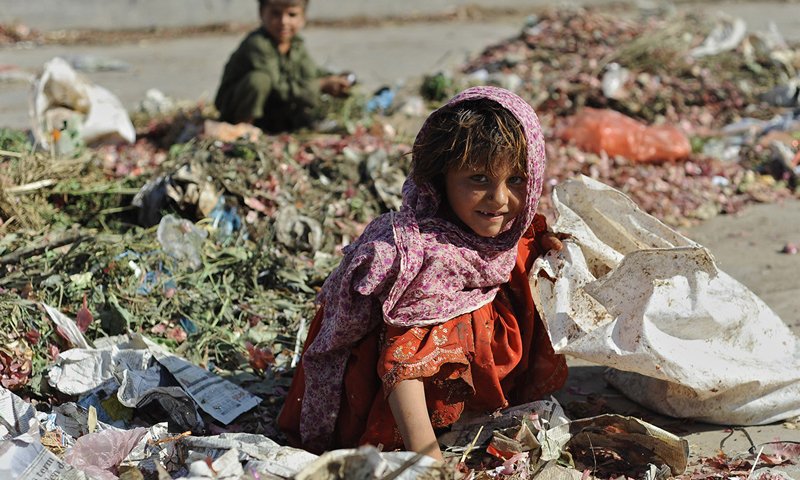
    At least 10 million more Pakistanis will drop below the poverty line because of the toll of the COVID-19 pandemic, the government’s new economic survey estimates.

    Around one in four Pakistanis are currently too poor to meet basic needs, but the figure is predicted to rise closer to 30 per cent of the world’s sixth most populous nation.

    “The COVID-19 outbreak is expected to have a negative impact on Pakistan’s economy, and the number of people living below the poverty line may rise from the existing figure of 50 to 60 million,” the survey says.

    The government’s annual Economic Survey also warned that the economy would contract for the first time in 68 years.

    “The country’s provisional gross domestic product (GDP) growth rate will likely contract 0.4 per cent instead of growing 3.3 per cent as previously forecast,” Adviser to Prime Minister (PM) on Finance Abdul Hafeez Shaikh told a news conference.

    The adviser said the International Monetary Fund (IMF) and World Bank (WB) were making bleaker assumptions keeping in view the severity and duration of the coronavirus pandemic. “In my view, we will have a better estimation when this year ends on June 30.”

    He highlighted the government’s swift and decisive policy actions since the start of the current fiscal year, including resource mobilisation, completion of the IMF programme, austerity measures and monetary policies helping stabilise the economy.

    The adviser stated that these measures helped the economy to reverse large external and internal imbalances. He said that significant improvement in external accounts was made as the current account and trade deficit witnessed a substantial contraction.

    “Foreign reserves steadily improved. There was an increase in foreign direct investment (FDI). The credit rating profile also improved. Fiscal performance remained strong during the first three quarters of the outgoing fiscal year, on the back of consolidation efforts and targeted reforms.”

    “To mitigate the socio-economic impact of the pandemic, the government announced a stimulus package of Rs1.24 trillion and offered further relief measures through the State Bank of Pakistan (SBP). The policy rate was also cut by 5.25pc to 8.0pc,” he said, adding that monetary and fiscal policy interventions had been made to restore economic activity in this difficult time and to reduce negative effects on poverty and unemployment.

  • ‘Eight million people have gone below poverty line under PTI govt’

    ‘Eight million people have gone below poverty line under PTI govt’

    Pakistan’s renowned economist Dr Hafiz A Pasha has claimed that eight million people in the country have gone below the poverty line under the Pakistan Tehreek-e-Insaf (PTI) government and another 10 million could slip below the same soon, Express Tribune reported.

    According to the details, Dr Pasha in an article has said that due to low economic growth and double-digit food inflation the national poverty ratio, which was 31.3% in June 2018, would sharply jump to over 40% by June 2020.

    In simple terms, people living in poverty will increase from 69 million in June 2018 to 87 million by June 2020, indicating 26% increase in poverty in first two years of the PTI government.

    “The situation is very alarming due to an economic growth rate that is close to the population growth rate and an exponential increase in prices of perishable food items,” reports quoted Pasha as saying.

    The economist said that the government’s decision to simultaneously increase taxes, energy tariffs and devaluation of currency contributed to the increase in poverty.

    He said that the Pakistan Muslim League-Nawaz (PML-N) government’s decision to keep the rupee-dollar parity stable kept the inflation under check adding that the incumbent government is implementing probably the toughest IMF programme of Pakistan’s history aimed at overpowering fiscal and external accounts challenges.

    Dr Pasha is the former finance minister of Pakistan and has also advised Prime Minister (PM) Imran Khan at the time of building consensus on signing an IMF [International Monetary Fund] programme.

    Meanwhile, the Federal Minister for Planning and Development Asad Umar in response to Dr Pasha’s claims has said, “We do not have latest official poverty statistics,” adding that the country was exiting a severe balance of payments crisis which had its own implications.

    “The PTI government accelerated the poverty alleviation measures aimed at protecting the poor and vulnerable people from the adverse impact of macroeconomic adjustments”, said the minister.