Tag: Power Division

  • No plans for fixed tax on solar power, says Power Division

    No plans for fixed tax on solar power, says Power Division

    The Power Division has dismissed recent media reports suggesting that the government is imposing a fixed tax on solar power.

    According to a notification released by the Information Ministry today, these reports are unfounded and inaccurate.

    The Power Division clarified in a statement that there is no substance to the claims about a fixed tax on solar power.

    It highlighted that neither the Central Power Purchasing Agency nor the Power Division has submitted any summary to the government proposing such a measure.

    The statement highlighted that the Net Metering Policy of 2017 was designed to encourage the use of alternative energy sources, contributing to a significant increase in solar energy adoption.

    This rapid solarization is seen as a positive trend, aligning with the government’s objectives to promote clean energy.

    The Power Division also mentioned that any proposed changes or amendments to current policies are aimed at alleviating financial burdens on the economically disadvantaged.

    It stressed that protecting the interests of the 152,000 net metering consumers remains a priority.

  • ECC approves Rs7.49 billion Ramzan Relief Package

    ECC approves Rs7.49 billion Ramzan Relief Package

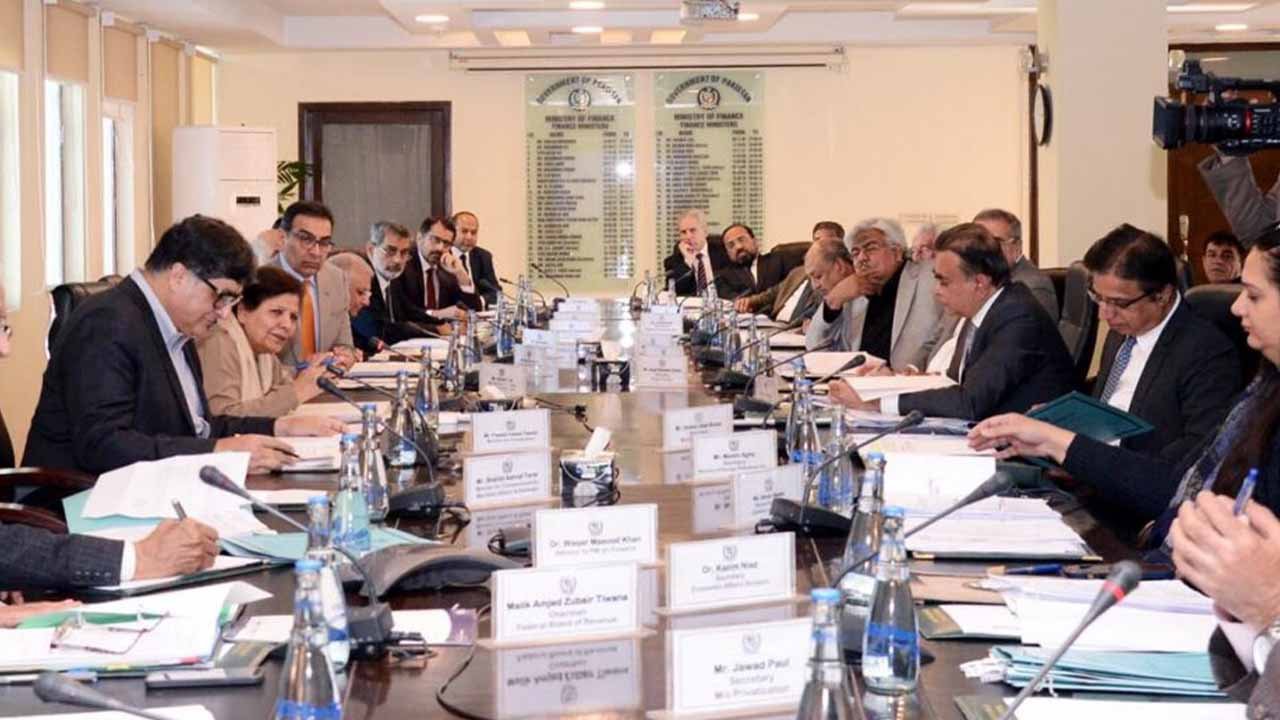
    In a significant move to provide relief to the general public during the upcoming Ramazan, the Economic Coordination Committee (ECC), in its latest meeting chaired by the Federal Minister for Finance, Revenue, and Economic Affairs, Dr Shamshad Akhtar, approved the Ramzan Relief Package-2024.

    The approved package, with a net amount of Rs7.49 billion, is specifically designed to benefit targeted beneficiaries of the Benazir Income Support Programme (BISP). This allocation is part of the budget for the fiscal year 2023-24.

    During the meeting, the committee also discussed and gave the green light to a summary from the Ministry of Commerce’s Tariff Policy Wing.

    The summary pertained to “Individual Tariff Rationalization Proposals from Different Sectors for Review of Custom Duties.” Following thorough deliberations, the committee advised that tariff rationalization should be coordinated with the overall trade policy.

    Furthermore, a proposal related to the “Permission to Import Wheat and Export of Wheat Flour under Export Facilitation Scheme 2021” was presented by the Ministry of Commerce.

    The ECC not only approved this proposal but also directed the relevant ministries to prepare comprehensive plans aimed at enhancing opportunities for value-added exports.

  • Electricity tariff for K-Electric consumers increased by Rs4.45 per unit 

    Electricity tariff for K-Electric consumers increased by Rs4.45 per unit 

     
    Residents of Karachi are set to see an increase in their electricity bills, as the National Electric Power Regulatory Authority (Nepra) has recently decided to raise the power tariff by Rs4.45 per unit for consumers of K-Electric (KE).  

    The decision to elevate electricity rates, as outlined in a notification from the Power Division, was made during the initial quarterly adjustment of the preceding fiscal year. 

    Moreover, additional charges from KE consumers will be applied to their October and November 2023 bills, as specified in the notification. 

    Simultaneously, in response to a request from KE, Nepra has granted approval for the inclusion of actual or prudent expenses associated with the temporary operation of Unit-3 of Bin Qasim Power Station (BQPS-I) from May 1 to August 15, 2021, in the cost calculations. 

    Consequently, prior determinations made by the Authority on September 15, 2021, and May 12, 2022, concerning this matter have been adjusted to accommodate this modification. 

    “In view of the foregoing, the Authority hereby decides to accede to the request of KEL [K-Electric Limited] and allows the actual/prudent cost relating to the interim operation of Unit-3 of BQPS-I (from May 1, 2021, to August 15, 2021). Accordingly, the earlier decisions of the Authority (dated September 15, 2021, and May 12, 2022) in this regard stand modified to this extent,” stated the power regulator. 

    However, a member of the authority, Mathar Niaz Rana, expressed in an additional note that under the Multi-Year Tariff (MYT) plan, KE was obligated to have both phases of BQPS-III operational by December 2019, a deadline they failed to meet. 

    Consequently, they resorted to utilising Unit 3 of BQPS-I, resulting in additional fuel expenses. The cost stemming from this inefficiency should not be passed on to consumers. 

    Nepra conducted a public hearing on January 25, 2023, during which KE was given an opportunity to present its case. 

    According to The News, in the hearing, the utility company asserted that they chose to temporarily utilise Unit-3 of BQPS-1 to meet Karachi’s peak summer demand instead of resorting to more costly power generation methods or implementing power outages, all in the best interest of consumers, as per Nepra Act Sections 31(2) and 32(3). 

  • Rural areas in Pakistan are facing up to 10 hours of load shedding due to massive power shortfall

    Rural areas in Pakistan are facing up to 10 hours of load shedding due to massive power shortfall

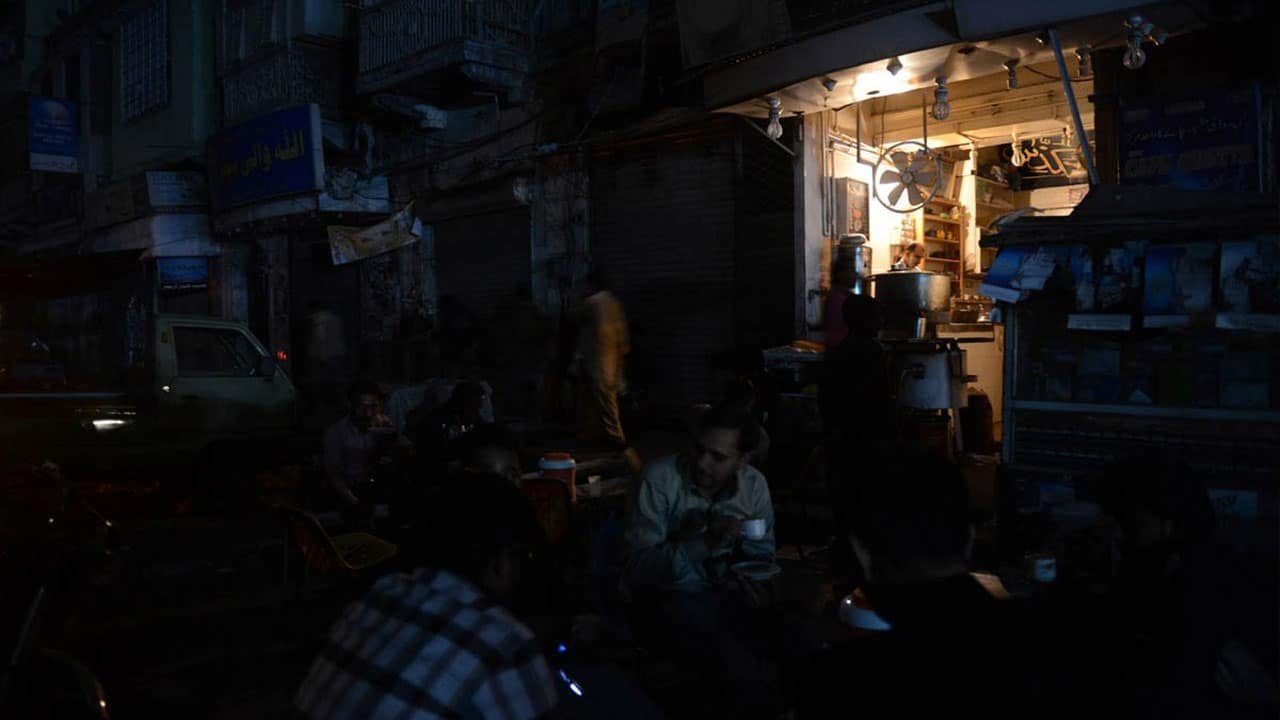
    Amidst a severe heatwave sweeping across the nation, the persistent electricity crisis shows no signs of relenting, with a power shortfall of 6,000 megawatts being recorded. The demand for electricity stands at 28,500 megawatts, while the actual production amounts to 22,500 megawatts.

    Reports indicate that cities are currently enduring load shedding periods lasting from three to five hours. In rural areas, outages are even more prolonged, stretching from eight to 10 hours, whereas urban regions experience load shedding for approximately two to four hours, according to officials from the power division.

    These officials further emphasise that the duration of load shedding is extended on feeders where there are reports of theft and outstanding recovery of line losses.

    As reported by the power division officials, the electricity production breakdown is as follows: 6,900 megawatts from hydroelectric sources, 10,800 megawatts from private power plants, 1,500 megawatts from thermal sources, and 2,300 megawatts from wind, solar, and nuclear plants.

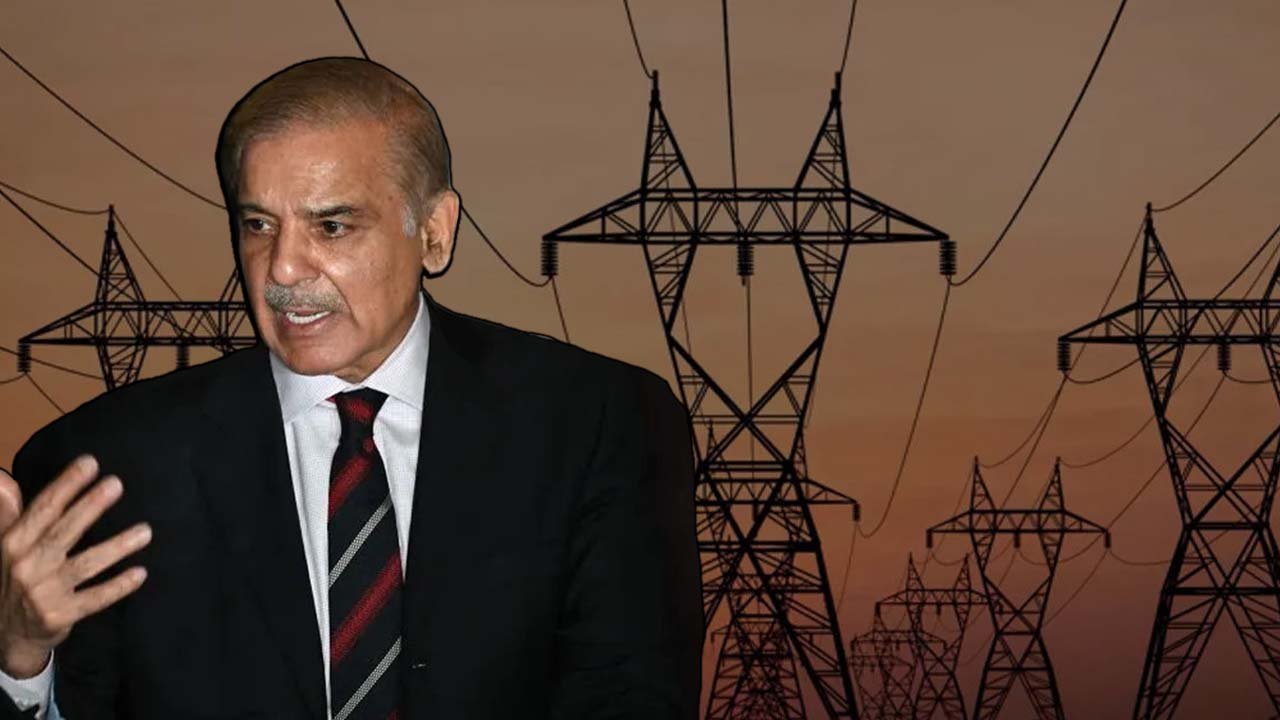
  • PM Shehbaz approves hike in gas and electricity tariffs to fulfill IMF demands

    PM Shehbaz approves hike in gas and electricity tariffs to fulfill IMF demands

    With only three days remaining to resolve differences, Prime Minister Shehbaz Sharif approved an increase in electricity prices on Monday in an attempt to reach an agreement with the International Monetary Fund (IMF). The annual base tariff is expected to increase by approximately 33 per cent.

    The decision was made during a virtual meeting held at the Prime Minister House after the IMF maintained its stance that Pakistan must fulfill its prior commitments.

    Sources familiar with the discussions indicated that there may be an average increase of Rs7.74 per unit in the base tariffs, but the increase for higher consumption levels will be much higher. Despite this, the Prime Minister still hopes that the Power Division can negotiate with the IMF to reduce the demanded increase.

    With the Prime Minister’s approval, the revised circular debt reduction plan, which includes details of the increase in prices due to quarterly and annual base tariff adjustments, will be shared with the IMF today.

    Power Minister Khurram Dastgir declined to comment on whether the Prime Minister had agreed to increase electricity prices, including the maximum increase for high-end consumers.

    According to sources, the IMF is seeking a 50 per cent increase in prices, while the government is proposing a range of 20 per cent to 33 per cent increase. The discussions began on January 31st and the IMF delegation was in Islamabad until February 9th.

    The IMF has stated that it is in Pakistan at the request of Prime Minister Shehbaz Sharif, with the expectation that the government will implement all of its outstanding actions, including tax increases. If the IMF agrees to the measures proposed by the government, a meeting between Finance Minister Ishaq Dar and IMF Mission Chief Nathan Porter may take place the same day to finalise the measures.

    The sources stated that the Power Division presented several options for increasing tariffs to the Prime Minister, including a Rs4.26 per unit increase in quarterly tariffs and a Rs7.74 per unit average increase in the base tariff.

    The IMF has asked the government of Pakistan to increase electricity prices by over Rs12 per unit to fully cover the additional budget subsidy demand of Rs675 billion. The Power Division believes it can recover Rs43 billion with a lag from July to December 2023, reducing the need for a price hike by the same amount.

    During budget planning, the government allocated only Rs355 billion for power subsidies in the current fiscal year, but the Power Division has requested an additional Rs675 billion in subsidies, bringing the total requirement to over Rs1.03 trillion. In a recent meeting, it was noted that the delayed decision-making has increased the cost of reviving the IMF program.

    The government still hopes the IMF will consider absorbing some of the increase through subsidies, but these subsidies must be supported by additional revenue measures. The IMF also refused the government’s request to exempt up to 300 units for consumers from the price increase, remaining firm on its stance to raise prices for consumers who use 200 units or more per month.

    According to Express Tribune, the Prime Minister has given direction to implement a maximum increase in electricity prices to those with high consumption levels. However, these consumers may struggle to bear the additional cost, which is primarily due to political decisions such as subsidies for exporters and insufficient subsidies in the budget, as well as inefficiencies in the power sector.

  • Funds worth Rs3 trillion misused in Naya Pakistan’s power division

    Funds worth Rs3 trillion misused in Naya Pakistan’s power division

    The Auditor General of Pakistan (AGP) has unearthed misappropriation of public funds worth around Rs3 trillion in the power division during the first year of the Pakistan Tehreek-e-Insaf (PTI) government.

    According to reports, the AGP has found huge irregularities, mismanagement, misappropriation and embezzlement, which it has highlighted in its report for the audit year 2019-20 that has been laid before the National Assembly after a delay of almost eight months.

    The AGP has also put question marks over sustainability of the power sector under the current state of affairs, governance shortcomings and weak financial and administrative controls.

    In particular, the country’s top auditor highlighted a total of 318 cases in the accounts of the power division and its associated entities in which Rs2.965tr worth of public funds had been misused. In its key findings, the AGP said 64 varied irregularities of more than Rs107 billion pertained to the procurement of electrical equipment, civil and electrical works, consultancy services and contractual mismanagement, Dawn reported.

    The AGP also highlighted recoveries of more than Rs2.5 trillion and pointed out 108 other cases of violation of internal rules and regulations of the audited entities involving Rs64 billion. In another 50 cases, violations of regulatory laws and regulations involving Rs184 billion were unearthed while a loss of more than Rs4 billion was reported due to fraud, embezzlement, misappropriation and theft in 21 cases.

    In four cases, irregularities of Rs1.2 billion were reported on account of the management of accounts with commercial banks and Rs263 million worth of 21 cases were highlighted pertaining to human resource regularities.

    On top of these major findings, the AGP also expressed dissatisfaction over the performance of power distribution companies (DISCOS) in reducing transmission and distribution (T&D) losses. It said the DISCOS suffered Rs240 billion losses on account of 18.3pc (at the rate of Rs13.06 per 1pc loss) T&D losses in FY2017-18, which increased to Rs276bn in 2018-19 on account of 17.7pc T&D loss at the rate of Rs15.18 per 1pc loss. This meant that even though a minor reduction of 0.6pc was achieved in technical loss that year, it was overturned by the tariff increase.

    Moreover, since the regulator had built the cost of 15.8pc losses to consumer tariff, the DISCOS still suffered losses worth Rs72 billion in these two years even after recovering the cost of such high losses from consumers.

    The audit noted that accounting of material was not being done by the field staff as per procedure and hence opportunities rose for leakage and loss. Many reports mentioned maintenance and monitoring of feeders which were not populated, resulting in poor management of feeder losses.

    Internal controls in the important areas of cash reconciliation and revenue collection were also found unsatisfactory and fraud in payment of pension in the DISCOS of Peshawar and Lahore and revenue fraud in the Islamabad Electric Supply Company (IESCO) were also highlighted. “Despite having an internal audit (in the power division), recurrence of frequent irregularities made its effectiveness questionable”, the AGP said.

    The Discos billed 93,887 million units to consumers in FY2018-19 worth Rs1.342tr and a recovery of Rs1.061tr was made, indicating a recovery rate of 79.06pc. The shortfall resulted in less receipt of recoveries by the DISCOS. “Revenue shortfall in the DISCOS showed managerial inefficiencies and policy bottlenecks constraining CPPA (Central Power Purchasing Agency) to pay-off its energy procurement liabilities”.

    The audit noted an improvement of one per cent in the revenue recovery in the previous fiscal 2017-18 but expressed concern that a recovery shortfall of 21pc posed significant operational challenges for the DISCOS, besides highlighting that total receivables from running and dead defaulters amounted to Rs572 billion in June 2019, which added to the financial crunch in the power sector.”