Tag: power generation

  • Govt plans to revise solar net metering policy amid power sector losses

    Govt plans to revise solar net metering policy amid power sector losses

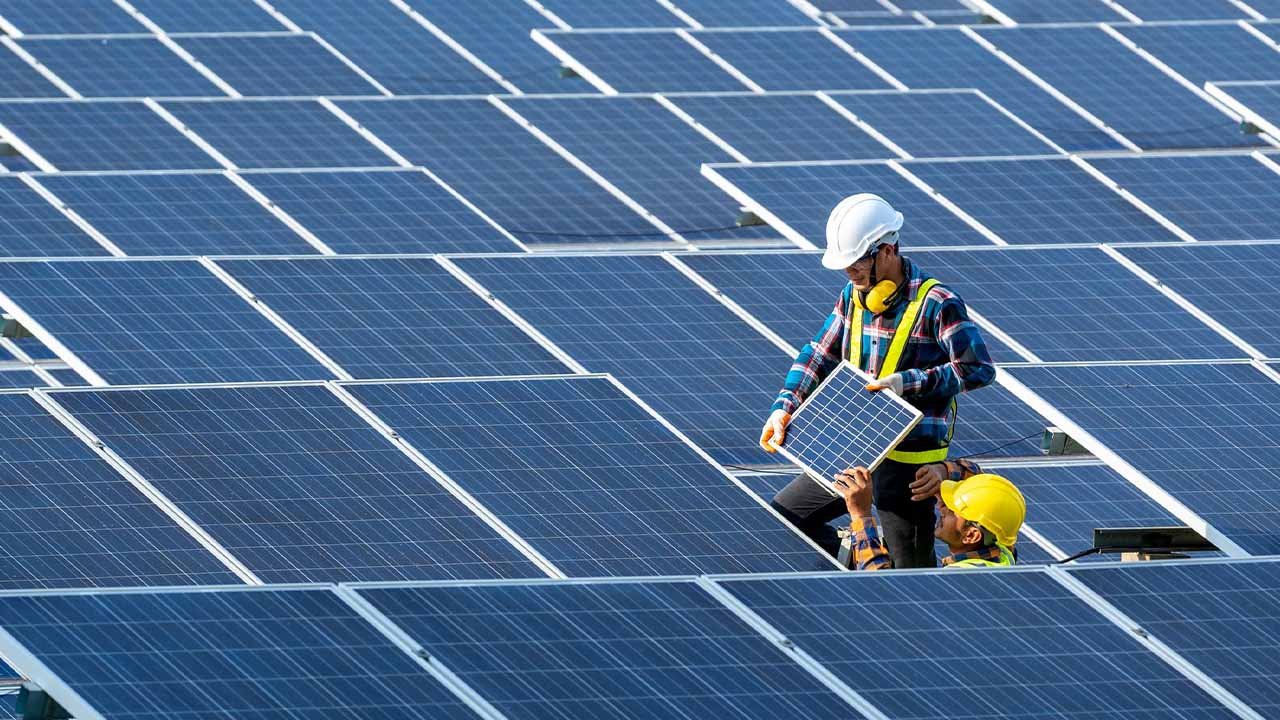
    The federal government has announced plans to revise Pakistan’s solar net metering policy, aiming to reduce losses within the power sector. This announcement was made by Federal Minister for Energy, Sardar Awais Ahmad Leghari, during a press conference where he highlighted current issues surrounding solar net metering.

    Minister Leghari noted that citizens installing solar systems initially expected to recover their investments within three years. However, due to recent advancements, this period has been significantly reduced to just one to one and a half years. This rapid return on investment underscores the growing efficiency and popularity of solar energy solutions.

    The PML-N-led government had initially promoted solarisation in 2017, resulting in 113,000 connections currently operating under the net metering scheme. Leghari reassured that while the government is open to revising the solar net metering policy if necessary, it remains committed to sustaining the programme.

    “We will take effective measures to eliminate power theft and thereby reduce the financial burden on the national exchequer,” he stated, emphasising the government’s dual focus on promoting clean energy and maintaining economic stability.

    The government is also assessing the impacts of the increasing trend towards rooftop-generated electricity. Minister Leghari explained that this assessment would help determine the rate of return on investments in solar equipment and understand the broader implications of this shift.

    He highlighted the need to analyse whether the growing reliance on solar panels is leading to inflated electricity prices for local households. “We will be involved in analysing and balancing the solar net metering,” Leghari added, indicating a comprehensive approach to ensuring the policy benefits all stakeholders.

    Net metering, a billing mechanism that credits solar energy system owners for the electricity they add to the grid, remains a pivotal aspect of the government’s strategy to encourage renewable energy adoption. This revision aims to optimise its benefits and address emerging challenges within the power sector.

  • Pakistan grapples with 23% surge in power generation costs amidst economic woes

    Pakistan grapples with 23% surge in power generation costs amidst economic woes

    In a startling development, the cost of power generation in Pakistan has surged by a staggering 23 per cent in January 2024, compared to the same period last year, reports the brokerage house Topline Securities.

    The average cost per kilowatt-hour (KWh) soared to Rs13.8, marking a significant increase from Rs11.20/KWh recorded in January 2023.

    The substantial hike in costs is attributed primarily to elevated expenses in power generation from gas and nuclear sources, which witnessed a spike of 43 per cent and 24 per cent, respectively, on a yearly basis. Moreover, the fuel cost for furnace oil (FO) also surged by 22 per cent year-on-year, according to data from Topline Securities.

    This surge comes as a severe blow to the populace, which is already grappling with high inflation and sluggish economic activity. Rising electricity bills have compounded the financial burden on citizens.

    In terms of power generation, Pakistan witnessed a marginal decline of over 2 per cent in January 2024 compared to the same period last year, with total generation amounting to 8,313 GWh (11,175 MW).

    The decline in power generation was predominantly due to a decrease in coal-based generation, which plummeted by 20 per cent year-on-year. Gas and wind power generation also witnessed declines of 10 per cent and 55 per cent, respectively.

    However, there was a 9 per cent increase in power generation on a monthly basis, indicating some fluctuation in the generation patterns.

    Coal emerged as the primary source of power generation in January 2024, constituting 23.4 per cent of the total generation mix, surpassing nuclear and RLNG (re-gasified liquid natural gas). Nuclear energy accounted for 20.8 per cent of the overall generation, while RLNG contributed 18.2 per cent.

    Renewable sources like wind, bagasse, and solar collectively made up a modest portion of the generation mix, indicating a potential for further development and investment in sustainable energy solutions.

    Overall, the surge in power generation costs coupled with a slight decline in generation highlights the challenges facing Pakistan’s energy sector and underscores the need for strategic measures to ensure an affordable and sustainable power supply in the country.

  • PSX bounces back with gain of nearly 500 points

    PSX bounces back with gain of nearly 500 points

    The Pakistan Stock Exchange (PSX) welcomed a resurgence of bullish activity as the KSE-100 Index marked a substantial gain of nearly 500 points in Tuesday’s trading session.

    At 1:55 pm, the benchmark index stood at 66,496.21, reflecting a noteworthy increase of 483.89 points, or 0.73 per cent. 

    The positive momentum was evident in key sectors such as cement, fertiliser, oil and gas exploration, OMCs, refineries, and power generation. However, a mixed trend characterised the automobile and commercial bank sectors.

    In contrast to the previous session, where profit-taking led to a 211-point dip in the KSE-100 Index, today’s bullish trend is attributed to favourable economic indicators. 

    Investors are keenly observing the upcoming International Monetary Fund (IMF) executive board meeting on January 11, 2024.

    Simultaneously, the Monetary Policy Committee (MPC) of the State Bank of Pakistan (SBP) is convening today, with market expectations leaning towards a maintenance of the key interest rate—a rate that reached an unprecedented 22 per cent in June and has remained unchanged for the past three meetings.

    Analysts note that investors have factored in the pinnacle of Pakistan’s interest rates, and optimism surrounds the anticipated successful conclusion of the IMF programme, contributing to the positive sentiment in both the stock markets and the currency.

  • Pakistan Stock Exchange sets record at 56,665 points following strong buying activity

    Pakistan Stock Exchange sets record at 56,665 points following strong buying activity

    The Pakistan Stock Exchange (PSX) experienced a positive trading session on Tuesday, with the benchmark KSE-100 index concluding at a record high of 56,665.93 after gaining 142 points.

    The day commenced with optimistic market sentiment, but a brief shift into negative territory occurred due to profit-taking activities.

    Nevertheless, a robust surge in buying activity during the latter part of the day allowed the index to finish in positive territory, reflecting a 0.25 per cent increase or 142 points. Despite notable profit-taking during the session, the market achieved a positive closure following periods of heightened volatility.

    Key contributors to the market’s performance during the session were identified in the power generation and distribution, technology, and communication sectors, as well as the automobile assembly sector, according to the brokerage house.

    This positive trend follows Monday’s milestone, where the KSE-100 Index surpassed the 56,500 level for the first time, recording a historic gain of over 1,132 points.

    Conversely, the Pakistani rupee sustained losses against the US dollar for the 16th consecutive session, depreciating by 0.11 per cent in the inter-bank market on Tuesday.

    According to the State Bank of Pakistan, the currency settled at 287.87, indicating a decrease of Re0.32.

    Market metrics revealed a decrease in volume on the all-share index, registering 526.3 million compared to the previous session’s 660.6 million.

    However, the value of shares witnessed an uptick, reaching Rs22.4 billion from Rs21.1 billion in the preceding session.

  • Power company in Punjab wants to set power price at record-breaking high of Rs77.3 per unit

    Power company in Punjab wants to set power price at record-breaking high of Rs77.3 per unit

    In a noteworthy development that has captured significant attention and ignited considerable debate, the Kot Addu Power Company (KAPCO) has formally submitted an application to the National Electric Power Regulatory Authority (NEPRA) for the endorsement of what could potentially become the nation’s most costly electricity generation tariff. 

    This significant step has unfolded against the backdrop of ongoing deliberations concerning the escalating expenses associated with electricity production within Pakistan. 

    The Kot Addu Power Company has put forth a bold proposition, aiming to establish the electricity tariff at an unprecedented Rs77.31 per unit, attributing the primary rationale for this request to substantial hikes in production costs. 

    Notably, the present initial tariff offered by the independent power producer (IPP) company stands at a modest twenty-eight rupees per unit, underscoring the magnitude of the escalation should their proposal garner approval. 

    Adding a layer of complexity to this unfolding narrative, IPP Kot Addu Power, the entity responsible for electricity generation, has been granted a sixteen-month extension during the tenure of the Pakistan Tehreek-e-Insaf (PTI) administration.  

    However, this extension has not been without its share of controversy, with the Senate Power Committee recently deeming it unlawful, further intensifying the discourse surrounding this matter. 

  • Govt may add 9,000 MW solar energy to national grid as an alternative power source

    Govt may add 9,000 MW solar energy to national grid as an alternative power source

    The federal government intends to prioritise the addition of 9,000 megawatts (MW) of solar energy to the national grid.

    According to Express Tribune,  the government may spend money on producing 6,000 MW of solar energy. A scheme to install 2,000 MW of solar photovoltaic (PV) power on 11 kV feeders is also being considered. The government has chosen a number of locations in south Punjab for this purpose.

    By solarizing the public-sector buildings, the government will also add 1,000 MW of solar energy to the national grid.

    Through a single-stage, two-envelope bid process and a tariff indexation of 70 per cent every three months, the authorities will implement a straight-line tariff. In this regard, it aims to provide friendly nations with competitive tariffs.

    The government may acquire all the electricity produced on a 25-year BOOT (Build, Own, Operate, and Transfer) basis due to increased demand. It also intends to guarantee power off-take and offer the land for the projects.

    Additionally, the government intends to exempt all investors from import customs and other taxes, as well as from income tax on gains and profits for the first ten years.

    Incentives for the 4MW solar generation to be installed at 11kv feeders through a bid process may also be announced by the Ministry of Energy.

    In this context, the government can propose a straight-line tariff and a quarterly 50 per cent Pak CPI indexation with a 15 per cent maximum. Additionally, a bid/lease procedure will be used to install the solar rooftop system.