Tag: power sector

  • NEPRA announces tariff hike of Rs3.33 per unit for ex-Wapda distribution companies

    NEPRA announces tariff hike of Rs3.33 per unit for ex-Wapda distribution companies

    The National Electric Power Regulatory Authority (NEPRA) has sanctioned an increase of Rs3.3321 per kilowatt-hour (kWh) in the electricity tariff for ex-Wapda distribution companies (XWDISCOs), according to a notification issued on Thursday.

    This tariff adjustment is attributed to fluctuations in fuel charges for April 2024. The increased rate will be itemised separately on consumers’ bills based on the units consumed during that month.

    NEPRA clarified that the revised tariff will apply to all consumer categories except Electric Vehicle Charging Stations (EVCS) and lifeline consumers.

    Previously, the Central Power Purchasing Agency (CPPA), a subsidiary of the Power Division, had requested an additional Rs3.49 per unit to cover the higher fuel costs for April 2024.

    The CPPA-G reported that the actual pooled fuel cost for April 2024 was Rs8.9801/kWh, significantly higher than the reference fuel cost of Rs5.4918/kWh, resulting in a difference of Rs3.4883/kWh.

    “After incorporating the aforementioned adjustments, NEPRA reviewed and assessed a national average uniform increase of Rs3.3321/kWh in the applicable tariff for XWDISCOs on account of variations in the fuel charges for April 2024,” the notification stated.

    Consumers can expect to see this adjustment reflected in their upcoming bills as NEPRA continues to address the variations in fuel costs impacting the electricity sector.

  • Nepra approves Rs7.056 per unit hike for power consumers

    Nepra approves Rs7.056 per unit hike for power consumers

    In a setback for the already burdened public grappling with inflation, the National Electric Power Regulatory Authority (Nepra) has greenlit a fuel cost adjustment, paving the way for a Rs7.0562 per unit increase in tariffs for March 2024.

    This decision grants state-run power distribution companies the authority to impose additional charges, projecting a staggering financial burden of around Rs56 billion on consumers.

    This figure could potentially soar to nearly Rs66 billion, taking into account the 18 per cent general sales tax (GST).

    It’s important to note that this tariff adjustment is applicable across all consumer categories, except for electric vehicle charging stations (EVCS) and lifeline consumers.

    The Central Power Purchasing Agency (CPPA), representing the distribution companies, had initially sought Rs7.13 per unit in its petition.

    Earlier this month, The News highlighted the plea from ex-Wapda distribution companies (XWDiscos) seeking Nepra’s approval for the Rs7.13 per unit increase.

    This was attributed to a significant drop in hydropower production and systemic constraints, such as the incapacity of the high-voltage direct current (HVDC) transmission line to efficiently transport economically viable power from southern producers to the north.

    Amidst these developments, commentators express concern over the substantial surge in fuel costs, reaching Rs14.6206/kWh for January 2024.

    In response, Nepra has taken decisive action, initiating an investigation under Section 27-A of the NEPRA Act to uncover the reasons behind this significant fuel cost, as claimed by CPPA-G for January 2024.

  • World Bank greenlights $350 million for Pakistan’s fiscal reforms

    World Bank greenlights $350 million for Pakistan’s fiscal reforms

    The Board of Executive Directors of the World Bank gave its approval on Wednesday for a financing package of $350 million to support Pakistan’s fiscal and competitiveness reforms.

    This funding is allocated for the Second Resilient Institutions for Sustainable Economy (RISE-II) Operation, with the primary goal of strengthening fiscal management and promoting competitiveness for sustainable and inclusive economic growth, according to a statement from the World Bank.

    Najy Benhassine, the World Bank Country Director for Pakistan, stressed the urgent need for fiscal and structural reforms in Pakistan to restore macroeconomic balance and establish the groundwork for sustainable growth.

    He highlighted that RISE-II builds upon previous phases of tax, energy, and business climate reforms, aiming to generate additional revenues, improve expenditure targeting, and stimulate competition and investment.

    The RISE-II Operation is designed to enhance fiscal management by improving fiscal policy coordination, increasing debt transparency and management, strengthening property taxation, and enhancing the financial viability of the power sector.

    Additionally, the operation seeks to boost growth and competitiveness by reducing the cost of tax compliance, improving financial sector transparency, promoting digital payments, and facilitating exports through reduced import tariffs.

    Derek H. C. Chen, Task Team Leader of the operation, emphasised the crucial opportunity for Pakistan to address long-standing structural distortions in its economy after the upcoming general elections.

    Failing to seize this opportunity, he warned, could lead the country back into stop-and-go economic cycles.

    Recently, the World Bank projected a decrease in remittance flows to Pakistan, estimating a decline to $24 billion in 2023 and a further drop below $22 billion with a 10 per cent decline in 2024.

    The report attributed this trend to growing economic turmoil, a balance of payment crisis, and high debt, resulting in a loss of public confidence and a shift of remittances from formal to informal channels.

    Addressing Pakistan’s economic challenges, Martin Raiser, the World Bank’s Regional Vice President for South Asia, noted difficult situations, floods, and climate change.

    He highlighted that the country is trapped in a low-growth scenario with poor human development outcomes and increasing poverty. Raiser urged Pakistan to make crucial decisions for a brighter future, emphasising the need for difficult but necessary steps.

    In its October report, ‘South Asia Development Update Towards faster, cleaner growth,’ the World Bank projected positive growth for Pakistan in fiscal years 2023–24, albeit at a modest rate of 1.7 per cent.

    The report underscored the country’s dependence on capital inflows to finance substantial fiscal and current account deficits.

  • NEPRA exposes overbilling scandal impacting thousands of electricity consumers 

    NEPRA exposes overbilling scandal impacting thousands of electricity consumers 

    An investigative report by the National Electric Power Regulatory Authority (NEPRA) unveiled a disconcerting situation in Pakistan, affecting thousands of electricity consumers during the months of July and August this year.  

    The report disclosed that distribution companies (Discos) had billed consumers for over 40 days, a major contributor to the issue of overbilling in the mentioned months. Notably, MEPCO, followed by GEPCO, FESCO, LESCO, and HESCO, were identified as the Discos significantly involved in this overbilling, implicating all Discos collectively in this unjustified practice. 

    As a response to these findings, NEPRA recommended initiating legal proceedings against the power distribution companies, including K-Electric Limited (KEL), under NEPRA Fine Regulations, 2021. The basis for these actions lies in the violation of the provisions outlined in the NEPRA Act, Consumer Service Manual (CSM), and tariff terms and conditions. 

    Expressing concern, NEPRA emphasised the unfortunate deliberate malpractices by distribution companies undertaken to conceal their inefficiencies. These practices resulted in higher electricity bills for thousands of consumers.  

    The report highlighted the failure of Discos to adhere to the percentage checking mechanism outlined in the Consumer Service Manual (CSM), along with the unauthorised charging of detection bills, contravening Clauses 9.1 and 9.2 of the CSM, which provide a specific procedure for charging detection bills. 

    NEPRA noted with concern that detection bills charged by Discos were found to be fake and frivolous, contributing to a significantly low recovery ratio in certain Discos.  

    The authority initiated an inquiry in response to widespread complaints from consumers across the country regarding excessive, inflated, and erroneous bills during July and August 2023. A hearing was conducted on November 13, 2023, wherein CEOs of all distribution companies participated online, presenting their perspectives. 

    During the proceedings, it was observed that numerous distribution companies were charging metre readings, with discrepancies between snap readings and the readings recorded on consumers’ bills. 

    Additionally, some cases were identified where snaps of metre readings were either invisible or intentionally not taken. Monthly metre readings were reported to be taken beyond the standard billing cycle of 30 days in certain instances, leading to undue and inflated charging of upper slab bills for less frequent users and a consequent change in category from protected to unprotected. 


  • NEPRA greenlights Rs1.52 per unit hike in power tariff for Karachi residents

    The National Electric Power Regulatory Authority (NEPRA) has granted approval for an increase in the electricity tariff by Rs1.52 per unit for consumers of K-Electric.

    In accordance with the directive from the Economic Coordination Committee (ECC) in June 2023, NEPRA has issued a notification officially declaring a rise of Rs1.52 per unit in electricity charges, according to a press release.

    These adjustments will be reflected in the monthly electricity bills spanning from December 2023 to November 2024.

    A spokesperson for K-Electric clarified that NEPRA’s notification aligns with a previous ECC decision related to charges from the preceding tenure.

    In a statement, the spokesperson mentioned, “The prolonged duration in finalising KE’s tariff has contributed to the current circumstances, resulting in lower charges from Karachi compared to other regions in the country. Operating within the regulated framework of Pakistan’s power sector, KE, like other DISCOS, adheres to decisions made by the government of Pakistan and NEPRA concerning power tariffs.”

    It is noteworthy that lifeline consumers are exempted from the recent increase in charges, providing relief to this specific consumer group, the statement added.

    In a previous development this month, the Economic Coordination Committee (ECC) made a decision regarding the uniform quarterly tariff adjustments for K-Electric consumers, approving a hike of Rs1.72 per unit.

    The decision entails that the tariff rationalization guidelines previously issued to the National Electric Power Regulatory Authority (NEPRA) shall be applicable to the consumption of July, August, and September 2023, to be recovered from K-Electric consumers in December 2023, January 2024, and February 2024, respectively.

    Subsequent to this decision, the electricity tariff for K-Electric consumers will experience an increase of Rs1.72 per unit.

    Sources indicate that there will be a hike of Rs1.25 per unit in terms of quarterly adjustment from January to March 2023, while Rs0.47 per unit will be increased in terms of quarterly adjustment from October to December 2023.

    These measures are taken to ensure uniform electricity tariffs across the country, as per sources familiar with the matter.

  • Rs5.1 trillion debt threatens energy sector, govt thinking about privatisation of power companies

    Rs5.1 trillion debt threatens energy sector, govt thinking about privatisation of power companies

    The caretaker government is contemplating significant changes in response to mounting circular debt and losses in the power and gas sectors in Pakistan.

    Two key strategies are under consideration: privatising both power generation (Gencos) and distribution companies (Discos) or transferring management control to private entities for a duration of 20 to 25 years.

    This policy shift is driven by the alarming circular debt crisis in the power sector, totaling Rs2.3 trillion, and a staggering Rs2.8 trillion in the gas sector. Combined, this amounts to over $17 billion, endangering sector sustainability.

    Energy Minister Muhammad Ali disclosed that the government is considering transferring management responsibilities for four power generation plants and 10 state-run Discos to private entities under long-term concession agreements. Discussions with the World Bank’s International Finance Corporation (IFC) for such agreements are ongoing.

    The power generation plants under consideration include the Haveli Bahadur Shah and Balloki power plants, the Guddu power plant, and the Nandipur power plant. The government is exploring options such as transferring Discos to provincial governments, complete privatisation, or management delegation to private investors.

    After privatisation or management transfer, uniform tariffs may no longer be mandatory, allowing for varying tariff structures. This move is aimed at reducing government subsidies and losses.

    The government is also considering public listings, but only for profitable entities. This shift towards privatisation is seen as a means to spur economic growth, job creation, and increased tax revenues.

    Regarding gas availability, the situation is expected to be similar to the previous year, with gas load-shedding planned. Gas tariffs are set to increase, particularly for low-income consumers.

    Government-independent power producer (IPP) agreements will be honoured as international investments prevent alterations. Short-term strategies to reduce circular debt include cost reduction measures, extending loan terms, boosting local power generation, and upgrading transmission lines.

    The gas sector’s annual losses of Rs350 billion are a significant concern, primarily due to the reliance on imported liquefied natural gas (LNG) procured at a higher cost than what is sold domestically.

    In summary, the Pakistani government is considering a major overhaul of the power and gas sectors, with privatisation and management transfers as primary options to address circular debt and losses. These reforms aim to reduce financial burdens, encourage efficiency, and stimulate economic growth, all while ensuring essential services remain accessible to consumers.

  • Power sector’s circular debt surpasses Rs2 trillion despite massive tariff increase 

    Power sector’s circular debt surpasses Rs2 trillion despite massive tariff increase 

    Despite raising tariffs significantly, Pakistan’s power sector debt grew to Rs2.31 trillion by June 2023, up from Rs2.25 trillion in the previous fiscal year (FY22). This increase of Rs57 billion (about 3 per cent) over 12 months is quite different from FY22 when the debt actually decreased by Rs27 billion. 

    Here’s a breakdown of the key points: 

    1. In FY22, the debt was Rs2.25 trillion, but by June 2023, it had risen to Rs2.31 trillion. 

    2. In FY22, power producers were owed Rs1,351 billion, generation companies owed Rs101 billion to fuel suppliers, and Rs800 billion was held in Pakistan Holding Limited (PHL).  

    3. In FY22-23, the debt to power producers increased to Rs1,434 billion, while the debt to PHL decreased to Rs765 billion in FY23. 

    4. In FY22, some subsidies were reduced by Rs12 billion, but in FY23, there were no subsidies left. 

    5. The interest charges on delayed payments by independent power producers (IPPs) increased to Rs105 billion in FY22 but dropped to Rs100 billion by the end of FY23. 

    6. The markup paid on IPPs’ claims by PHL increased from Rs29 billion in FY22 to Rs43 billion in FY23. 

    7. The pending generation cost, including tariff adjustments and fuel charges, decreased from Rs414 billion in FY22 to Rs250 billion in FY23. 

    8. K-Electric’s outstanding dues went from Rs107 billion in FY22 to an excess payment of Rs53 billion in FY23. 

    9. However, power distribution companies (Discos) saw their losses due to inefficiency rise from Rs133 billion to Rs160 billion in FY23. 

    Read more: Pakistan to launch digital rupee to reduce printing and distribution costs 

    In simple terms, even though the government raised tariffs to collect more money for the power sector, the debt continued to increase. This debt is owed to various power-related entities, and some subsidies and charges also changed over the years. Additionally, while some costs went down, the losses due to inefficiencies in power distribution increased. 

  • IMF declines request for tariff adjustment and subsidy on high electricity bills 

    IMF declines request for tariff adjustment and subsidy on high electricity bills 

    In light of the government’s comprehensive deliberation on strategies to alleviate the burden of electricity bills, the International Monetary Fund (IMF) has declined the proposal for tariff adjustments or additional subsidies. This decision was made despite the government’s assertion that its bill collections for August had nearly met expectations, as reported by The News on Tuesday. 

    The IMF has expressed strong reservations regarding the government’s initiative to provide relief to economically disadvantaged individuals facing high power bills. Pakistan has consequently approached the global lender, requesting permission to phase in upcoming quarterly tariff adjustments (QTAs) and Fuel Price Adjustments (FPAs) amounting to Rs7.50 per unit over the next four to six months. 

    An authoritative source confirmed this request, stating, “Pakistan has sought the IMF’s approval for a gradual implementation of QTAs and FPAs over a four to six-month period, potentially incurring additional costs that will require mutual agreement.” 

    According to sources, the power sector continues to grapple with challenges, given the necessity of increasing tariffs by approximately Rs5 per unit in the current month and incorporating FPAs amounting to Rs2.72 per unit. Consequently, a cumulative tariff increase exceeding Rs7 per unit is anticipated.  

    The computation of QTAs will be based on losses incurred during the April-June period, reflecting reduced unit usage, increased interest payments, and fluctuations in exchange rates. Meanwhile, the FPA is calculated to address the rising prices of imported fuel, resulting in a potential hike of Rs7.50 per unit in September bills, subject to regulatory approval.  

    Simultaneously, the Ministry of Power asserts that its bill collection performance for August 2023 has improved and is nearing expectations. They contend that to mitigate the impact of inflated bills, they must seek the IMF’s approval for the staggered implementation of QTAs and FPAs.  

    According to calculations by the Ministry of Power for various consumer categories, those utilising 400 units can anticipate a reduction in power charges from Rs21,000 in August 2023 to Rs16,963 in September and further to Rs11,356 in October, factoring in QTAs and FPAs. Similarly, charges for consumers using 300 units are projected to decrease from Rs13,000 in August to Rs10,000 in September and Rs8,000 in October 2023. 

    With the onset of winter in October, it is anticipated that the issue of escalated bills will gradually subside. Additionally, officials are planning to approach the National Electric Power Regulatory Authority (Nepra) to determine the next tariff adjustments, considering seasonal usage trends. Given the peak usage during the summer months followed by a decline in winter, tariff adjustments will be tailored to accommodate these seasonal fluctuations. 

    The Prime Minister has instructed the Ministry of Finance to develop a strategy for economic stability in Pakistan. During a meeting with Interim Finance Minister Shamshad Akhtar, the current economic situation was discussed. 

    The government aims to find innovative solutions to ease the burden on electricity consumers, addressing issues like circular debt, power theft, and taxes with short-term measures. 

    The caretaker government’s primary goal is to facilitate early general elections while upholding constitutional obligations such as constituency delimitation following the population census. The focus is on restructuring fiscal and monetary policies for economic revitalization. 

  • Taxes in your electricity bill: What Pakistanis are paying and what for?

    Taxes in your electricity bill: What Pakistanis are paying and what for?

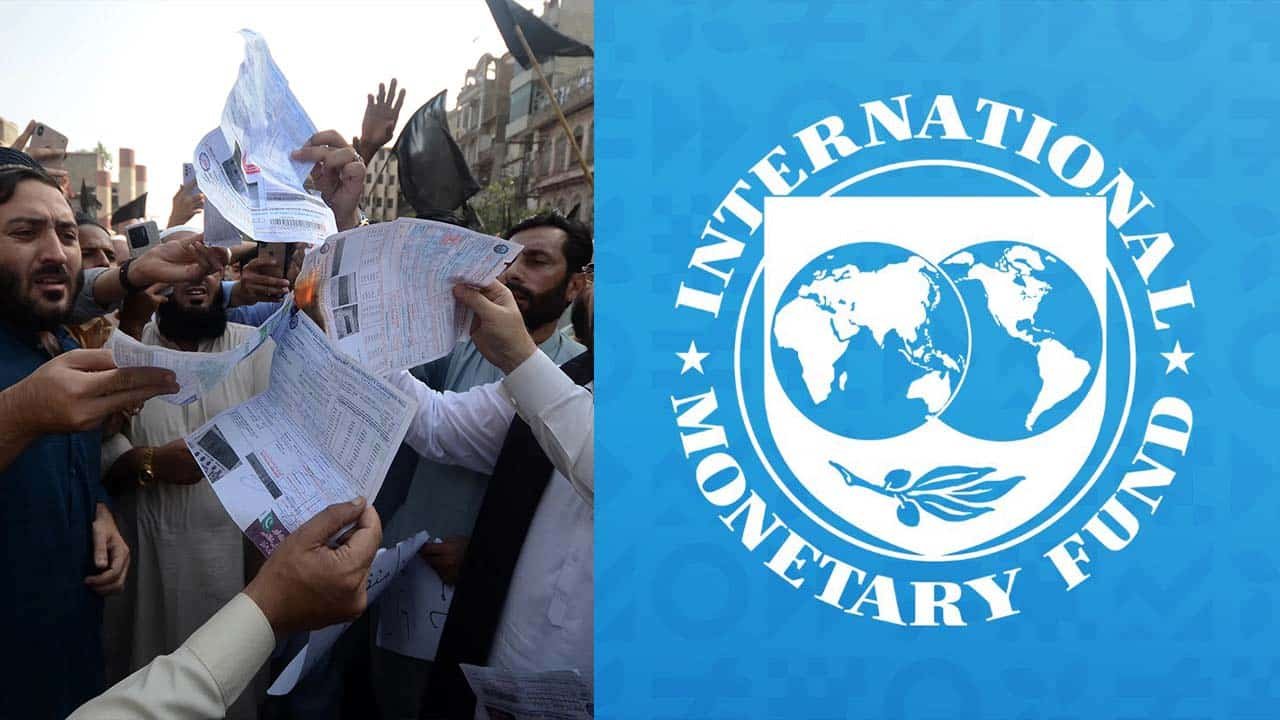
    Protests against exorbitant electricity prices continued to grip Pakistan as consumers from all corners of the country voiced their frustration by burning electricity bills and chanting slogans denouncing overcharging. With Pakistan facing a severe economic crisis and inflation rates surging to a staggering 29 per cent, citizens are grappling with the overwhelming impact of inflated electricity costs.

    The outcry has intensified as incumbent authorities adhering to an IMF deal have slashed power sector subsidies, resulting in unprecedented price hikes that have burdened already inflation-weary citizens. The new pricing structure has set electricity rates at a record high, significantly affecting the cost of living for the nation’s over 240 million inhabitants.

    Central to the grievances is the manner in which electricity bills are calculated. The basic charge is linked to kilowatt-hours (kWh) or units consumed, a component that carries an array of additional taxes. These taxes, directly borne by the masses, have contributed to the mounting frustration felt by the population.

    An individual from Gujranwala recently shared an eye-opening example of the impact of these charges. Despite consuming around 212 units in the previous month, he received an electricity bill of Rs10,500, while the cost of the electricity consumed was merely around Rs6,400. The disparity between consumption and billing has drawn attention to the various components contributing to the final cost.

    For those consuming slightly over 200 units, the Fuel Price Adjustment (FPA) accounts for approximately Rs250. This adjustment is contingent on the price of the fuel used in electricity generation. If the cost of fuel rises during power generation, WAPDA (Water and Power Development Authority) levies an additional charge in subsequent billing cycles.

    Breaking down the bill further, it reveals a complex web of charges. An electricity duty of around Rs100 is imposed, accompanied by a General Sales Tax (GST) of Rs1,316.

    Additional charges include Income Tax amounting to Rs900 and Extra Taxes totaling Rs366. The bill also features a peculiar charge of Rs227 labeled as ‘Further Taxes,’ which has prompted criticism from citizens questioning its purpose and transparency.

    Additional charges on the bill encompass Rs365 for Sales Tax, Rs680 for Financing Cost Surcharge (FC Surcharge), and Rs115 designated as ‘Taxes on FPA.’ Notably, non-filers of income tax are subjected to supplementary charges on their utility bills.

    As confusion mounts among consumers regarding the breakdown of charges, it is imperative for electricity consumers to comprehend the various taxes levied on their monthly bills. Diverse categories of consumers are subject to a range of taxes, duties, and surcharges, contributing to the complex structure of electricity pricing in Pakistan.

    Below is a list of the taxes and levies imposed on electricity consumers in Pakistan:

    Electricity Duty: Ranging from 1.0 per cent to 1.5 per cent of Variable Charges, this provincial duty is levied on all consumers.

    General Sales Tax (GST): At a rate of 17 per cent of the electricity bill, GST is levied on all consumers under the Sales Tax Act 1990.

    PTV License Fee: Domestic consumers pay Rs35, while commercial consumers pay Rs60 as PTV license fee in their electricity bills.

    Financing Cost Surcharge: This surcharge of Rs0.43 per kWh applies to all consumer categories except lifeline domestic consumers.

    Fuel Price Adjustment (FPA): FPA represents the difference between actual fuel charges and reference fuel charges. Positive variation leads to a charge, while negative variation benefits the consumer.

    Extra Tax: Imposed on industrial and commercial consumers not registered in the active taxpayer list, rates range from 5 per cent to 17 per cent based on different bill amount slabs.

    Further Tax: Levied at a 3 per cent rate on all consumers without a Sales Tax Return Number (STRN), except for domestic, agriculture, bulk consumers, and street light connections.

    Income Tax: Charged at varying rates depending on the applicable tariff and the electricity bill amount.

    Sales Tax: Commercial consumers face a 5 per cent sales tax on bills up to Rs20,000 and a 7.5 per cent tax on bills exceeding Rs20,000.

    With public discontent on the rise, authorities are urged to address the concerns of citizens and seek a balanced approach that mitigates the impact of these charges on the already struggling populace.

    As the nation grapples with economic uncertainties, finding a solution that eases the burden on citizens while ensuring the sustainability of the power sector remains a pressing challenge.
  • Nepra approves Rs2.31 per unit tariff increase for K-Electric consumers

    The National Electric Power Regulatory Authority (Nepra) has approved a tariff increase of Rs2.31 per unit for K-Electric (KE) consumers due to June 2023’s monthly fuel charges adjustment. This is slightly below KE’s requested Rs2.34 per unit hike. The new tariff takes effect in August and excludes lifeline consumers and electric vehicle charging stations.

    A public hearing on July 26, 2023, discussed KE’s proposal to address higher fuel costs for electricity generation in June. KE generated electricity at Rs24.90 per unit internally, while government-supplied electricity cost Rs11.56 per unit during that period. Nepra’s analysis resulted in an upward revision of Rs2.31 per unit for June, compared to KE’s requested increase.

    Conversely, Nepra raised the power tariff by Rs1.81 per unit for ex-Wapda distribution companies (DISCOs) in June’s fuel charges adjustment, slightly less than the hike for KE consumers. The Central Power Purchasing Agency-Guarantee (CPPA-G) requested a tariff increase of Rs1.88 per unit on behalf of DISCOs.

    This tariff adjustment, effective in August, applies to all DISCOs customers except lifeline consumers and electric vehicle charging stations. It follows a public hearing held by Nepra on July 26. Earlier, DISCOs customers paid Rs1.90 per unit under May 2023’s fuel charges adjustment, making the new rate Rs0.09 per unit lower.

    While the tariff increase has raised concerns among consumers, it has also spotlighted the delay in approving renewable energy projects. During KE’s petition hearing, an industrial consumer, Rehan Javed, highlighted pending Requests for Proposals (RFPs) with Nepra, which could expedite affordable electricity production through renewables, benefiting Karachi’s businesses.

    Nepra member Rafique Ahmed Shaikh expressed disappointment in KE’s slow progress in embracing renewable energy. Delayed approval of RFPs has hindered renewable energy initiatives.

    The Ministry of Energy’s bid to raise the base tariff for the new fiscal year, potentially leading to record-high prices, underscores the urgency of integrating renewable energy into the national energy mix.