Tag: power tariff hike

  • Electricity prices increased by Rs2.56 per unit under fuel cost adjustment

    Electricity prices increased by Rs2.56 per unit under fuel cost adjustment

    In a move likely to compound the financial difficulties faced by inflation-burdened citizens, the federal government announced a Rs2.56 per unit increase in the power tariff on Thursday.

    This adjustment, pertaining to fuel cost adjustment (FCA) for June, will be reflected in electricity bills issued in August.

    This tariff hike is part of a strategy to bolster Pakistan’s chances of securing a new programme from the International Monetary Fund (IMF). The National Electric Power Regulatory Authority (Nepra) has officially notified the increase, which will exclude lifeline and K-Electric consumers.

    The new tariff adjustment is expected to impose an additional financial burden of Rs33.45 billion on consumers. With the inclusion of an 18 per cent GST, this figure is projected to rise to Rs39 billion. The Central Power Purchasing Agency (CPPA) had proposed a slightly higher increase of Rs2.63 per unit under the FCA.

    The surge in electricity costs, coupled with escalating taxes, has sparked significant public dissatisfaction, leading to protests and sit-ins from communities already struggling with the rising cost of living.

    This public outcry has pressured the government to explore options for reducing electricity rates in an effort to alleviate some of the financial strain on the populace.

    Last month, Prime Minister Shehbaz Sharif’s administration had already implemented a substantial increase in the base electricity tariff for domestic consumers, raising it to Rs48.48 per unit. Consumers in Karachi were also affected by this hike.

    However, a temporary reprieve was granted to those using up to 200 units per month, who will not see their rates increase for the next three months.

    Additionally, the power regulator has approved the federal government’s request for tariff increases affecting commercial, general services, bulk, and agricultural consumers.

  • K-Electric seeks NEPRA approval for Rs5.45 per unit tariff hike following petrol price surge

    K-Electric seeks NEPRA approval for Rs5.45 per unit tariff hike following petrol price surge

    Karachi’s power provider, K-Electric, has submitted a request to the National Electric Power Regulatory Authority (NEPRA) seeking approval for a Rs5.45 per unit increase in electricity tariffs under the Fuel Cost Adjustment (FCA) mechanism for May and June.

    If NEPRA approves this request, it will significantly intensify the financial burden on consumers already struggling with high inflation and declining incomes. Citing rising fuel costs, K-Electric has requested a tariff increase of Rs2.53 per unit for May and Rs2.92 per unit for June.

    This proposed hike, if sanctioned during NEPRA’s hearing on 30th July, would impose an additional Rs10 billion burden on consumers.

    This request follows the government’s recent decision to raise the base tariff for domestic consumers by up to Rs48.84 per unit, coupled with increases in the petroleum levy and new taxes on agricultural income.

    According to a Power Division notification, the hike in electricity prices will also affect Karachi consumers. However, those consuming up to 200 units per month will be exempt from the increase for three months.

    NEPRA recently approved the federal government’s application to raise electricity tariffs for domestic, commercial, general services, bulk, and agricultural consumers.

    On 5th July, NEPRA had sanctioned an Rs3.3287 per unit increase in electricity prices for May 2024 due to the monthly FCA, although this did not apply to K-Electric consumers.

    Additionally, the federal cabinet has approved increases in the base tariff by Rs8.04 for commercial consumers, Rs6.62 for agricultural consumers, Rs6.96 for general services, and Rs5.96 for bulk consumers.

    As a result, the base tariff has risen to Rs46.83 per unit for agricultural consumers and Rs61.03 per unit for general services. Bulk consumers will now pay Rs59.96 per unit following an increase of Rs5.51 per unit. The base tariff for industrial consumers remains unchanged.

  • Govt approves Rs5.72 hike in basic power tariff to offset sector losses

    Govt approves Rs5.72 hike in basic power tariff to offset sector losses

    The federal cabinet has approved a significant increase of Rs5.72 per unit in the basic power tariff through a circular decision. This decision, finalised via a circulation summary, aims to address financial challenges within Pakistan’s power sector.

    Sources familiar with the matter confirmed that the proposal will now be forwarded to the National Electric Power Regulatory Authority (NEPRA) for uniform implementation across the board.

    According to official sources, the Power Division will formally submit an application to NEPRA to initiate the process of implementing the revised tariff structure.

    This adjustment, slated for the fiscal year 2024-2025, is scheduled to come into effect starting July 1, 2024. The approved increase will raise the average basic electricity tariff from Rs29.78 to Rs35.50 per unit.

    A recent report from NEPRA revealed that Pakistan’s power sector incurred a staggering Rs403 billion loss during the fiscal year 2022-2023.

    The report, which assessed the performance of power distribution companies, including K-Electric, highlighted that nine out of these companies failed to achieve full recovery targets. It attributed the financial strain partly to inefficiencies such as line losses and inadequate revenue collection.

    Furthermore, the report underscored that these companies did not fulfill their electricity procurement obligations as per assigned quotas, leading to deliberate load shedding practices. This situation has exacerbated financial losses, amounting to billions in national revenue.

  • K-Electric seeks Rs10.69 per unit hike in basic power tariff

    K-Electric seeks Rs10.69 per unit hike in basic power tariff

    K-Electric has proposed a substantial increase in its basic power tariff, seeking to raise the rate by Rs10.69 per unit to reach Rs44.69 per unit.

    This proposal has been made under the 7-year Multi-Year Tariff (MYT) framework.

    Currently, K-Electric’s average basic tariff stands at Rs34 per unit. The utility company has detailed its request, including specific components for the proposed increase. The Energy Purchase Price (EPP) component is to be set at Rs18.88 per unit.

    Additionally, transmission charges are projected to be Rs3.48 per unit, and distribution charges at Rs3.84 per unit. Operation and maintenance costs are requested to be Rs0.42 per unit, while the retail margin is sought to be Rs0.59 per unit.

    Furthermore, K-Electric has asked for the recovery of lost allocation at Rs2.88 per unit and working capital at Rs2.07 per unit.

    The National Electric Power Regulatory Authority (NEPRA) has invited stakeholders to submit their feedback on K-Electric’s request within the next seven days.

    A decision on the proposal is anticipated soon. If approved, the new tariff will impact millions of electricity consumers in Karachi and its surrounding areas.

    Last month, K-Electric submitted a request for a significant hike of Rs18.86 per unit in the power tariff. This adjustment was based on the Fuel Charge Adjustments (FCA) for seven months, submitted to NEPRA.

    Concurrently, K-Electric also requested a reduction in the power tariff by Rs0.29 per unit for a two-month period.

    In another development, the federal government has outlined a plan to privatise several profit-making power distribution companies (Discos). The companies slated for privatisation include Lahore Electric Supply Company (LESCO), Faisalabad Electric Supply Company (FESCO), Gujranwala Electric Power Company (GEPCO), Multan Electric Power Company (MEPCO), and Faisalabad Electric Supply Company (FESCO).

    These developments come at a critical time for Pakistan’s power sector, where tariff adjustments and privatisation efforts are expected to have significant implications for both the economy and consumers.

  • NEPRA approves power tariff increase of Rs2.8372 per unit

    NEPRA approves power tariff increase of Rs2.8372 per unit

    In a recent announcement, the National Electric Power Regulatory Authority (NEPRA) has approved a tariff increase of Rs2.8372 per kilowatt-hour (kWh) for all ex-Wapda distribution companies (XWDISCOs).

    This adjustment, reflected in a notification issued by NEPRA, is a result of fluctuations in fuel charges observed during March 2024.

    The tariff adjustment will be applied to consumer bills based on the units billed in March 2024. This increase will be listed separately in consumer billing statements to reflect the additional cost due to fuel charge variations.

    However, NEPRA clarified that this adjustment will not apply to certain categories of consumers, including Electric Vehicle Charging Stations (EVCS) and lifeline consumers, who benefit from lower electricity rates.

    This development follows a request made last month by the Central Power Purchasing Agency (CPPA), a subsidiary of the Power Division, which proposed an additional fuel charge of Rs2.94 per unit to cover the higher costs experienced in March 2024.

    The CPPA reported that the actual fuel cost for the month stood at Rs9.3819/kWh, significantly higher than the reference fuel cost component of Rs6.4417/kWh, leading to the proposed increase.

    After reviewing the CPPA’s request and the associated fuel cost variations, NEPRA concluded that an increase of Rs2.8372/kWh in the national average uniform tariff was justified.

    This adjustment is intended to balance the higher fuel costs incurred in March and ensure that the tariff structure remains aligned with the cost of energy production.

    Consumers are advised to review their electricity bills for March 2024 to understand how this adjustment will impact their total energy costs.

  • Nepra approves Rs7.056 per unit hike for power consumers

    Nepra approves Rs7.056 per unit hike for power consumers

    In a setback for the already burdened public grappling with inflation, the National Electric Power Regulatory Authority (Nepra) has greenlit a fuel cost adjustment, paving the way for a Rs7.0562 per unit increase in tariffs for March 2024.

    This decision grants state-run power distribution companies the authority to impose additional charges, projecting a staggering financial burden of around Rs56 billion on consumers.

    This figure could potentially soar to nearly Rs66 billion, taking into account the 18 per cent general sales tax (GST).

    It’s important to note that this tariff adjustment is applicable across all consumer categories, except for electric vehicle charging stations (EVCS) and lifeline consumers.

    The Central Power Purchasing Agency (CPPA), representing the distribution companies, had initially sought Rs7.13 per unit in its petition.

    Earlier this month, The News highlighted the plea from ex-Wapda distribution companies (XWDiscos) seeking Nepra’s approval for the Rs7.13 per unit increase.

    This was attributed to a significant drop in hydropower production and systemic constraints, such as the incapacity of the high-voltage direct current (HVDC) transmission line to efficiently transport economically viable power from southern producers to the north.

    Amidst these developments, commentators express concern over the substantial surge in fuel costs, reaching Rs14.6206/kWh for January 2024.

    In response, Nepra has taken decisive action, initiating an investigation under Section 27-A of the NEPRA Act to uncover the reasons behind this significant fuel cost, as claimed by CPPA-G for January 2024.

  • Steel prices surge to record high in Pakistan, posing a major challenge for construction sector

    Steel prices surge to record high in Pakistan, posing a major challenge for construction sector

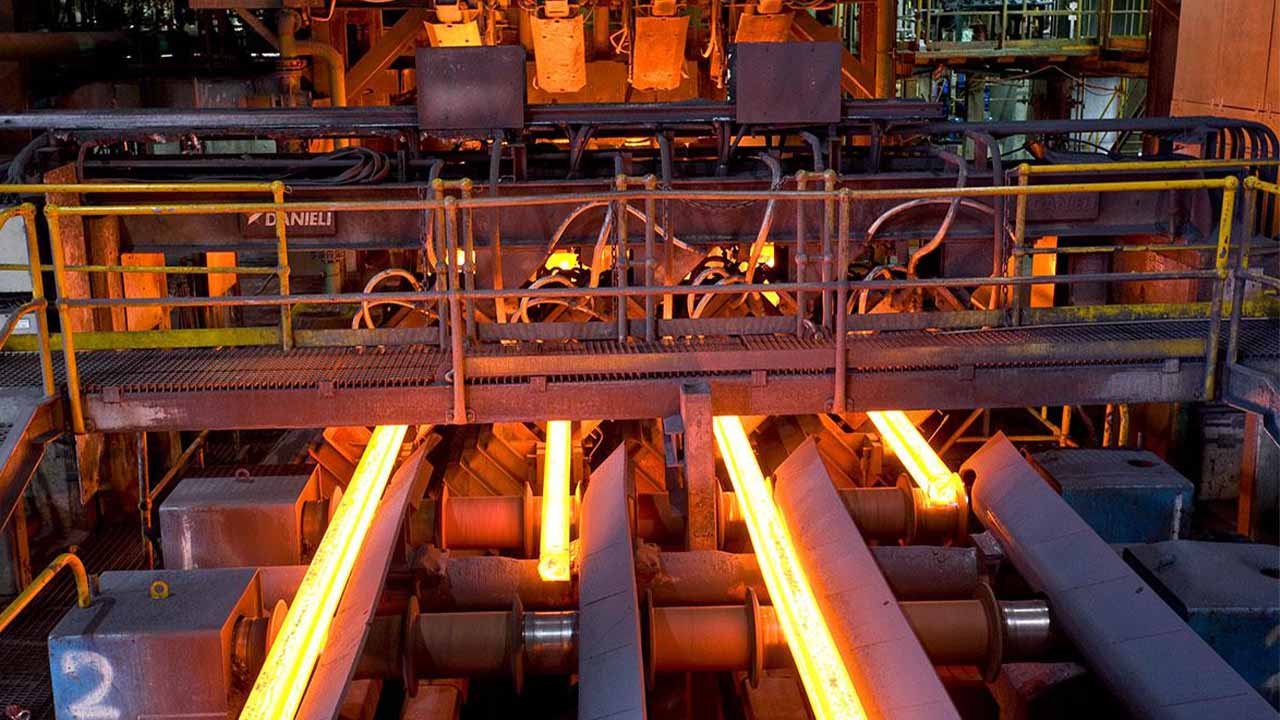
    The construction industry in Pakistan is currently grappling with a formidable challenge as the price of steel, its primary raw material, reaches an unprecedented high. On Monday, leading steel rebars producers announced a substantial increase of Rs5,000 per metric ton, attributing it to a scarcity of raw materials and a significant surge in the basic power tariff.

    According to Samaa, this decision to raise steel prices has sparked concern throughout the construction sector, as the cost of steel now stands at a staggering Rs260,000 per metric ton. Such a sharp escalation in costs has understandably raised eyebrows and placed industry players under mounting pressure to navigate these burgeoning challenges.

    Adding to the predicament is the recent increase in electricity tariffs, further exacerbating the situation and intensifying the strain on steel manufacturers as they grapple with soaring production costs.

    As a result, the construction industry finds itself confronting a multifaceted burden due to the surge in steel prices, impacting various aspects of their operations.

  • Govt implements Rs4.96 per unit power tariff hike, aims to collect Rs3.28 trillion from consumers

    Govt implements Rs4.96 per unit power tariff hike, aims to collect Rs3.28 trillion from consumers

    The National Electric Power Regulatory Authority (Nepra) announced a significant increase of Rs4.96 per unit in the electricity base tariff for the fiscal year 2024, in response to a demand from the International Monetary Fund (IMF). This adjustment will result in the government collecting Rs3.281 trillion from power consumers across all distribution companies.

    Additionally, the government is actively working on raising gas rates, as the Oil and Gas Regulatory Authority (OGRA) has already determined a 45-50 per cent increase in gas prices on June 2, 2023.

    The implementation of the power tariff hike is scheduled to commence on July 1, with the tariff rising to Rs29.78 per unit from the current rate of Rs24.82 per unit.

    Customers utilising time-of-use (ToU) meters will be charged up to Rs49.35 per unit. During peak hours from 5pm to 11pm, they will pay Rs49.35 per unit, while during non-peak hours, the charge will be Rs33.03 per unit.

    This decision has imposed an additional burden on the residents of Karachi, as Nepra has also raised the monthly fuel charges adjustment for the month of May by Rs1.44 per unit, which will be reflected in the billing for July.

    However, the increase in the base tariff will be implemented differently for various categories. Some categories will experience a lower increase, while for others, the increase may reach up to Rs6 per unit, depending on the government’s decision.

    The power regulator has determined an average increase in the base tariff of Rs4.96 per unit. Apart from the new base tariff of Rs29.78 per unit, end consumers will also be required to pay a financing cost surcharge of Rs3.23 per unit from July 1.

    This surcharge aims to generate Rs335 billion to address the power sector’s debt and liabilities, which currently amount to Rs2.6 trillion. Furthermore, consumers will continue to pay the Tariff Rationalisation Surcharge of Rs0.47 per unit.

    Within the base tariff increase of Rs4.96 per unit, the payment for capacity charges has risen to 70 per cent, equivalent to Rs3.472 per unit, while 30 per cent accounts for energy prices.

    The new base tariff increase has been calculated considering a dollar value of Rs287, an inflation rate of 17 per cent, and a 7 per cent growth in electricity generation. As a result, consumers will pay capacity charges totaling Rs1.874 trillion, compared to Rs1.251 trillion in 2022-23.

    Unfortunately, the end electricity consumer in Pakistan is being burdened with additional costs to compensate for ongoing inefficiencies in the power sector, in addition to paying for the actual cost of electricity. These costs include tariff rationalisation charges, financing cost surcharges, electricity duty, PTV license fee, GST, income tax, extra tax, further tax, and sales tax.

    In reality, consumers are paying 31 per cent above the actual cost of electricity in the form of surcharges, duties, and taxes. Electricity Duty, a provincial duty, is levied on all consumers, ranging from 1.0 per cent to 1.5 per cent of Variable Charges. General Sales Tax (GST) is charged at a rate of 17 per cent on all consumers under the Sale Tax Act 1990.

    Income Tax is applicable to non-taxpayer consumers at varying rates depending on the tariff and electricity bill amount, and commercial consumers pay 5 per cent on bills up to Rs20,000 and 7.5 per cent on bills exceeding Rs20,000. Further tax of 3 per cent is charged from all consumers without a Sales Tax Return Number (STRN), except for domestic, agriculture, bulk consumers, and street light connections.

    The increase in power tariffs was a necessary requirement imposed by the IMF to provide financial assistance to Pakistan. The IMF has consistently urged the government to raise tariffs and eliminate power subsidies as part of its efforts to reduce the country’s fiscal deficit.

    However, Nepra attributes the tariff increase to factors such as low sales growth, rupee devaluation, high inflation, exorbitant interest rates, and the addition of new capacities.