Tag: power tariffs

  • IMF’s ‘yes or no’ decision nears on relief for electricity bills

    IMF’s ‘yes or no’ decision nears on relief for electricity bills

    In the midst of extensive protests regarding soaring electricity charges, the interim government has reportedly devised a strategy aimed at alleviating the financial burden on electricity consumers in the country.  

    According to Geo News, the interim government is preparing a relief package that will grant up to Rs3,000 in relief to customers who use up to 300 units of electricity in their October bills. Furthermore, those facing electricity bills between Rs60,000 and Rs70,000 stand to benefit from a significant reduction of Rs13,000. 

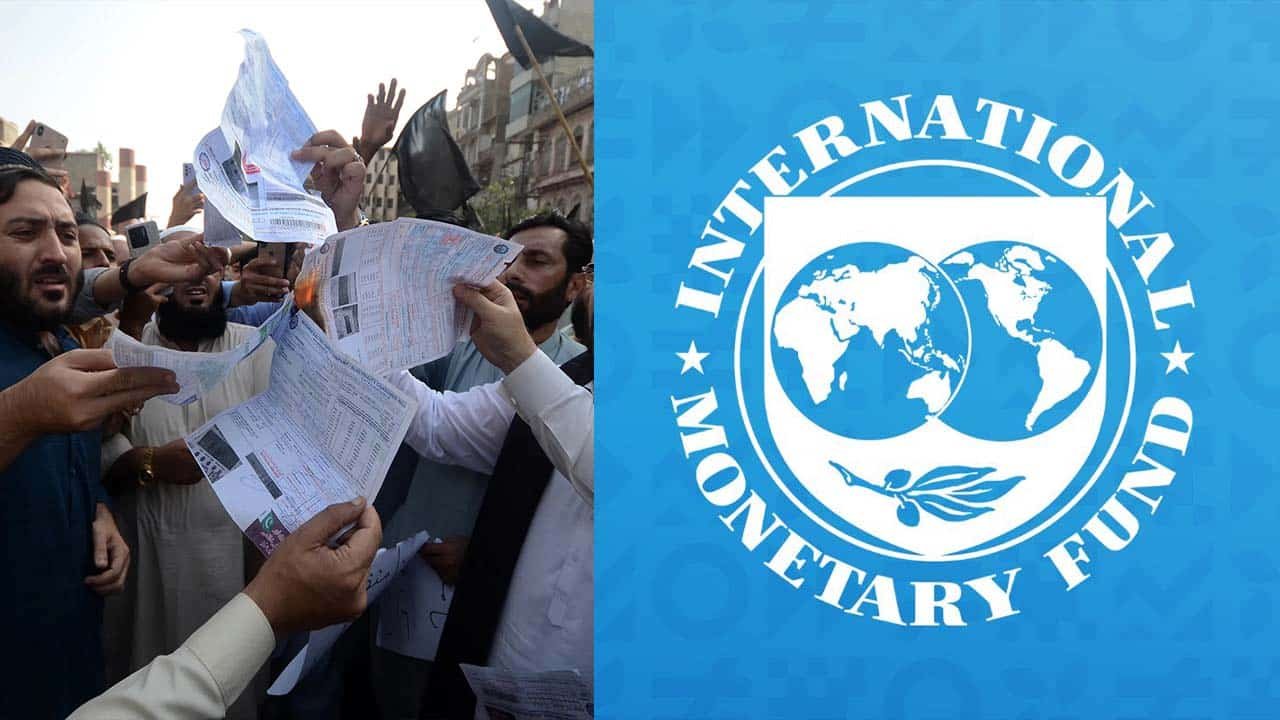
    Simultaneously, discussions between the International Monetary Fund (IMF) and the interim government are ongoing, focusing on providing relief to electricity consumers. 

    In a separate report by The News, it’s revealed that the IMF, headquartered in Washington, has requested additional data from the Power Division to inform its decision regarding various proposals to address the impact of high bills in August and September. 

    “We have shared the required data with the Fund people hoping that IMF may today (Monday) come up with its response with a yes or no to the assertions of the Finance and Power Divisions, seeking permission for relief to inflation-stricken people in electricity bills,” shared sources involved in discussions with the IMF. 

    Currently, officials from both the Power and Finance divisions are engaged in intensive discussions with IMF representatives, considering the data associated with proposed measures to alleviate power tariffs and their potential effects on circular debt, cash flow, and potential delays in Independent Power Producers (IPPs) payments, ensuring the stability of the power sector. 

    In response to continuous protests by citizens and traders against soaring power bills and added taxes, the government is actively seeking to convince the global lender to grant immediate relief to electricity consumers in a nation already grappling with severe inflation. 
  • Govt to implement Rs7 per unit power tariff hike, expecting over Rs3.2 trillion in revenue

    Govt to implement Rs7 per unit power tariff hike, expecting over Rs3.2 trillion in revenue

    The government is planning to raise the power base tariff by approximately Rs7 per unit. This move is expected to generate over Rs3.2 trillion in additional revenue from power consumers. The International Monetary Fund (IMF) Executive Board is set to discuss a stand-by arrangement, which is the final step in solidifying the IMF Staff Level Agreement. The government will then need to fulfill the program’s requirements.

    The increase in power tariff is a crucial condition set by the IMF for providing financial assistance to Pakistan. The Fund has been urging the government to raise the tariff and eliminate power subsidies to reduce the country’s fiscal deficit. The proposed increase, along with an 18 per cent GST on bills, could lead to a significant financial burden on power consumers.

    Nepra, the regulatory authority, has conducted hearings with distribution companies (Discos) on this matter. While the privatised company, K-Electric, will be insulated from the increase in base tariff, the price of electricity it draws from the national grid will become costlier.

    The increase in base tariff, estimated at nearly Rs7 per unit, is awaiting submission to the federal government for notification. If finalised, it would raise the base tariff to Rs31.80 per unit from the current Rs24.80. The increase is aimed at reducing the power sector’s circular debt accumulation, which currently stands at approximately Rs2.64 trillion due to inefficiencies in power generation, transmission, and distribution.

    The rise in power tariffs will impact consumers across residential, commercial, and industrial sectors, leading to inflation. Businesses will pass on the increased costs to consumers, while households will need to allocate more funds for power, straining their budgets. However, the government asserts that this step is necessary to revive the power sector and the economy. It has also promised targeted subsidies to alleviate the burden on the poor and vulnerable.

    In a positive development, the government has made a payment of Rs142 billion to Independent Power Producers (IPPs), reducing their outstanding dues and improving their cash flows. However, the power sector still faces a circular debt of Rs2.64 trillion. Additionally, the IMF has called for a 45-50 per cent increase in gas tariffs, affecting consumers of Sui Northern Gas Pipelines Limited (SNGPL) and Sui Southern Gas Company Limited (SSGCL).

    The government is likely to continue its policy of having high-end consumers subsidise low-end consumers. The circular debt in the energy sector amounts to over Rs4.30 trillion, including debts from the oil and gas sector.

    Finance ministry and Nepra officials have experienced confusion regarding the finalisation of the increase in base tariff, as the IMF board meeting approaches. The regulator is awaiting projections from the finance ministry to determine the final base tariff. The government aims to achieve a value of Rs240 for the US dollar, despite setting it at Rs290 billion in the federal budget.

    Overall, the government’s objective is to address the financial challenges in the power sector while providing support to those affected by the tariff increase. The proposed measures are crucial to stabilise the power sector and stimulate the economy.

  • Pakistan to receive first-ever shipment of low-cost oil from Russia in May

    Pakistan to receive first-ever shipment of low-cost oil from Russia in May

    Minister of State for Petroleum, Musadik Malik, announced on Sunday that Pakistan will receive its first-ever shipment of low-cost oil from Russia next month, which is expected to benefit the general public.

    In an interview with a private news channel, the minister confirmed that the government had finalised a deal with Russian authorities following successful dialogues. The shipment is expected to arrive in May via cargo. The minister also ensured that the government will pass on the cost savings to consumers.

    Regarding power and gas tariffs, Malik stated that the government is planning to introduce different tariffs for the poor and elite classes. He stated that the government has already made progress in this regard and hopes to issue separate billing for the underprivileged and elite class. The new tariff structure is expected to provide relief to the poor segment of society.

    Last month, officials from the Petroleum Division had disclosed that Pakistan was in talks with Russia to procure crude oil at around $50 per barrel, which is $10 per barrel lower than the price cap imposed by the G7 countries on oil imports from Russia due to its conflict with Ukraine.

    The officials had shared that Moscow was keen on completing all the prerequisites, such as the mode of payment, shipping cost with premium, and insurance cost, before signing the agreement with Pakistan.