Tag: Practice and Procedure Act 2023

  • Supreme Court upholds Practice & Procedure Act 2023

    Supreme Court upholds Practice & Procedure Act 2023

    The Supreme Court (SC) has issued a verdict in favour of the SC (Practice and Procedure) Act, 2023, dismissing petitions challenging its validity.

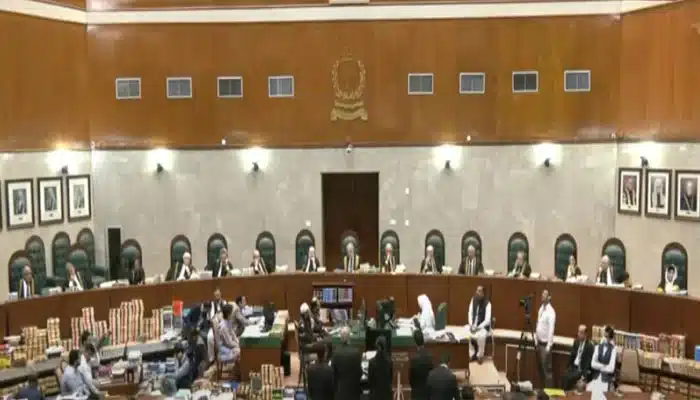
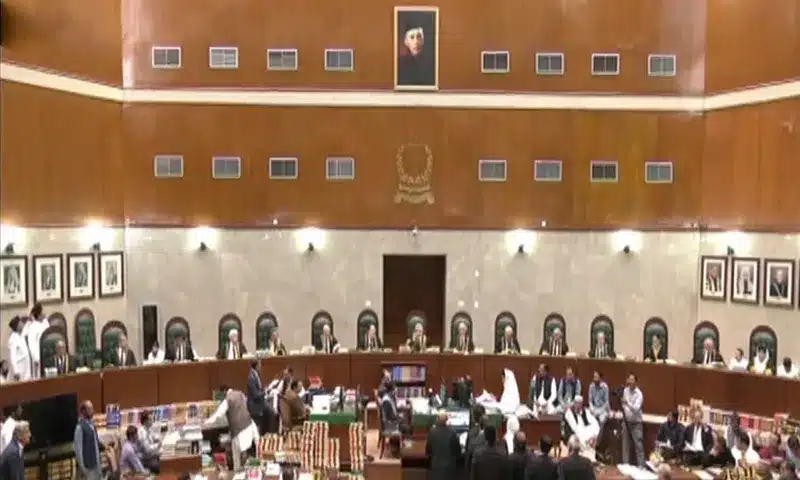
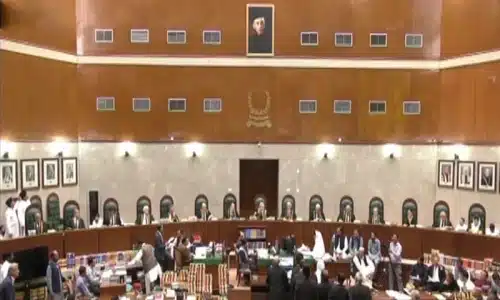
    Headed by Chief Justice Qazi Faez Isa, the SC full bench consisted of Justice Sardar Tariq Masood, Justice Ahsan, Justice Syed Mansoor Ali Shah, Justice Akhtar, Justice Yahya Afridi, Justice Aminuddin Khan, Justice Naqvi, Justice Jamal Khan Mandokhel, Justice Mazhar, Justice Ayesha, Justice Athar Minallah, Justice Rizvi, Justice Waheed and Justice Musarrat Hilali.

    The decision was upheld by 10-5 majority.

    While reading out the order, CJP Isa noted that five members of the full court bench — Justice Ijazul Ahsan, Justice Munib Akhtar, Justice Sayyed Mazahir Ali Akbar Naqvi, Justice Ayesha A Malik, and Justice Shahid Waheed — had opposed the law.

    The decision on the SC (Practice and Procedure) Act, 2023, case was delivered after the completion of all arguments. Attorney General Mansoor Awan presented a comprehensive case in favor of the act, leading to the full court’s decision in support of the legislation.

    The SC (Practice and Procedure) Act, 2023, has been a subject of considerable debate and legal scrutiny, with various petitions seeking its annulment. However, the apex court has preserved the Act, emphasising its continued relevance in the legal system.

    However, by an 8-7 decision, the majority of judges have decided against the provision of law wherein retrospective right of appeal was given in the Act.

    The Supreme Court (Practice & Procedure) Act, 2023, which has been at the centre of legal debate and judicial proceedings, introduced several crucial provisions, reshaping the functioning of the Supreme Court of Pakistan:

    1. Sou Motu Notice: The Act granted the power of taking suo motu notice to a three-member committee, consisting of senior judges, including the Chief Justice. This provision aimed to facilitate the initiation of legal proceedings in the apex court and ensure transparency. It also included the right to appeal.
    2. Constitution of Benches: According to the Act, every case, matter, or appeal brought before the Supreme Court would be heard and decided by a bench formed by a committee comprising the Chief Justice and the two most senior judges. Decisions of the committee would be made by a majority vote.
    3. Original Jurisdiction: When exercising the apex court’s original jurisdiction, the Act mandated that any matter invoking the use of Article 184(3) must first be presented before the committee.
    4. Interpretation of the Constitution: In cases where the interpretation of the Constitution was necessary, the Act stipulated that the committee would assemble a bench consisting of no fewer than five Supreme Court judges.
    5. Right to Appeal: In instances where a decision was made by a Supreme Court bench exercising Article 184(3) jurisdiction, the Act allowed for an appeal to be filed within 30 days of the bench’s order. This appeal would be scheduled for a hearing within a period not exceeding 14 days.
    6. Retrospective Right of Appeal: The Act also extended the right of appeal retrospectively to individuals who had been affected by an order made under Article 184(3) before the commencement of the SC (Practice and Procedure) Act, 2023, provided that the appeal was filed within 30 days of the Act’s implementation.
    7. Choice of Counsel: Parties involved in legal proceedings were granted the right to select their counsel for filing a review application under Article 188 of the Constitution.
    8. Urgency and Interim Relief: The Act outlined that any application claiming urgency or seeking interim relief in a case, appeal, or matter would be scheduled for a hearing within 14 days from the date of filing.
  • Court reserves verdict on Practice and Procedure Act 2023

    Court reserves verdict on Practice and Procedure Act 2023

    The Supreme Court (SC) has reserved its decision on petitions that challenge the 2023 SC (Practice and Procedure) Act, which restricts the authority of the Chief Justice of Pakistan.

    Chief Justice of Pakistan (CJP) Qazi Faez Isa led the full-court bench consisting of Justice Sardar Tariq Masood, Justice Ijaz Ul Ahsan, Justice Syed Mansoor Ali Shah, Justice Munib Akhtar, Justice Yahya Afridi, Justice Aminuddin Khan, Justice Sayyed Mazahar Ali Akbar Naqvi, Justice Jamal Khan Mandokhel, Justice Muhammad Ali Mazhar, Justice Ayesha A Malik, Justice Athar Minallah, Justice Syed Hasan Azhar Rizvi, Justice Shahid Waheed, and Justice Musarrat Hilali are hearing the case.

    “We will discuss amongst ourselves [now]. If there is a consensus, then we will announce it, otherwise, the decision will be reserved,” Chief Justice of Pakistan (CJP) Qazi Faez Isa said at the end of today’s hearing.

    During the hearing, the CJP emphasised the importance of maintaining a harmonious relationship between the Parliament and the SC.

    “Do not pit the Parliament and Supreme Court against each other,” he remarked, insisting on the idea of “live and let live”.

    “Why do we see each other’s institutions negatively? Why can’t it be said that one institution legislated for the betterment of another?” CJP Isa questioned.

    All the petitioners, including all political parties, concluded their arguments in today’s hearing. The Attorney General of Pakistan (AGP), Mansoor Usman Awan, also gave his arguments today.

  • Parliament enacted legislation with ‘good intentions’, says Chief Justice Isa

    Parliament enacted legislation with ‘good intentions’, says Chief Justice Isa

    The Chief Justice of Pakistan (CJP), Qazi Faez Isa, while hearing petitions filed against the Practice and Procedure Act (2023), remarked that the Parliament has enacted the legislation with good intentions. “If a patient is dying, can a person with medical understanding allow the patient to die just because he is not a doctor? Parliament is told that the number game should be complete, but one person comes and makes Parliament a rubber stamp,” he said.

    A full court headed by CJP Qazi Faez Isa is hearing petitions against the Practice and Procedure Act (2023) in the Supreme Court.

    During the hearing, Justice Ijaz-ul-Ahsan remarked that Parliament cannot make rules or legislate to make rules; only the Supreme Court has the authority to change the rules within the scope of the existing law.

    The CJP said that the Constitution says that the Supreme Court is authorised to make its own rules of practice and procedure.

    Justice Ijaz-ul-Ahsan said that the Constitution already binds the Supreme Court to make rules in accordance with the Constitution and the law, while the Chief Justice of Pakistan, while talking to the president of the Supreme Court Bar Association, Abid Zubairi, said that time is short, asking what difference does it make to the option.

    Abid Zubairi said in his arguments that even if the words of making rules according to the constitution and law are removed from the constitution, it will not make a difference, to which CJP Isa said that it is fine; the answer has come.

    Abid Zubairi said that when the Supreme Court made the rules, they could not be changed by law, and the CJP said that the hearing has to be completed today, as he wanted to hear the lawyers.

  • What is Practice and Procedure act 2023?

    What is Practice and Procedure act 2023?

    On March 29 and March 30, 2023, the National Assembly and Senate, respectively, adopted and enacted the (Practice and Procedure Bill) 2023. Without his signature, the President remitted the bill for review, but on April 10, 2023, the Joint Session of Parliament once more passed the Act after it had complied with all rules and procedures.

    According to the Act, each case, appeal, and subject before the Supreme Court will be heard by benches formed by a committee comprising of the Chief Justice and the two senior most judges.

    It further stated that any issue involving the use of original jurisdiction under Article 184, paragraph (3), shall be brought before the committee for consideration first.
    The committee must then assemble a bench of at least three Supreme Court justices, which may also include committee members, if it deems that the issue involves the enforcement of one or more fundamental rights.
    According to the Act, an appeal must be submitted within 30 days of the larger bench of the Supreme Court obtaining jurisdiction over it and its hearing date must be scheduled no later than 14 days after that. When submitting a review application, it also offers a party the flexibility to choose the lawyer of its choice.

  • Unprepared lawyers in live Supreme Court proceedings unleash Pakistani Twitter at its best

    Unprepared lawyers in live Supreme Court proceedings unleash Pakistani Twitter at its best

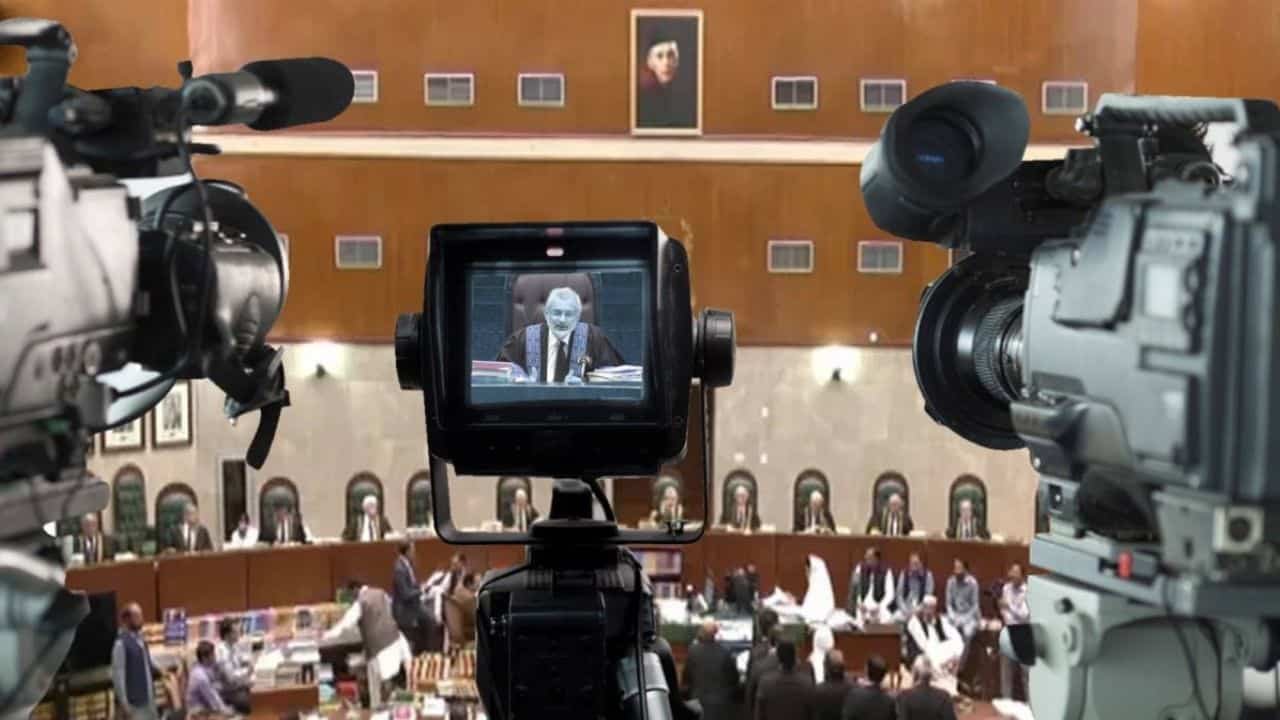
    The live transmission of the Supreme Court’s (SC) full bench led by Chief Justice of Pakistan (CJP) Qaez Faez Isa on Monday has led to social media blitz of memes.

    Delighted viewers got to see a Supreme Court hearing for the first time, and they did not hold back on jokes.

    Lawyers, particularly Khawaja Tariq Rahim, came under particular scrutiny, and the internet was not particularly impressed with his arguments, or lack thereof.

    We have gathered the best of the internet’s comments on proceedings, judges’ remarks and lawyers’ arguments.

    One user used a meme about what lawyers think they do, what public thinks lawyers do and what lawyers actually do.

    Another user tweeted a meme what CJP Isa might have said to Advocate Khawaja Tariq Rahim.

    More tweets about lawyers and their arguments here:

    Do you agree with these tweets?

  • Justice Faez Isa’s first day as CJP has many milestones

    Justice Faez Isa’s first day as CJP has many milestones

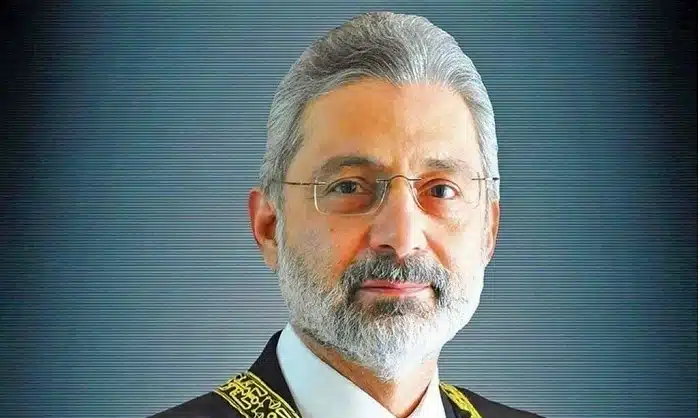
    On Sunday, Justice Qazi Faez Isa took the oath of office to become the 29th Chief Justice of Pakistan (CJP). Before the swearing-in began, Justice Faiz Isa also called his wife, Mrs. Sarina Isa, to the stage, where she remained until the end of the oath.

    After taking the oath, Qazi Faez Isa took multiple steps that have not been taken before.

    For the first time in judicial history, a woman has been appointed registrar of the Supreme Court when Lahore district and session judge Jazeela Aslam was appointed on the post.

    Jazeela Aslam also served as a session judge in Kasur and Sialkot.

    Jazeela Aslam completed her BA from Kinnard College Lahore and her LLB from Punjab University. She also passed the competitive judiciary exam on second-place in all of Punjab.

    Secondly, CJP Faez Isa also called a full court meeting on Monday to discuss several issues, like the live telecast of the court proceeding. On the other hand, former CJP Umar Atta Bandial didn’t hold a full court meeting in his whole tenure as CJP.

    It can also be seen for the first time in the country’s judicial history that the Supreme Court’s full court, comprising all 15 judges, will hear a set of petitions challenging the Supreme Court (Practice and Procedure) Act 2023, and the hearing will be live on TV.

    The CJP Faez Isa reached the apex court today in his personal car without any protocol and said to the staff of the court that “people come to the Supreme Court to solve their problems. Treat visitors like guests.”