Tag: Prediction

  • US dollar may drop to Rs210 in November

    US dollar may drop to Rs210 in November

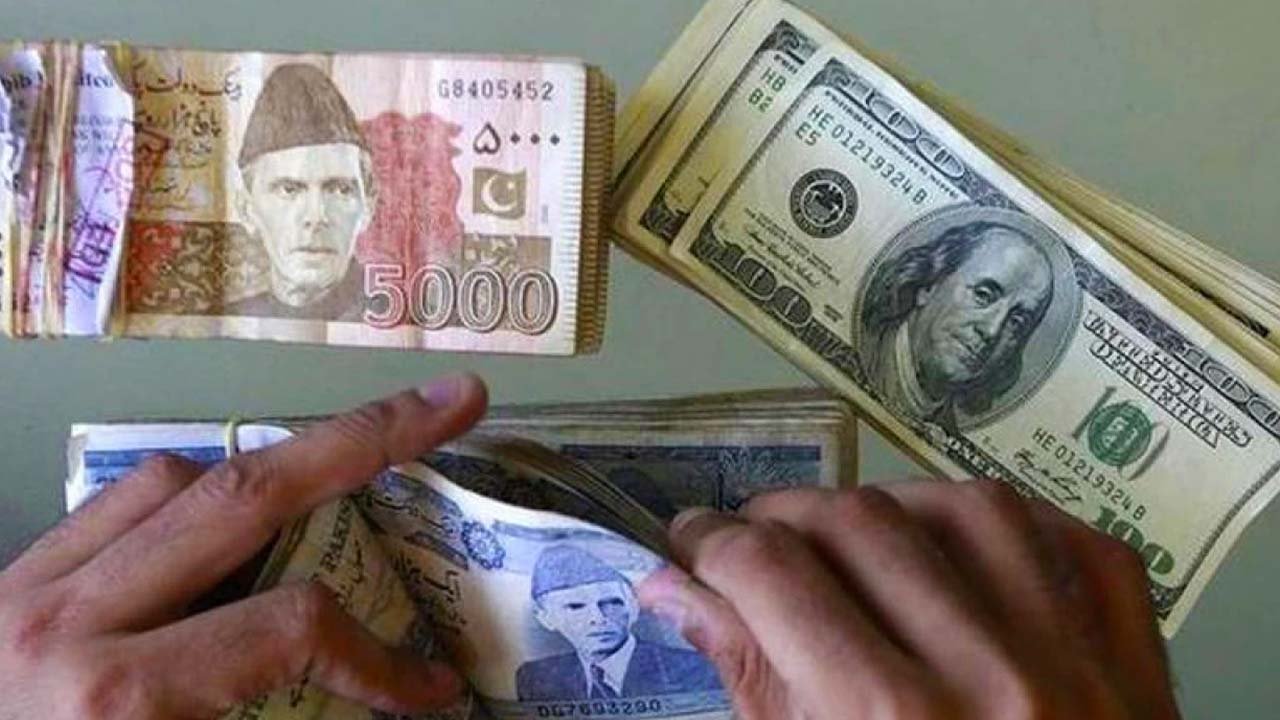
    Considering expected inflows from the Asian Development Bank (ADB) and Pakistan’s deletion from the Financial Action Task Force’s (FATF) grey list, the currency is projected to strengthen versus the US dollar this week.

    According to The News, this week in the interbank market, the local currency dipped by 0.89 per cent in value against the dollar. However, thanks to encouraging news from the ADB and FATF, the local currency increased to Rs220.84 during the last trading session.

    According to the analysts, assistance from multilateral creditors during the floods would help boost foreign exchange reserves and strengthen the local currency.

    The State Bank of Pakistan’s foreign exchange holdings as of October 14 totaled $7.59 billion, or nearly one month’s worth of imports.

    According to Tresmark, a terminal that tracks real-time pricing of financial markets, the rupee is predicted to trade at 216 to the dollar in the coming 10 days and 210 to the dollar in the coming 30 days.

    “This is because of ADB-related inflows of $1.5 billion in the coming week and $2 billion of inflows in the first week of November. Of course, this would not have been possible without the finance minister’s undervalued rupee mantra,” Tresmark said in a client note.

    Six months from now, though, would be the rupee’s true test, it was said.

    Analysts predict that the US interest rate will surpass 5 per cent (a level last reached in 2008) and that the dollar will continue to rise.

    Markets expect the Indian Rupee to be at 95 per dollar, the Bangladesh Taka to be at 115 per dollar, and the Yuan to continue declining, despite the fact that major currencies all have a bearish tendency. Although the dollar’s strength is an issue, the global recession continues to be of much greater concern.

    A 15-20 per cent decline in exports and a 5 per cent decline in remittances are anticipated by economists, even if the current account deficit (CAD) for September was practically at breakeven.

    They continued, saying that maintaining the economic winter would need sustained import compression and additional economic deceleration.

    Due to lower letters of credit being settled during the previous week, the rupee somewhat declined. According to market estimates, only around 50 per cent, or roughly $600 million, has yet to be processed.
  • ADB projects Pakistan’s economy to ‘recover slightly’ in FY23

    ADB projects Pakistan’s economy to ‘recover slightly’ in FY23

    In FY2023, Pakistan’s Gross Domestic Product (GDP) growth is expected to modestly improve due to structural changes, according to the Asian Development Bank (ADB).

    According to the bank’s most recent Asian Development Outlook Supplement, Pakistan’s GDP growth is predicted to decrease in FY22 (which ends on June 30, 2022), as a result of fiscal tightening measures taken to control rising demand pressures and contain external and fiscal imbalances.

    As the country’s inflation surged from 12.3 per cent in December 2021 to 21.3 per cent in June 2022, the bank slightly lowered Pakistan’s inflation for FY22 and dramatically for FY23.

    “In addition to the effects of elevated global energy and food prices, the government’s efforts to revive the stalled International Monetary Fund (IMF) programme has meant raising power tariffs and withdrawing subsidies in the oil and power sectors,” said ADB.

    In comparison to Sri Lanka, which boosted its policy rate by 950 basis points over the previous six months, the State Bank of Pakistan (SBP) has upped interest rates by 525 basis points since January 1. This also makes it one of the most active central banks in the region.

    The ADB also reduced its 2022 growth prediction for Asia and issued a warning that things could become worse as a result of the conflict in Ukraine and supply chain disruptions that are expected to drive up costs.

    Read more: Pakistani rupee plunges to Rs227 against US dollar at midday trading

    Although Covid-19’s effects had subsided, the region was now dealing with the consequences of Russia’s invasion of Ukraine, lockdowns in China, and aggressively raised interest rates, according to the Manila-based lender.

    The bank reduced its 2022 growth prediction to 4.6 per cent to reflect the decline in developing Asia, which runs from Kazakhstan in Central Asia to the Cook Islands in the Pacific.

    South Asia’s economy is anticipated to grow less than the projected rate of growth in the Asian Development Outlook 2022.