Tag: #president

  • Arif Alvi apologises for sharing old photos online

    Arif Alvi apologises for sharing old photos online

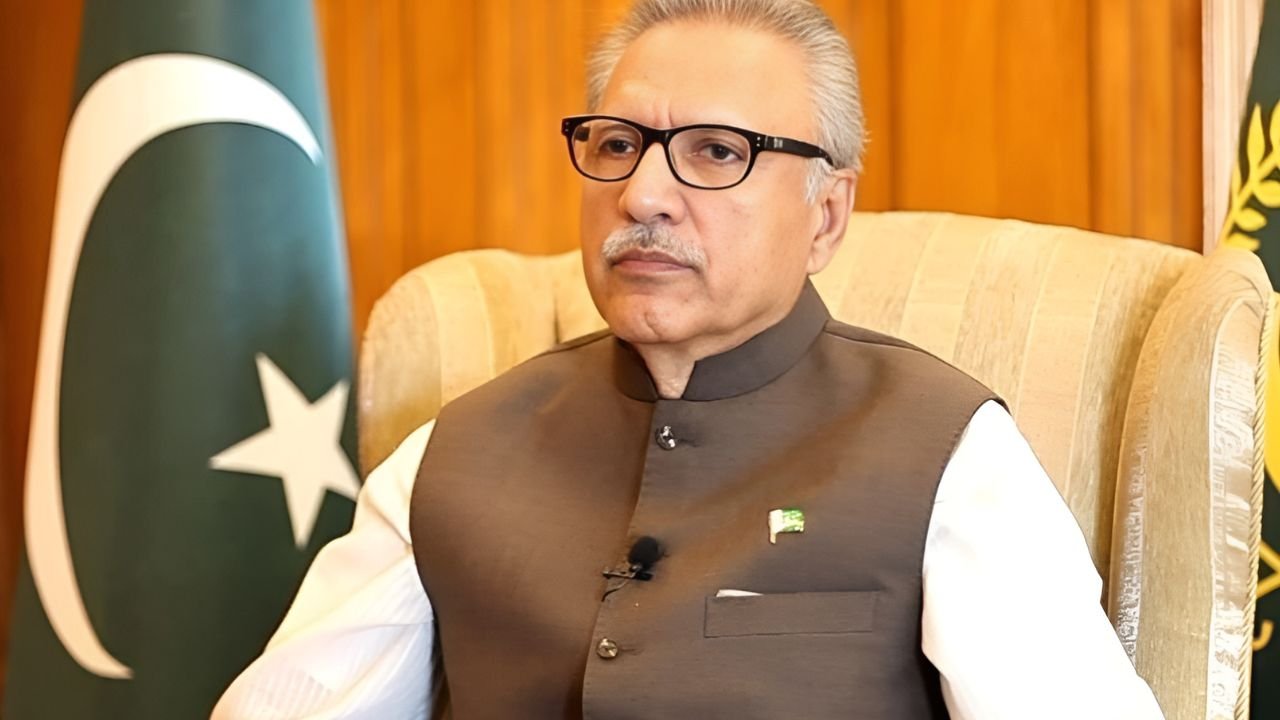
    Former President of Pakistan Arif Alvi has apologised for sharing pictures of a rally held in the past on the internet, assuming the pictures were of the PTI rally held in the Sangjani area near Islamabad on September 8.

    Alvi apologised after Punjab Information Minister Maryam Aurangzeb pointed out the error.

    In an X (formerly Twitter), Alvi wrote, “After fact check, I have deleted two posts, as they were images of the previous occasion. I apologise for the error.”

    “Social Media is too big to be bagged or shut down. Only error connections can tame this leviathan,” he added.

    PTI held a rally in the Sangjani area on Sunday. Many fake rally images were posted on the internet, and the former President fell victim to one by sharing it on social sites.

    Arif Alvi was President of Pakistan from 2018 to 2024.

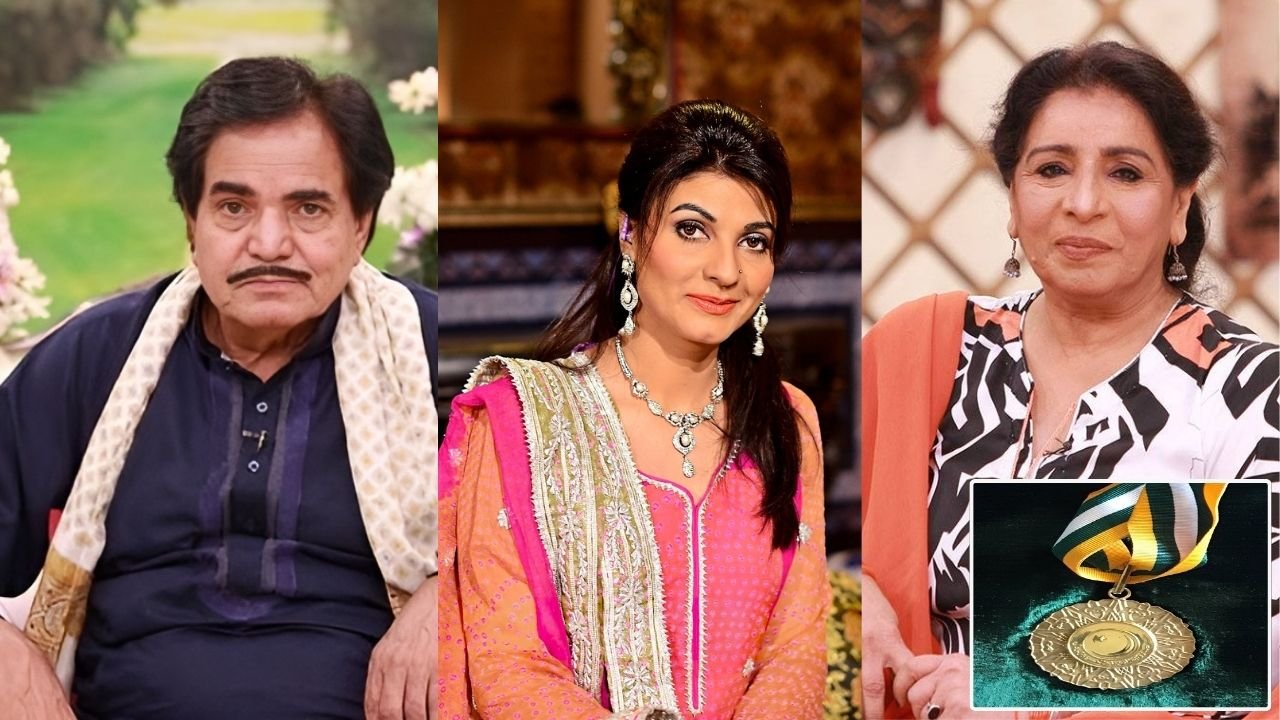
  • Three Pakistani celebrities to get Pride of Performance Award

    Three Pakistani celebrities to get Pride of Performance Award

    Pakistan marked its 77th Independence Day on August 14 with a special announcement of the list of nominees for the next civil awards.

    The Government of Pakistan honours outstanding individuals from various fields with prestigious awards every year.

    A number of controversies have stirred over the past years pertaining to recipients of the top honours, especially regarding the nominees of the entertainment industry.

    This year, only three individuals from the industry have been nominated for the President’s Award for Pride of Performance which will be granted next year, in 2025.

    Here are the name of the celebrities:

    Fariha Pervez

    Fariha Pervez is a renowned pop singer-songwriter and music producer. She began her career with anchoring and acting in the early ’90s followed by a switch to music in the mid-’90s.

    Hamid Rana

    Hamid Rana is a Pakistani stage and television actor who has also starred in a number of Lollywood movies.

    His acting career began in the 1970s and his roles in drama serials earned him fame.

    Sheeba Arshad

    Sheeba Arshad is a veteran actress who has been active in the entertainment industry for
    decades. She is best known for her iconic role as Chandi in the PTV classic drama serial ‘Sona Chandi’, which aired in the 1980s.

  • Pakistani student makes history, elected as president of Oxford University Graduate Community

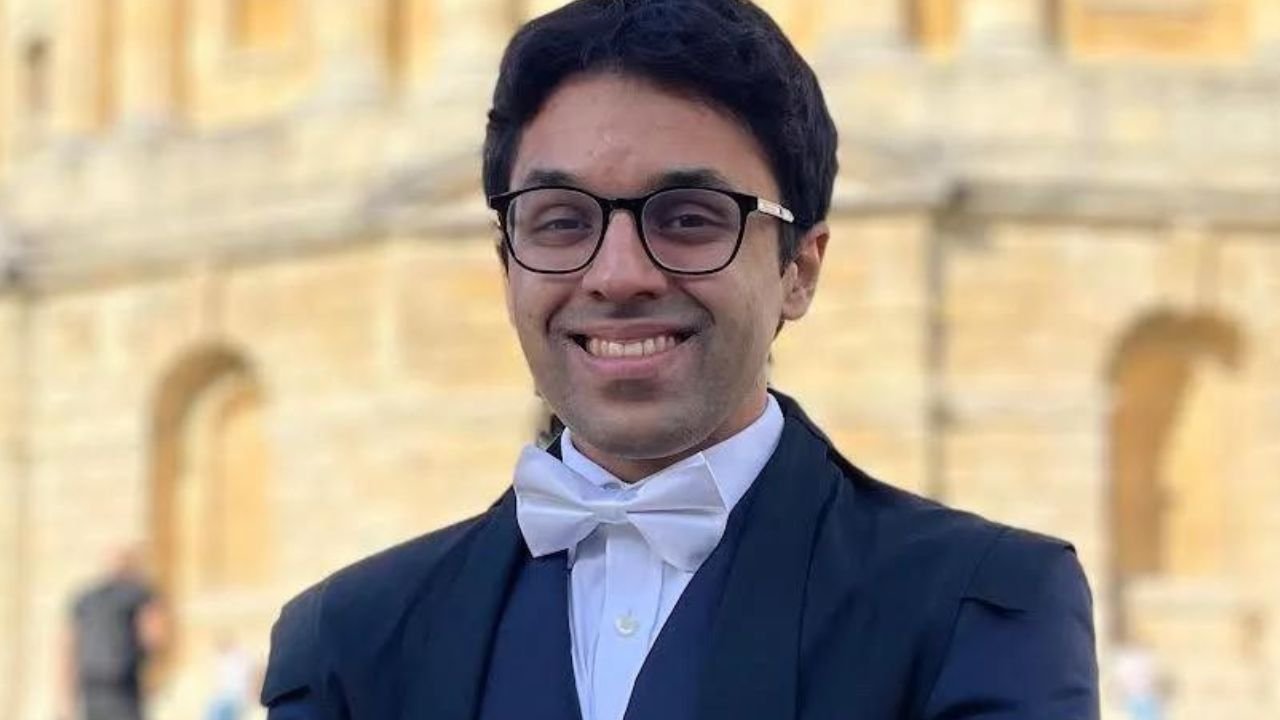
    Pakistani student makes history, elected as president of Oxford University Graduate Community

    Student Raza Nazar makes history after getting elected president of the Graduate Community at Oxford University, becoming the first Muslim and Pakistani to hold this position.

    He stated that his research focuses on constitutional theory and sovereignty, Geo news reports.

    The President of the Graduate Community (MCR) at Oxford University represents and advocates for the interests of graduate students, fostering community engagement through events and activities. They also serve as a liaison between students and university administration, ensuring their voices are heard on important issues.

    After earning his primary education in Karachi, Raza Nazar completed his law degree from the London School of Economics (LSE), where he held the position of President of the LSE Law Society. During his time at LSE, he also co-founded the LSE Future of Pakistan conference, an annual event that gathers students, experts, and government officials.

    Raza pursued a Bachelor of Civil Laws (BCL) while at Oxford which the University of Oxford describes as “the most highly regarded taught master’s-level qualification in the Common Law world,” joining the few Pakistanis to have completed the BCL,  including former Prime Minister Huseyn Shaheed Suhrawardy and former President Wasim Sajjad.

  • Joe Biden quits the US presidential race, endorses Kamala Harris

    Joe Biden quits the US presidential race, endorses Kamala Harris

    Joe Biden on Sunday dropped out of the US presidential election and endorsed Vice President Kamala Harris as the Democratic Party’s new nominee, in a move that upends the 2024 race for the White House.

    The 81-year-old Biden stepped aside after weeks of pressure from Demo­crats following a disastrous debate performance, throwing the election battle against Republican Donald Trump into unprecedented turmoil.

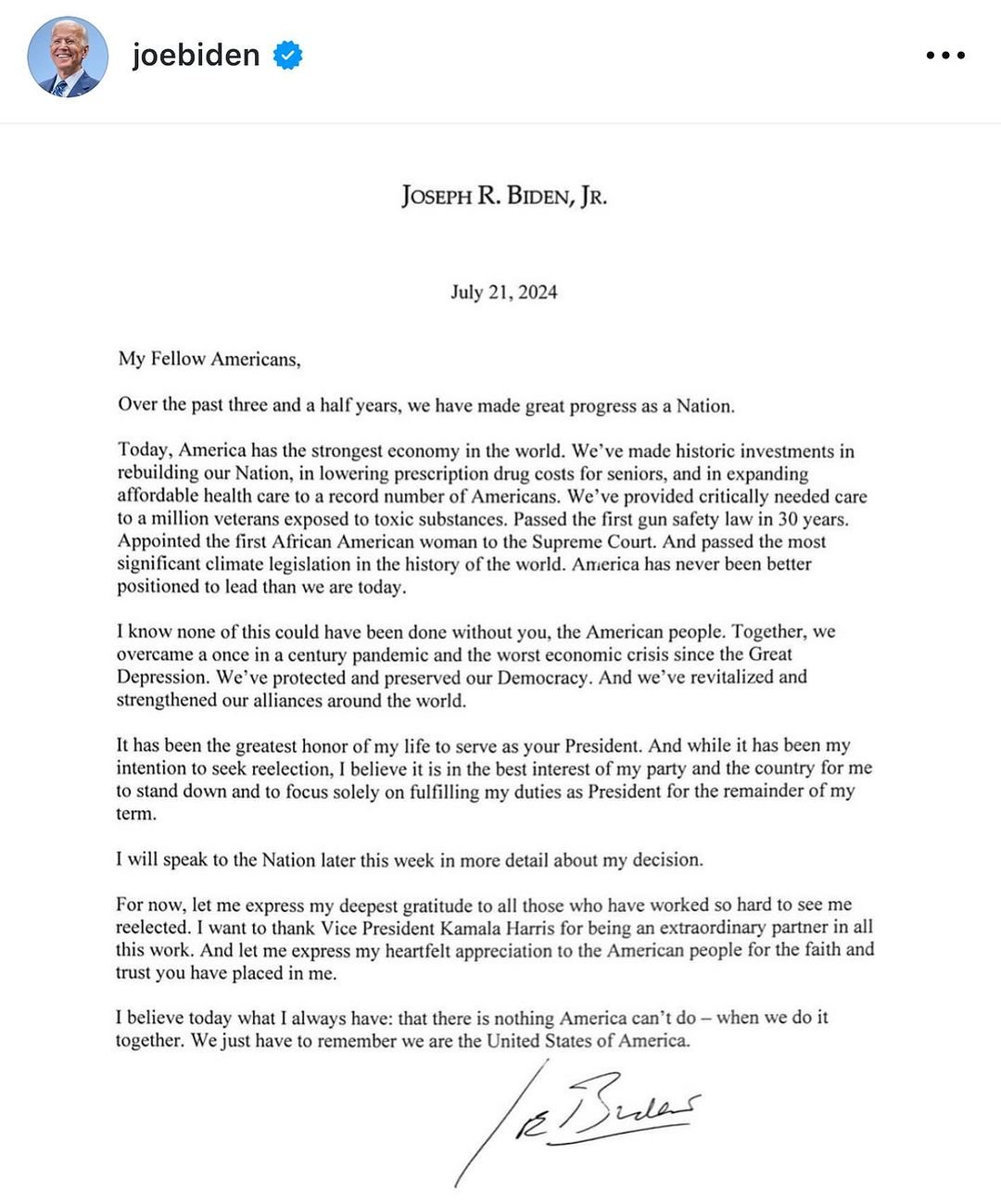
    “While it has been my intention to seek reelection, I believe it is in the best interest of my party and the country for me to stand down and focus solely on fulfilling my duties as President for the remainder of my term,” Biden said in a letter on X while recovering from Covid at his beach house in Delaware.

    Biden said he would “speak to the nation later this week in more detail about my decision”. He later added that he was backing Harris, who is the first female, Black and South Asian vice president in US history, and will now be aiming to become its first female commander-in-chief.

    “Today I want to offer my full support and endorsement for Kamala to be the nominee of our party this year,” Biden said on X. “Democrats – it’s time to come together and beat Trump. Let’s do this.” Biden is the first president in US history to pull out so late in an election race, and the first to bow out because of concerns over his mental acuity and health.

    Biden spent more than three weeks resisting calls to step down following the shock of the June 27 debate, at one point insisting that only the “Lord Almighty” could convince him to back out.

    In a bid to show he was up to the job, he gave a number of interviews and what was billed as a “big boy” press conference in which he took numerous questions, but made further gaffes including calling Harris “Vice President Trump”. A tide of voices within his own party calling on him to go, starting with donor and actor George Clooney and ending with former president Barack Obama, sealed his fate.

    Chaotic period for US

    The end finally came shortly after Biden had been diagnosed with Covid, forcing him off the campaign trail and into isolation in Rehoboth Beach.

    Biden’s decision to pull out also caps a tense and chaotic period in the US election, with Trump having survived an assassination attempt at a campaign rally on July 13.

    Biden joins a small club of US presidents who have decided to throw in the towel after just one term, with the last being Lyndon Johnson in 1968 — a year also marked by political turmoil and violence.

    Johnson’s replacement as nominee, then-vice president Hubert Humphrey, went on to lose heavily to Richard Nixon. But Democrats are counting on Harris to fare better, and hoping that she can prevent convicted felon Trump from making a sensational comeback to the Oval Office.

    In recent weeks, the Biden campaign has reportedly been quietly carrying out a head-to-head survey of voters measuring how she matched up against Trump.

    While Harris struggled to make an impact in her first years in the White House, she has emerged in the last year as a strong performer on the campaign trail on key messages such as abortion rights. She has also made much of her life story as the first woman in US history to hold the vice presidency, as well as the first person of Black and South Asian origin.

    Barring opposition from her party, Harris is now set to be nominated at the Democratic National Conven­tion in Chicago on August 19 in what promises to be a dramatic moment — and a heartrending one for Biden.

    Biden took office in January 2021 pledging to heal the “soul of America” after four turbulent years under Trump and the shock of the January 6, 2021 Capitol assault by his supporters.

    Overcoming a reputation for verbal flubs, Obama’s former vice president pushed through a massive Covid recovery plan and a green industry scheme.

    US allies welcomed his pledge that “America is back” following Trump’s trampling on international alliances, and his strong support for Ukraine as it battled Russia’s 2022 invasion. But he faced criticism over the catastrophic US withdrawal from Afgha­nistan and inflation that meant overstretched Americans ignored otherwise positive economic numbers.

    Behind it all were the ongoing concerns about his age with a series of senior moments, including tripping up the stairs to Air Force One and falling off his bike, contributing to the doddery image played up by Republicans.

    Biden’s Letter

  • Iran reformist Pezeshkian wins presidential election

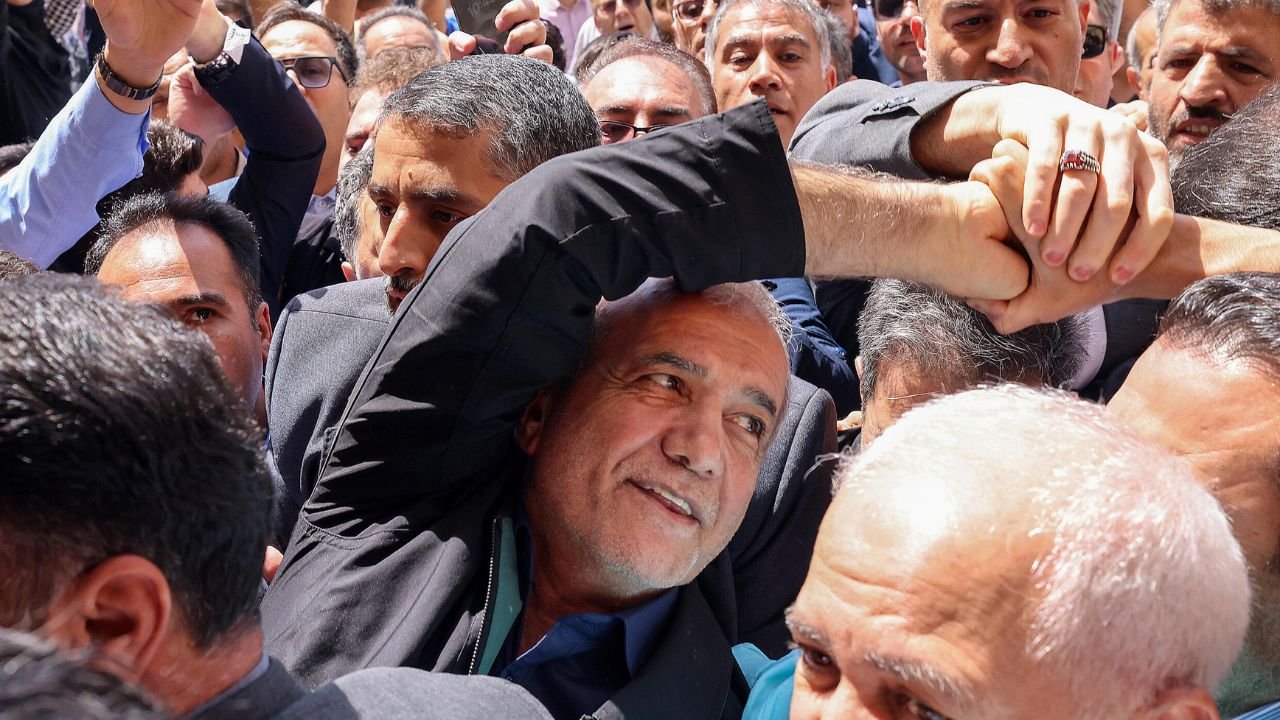
    Iran reformist Pezeshkian wins presidential election

    Tehran (AFP) – Masoud Pezeshkian, Iran’s only reformist candidate in the latest presidential election, has risen from relative obscurity to become the ninth president of the Islamic republic.

    Pezeshkian, 69, won around 53.6 percent of the vote in a runoff election against the ultraconservative Saeed Jalili.

    In the first round of Iran’s snap elections on June 28, Pezeshkian led the polls against three other conservative figures, stunning supporters and rivals alike.

    Pezeshkian’s victory has raised the hopes of Iran’s reformists after years of dominance by the conservative and ultraconservative camps.

    He will replace late ultraconservative president Ebrahim Raisi who died in a May helicopter crash.

    “The difficult path ahead will not be smooth except with your companionship, empathy, and trust. I extend my hand to you,” Pezeshkian said in a post on X, after on Tuesday saying he would “extend the hand of friendship to everyone” if he won.

    In the lead-up to the elections, Iran’s main reformist coalition threw its weight behind Pezeshkian, with former presidents Mohammad Khatami and the moderate Hassan Rouhani declaring support for his bid.

    Pezeshkian takes over the presidency amid heightened regional tensions over the Gaza war, a dispute with the West over Iran’s nuclear programme and domestic discontent over the state of Iran’s sanctions-hit economy.

    ‘Out of isolation’

    The outspoken heart surgeon had publicly criticised the Raisi government over its handling of the death in custody of Iranian Kurd Mahsa Amini, who had been arrested for allegedly violating the Islamic republic’s strict dress code for women.

    In a post on Twitter, now known as X, at the time, he called on the authorities to “set up an investigation team” to look into the circumstances behind her death.

    In recent campaigning, he has maintained his stance, criticising the enforcement of mandatory hijab laws which require women to cover their head and neck in public since shortly after the 1979 Islamic revolution.

    “We oppose any violent and inhumane behaviour towards anyone, notably our sisters and daughters, and we will not allow these actions to happen,” he said.

    He also vowed to ease internet restrictions and to involve ethnic minorities in his government.

    Pezeshkian was born in 1954 to an Iranian father of Turkic origin and a Kurdish mother in the city of Mahabad in the northwestern province of West Azerbaijan.

    He has represented Tabriz in Iran’s parliament since 2008, served as health minister in Khatami’s government, and supervised sending medical teams to the war front during the Iran-Iraq conflict between 1980 and 1988.

    In 1993, Pezeshkian lost his wife and one of his children in a car accident. He never remarried and raised his remaining three children — two sons and a daughter — alone.

    Campaigning on behalf of Pezeshkian was Mohammad Javad Zarif, Iran’s combative former foreign minister who helped secure the landmark 2015 nuclear deal with world powers, which fell through three years later.

    Pezeshkian has called for reviving the accord — which sought to curb Tehran’s nuclear activity in return for sanctions relief — to get Iran “out of isolation”.

    “If we manage to lift the sanctions, people will have an easier life while the continuation of sanctions means making people’s lives miserable,” he said during a televised interview.

    Pezeshkian will be tasked with applying state policy outlined by the supreme leader Ayatollah Ali Khamenei, who wields ultimate authority in the country.

  • Noor Bukhari pays tribute to late Iranian President Raisi

    Noor Bukhari pays tribute to late Iranian President Raisi

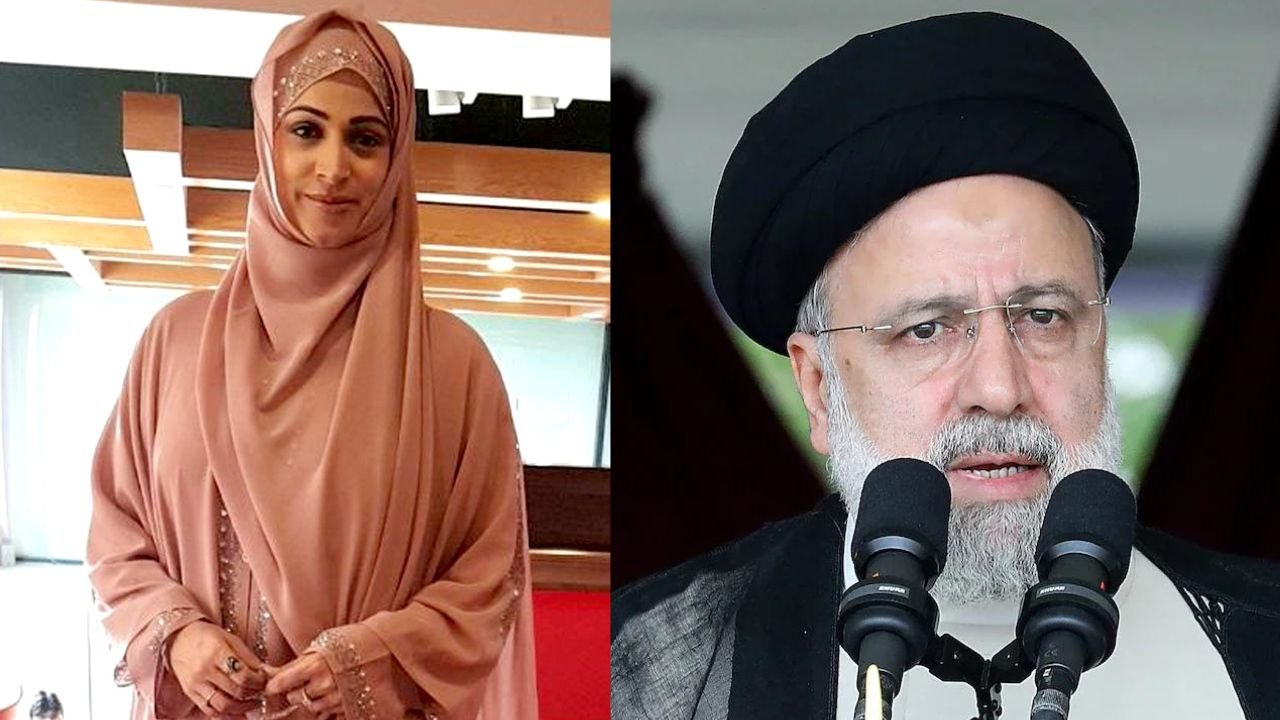
    Former actress Noor Bukhari has paid tribute to Iran’s President Seyyed Ebrahim Raisi who died in a helicopter crash this week.

    Noor Bukhari posted a photo of the late Iranian president on her Instagram account, writing in the caption, “Syed Qurbani de gaya hai … ab khair any waali hai ummah ke liye. Want ke yazeed countdown started”
    (A Syed has sacrificed himself; now good news is coming for the Muslim Ummah, and the countdown for Yazid has begun.)
    Raisi’s funeral was held today in his hometown after two days of processions attended by thousands of mourners.

    Raisi, 63, died on Sunday alongside his foreign minister and six others when their helicopter crashed in the country’s mountainous northwest while returning from a dam inauguration.
    His final resting place will be at the holy shrine of Imam Reza, a key Shiite mausoleum in the northeastern city of Mashhad, where the ultra-conservative president was born.

  • Why is South Africa still waiting for a female president?

    Why is South Africa still waiting for a female president?

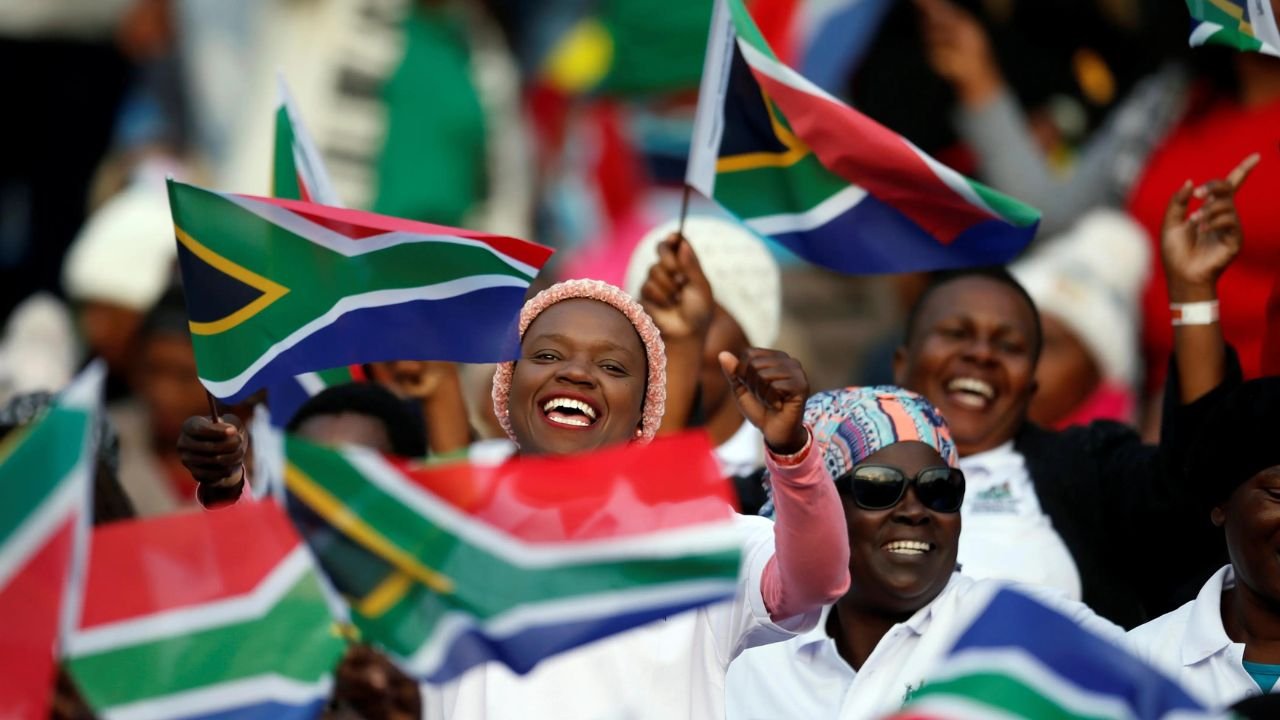
    South Africa has one of the world’s highest rates of female parliamentary representation in the world while boasting one of the most progressive constitutions.

    Yet the country is yet to produce a female president — something upcoming general elections are unlikely to change.

    Of the more than 50 parties in the running on May 29, only a handful are led by a woman. The five largest are all headed by men.

    “It is rare for a woman-owned party to stand, succeed and be sustainable,” said Colleen Makhubele, one of the few female party chiefs, who runs the small South African Rainbow Alliance (SARA).

    The dearth is despite South Africa ranking 11th globally for female representation in parliament, just below Sweden and higher than Finland.

    Women played a major role in the anti-apartheid struggle, and have held important government posts since the advent of democracy in 1994.

    About half the country’s ministries, including the key departments of foreign affairs and defence, are currently run by women.

    Women’s rights activists say the reason partially lies in the disconnect between the liberal views on which democratic South Africa was founded, and what still remains a fairly conservative society.

    The rainbow nation’s constitution lists “non-racialism and non-sexism” as the country’s second founding value after democracy itself.

    Yet many still see women as fit to lead their family — but not the nation.

    About one in five respondents to a 2017 Ipsos survey said that a woman’s place was in the home. Moreover, 22 percent thought men made better political leaders.

    This results in women often being overlooked when parties choose a leading candidate, said Bafana Khumalo, co-director of NGO Sonke Gender Justice.

    “Women are seen as important… but not to be voted into power,” he said.

    Makhubele of SARA, a former Johannesburg council speaker, said she has to work twice as hard as her male colleagues to win votes, funding and media coverage.

    Attitudes are slowly changing.

    A 2020 poll by Women Deliver, a non-profit, found 91 percent of respondents believed gender equality was important.

    Forty-three percent supported the government taking action to achieve equal representation in politics, and 69 percent backed gender quotas.

    The latter are already implemented by the ruling African National Congress (ANC) and the leftist Economic Freedom Fighters (EFF) — the country’s third largest party.

    The second largest party, the liberal Democratic Alliance (DA), had a female leader between 2007 and 2015.

    But that’s not enough, said political analyst and author Susan Booysen.

    “I’m blaming political parties for not systematically nurturing women’s ascendancy in party politics to get them to the top… women don’t see that systemic mentoring and promotion” she said.

    Parties might be missing out.

    Women make up more than 55 percent of registered voters in the upcoming elections and are seen as key drivers of support.

    “They’re the ones who actually make sure the people they live with go and vote on election day,” said Zama Khanyase of the ANC’s youth league.

    The ANC is largely expected to get less than 50 percent of the vote and for the first time lose its absolute majority in parliament when South Africans head to the polls in a month’s time.

    That could force it into a coalition to remain in power.

    After the parliamentary vote national assembly lawmakers then appoint a president.
  • Zardari wants to use presidential protection in NAB cases

    Zardari wants to use presidential protection in NAB cases

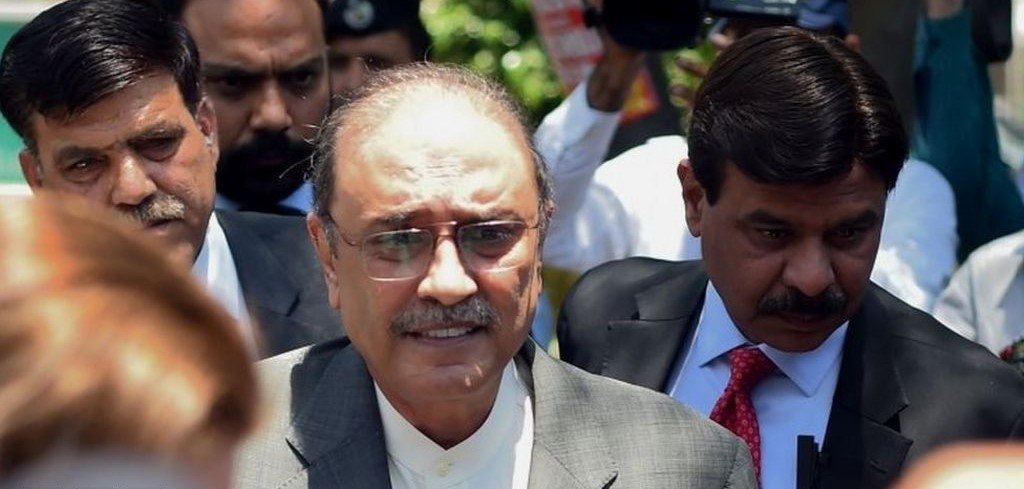
    President Asif Ali Zardari has filed for Presidential immunity under Article 248 of the Constitution in two National Accountability Bureau (NAB) cases. The clause provides protection to high-ranking state officials from all legal proceedings in court for any action taken by them during their terms in office.

    In the Park Lane Case, Mr Zardari is accused of allegedly using his influence to extract loans from the state exchequer for dummy corporations during his term as the President from 2008 to 2013. It is important to note that Mr Zardari, along with his sister and several other business associates, are accused in this case as well. However, the Presidential immunity only protects Mr Zardari.

    The other NAB case is known as the Thatta Water Supply reference in which Asif Ali Zardari and others are accused of illegally awarding different contracts to private contractors. Zardari’s counsel emphasized that President Zardari’s status as the country’s elected head granted him immunity from legal action, thus rendering the continuation of the case against him untenable.

    The accountability court has since issued a notice to the NAB, seeking a response to Mr Zardari’s application for immunity by April 22.

    President Asif Ali Zardari has filed for Presidential immunity under Article 248 of the Constitution in two National Accountability Bureau (NAB) cases. The clause provides protection to high-ranking state officials from all legal proceedings in court for any action taken by them during their terms in office.

    In the Park Lane Case, Mr Zardari is accused of allegedly using his influence to extract loans from the state exchequer for dummy corporations during his term as the President from 2008 to 2013. It is important to note that Mr Zardari, along with his sister and several other business associates, are accused in this case as well. However, the Presidential immunity only protects Mr Zardari.

    The other NAB case is known as the Thatta Water Supply reference in which Asif Ali Zardari and others are accused of illegally awarding different contracts to private contractors. Zardari’s counsel emphasized that President Zardari’s status as the country’s elected head granted him immunity from legal action, thus rendering the continuation of the case against him untenable.

    The accountability court has since issued a notice to the NAB, seeking a response to Mr Zardari’s application for immunity by April 22.

  • Tayyip Erdogan congratulates Asif Zardari on becoming president

    Tayyip Erdogan congratulates Asif Zardari on becoming president

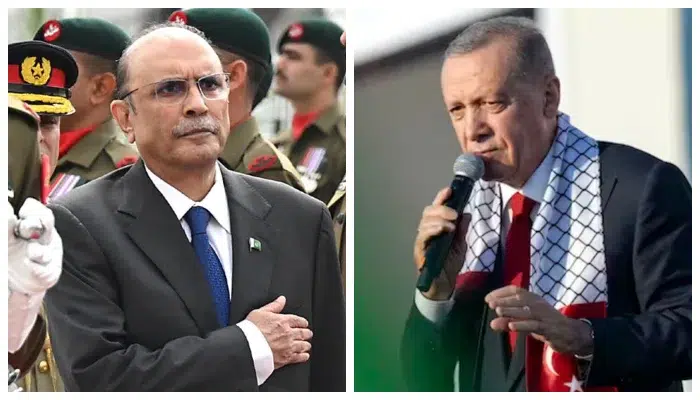
    Turkish President Recep Tayyip Erdogan called newly-elected president Asif Ali Zardari on Tuesday to congratulate him on becoming the head of state.

    The President’s Secretariat said in a statement that both leaders talked about important issues and agreed to work together for the betterment of the countries.

    President Zardari also thanked Erdogan for his phone call and best wishes.

    “President Asif Ali Zardari wished a happy Ramadan to the Turkish nation and desired to see the role of Turkish women in the Islamic world,” read the statement.

    He also expressed a desire to invite the Turkish President to Pakistan for a visit soon.

    Asif Zardari became president for the second time with a big majority on Saturday. He got 411 votes from parliament and the four assemblies.

    Besides the Pakistan Peoples Party (PPP), the newly elected president had the backing of the Pakistan Muslim League-Nawaz (PML-N), the Muttahida Qaumi Movement-Pakistan (MQM-Pakistan), and other smaller parties.

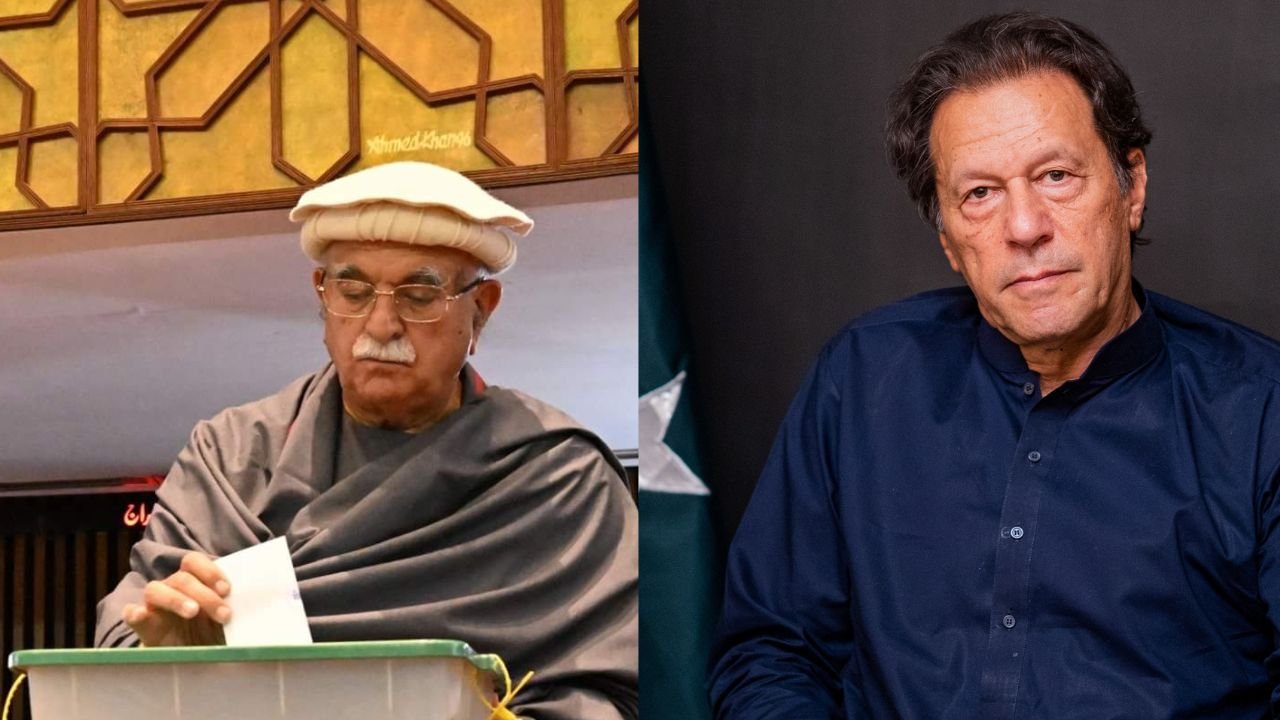
  • Mahmood Khan Achakzai nominated for President by Sunni Ittehad Council after fiery speech

    Mahmood Khan Achakzai nominated for President by Sunni Ittehad Council after fiery speech

    Sunni Ittehad Council (SIC) has put forward the name of Mahmood Khan Achakzai, the leader of Pashtun­khwa Milli Awami Party (PKMAP), as their candidate for the upcoming presidential election in Pakistan.

    The announcement was made on Saturday by the SIC, endorsing Achakzai to vie for the country’s highest constitutional position against Asif Ali Zardari, the Pakistan Peoples Party (PPP) Co-chairman, who is backed by the Pakistan Muslim League-Nawaz (PML-N) and other allied parties forming a coalition government.

    Achakzai, who secured a National Assembly seat from Balochistan’s NA-266 constituency, received backing not only from his party but also from the Pakistan Tehreek-e-Insaf (PTI) founder, Imran Khan. Despite Khan’s current incarceration in Rawalpindi’s Adiala jail, he urged his party members to support Achakzai’s candidacy.

    In 2014, Khan had made fun of Achakzai in a public rally during his dharna, mimicking the Baloch leader’s shawl with a duppata.

    Confirming the nomination, PTI Chairman Barrister Gohar Khan affirmed their support for Achakzai in the presidential poll. This move comes following PTI’s efforts to gather political support against alleged electoral irregularities, with a recent meeting between PTI representatives and Achakzai, along with Balochistan National Party (Mengal) chief Akhtar Mengal.

    During the meeting, Achakzai expressed his party’s commitment to support any political entity advocating for constitutional supremacy and parliamentary empowerment.

    The presidential election, scheduled for March 9, is set to follow a stringent timeline outlined by the Election Commission of Pakistan (ECP). The deadline for the submission of nomination papers is today, with scrutiny scheduled to be completed by March 4. Candidates have until March 5 to withdraw their nominations, following which the final list of candidates will be published on March 6, preceding the polling.

    The current President, Dr. Arif Alvi, completed his five-year term on September 8, 2023, making him the fourth democratically elected president to do so. However, due to the absence of the required electoral college, he continues to hold office until his successor is elected.

    According to constitutional provisions, the president is elected by members of the National Assembly, Senate, and the four provincial assemblies. The oath-taking ceremony for the newly elected president will be administered by Chief Justice Qazi Faez Isa following the election process.

    During his fiery speech yesterday in parliament, Achakzai asked the speaker to have four resolutions passed from the house including, “This parliament announces that there will be no role of Establishment and intelligence institutions in the politics of Pakistan. This parliament will be the representative of internal and external affairs of Pakistani politics. No General will come in between.”

    He accused certain individuals of attempting to turn the parliament, representing 220 million people, into a marketplace. He emphasized the importance of upholding the Constitution and resisting any efforts by the establishment to manipulate it and further stated that just as Nawaz Sharif advocated for respecting the vote, Imran Khan has also risen to power through the people’s support.

    The PKMAP leader raised concerns about attacks on the parliament, stating that the recent attempt was futile as the people had thwarted it. He called for accountability for those seeking to undermine the democratic process.

    The presidential candidate for SIC also criticized the military and intelligence agencies’ involvement in politics, stating that they must refrain from such interference and focus on their designated roles.

    In his impassioned speech, Achakzai underscored the importance of honoring judges who did not support martial law by recognizing them as heroes, while suggesting that those who did support such measures should have their salaries revoked.