Tag: press freedom

  • Turkish journalist jailed fifth time

    Turkish journalist jailed fifth time

    Turkish investigative journalist Baris Pehlivan, who was ordered to return to prison by text message this month, was jailed on Tuesday for the fifth time in three years.

    The justice ministry informed him on August 2 via an SMS message that he had to surrender himself by August 15 to the prison in Silivi on the outskirts of Istanbul, where many of the government critics are held.

    Pehlivan’s latest book, “SS”, accuses former interior minister Suleyman Soylu of having links to organised crime.
    “Baris might be released on parole,” his lawyer Huseyin Ersoz told AFP. “A decision could be made at any time,” he said.
    A former editor in chief at Oda TV and contributor to daily newspaper Cumhuriyet, Pehlivan has already been imprisoned four times.
    Two of those incidents involved him spending a day behind bars — once in February and once in May.

    Pehlivan and six other journalists were sentenced to three years and nine months in prison in 2020 for reporting the funeral of a member of Turkey’s MIT secret services who was operating in Libya, where Ankara supports the UN-recognised Tripoli government.
    While his death has never been denied by the Turkish authorities, the reporters were charged with revealing “state secrets”.
    Pehlivan was recalled this time to serve eight months of the 2020 sentence for violating the country’s national intelligence laws.

    “People go to jail (in Turkey) just for writing the truth, just for doing journalism,” Pehlivan said before being sent to prison.
    “Mine is a drop in this ocean, in this big fight,” he said.

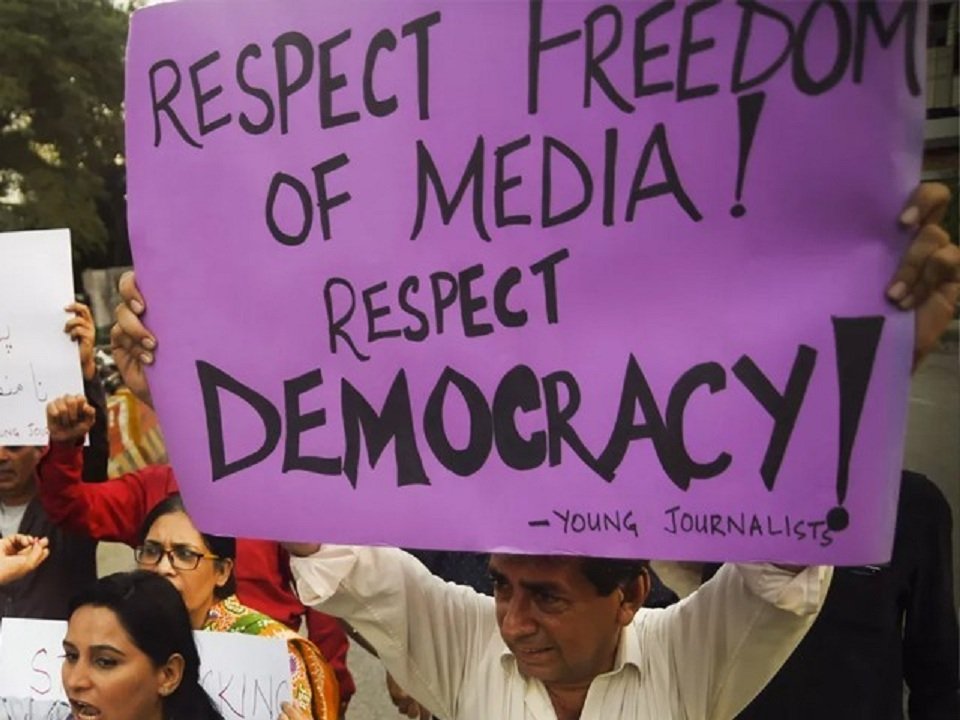
    Press freedom advocates last week condemned the “judicial harassment” of the journalist and urged the Turkish government to respect media freedom.
    Erol Onderoglu of Reporters Without Borders said Pehlivan was the 13th journalist to be jailed this year.
    “Arresting a reporter is an anachronistic attack on public opinion,” he commented on Twitter, recently rebranded as X.

    Turkey is ranked 165th out of 180 countries in the RSF’s latest press freedom index.

  • From 157 to 150: Pakistan’s press freedom ranking improves

    In a positive development, Pakistan’s press freedom ranking has improved, with the country moving up seven spots to number 150 on the list.

    However, India’s position has slipped to 160 compared to last year’s stats when the country was placed at 150. China has been placed in the second last spot in the ranking list and North Korea has been put in the last.

    May 3rd marks World Press Freedom Day, an opportunity to celebrate the fundamental principles of press freedom; to assess the state of press freedom throughout the world; to defend the media from attacks on their independence and to pay tribute to journalists who have lost their lives in the line of duty.

    The World Press Freedom Index also revealed a shocking general slide, with an unprecedented 31 countries deemed to be in a “very serious situation”.

    Prime Minister (PM) Shehbaz Sharif took to Twitter to pay his tributes to all journalists across the world “for the commendable work they are doing to inform and educate the people.”

  • US urges Kenya to investigate Arshad Sharif’s killing

    US urges Kenya to investigate Arshad Sharif’s killing

    On Tuesday, the United States of America urged Kenya to conduct an open investigation into the killing of Pakistani journalist and anchor person Arshad Sharif.

    “We’re deeply saddened by the death of Arshad Sharif,” said the US State Department spokesperson Ned Price.

    “We encourage a full investigation by the Government of Kenya into his death. It’s not entirely clear that we know all the circumstances at this point regarding what led to his death, but we do urge a full investigation,” the spokesperson added.

    “And it’s clear through his work that Arshad Sharif was dedicated to that fundamental right of freedom of expression – took him around the world. His work was known around the world.”

    Prime Minister (PM) Shehbaz Sharif on Monday urged Kenya to ensure fair and transparent investigations into the murder of senior Pakistani journalist Arshad Sharif.
    Taking to Twitter, the Premier said that he had made a telephone call to Kenyan President William Ruto about the killing.
    “I requested him to ensure fair & transparent investigation into the shocking incident,” he wrote on Twitter.

  • PM Khan strongly dislikes Pakistani media: Foreign Policy report

    PM Khan strongly dislikes Pakistani media: Foreign Policy report

    “Pakistan’s government is tightening its control of media with laws and oversight bodies that critics say enhance its power to censor and punish journalists. New laws potentially extend control to social media such as YouTube and Twitter, snuffing out investigative journalism and critical commentary,” says a report published in Foreign Policy (FP) magazine.

    The report says that Prime Minister Imran Khan “has long had deep antipathy for the media and rarely voices support for journalists who are attacked or disappeared for their work”. It adds that Committee to Protect Journalists (CPJ) Asia programme coordinator, Steven Butler, was denied entry to Pakistan in 2019. “Journalists who find outlets abroad to publish their work and provide income are branded foreign agents intent on the destruction of the Pakistani state,” says the FP report.

    “Our society is a democratic society, and people do realise why these journalists are not on air, are not speaking, why their voices are not being heard,” said Asma Shirazi. “These critical voices are a blessing in democracies. But now that they are not there, there is a huge gap. And people know this, they see this, and they know why it is.”

    Self-censorship by journalists is an insidious consequence of the harassment, she said. “But we have been here before. We know how to deal with it—we keep fighting.”

    PECA Ordinance 2022

    In February, the Prevention of Electronic Crimes Amendment (PECA) Ordinance 2022 was promulgated by President Arif Alvi. Talking exclusively to The Current, Information Minister Fawad Chaudhry said, “A person who forwards fake news over WhatsApp can be fined and go to jail under the new law.”

    Civil society, political collectives, journalists and rights activists condemned the new PECA Ordinance.

    Islamabad High Court (IHC) Chief Justice Athar Minallah said that it seems like no one told the premier that there are laws for contempt other than PECA. “It seems like PM Khan was not assisted correctly over PECA Ordinance,” said Justice Minallah, adding that the law is used against critics here.

    PM Khan defends PECA Ordinance

    “The PECA law was made in 2016. We are only amending it,” said PM Khan on Monday. He said that “filth” such as child pornography was being shared on social media. He also accused journalists of taking money and blackmail.

    Joint statement by Amnesty International and Human Rights Watch

    On Monday, Amnesty International and Human Rights Watch (HRW) said in a joint statement that the government’s amendment to its cybercrimes act “is the latest in a concerted campaign to restrict freedom of expression and stifle dissent”.

    “PECA has been used to silence freedom of expression on the pretext of combating ‘fake news,’ cybercrime, and misinformation,” said Nadia Rahman, acting deputy regional director for South Asia at Amnesty International. “This amendment not only violates the Pakistan Constitution, but also puts anyone who questions the government or other state institutions at further risk. It particularly endangers journalists, human rights defenders, and political opponents who run the risk of prosecution for merely doing their jobs.”

    “The Prevention of Electronic Crimes Act neither protects the public from legitimate cybercrime concerns nor respects fundamental human rights,” said Patricia Gossman, Asia associate director at Human Rights Watch. “The new amendments will further embed violations of basic rights with a thin veneer of legality.”

  • ‘The gun is already placed on their head’: Hamid Mir on being  banned by Geo

    ‘The gun is already placed on their head’: Hamid Mir on being banned by Geo

    In an interview with Stephen Sackur on BBC HARDtalk, senior journalist Hamid Mir talked about why he was banned on Geo News, press freedom, censorship under Prime Minister Imran Khan, attacks on journalists, and how he is worried for his own safety in Pakistan.

    Disappointment on being off-air

    Stephen Sackur questioned Hamid Mir as to how disappointed he was with his employers [Geo News] and the Jang group who did not stand by him. Sackur also questioned how Mir felt that he had lost his voice and platform as a journalist because he was suspended from his channel.

    Mir said he was certainly disappointed but did understand the circumstances under which the decision was taken place.

    “Mir Shakil ur Rehman was arrested last year and he remained in the detention of the National Accountability Bureau (NAB) for more than seven months for a three-decade-old case, which was not a very big case. And I think that he was arrested, he was detained, just because of the freedom he was trying to give us. He got bail from the Supreme Court but his name was placed on the Exit Control List. He cannot leave Pakistan. He is already being held at gunpoint. So, my employers, the gun is already at their head. So when they were asked to ban Hamid Mir, they banned me. So I can understand their problem,” replied Mir.

    Imran Khan is a helpless Prime Minister

    The BBC host asked Mir that in the past he had a friendly relationship with PM Imran Khan so did he ever think that PM Imran personally wanted to see him taken off-air.

    Hamid replied, “It’s a very difficult question for me to respond [to], but I will try to very honestly. Imran Khan stood by me in 2007 when I was banned by General Pervez Musharraf, and yes at that time he was the biggest supporter of media freedom in Pakistan. Yes, I provided him a lot of space on my TV shows because he was in the Opposition, and you can say that I was friendly with him when he was in the Opposition. But when he became PM, I started raising questions. I even met him personally, and I asked him that your government should provide more space to the media because you are the biggest beneficiary of media freedom.”

    “One of my interviews with the former president, Asif Ali Zardari, was banned on my show, on my TV channel and some other Opposition leaders were also banned on different TV channels. So we started criticising Imran Khan and so I think he was not happy with my criticism.

    “The second part of your question is very important. I think that Imran Khan is not directly responsible for imposing a ban on me. And I don’t think he wants me to be off-air. But like past prime ministers, he is not a very powerful prime minister and I think he is helpless and he can’t help me,” said Mir.

    Concerned about my personal security

    Sackur questioned Mir if he feared the toxic environment in Pakistan and how concerned was he about his personal safety in the country after two assassination attempts on him. Mir answered, “Yes, I am very concerned about my personal security for a long time. I asked my family to leave Pakistan and my family left, my daughter and wife have already left. I was also approached by some people who suggested I leave Pakistan. But I decided not to leave.”

    Ready to face imprisonment

    The HARDtalk host asked Hamid Mir if he was ready to face imprisonment for the accusations against him, to which Mir responded, ” Yes, and I am ready to face life imprisonment because if they will be able to convict me at least the whole world will come to know what is going on in Pakistan. The whole world is already aware of what is going on in Pakistan because I am a living example of censorship in Pakistan. Everybody knows what happened to Hamid Mir and why he is banned and everybody knows the names of the people which I have not mentioned, everybody knows who was responsible for imposing a ban on me.”

    “The common Pakistanis are very wise, they are very clever. They know each and everything about what’s going on. But you see, there is no rule of law in Pakistan. And we only want justice, we want that the rule of law should be established in Pakistan. And if a journalist is asking questions, don’t try to silence his voice,” added Mir.

    State of media freedom in Pakistan

    Stephen Sackur questioned Mir whether there was a climate of fear in Pakistan when it comes to journalists or journalism.

    “Yes, definitely, there is a climate of fear in Pakistan. A lot of young journalists, they are very disappointed and look at the state of media freedom in Pakistan. When Mr Imran Khan became prime minister in 2018 Pakistan was ranked at 139 on the World Press Freedom Index. Today, in 2021, when I am talking to you, it is 145. So Pakistan lost six points in the last three years,” said Mir.

    He further added, “According to the International Federation of Journalists, Pakistan is one of the five most dangerous countries for journalists in the whole world. This is not good for Pakistan, for its reputation and credibility in the international community. And yes, there is a climate of fear in Pakistan because Pakistani journalists think journalism is becoming very difficult in this country and this government of Imran Khan [is] now planning some more anti-media laws which is not acceptable to us.”

    Rule of law only solution in Pakistan

    Commenting on the grave danger to democracy in Pakistan, Hamid Mir said, “I think that the rule of law is the solution to all of our problems. That’s why we want a general democracy in Pakistan because the founder of Pakistan, Muhammad Ali Jinnah was a democrat and I am a follower of his.”

    “And all those people who are trying to snatch media freedom from us are enemies of Pakistan and are enemies of Muhammad Ali Jinnah,” said Mir.
  • Fawad Chaudhry, Shireen Mazari condemn attack on journalist

    Federal Minister for Information and Broadcasting Fawad Chaudhry and Minister for Human Rights Shireen Mazari on Wednesday condemned the attack on journalist Asad Ali Toor, by unidentified men.

    As per the official account of the Ministry of Information and Broadcasting, SSP Islamabad has been directed to probe the attack and bring the perpetrators to justice.

    As per Asad Ali Toor’s video statement, three unidentified men broke into his apartment and tortured him. The three assailants can be seen leaving Toor’s apartment in the CCTV footage, reported BBC Urdu. Journalist Shahbaz Zahid also posted the CCTV footage on Twitter.

    Chairman Pakistan People’s Party (PPP) Bilawal Bhutto-Zardari also called for a full and transparent inquiry of the incident.

    Amnesty International has also urged authorities to take urgent steps for the safety of media workers in Pakistan.

    Journalists from around the country have condemned the attack and expressed solidarity with Toor.

    The federal cabinet in April approved the Protection of Journalists and Media Professionals Bill. Last year, journalist Matiullah Jan was abducted in Islamabad but was released after 12 hours while last month, senior journalist Absar Alam survived an assassination attempt in Islamabad. The Freedom Network’s annual state of press freedom report released in April 2021 highlighted a dramatic escalation in the climate of intimidation and harassment of journalists and the media in Pakistan.

  • Politicians, journalists mark #WorldPressFreedomDay

    World Press Freedom Day is observed every year on May 3 and this year’s theme is ‘Information as a Public Good’. To mark the day, politicians, journalists and other key figures have stepped forward to call for freedom of press and media.

    United Nations Secretary-General António Guterres was also among those who marked this day. In his message, Guterres urged all governments to do everything in their power to support a free, independent and diverse media.

    Politicians and journalists from Pakistan including Federal Minister for Information and Broadcasting Fawad Chaudhry and Special Assistant to Chief Minister Punjab on Information and culture Firdous Ashiq Awan also shared messages to mark the day and paid rich tributes to journalists.

  • Justice Isa holds referendum on country’s press freedom situation in court; no hands raised

    Justice Isa holds referendum on country’s press freedom situation in court; no hands raised

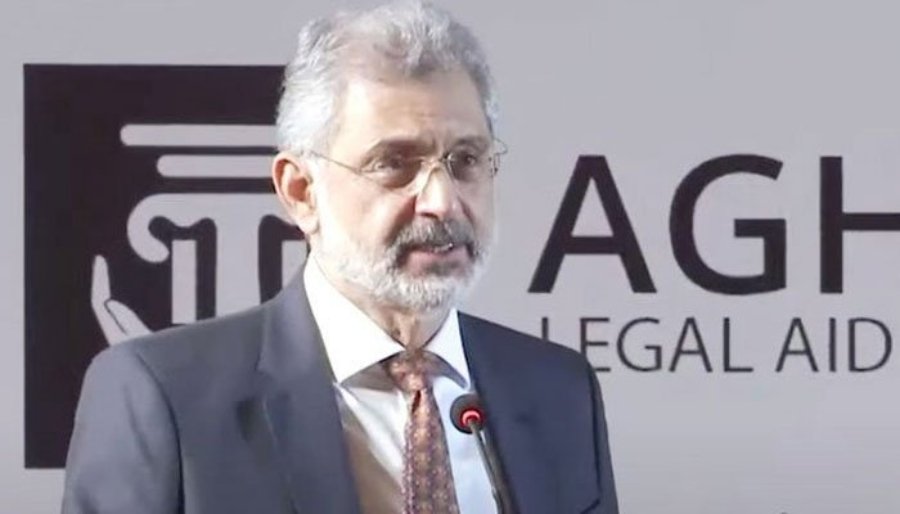
    Supreme Court’s (SC) Justice Qazi Faez Isa has expressed serious concerns over the press freedom situation in Pakistan, holding a referendum on freedom of press in his court.

    “Tell me… is media free in Pakistan?” Justice Isa asked the attorney general while hearing the case regarding local government elections with Justice Maqbool Baqir.

    The top court judge asked the reporters present in the courtroom to raise their hands if media was free in the country. Even though a number of media persons were present, nobody raised their hands.

    At this, Justice Isa said, “The people who are behind curbs on media must go to jails.”

    “The country is systematically being damaged. The poor are crying,” he added.

    Justice Baqir, on the other hand, remarked that a judge should avoid discussing such things but for how long could one remain silent on a situation such as the prevailing one. “It is not an ideal situation.”

    Earlier, the Election Commission of Pakistan (ECP) submitted schedule of local bodies elections to the court.

    The election watchdog, in its reply to the apex court, stated that local government polls will be held in Punjab on July 20 while Khyber Pakhtunkhwa (KP) and Cantonment Boards will hold the election on April 8.

    The commission further said that decision regarding date of the elections in Sindh and Balochistan will be taken on February 11.

    Last Thursday, the top court had asked the ECP to furnish a comprehensive reply within a week on holding the polls.

  • PTI issues list of ‘good’ and ‘bad’ journalists, deletes tweet after backlash

    PTI issues list of ‘good’ and ‘bad’ journalists, deletes tweet after backlash

    In another attack on press freedom, an official Twitter handle of Pakistan Tehreek-e-Insaf (PTI) Lahore issued a list of ‘bad’ journalists on social media, calling them “anchors/mediamen building narratives for the corrupt”.

    “Let take these name loud and clear,” read the tweet with hashtag ‘HardTalkNotCapitalTalk’.

    A little context of the tweet: the said hashtag started trending on social media site after an interview of Pakistan Muslim League-Nawaz leader Ishaq Dar, wherein he was grilled by Stephen Sackur in his characteristically inquisitorial style.

    The trolls subsequently took to Twitter to celebrate the humiliation meted out to Dar and launched attacks on Pakistani mediapersons, especially Hamid Mir who hosts Capital Talk on Geo, for ostensibly being ‘too lenient to the corrupt’ Sharifs and other opposition politicians.

    So, who are these ‘bad journalist’ accused by the ruling party of promoting ‘corrupt narratives’? According to the list, Hamid Mir, Asma Shirazi, Naseem Zahra, Najam Sethi, Talat Hussain, Mansoor Ali Khan, Gharidah Farooqi, Javed Ch, and Saleem Safi are the ‘bad journalists’.

    Most of the mentioned journalists are critical of government policies and other transgressions.

    ‘GOOD JOURNALISTS’

    But the PTI Lahore account also shared a list of journalists who they thought were “fighting the war of truth and justice” i.e. “good journalists”.

    These journalists are Imran Khan, Maleeha Hashmey, Sabir Shakir, Kashif Abbasi, Ghulam Hussain, Sami Ibrahim, Shifa Yousafzai, Mooed Pirzada, Abdul Qadir, and Waqar Malik.

    The official handle asked its followers to “appreciate brave and bold journalists fighting the war of truth and justice” instead of the ‘bad’ journalists who promote corruption.

    The journalists and media organisations took exception to the tweets by the official handle of the PTI’s Lahore chapter. The Coalition For Women In Journalism condemned the “vicious attacks of PTI trolls against these brave women journalists”.

    The list was also condemned by Mansoor Ali Khan, who said such lists put journalists in the harm’s way. Whereas Amber Rahim Shamsi commented on the list of “good journalists”, saying: “When those in power become comfortable with a journalist, it’s because the journalist isn’t asking uncomfortable questions.”

    Subsequently, a member of PTI social media issued “apologies”, saying it was done by a “regional account”.

    According to Human Rights Watch, “In Pakistan, arbitrary arrest, detention, and baseless criminal prosecutions are used as instruments of press censorship” among other things.

    In Aug this year, women journalists released a joint statement on attacks on women in media in Pakistan, which said that vicious attacks through social media were being directed at women journalists and commentators in Pakistan, making it incredibly difficult for them to carry out their professional duties.

    In the following month, daughter of late poet Fahmida Riaz, in protest against the alleged abduction and torture of journalists and writers by the state, declined the presidential award that the government had announced for her late mother.

  • Tech companies will quit Pakistan if new social media rules enforced

    The Asia Internet Coalition (AIC) — an internet group that represents leading global Internet companies — has rejected the new social media rules announced by the Pakistan government, saying the tech giants would be forced to leave the country in case of such restrictions.

    The statement came a day after the government imposed new curbs on social media that bound the technology companies to provide the designated investigation agency with any information or data in decrypted, readable and comprehensible format.

    These new rules, “Removal and Blocking of Unlawful Online Content (Procedure, Oversight and Safeguards) Rules 2020,” have been framed under the Prevention of Electronic Crimes Act 2016 (PECA). They were approved initially by Prime Minister Imran Khan’s cabinet in February.

    They give the PTA “removal and blocking” powers of digital content that “harms, intimidates or excites disaffection” towards the government or poses a threat to the “integrity, security and defence of Pakistan”.

    A service provider or social media company could face a fine up to Rs500 million ($3.14 million) for non-compliance, which would in turn trigger a mechanism preventing the uploading and live streaming, particularly related to “terrorism, hate speech, pornography, incitement to violence and detrimental to national security”.

    A platform has to act within 24 hours or, in case of an emergency, six hours to remove content. The rules also empower the telecom authority to block an entire online system.

    PTA spokesman Khurram Mehran told Reuters the rules were meant for better coordination with foreign-based social media companies, which usually “don’t respond to legal requirements”.

    The new rules shocked rights activists who complained that there had been no consultation. “The expansion of these powers is just horrendous,” Nighat Dad, a digital rights activist, told Reuters.

    “The consultation never occurred,” said Jeff Paine, managing director of AIC, urging the government to “work with industry on practical, clear rules”.

    The AIC said in a statement: “The draconian data localisation requirements will damage the ability of people to access free and open internet and shut Pakistan’s digital economy off from the rest of the world.

    “It’s chilling to see the PTA’s powers expanded, allowing them to force social media companies to violate established human rights norms on privacy and freedom of expression.”

    Furthermore, the tech companies warned that the rules would make it extremely difficult for the AIC members to make their services available to Pakistani users and businesses, a report published in Dawn said.