Tag: Price adjustment

  • OGRA announces ‘reduction’ of Rs0.81 per kg in LPG price

    OGRA announces ‘reduction’ of Rs0.81 per kg in LPG price

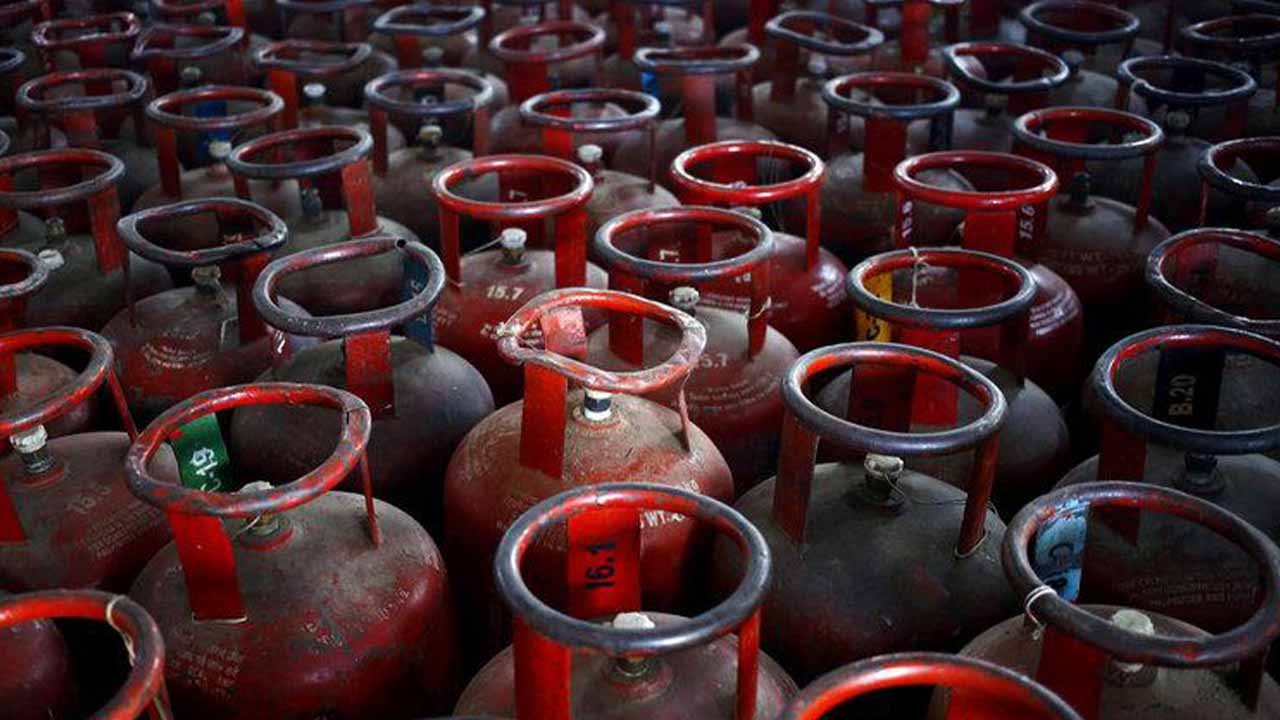
    The Oil and Gas Regulatory Authority (OGRA) has implemented a modest reduction in the price of Liquefied Petroleum Gas (LPG) by Rs0.81 per kg, effective from March 01, 2024.

    The previous consumer price for LPG stood at approximately Rs257.59 per kg. With the latest adjustment, consumers can now avail themselves of LPG at the revised rate of Rs216.79 per kg, indicating a notable decrease.

    For consumers relying on an 11.8 kg LPG cylinder, the cost has been adjusted to Rs3,030.12. This represents a decrease of Rs9.51 per cylinder from the previous price of Rs3,039.63, providing some relief to households and businesses alike.

    The move by OGRA to reduce LPG prices aims to alleviate the financial burden on consumers amid fluctuating economic conditions.

    This adjustment reflects the Authority’s commitment to ensuring fair pricing and accessibility of essential commodities for the public.

    Consumers are encouraged to verify and adopt the new rates, as OGRA continues its efforts to maintain transparency and affordability in the energy sector.

  • Govt expected to increase petrol price by Rs3.5 for first half of March

    Govt expected to increase petrol price by Rs3.5 for first half of March

    In a possible move that could impact consumers, the government is considering a hike in petrol prices by Rs3.5 per litre for the initial half of March 2024.

    As of the latest estimates until February 27, 2024, the ex-refinery price of petroleum has seen a noticeable rise, reaching Rs195.75 per litre. This reflects an increase of approximately Rs3.58 compared to the preceding fortnight’s price of Rs192.17 per litre.

    Contrary to petrol, there might be no significant adjustment in the price of high-speed diesel (HSD), with the government likely to maintain the current rate due to marginal changes in its pricing structure.

    The national currency has experienced a modest appreciation against the USD since the previous fortnight’s decision, settling at a weighted average rate of approximately PKR 279.37 per USD.

    It is crucial to highlight that, with two more sessions pending before the next pricing update, the final prices will be subject to global market fluctuations and exchange rate variations.

    The official announcement revealing the new prices is scheduled for midnight on February 29, 2024. If approved, these adjustments will remain effective for the first half of March. 

  • Public health concerns mount as essential drug prices increase

    Public health concerns mount as essential drug prices increase

    The interim government announced on Wednesday a price adjustment affecting 146 essential drugs, aligning with the decision made by the federal cabinet on February 1, 2024.

    The Ministry of National Health Services and Regulations issued a notification invoking its authority under Section 36 of the Drug Act 1976, stating that all drugs and biological substances not included in the National Essential Medicines List are exempt from Section 12 of the act in the public interest.

    This decision stems from a federal cabinet meeting chaired by interim Prime Minister Anwaar ul Haq Kakar on February 1, 2024. The move, categorised under hardship, was endorsed based on the recommendation of the National Health Services Ministry. The ministry highlighted the escalating costs of raw materials for drug manufacturing in the global market.

    Officials from the National Health Services Ministry and the Drug Regulatory Authority of Pakistan (DRAP) informed the cabinet that citizens could report medicine unavailability through the pharmaceutical industry regulator’s online portal.

    Primarily targeting vital medications like those for cancer treatment, vaccines, and antibiotics, the decision, communicated through a drug price hike notification, was based on a proposal from the Drug Regulatory Authority, suggesting price increases for 262 medicines. However, the government opted to implement adjustments for 146 medicines crucial to saving lives.

    According to Brecorder, among the medicines listed for price increments, pharmaceutical companies are tasked with adjusting the prices of 116 medications.

    Significantly, the government will now oversee the prices of 464 medicines included in the National Essential Medicines List, ensuring the accessibility of critical medications to the public.

    The government’s decision to deregulate drug prices grants pharmaceutical companies autonomy to adjust prices independently, marking a significant shift in pharmaceutical pricing governance that may reshape the healthcare industry’s landscape.

    As stakeholders assess the implications, concerns regarding affordability and access to life-saving medications emerge. While the government seeks to balance the viability of pharmaceutical companies with public health interests, the consequences of these adjustments warrant scrutiny and debate.

    However, following the cabinet’s approval of the price increase, a shortage of essential drugs was observed in both the wholesale and retail markets. Drug distributors and retailers attribute this to manufacturers awaiting formal notification from the Health Ministry regarding the price increase before releasing supplies to the market.

    This practice has resulted in significant patient suffering, as Mohammad Samiullah Awan, a drug retailer, highlights. While the notification’s issuance may ensure medicine availability, it further burdens already financially strained consumers grappling with price hikes.

  • Slight relief for consumers: Petrol price dropped by Rs2.04 per litre

    Slight relief for consumers: Petrol price dropped by Rs2.04 per litre

    The government announced a reduction in the prices of petrol and high-speed diesel (HSD) by Rs2.04 and Rs6.47 per litre, respectively, for the upcoming fortnight.

    According to a notification from the Ministry of Finance, the revised prices for petrol and HSD now stand at Rs281.34 and Rs296.71.

    Simultaneously, there was a decrease in the prices of kerosene oil and light-diesel oil by Rs6.05 and Rs9.01 per litre, bringing their new prices to Rs204.98 and Rs180.45, respectively.

    Prior to this decision, officials had anticipated a more substantial decline in the prices of petrol and HSD, ranging from Rs8 to Rs10 per litre.
    This projection was primarily based on the recent drop in international prices.

    However, despite the decrease in global prices for both HSD and petrol over the past two weeks, the rupee experienced depreciation against the dollar in the same period, mitigating the benefit of lower international prices for consumers.

    According to officials, the international prices indicated a reduction of about $9 per barrel on average for HSD, decreasing from approximately $113 to $104 during the week.

    Similarly, the price of petrol saw a decline of one dollar, moving from $91 to $90. Conversely, the rupee depreciated by Rs6 against the dollar, falling from Rs280 to Rs286.

  • Govt implements major gas price hike to tackle circular debt crisis 

    Govt implements major gas price hike to tackle circular debt crisis 

    On Monday night, the interim government made a significant announcement that will have a profound impact on the nation’s economy.  

    The decision involved a substantial increase in gas prices, set to take effect on November 1st, 2023. 

    Under this new pricing structure, non-protected domestic consumers will experience a substantial surge in their gas tariffs.  

    Specifically, rates will surge by a staggering 173 per cent for this category of consumers. Commercial users will see their gas prices climb by 136.4 per cent, while those in the export and non-export industries will face increases of 91 per cent and 83 per cent, respectively. 

    Further elaborating on the specifics of these changes, the revised monthly charges for protected consumers have been elevated from a mere Rs10 to a more substantial Rs400. For non-protected consumers, the monthly charges have surged from Rs460 to Rs1000, and for higher consumption slabs, the charges have escalated to a maximum of Rs2000. 

    In terms of actual consumption, the price per mmbtu will vary depending on usage. Users consuming up to 0.25 cubic metres will be charged Rs121 per mmbtu.  

    Those using up to 0.5 cubic metres will pay Rs150 per mmbtu; users with a monthly consumption of 0.60 cubic metres will incur charges of Rs200 per mmbtu; and those utilising 0.9 cubic metres will see rates set at Rs250 per mmbtu.  

    The steepest increase is witnessed by individuals using 1 cubic metre of gas per month, as their charges have surged from Rs400 per mmbtu to Rs1,000 per mmbtu. Users with gas consumption up to 1.5 cubic metres, previously paying Rs600 per mmbtu, will now be required to pay Rs1,200 per mmbtu starting from November 1st. 

    The changes in gas pricing also extend to small commercial users, such as local tandoors, who will be paying Rs697 per mmbtu from the aforementioned date.  

    The power sector will experience a range of charges, with rates fluctuating between Rs1,050 and Rs3,890 per mmbtu, while the cement industry will be subject to a consistent rate of Rs4,400 per mmbtu. 

    As for the export industry, gas pricing has been set at Rs2,100 to Rs2,400 per mmbtu, while non-export industries will be required to pay between Rs2,200 and Rs2,500 per mmbtu. These significant adjustments have been made to alleviate the burden on the nation’s economy. 

    The Power Division, in an official statement, justified the increase in gas prices by referencing the recommendations of the Oil and Gas Regulatory Authority, which sought to prevent an additional burden of Rs400 billion on the already burgeoning circular debt.  
  • Petrol price reduced by Rs8 to Rs323.38 per litre for two weeks

    Petrol price reduced by Rs8 to Rs323.38 per litre for two weeks

    In a noteworthy development aimed at alleviating concerns over inflation, the interim government has decided to implement a reduction in the prices of petroleum products for the upcoming two weeks.  

    As of October 1, 2023, the price of petrol will see a substantial decrease of Rs8 per litre, resulting in a new rate of Rs323.38. Additionally, a price reduction of Rs11 per litre has been announced for diesel, bringing the revised rate to Rs318.18 per litre. 

    This decision has been prompted by the strengthening of the Pakistani rupee and a global decrease in petroleum prices, as indicated by the Ministry of Finance in an official statement.  

    The Ministry stated, “In the wake of variations in international prices of petroleum products and the improvement in the exchange rate, the Government of Pakistan has decided to revise the consumer prices of petroleum products.” 

    Furthermore, the government has taken steps to lower the cost of kerosene oil by Rs7.53 per litre, establishing a new rate of 237.28, while light diesel oil will witness a reduction of Rs7.77 per litre, resulting in a price of 212.45 per litre.