Tag: price hike

  • IMF says bijli aur gas mazeed mehngi karu

    IMF says bijli aur gas mazeed mehngi karu

    The International Monetary Fund (IMF) has told the Pakistani authorities of its plan to release the next bailout package under specific conditions which Pakistan would have to fulfil like increasing revenue and curtailing government expenditure.

    “The government will have to hike electricity and gas tariffs in coming July and August 2024 to strike a deal with the IMF,” Geo news reported.

    If approved, the fresh bailout package through climate finance would range from $6 to $8 billion.

    The government would also have to present an aligned budget and secure its approval from the parliament.

    The IMF has asked the government to raise the power tariff by jacking up fuel price adjustments and quarterly tariff adjustments. The tariff on gas will also be increased.

    On solar net metering, the government has decided to hire a Chinese consultant and others to study it independently because the net metering system is reportedly causing harm to distribution grids.

  • Pak Suzuki hikes prices, Cultus AGS now priced above Rs4.5 million

    Pak Suzuki hikes prices, Cultus AGS now priced above Rs4.5 million

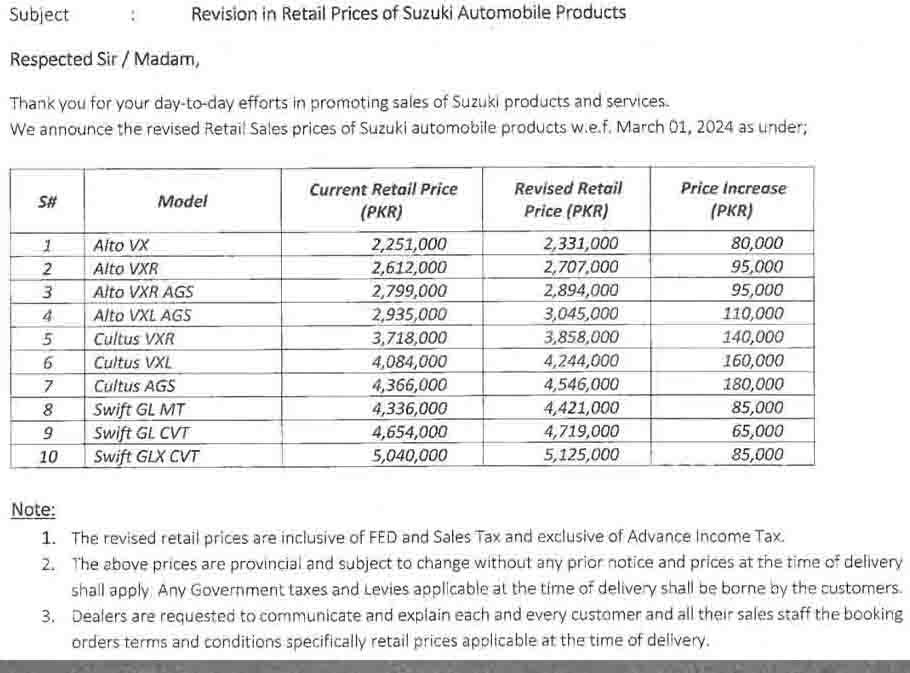
    In response to inflationary pressures and rising overhead costs, Pak Suzuki has announced a significant hike in car prices, impacting models across the range.

    The adjustments, ranging from Rs80,000 to Rs180,000, are set to take effect on March 1, 2024.

    Shafiq Ahmed Shaikh, Head of Corporate Affairs at Pak Suzuki, explained the rationale behind the decision, citing factors such as inflation, increased overhead expenses, higher international raw material and accessory costs, and elevated shipment and freight charges.

    The latest adjustments mean that the top-of-the-line model, Alto VXL AGS, will now be available at Rs3.045 million, reflecting a price increase of Rs110,000.

    However, the most significant surge is observed in the Cultus AGS, with its new price set at Rs4.546 million, following an increase of Rs180,000.

    This move by Pak Suzuki aims to navigate the challenges posed by the current economic landscape, ensuring the sustainability of operations amid various cost escalations.

    Customers will experience the impact of these changes as they come into effect, marking a new pricing structure for Suzuki vehicles in Pakistan.

    Here are the new prices for all Suzuki cars:

  • ECC greenlights 25% sales tax increase on domestic cars

    ECC greenlights 25% sales tax increase on domestic cars

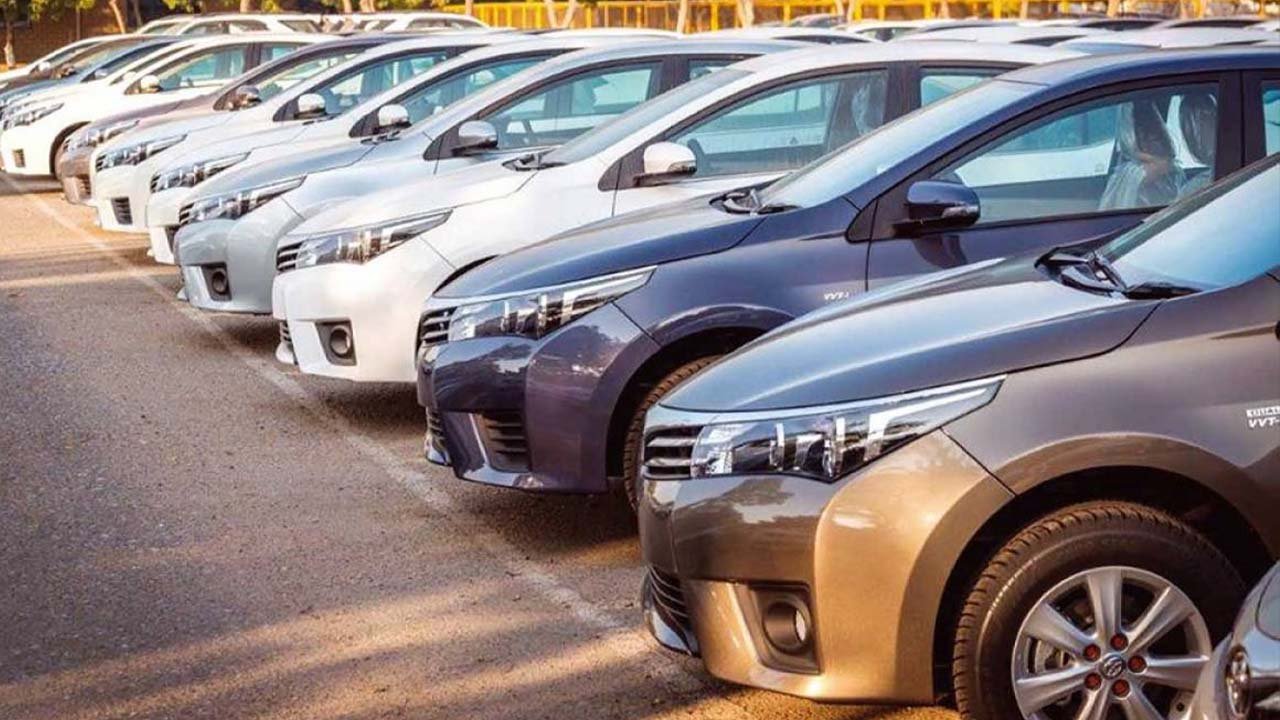
    In a significant development, the Economic Coordination Committee (ECC) of the Cabinet has given its nod to a proposal for increasing the sales tax on vehicles manufactured and assembled within the borders of Pakistan.

    The decision was finalised during a pivotal ECC meeting held in the capital city on Wednesday.

    The proposal, presented by the Federal Board of Revenue (FBR), suggested an elevation in the sales tax applicable to the auto sector, particularly on vehicles produced and assembled domestically.

    Following a comprehensive deliberation, the ECC cabinet sanctioned the process for determining a 25 per cent sales tax rate on locally manufactured and assembled vehicles.

    As per the endorsed proposal, vehicles valued at Rs4 million or equipped with 1400 cc engines will be subject to a 25 per cent sales tax.

    This taxation structure is anticipated to persist in the upcoming budget, signalling potential implications for consumers as a result of the price hike.

    The imposition of a 25 per cent sales tax on 1400cc vehicles is expected to have a direct impact on the pricing structure, leading to a potential surge in vehicle costs. The ECC’s decision aligns with ongoing efforts to streamline fiscal policies in the country.

    In addition to this decision, the ECC also greenlit a substantial subsidy of Rs7,492.75 million under the Ramazan Relief Package 2024.

    Chaired by Caretaker Finance Minister Shamshad Akhtar, the meeting aimed to address the financial aspects of the relief package, particularly subsidising the targeted beneficiaries of the Benazir Income Support Programme (BISP).

    According to a press statement issued by the finance ministry, the subsidy allocation is part of the budget for 2023–24, with a primary focus on providing support to those identified under the BISP. This move underscores the government’s commitment to social welfare initiatives.

    Furthermore, the ECC approved a proposal related to the “Permission to Import Wheat and Export of Wheat Flour under the Export Facilitation Scheme 2021.” This decision, brought forth by the Ministry of Commerce, reflects the government’s strategic measures to balance wheat supply and demand dynamics in the country.

    The ECC meeting signifies a pivotal moment in shaping economic policies, with decisions that carry far-reaching implications for both the automotive sector and social welfare initiatives in Pakistan.

    The approved proposals are poised to contribute to the broader economic landscape and address pertinent challenges in the nation’s fiscal framework.

  • Price of 10kg flour bag reaches nearly Rs1,500 

    Price of 10kg flour bag reaches nearly Rs1,500 

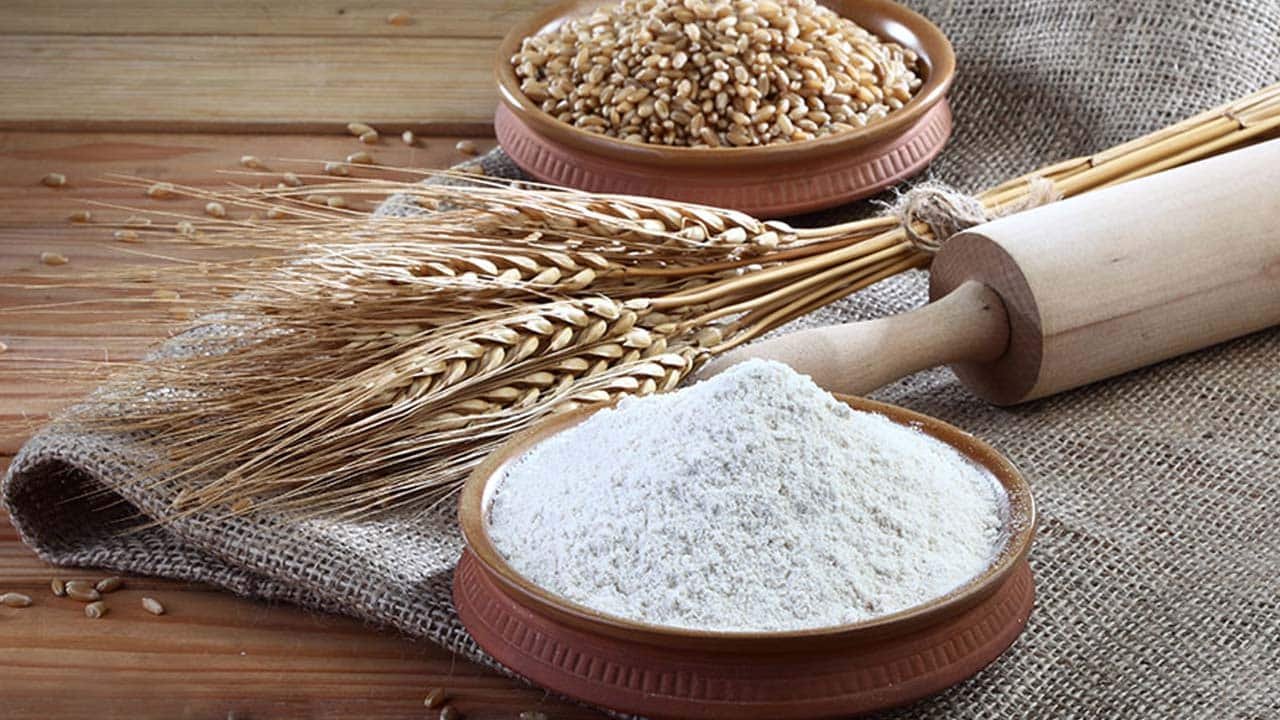
    The price of ‘chakki’ flour has recently experienced an increase of Rs10 to Rs12 per kilogramme in Hyderabad, the second-largest city in the province of Sindh.  

    Consequently, the price of a 10-kg sack of flour has risen from Rs1,350 to Rs1,470.  

    In an official statement, ‘chakki’ owners explained that the surge in prices is attributed to the increased cost of wheat. They clarified that the price of a 100-kg sack of wheat has escalated by Rs3,000, elevating it from Rs8,500 to Rs11,500.  

    According to their assertions, the prevailing market rate for a 100-kg sack of wheat is Rs12,000.  

    Earlier this month in Karachi, the retail price of flour was established at Rs127 per kilogramme following successful negotiations between Karachi Commissioner Salim Rajput and the flour mills association.  

    During the discussions, the association agreed to retail the flour at Rs127 and wholesale it at Rs120 per kilogramme in the city.  

    Furthermore, the wholesale market prices were set at Rs130 per kilogramme for fine flour and Rs134 per kilogramme for retail.  

    Meanwhile, there has been a noticeable increase in prices for sugar, flour, and other essential commodities at utility stores nationwide.   

    The reported prices reveal that sugar is priced at Rs155 in utility stores, compared to Rs142.54 in the open market, representing a Rs12.46 disparity.  

    Similarly, a 20-kg bag of flour is priced at Rs2,840 in utility stores, with an open market price of Rs2,706.32, reflecting a Rs133.68 difference. 

  • NEPRA announces increase in electricity tariff, impacting November bills 

    NEPRA announces increase in electricity tariff, impacting November bills 

    In yet another unsettling development for power consumers already burdened by rising costs, the National Electric Power Regulatory Authority (NEPRA) has announced an increase of Rs0.40 per unit in the electricity tariff.  

    This adjustment, approved by NEPRA in response to the monthly fuel adjustment for September, will result in higher charges on November bills for electricity consumers. 

    It’s important to note that this tariff hike will affect all consumer categories, except for those classified as lifeline consumers and K-Electric users.  

    In October, NEPRA had previously approved a separate increase of Rs1.71 per unit in the electricity tariff, which was attributed to fuel adjustment charges (FAC) for the month of August. This increase was reflected in the bills for October. 

    Additionally, on October 3rd, NEPRA sanctioned a per-unit price increase of Rs 3.28 as part of the quarterly adjustment.  

    This adjustment will entail a recovery of Rs3.28 per kilowatt-hour (kWh) from various consumer categories within power distribution companies (DISCOs) and K-Electric over a six-month period, spanning from October 2023 to March 2024. 

  • PM Kakar ordered to appear before court over fuel price increase

    PM Kakar ordered to appear before court over fuel price increase

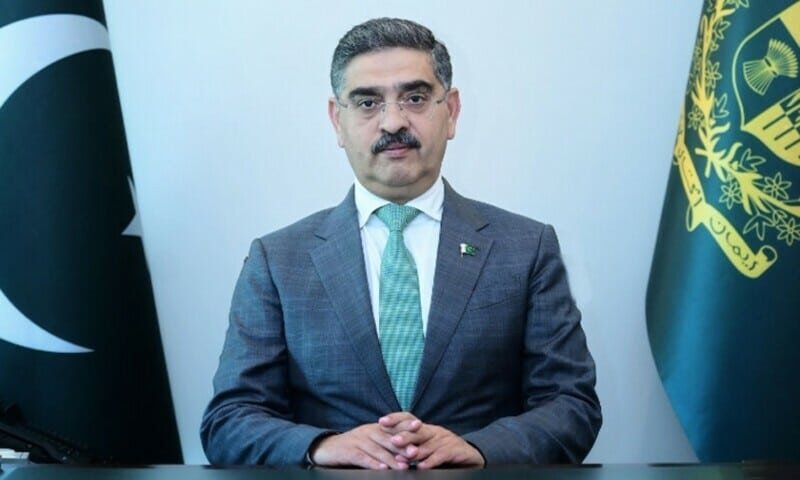
    Caretaker Prime Minister Anwaar-ul-Haq Kakar has received summons on Tuesday from a civil court in Gujranwala over the recent increase in the prices of petroleum products.

    Judge Mohammad Awais summoned the caretaker PM, secretary petroleum, and Gujranwala commissioner against the hike in petrol prices.

    Advocate Manzoor Qadir filed a petition on September 16 asking for a stay order on the decision of the caretaker government to increase fuel prices. According to the petition, the caretaker prime minister and other officials are “concerned parties” and responsible for the price hike.

    The court has ordered the caretaker prime minister and other officials to appear before the court on September 20 (Wednesday).

    The caretaker government had increased the petrol price by more than Rs 26 and the diesel price by over Rs 17 per litre last week.

    According to the Finance Ministry, the decision was taken due to the increase in oil prices in the international market.

  • Govt raises petrol price by Rs26.02 per litre, diesel by Rs17

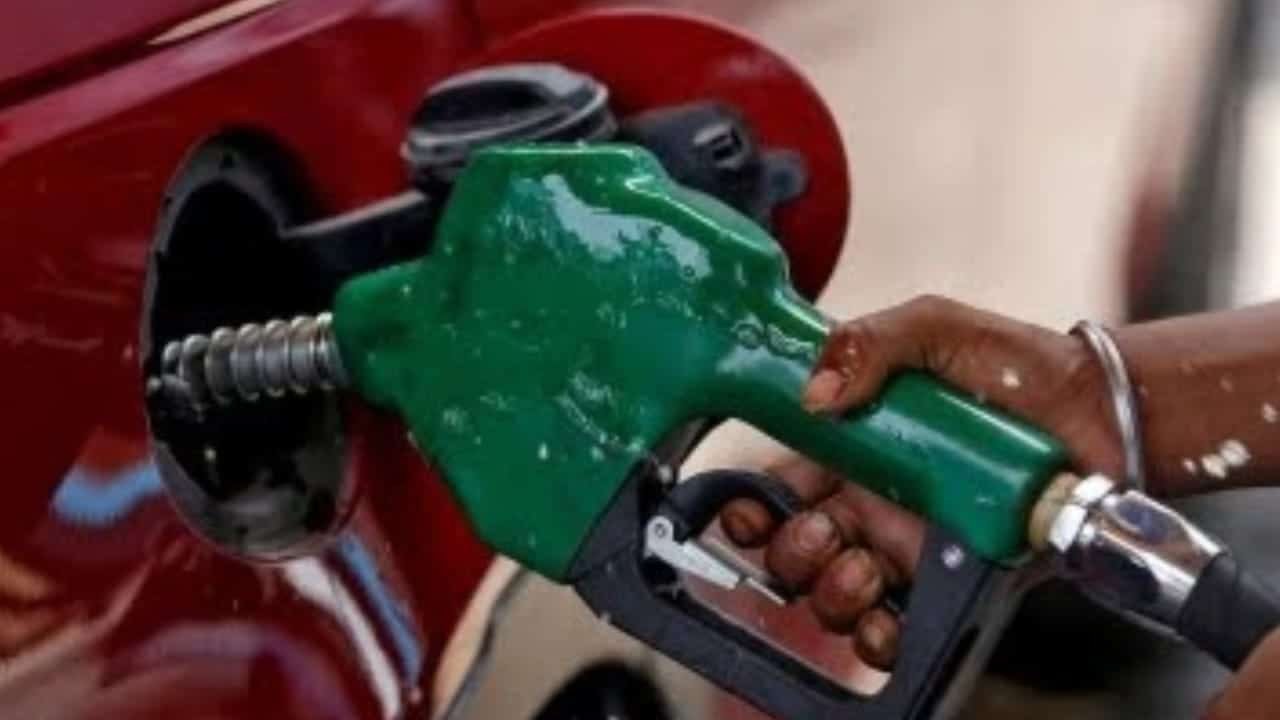
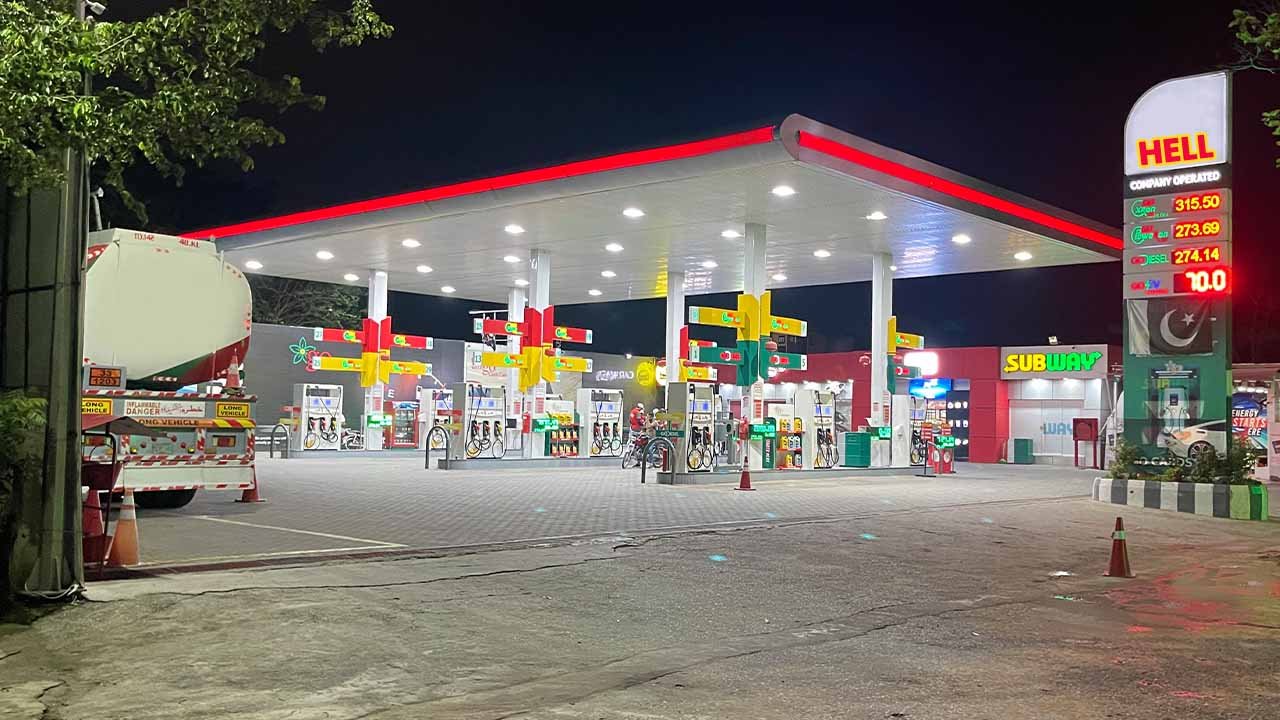
    On Friday night, the interim government implemented a significant adjustment in fuel prices. The cost of petrol rose by Rs26.02 per litre, reaching a new rate of Rs331.38 per litre, while high-speed diesel (HSD) saw an increase of Rs17.34 per litre, settling at Rs329.18 per litre.

    The Ministry of Finance made this announcement via a post on X (formerly known as Twitter) after midnight.

    This decision was driven by the continuous upward trajectory of petroleum prices in the global market. It’s important to note that there were no alterations made to the rates of kerosene or light diesel oil.

    This latest price surge closely follows a substantial hike on September 1, when the interim government elevated fuel prices by up to Rs18 per litre. This increase was preceded by similar adjustments made by the interim government on August 15.

    The rationale behind these price adjustments lies in adherence to existing tax structures and import parity prices. These changes were primarily necessitated by currency fluctuations and a slight uptick in international oil prices.

  • ‘Never leaving home again’: social media is in tears after ANOTHER petrol price hike

    ‘Never leaving home again’: social media is in tears after ANOTHER petrol price hike

    Kuch rehnay nahi dena? Yesterday night, the caretaker government announced yet another price hike in petrol charges, taking it to a historic high of Rs 301 per litre.

    In a statement, the finance ministry said that the reason behind the hike included escalating prices in the international market as well as shifts in exchange rates.

    But social media users were in dismay that after exorbitant electricity bills, they will have to pay unheard of sums for fuel.

    Sab se pehle tou, get used to the social distancing times and start staying more at home, like this user put it.

    Waisay this would be a good excuse

    Go back to ye olde times and send letters to your beloved?

    *Dances to the bop while wailing*

  • Petrol price increased by Rs17.50 to Rs290.45 per litre

    Petrol price increased by Rs17.50 to Rs290.45 per litre

    The caretaker government has increased the petrol price by Rs17.50 to Rs290.45 per litre while diesel price has been increased by Rs20 to Rs293.40 per litre.

    The situation appears to be worsening for the already burdened population, who were already facing challenges in affording expensive petrol. Now, an additional financial strain is looming as they will be obligated to pay even higher prices.

    The Finance Division, addressing the recent developments, explained that the escalation of petroleum prices in the international market over the past two weeks has necessitated a revision in consumer prices within Pakistan. This decision has been made in response to the global market dynamics impacting local prices.

    This announcement follows a substantial price hike in fuel that was announced by the former Pakistan Democratic Movement (PDM)-led government on August 1.

    At that time, a significant increase of Rs19 per litre in the prices of both petrol and diesel was introduced. This move was attributed to the mounting global oil prices.

  • Utility Stores hike sugar, ghee, and flour prices following subsidy withdrawal

    In a surprising move, the Utility Stores Corporation (USC) has raised the prices of crucial commodities such as sugar, ghee, and flour, affecting consumers across the board, including those enrolled in the Benazir Income Support Programme (BISP). This price increase comes in the wake of the outgoing government’s decision to eliminate subsidies on these essential items.

    Among the notable price hikes, a 10-kg bag of flour has witnessed a substantial increase of Rs200; sugar prices have surged by Rs30; and ghee prices have risen by Rs53 per kilogramme. This unforeseen surge in prices has left many consumers bewildered, especially considering that the government recently augmented the subsidy allocation for the USC from Rs30 billion to Rs35 billion in the ongoing fiscal year’s budget.

    In a bid to alleviate the burden on consumers, the Prime Minister’s Azadi package for BISP beneficiaries is set to launch on August 11. This relief package aims to cushion the impact of the price hikes by offering a 10-kg bag of flour at a reduced price of Rs648. Additionally, a discount of Rs25 per kilogramme will be applied to rice and pulses for eligible beneficiaries.

    However, the plight of consumers has been compounded by widespread shortages of essential goods at utility stores. Frustration among citizens has mounted as they endure long lines for houRsin the hope of purchasing subsidised items, only to be met with empty shelves and disappointment. The lack of availability has further exacerbated the challenges posed by the recent price increases.

    Curiously, authorities at the utility stores have refrained from commenting on the escalating situation. This silence has left consumers and observers alike wondering about the root causes of these unexpected developments and the potential implications for the broader economic landscape.